
Pad Krapao — Thai Basil Stir-Fry
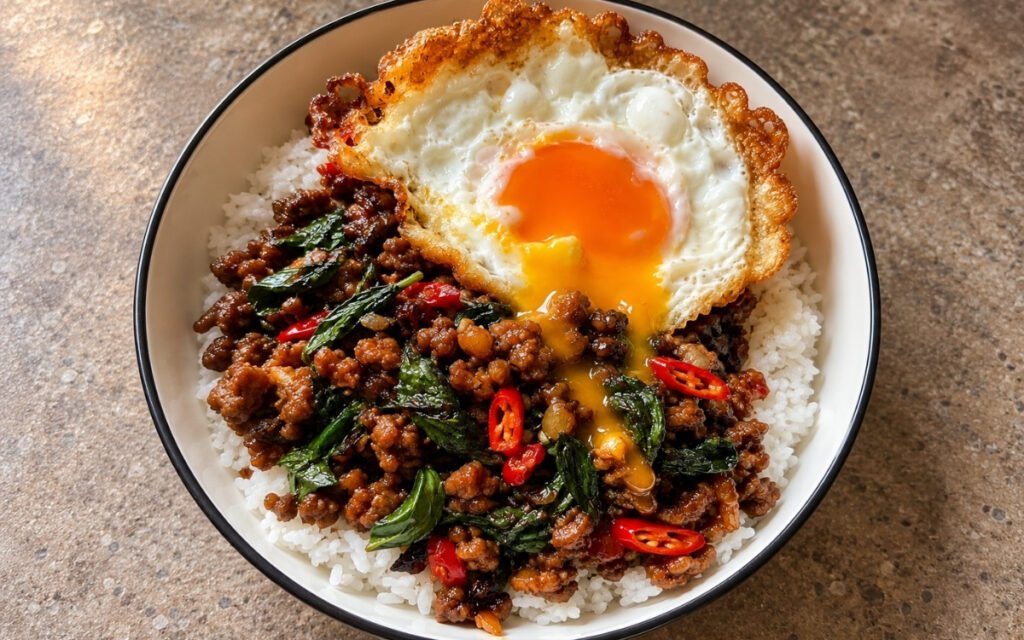
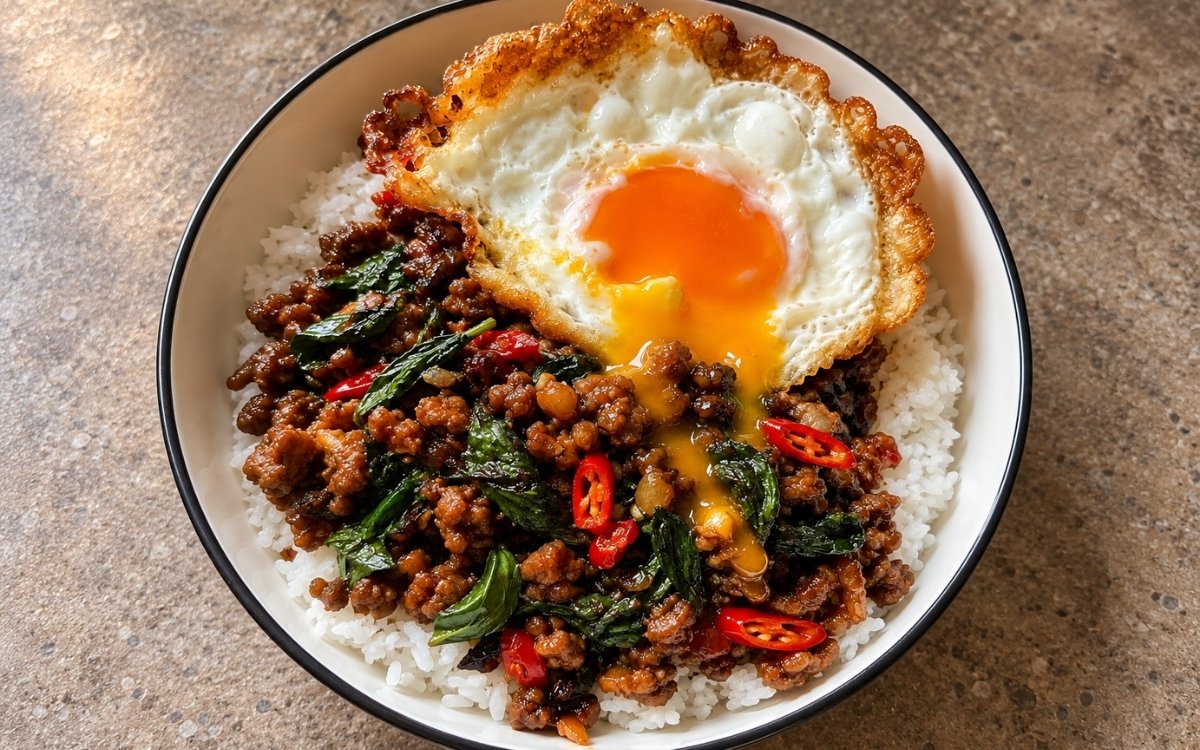
A classic Thai stir-fry of minced pork cooked hard over high heat until caramelized and deeply savory, then tossed with garlic, chilies, a glossy sauce, and a generous amount of Thai holy basil, served over jasmine rice and topped with a crispy-edged fried egg with a runny yolk. Letting the pork sit briefly in the hot pan before stirring, rather than breaking it up immediately, is the technique this whole dish depends on for real, deep caramelization — pork rushed straight into sauce while still pale and wet misses the concentrated, browned character this dish is built around, the same let-it-sit-before-stirring principle used elsewhere in this collection whenever a ground meat’s own browning depends on genuine, sustained pan contact rather than immediate breaking and stirring. Adding the holy basil only at the very end, tossing it in for the briefest window, is what lets it wilt into the pork while still keeping its own distinctive aroma. Frying the eggs in a generous layer of hot oil until the edges turn deeply lacy and golden is what delivers the crisp, frilly texture that contrasts against the still-runny yolk. The payoff is a plate with real, vivid Thai contrast — hard-caramelized, savoury pork studded with fragrant basil, spooned over rice and topped with a crisp-edged, runny fried egg.
Prep Time : 20 min
Cook Time : 20 min
Servings : 4
20 min
20 min
4
Ingredients
Rice
• 300g jasmine rice (75g per serving)
• Water, as needed for your usual rice-cooking method
Pork Stir-Fry
• 800g ground pork, moderately fatty but not overly fatty
• 12g neutral oil, plus more if needed
• 35g garlic, roughly chopped or pounded
• 20–30g Thai red chilies, sliced or roughly pounded, to taste
• 2 small shallots, thinly sliced (optional but common in many home-style versions)
• 120–150g Thai holy basil leaves, picked from the stems
Stir-Fry Sauce
• 45ml oyster sauce — this one on Amazon
• 30ml fish sauce — this one on Amazon
• 15ml light soy sauce
• 10–15ml dark soy sauce — this one on Amazon
• 8–12g sugar
• 30–45ml water or unsalted stock
Fried Eggs
• 4 eggs
• Neutral oil, for frying
This post may contain affiliate links. As an Amazon Associate I earn from qualifying purchases, at no additional cost to you.
Directions
- Cook the Rice
Cook the jasmine rice so it is fluffy and dry enough to support the stir-fry rather than wet or clumpy. Keep warm. For this dish, freshly cooked rice is ideal. Slightly drier rice gives a better final balance once the saucy pork is spooned on top. That deliberately drier rice consistency protects against the whole plate turning soggy once the glossy, sauced pork is spooned directly over it. - Prepare the Sauce and Aromatics
Stir together the oyster sauce, fish sauce, light soy sauce, dark soy sauce, sugar, and water until combined. Roughly chop or pound the garlic and chilies together so they are coarse rather than finely pureed. If using shallots, slice them thinly. Pick the holy basil leaves and discard tough stems. Having everything ready matters because the stir-fry moves very quickly once it hits the pan. Keeping the garlic and chili mixture genuinely coarse, rather than a fine paste, is what lets each piece retain some real, distinct texture and bite once folded through the finished pork. - Start the Pork
Heat a wok or large skillet over high heat until very hot. Add the oil, then add the ground pork. Spread it out and let it sit briefly before stirring so it starts to brown and develop dark caramelized edges. Break it up into small crumbles and stir-fry until most of the moisture cooks off and the pork begins to fry in its own fat. This is one of the key turning points: do not rush to add sauce while the pork is still pale and wet. It should look lightly browned, concentrated, and slightly crisp in spots. That deliberate pause before stirring gives the pork’s own surface genuine, sustained contact with the hot pan — breaking it apart too early interrupts that contact before any real browning has the chance to develop. - Add the Aromatics
Add the garlic-chili mixture and the shallots, if using. Stir-fry for 30–60 seconds until fragrant. Do not let the garlic scorch black; it should smell sweet and sharp, not bitter. That brief, watched cooking window reflects how little margin coarsely chopped garlic actually has between fragrant and burnt — pushed even slightly further, it would introduce real bitterness straight into the finished dish. - Sauce the Stir-Fry
Pour in the sauce mixture and keep stir-frying over high heat. Cook until the sauce reduces and clings to the pork in a glossy coating rather than pooling thinly at the bottom. The mixture should look shiny and intense, with some darker caramelized bits around the edges of the pan. That real reduction, cooking until the sauce genuinely clings rather than pools, is what delivers the glossy, concentrated coating this dish depends on — a sauce pulled too early would leave the pork sitting in a thin, watery liquid instead. - Finish with Holy Basil
Add the holy basil and toss just until wilted, 15–30 seconds. Do not overcook the basil. It should collapse into the pork while still keeping its aroma. Remove the stir-fry from the heat as soon as the basil is wilted. That genuinely brief window protects the basil’s own distinctive aroma — holy basil loses real fragrance quickly under sustained heat, and pulling the pan the moment it wilts is what preserves that character right through to serving. - Fry the Eggs
In a separate pan, heat a generous layer of oil over medium-high to high heat. Fry the eggs one at a time or two at a time until the whites are set, the edges are deeply lacy and golden-brown, and the yolks remain runny. Spoon some hot oil over the whites if needed to help them set without flipping. Drain briefly. The egg should have crisp frilly edges and a fluid yolk that can run into the pork and rice. That genuinely generous layer of hot oil is what actively fries the egg’s own edges into their characteristic lacy, crisp texture — a thin film of oil alone couldn’t produce the same deep, frilly browning around the white. - Serve
Divide the rice among 4 bowls or plates. Spoon the pad krapao over the rice and top each serving with one fried egg. Serve immediately. Serving without delay delivers the whole plate at its intended contrast — the pork’s own hot, glossy intensity and the egg’s crisp edges both change noticeably the longer everything sits.
*Notes :
- Letting the pork sit briefly in the hot pan before breaking it up deserves genuine recognition as the technique most directly responsible for whether this dish achieves its characteristic deep, caramelized flavour. The recipe’s own explicit framing of this as “one of the key turning points” reflects exactly how much rides on it — pork stirred and broken apart too early never gets the sustained pan contact real browning depends on.
- Reducing the sauce until it genuinely clings to the pork, rather than pulling it while still thin, deserves the same attention this technique receives throughout this collection’s other glossy, sauced stir-fries. That real reduction is what produces the concentrated, shiny coating this dish is specifically known for — a thinner, pooled sauce would leave the finished pork tasting noticeably diluted by comparison.
- Adding the holy basil only at the very last moment, tossing it for the briefest possible window, deserves genuine respect as the detail responsible for preserving this dish’s whole distinctive aromatic character. Holy basil’s own fragrance fades quickly under sustained heat, and pulling the pan the instant it wilts is what protects that aroma right through to the moment the dish is served.
- Frying the eggs in a genuinely generous layer of hot oil, rather than a thin film, deserves attention as the technique responsible for their characteristic crisp, lacy edges. That real volume of hot oil actively fries the egg’s exterior into a frilly, deeply golden texture — a shallow film simply wouldn’t produce the same effect around the white’s own edges.
Why This Recipe Works
This recipe works because the pork is given real, sustained contact with the hot pan before being stirred, building genuine caramelization rather than staying pale and wet. The garlic and chilies are kept coarse, adding real texture, and cooked only briefly to protect against bitterness.
The sauce is reduced until it genuinely clings to the pork, and the holy basil is added only at the very last moment, preserving its own distinctive aroma.
The eggs are fried in a generous layer of oil for real, crisp, lacy edges, and serving everything immediately delivers the whole plate’s intended contrast between hot, glossy pork and crisp, runny-yolked egg.
Ingredient Breakdown
Hard-Caramelized Ground Pork
The critical technique — real, sustained pan contact before stirring builds genuine deep, browned flavour.
Coarsely Chopped Garlic and Chili
The critical technique — kept coarse rather than pureed for real, distinct texture in every bite.
Reduced, Glossy Sauce
The critical technique — cooked until it clings to the pork rather than pooling thinly, delivering concentrated flavour.
Last-Moment Holy Basil
The critical technique — added only briefly to preserve its own distinctive, fading aroma.
Generously Oil-Fried Eggs
The critical technique — a real volume of hot oil produces the characteristic crisp, lacy edges around the white.
Runny Egg Yolk
The defining finishing element — meant to be broken and run into the pork and rice as part of the classic eating experience.
Flavor Structure Explained
This pad krapao follows a layered balance model:
- Neutral, dry foundation (fluffy jasmine rice)
- Deep, caramelized centrepiece (hard-fried, browned ground pork)
- Sharp aromatic heat (garlic, Thai red chilies)
- Glossy, savoury-sweet coating (reduced stir-fry sauce)
- Fragrant herbal finish (Thai holy basil)
- Rich, runny topping (fried egg)
Fluffy, deliberately dry jasmine rice provides this dish’s neutral foundation, built to support the saucy stir-fry spooned over it. Hard-caramelized ground pork serves as the deep, savoury centrepiece, its flavour built through genuine sustained browning. Coarsely chopped garlic and Thai red chilies contribute sharp, aromatic heat throughout. A reduced, glossy sauce coats every component with concentrated savoury-sweetness. Thai holy basil, added at the very last moment, finishes the pork with fragrant herbal character, and a crisp-edged, runny fried egg tops the whole plate with rich, enriching finish.
Common Mistakes to Avoid
- Stirring the Pork Immediately Instead of Letting It Sit – This prevents real browning from developing. Always let it sit briefly against the hot pan first.
- Adding the Sauce Before the Pork Is Properly Browned – This misses the concentrated, caramelized flavour this dish depends on. Always wait until the pork looks lightly browned and slightly crisp.
- Burning the Garlic and Chili – This introduces real bitterness. Always cook them only briefly, watching closely.
- Overcooking the Holy Basil – This dulls its distinctive aroma. Always add it last and remove the pan from heat the instant it wilts.
- Frying the Eggs in Too Little Oil – This prevents the characteristic crisp, lacy edges from developing. Always use a genuinely generous layer of hot oil.
Variations
Extra-Spicy Version
Increase the Thai red chilies, per the recipe’s own note on this dish traditionally being served very spicy, adjusting to taste without losing the dish’s overall balance.
Ground Chicken Version
Substitute ground chicken for pork, following the same hard-sear technique, for a leaner but equally classic variation on the same dish.
Extra-Basil Version
Increase the Thai holy basil for a more pronounced, herbaceous finish throughout the pork, folding it in during the same brief final window.
Genuinely Authentic Herb Version
Use true Thai holy basil rather than Thai sweet basil or Italian basil, per the recipe’s own explicit guidance, since neither substitute delivers the same classical flavour this dish depends on.
Storage & Make-Ahead
Thai holy basil is genuinely the proper herb for this dish, and Thai sweet basil gives a noticeably different flavour while Italian basil is not considered a classical substitute at all, so seek out the real thing whenever possible.
Use high heat throughout and avoid overcrowding the pan, since a pan that’s too small will cause the pork to steam rather than fry and caramelize properly, and cooking in two batches solves that problem if your equipment runs small.
The finished pork should read as savory, slightly sweet, and a little salty, moderately loose from the sauce but never soupy, so if the mixture turns too wet, keep cooking until the liquid reduces and turns properly glossy.
A moderately fatty grind of pork gives the best overall result here, producing juicy, flavourful meat with some genuinely caramelized edges without becoming excessively greasy in the finished dish.
The runny egg yolk is not optional in spirit — once broken, it enriches both the pork and the rice and is genuinely part of the classic eating experience this dish is built around, so resist the temptation to cook it firm.
Frequently Asked Questions
Why does the pork need to sit briefly in the hot pan before being stirred?
That pause gives the pork’s own surface real, sustained contact with the hot pan, which is specifically what allows genuine browning and caramelization to develop. Stirring too early interrupts that contact before it has any real chance to build.
Why can’t the sauce be added while the pork is still pale and wet?
Adding sauce too early misses the deep, concentrated flavour that only develops once the pork has genuinely browned and started frying in its own rendered fat. Rushing this stage produces a noticeably flatter finished dish.
Why does the holy basil go in only at the very end, for such a brief window?
Holy basil’s own distinctive fragrance fades quickly under sustained heat. Adding it last and pulling the pan the moment it wilts is what protects that aroma right through to serving.
Why do the eggs need such a generous amount of oil to fry properly?
A real volume of hot oil is what actively fries the egg’s edges into their characteristic crisp, lacy, deeply golden texture. A thin film of oil alone wouldn’t produce that same frilly effect.
Are there other classic Thai stir-fry, salad, or rice bowl dishes worth trying?
Larb Gai — Thai Minced Chicken Salad and Pad See Ew — Thai Stir-Fried Wide Noodles both offer other classic Thai directions worth exploring. Thai Green Mango Salad is also worth trying for a fresh, bright contrast, and Chicken Adobo Rice Bowl and Simple Fried Rice offer other satisfying rice bowl dishes worth exploring.
Nutrition Facts
( per serving )
Calories
~720 kcal
Protein
36 g
Fat
38 g
Carbs
62 g
Calories
~720 kcal
Protein
36 g
Fat
38 g
Carbs
62 g
Related Recipes
Related Recipes

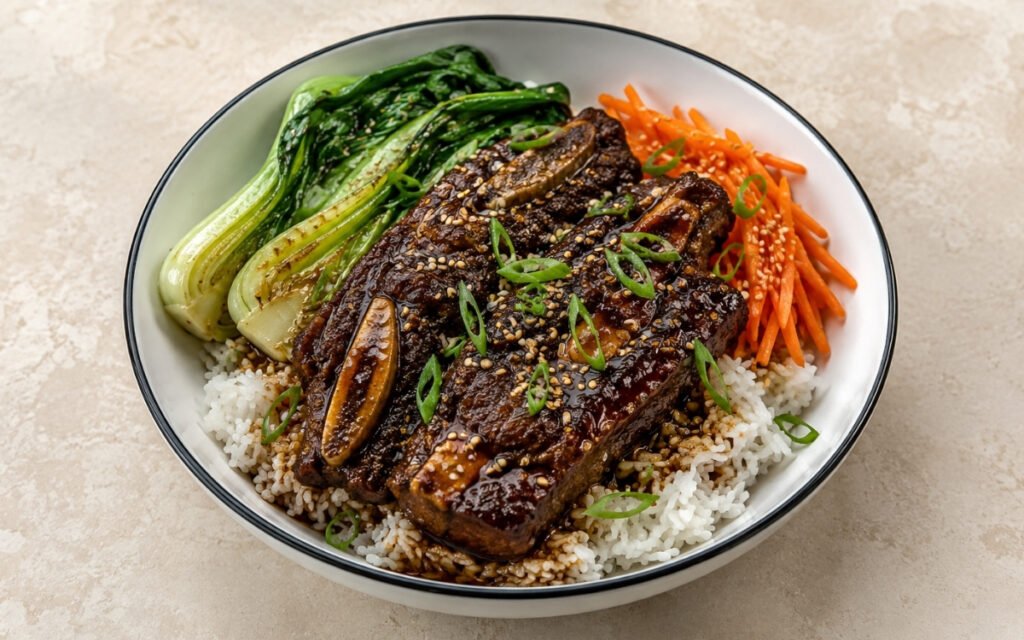
Korean-Style Braised Beef Rice Bowl
Bone-in short ribs braised 2 hours in soy-mirin-gochugaru-star anise liquid — strained, reduced to a glossy sauce, shredded beef returned. Over jasmine rice with bok choy.
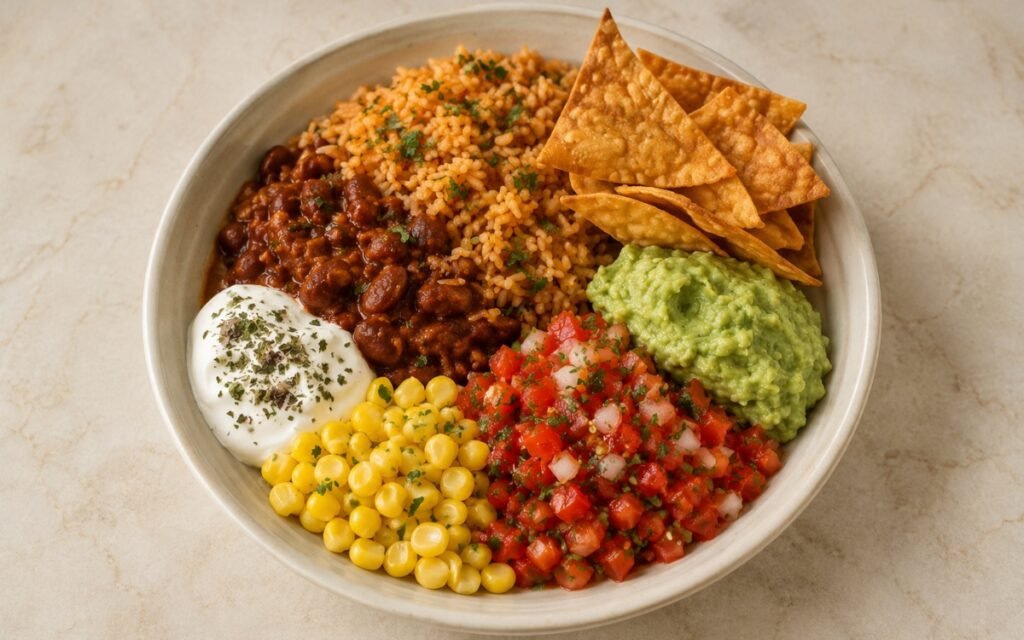
Loaded Mexican Taco Bowl
Toasted tomato rice, smoky chipotle red beans, fresh pico de gallo, plain guacamole, sour cream, and crispy tortilla chips, layered in one vibrant bowl.
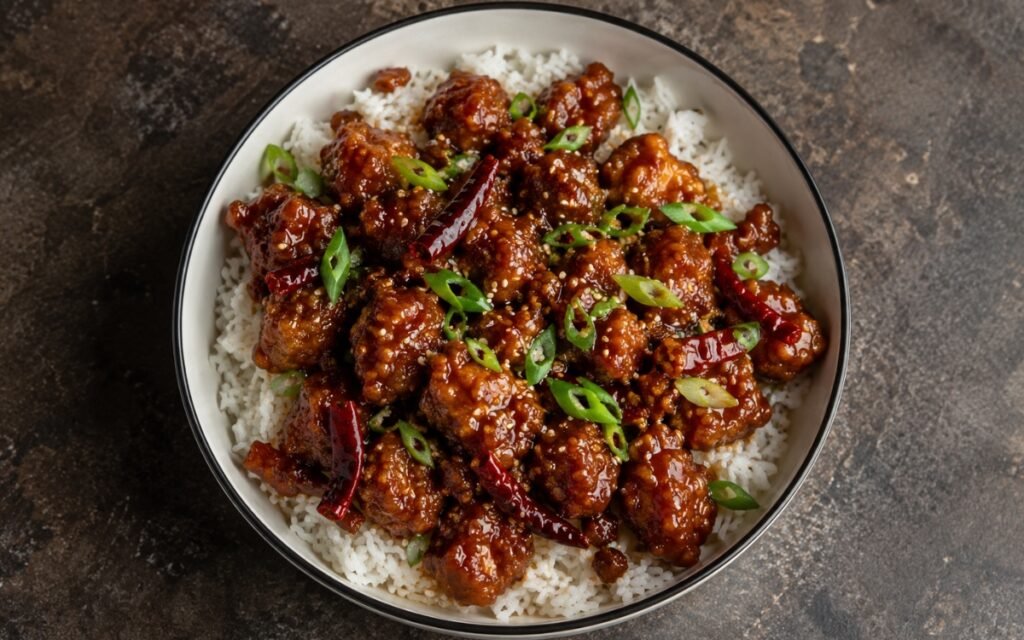
General Tso’s Chicken Rice Bowl
Chicken thighs marinated in Shaoxing wine and soy, dredged in 1:1 cornstarch and flour, fried golden, and tossed in a glossy brown sugar-soy-hoisin-dried chili sauce. Over jasmine rice with scallions and sesame seeds.
You might also like
You might also like
Classic Breakfast Biscuit Sandwich
A tender buttermilk biscuit filled with a browned breakfast sausage patty, soft folded scrambled egg, and melted American cheese.
Chinese Five-Spice Chicken Thighs
Chicken thighs scored and marinated in five-spice, soy, ginger, and garlic — seared undisturbed, roasted until crispy, rested. Warm, aromatic, crispy-skinned.
Easy Authentic Carbonara Pasta
Six ingredients, the 45-second cooling window, and continuous tossing — authentic Roman egg emulsion, no cream needed.

Pad Krapao — Thai Basil Stir-Fry
Ingredients
Method
- Cook the jasmine rice so it is fluffy and dry enough to support the stir-fry rather than wet or clumpy. Keep warm. For this dish, freshly cooked rice is ideal. Slightly drier rice gives a better final balance once the saucy pork is spooned on top. That deliberately drier rice consistency protects against the whole plate turning soggy once the glossy, sauced pork is spooned directly over it.
- Stir together the oyster sauce, fish sauce, light soy sauce, dark soy sauce, sugar, and water until combined. Roughly chop or pound the garlic and chilies together so they are coarse rather than finely pureed. If using shallots, slice them thinly. Pick the holy basil leaves and discard tough stems. Having everything ready matters because the stir-fry moves very quickly once it hits the pan. Keeping the garlic and chili mixture genuinely coarse, rather than a fine paste, is what lets each piece retain some real, distinct texture and bite once folded through the finished pork.
- Heat a wok or large skillet over high heat until very hot. Add the oil, then add the ground pork. Spread it out and let it sit briefly before stirring so it starts to brown and develop dark caramelized edges. Break it up into small crumbles and stir-fry until most of the moisture cooks off and the pork begins to fry in its own fat. This is one of the key turning points: do not rush to add sauce while the pork is still pale and wet. It should look lightly browned, concentrated, and slightly crisp in spots. That deliberate pause before stirring gives the pork’s own surface genuine, sustained contact with the hot pan — breaking it apart too early interrupts that contact before any real browning has the chance to develop.
- Add the garlic-chili mixture and the shallots, if using. Stir-fry for 30–60 seconds until fragrant. Do not let the garlic scorch black; it should smell sweet and sharp, not bitter. That brief, watched cooking window reflects how little margin coarsely chopped garlic actually has between fragrant and burnt — pushed even slightly further, it would introduce real bitterness straight into the finished dish.
- Pour in the sauce mixture and keep stir-frying over high heat. Cook until the sauce reduces and clings to the pork in a glossy coating rather than pooling thinly at the bottom. The mixture should look shiny and intense, with some darker caramelized bits around the edges of the pan. That real reduction, cooking until the sauce genuinely clings rather than pools, is what delivers the glossy, concentrated coating this dish depends on — a sauce pulled too early would leave the pork sitting in a thin, watery liquid instead.
- Add the holy basil and toss just until wilted, 15–30 seconds. Do not overcook the basil. It should collapse into the pork while still keeping its aroma. Remove the stir-fry from the heat as soon as the basil is wilted. That genuinely brief window protects the basil’s own distinctive aroma — holy basil loses real fragrance quickly under sustained heat, and pulling the pan the moment it wilts is what preserves that character right through to serving.
- In a separate pan, heat a generous layer of oil over medium-high to high heat. Fry the eggs one at a time or two at a time until the whites are set, the edges are deeply lacy and golden-brown, and the yolks remain runny. Spoon some hot oil over the whites if needed to help them set without flipping. Drain briefly. The egg should have crisp frilly edges and a fluid yolk that can run into the pork and rice. That genuinely generous layer of hot oil is what actively fries the egg’s own edges into their characteristic lacy, crisp texture — a thin film of oil alone couldn’t produce the same deep, frilly browning around the white.
- Divide the rice among 4 bowls or plates. Spoon the pad krapao over the rice and top each serving with one fried egg. Serve immediately. Serving without delay delivers the whole plate at its intended contrast — the pork’s own hot, glossy intensity and the egg’s crisp edges both change noticeably the longer everything sits.