
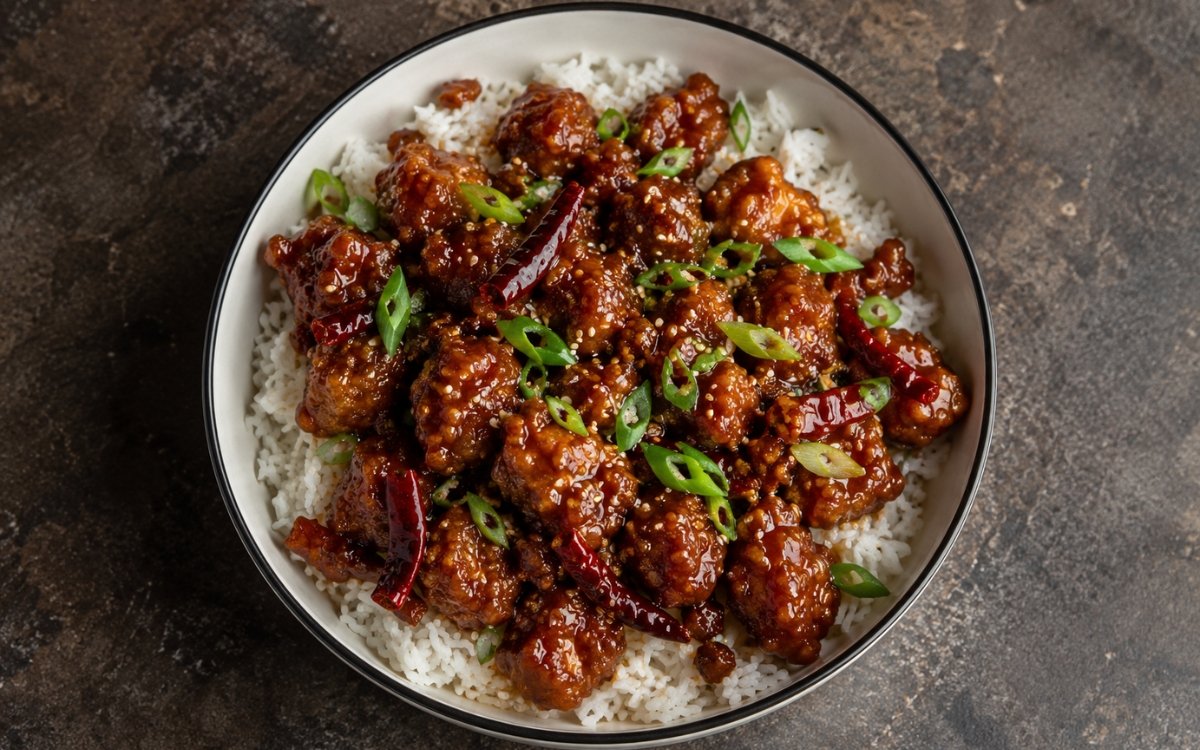
General Tso’s Chicken Rice Bowl
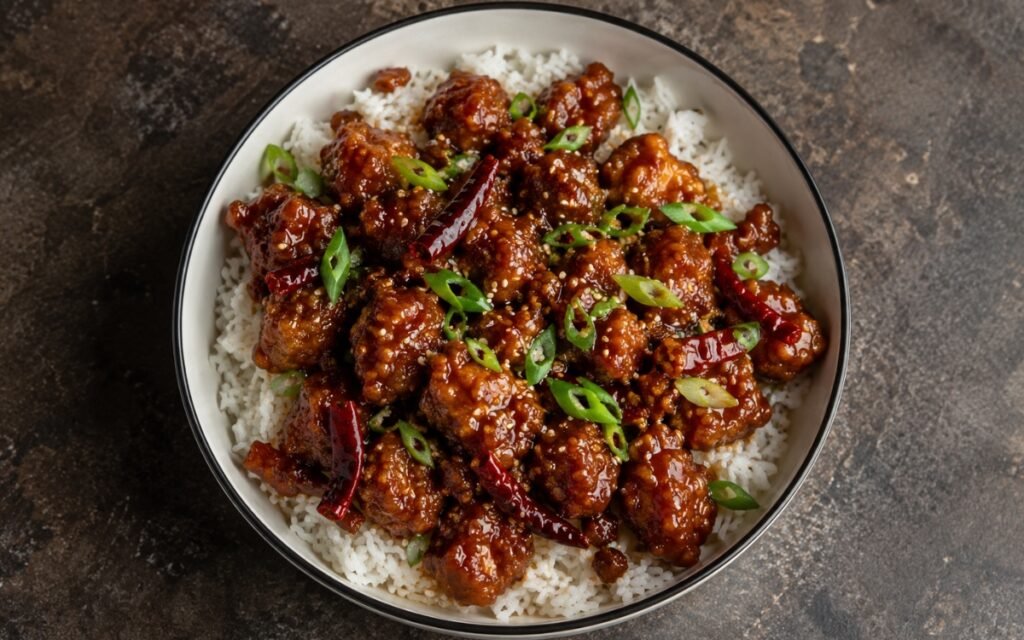
Chicken thighs cubed, marinated in ginger, garlic, soy sauce, Shaoxing wine, and salt — then dredged in the 1:1 cornstarch-flour mixture that produces the specific light, shattering crust that holds the General Tso’s sauce without dissolving into it. Two frying methods covered: shallow-pan frying for the accessible weeknight version where the chicken develops a golden crust in 2–3cm of oil; and deep frying for the restaurant-quality result where the completely submerged crust crisps on every surface simultaneously. The sauce built on chicken stock, soy, Shaoxing wine, rice vinegar, brown sugar, tomato paste, hoisin, and sesame oil — dried Chinese chilies, garlic, and ginger bloomed in the wok first — reduced, then thickened with a cornstarch slurry to the glossy, coating, specifically sticky consistency that makes General Tso’s sauce immediately recognisable. Jasmine rice cooked by the specific technique — rinsed, boiled immediately, cut to lowest heat, lid on for 15 minutes, rested 10 minutes undisturbed — that produces the separate, fluffy grains underneath the sauced chicken.
Prep Time : 25 min
Cook Time : 30 min
Servings : 4
25 min
30 min
4
Ingredients
For the Jasmine Rice
• 300g jasmine rice, uncooked
• 450ml water
• Pinch of fine sea salt
For the Chicken Marinade and Dredge
• 700g boneless, skinless chicken thighs, cut into 3–4cm bite-sized cubes
• 10g fresh ginger, finely grated
• 3 garlic cloves, minced
• 30ml soy sauce — this one on Amazon
• 30ml Shaoxing rice wine — this one on Amazon
• 1 tsp fine sea salt
• 60g cornstarch
• 60g all-purpose flour
• Neutral oil, for frying — approximately 500ml for shallow frying, 1.5–2 litres for deep frying
For the General Tso’s Sauce
• 120ml chicken stock
• 60ml soy sauce
• 30ml Shaoxing rice wine
• 30ml rice vinegar — this one on Amazon
• 70g light brown sugar
• 15g tomato paste
• 15g hoisin sauce — approximately 1 tbsp — this one on Amazon
• 2 tsp toasted sesame oil — this one on Amazon
Aromatics
• 4 garlic cloves, minced
• 15g fresh ginger, minced
• 6–8 dried Chinese red chilies, broken into rough pieces
Slurry
• 12g cornstarch
• 30ml cold water
For Garnish
• 4 scallions, thinly sliced
• Toasted sesame seeds
This post may contain affiliate links. As an Amazon Associate I earn from qualifying purchases, at no additional cost to you.
Directions
- Cook the Jasmine Rice
Rinse the 300g of jasmine rice under cold running water 2–3 times, swirling with your hand between each rinse, until the water runs noticeably clearer. After the final rinse, drain through a fine-mesh sieve until no water drips — complete drainage matters, because the cooking water ratio is calibrated to the dry-drained rice weight. Pour into a medium saucepan and add 450ml of cold water and a pinch of salt. Bring to a full rolling boil over high heat — watch it rather than leaving it, as the boil arrives quickly. The instant the boil is confirmed, reduce the heat to the absolute lowest possible setting. Cover tightly. Cook for exactly 15 minutes without lifting the lid at any point during cooking or resting — any lid-lifting releases the steam that is cooking the rice above the water line. After 15 minutes, turn the heat off completely. Allow the covered saucepan to rest, still lidded, for 10 minutes. Do not lift the lid during this rest period either — the residual steam completes the cooking of any remaining moisture and evenly hydrates the upper layers of the rice. After the full 10-minute rest, remove the lid and fluff with a fork. - Marinate the Chicken
Cut the 700g of chicken thighs into 3–4cm bite-sized cubes. Chicken thighs are the specifically correct cut for General Tso’s — their fat content keeps each piece moist and juicy through the high-heat frying and the subsequent sauce tossing, where lean breast meat would tighten and dry. In a large bowl, combine the 10g of grated ginger, 3 minced garlic cloves, 30ml of soy sauce, 30ml of Shaoxing wine, and 1 tsp of fine sea salt. Add the chicken cubes and toss to coat every piece. Cover and allow to marinate for 15–30 minutes at room temperature. The marinade’s Shaoxing wine begins mildly tenderising the surface proteins; the soy provides flavour penetration; the ginger and garlic contribute aromatic character that is present throughout the chicken’s interior rather than only on the sauce-coated surface. - Dredge the Chicken
In a wide, shallow bowl, whisk together the 60g of cornstarch and 60g of all-purpose flour until combined. The 1:1 ratio is the specific balance for General Tso’s chicken — pure cornstarch produces a very thin, very crisp but fragile crust; pure flour produces a thicker, bread-like coating that absorbs the sauce instead of being coated by it. Together they produce a crust that is light enough to shatter on the first bite, thick enough to hold the sauce coating without dissolving, and specifically with the slight chew at the interior layer that makes the finished chicken texturally interesting. Remove the chicken pieces from the marinade one by one, allowing excess marinade to drip briefly, and toss each piece in the dredge mixture — pressing gently to ensure all surfaces are coated. Shake off any thick excess powder. Place the dredged pieces on a plate or wire rack and allow to rest for 5 minutes — the brief rest allows the cornstarch and flour to absorb the marinade’s surface moisture and adhere more completely, reducing the amount of crust that falls off during frying. - Shallow Frying Method
For the accessible weeknight approach: pour neutral oil into a large, heavy-bottomed skillet or wok to a depth of approximately 2.5–3cm. Heat to 175–180°C over medium-high heat. Working in batches of 8–10 pieces — never overcrowding, as dropped temperature produces oil-absorbing rather than crisping — carefully lower the dredged chicken into the oil. Fry for 3–4 minutes on the first side without moving, until the crust is deeply golden and set. Turn each piece and fry for 2–3 minutes on the second side. The crust should be a deep amber-gold on both sides. Transfer to a wire rack — not paper towels, which trap steam and soften the bottom crust. Shallow frying produces a slightly more uneven crust on the curved sides between the flat faces, but this is acceptable and the technique requires significantly less oil. - Deep Frying Method
For the restaurant-quality result where every surface of every cube is simultaneously crisped: fill a deep pot or wok with 1.5–2 litres of neutral oil. Heat to 175–180°C — verified with a thermometer. Working in batches of 8–10 pieces, lower the dredged chicken into the oil using a spider strainer or slotted spoon. Fry for 3–4 minutes total, stirring occasionally to ensure all surfaces contact the hot oil, until the entire surface of each cube is uniformly deep golden. The complete submersion produces an even, sealed crust on every face simultaneously — producing the specific texture that General Tso’s chicken has at its best in restaurant versions. Transfer to a wire rack. For an extra-crispy result, allow the first-fried batch to rest for 2 minutes and then return to 190°C oil for 60–90 seconds — the double-fry drives additional moisture from the crust and produces a specifically more shattered texture. - Build the General Tso’s Sauce
In a small bowl, combine all the sauce components together before beginning to cook — the sauce builds quickly in the wok and pre-combining ensures no component is missed in the rapid sequence: 120ml of chicken stock, 60ml of soy sauce, 30ml of Shaoxing wine, 30ml of rice vinegar, 70g of brown sugar, 15g of tomato paste, 15g of hoisin sauce, and 2 tsp of sesame oil. Stir until the tomato paste is fully incorporated and the mixture is uniform. Heat 1 tbsp of neutral oil in a wok over medium heat. Add the broken dried Chinese chilies and stir-fry for approximately 15 seconds — the oil-blooming of the dried chilies releases their fat-soluble capsaicin and aromatic compounds into the surrounding oil in a way that dry spice addition cannot achieve. At 15 seconds they should be fragrant and slightly darkened without burning — burnt dried chilies produce bitterness throughout the sauce. Add the 4 minced garlic cloves and 15g of minced ginger simultaneously. Stir-fry for 20–30 seconds, pressing the aromatics against the wok surface, until fragrant. Pour the combined sauce mixture into the wok. Stir to incorporate the aromatics. Bring to a simmer and cook for 2–3 minutes, stirring occasionally, until the brown sugar has dissolved completely and the sauce has reduced slightly and darkened from its initial raw-sauce colour to a deeper, glossy mahogany. In a small bowl, whisk together the 12g of cornstarch and 30ml of cold water until the slurry is completely smooth with no lumps. While stirring the simmering sauce continuously, pour the slurry in a steady stream into the sauce. Cook, stirring continuously, for 30–60 seconds until the sauce becomes visibly glossy and thick enough to coat the back of a spoon — the cornstarch gelatinising within this window and providing the specific sticky, coating consistency of General Tso’s sauce. - Toss the Chicken in the Sauce and Serve
Add all the fried chicken pieces to the wok with the sauce. Toss continuously with a wok spatula for 1–2 minutes, turning every piece through the sauce until every surface is fully and evenly coated in the glossy, sticky sauce. Work quickly — extended tossing after the sauce has thickened begins softening the crust progressively. The correctly finished chicken should show a complete, glossy sauce coating on every surface while retaining audible crunch when a piece is bitten. Divide the jasmine rice among four wide bowls. Top each bowl with the General Tso’s chicken, spooning any additional sauce from the wok over each portion. Garnish generously with sliced scallions and toasted sesame seeds. Serve immediately.
*Notes :
- The dried Chinese red chilies — small, thin, intensely red dried chilies available at Asian grocery stores — are an aromatic and heat-providing component of the General Tso’s sauce rather than an eating component. Their fat-soluble capsaicin and aromatic compounds bloom into the oil during the 15-second stir-fry, distributing their character through the entire sauce base. The chilies themselves remain in the finished dish as a visual element and a source of occasional direct heat for those who bite into them — they are typically not eaten in restaurant versions but serve this visual and aromatic function.
- Shaoxing wine appears at two stages in this recipe — in the marinade and in the sauce — and its contribution at each stage is distinct. In the marinade it mildly tenderises the chicken’s surface proteins and provides an aromatic fermented grain depth that soy sauce alone does not. In the sauce it contributes the same fermented depth to the sauce’s complex background flavour alongside the hoisin. Together these two applications produce the specifically Chinese-restaurant depth that makes General Tso’s sauce more compelling than a simple sweet-soy preparation.
Why This Recipe Works
This recipe works because it addresses the two most important quality factors in General Tso’s chicken: the chicken is dredged in the 1:1 cornstarch-flour ratio that produces a crust strong enough to survive sauce tossing; and the sauce is built in the specific sequence — dried chilies bloomed in oil, aromatics added, sauce components combined, then thickened with a separately mixed slurry — that produces the glossy, coating consistency. The rice is cooked by the technique that produces separate, fluffy grains capable of carrying the sauce without becoming gummy.
Ingredient Breakdown
1:1 Cornstarch and Flour Dredge
The crust specification — cornstarch for crispness and lightness, flour for structure and chew; together producing a crust that shatters on the bite while holding the sauce coating without dissolving.
Two Frying Methods (Shallow and Deep)
The technique choice — shallow for accessible weeknight cooking; deep for the uniformly crisped restaurant-quality result on every surface simultaneously.
Pre-Combined Sauce Mixture
The speed management technique — all sauce components combined before the wok is heated, preventing rushed additions during the rapid cooking sequence.
Dried Chinese Chilies (Bloomed in Oil First)
The aromatic heat delivery — fat-soluble capsaicin released directly into the cooking oil distributing through the entire sauce rather than sitting as dry flecks.
Cornstarch Slurry (Added While Stirring)
The thickening agent — cold water slurry stirred continuously into the simmering sauce producing the glossy, sticky coating consistency.
Flavor Structure Explained
This General Tso’s chicken rice bowl follows a layered balance model:
- Sweet-savory sauce core (brown sugar, soy sauce, hoisin)
- Bright tangy contrast (rice vinegar, tomato paste)
- Warm spiced depth (dried chili, ginger)
- Deep umami foundation (stock, soy, hoisin)
- Crispy-sticky texture contrast (fried chicken, glazed sauce)
The sauce defines the dish with a concentrated balance of sweetness, savoriness, and fermented depth that coats every piece of chicken. Rice vinegar and tomato acidity sharpen the profile, preventing the sweetness from becoming heavy or flat. Dried chilies and ginger provide warmth that gradually builds through the meal. Soy, hoisin, and stock layer in the savory backbone that makes the sauce feel rich and satisfying rather than simply sweet. The defining pleasure comes from texture: crisp fried chicken beneath a glossy, sticky glaze, creating a contrast that is as important as the flavor itself.
Common Mistakes to Avoid
- Using Only Cornstarch in the Dredge – Pure cornstarch produces a fragile crust that partially dissolves into the sauce during tossing. The 1:1 flour addition provides structural integrity.
- Not Resting the Dredged Chicken – Immediately frying after dredging produces crust that falls off during frying. The 5-minute rest allows adhesion.
- Overcrowding the Oil – Overcrowded frying drops the oil temperature and produces pale, greasy chicken rather than golden, crunchy crust.
- Adding the Slurry to Cool Sauce – The cornstarch slurry requires simmering temperature to activate — always add to sauce that is actively simmering while stirring continuously.
- Not Tossing All the Chicken Simultaneously – Tossing in batches produces unevenly coated chicken. Always add all the fried chicken to the sauce at once.
- Not Serving Immediately – The sauce begins softening the crust within minutes of tossing. Always toss and serve immediately.
Variations
Spicier Version
Increase the dried chilies to 12–14 and add 1 tsp of chili paste to the sauce mixture — the heat is significantly more assertive and building throughout every bite.
With Broccoli
Add 200g of small broccoli florets to the wok after the sauce has been made — stir-fry for 2 minutes until tender-crisp before adding the fried chicken and tossing together. The broccoli’s slight bitterness specifically complements the sweet-savoury sauce.
Double-Fried Version
Fry at 175°C for 3–4 minutes, rest on a rack for 2 minutes, then return to 190°C oil for 90 seconds. The double fry drives additional moisture from the crust and produces a specifically more shattered, aggressive crunch.
Baked Version
Arrange dredged chicken on a wire rack over a baking sheet, spray generously with oil, and bake at 220°C for 20–25 minutes, turning once. Less crisp than fried but acceptable as a lighter alternative.
Storage & Make-Ahead
Fried chicken, without the sauce, can be refrigerated for up to 2 days. Before serving, re-crisp it in a 200°C oven or an air fryer for about 5 minutes, then toss it with freshly made sauce.
General Tso’s sauce, without the chicken, can be refrigerated in a sealed jar for up to 5 days. Reheat it gently in a wok before adding the fried chicken.
Jasmine rice can be refrigerated for up to 4 days. Reheat it covered with a splash of water to restore its texture.
The assembled bowl is not suitable for storage. For the best texture and flavor, toss together only the amount that will be eaten immediately.
Frequently Asked Questions
Why Shaoxing wine in both the marinade and the sauce?
In the marinade, Shaoxing tenderises the surface proteins and contributes aromatic fermented depth to the chicken’s interior. In the sauce, it contributes the same fermented grain character to the background sauce flavour. Both applications serve distinct purposes — the marinade’s Shaoxing seasons the chicken from the inside; the sauce’s Shaoxing provides complexity to the overall flavour.
What is the difference between shallow and deep frying for this recipe?
Shallow frying in 2.5–3cm of oil produces a golden crust on the flat faces that contact the oil but slightly less even coverage on the curved sides between contact points. Deep frying completely submerges each cube — the crust crisps on every surface simultaneously, producing the uniformly golden, completely sealed crust of restaurant versions. Both produce good results; deep frying produces the specifically better texture.
Why rest the dredged chicken before frying?
The brief 5-minute rest allows the cornstarch and flour to absorb the marinade’s surface moisture and bond more firmly to the chicken’s surface. Immediately fried chicken loses more crust in the oil than rested chicken — the rest significantly improves crust adhesion.
Why pre-combine the sauce components?
The wok’s sequence — chili bloom, aromatics, sauce addition — moves quickly at temperature. Pre-combining the sauce in one bowl means a single, decisive pour at the correct moment rather than 7–8 individual additions during rapid cooking where each could be missed or added in the wrong sequence.
Why is the slurry added while stirring continuously?
Cornstarch slurry added to a stationary sauce creates lumps — the starch gelatinises on contact with the hot liquid before it can disperse. Continuous stirring keeps the sauce moving, dispersing the starch evenly throughout the liquid before gelatinisation locks it in place.
Nutrition Facts
( per serving )
Calories
~820 kcal
Protein
48 g
Fat
28 g
Carbs
96 g
Calories
~820 kcal
Protein
48 g
Fat
28 g
Carbs
96 g
Related Recipes
Related Recipes

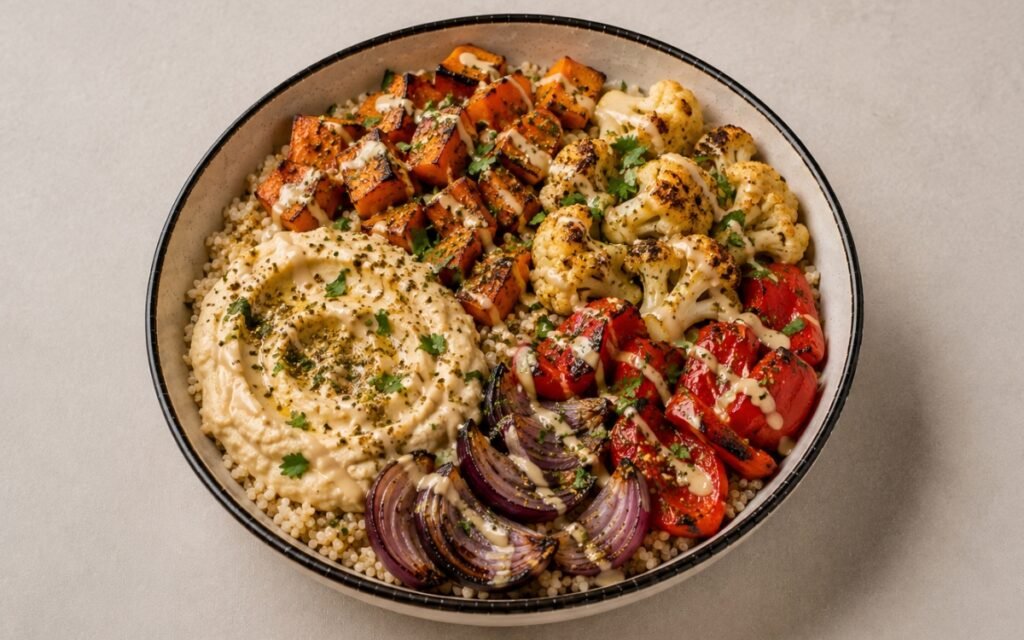
Roasted Veggie Quinoa Bowl
Za’atar-roasted sweet potatoes, cauliflower, and peppers over quinoa with creamy hummus and lemon-tahini drizzle.
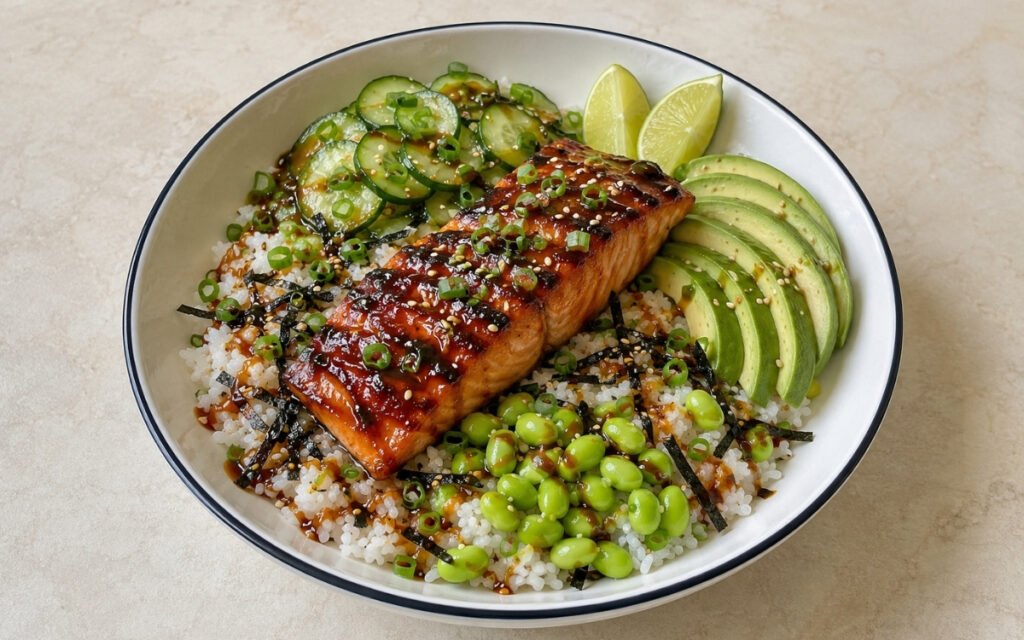
Miso Glazed Salmon Rice Bowl
Miso-glazed salmon with caramelized edges over sushi rice, paired with avocado, edamame, and pickled cucumber.
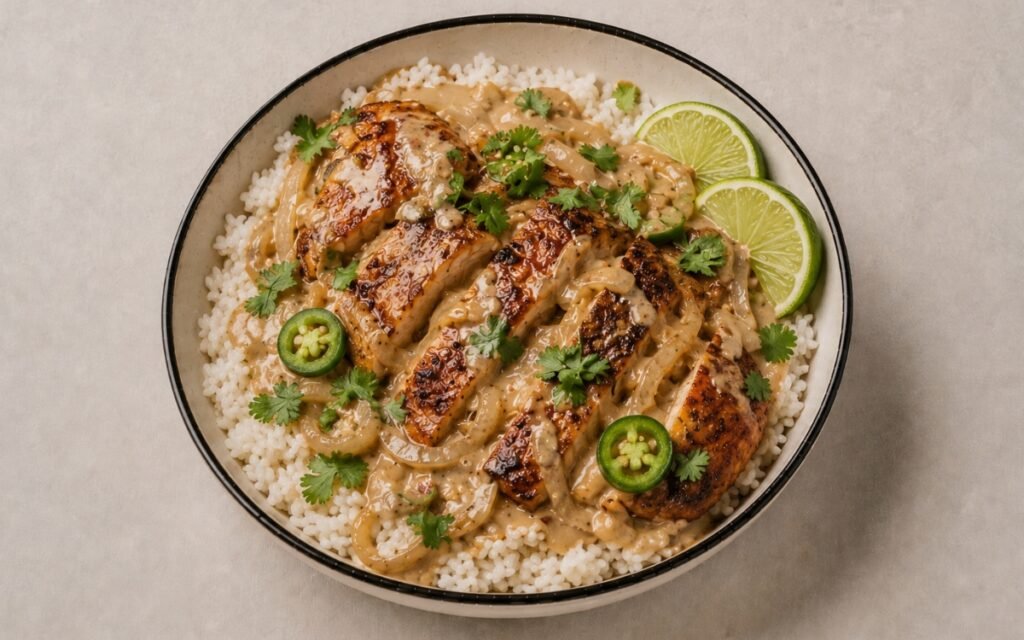
Creamy Coconut Chicken Rice Bowl
Seared chicken thighs simmered in coconut cream, ginger, lime, and soy sauce built in the same skillet — over coconut-lime jasmine rice. 45 minutes and better the next day.
You might also like
You might also like
Crispy Buffalo Chicken Tenders
Chicken tenderloins breaded in three stages, fried until golden, oven-finished — tossed in buttery buffalo sauce just before serving. Crispy and tangy.
Chicken Fries
Long thin chicken breast strips coated in a craggy panko-breadcrumb crust, deep-fried until golden and crisp, served with a savoury dipping sauce.
Chipotle Grilled Chicken Legs
Chicken leg quarters deeply scored and marinated in thick chipotle adobo paste — grilled two-zone style, rested, finished with cilantro and lime. Smoky and deeply charred.
General Tso’s Chicken Rice Bowl
Ingredients
Method
- Rinse the 300g of jasmine rice under cold running water 2–3 times, swirling with your hand between each rinse, until the water runs noticeably clearer. After the final rinse, drain through a fine-mesh sieve until no water drips — complete drainage matters, because the cooking water ratio is calibrated to the dry-drained rice weight. Pour into a medium saucepan and add 450ml of cold water and a pinch of salt. Bring to a full rolling boil over high heat — watch it rather than leaving it, as the boil arrives quickly. The instant the boil is confirmed, reduce the heat to the absolute lowest possible setting. Cover tightly. Cook for exactly 15 minutes without lifting the lid at any point during cooking or resting — any lid-lifting releases the steam that is cooking the rice above the water line. After 15 minutes, turn the heat off completely. Allow the covered saucepan to rest, still lidded, for 10 minutes. Do not lift the lid during this rest period either — the residual steam completes the cooking of any remaining moisture and evenly hydrates the upper layers of the rice. After the full 10-minute rest, remove the lid and fluff with a fork.
- Cut the 700g of chicken thighs into 3–4cm bite-sized cubes. Chicken thighs are the specifically correct cut for General Tso’s — their fat content keeps each piece moist and juicy through the high-heat frying and the subsequent sauce tossing, where lean breast meat would tighten and dry. In a large bowl, combine the 10g of grated ginger, 3 minced garlic cloves, 30ml of soy sauce, 30ml of Shaoxing wine, and 1 tsp of fine sea salt. Add the chicken cubes and toss to coat every piece. Cover and allow to marinate for 15–30 minutes at room temperature. The marinade’s Shaoxing wine begins mildly tenderising the surface proteins; the soy provides flavour penetration; the ginger and garlic contribute aromatic character that is present throughout the chicken’s interior rather than only on the sauce-coated surface.
- In a wide, shallow bowl, whisk together the 60g of cornstarch and 60g of all-purpose flour until combined. The 1:1 ratio is the specific balance for General Tso’s chicken — pure cornstarch produces a very thin, very crisp but fragile crust; pure flour produces a thicker, bread-like coating that absorbs the sauce instead of being coated by it. Together they produce a crust that is light enough to shatter on the first bite, thick enough to hold the sauce coating without dissolving, and specifically with the slight chew at the interior layer that makes the finished chicken texturally interesting. Remove the chicken pieces from the marinade one by one, allowing excess marinade to drip briefly, and toss each piece in the dredge mixture — pressing gently to ensure all surfaces are coated. Shake off any thick excess powder. Place the dredged pieces on a plate or wire rack and allow to rest for 5 minutes — the brief rest allows the cornstarch and flour to absorb the marinade’s surface moisture and adhere more completely, reducing the amount of crust that falls off during frying.
- For the accessible weeknight approach: pour neutral oil into a large, heavy-bottomed skillet or wok to a depth of approximately 2.5–3cm. Heat to 175–180°C over medium-high heat. Working in batches of 8–10 pieces — never overcrowding, as dropped temperature produces oil-absorbing rather than crisping — carefully lower the dredged chicken into the oil. Fry for 3–4 minutes on the first side without moving, until the crust is deeply golden and set. Turn each piece and fry for 2–3 minutes on the second side. The crust should be a deep amber-gold on both sides. Transfer to a wire rack — not paper towels, which trap steam and soften the bottom crust. Shallow frying produces a slightly more uneven crust on the curved sides between the flat faces, but this is acceptable and the technique requires significantly less oil.
- For the restaurant-quality result where every surface of every cube is simultaneously crisped: fill a deep pot or wok with 1.5–2 litres of neutral oil. Heat to 175–180°C — verified with a thermometer. Working in batches of 8–10 pieces, lower the dredged chicken into the oil using a spider strainer or slotted spoon. Fry for 3–4 minutes total, stirring occasionally to ensure all surfaces contact the hot oil, until the entire surface of each cube is uniformly deep golden. The complete submersion produces an even, sealed crust on every face simultaneously — producing the specific texture that General Tso’s chicken has at its best in restaurant versions. Transfer to a wire rack. For an extra-crispy result, allow the first-fried batch to rest for 2 minutes and then return to 190°C oil for 60–90 seconds — the double-fry drives additional moisture from the crust and produces a specifically more shattered texture.
- In a small bowl, combine all the sauce components together before beginning to cook — the sauce builds quickly in the wok and pre-combining ensures no component is missed in the rapid sequence: 120ml of chicken stock, 60ml of soy sauce, 30ml of Shaoxing wine, 30ml of rice vinegar, 70g of brown sugar, 15g of tomato paste, 15g of hoisin sauce, and 2 tsp of sesame oil. Stir until the tomato paste is fully incorporated and the mixture is uniform. Heat 1 tbsp of neutral oil in a wok over medium heat. Add the broken dried Chinese chilies and stir-fry for approximately 15 seconds — the oil-blooming of the dried chilies releases their fat-soluble capsaicin and aromatic compounds into the surrounding oil in a way that dry spice addition cannot achieve. At 15 seconds they should be fragrant and slightly darkened without burning — burnt dried chilies produce bitterness throughout the sauce. Add the 4 minced garlic cloves and 15g of minced ginger simultaneously. Stir-fry for 20–30 seconds, pressing the aromatics against the wok surface, until fragrant. Pour the combined sauce mixture into the wok. Stir to incorporate the aromatics. Bring to a simmer and cook for 2–3 minutes, stirring occasionally, until the brown sugar has dissolved completely and the sauce has reduced slightly and darkened from its initial raw-sauce colour to a deeper, glossy mahogany. In a small bowl, whisk together the 12g of cornstarch and 30ml of cold water until the slurry is completely smooth with no lumps. While stirring the simmering sauce continuously, pour the slurry in a steady stream into the sauce. Cook, stirring continuously, for 30–60 seconds until the sauce becomes visibly glossy and thick enough to coat the back of a spoon — the cornstarch gelatinising within this window and providing the specific sticky, coating consistency of General Tso’s sauce.
- Add all the fried chicken pieces to the wok with the sauce. Toss continuously with a wok spatula for 1–2 minutes, turning every piece through the sauce until every surface is fully and evenly coated in the glossy, sticky sauce. Work quickly — extended tossing after the sauce has thickened begins softening the crust progressively. The correctly finished chicken should show a complete, glossy sauce coating on every surface while retaining audible crunch when a piece is bitten. Divide the jasmine rice among four wide bowls. Top each bowl with the General Tso’s chicken, spooning any additional sauce from the wok over each portion. Garnish generously with sliced scallions and toasted sesame seeds. Serve immediately.