
Salmon Poke Bowl
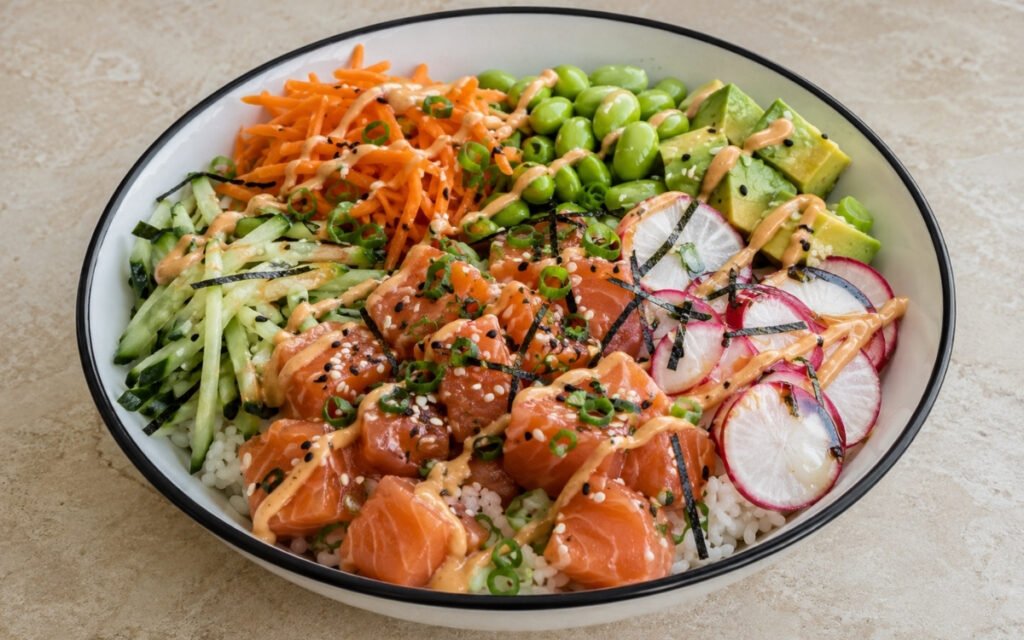
Fresh, sushi-grade salmon marinated in a savory soy-sesame sauce, served over seasoned sushi rice with crisp vegetables, creamy avocado, and a drizzle of spicy mayo. This Hawaiian-inspired bowl brings restaurant-quality poke to your home kitchen with vibrant colors, bold flavors, and satisfying textures in every bite. Twenty minutes of prep, fifteen minutes of cook time, and you have a bowl that looks like it took considerably longer.
Prep Time : 20 min
Cook Time : 15 min
Servings : 4
20 min
15 min
4
Ingredients
For the Salmon Poke
• 450g sushi-grade salmon, cut into 2cm cubes
• 45ml soy sauce
• 15ml sesame oil — this one on Amazon
• 15ml rice vinegar
• 10g honey
• 5g fresh ginger, grated
• 2 garlic cloves, minced
• 10g sesame seeds
• 2 green onions, sliced
For the Sushi Rice
• 300g sushi rice, uncooked — this one on Amazon
• 540ml water
• 45ml rice vinegar
• 15g sugar
• 6g salt
For the Spicy Mayo
• 80g Japanese mayonnaise — this one on Amazon
• 15g sriracha sauce
• 5ml lime juice
For the Bowl
• 150g cucumber, julienned into matchsticks
• 100g radishes, thinly sliced
• 150g shelled edamame
• 1 ripe avocado, diced (about 150g)
• 100g carrot, shredded
• 2 green onions, thinly sliced on diagonal
• 10g sesame seeds
• 20g nori strips — this one on Amazon
This post may contain affiliate links. As an Amazon Associate I earn from qualifying purchases, at no additional cost to you.
Directions
- Prepare the Sushi Rice
Rinse 300g sushi rice under cold running water in a fine mesh strainer, working the grains gently with your fingers for 2–3 minutes until the water runs completely clear. This rinsing step removes the excess surface starch that would otherwise make sushi rice sticky and clumped rather than glossy and individual. Drain thoroughly. Combine the rinsed rice and 480ml cold water in a medium, heavy-bottomed pot with a tight-fitting lid. Bring to a boil over high heat, then immediately reduce to the lowest possible heat, cover tightly, and simmer for 15 minutes without lifting the lid at any point. Remove from heat and let stand covered for a further 10 minutes — the residual steam completes the cooking and equalizes moisture from bottom to top. While the rice rests, combine the 30ml rice vinegar, 15g sugar, and 5g salt in a small bowl and stir until the sugar and salt are fully dissolved. When the rice is ready, fluff gently with a rice paddle or fork using folding strokes rather than stirring. Pour the vinegar mixture over the rice in a thin stream while continuing to fold, distributing it evenly without crushing the grains. The rice should look glossy and taste gently sweet-sour with a pleasant stickiness. Spread on a flat tray or leave in the uncovered pot to cool slightly — poke bowls are assembled with warm, not hot rice. - Make the Salmon Marinade
In a medium bowl large enough to hold the salmon, whisk together the soy sauce, sesame oil, rice vinegar, honey, grated ginger, and minced garlic until fully combined and the honey is dissolved. This marinade is a calibrated balance of four distinct flavor notes — salt and umami from the soy, nuttiness from the sesame oil, brightness from the rice vinegar, and sweetness from the honey — that together create the distinctive flavor of authentic poke without any single element dominating. The grated ginger and garlic provide the aromatic savory base that grounds the four primary flavors. Taste the marinade before adding the salmon — it should taste pleasantly bold, slightly sweet, and deeply savory. Adjust the honey if more sweetness is needed or add an additional small amount of rice vinegar if it needs brightening. - Marinate the Salmon
The quality of the salmon is the single most important variable in this recipe. Sushi-grade or sashimi-grade salmon from a reputable fishmonger is non-negotiable — this fish will be served with minimal cooking from the marinade acid, and the quality, freshness, and handling of the fish determines both the safety and the eating quality of the finished bowl. Do not use ordinary supermarket salmon labelled simply as “fresh.” When in doubt, ask your fishmonger directly whether the fish is suitable for raw consumption. Cut the salmon into uniform 2cm cubes — consistent size ensures even marination and a uniform texture throughout. Add the cubed salmon to the marinade and fold gently with a spatula or your hands, ensuring every piece is evenly coated. Cover and refrigerate for exactly 15 minutes. This timing is not arbitrary — 15 minutes allows the marinade to penetrate the surface of each cube and season the salmon thoroughly without the acid in the rice vinegar beginning to denature the proteins. Beyond 20–25 minutes, the texture of the salmon begins to change noticeably, becoming firmer and slightly opaque at the edges as the acid chemically cooks the surface — this is the same process as making ceviche, and it is not what poke should be. Set a timer. - Make the Spicy Mayo
In a small bowl, whisk together the Japanese mayonnaise, sriracha, and lime juice until smooth and fully incorporated. The lime juice is a small but important addition that distinguishes this spicy mayo from a simple sriracha-mayo combination — its citrus acidity brightens the rich, egg-heavy mayonnaise and sharpens the sriracha’s heat into something more vivid and defined. Japanese mayonnaise, specifically Kewpie brand, is strongly preferred over Western mayonnaise — its higher egg yolk ratio, rice vinegar base, and slight umami note produce a fundamentally different and superior result in this application. Transfer to a squeeze bottle for controlled drizzling. If a squeeze bottle is unavailable, a small ziplock bag with one corner snipped works equally well and produces the same decorative drizzle effect. Refrigerate until assembly. - Prepare the Vegetables
While the salmon marinates, prepare all bowl components. Julienne the cucumber into matchsticks — thin, uniform strips approximately 5cm long and 3–4mm wide. Unpeeled cucumber adds color and a slightly bitter edge; peeled cucumber is cleaner in flavor — both work. Slice the radishes as thinly as possible, ideally on a mandoline, for the delicate, almost translucent appearance that makes radishes visually striking in a bowl. Dice the avocado into pieces slightly larger than the salmon cubes — the avocado should have presence and be clearly distinguishable rather than disappearing into the bowl. Shred the carrot on the large holes of a box grater or with a julienne peeler. If the edamame is frozen, blanch briefly in boiling water for 2 minutes and drain. Slice the green onions thinly on a diagonal — the angled cut exposes more of the interior of each slice and is both the visually correct cut for this bowl and the one that produces the most pleasant bite. - Assemble the Bowls
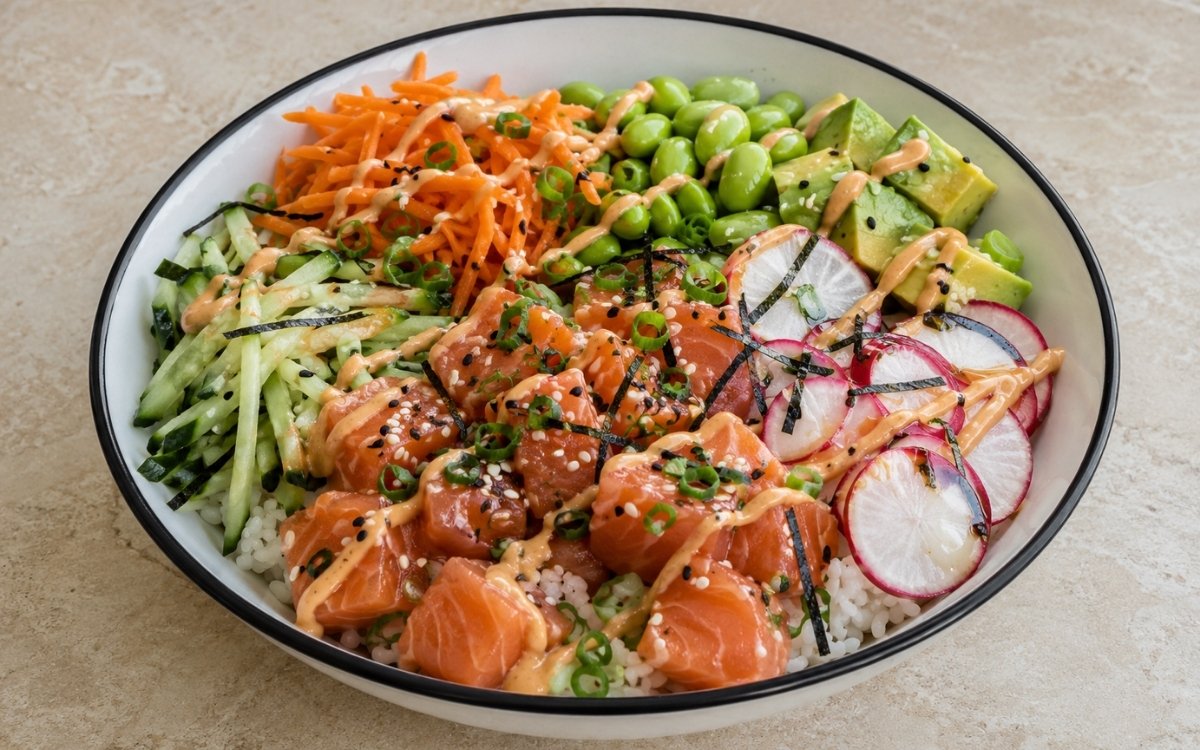
Divide the seasoned sushi rice evenly among four wide, shallow bowls — the surface area matters for this bowl style, as the visual composition depends on all components being clearly visible from above. The rice goes in as a base covering the bottom of the bowl. Arrange the marinated salmon, julienned cucumber, sliced radishes, edamame, diced avocado, and shredded carrot in distinct, separate sections on top of the rice — work around the bowl placing each component in its own clearly defined area rather than mixing or scattering. This sectioned arrangement is what gives a poke bowl its characteristic visual identity: a mosaic of colors, textures, and shapes, each component visible and identifiable. Sprinkle the sesame seeds over the entire bowl from a height to distribute them evenly, then add the sliced green onions. Drizzle the spicy mayo in a zigzag pattern across the bowl from a squeeze bottle or spoon — enough to cover most of the components with a thin line rather than pooling in one area. Tuck or scatter the nori strips across the top. Serve immediately — this bowl does not hold well once assembled.
*Notes :
- Sourcing sushi-grade salmon is the step that many home cooks skip or approximate, and it is the step that cannot be compromised. “Sushi-grade” is not a formally regulated term in most countries, but a reputable fishmonger using it means the fish has been handled at temperatures and under conditions that make it appropriate for raw consumption. In practice, this usually means the fish was frozen at very low temperature at sea immediately after catch — freezing at -20°C for 7 days or -35°C for 15 hours kills parasites that can be present in wild salmon. Farm-raised Atlantic salmon, which is the most commonly available sushi-grade salmon, carries lower parasite risk than wild Pacific salmon. If you are preparing this for guests with compromised immune systems, pregnant guests, or young children, the brief searing option noted in the recipe provides an additional safety margin.
- Spicy mayonnaise is available ready-made in most Asian grocery stores and increasingly in mainstream supermarkets. Making your own takes 30 seconds: combine 60g Japanese mayonnaise (Kewpie brand if available — it is richer and more umami-forward than Western mayo) with 15–20g sriracha and stir. Adjust the sriracha quantity to heat preference. Kewpie mayonnaise in particular has a dramatically better flavor than standard Western mayonnaise in this application — its egg-yolk richness and mild sweetness are specifically well-suited to Japanese-inspired dishes.
- Sushi rice vinegar seasoning is added while the rice is still warm for a specific reason — warm rice absorbs the vinegar mixture more readily and the folding motion distributes it more evenly than cold rice, which resists absorption and can leave sour patches. The rice should be warm but not hot when assembled with the cold marinated salmon — hot rice partially cooks the fish from below.
Why This Recipe Works
This recipe works because it applies the two principles of authentic Hawaiian poke — quality raw fish and a balanced soy-sesame marinade — to a bowl format that adds textural and nutritional completeness through the surrounding vegetables and seasoned rice.
The 15-minute marination window is the critical timing that keeps the salmon in its ideal state: seasoned and flavorful at the surface without any textural compromise from over-marination.
The sectioned bowl assembly ensures every component maintains its individual identity visually and texturally, which is what gives the bowl its satisfying, varied eating experience — no two forkfuls need to be identical.
Ingredient Breakdown
Sushi-Grade Salmon
The defining ingredient — quality and freshness are the entire foundation of the dish. Non-negotiable.
Soy Sauce
The primary seasoning of the marinade — delivers salt, umami, and the savory depth that makes poke’s flavor immediately recognizable.
Sesame Oil
Provides the distinctive nutty, toasted aromatic quality of Asian-inspired marinades — a small quantity with a large flavor impact.
Rice Vinegar
Mild, slightly sweet acidity that brightens the marinade without overwhelming — the acid that technically begins marinating the fish.
Honey
Natural sweetness that rounds the soy’s saltiness and creates the balanced sweet-savory character of authentic poke.
Fresh Ginger and Garlic
Aromatic savory base notes that give the marinade warmth and depth without competing with the salmon’s own flavor.
Sushi Rice Seasoned with Vinegar
The starchy, glossy base that provides the neutral, slightly tangy foundation the marinated fish and vegetables rest on.
Spicy Mayo
The richness element — creamy, slightly spicy, the finishing drizzle that ties all bowl components together.
Nori Strips
Provide the clean oceanic flavor that connects the bowl to its Japanese and Hawaiian heritage.
Flavor Structure Explained
This poke bowl follows a layered balance model:
- Neutral base (seasoned rice)
- Dominant savory-umami core (marinated salmon)
- Fresh crisp contrast (cucumber, radish, carrot, edamame)
- Creamy richness (avocado)
- Sweet-heat binding layer (spicy mayo)
Seasoned rice establishes a quiet, slightly tangy foundation that supports without competing. Marinated salmon defines the core with savory umami, layered with soy depth, sesame aromatics, and gentle sweetness. Raw vegetables provide freshness and textural contrast — crisp, clean, and intentionally mild to balance the fish. Avocado softens the profile with creamy richness, rounding sharper edges. Spicy mayo ties everything together, adding concentrated sweetness, heat, and fat that elevates the bowl from light to satisfying. Sesame seeds and nori finish the structure with nutty crunch and subtle oceanic depth, completing the composition.
Common Mistakes to Avoid
- Over-marinating the Salmon – Beyond 20 minutes the acid begins to denature the proteins and the texture changes. Set a timer and pull the salmon at exactly 15 minutes.
- Using Non-Sushi-Grade Fish – The salmon will be served essentially raw. Quality and handling matter in a way they do not for cooked fish recipes.
- Adding Hot Rice to the Bowl – Hot rice partially cooks the salmon from below, changing its texture. Allow the rice to cool to warm before assembling.
- Mixing the Components – The visual and textural appeal of a poke bowl depends on separate, identifiable components. Do not mix — arrange in sections.
- Not Rinsing the Rice – Unrinsed sushi rice produces an overly sticky, clumped result. Rinse thoroughly until completely clear.
- Assembling Too Far Ahead – This bowl must be assembled immediately before eating. The rice absorbs moisture from the toppings, the vegetables soften, and the avocado browns within 30 minutes of assembly.
Variations
Tuna Poke
Replace the salmon with the same weight of sushi-grade ahi tuna for the most classic Hawaiian poke experience. The full recipe is available as Tuna Poke Bowl.
Cooked Shrimp Version
For those who prefer fully cooked fish, replace the salmon with 450g of peeled, deveined shrimp, sautéed in a hot pan for 2 minutes per side, then cooled and marinated for 10 minutes before assembling.
Vegetarian/Vegan Version
Replace the salmon with extra-firm tofu, pressed and cut into 2cm cubes, baked at 200°C for 20 minutes until golden, then marinated in the same soy-sesame mixture for 20 minutes. Replace the honey with maple syrup and use vegan mayo.
Mango Poke Bowl
Add 150g of diced ripe mango to the bowl components for a tropical sweetness that has a natural affinity with salmon and sesame.
Spicier Version
Add 10ml sriracha directly to the salmon marinade for fish with built-in heat, and increase the sriracha in the spicy mayo for a more aggressive heat profile throughout.
Storage & Make-Ahead
Marinated salmon should be prepared and marinated immediately before assembling, and it should not be stored for more than 30 minutes in total.
Seasoned sushi rice is best used within 2 hours of making. Once refrigerated, it hardens and does not return well to its original texture when reheated. Spicy mayo can be refrigerated in an airtight container for up to 2 weeks.
All vegetables except the avocado can be prepared in advance and stored in separate airtight containers for up to 24 hours. The avocado should be prepared immediately before assembling.
For meal prep, you can prepare the sushi rice and all of the vegetables ahead of time. The salmon, however, should only be prepared and marinated at the moment of assembly.
Frequently Asked Questions
What does “sushi-grade” actually mean?
It is not a regulated term, but when used by a reputable fishmonger it indicates the fish has been handled, stored, and in many cases frozen under conditions that make it appropriate for raw consumption. Always buy from a trusted source and ask directly if uncertain.
Can I use regular mayonnaise instead of Japanese mayo?
Regular mayonnaise works but produces a less rich, less flavorful result. Kewpie Japanese mayonnaise is widely available and makes a noticeable difference in this application — it is worth sourcing.
What is the best rice for salmon poke bowls?
Short-grain Japanese sushi rice is the correct choice — its starch content produces the characteristic slight stickiness that holds the seasoning and supports the toppings without falling apart. Medium-grain rice is an acceptable substitute. Long-grain rice is too dry and separate for this application.
How do I julienne cucumber quickly?
Cut the cucumber in half lengthwise, then into long planks approximately 4mm thick, then stack the planks and cut lengthwise again into matchsticks. A mandoline with a julienne blade makes the process faster and more consistent.
Can I add more toppings?
Yes — poke bowls are highly customizable by nature. Pickled ginger, wakame seaweed salad, sliced jalapeño, tobiko (flying fish roe), crispy shallots, and mango cubes all work beautifully within the bowl’s flavor profile.
Nutrition Facts
( per serving )
Calories
~870 kcal
Protein
46 g
Fat
36 g
Carbs
82 g
Calories
~870 kcal
Protein
46 g
Fat
36 g
Carbs
82 g
Related Recipes
Related Recipes

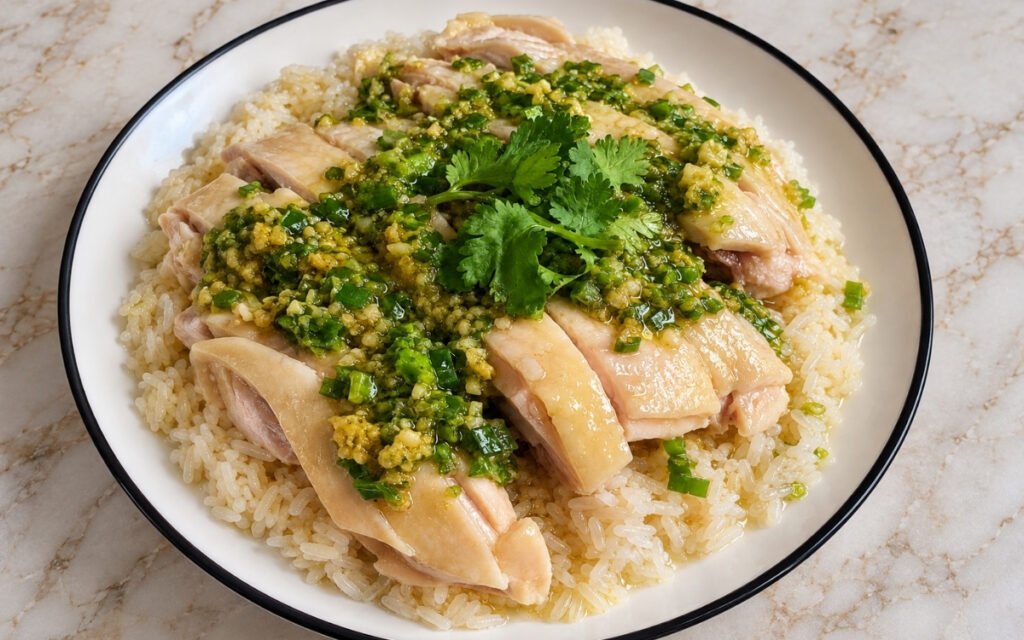
Ginger Scallion Chicken over Rice
Gently poached skin-on chicken thighs over fragrant rice cooked in enriched chicken broth, finished with a vivid ginger-scallion sauce.
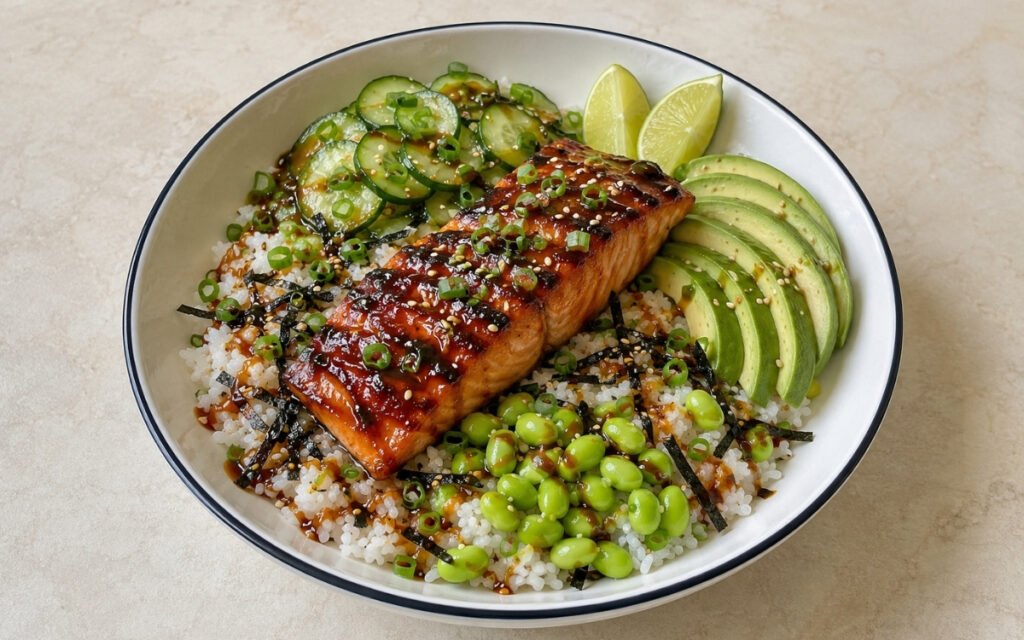
Miso Glazed Salmon Rice Bowl
Miso-glazed salmon with caramelized edges over sushi rice, paired with avocado, edamame, and pickled cucumber.
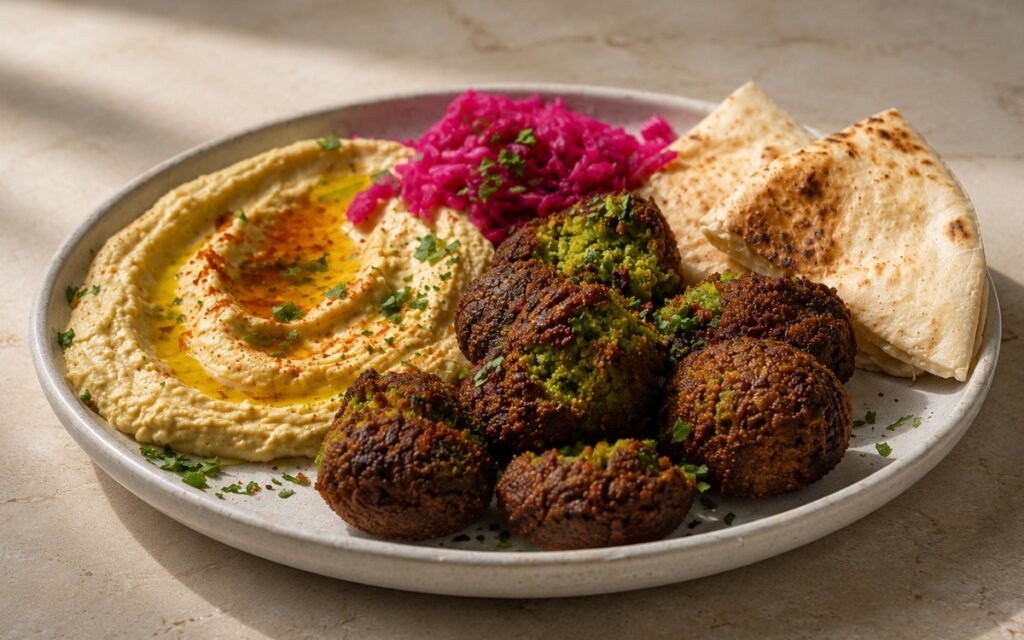
Crispy Falafel Plate
Golden shallow-fried falafel discs with a green herb centre, creamy hummus, pink pickled red cabbage and warm pita.
You might also like
You might also like
Pan-Seared Cod
Cod fillets dried thoroughly, lightly floured, seared undisturbed — finished with butter basting and a lemon caper pan sauce. Delicate and crisp.
Fresh Homemade Basil Pesto Pasta
Fresh basil pesto with the traditional Ligurian potato and green bean combination — better than any jar.
Spicy Peanut Butter Noodles
Udon in a peanut sauce spiked with bird’s eye chilies and Sichuan peppercorns — better the next day.
Salmon Poke Bowl
Ingredients
Method
- Rinse 300g sushi rice under cold running water in a fine mesh strainer, working the grains gently with your fingers for 2–3 minutes until the water runs completely clear. This rinsing step removes the excess surface starch that would otherwise make sushi rice sticky and clumped rather than glossy and individual. Drain thoroughly. Combine the rinsed rice and 480ml cold water in a medium, heavy-bottomed pot with a tight-fitting lid. Bring to a boil over high heat, then immediately reduce to the lowest possible heat, cover tightly, and simmer for 15 minutes without lifting the lid at any point. Remove from heat and let stand covered for a further 10 minutes — the residual steam completes the cooking and equalizes moisture from bottom to top. While the rice rests, combine the 30ml rice vinegar, 15g sugar, and 5g salt in a small bowl and stir until the sugar and salt are fully dissolved. When the rice is ready, fluff gently with a rice paddle or fork using folding strokes rather than stirring. Pour the vinegar mixture over the rice in a thin stream while continuing to fold, distributing it evenly without crushing the grains. The rice should look glossy and taste gently sweet-sour with a pleasant stickiness. Spread on a flat tray or leave in the uncovered pot to cool slightly — poke bowls are assembled with warm, not hot rice.
- In a medium bowl large enough to hold the salmon, whisk together the soy sauce, sesame oil, rice vinegar, honey, grated ginger, and minced garlic until fully combined and the honey is dissolved. This marinade is a calibrated balance of four distinct flavor notes — salt and umami from the soy, nuttiness from the sesame oil, brightness from the rice vinegar, and sweetness from the honey — that together create the distinctive flavor of authentic poke without any single element dominating. The grated ginger and garlic provide the aromatic savory base that grounds the four primary flavors. Taste the marinade before adding the salmon — it should taste pleasantly bold, slightly sweet, and deeply savory. Adjust the honey if more sweetness is needed or add an additional small amount of rice vinegar if it needs brightening.
- The quality of the salmon is the single most important variable in this recipe. Sushi-grade or sashimi-grade salmon from a reputable fishmonger is non-negotiable — this fish will be served with minimal cooking from the marinade acid, and the quality, freshness, and handling of the fish determines both the safety and the eating quality of the finished bowl. Do not use ordinary supermarket salmon labelled simply as “fresh.” When in doubt, ask your fishmonger directly whether the fish is suitable for raw consumption. Cut the salmon into uniform 2cm cubes — consistent size ensures even marination and a uniform texture throughout. Add the cubed salmon to the marinade and fold gently with a spatula or your hands, ensuring every piece is evenly coated. Cover and refrigerate for exactly 15 minutes. This timing is not arbitrary — 15 minutes allows the marinade to penetrate the surface of each cube and season the salmon thoroughly without the acid in the rice vinegar beginning to denature the proteins. Beyond 20–25 minutes, the texture of the salmon begins to change noticeably, becoming firmer and slightly opaque at the edges as the acid chemically cooks the surface — this is the same process as making ceviche, and it is not what poke should be. Set a timer.
- In a small bowl, whisk together the Japanese mayonnaise, sriracha, and lime juice until smooth and fully incorporated. The lime juice is a small but important addition that distinguishes this spicy mayo from a simple sriracha-mayo combination — its citrus acidity brightens the rich, egg-heavy mayonnaise and sharpens the sriracha’s heat into something more vivid and defined. Japanese mayonnaise, specifically Kewpie brand, is strongly preferred over Western mayonnaise — its higher egg yolk ratio, rice vinegar base, and slight umami note produce a fundamentally different and superior result in this application. Transfer to a squeeze bottle for controlled drizzling. If a squeeze bottle is unavailable, a small ziplock bag with one corner snipped works equally well and produces the same decorative drizzle effect. Refrigerate until assembly.
- While the salmon marinates, prepare all bowl components. Julienne the cucumber into matchsticks — thin, uniform strips approximately 5cm long and 3–4mm wide. Unpeeled cucumber adds color and a slightly bitter edge; peeled cucumber is cleaner in flavor — both work. Slice the radishes as thinly as possible, ideally on a mandoline, for the delicate, almost translucent appearance that makes radishes visually striking in a bowl. Dice the avocado into pieces slightly larger than the salmon cubes — the avocado should have presence and be clearly distinguishable rather than disappearing into the bowl. Shred the carrot on the large holes of a box grater or with a julienne peeler. If the edamame is frozen, blanch briefly in boiling water for 2 minutes and drain. Slice the green onions thinly on a diagonal — the angled cut exposes more of the interior of each slice and is both the visually correct cut for this bowl and the one that produces the most pleasant bite.
- Divide the seasoned sushi rice evenly among four wide, shallow bowls — the surface area matters for this bowl style, as the visual composition depends on all components being clearly visible from above. The rice goes in as a base covering the bottom of the bowl. Arrange the marinated salmon, julienned cucumber, sliced radishes, edamame, diced avocado, and shredded carrot in distinct, separate sections on top of the rice — work around the bowl placing each component in its own clearly defined area rather than mixing or scattering. This sectioned arrangement is what gives a poke bowl its characteristic visual identity: a mosaic of colors, textures, and shapes, each component visible and identifiable. Sprinkle the sesame seeds over the entire bowl from a height to distribute them evenly, then add the sliced green onions. Drizzle the spicy mayo in a zigzag pattern across the bowl from a squeeze bottle or spoon — enough to cover most of the components with a thin line rather than pooling in one area. Tuck or scatter the nori strips across the top. Serve immediately — this bowl does not hold well once assembled.