
Tuna Poke Bowl
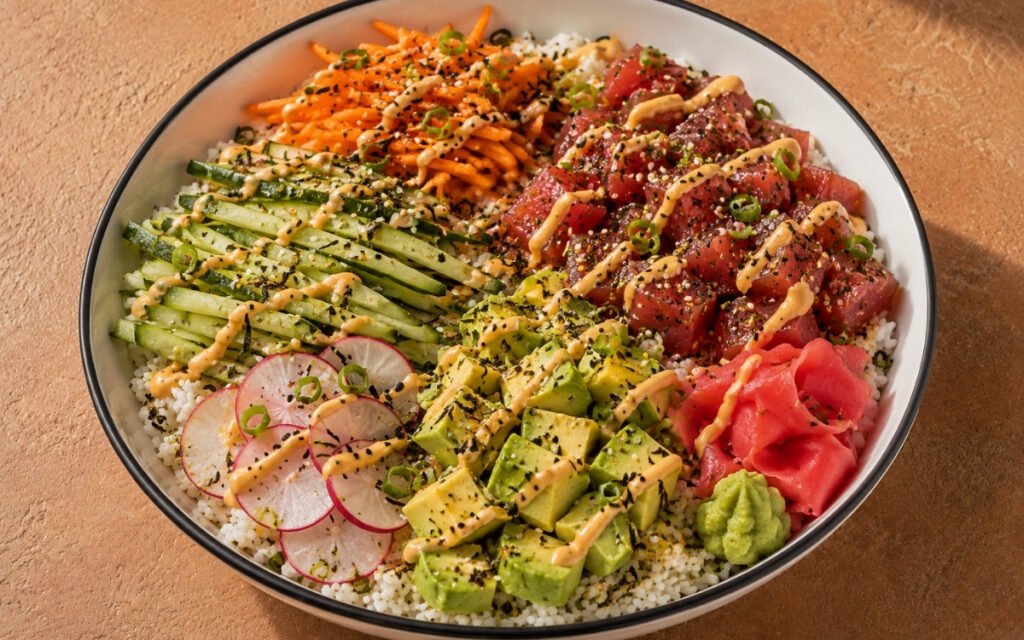
Authentic Hawaiian-style poke bowl featuring sushi-grade ahi tuna marinated in a savory sesame-soy glaze, served over perfectly seasoned sushi rice with crisp vegetables, creamy avocado, and a drizzle of spicy mayo. This vibrant, restaurant-quality bowl delivers fresh Pacific island flavors with beautiful presentation and satisfying textures in every bite. Twenty-five minutes of prep and you have a bowl that looks and tastes like it came from a dedicated poke restaurant.
Prep Time : 25 min
Cook Time : 20 min
Servings : 4
25 min
20 min
4
Ingredients
For the Sushi Rice
• 300g sushi rice (short-grain white rice) — this one on Amazon
• 540ml water
• 45ml rice vinegar
• 15g sugar
• 6g salt
For the Marinated Tuna
• 600g sushi-grade ahi tuna
• 60ml soy sauce
• 15ml sesame oil — this one on Amazon
• 10ml rice vinegar
• 5g fresh ginger, grated
• 2 garlic cloves, minced
For the Spicy Mayo
• 80g Japanese mayonnaise — this one on Amazon
• 15g sriracha sauce
• 5ml lime juice
For the Vegetables and Toppings
• 200g cucumber
• 150g radishes
• 300g ripe avocados
• 100g carrots
• 100g green onions
• 20g sesame seeds
• 8g furikake seasoning — this one on Amazon
• 20g pickled ginger
• 10g wasabi paste (optional)
This post may contain affiliate links. As an Amazon Associate I earn from qualifying purchases, at no additional cost to you.
Directions
- Prepare the Sushi Rice
Rinse the sushi rice under cold running water in a fine mesh strainer, working the grains gently with your fingers for 2–3 minutes until the water runs completely clear. The cloudy white water at the start is surface starch — left on the rice it produces an excessively sticky, clumped result rather than the glossy, lightly clingy texture that defines well-made sushi rice. Drain thoroughly after rinsing. Combine the rinsed rice and 540ml cold water in a medium, heavy-bottomed saucepan with a tight-fitting lid. Bring to a boil over high heat, then immediately reduce to the lowest possible heat setting, cover tightly, and simmer for exactly 15 minutes without lifting the lid at any point — the steam building inside the pot is doing the cooking, and releasing it at any stage produces uneven results. Remove from heat and let stand covered for a further 10 minutes. While the rice rests, combine the rice vinegar, sugar, and salt in a small bowl and stir until both are completely dissolved — undissolved sugar creates sweet spots in the finished rice. When the 10-minute rest is complete, uncover the rice and fluff gently using a rice paddle or fork with a cutting and folding motion rather than stirring. Pour the vinegar seasoning over the rice in a thin stream while continuing to fold — the goal is to coat every grain evenly while simultaneously fanning the rice slightly to help excess moisture escape and give the grains their characteristic gentle sheen. The finished rice should taste gently sweet-sour and look glossy. Keep covered and warm until assembly. - Marinate the Tuna
Ahi tuna is the correct and traditional fish for Hawaiian poke, and sushi-grade quality is the non-negotiable baseline. Ahi tuna — yellowfin or bigeye — should be deep red, almost burgundy in color when truly fresh, with an absolutely clean oceanic smell and a firm, dense texture. Any pink-grey coloration, soft texture, or even faint sour smell indicates fish that is not suitable for raw consumption. Buy from a reputable fishmonger and ask specifically when the fish arrived. Cut the tuna into uniform 1.5cm cubes — smaller than the salmon in a standard poke bowl because tuna’s denser texture holds marinade differently, and the slightly smaller cube produces a better marinade-to-fish ratio and a more pleasant mouthful. In a medium bowl, whisk together the soy sauce, sesame oil, rice vinegar, grated ginger, and minced garlic until fully combined. The marinade is intentionally leaner than many poke marinades — no honey or additional sweetener — which allows the tuna’s own clean, meaty flavor to remain the primary note rather than being sweetened. Add the cubed tuna and fold gently using a spatula, ensuring every piece is evenly coated without breaking the fish. Cover and refrigerate for 10–15 minutes. Tuna is denser than salmon and less susceptible to acid-cooking at the surface, but the 15-minute maximum still applies — beyond this the soy’s salt begins to firm the fish noticeably. - Make the Spicy Mayo
In a small bowl, whisk together the Japanese mayonnaise, sriracha, and lime juice until smooth and fully incorporated. The lime juice is a small but important addition that distinguishes this spicy mayo from a simple sriracha-mayo combination — its citrus acidity brightens the rich, egg-heavy mayonnaise and sharpens the sriracha’s heat into something more vivid and defined. Japanese mayonnaise, specifically Kewpie brand, is strongly preferred over Western mayonnaise — its higher egg yolk ratio, rice vinegar base, and slight umami note produce a fundamentally different and superior result in this application. Transfer to a squeeze bottle for controlled drizzling. If a squeeze bottle is unavailable, a small ziplock bag with one corner snipped works equally well and produces the same decorative drizzle effect. Refrigerate until assembly. - Toast the Sesame Seeds and Prepare the Vegetables
Place the sesame seeds in a dry skillet over medium heat and toast, stirring constantly, for 2–3 minutes until golden and fragrant. Sesame seeds go from raw to burnt quickly — watch continuously and remove immediately to a plate the moment they are golden. Toasted sesame seeds have a dramatically more complex, nutty flavor than raw ones and are worth the two minutes they require. Julienne the cucumber into thin matchsticks approximately 5cm long — unpeeled for color and textural contrast, or peeled for a cleaner appearance. Slice the radishes as thinly as possible, ideally on a mandoline, for the delicate translucent appearance that makes them visually striking in the bowl. Dice the avocados into generous cubes — slightly larger than the tuna cubes so they have visual presence alongside the fish. Shred the carrots on the large holes of a box grater. Slice the green onions thinly on a diagonal — the bias cut exposes more surface area and is both the visually correct cut and the most pleasant to eat in a raw garnish. Prepare the avocado last among the vegetables to minimize browning. - Assemble the Bowls
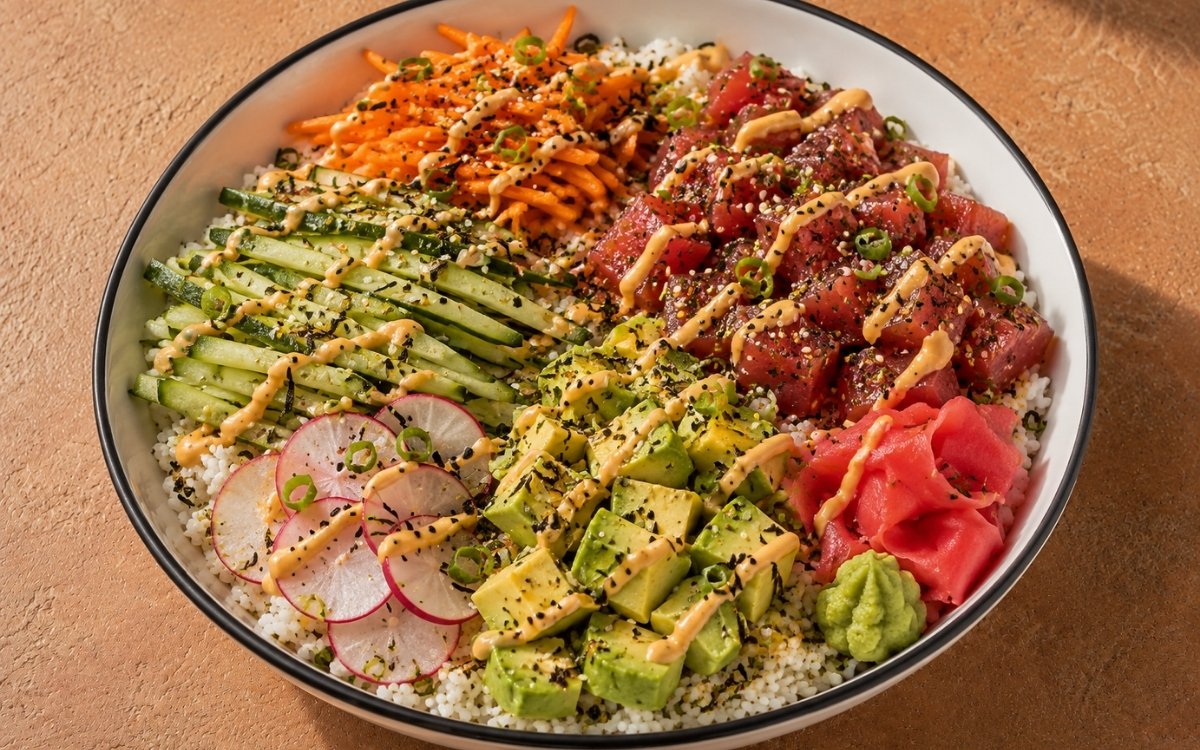
Divide the warm seasoned sushi rice evenly among four large, wide bowls — wide bowls are important because the visual presentation of a poke bowl depends on all components being visible simultaneously from above. Arrange the marinated tuna in an attractive mound in the center of each bowl, spooning any remaining marinade from the bowl over the fish to add additional flavor and gloss. Create distinct, separate sections around the tuna with the julienned cucumber, sliced radishes, diced avocado, and shredded carrot — each component occupying its own clearly defined space in the bowl rather than being mixed or scattered. This sectioned arrangement is the visual signature of a properly assembled poke bowl and is also practically important: it keeps the crisp vegetables separate from the moist fish so textures remain distinct until the moment of eating. - Garnish and Serve
Drizzle each bowl generously with spicy mayo in a decorative zigzag pattern across all components. Sprinkle the toasted sesame seeds evenly from a height across the entire bowl surface. Add the sliced green onions and scatter the furikake seasoning over the top — furikake is a Japanese seasoning blend of dried seaweed, sesame seeds, and dried fish that adds an immediate oceanic, umami note connecting the bowl to its Hawaiian and Japanese heritage. Place a small portion of pickled ginger on the side of each bowl and a small amount of wasabi paste if using. Serve immediately — the essential eating experience of this bowl is the contrast between cold, clean marinated fish and warm, seasoned rice, and this contrast disappears as the bowl approaches room temperature.
*Notes :
- Ahi tuna’s suitability for raw consumption depends on sourcing and handling. Yellowfin and bigeye tuna have a lower inherent parasite risk than many other wild fish species, but sushi-grade designation from a reputable fishmonger remains the baseline standard. The fish should be handled continuously at refrigerator temperature from purchase to marination — never left at room temperature for more than a few minutes. Unlike salmon, which benefits from a prior freezing step to eliminate parasites, high-quality ahi tuna is often sold specifically as never-frozen, as freezing slightly affects the texture of its dense flesh. Your fishmonger can advise on the specific handling history of their stock.
- Furikake is available in most Asian grocery stores and increasingly in mainstream supermarkets in the international foods section. Its contribution to this bowl is subtle but distinctive — the dried seaweed component in particular provides a clean oceanic flavor that connects the bowl to its Pacific island origins and amplifies the tuna’s natural sea character. If unavailable, an additional scattering of nori strips achieves a similar effect.
- Pickled ginger in a poke bowl serves the same palate-cleansing function it does in a sushi order — its sharp, sweet acidity refreshes the palate between bites and prevents the richness of the mayo and avocado from building up over the course of eating. It is not decorative; it is a functional flavor component that affects how the bowl eats across multiple bites.
- The wasabi paste is offered as optional because its heat level is considerably more aggressive than the spicy mayo and it can overpower the tuna’s clean flavor if used generously. A very small amount mixed into a bite of rice and tuna is the correct approach — treat it as an accent rather than a sauce.
Why This Recipe Works
This recipe succeeds by treating ahi tuna with the same respect a good sushi restaurant does — minimal intervention, clean marinade, and fast assembly that preserves the fish’s natural character. The marinade’s restraint is deliberate: soy, sesame, ginger, and garlic provide a savory frame around the tuna rather than overwhelming it.
The rice seasoning is calibrated to be a background note — present and pleasant but never competing with the fish. The spicy mayo provides the richness layer that brings the bowl together, and the furikake and pickled ginger provide the authentic flavor accents that distinguish a genuine poke bowl from a simple raw fish bowl.
Ingredient Breakdown
Sushi-Grade Ahi Tuna
The defining ingredient — deep red, dense, clean-flavored, and the entire focus of the bowl. Quality determines everything.
Soy Sauce
The primary seasoning of the marinade — salt, umami, and the savory depth that characterizes poke.
Sesame Oil
Delivers toasted nuttiness and the aromatic signature of Pacific-Asian cuisine in a small, potent quantity.
Rice Vinegar
Mild, clean acidity in both the marinade and the rice seasoning — the consistent brightening thread running through every component.
Japanese Mayonnaise
Richer, more umami-forward than Western mayo — the correct base for a spicy mayo that complements rather than masks the fish.
Furikake
The authentic Pacific flavor accent — dried seaweed, sesame, and fish seasoning that connects the bowl to its Hawaiian-Japanese heritage.
Pickled Ginger
Palate cleanser and functional flavor component — its sharpness refreshes between bites and prevents flavor fatigue across the bowl.
Wasabi
Optional heat accent — a small amount mixed into a bite dramatically amplifies the tuna’s oceanic character.
Flavor Structure Explained
This poke bowl follows a layered balance model:
- Central protein focus (ahi tuna)
- Savory-nutty coating (soy-sesame marinade)
- Neutral grounding base (seasoned sushi rice)
- Fresh crisp layer (raw vegetables)
- Rich binding element (spicy mayo)
Ahi tuna defines the core, delivering clean, meaty depth that everything else is built around. The soy-sesame marinade enhances that center with savory and nutty notes, amplifying without masking. Sushi rice provides a quiet, slightly sweet-sour base that supports without competing. Raw vegetables add freshness and texture — crisp, cool, and intentionally restrained. Spicy mayo introduces richness that bridges the lean fish and neutral rice, creating cohesion. Furikake and sesame seeds finish the profile with nutty, oceanic top notes and subtle texture, completing the dish without disrupting its balance.
Common Mistakes to Avoid
- Using Non-Sushi-Grade Tuna – The tuna is served raw. There is no compromise available on this point — quality and sourcing are safety issues, not preference issues.
- Over-marinating – Beyond 15 minutes, the soy’s salt firms the tuna noticeably and the texture changes. Set a timer.
- Assembling Ahead of Serving – The rice absorbs moisture from the toppings rapidly, the vegetables soften, and the temperature contrast between warm rice and cold fish disappears. Assemble only at the moment of serving.
- Not Rinsing the Rice – Surface starch left on sushi rice produces heavy, clumped grains. Rinse until completely clear.
- Using Western Mayonnaise – The flavor difference between Kewpie Japanese mayonnaise and Western mayonnaise is substantial in this context. Source the correct product.
- Cutting Uneven Tuna Pieces – Inconsistent cube sizes produce uneven marination and an uneven eating experience. Take the extra minute to cut uniformly.
Variations
Salmon Poke Version
Replace the ahi tuna with sushi-grade salmon using the same technique, adding 10g honey to the marinade and increasing marination to exactly 15 minutes. The full recipe is available as Salmon Poke Bowl.
Spicy Tuna Version
Add 15g sriracha directly to the tuna marinade along with 5g sesame chili oil for a heat-forward variation where the fish itself carries the spice.
Mango Tuna Poke Bowl
Add 150g diced ripe mango to the bowl components for a tropical sweetness that has a natural, classic affinity with ahi tuna.
Vegetarian Version
Replace the tuna with extra-firm tofu pressed dry, cut into 1.5cm cubes, and marinated in the identical soy-sesame mixture for 20 minutes before assembling. Bake at 200°C for 15 minutes before marinating for a firmer texture.
Brown Rice Version
Substitute cooked short-grain brown rice for the sushi rice for a nuttier, more fiber-rich base — season with the same vinegar mixture.
Storage & Make-Ahead
Marinated tuna should be prepared and marinated immediately before assembling. Any leftovers should be consumed within 24 hours and stored in an airtight container in the coldest part of the refrigerator.
Seasoned sushi rice is best used within 2 hours of making. It hardens in the refrigerator, loses its characteristic texture, and does not reheat well back to its original state. Spicy mayo can be refrigerated in an airtight container for up to 2 weeks.
All vegetables except the avocado can be prepared up to 24 hours in advance and stored in separate airtight containers. The avocado should be prepared immediately before assembling.
For the best meal prep approach, prepare the vegetables and spicy mayo the day before. Cook and season the rice on the day of serving, then marinate and assemble the tuna only at the moment of serving.
Frequently Asked Questions
What is the difference between yellowfin and bigeye ahi tuna?
Both are sold as ahi tuna. Yellowfin is leaner, milder, and more widely available. Bigeye has more fat marbling and a richer, deeper flavor. Both are excellent for poke — use whichever your fishmonger has at its freshest.
How do I know if my tuna is truly fresh?
Deep red to burgundy color, absolutely no smell beyond a clean oceanic scent, firm and dense texture with no softness or separation. If it smells of anything other than the sea, do not use it raw.
Can I use canned tuna?
No — canned tuna is cooked and its texture and flavor are entirely unsuitable for a poke bowl. It is a different ingredient in every meaningful way.
What is furikake and where do I find it?
A Japanese seasoning blend of dried seaweed, sesame seeds, dried fish, and salt. Available in Asian grocery stores, Japanese specialty shops, and online. Several mainstream supermarkets now carry it in the international foods aisle.
My rice is too sticky — what went wrong?
Either it was not rinsed thoroughly enough, too much water was used, or the vinegar seasoning was added before enough moisture had escaped during the resting period. Always rinse until completely clear and fluff before adding the vinegar mixture.
Nutrition Facts
( per serving )
Calories
~970 kcal
Protein
44 g
Fat
39 g
Carbs
91 g
Calories
~970 kcal
Protein
44 g
Fat
39 g
Carbs
91 g
Related Recipes
Related Recipes

Spicy Thai Beef Salad (Yam Neua)
Sliced seared beef tossed with crisp vegetables, fresh herbs, and a punchy Thai lime-chili dressing.
Chicken Adobo Rice Bowl
Boneless chicken thighs braised in soy sauce, vinegar, garlic, bay leaf and black pepper until deeply savory and glossy, spooned over rice.
Crispy Salmon Bites with Spicy Mayo
Golden, caramelized salmon bites over jasmine rice with cucumber, scallions, sesame seeds, and a generous drizzle of spicy mayo.
You might also like
You might also like
Spicy Peanut Butter Noodles
Udon in a peanut sauce spiked with bird’s eye chilies and Sichuan peppercorns — better the next day.
Homemade Chicken Shawarma
Chicken thighs marinated in thick yogurt and warm spices, grilled undisturbed for deep char — rested and sliced against the grain. Aromatic and tangy.
Garlic Shrimp Skewers
Shrimp marinated 30 minutes in garlic herb butter, threaded on double skewers, grilled fast with fresh butter basting until charred. Juicy and garlicky.
Tuna Poke Bowl
Ingredients
Method
- Rinse the sushi rice under cold running water in a fine mesh strainer, working the grains gently with your fingers for 2–3 minutes until the water runs completely clear. The cloudy white water at the start is surface starch — left on the rice it produces an excessively sticky, clumped result rather than the glossy, lightly clingy texture that defines well-made sushi rice. Drain thoroughly after rinsing. Combine the rinsed rice and 540ml cold water in a medium, heavy-bottomed saucepan with a tight-fitting lid. Bring to a boil over high heat, then immediately reduce to the lowest possible heat setting, cover tightly, and simmer for exactly 15 minutes without lifting the lid at any point — the steam building inside the pot is doing the cooking, and releasing it at any stage produces uneven results. Remove from heat and let stand covered for a further 10 minutes. While the rice rests, combine the rice vinegar, sugar, and salt in a small bowl and stir until both are completely dissolved — undissolved sugar creates sweet spots in the finished rice. When the 10-minute rest is complete, uncover the rice and fluff gently using a rice paddle or fork with a cutting and folding motion rather than stirring. Pour the vinegar seasoning over the rice in a thin stream while continuing to fold — the goal is to coat every grain evenly while simultaneously fanning the rice slightly to help excess moisture escape and give the grains their characteristic gentle sheen. The finished rice should taste gently sweet-sour and look glossy. Keep covered and warm until assembly.
- Ahi tuna is the correct and traditional fish for Hawaiian poke, and sushi-grade quality is the non-negotiable baseline. Ahi tuna — yellowfin or bigeye — should be deep red, almost burgundy in color when truly fresh, with an absolutely clean oceanic smell and a firm, dense texture. Any pink-grey coloration, soft texture, or even faint sour smell indicates fish that is not suitable for raw consumption. Buy from a reputable fishmonger and ask specifically when the fish arrived. Cut the tuna into uniform 1.5cm cubes — smaller than the salmon in a standard poke bowl because tuna’s denser texture holds marinade differently, and the slightly smaller cube produces a better marinade-to-fish ratio and a more pleasant mouthful. In a medium bowl, whisk together the soy sauce, sesame oil, rice vinegar, grated ginger, and minced garlic until fully combined. The marinade is intentionally leaner than many poke marinades — no honey or additional sweetener — which allows the tuna’s own clean, meaty flavor to remain the primary note rather than being sweetened. Add the cubed tuna and fold gently using a spatula, ensuring every piece is evenly coated without breaking the fish. Cover and refrigerate for 10–15 minutes. Tuna is denser than salmon and less susceptible to acid-cooking at the surface, but the 15-minute maximum still applies — beyond this the soy’s salt begins to firm the fish noticeably.
- In a small bowl, whisk together the Japanese mayonnaise, sriracha, and lime juice until smooth and fully incorporated. The lime juice is a small but important addition that distinguishes this spicy mayo from a simple sriracha-mayo combination — its citrus acidity brightens the rich, egg-heavy mayonnaise and sharpens the sriracha’s heat into something more vivid and defined. Japanese mayonnaise, specifically Kewpie brand, is strongly preferred over Western mayonnaise — its higher egg yolk ratio, rice vinegar base, and slight umami note produce a fundamentally different and superior result in this application. Transfer to a squeeze bottle for controlled drizzling. If a squeeze bottle is unavailable, a small ziplock bag with one corner snipped works equally well and produces the same decorative drizzle effect. Refrigerate until assembly.
- Place the sesame seeds in a dry skillet over medium heat and toast, stirring constantly, for 2–3 minutes until golden and fragrant. Sesame seeds go from raw to burnt quickly — watch continuously and remove immediately to a plate the moment they are golden. Toasted sesame seeds have a dramatically more complex, nutty flavor than raw ones and are worth the two minutes they require. Julienne the cucumber into thin matchsticks approximately 5cm long — unpeeled for color and textural contrast, or peeled for a cleaner appearance. Slice the radishes as thinly as possible, ideally on a mandoline, for the delicate translucent appearance that makes them visually striking in the bowl. Dice the avocados into generous cubes — slightly larger than the tuna cubes so they have visual presence alongside the fish. Shred the carrots on the large holes of a box grater. Slice the green onions thinly on a diagonal — the bias cut exposes more surface area and is both the visually correct cut and the most pleasant to eat in a raw garnish. Prepare the avocado last among the vegetables to minimize browning.
- Divide the warm seasoned sushi rice evenly among four large, wide bowls — wide bowls are important because the visual presentation of a poke bowl depends on all components being visible simultaneously from above. Arrange the marinated tuna in an attractive mound in the center of each bowl, spooning any remaining marinade from the bowl over the fish to add additional flavor and gloss. Create distinct, separate sections around the tuna with the julienned cucumber, sliced radishes, diced avocado, and shredded carrot — each component occupying its own clearly defined space in the bowl rather than being mixed or scattered. This sectioned arrangement is the visual signature of a properly assembled poke bowl and is also practically important: it keeps the crisp vegetables separate from the moist fish so textures remain distinct until the moment of eating.
- Drizzle each bowl generously with spicy mayo in a decorative zigzag pattern across all components. Sprinkle the toasted sesame seeds evenly from a height across the entire bowl surface. Add the sliced green onions and scatter the furikake seasoning over the top — furikake is a Japanese seasoning blend of dried seaweed, sesame seeds, and dried fish that adds an immediate oceanic, umami note connecting the bowl to its Hawaiian and Japanese heritage. Place a small portion of pickled ginger on the side of each bowl and a small amount of wasabi paste if using. Serve immediately — the essential eating experience of this bowl is the contrast between cold, clean marinated fish and warm, seasoned rice, and this contrast disappears as the bowl approaches room temperature.