
Chicken Adobo Rice Bowl
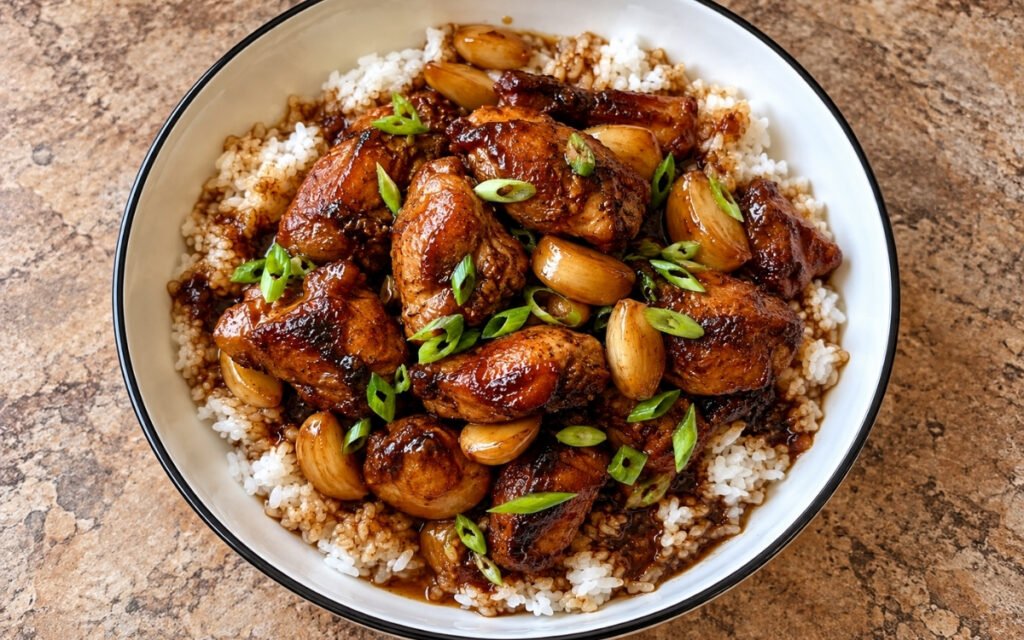
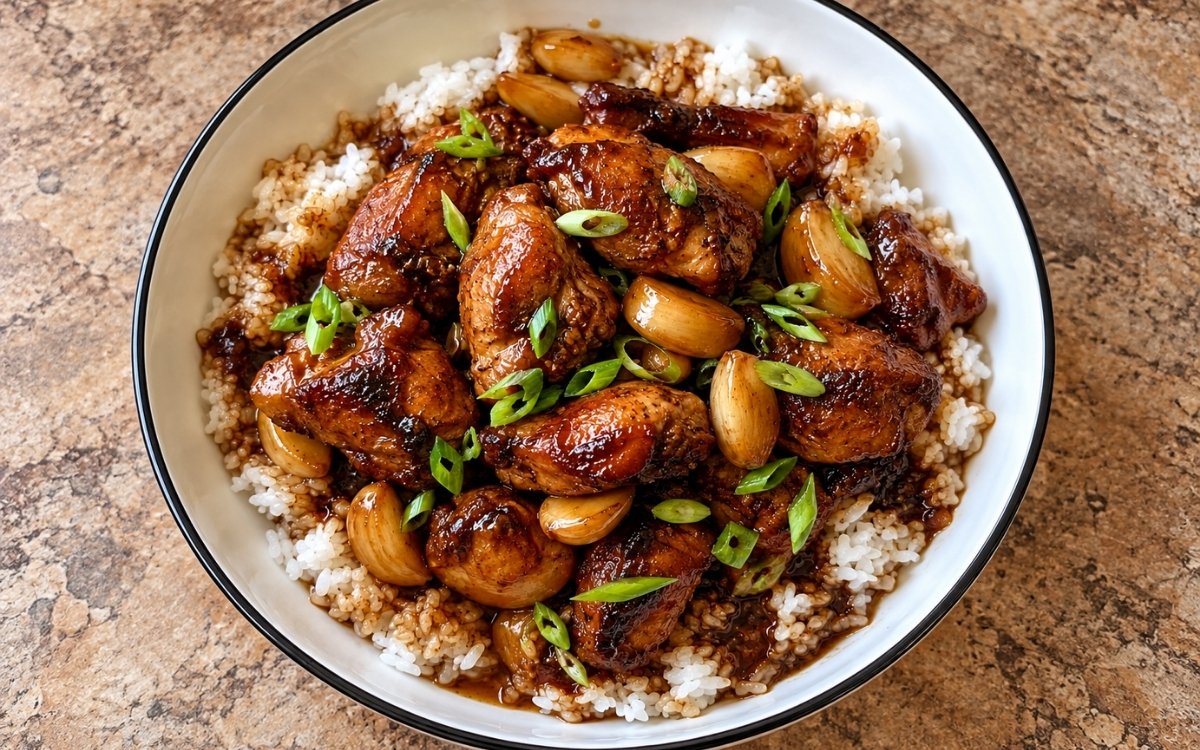
A classic Filipino-style chicken adobo rice bowl with boneless chicken thighs braised in soy sauce, vinegar, garlic, bay leaf and black pepper until deeply savory and glossy, the sauce reduced until rich and mahogany-dark, with plenty of soft whole garlic cloves spooned over white rice so the grains soak up the sauce. Keeping the vinegar out of the initial marinade, adding it only once the braise actually begins, is the technique this whole dish depends on for real, clean adobo flavour — vinegar included too early gives a muddier result and less control over the braise’s own final balance, the same add-the-acid-later principle used elsewhere in this collection whenever a braise’s own acidity needs to be introduced at a specific, controlled stage rather than throughout the whole cooking process. Letting the vinegar boil hard for a couple of minutes before stirring is what cooks off its own raw, sharp edge, keeping the finished sauce balanced rather than harsh. Browning the chicken properly before it ever braises is what builds the dish’s characteristic dark, developed flavour. The payoff is a bowl with real, classic Filipino richness — tender, glossy braised chicken and soft whole garlic cloves in a mahogany-dark, tangy-savoury sauce, spooned generously over rice that soaks it all up.
Prep Time : 20 min
Cook Time : 35 min
Servings : 4
20 min
35 min
4
Ingredients
For the Chicken Adobo
• 1kg boneless skinless chicken thighs, cut into large bite-size chunks
• 20 garlic cloves, peeled, left whole
• 120ml soy sauce — this one on Amazon
• 100ml cane vinegar or white vinegar — this one on Amazon
• 180ml water
• 3 bay leaves
• 2 tsp whole black peppercorns, lightly cracked
• 1 tbsp neutral oil
• 1 tsp brown sugar, optional, only if needed to round the sauce
For Finishing
• 3 scallions, thinly sliced
This post may contain affiliate links. As an Amazon Associate I earn from qualifying purchases, at no additional cost to you.
Directions
- Cook the Rice
Rinse the jasmine rice until the water runs mostly clear. Combine with 360ml water and cook until tender. Rest covered for 10 minutes, then fluff. Hold warm. That resting period lets residual steam finish distributing evenly through the rice, which is directly what makes it easier to fluff into tender, separate grains rather than a compacted mass. - Marinate the Chicken
In a bowl, combine the chicken thighs, garlic, soy sauce, bay leaves, and black peppercorns. Marinate for 30 minutes. Keep the vinegar out of the marinade. Adding it later gives a cleaner adobo flavor and better control over the braise. That deliberate exclusion of vinegar at this stage protects the whole dish’s final balance — vinegar mixed in from the very start would begin working on the chicken’s own proteins right away, well before the braise’s own controlled, later-stage acidity is actually meant to be introduced. - Brown the Chicken
Lift the chicken out of the marinade, letting excess drip back into the bowl. Reserve the marinade and garlic. Heat the oil in a wide heavy pan or sauté pan over medium-high heat. Brown the chicken in batches for 2–3 minutes per side until lightly caramelized. Do not fully cook it through at this stage. Add the reserved garlic cloves and cook for 1 minute so they begin to take on a little color. Do not crowd the pan. The chicken should sear, not steam. Good browning builds the dark adobo flavor. That real, deliberate browning at this early stage is exactly what builds the fond directly responsible for the sauce’s own eventual dark, developed colour and depth — chicken added straight to a braise without this step would miss that foundational flavour entirely. - Braise the Adobo
Return all the chicken to the pan. Add the reserved soy marinade and 180ml water. Bring to a simmer. Pour in the vinegar. Let it come to a boil without stirring for about 2 minutes, then lower to a gentle simmer. Cover partially and cook for 15–20 minutes, stirring only occasionally after the first few minutes, until the chicken is tender and the garlic is soft. Letting the vinegar boil before stirring helps cook off the raw acidic edge and keeps the sauce balanced rather than sharp. That specific, undisturbed boil right after the vinegar joins is what lets its own sharpest, harshest notes actually cook off into the air — stirring too early would instead work that same raw acidity directly through the whole braise before it’s had the chance to mellow. - Reduce the Sauce
Uncover and continue simmering for 8–12 minutes, turning the chicken occasionally, until the sauce reduces to a glossy consistency that coats the meat and leaves a hearty pool for the rice. Taste. Add the 1 tsp brown sugar only if the sauce needs slight rounding. Remove bay leaves if desired. The finished sauce should be salty, tangy, garlicky and shiny — not watery. It should lightly cling to the chicken and stain the rice dark at the edges. That final, uncovered reduction stage concentrates the sauce’s own real flavour, converting it from a thinner braising liquid into the glossy, clinging consistency this dish depends on for coating both the chicken and the rice properly. - Assemble the Bowls
Divide the warm rice among 4 bowls. Spoon over the chicken and all the soft braised garlic cloves. Generously spoon the reduced adobo sauce over and around the rice. Finish with sliced scallions. Serve immediately. Spooning that reduced sauce generously and directly over the rice, rather than serving it only alongside the chicken, is what actually lets the grains soak up its own dark, savoury flavour the way this dish is specifically meant to be eaten.
*Notes :
- Keeping the vinegar out of the initial marinade deserves genuine recognition as the technique most directly responsible for this dish’s real, clean adobo flavour. The recipe’s own explicit note that adding it later “gives a cleaner adobo flavor and better control over the braise” reflects a real, deliberate choice — vinegar mixed in from the very start would begin acting on the chicken well before the braise’s own controlled acidity is actually meant to be introduced.
- Letting the vinegar boil undisturbed for a genuine couple of minutes once it joins the braise deserves the same attention this technique receives throughout classical adobo preparation generally. That specific, unstirred boiling window is what lets the vinegar’s own sharpest, rawest edge actually cook off into the air, protecting the finished sauce from tasting harsh rather than properly balanced.
- Browning the chicken thoroughly before it ever meets the braising liquid deserves genuine respect as the technique responsible for adobo’s whole characteristic dark, developed flavour. The recipe’s own explicit framing — “good browning builds the dark adobo flavor” — reflects real understanding that this early searing stage builds fond directly into the pan, fond that carries straight through into the finished, reduced sauce.
- Leaving the garlic cloves genuinely whole throughout the braise, rather than mincing them, deserves attention as a deliberate technique specific to this dish’s own character. The recipe’s own explicit note that whole cloves “soften and sweeten in the sauce instead of disappearing” reflects real understanding that this approach delivers distinct, spreadably soft garlic as its own component, rather than diffusing it invisibly throughout the sauce.
Why This Recipe Works
This recipe works because the vinegar is kept out of the initial marinade, giving the finished dish real, clean flavour and genuine control over the braise’s own acidity. The chicken is browned thoroughly before braising, building the fond responsible for adobo’s characteristic dark colour and depth.
The vinegar is allowed to boil undisturbed once it’s added, cooking off its own harshest edge. Whole garlic cloves soften and sweeten throughout the extended braise rather than disappearing, and a final, uncovered reduction concentrates the sauce into the glossy, clinging consistency this dish depends on for properly soaking the rice.
Ingredient Breakdown
Vinegar-Free Marinade
The critical technique — keeping acid out of this early stage gives the finished dish cleaner flavour and better braise control.
Thoroughly Browned Chicken
The critical technique — builds the fond directly responsible for adobo’s characteristic dark colour and depth.
Undisturbed Vinegar Boil
The critical technique — cooks off the vinegar’s own raw, sharp edge before it’s worked through the whole braise.
Whole Garlic Cloves
The critical technique — softens and sweetens as its own distinct component rather than disappearing into the sauce.
Final Uncovered Reduction
The critical technique — concentrates the braising liquid into the glossy, clinging sauce this dish depends on.
Jasmine Rice
The neutral foundation — a fluffy, dry base specifically built to soak up the reduced adobo sauce.
Flavor Structure Explained
This chicken adobo rice bowl follows a layered balance model:
- Neutral, absorbent foundation (fluffy jasmine rice)
- Savoury, browned centrepiece (seared, braised chicken thighs)
- Tangy, deeply reduced sauce (soy sauce, vinegar, braising liquid)
- Sweet, softened aromatic (whole braised garlic cloves)
- Fresh finishing note (scallions)
Fluffy jasmine rice provides this bowl’s neutral, absorbent foundation, built specifically to soak up the sauce spooned over it. Seared, thoroughly braised chicken thighs serve as the savoury centrepiece, their flavour built through real, deliberate browning. A tangy, deeply reduced sauce of soy sauce, vinegar, and braising liquid ties the whole bowl together with genuine, concentrated depth. Whole braised garlic cloves add sweet, softened aromatic richness as their own distinct component. A final scatter of fresh scallions finishes the bowl with bright, classic Filipino contrast against all that deep, savoury richness.
Common Mistakes to Avoid
- Adding Vinegar to the Initial Marinade – This muddies the finished flavour and reduces control over the braise. Always keep it separate until the braising stage..
- Crowding the Pan While Browning the Chicken – This causes the chicken to steam rather than sear, missing the dark flavour this dish depends on. Always brown in properly spaced batches.
- Stirring the Vinegar Immediately Once Added – This works its raw, sharp edge through the whole braise before it can cook off. Always let it boil undisturbed first.
- Mincing the Garlic Instead of Leaving It Whole – This causes it to disappear into the sauce rather than becoming its own soft, spreadable component. Always leave the cloves whole.
- Serving the Sauce Too Loose – This leaves the rice under-soaked and the dish tasting watery. Always reduce it until genuinely glossy and clinging.
Variations
Cane Vinegar Version
Use cane vinegar specifically, per the recipe’s own note on it being the most classical choice, rather than white vinegar, for a more traditionally rounded, slightly sweeter tang.
Caramelized-Edge Version
Let some of the chicken edges briefly fry directly in the rendered sauce near the end of cooking, per the recipe’s own optional suggestion, for deeper, more caramelized spots throughout.
Make-Ahead Version
Prepare the adobo a day ahead and reheat gently before serving, per the recipe’s own note that the flavours deepen and improve overnight.
Extra-Garlicky Version
Increase the whole garlic cloves slightly for a more pronounced, sweetly softened garlic presence throughout every bowl.
Storage & Make-Ahead
Boneless chicken thigh is genuinely the best choice for this recipe, since it stays juicy and becomes noticeably more tender than breast would over the course of the extended braise this dish requires.
Leave the garlic cloves whole throughout cooking rather than mincing them, since that specific approach is what lets them soften and sweeten in the sauce as their own distinct component instead of simply disappearing.
Cane vinegar is the most classical choice for this recipe, though white vinegar works perfectly well as a substitute if cane vinegar isn’t available in your area.
The finished sauce should taste genuinely bold — salty, tangy, and garlicky — and if it seems too salty before reduction, add a splash of water rather than trying to correct it later, while a sauce that tastes too sharp after reduction is better handled with a little more simmering time than with added sugar.
Adobo often tastes even better after resting and being reheated the next day, since the flavours genuinely continue deepening overnight, making this a dish that holds up especially well as leftovers or intentional make-ahead cooking.
Frequently Asked Questions
Why is the vinegar kept out of the initial marinade rather than added from the start?
Adding vinegar to the marinade would begin acting on the chicken’s own proteins well before the braise’s own controlled acidity is actually meant to be introduced. Keeping it separate gives the finished dish cleaner flavour and better overall control.
Why does the chicken need to be browned thoroughly before it goes into the braise?
That real, deliberate browning builds fond directly into the pan, and that same fond carries straight through into the finished, reduced sauce, delivering adobo’s characteristic dark colour and depth.
Why is the vinegar allowed to boil undisturbed for a couple of minutes before stirring?
That specific window lets the vinegar’s own sharpest, rawest edge actually cook off into the air. Stirring too early would instead work that same raw acidity through the entire braise before it has the chance to mellow.
Why are the garlic cloves left whole rather than minced?
Whole cloves soften and sweeten throughout the extended braise as their own distinct, spreadable component. Minced garlic would instead simply dissolve into the sauce, losing that same real, recognisable presence.
Are there other classic Southeast Asian braised, glazed, or rice bowl dishes worth trying?
Ginger Scallion Chicken over Rice and Char Siu over Rice both offer other classic rice bowl directions worth exploring. Vietnamese Turmeric Sticky Rice (Xôi Xéo) is also worth trying for a different rice-based dish, and Teriyaki Chicken Rice Bowl and Coconut Rice offer other satisfying rice bowl pairings worth exploring.
Nutrition Facts
( per serving )
Calories
~620 kcal
Protein
42 g
Fat
22 g
Carbs
62 g
Calories
~620 kcal
Protein
42 g
Fat
22 g
Carbs
62 g
Related Recipes
Related Recipes

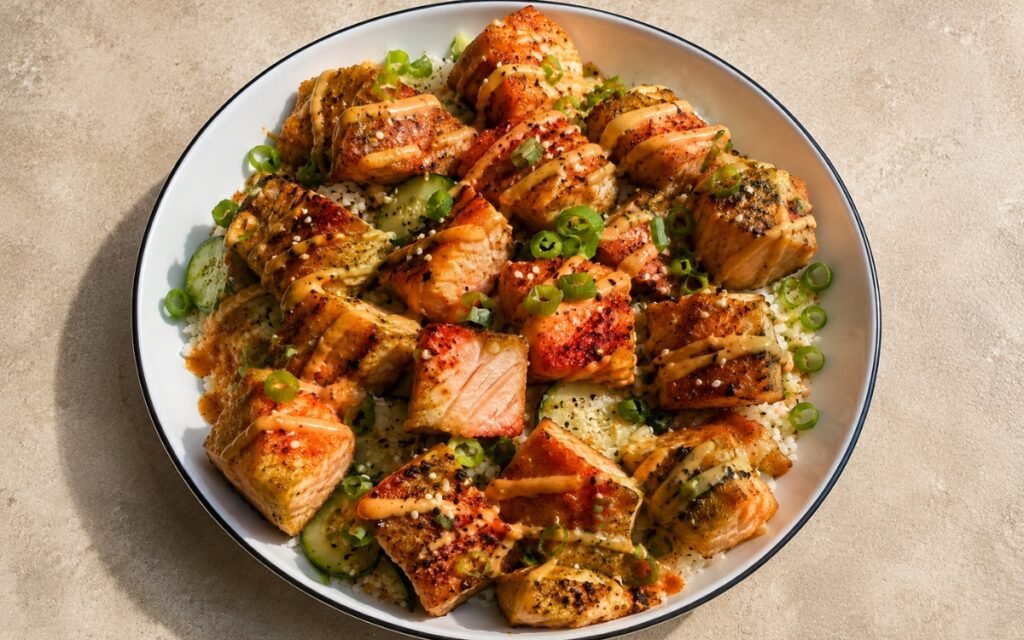
Crispy Salmon Bites with Spicy Mayo
Golden, caramelized salmon bites over jasmine rice with cucumber, scallions, sesame seeds, and a generous drizzle of spicy mayo.
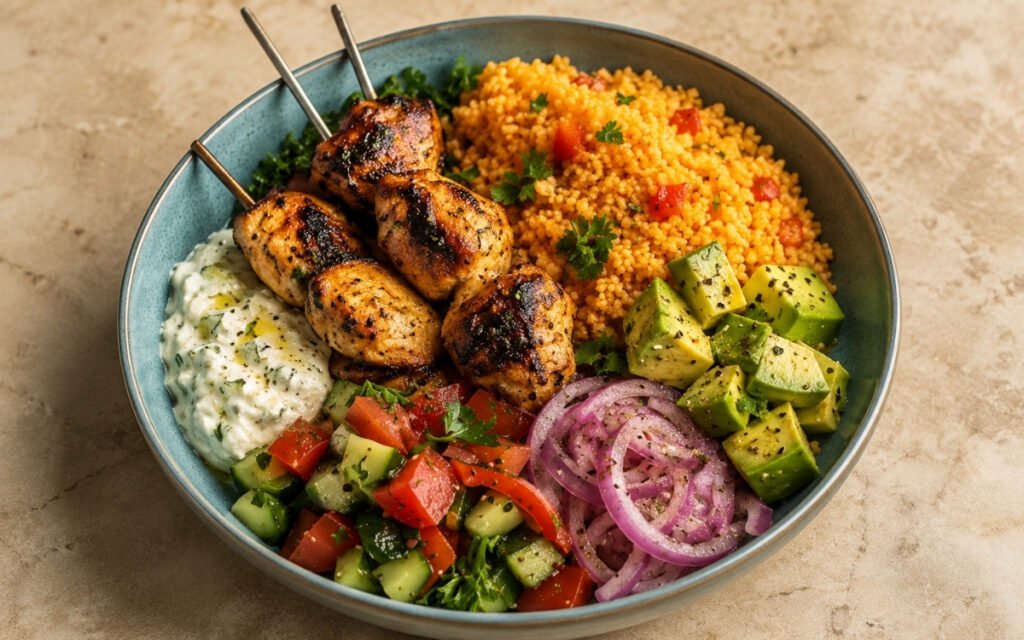
Greek Chicken Souvlaki Mediterranean Bowl
Charred souvlaki skewers, Moroccan spiced couscous, thick tzatziki, pickled red onion, and avocado — a complete, bold Mediterranean bowl in one dish.
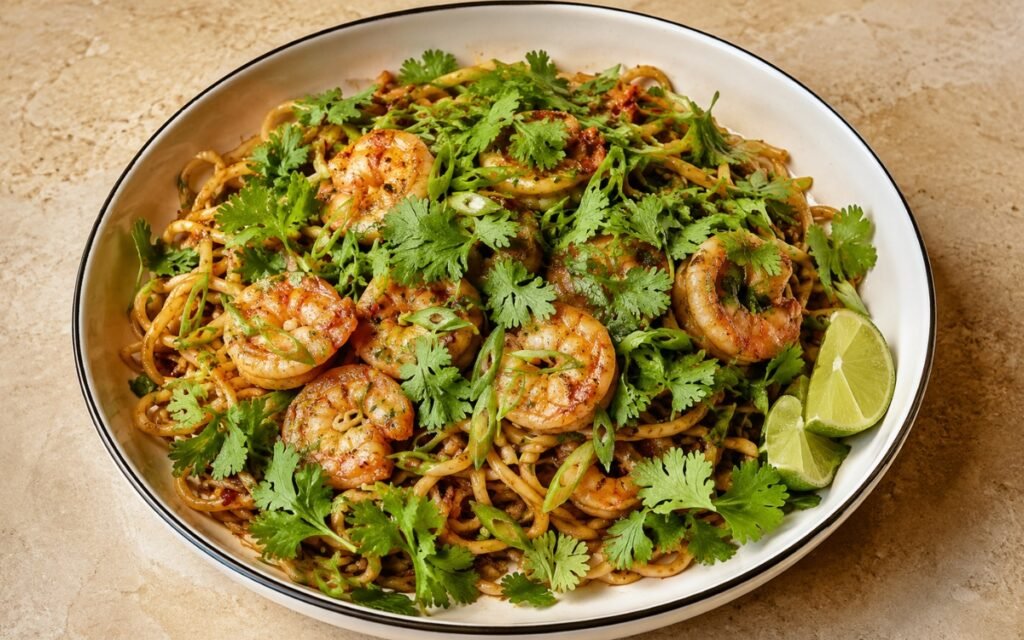
Chili Lime Noodles with Shrimp
Rice noodles tossed in soy, fish sauce, brown sugar, and chili — half the lime added during cooking, half off heat with all the zest for aromatic brightness. Shrimp finished in sauce, generous cilantro throughout. 40 minutes.
You might also like
You might also like
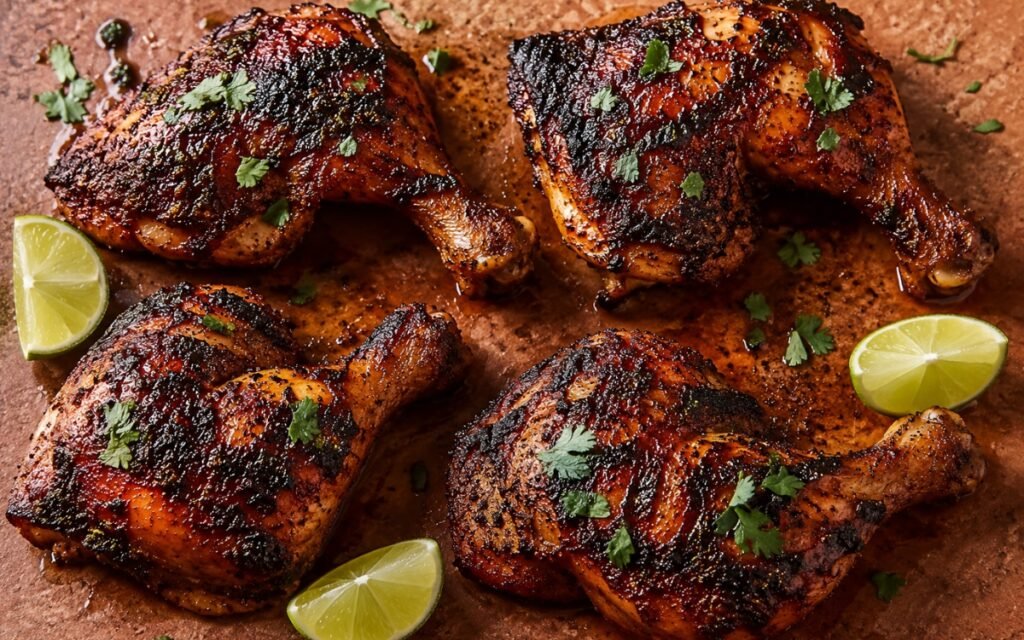
Chipotle Grilled Chicken Legs
Chicken leg quarters deeply scored and marinated in thick chipotle adobo paste — grilled two-zone style, rested, finished with cilantro and lime. Smoky and deeply charred.
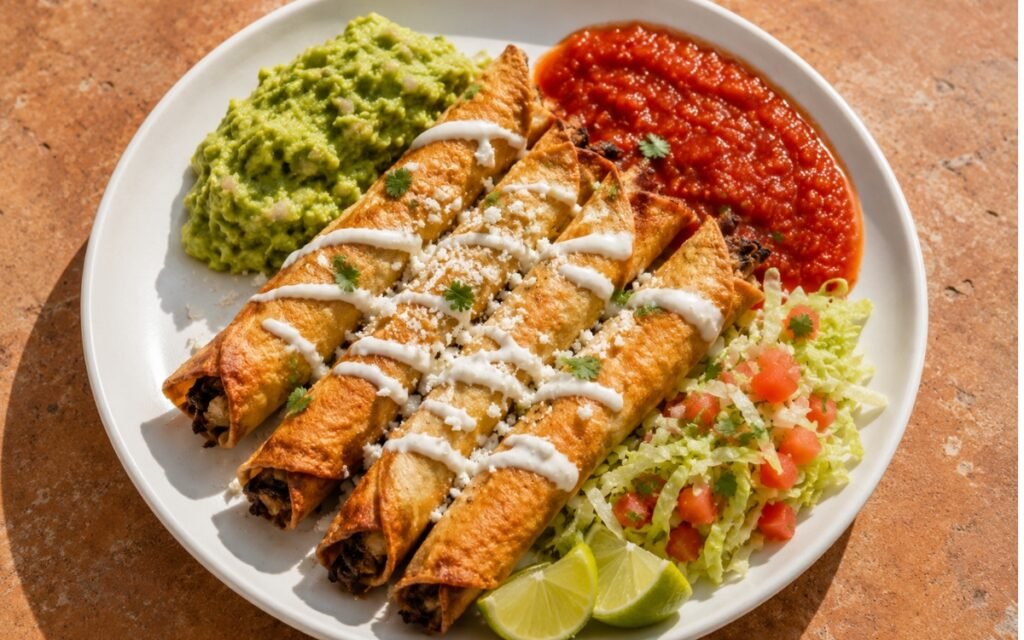
Flautas de Pollo
Spiced shredded chicken thighs rolled tightly in corn tortillas and fried until golden and crisp, served with chunky guacamole and bright salsa roja.
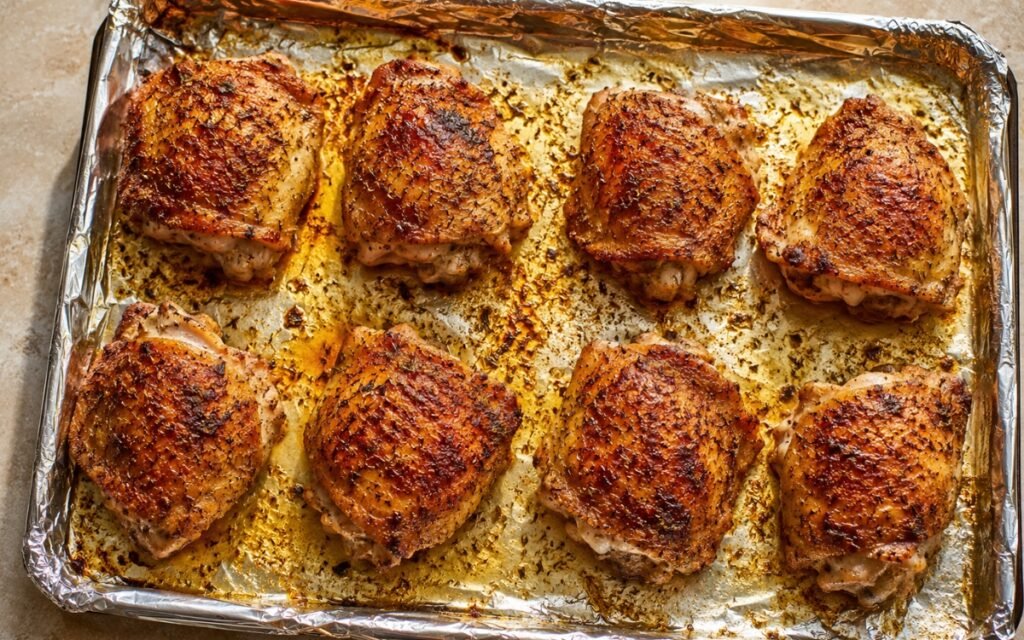
Cripsy Oven-Baked Chicken Thighs
Crispy-skinned chicken thighs baked with simple spices—the most forgiving and flavorful cut.
Chicken Adobo Rice Bowl
Ingredients
Method
- Rinse the jasmine rice until the water runs mostly clear. Combine with 360ml water and cook until tender. Rest covered for 10 minutes, then fluff. Hold warm. That resting period lets residual steam finish distributing evenly through the rice, which is directly what makes it easier to fluff into tender, separate grains rather than a compacted mass.
- In a bowl, combine the chicken thighs, garlic, soy sauce, bay leaves, and black peppercorns. Marinate for 30 minutes. Keep the vinegar out of the marinade. Adding it later gives a cleaner adobo flavor and better control over the braise. That deliberate exclusion of vinegar at this stage protects the whole dish’s final balance — vinegar mixed in from the very start would begin working on the chicken’s own proteins right away, well before the braise’s own controlled, later-stage acidity is actually meant to be introduced.
- Lift the chicken out of the marinade, letting excess drip back into the bowl. Reserve the marinade and garlic. Heat the oil in a wide heavy pan or sauté pan over medium-high heat. Brown the chicken in batches for 2–3 minutes per side until lightly caramelized. Do not fully cook it through at this stage. Add the reserved garlic cloves and cook for 1 minute so they begin to take on a little color. Do not crowd the pan. The chicken should sear, not steam. Good browning builds the dark adobo flavor. That real, deliberate browning at this early stage is exactly what builds the fond directly responsible for the sauce’s own eventual dark, developed colour and depth — chicken added straight to a braise without this step would miss that foundational flavour entirely.
- Return all the chicken to the pan. Add the reserved soy marinade and 180ml water. Bring to a simmer. Pour in the vinegar. Let it come to a boil without stirring for about 2 minutes, then lower to a gentle simmer. Cover partially and cook for 15–20 minutes, stirring only occasionally after the first few minutes, until the chicken is tender and the garlic is soft. Letting the vinegar boil before stirring helps cook off the raw acidic edge and keeps the sauce balanced rather than sharp. That specific, undisturbed boil right after the vinegar joins is what lets its own sharpest, harshest notes actually cook off into the air — stirring too early would instead work that same raw acidity directly through the whole braise before it’s had the chance to mellow.
- Uncover and continue simmering for 8–12 minutes, turning the chicken occasionally, until the sauce reduces to a glossy consistency that coats the meat and leaves a hearty pool for the rice. Taste. Add the 1 tsp brown sugar only if the sauce needs slight rounding. Remove bay leaves if desired. The finished sauce should be salty, tangy, garlicky and shiny — not watery. It should lightly cling to the chicken and stain the rice dark at the edges. That final, uncovered reduction stage concentrates the sauce’s own real flavour, converting it from a thinner braising liquid into the glossy, clinging consistency this dish depends on for coating both the chicken and the rice properly.
- Divide the warm rice among 4 bowls. Spoon over the chicken and all the soft braised garlic cloves. Generously spoon the reduced adobo sauce over and around the rice. Finish with sliced scallions. Serve immediately. Spooning that reduced sauce generously and directly over the rice, rather than serving it only alongside the chicken, is what actually lets the grains soak up its own dark, savoury flavour the way this dish is specifically meant to be eaten.