
Ginger Scallion Chicken over Rice (Hainanese Style Chicken)
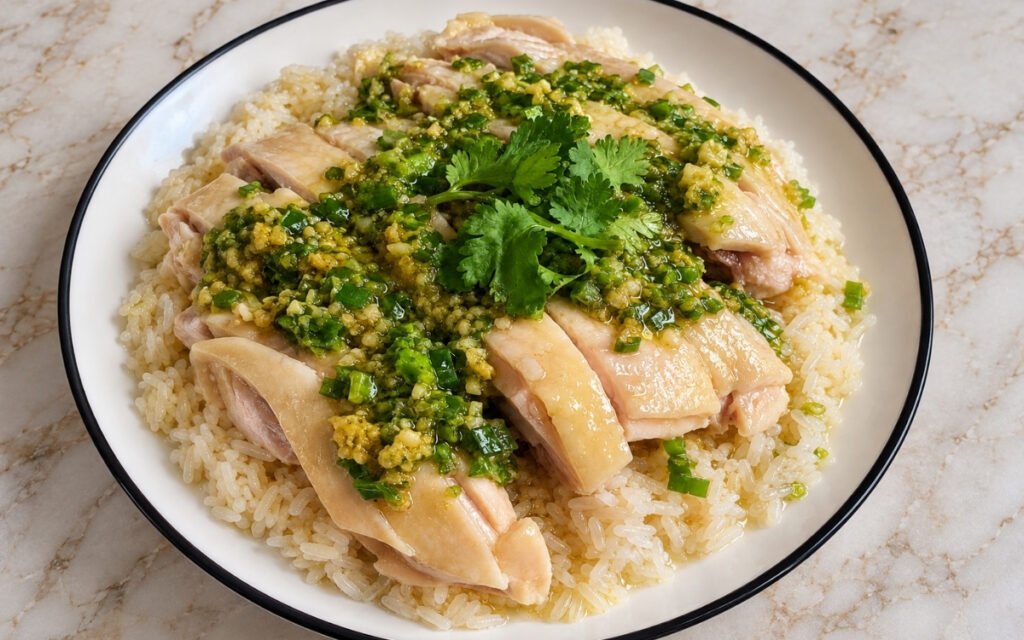
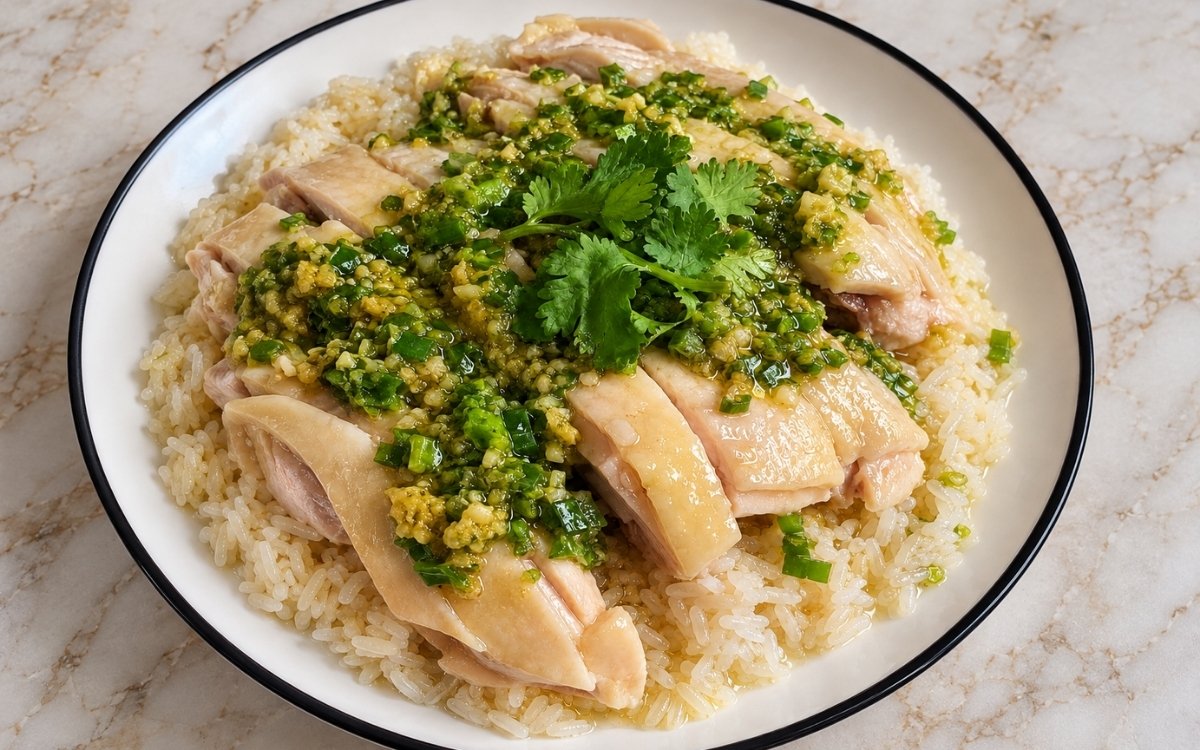
A Hainanese-style chicken rice plate built with gently poached skin-on chicken thighs, fragrant rice cooked in enriched chicken broth, and a vivid ginger-scallion sauce spooned generously over the sliced chicken so the juices run into the rice. Poaching the chicken at a genuinely gentle simmer, never a hard boil, is the technique this whole dish depends on for tender meat and smooth, unbroken skin — aggressive boiling would tighten the meat and roughen the skin instead, the same gentle-poach-for-tender-skin principle used elsewhere in this collection whenever a whole cut of skin-on poultry needs moist, low-temperature heat to stay silky rather than the toughening a hard boil would cause. Cooking the rice in the chicken’s own strained poaching broth, rather than plain water, is what gives it real, savoury depth that carries the whole plate. Pouring genuinely hot oil directly over the raw ginger and scallion is what builds the sauce’s own vivid colour and punchy flavour in a single, immediate step. The payoff is a plate with real, classical Hainanese balance — tender, silky poached chicken over fragrant, savoury rice, brightened by a vivid, spoonable ginger-scallion sauce.
Prep Time : 25 min
Cook Time : 45 min
Servings : 4
25 min
45 min
4
Ingredients
For the Chicken
• 800g skin-on, boneless chicken thighs (about 200g per serving)
• 2L water
• 20g fresh ginger, sliced
• 4 scallions, cut into large pieces
• 10g fine salt
• 1 tsp white pepper — this one on Amazon
• 1 tbsp Shaoxing wine or dry cooking wine (optional) — this one on Amazon
For the Rice
• 300g jasmine rice (75g per serving)
• 20g chicken fat, neutral oil, or a mix
• 2 cloves garlic, finely minced
• 10g fresh ginger, finely minced
• 450ml strained hot poaching broth, or as needed for your rice cooker / stovetop ratio
• ½ tsp fine salt, or to taste
For the Ginger-Scallion Sauce
• 80g scallions, very finely chopped
• 35g fresh ginger, peeled and very finely minced or grated
• ½ tsp fine salt, plus more to taste
• ¼ tsp sugar
• 80ml neutral oil, heated until shimmering
• 1–2 tbsp hot chicken broth, as needed
• 1 tsp sesame oil (optional, use lightly) — this one on Amazon
• White pepper, to taste
For Finishing
• 2–4 tbsp reserved chicken juices or broth
• Fresh cilantro leaves, for garnish
This post may contain affiliate links. As an Amazon Associate I earn from qualifying purchases, at no additional cost to you.
Directions
- Poach the Chicken Gently
Place the chicken thighs in a saucepan or shallow pot in a single layer if possible. Add the water, sliced ginger, scallion pieces, salt, white pepper, and Shaoxing wine if using. Bring the liquid just to a gentle simmer over medium heat. Do not let it boil hard. Once the liquid reaches a gentle simmer and the chicken turns opaque on the outside, lower the heat so the broth stays at a very gentle poach, around 80–90°C. Poach for 12–18 minutes, depending on thickness, until the chicken is just cooked through. The thickest part should reach about 72–74°C. The meat should feel springy and the juices should run clear, but the chicken must still look juicy, pale, and silky. Turn off the heat, cover, and let the chicken rest in the hot broth for 5 minutes to finish gently and stay moist. Remove the chicken and let it rest. Reserve the poaching broth. For the glossiest skin and cleanest slices, let the chicken cool just enough to handle before slicing. That genuinely gentle poach, held well below a boil throughout, is exactly what protects the chicken’s own skin from tightening and roughening — a hard boil would agitate both meat and skin considerably more than this delicate cut and texture can tolerate. - Prepare the Rice
Rinse the jasmine rice until the water runs almost clear, then drain well. Heat the chicken fat or oil in a saucepan or rice-cooker insert. Add the garlic and minced ginger and cook over medium-low heat for 30–60 seconds until fragrant, without browning. Add the drained rice and stir for 1–2 minutes so every grain is lightly coated in fat. This is a key step for distinct, fragrant rice. Add 450ml strained hot poaching broth and the salt. Cook in a rice cooker or on the stovetop until tender. Once done, rest the rice covered for 10 minutes, then fluff gently. The rice should be aromatic, lightly savory, and separate rather than wet or mushy. Coating every grain in fat before any liquid is added is what lets the rice actually cook up distinct and separate, rather than the grains clumping together the way uncoated rice tends to. - Make the Ginger-Scallion Sauce
Place the chopped scallions, minced ginger, salt, sugar, and a pinch of white pepper in a heatproof bowl. Heat the neutral oil until shimmering hot, then pour it directly over the scallion-ginger mixture. It should sizzle immediately. Stir well. Add 1–2 tablespoons hot chicken broth to loosen it slightly if needed. The sauce should be glossy, spoonable, and vivid green, with visible minced ginger and scallion suspended in the oil. Add the sesame oil only if using, and keep it light so it does not overpower the clean Hainanese profile. Taste and adjust the salt. The sauce should taste punchy and savory because it seasons both the chicken and the rice. That immediate, audible sizzle when the hot oil hits the raw aromatics is a genuine confirmation the oil is actually hot enough to properly cook and release the ginger and scallion’s own flavour, rather than simply warming them through. - Slice the Chicken
Slice the rested chicken into wide, neat pieces across the grain, keeping the skin attached. If any juices collect while the chicken rests, reserve them and spoon them back over the sliced meat. The chicken should look moist and lightly glossy, not dry or shredded. Slicing specifically across the grain, rather than with it, is what keeps every piece genuinely tender to bite through, cutting across the meat’s own muscle fibers rather than leaving them intact. - Assemble
Divide the rice among 4 plates or shallow bowls. Fan the sliced chicken over the rice. Spoon a little reserved hot broth or chicken juices over the rice and chicken to keep everything visibly moist. Spoon the ginger-scallion sauce generously over the chicken so some runs down into the rice. Finish with a small amount of fresh cilantro. Spooning the sauce specifically over the chicken, rather than mixing it in beforehand, is what lets it run down naturally into the rice below, seasoning both components together right at the moment of serving.
*Notes :
- Poaching the chicken at a genuinely gentle simmer, never letting it reach a hard boil, deserves recognition as the technique most directly responsible for this dish’s whole defining texture. The recipe’s own explicit warning that boiling aggressively “keeps the meat tender and the skin smooth instead of tight and rough” reflects exactly what’s at stake — that patient, low-temperature poach is what protects both the meat’s tenderness and the skin’s own silky surface.
- Cooking the rice in the chicken’s own strained poaching broth, rather than plain water, deserves the same attention this technique receives throughout this collection’s other broth-enriched grain dishes. That reused liquid carries real, concentrated chicken flavour directly into every grain, building depth a plain-water version simply couldn’t achieve on its own.
- Pouring genuinely hot, shimmering oil directly over the raw ginger and scallion deserves genuine respect as the technique responsible for this sauce’s whole vivid character. That immediate, audible sizzle confirms the oil is actually hot enough to properly cook the aromatics on contact, releasing their full flavour and colour rather than merely warming them through with insufficiently hot oil.
- Resting the poached chicken in its own hot broth for a brief window after the heat is turned off deserves attention as a real, deliberate technique rather than a passive pause. That residual, gentle heat lets the chicken finish cooking through completely without ever needing to return to more aggressive direct heat, protecting its own tenderness right through to the final stage.
Why This Recipe Works
This recipe works because the chicken is poached at a genuinely gentle simmer throughout, protecting both its tenderness and its skin’s own smooth texture. Resting it briefly in the hot broth after cooking finishes the process gently.
The rice is cooked in the chicken’s own strained broth, carrying real depth into every grain, and coating the grains in fat before adding liquid keeps them properly separate.
The ginger-scallion sauce is built by pouring genuinely hot oil directly over the raw aromatics, releasing their full flavour and colour in one immediate step.
Slicing the chicken across the grain and assembling with sauce spooned generously over the top delivers the whole plate’s intended moisture and flavour right at serving.
Ingredient Breakdown
Gently Poached Chicken (Never Boiled Hard)
The critical technique — protects both the meat’s tenderness and the skin’s own smooth, silky texture.
Post-Poach Resting in Hot Broth
The critical technique — finishes cooking the chicken gently without ever needing to return to aggressive heat.
Broth-Cooked Rice
The critical technique — the chicken’s own strained poaching liquid carries real, concentrated flavour into every grain.
Fat-Coated Rice (Before Liquid)
The critical technique — keeps the finished grains properly separate rather than clumping together.
Hot-Oil-Poured Ginger-Scallion Sauce
The critical technique — genuinely hot, shimmering oil poured directly over raw aromatics builds real flavour and vivid colour in one step.
Cross-Grain Sliced Chicken
The finishing technique — keeps every piece genuinely tender to bite through.
Flavor Structure Explained
This Hainanese-style chicken and rice follows a layered balance model:
- Fragrant, savoury foundation (broth-cooked jasmine rice)
- Tender, silky centrepiece (gently poached, skin-on chicken)
- Vivid, punchy sauce (hot-oil ginger-scallion sauce)
- Rich, glossy moisture (reserved chicken juices and broth)
- Fresh finishing note (cilantro)
Broth-cooked jasmine rice provides this plate’s fragrant, genuinely savoury foundation, its flavour built directly from the chicken’s own poaching liquid. Gently poached, skin-on chicken serves as the tender, silky centrepiece, its texture protected through patient, low-temperature cooking. A vivid, punchy ginger-scallion sauce, built by pouring hot oil over raw aromatics, ties the chicken and rice together with real, concentrated flavour. Reserved chicken juices and broth add rich, glossy moisture throughout, and a final scatter of fresh cilantro finishes the classic plate with bright, aromatic lift.
Common Mistakes to Avoid
- Boiling the Chicken Hard Instead of Gently Poaching It – This tightens the meat and roughens the skin. Always maintain a genuine, gentle simmer throughout.
- Skipping the Post-Poach Resting Period – This misses a real chance for the chicken to finish gently without additional direct heat. Always let it rest covered in the hot broth.
- Cooking the Rice in Plain Water Instead of Broth – This misses real, concentrated flavour the chicken’s own poaching liquid provides. Always use the strained broth if available.
- Not Coating the Rice in Fat Before Adding Liquid – This risks clumpy, less distinct grains. Always toast the rice briefly in fat first.
- Pouring Oil That Isn’t Genuinely Hot Over the Aromatics – This produces a duller, less flavourful sauce. Always heat the oil until it shimmers and sizzles immediately on contact.
Variations
Rendered Chicken Fat Version
Use rendered chicken fat rather than neutral oil for the rice, per the recipe’s own note on it giving the most classical flavour, for a richer, more traditionally Hainanese finished dish.
Extra-Vivid Sauce Version
Increase the scallion and ginger slightly in the sauce for an even more vibrant colour and more assertive, punchy flavour throughout.
Thermometer-Guided Version
Use a thermometer and pull the chicken specifically at 72–74°C, per the recipe’s own guidance, letting carryover heat finish the cooking for the most precisely tender result.
Extra-Aromatic Rice Version
Increase the garlic and ginger cooked into the rice’s fat base slightly for a more pronounced aromatic foundation beneath the chicken and sauce.
Storage & Make-Ahead
Do not boil the chicken aggressively at any point during poaching, since a genuinely gentle poach is specifically what keeps the meat tender and the skin smooth rather than tight and rough once it’s cooked through.
Boneless skin-on thighs are very forgiving and stay juicy through this process, but they will still overcook if boiled too hard or held at heat for too long, so keep a close eye on both the temperature and the timing throughout.
Strain the poaching broth thoroughly before using it for the rice, since that step keeps the finished rice looking clean and properly polished rather than clouded by any solids left behind from poaching.
If you have access to rendered chicken fat, use it for cooking the rice for the most classical flavour possible, though neutral oil works perfectly well as a substitute if that’s what you have on hand.
The ginger-scallion sauce should be made with genuinely very finely chopped ingredients rather than large chunks, giving it a relish-like, spoonable texture, and if it looks dry, loosen it with a little hot broth, or add more salt if it tastes flat.
Frequently Asked Questions
Why does the chicken need to be poached so gently rather than boiled?
A genuinely gentle poach is what keeps the meat tender and the skin smooth rather than tight and rough. Boiling aggressively would agitate both the meat and the delicate skin considerably more than this style of chicken can tolerate without toughening.
Why is the rice cooked in the chicken’s poaching broth instead of plain water?
That reused broth carries real, concentrated chicken flavour directly into every grain of rice, building genuine depth throughout the dish that plain water simply couldn’t provide on its own.
Why does the oil for the ginger-scallion sauce need to be genuinely hot, shimmering, before it’s poured over the aromatics?
That real heat is what actually cooks the raw ginger and scallion on contact, releasing their full flavour and building the sauce’s vivid colour. Oil that isn’t hot enough would only warm the aromatics rather than properly cooking them.
Why is the chicken rested in its own hot broth after poaching, rather than removed immediately?
That residual heat lets the chicken finish cooking through gently, without needing to return to more direct, aggressive heat. This protects its own tenderness right through to slicing and serving.
Are there other classic Southeast Asian rice bowl, roasted pork, or side dishes worth trying?
Vietnamese Turmeric Sticky Rice (Xôi Xéo) offers another classic rice-based dish worth exploring. Char Siu over Rice and Chicken Adobo Rice Bowl are also worth trying for other satisfying rice bowl directions, and Simple Fried Rice and Japanese Cucumber Salad (Sunomono) offer other classic pairings worth exploring.
Nutrition Facts
( per serving )
Calories
~680 kcal
Protein
38 g
Fat
32 g
Carbs
58 g
Calories
~680 kcal
Protein
38 g
Fat
32 g
Carbs
58 g
Related Recipes
Related Recipes

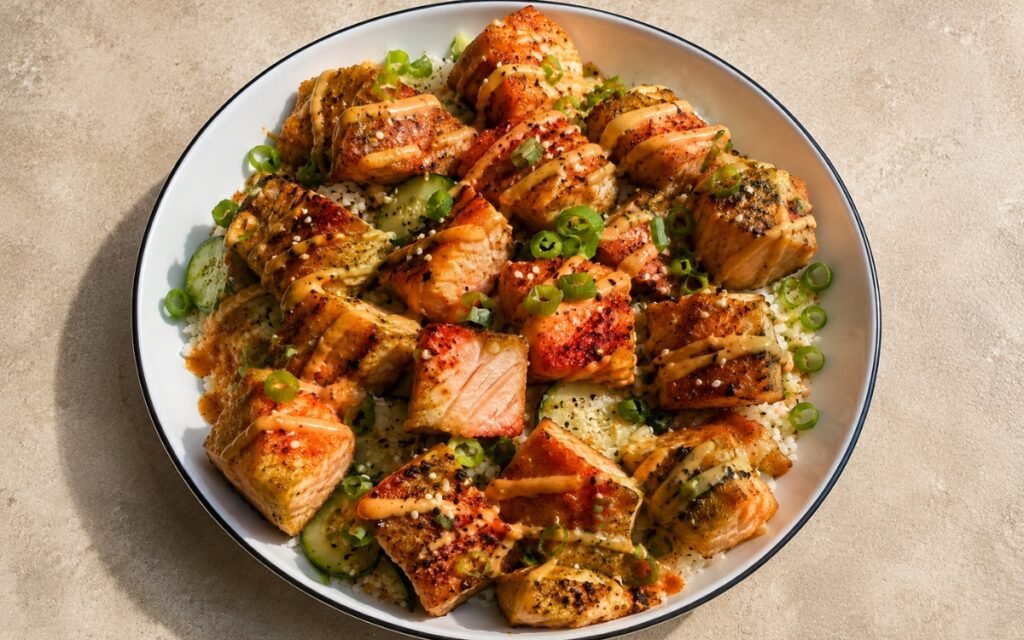
Crispy Salmon Bites with Spicy Mayo
Golden, caramelized salmon bites over jasmine rice with cucumber, scallions, sesame seeds, and a generous drizzle of spicy mayo.
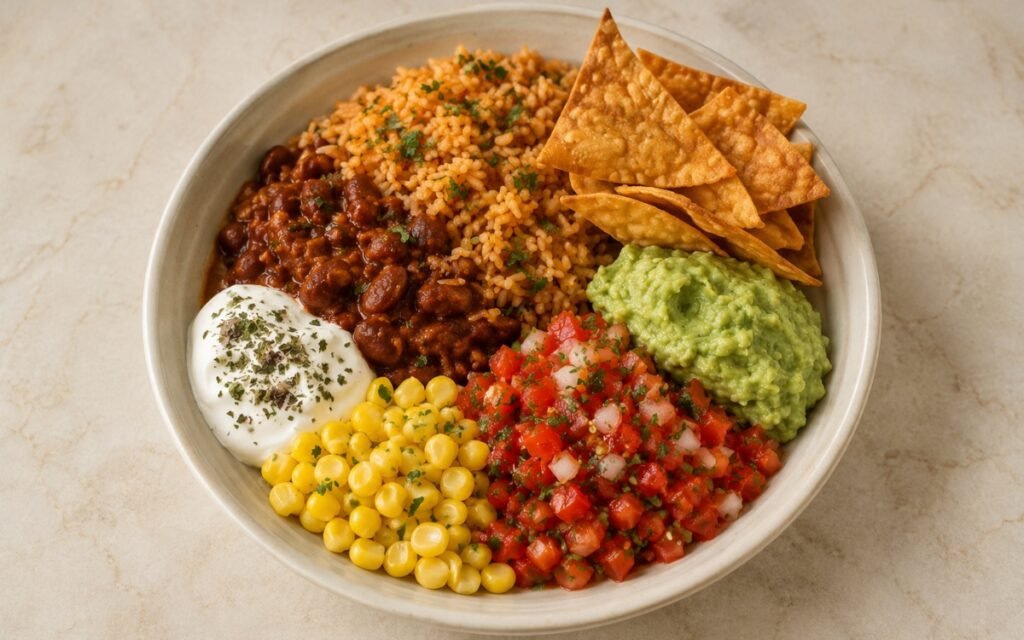
Loaded Mexican Taco Bowl
Toasted tomato rice, smoky chipotle red beans, fresh pico de gallo, plain guacamole, sour cream, and crispy tortilla chips, layered in one vibrant bowl.
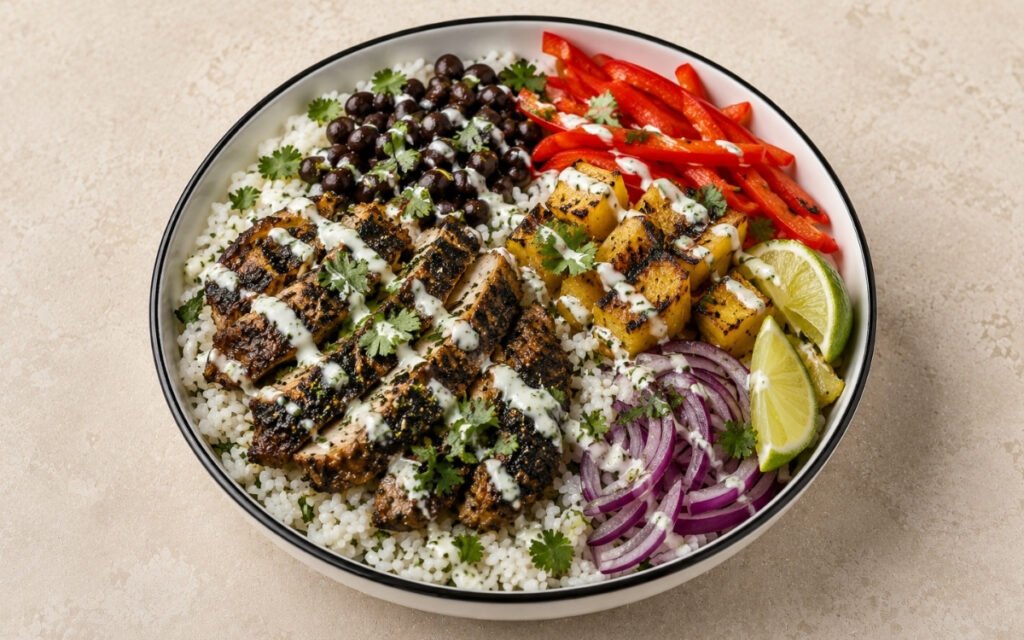
Caribbean Jerk Chicken Rice Bowl
Chicken thighs scored, marinated in blended allspice jerk paste, and deeply charred in cast iron — over coconut rice with charred pineapple, black beans, and lime-cilantro crema.
You might also like
You might also like
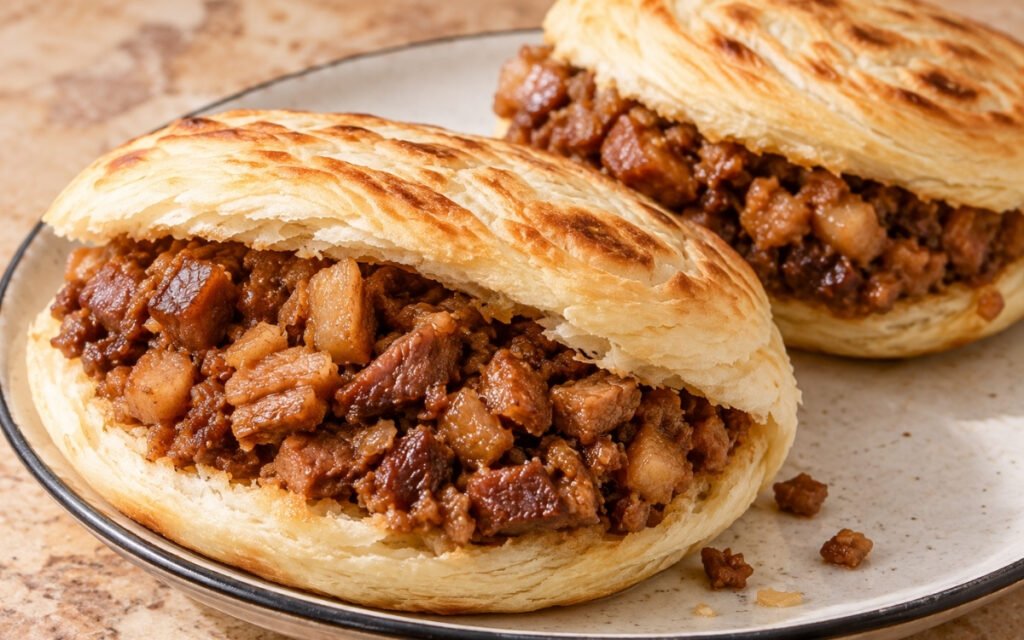
Roujiamo Sandwich
Crisp-outside, soft-inside flatbread packed with finely chopped, richly spiced braised pork belly and reduced braising juices.
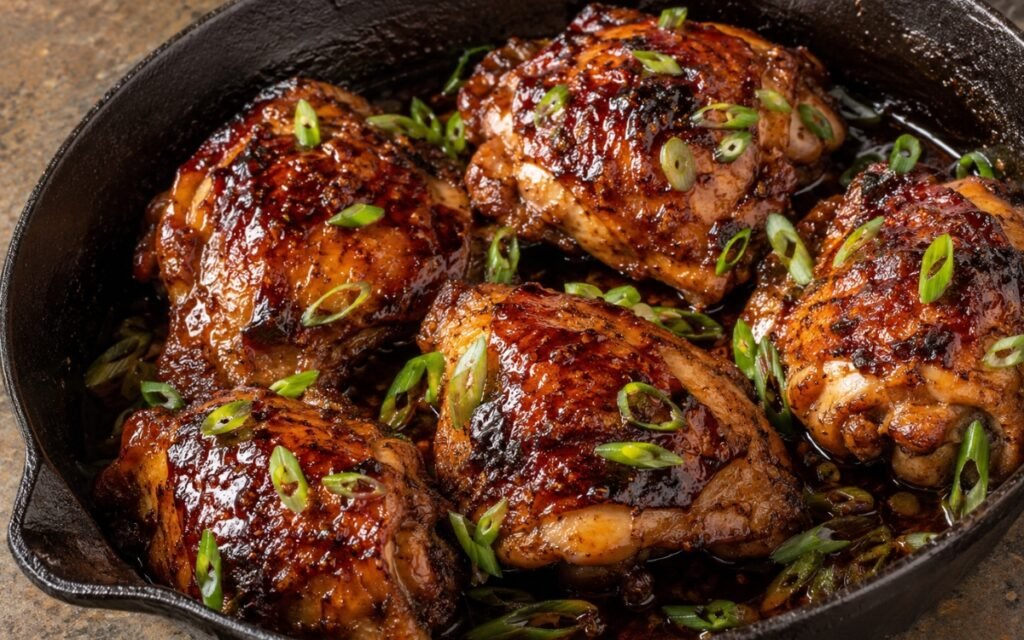
Chinese Five-Spice Chicken Thighs
Chicken thighs scored and marinated in five-spice, soy, ginger, and garlic — seared undisturbed, roasted until crispy, rested. Warm, aromatic, crispy-skinned.
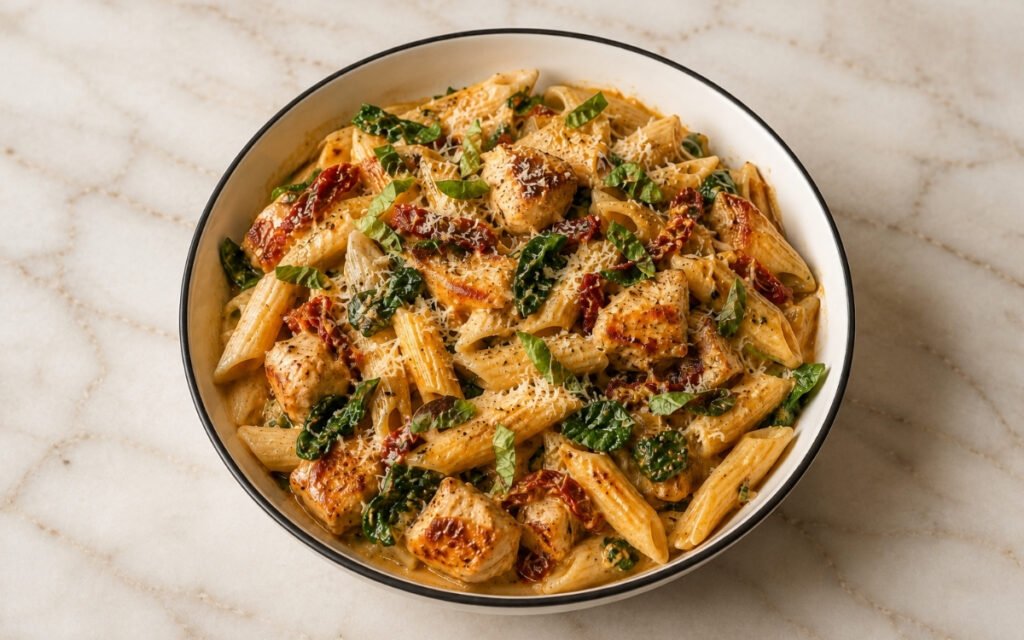
Tuscan Chicken Cream Pasta
Seared chicken, sun-dried tomatoes, spinach, and Parmigiano cream in one pan — finished with the tomato jar oil. 40 minutes.
Ginger Scallion Chicken over Rice (Hainanese Style Chicken)
Ingredients
Method
- Place the chicken thighs in a saucepan or shallow pot in a single layer if possible. Add the water, sliced ginger, scallion pieces, salt, white pepper, and Shaoxing wine if using. Bring the liquid just to a gentle simmer over medium heat. Do not let it boil hard. Once the liquid reaches a gentle simmer and the chicken turns opaque on the outside, lower the heat so the broth stays at a very gentle poach, around 80–90°C. Poach for 12–18 minutes, depending on thickness, until the chicken is just cooked through. The thickest part should reach about 72–74°C. The meat should feel springy and the juices should run clear, but the chicken must still look juicy, pale, and silky. Turn off the heat, cover, and let the chicken rest in the hot broth for 5 minutes to finish gently and stay moist. Remove the chicken and let it rest. Reserve the poaching broth. For the glossiest skin and cleanest slices, let the chicken cool just enough to handle before slicing. That genuinely gentle poach, held well below a boil throughout, is exactly what protects the chicken’s own skin from tightening and roughening — a hard boil would agitate both meat and skin considerably more than this delicate cut and texture can tolerate.
- Rinse the jasmine rice until the water runs almost clear, then drain well. Heat the chicken fat or oil in a saucepan or rice-cooker insert. Add the garlic and minced ginger and cook over medium-low heat for 30–60 seconds until fragrant, without browning. Add the drained rice and stir for 1–2 minutes so every grain is lightly coated in fat. This is a key step for distinct, fragrant rice. Add 450ml strained hot poaching broth and the salt. Cook in a rice cooker or on the stovetop until tender. Once done, rest the rice covered for 10 minutes, then fluff gently. The rice should be aromatic, lightly savory, and separate rather than wet or mushy. Coating every grain in fat before any liquid is added is what lets the rice actually cook up distinct and separate, rather than the grains clumping together the way uncoated rice tends to.
- Place the chopped scallions, minced ginger, salt, sugar, and a pinch of white pepper in a heatproof bowl. Heat the neutral oil until shimmering hot, then pour it directly over the scallion-ginger mixture. It should sizzle immediately. Stir well. Add 1–2 tablespoons hot chicken broth to loosen it slightly if needed. The sauce should be glossy, spoonable, and vivid green, with visible minced ginger and scallion suspended in the oil. Add the sesame oil only if using, and keep it light so it does not overpower the clean Hainanese profile. Taste and adjust the salt. The sauce should taste punchy and savory because it seasons both the chicken and the rice. That immediate, audible sizzle when the hot oil hits the raw aromatics is a genuine confirmation the oil is actually hot enough to properly cook and release the ginger and scallion’s own flavour, rather than simply warming them through.
- Slice the rested chicken into wide, neat pieces across the grain, keeping the skin attached. If any juices collect while the chicken rests, reserve them and spoon them back over the sliced meat. The chicken should look moist and lightly glossy, not dry or shredded. Slicing specifically across the grain, rather than with it, is what keeps every piece genuinely tender to bite through, cutting across the meat’s own muscle fibers rather than leaving them intact.
- Divide the rice among 4 plates or shallow bowls. Fan the sliced chicken over the rice. Spoon a little reserved hot broth or chicken juices over the rice and chicken to keep everything visibly moist. Spoon the ginger-scallion sauce generously over the chicken so some runs down into the rice. Finish with a small amount of fresh cilantro. Spooning the sauce specifically over the chicken, rather than mixing it in beforehand, is what lets it run down naturally into the rice below, seasoning both components together right at the moment of serving.