
Japanese Gyoza Soup
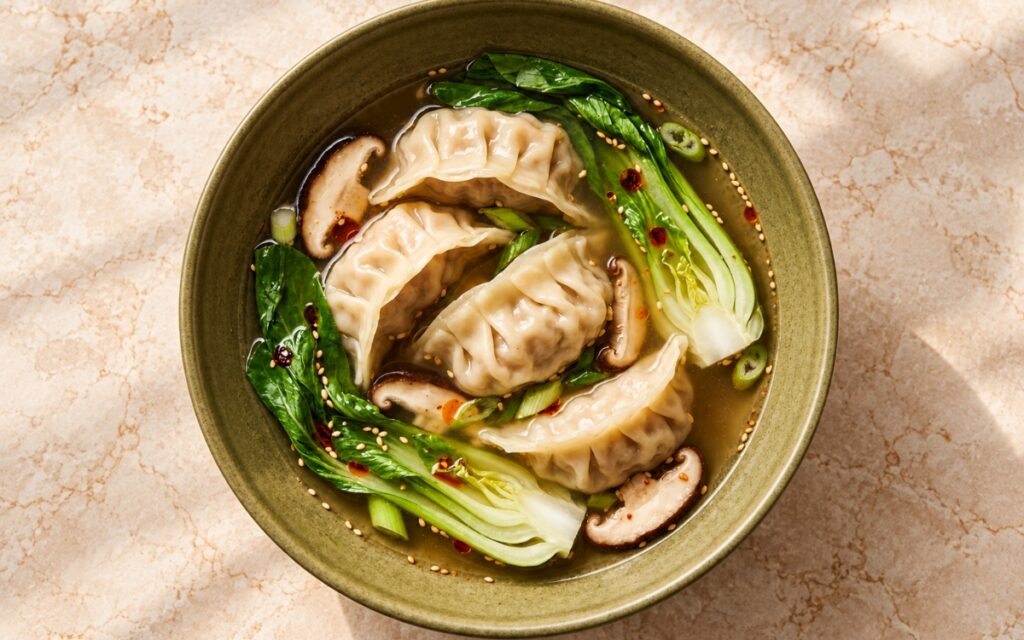
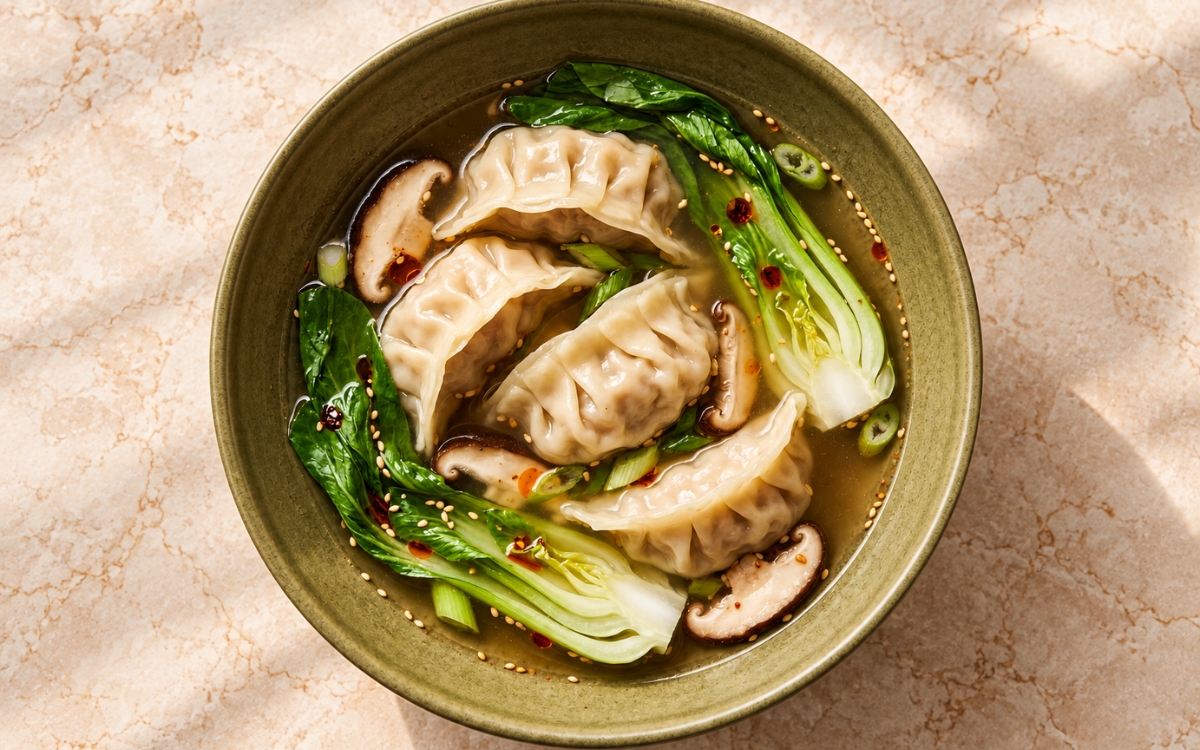
A light, comforting Japanese-style gyoza soup built from delicate chicken dumplings in a clear, golden broth with baby bok choy, sliced shiitake mushrooms, scallion, toasted sesame seeds, and a few drops of chili oil, the key being a broth that stays clean and light while the dumplings remain the star. Cooking the gyoza in a separate pot of gently simmering water, rather than directly in the soup broth, is the technique this whole soup depends on for a clear, light golden finish — dumplings shed starch and any escaping filling into their cooking water, and a rolling boil clouds the broth and tears the delicate wrappers, the same keep-it-gentle-and-separate principle used elsewhere in this collection whenever a clear broth must stay clean. Squeezing the salted napa cabbage very dry is what keeps the filling cohesive and stops the wrappers from splitting and leaking into the soup. Mixing the filling firmly in one direction until sticky is what gives the dumplings a springy, juicy bite rather than a loose, crumbly one. The payoff is a bowl with real, quiet comfort — silky pleated dumplings, juicy chicken filling, tender bok choy and shiitake, and a light golden broth finished with scallion, sesame, and tiny drops of chili oil.
Prep Time : 40 min
Total Time : 1 hr 5 min
Servings : 4
40 min
1 hr 5 min
4
Ingredients
For the Chicken Gyoza Filling
• 450g ground chicken thigh
• 180g napa cabbage, finely chopped
• 3 scallions, very finely sliced
• 2 garlic cloves, finely grated
• 15g fresh ginger, finely grated
• 20ml soy sauce
• 15ml sake
• 10ml toasted sesame oil
• 5ml neutral oil
• 4g fine salt, for salting the cabbage
• 1g white pepper
• 8g potato starch or cornstarch
For the Dumplings
• 20 round gyoza wrappers
• Water, as needed for sealing
• Potato starch or cornstarch, for lightly dusting the tray
For the Soup Broth
• 1,500ml light chicken stock
• 250ml water
• 20ml soy sauce
• 10ml usukuchi soy sauce, or additional regular soy sauce
• 15ml sake
• 10ml mirin
• 4 thin slices fresh ginger
• Salt, to taste
• A pinch of white pepper
For the Vegetables and Garnish
• 4 small baby bok choy, halved lengthwise
• 8 medium shiitake mushrooms, stems removed, caps sliced
• 2 scallions, thinly sliced
• 2 tsp toasted sesame seeds
• 1–2 tsp chili oil, for finishing
Directions
- Salt and Squeeze the Cabbage
Toss the 180g of finely chopped napa cabbage with the 4g of fine salt in a bowl and leave it for 10 minutes, until it looks lightly wilted and water has collected at the bottom. Gather the cabbage in a clean cloth or squeeze it in your fist, pressing firmly several times until it feels much drier and no more liquid runs out. Do not leave a pool of moisture in the cabbage, because wet cabbage loosens the filling and lets the dumplings leak into the soup. That thorough squeezing is what keeps the filling cohesive and the wrappers intact. - Mix the Chicken Filling
Combine the 450g of ground chicken thigh, the squeezed cabbage, 3 very finely sliced scallions, 2 grated garlic cloves, 15g of grated ginger, 20ml soy sauce, 15ml sake, 10ml toasted sesame oil, 5ml neutral oil, 1g white pepper, and 8g potato starch in a mixing bowl. Mix firmly with chopsticks or your hand for 2–3 minutes, stirring in one direction, until the filling turns sticky, cohesive, and slightly tacky, holding together as a soft paste that clings to the bowl. If it feels too wet, mix in 1–2 more teaspoons of starch. That firm one-direction mixing is what develops a springy, juicy filling. - Wrap the Gyoza
Keep the 20 round wrappers under a towel so they do not dry out, and set a small bowl of water beside a tray lightly dusted with potato starch or cornstarch. Place 20–22g of filling in the centre of each wrapper, moisten the edge lightly with water, then fold into a half-moon and pleat one side over the other, pressing firmly at the pleats and both ends. Each dumpling should look full but close comfortably, sealed tightly with no air pockets. Set the finished gyoza on the tray, cover loosely, and keep any extra filling for a second batch. That firm sealing is what stops the dumplings bursting in the water. - Build the Broth
Combine the 1,500ml of chicken stock, 250ml water, 20ml soy sauce, 10ml usukuchi soy sauce, 15ml sake, 10ml mirin, and the 4 slices of ginger in a pot and bring it to a gentle simmer, never a hard boil. Taste and adjust lightly with salt and a pinch of white pepper, until the broth tastes delicate, clean, and lightly savoury rather than dark or salty. It should stay clear and light golden. That gentle heat and restrained seasoning are what keep the broth clean enough to let the dumplings lead. - Cook the Mushrooms and Bok Choy
Add the 8 sliced shiitake caps to the simmering broth and cook gently for 3–4 minutes, until tender and softened. Add the 4 halved baby bok choy and cook for 1–2 minutes, just until the stems are tender and the leaves are still bright green. Lift both out with a slotted spoon if you want cleaner final bowls, or leave them in and hold the broth on the lowest heat. That short, gentle cooking is what keeps the bok choy vivid and the mushrooms silky. - Cook the Gyoza Separately
Bring a separate pot of water to a gentle boil, then lower it to a steady simmer, and add the gyoza in batches if needed so they are not crowded. Cook for 4–5 minutes, stirring very gently once after the first minute to prevent sticking, until the wrappers look silky and slightly translucent, the dumplings float, and the filling is cooked through. Check that the centre reaches 74°C if you want to be certain, and add 1–2 minutes if cooking from frozen. That separate pot is what keeps starch and stray filling out of the soup. - Assemble and Serve
Reheat the broth until piping hot, lift out the ginger slices, and divide the cooked gyoza among 4 bowls, 5 dumplings per bowl. Arrange the bok choy and shiitake around the dumplings, then ladle the hot broth around them so the pleated tops sit visibly above the surface. Finish with the 2 sliced scallions, the 2 tsp of toasted sesame seeds, and a few tiny droplets of the 1–2 tsp of chili oil, using only enough to accent the broth, never to turn it red. That minimal finish is what keeps the dumplings the star of the bowl.
*Notes :
- Cooking the gyoza in their own pot of water deserves genuine recognition as the technique most directly responsible for a clear, golden broth. Raw wrappers release surface starch as they cook and any seepage from the filling clouds the liquid, so a separate pot keeps all of that away from the soup the bowls are built on.
- Squeezing the salted cabbage thoroughly deserves the same attention this technique receives throughout this collection’s other dumpling and filling-based recipes. Salt draws out the water the cabbage would otherwise release inside each wrapper, and that liquid is what loosens the filling, splits the seams, and leaks into the broth.
- A gentle simmer deserves genuine respect as the detail most directly responsible for intact dumplings and a clean soup. A rolling boil knocks the delicate gyoza against each other and the pot, tearing wrappers at the pleats, whereas a steady simmer cooks the filling through gently without breaking anything or clouding the liquid.
- The 74°C filling temperature deserves attention as a genuine, checkable readiness cue rather than a loose approximation. Floating, silky, slightly translucent wrappers are a good visual sign, but a quick probe confirms the ground chicken is fully cooked through, which matters because the centre of a plump dumpling is always the last part to set.
Why This Recipe Works
This recipe works because salting and squeezing the napa cabbage keeps excess water out of the filling, so every wrapper stays sealed. Firm one-direction mixing turns ground chicken thigh into a sticky, springy paste that stays juicy once cooked. A broth of light stock, soy sauce, usukuchi soy, sake, mirin, and ginger is seasoned lightly enough to let the dumplings lead. Cooking the gyoza in a separate pot of gently simmering water keeps that broth clear and golden. Assembling everything just before serving leaves silky wrappers, tender vegetables, and a clean, savoury finish.
Ingredient Breakdown
Separate Pot for the Gyoza (Not the Broth)
The critical technique — their own water catches released starch and stray filling, so the soup broth stays clear and golden.
Salted, Squeezed Napa Cabbage
The critical technique — salting draws out water and squeezing removes it, so the filling stays cohesive and the wrappers seal without splitting.
Ground Chicken Thigh
The critical ingredient choice — thigh meat carries more fat than lean breast, giving a juicier, more tender filling that stays springy after cooking.
Light Chicken Stock with Usukuchi Soy
The flavour foundation — a delicate stock and pale soy season the broth gently without darkening it, so it stays clean and lightly savoury.
Sake, Mirin, and Fresh Ginger
The aromatic balance — sake and ginger lift the stock while mirin adds gentle sweetness, rounding the broth without making it heavy.
Baby Bok Choy and Shiitake (Just Tender)
The vegetable contrast — fresh green bok choy and earthy shiitake frame the dumplings, cooked only until tender so they stay vivid and silky.
Chili Oil and Sesame (A Few Drops)
The finishing touch — tiny droplets add warmth and toasted sesame adds nuttiness, without turning the clear broth red.
Flavor Structure Explained
This Japanese gyoza soup follows a layered balance model:
- Juicy, savoury foundation (ground chicken thigh, garlic, ginger, soy sauce)
- Silky, tender structure (gyoza wrappers, napa cabbage)
- Clean, delicate base (light chicken stock, usukuchi soy sauce, sake, mirin)
- Sweet, earthy vegetable note (baby bok choy, shiitake mushrooms)
- Fresh, warming finishing note (scallion, toasted sesame seeds, chili oil)
Ground chicken thigh, garlic, ginger, and soy sauce build a juicy, savoury core inside the dumplings, while the silky wrappers and napa cabbage give them a tender structure. A light stock seasoned with usukuchi soy, sake, and mirin forms a clean, delicate base that supports rather than competes. Bok choy and shiitake add gentle sweetness and earthy depth around the bowl. Scallion, toasted sesame, and a few drops of chili oil add the fresh, warming finish that ties the Japanese gyoza soup together.
Common Mistakes to Avoid
- Leaving Water in the Cabbage – This loosens the filling and lets the wrappers split and leak into the soup. Always salt the cabbage for 10 minutes and squeeze it until no liquid runs out.
- Cooking the Gyoza in the Serving Broth – This clouds the soup with starch and escaping filling, leaving it murky instead of clear. Always cook the dumplings in a separate pot of simmering water.
- Boiling the Water Aggressively – This tears the delicate wrappers and knocks the dumplings together, and a rolling boil in the broth clouds it too. Always keep both pots at a gentle simmer.
- Leaving Seams Open or Overfilling – This lets the filling push through the pleats so the dumplings burst in the water. Always press firmly at the pleats and both ends, and keep to 20–22g of filling.
- Drowning the Bowl in Chili Oil – This turns the clear golden broth red and overpowers its delicate flavour. Always use only a few tiny droplets as a finishing accent.
Variations
Pork Version
Replace the ground chicken thigh with the same weight of ground pork for a richer, fattier filling that still suits the light golden broth, keeping the cabbage squeezed and the mixing firm.
Frozen Gyoza Version
Fold the dumplings ahead, freeze them in a single layer, and cook them straight from frozen in the simmering water for 1–2 minutes longer, so a weeknight bowl comes together quickly.
Mushroom-Boosted Version
Stir a small amount of very finely minced shiitake into the filling for deeper savoury flavour, keeping it restrained so the juicy chicken still leads.
Spicier Version
Offer extra chili oil at the table so each person can add warmth to taste, while the bowls themselves are still served clear and golden with only a few drops.
Storage & Make-Ahead
Gyoza soup is best assembled just before serving, because the wrappers keep softening in hot broth, so hold the cooked dumplings and the hot broth separate for as long as possible and combine them in the bowls at the last moment.
Uncooked gyoza can be frozen in a single layer on a tray and then stored frozen once solid, and they cook straight from frozen without thawing, needing only 1–2 minutes longer than fresh ones.
The broth, shiitake, and bok choy can be prepared a few hours ahead and held off the heat, then reheated gently until piping hot, which keeps the soup light and spares you last-minute work.
If the broth becomes starchy or cloudy while it waits, strain it or refresh it with a little extra hot stock before serving, so the finished bowls stay clear and light golden.
Leftover cooked gyoza keep best refrigerated in an airtight container, separate from the broth, for up to 1 day, then they should be reheated briefly in simmering broth until hot through, although the wrappers will be softer than on the first day.
Frequently Asked Questions
Why are the gyoza cooked in a separate pot instead of in the soup broth?
Dumplings release starch and sometimes a little filling as they cook, so simmering them in their own water keeps that cloudiness out of the soup and leaves the serving broth clear, light, and golden.
Why is the napa cabbage salted and squeezed so dry?
Salt draws water out of the cabbage, and squeezing removes it, so the filling stays sticky and cohesive instead of loose and wet, which prevents the wrappers from splitting and leaking into the soup.
Why is the filling mixed firmly in one direction until sticky?
Stirring in one direction develops the proteins in the ground chicken into a springy, emulsified paste that holds its juices, whereas loose mixing leaves a crumbly, dry filling that does not bind well.
Why must both the broth and the dumpling water stay at a gentle simmer?
A rolling boil clouds the broth and tosses the delicate gyoza around until the wrappers tear, while a steady simmer cooks the filling through and keeps the soup clear and the dumplings intact.
Are there other classic Japanese dumpling, ramen, or chili oil dishes worth trying?
Japanese Pork Gyoza — Pan-Fried Dumplings offers another classic Japanese dumpling direction worth exploring. Sichuan Chili Oil Wontons and Miso Butter Corn Ramen are also worth trying for other bold, comforting bowl directions, and Pork Soup Dumplings / Xiao Long Bao and Chili Garlic Oil offer other dumpling and chili oil dishes worth exploring.
Nutrition Facts
( Per Serving )
Calories
~430 kcal
Protein
30 g
Fat
17 g
Carbs
35 g
Calories
~430 kcal
Protein
30 g
Fat
17 g
Carbs
35 g
Related Recipes
Related Recipes
-

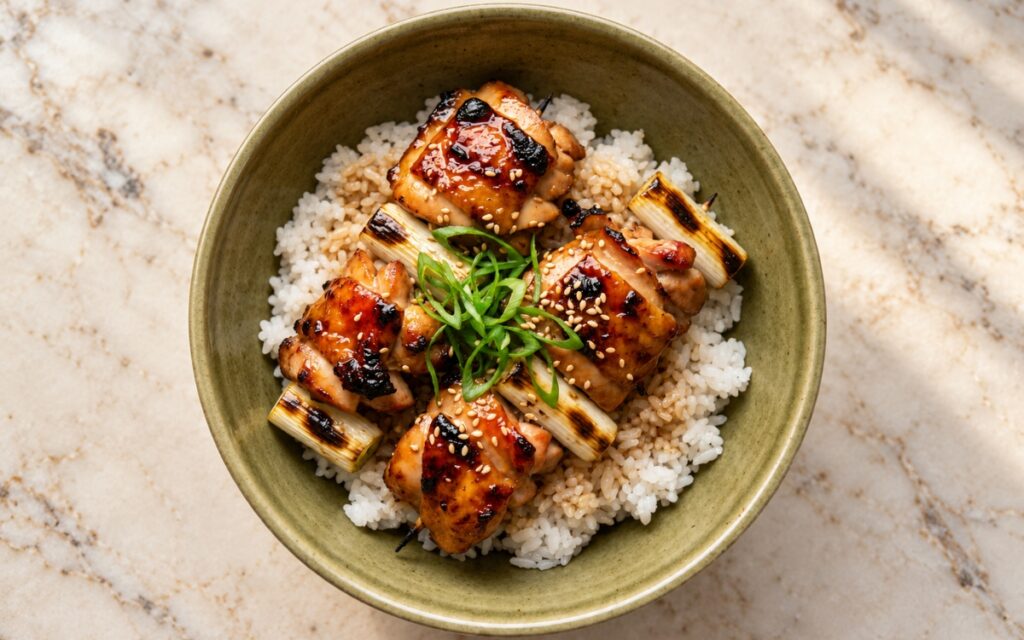
Japanese Chicken Yakitori Rice Bowl
Grilled skin-on chicken thigh and charred scallion sections glazed in glossy yakitori tare over short-grain rice with sesame and sliced green onions.
-
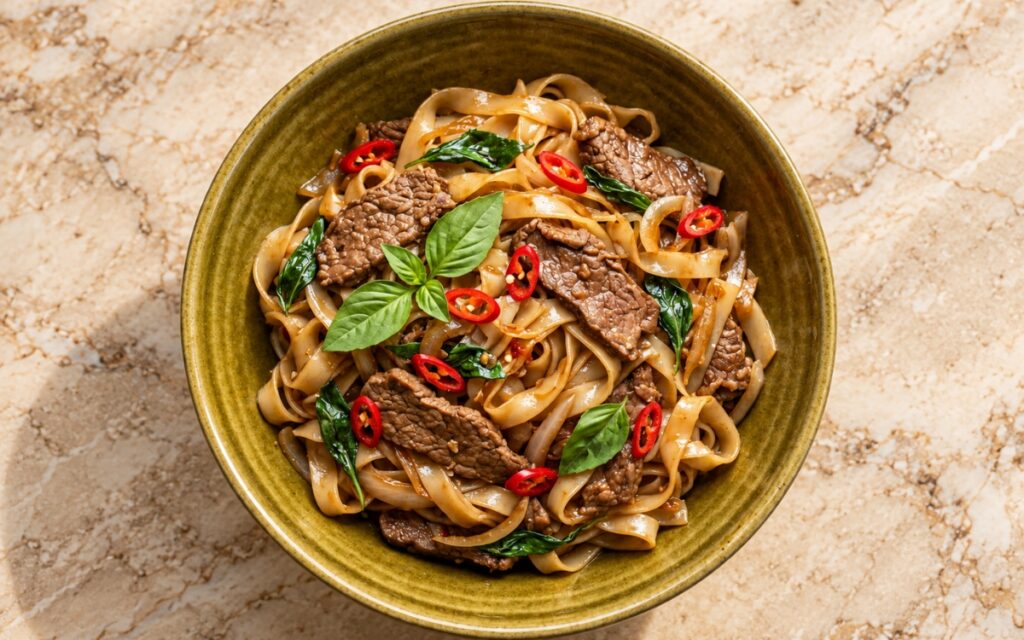
Thai Basil Beef Noodles
Wide rice noodles stir-fried with seared beef, onion, garlic and red chillies in a glossy dark sauce, finished with fresh Thai basil.
-
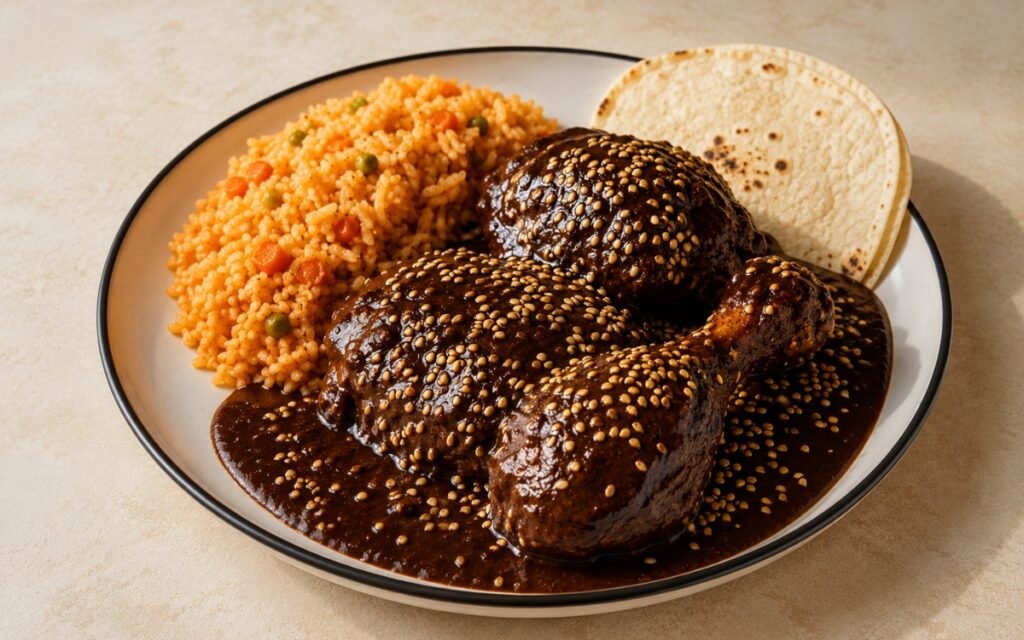
Chicken Mole Poblano
Gently poached chicken finished in deep, glossy mole poblano sauce, topped with toasted sesame seeds, served with Mexican rice and warm tortillas.
You might also like
You might also like
-
Peruvian Green Sauce Chicken
Charred bone-in chicken thighs with deeply browned skin, served with fluffy white rice, raw red onion, lime wedges, and a thick, creamy green ají verde.
-
Teriyaki Chicken Rice Bowl
Chicken thighs seared and glazed in homemade soy-mirin-sake-ginger teriyaki — reduced until sticky and glossy over jasmine rice with crisp stir-fried vegetables. 40 minutes.
-
Korean Spicy Chicken Dakgalbi Bowl
Glossy gochujang chicken with sweet potato, cabbage, and onion over white rice, topped with sesame seeds and scallion.


Japanese Gyoza Soup
Ingredients
Method
- Toss the 180g of finely chopped napa cabbage with the 4g of fine salt in a bowl and leave it for 10 minutes, until it looks lightly wilted and water has collected at the bottom. Gather the cabbage in a clean cloth or squeeze it in your fist, pressing firmly several times until it feels much drier and no more liquid runs out. Do not leave a pool of moisture in the cabbage, because wet cabbage loosens the filling and lets the dumplings leak into the soup. That thorough squeezing is what keeps the filling cohesive and the wrappers intact.
- Combine the 450g of ground chicken thigh, the squeezed cabbage, 3 very finely sliced scallions, 2 grated garlic cloves, 15g of grated ginger, 20ml soy sauce, 15ml sake, 10ml toasted sesame oil, 5ml neutral oil, 1g white pepper, and 8g potato starch in a mixing bowl. Mix firmly with chopsticks or your hand for 2–3 minutes, stirring in one direction, until the filling turns sticky, cohesive, and slightly tacky, holding together as a soft paste that clings to the bowl. If it feels too wet, mix in 1–2 more teaspoons of starch. That firm one-direction mixing is what develops a springy, juicy filling.
- Keep the 20 round wrappers under a towel so they do not dry out, and set a small bowl of water beside a tray lightly dusted with potato starch or cornstarch. Place 20–22g of filling in the centre of each wrapper, moisten the edge lightly with water, then fold into a half-moon and pleat one side over the other, pressing firmly at the pleats and both ends. Each dumpling should look full but close comfortably, sealed tightly with no air pockets. Set the finished gyoza on the tray, cover loosely, and keep any extra filling for a second batch. That firm sealing is what stops the dumplings bursting in the water.
- Combine the 1,500ml of chicken stock, 250ml water, 20ml soy sauce, 10ml usukuchi soy sauce, 15ml sake, 10ml mirin, and the 4 slices of ginger in a pot and bring it to a gentle simmer, never a hard boil. Taste and adjust lightly with salt and a pinch of white pepper, until the broth tastes delicate, clean, and lightly savoury rather than dark or salty. It should stay clear and light golden. That gentle heat and restrained seasoning are what keep the broth clean enough to let the dumplings lead.
- Add the 8 sliced shiitake caps to the simmering broth and cook gently for 3–4 minutes, until tender and softened. Add the 4 halved baby bok choy and cook for 1–2 minutes, just until the stems are tender and the leaves are still bright green. Lift both out with a slotted spoon if you want cleaner final bowls, or leave them in and hold the broth on the lowest heat. That short, gentle cooking is what keeps the bok choy vivid and the mushrooms silky.
- Bring a separate pot of water to a gentle boil, then lower it to a steady simmer, and add the gyoza in batches if needed so they are not crowded. Cook for 4–5 minutes, stirring very gently once after the first minute to prevent sticking, until the wrappers look silky and slightly translucent, the dumplings float, and the filling is cooked through. Check that the centre reaches 74°C if you want to be certain, and add 1–2 minutes if cooking from frozen. That separate pot is what keeps starch and stray filling out of the soup.
- Reheat the broth until piping hot, lift out the ginger slices, and divide the cooked gyoza among 4 bowls, 5 dumplings per bowl. Arrange the bok choy and shiitake around the dumplings, then ladle the hot broth around them so the pleated tops sit visibly above the surface. Finish with the 2 sliced scallions, the 2 tsp of toasted sesame seeds, and a few tiny droplets of the 1–2 tsp of chili oil, using only enough to accent the broth, never to turn it red. That minimal finish is what keeps the dumplings the star of the bowl.