
Korean Spicy Chicken Dakgalbi Bowl
A rice-bowl take on Korean dakgalbi, built from boneless chicken thigh pieces coated in a deep-red gochujang and gochugaru sauce, cooked with sweet potato, cabbage, onion, and scallions, and spooned over fluffy white rice with sesame seeds and fresh scallion. Searing the marinated chicken in a single layer before any vegetables join the pan, rather than stewing everything together from the start, is the technique this whole bowl depends on for deep colour and caramelised edges — crowding the pan releases steam that boils the sauce pale instead of browning it, the same sear-first-then-build principle used elsewhere in this collection whenever a sticky sauce must cling to browned meat. Cutting the sweet potato small and pre-softening it briefly is what genuinely lets it turn tender at the same moment as the cabbage and chicken. Cooking the vegetables covered and then uncovered is what wilts them fully and then lets the excess moisture reduce into a thick, glossy glaze. The payoff is a bowl with real, genuinely sticky depth — lacquered, medium-hot chicken, sweet potato and cabbage glazed rather than watery, and distinct grains of rice underneath, finished with toasted sesame and sliced scallion.

Prep Time : 20 min
Total Time : 1 hr 15 min
Servings : 4
20 min
1 hr 15 min
4
Ingredients
For the Rice
• 300g uncooked white rice (short-grain or jasmine), rinsed
• Water, as needed for cooking the rice
For the Chicken
• 700g boneless skinless chicken thighs, cut into large bite-size pieces
For the Vegetables
• 300g sweet potato, peeled and cut into small bite-size chunks or thin half-moons
• 300g green cabbage, cut into rough bite-size pieces
• 1 medium onion (about 180g), sliced
• 4 scallions, cut into 4–5 cm pieces, whites and greens separated
For the Dakgalbi Sauce and Marinade
• 4 tbsp gochujang
• 1½ tbsp gochugaru
• 2 tbsp soy sauce
• 1½ tbsp brown sugar
• 1 tbsp honey or corn syrup
• 1½ tbsp mirin or rice wine
• 1 tbsp sesame oil
• 4 garlic cloves, finely grated or minced
• 1 tsp fresh ginger, grated
• ½ tsp black pepper
• 2 tbsp water
For the Cooking
• 1½ tbsp neutral oil
• 2–4 tbsp water, as needed during cooking
For the Garnish
• 2 tsp toasted sesame seeds
• 1 extra scallion, thinly sliced
Directions
- Cook the Rice
Rinse the 300g of rice in several changes of cold water until the water runs mostly clear, then drain well. Cook it in a rice cooker, or in a covered saucepan with water at your usual ratio for the rice, ideally while the chicken marinates so it is ready when the pan is. Rest it covered for 10 minutes, then fluff gently with a fork and keep it warm. The grains should stay fluffy and distinct, never sticky or wet. That covered rest is what lets residual steam settle evenly, keeping the rice genuinely separate enough to sit beneath a sticky glaze without turning to paste. - Make the Sauce
In a large bowl, stir together the 4 tbsp gochujang, 1½ tbsp gochugaru, 2 tbsp soy sauce, 1½ tbsp brown sugar, 1 tbsp honey or corn syrup, 1½ tbsp mirin or rice wine, 1 tbsp sesame oil, 4 grated garlic cloves, 1 tsp grated ginger, ½ tsp black pepper, and 2 tbsp water. Mix until completely smooth, with no streaks of paste. The sauce should be genuinely thick but spoonable, clinging to the back of a spoon rather than running off it. That thickness is what lets it coat the chicken evenly now and later reduce into a glossy glaze rather than a thin, watery sauce. - Marinate the Chicken
Cut the 700g of chicken thighs into large bite-size pieces so they stay juicy in the pan, add them to the sauce, and toss until every piece is evenly coated. Cover and leave for 20–30 minutes, refrigerating the bowl if the wait will run longer, and use the time to cook the rice and prepare the vegetables. The chicken should look deep red and fully coated. That short marination is what lets the meat take on colour and flavour before it touches the pan, so a longer wait is fine but not necessary. - Pre-Soften the Sweet Potato
Peel the 300g of sweet potato and cut it into small bite-size chunks or thin half-moons, then slice the onion, cut the 300g of cabbage into rough bite-size pieces, and cut the 4 scallions into 4–5 cm lengths, keeping the whites and greens apart. If the sweet potato pieces are on the thicker side, microwave or steam them for 3–4 minutes until just starting to soften but still holding their shape. That head start matters because sweet potato takes the longest of all the vegetables, and pre-softening is what lets everything finish together without overcooking the chicken. - Sear the Chicken
Heat a wide sauté pan or skillet over medium-high heat with the 1½ tbsp neutral oil. Add the marinated chicken in one layer as much as possible, scraping in all the sauce from the bowl, and leave it largely untouched for 4–5 minutes until the outside is browned and lightly caramelised. Lower the heat slightly if the sauce darkens faster than the chicken colours, and do not stir constantly at the start. That steady contact with the hot pan is what builds caramelised flavour, since constant stirring or a crowded pan lets the chicken steam instead of sear. - Add the Vegetables
Add the sweet potato, onion, scallion whites, and cabbage to the pan and toss everything together with the chicken. Add 2–4 tbsp water if the pan looks dry, then cover for 3–4 minutes. Uncover and keep cooking, stirring often, for another 8–12 minutes, until the chicken is cooked through to 74°C in the thickest piece, the cabbage is wilted but still present in pieces, the onion is soft, and the sweet potato is tender when pierced. That covered start is what steams the vegetables through, and the uncovered cooking afterwards is what lets excess moisture cook off instead of pooling like a stew. - Finish the Glaze
Add the scallion greens and cook for 30–60 seconds more, stirring until the sauce turns glossy and clings tightly to the chicken and vegetables. The mixture should look thick and shiny, with no thin liquid pooling in the pan; if any remains, keep cooking over medium-high heat for another minute or two. The vegetables should be tender and glazed, not watery. That final reduction is what genuinely turns a loose sauce into a lacquer, which is the difference between dakgalbi and a spicy chicken stew. - Assemble the Bowls
Divide the hot rice among 4 bowls, then spoon the dakgalbi mixture over the top, leaving some white rice visible around the edges. Scatter the 2 tsp of toasted sesame seeds and the thinly sliced extra scallion across the four bowls. Serve straight away, while the glaze is hot and sticky and the vegetables are still tender. That visible rice border is what keeps the dish eating like a rice bowl, with the glaze seasoning only the first layer of grains instead of soaking the whole base.
*Notes :
- Searing the chicken in a single layer, without stirring at the start, deserves genuine recognition as the technique most directly responsible for the bowl’s colour and flavour. Direct contact between the sugar-rich marinade and the hot pan is what caramelises the surface — a crowded pan or constant stirring traps steam and leaves the chicken pale, with a flat, boiled taste.
- Cutting the sweet potato small and giving it a brief head start deserves the same attention this technique receives throughout this collection’s other mixed-vegetable skillet dishes. Dense root vegetables need far longer than cabbage or onion to soften, so unevenly sized or unsoftened pieces either stay hard in the centre or force the chicken to overcook while they catch up.
- Letting excess moisture cook off at the end deserves genuine respect as the detail most directly responsible for a glaze rather than a stew. Cabbage and onion release a surprising amount of water as they wilt — only the final uncovered cooking evaporates it, concentrating the gochujang into a thick, sticky coating instead of a thin red pool.
- Choosing boneless skinless thighs rather than breast deserves attention as a genuine, checkable decision rather than a loose preference. Thigh meat carries more fat and connective tissue, which keeps it juicy through the long, hot cooking this dish genuinely needs, while breast dries out and turns stringy long before the vegetables and glaze are ready.
Why This Recipe Works
This recipe works because a smooth, thick gochujang marinade colours and seasons the thigh meat before it reaches the pan, and a hot single-layer sear turns that sugar-rich coating into caramelised edges. Small, pre-softened sweet potato pieces finish at the same moment as the cabbage, onion, and chicken, so nothing is overcooked waiting for something else. Covering the pan briefly steams the vegetables through, while uncovered cooking evaporates their moisture. The reduced sauce then clings as a genuinely glossy glaze, leaving tender, sticky chicken and vegetables over distinct grains of rice.
Ingredient Breakdown
Single-Layer Sear
The critical technique — letting the marinated chicken brown undisturbed builds caramelised edges and deep flavour that stewing in sauce cannot produce.
Boneless Skinless Chicken Thighs (Not Breast)
The critical ingredient choice — richer thigh meat stays genuinely juicy through long cooking and holds the sauce better than breast.
Small, Pre-Softened Sweet Potato
The critical timing technique — small pieces with a short head start soften alongside the cabbage and add sweetness against the heat.
Gochujang and Gochugaru
The defining flavour ingredient — fermented paste supplies savoury depth and body, while the flakes add clean heat and deep red colour.
Moisture Reduction
The critical finishing technique — uncovered cooking evaporates the vegetables’ water, concentrating the sauce into a thick glaze that clings.
Distinct-Grain Rice
The structural foundation — fluffy, separate grains stay neutral enough to balance the hot, sweet sauce while soaking up a little glaze.
Flavor Structure Explained
This Korean spicy chicken dakgalbi bowl follows a layered balance model:
- Neutral, fluffy foundation (white rice)
- Savoury, caramelised core (seared chicken thigh, gochujang marinade)
- Sweet, tender body (sweet potato, onion, cabbage)
- Spicy, sticky glaze (gochujang, gochugaru, brown sugar, honey, mirin)
- Aromatic, nutty finish (garlic, ginger, sesame oil, toasted sesame seeds, scallion)
White rice gives the bowl its soft, neutral base, so the chicken and glaze stay the focus. Seared thigh meat, coated in fermented gochujang, forms the savoury core, while sweet potato, onion, and cabbage add tender sweetness and soft texture. Gochugaru, brown sugar, honey, and mirin create the medium-hot, sticky glaze, and garlic, ginger, sesame oil, toasted seeds, and fresh scallion add the aromatic finish that ties the whole dish together.
Common Mistakes to Avoid
- Stirring the Chicken Constantly at the Start – This keeps the meat off the hot pan, so it steams pale instead of caramelising. Always let it sit undisturbed for 4–5 minutes in one layer.
- Cutting the Sweet Potato Too Large – This leaves hard centres long after the chicken is done. Always cut small chunks or half-moons, and microwave thicker pieces for 3–4 minutes first.
- Leaving the Pan Covered Too Long – This traps steam, so released water thins the sauce into a stew. Always uncover after 3–4 minutes and cook until the liquid evaporates.
- Using Chicken Breast Instead of Thigh – This dries out and turns stringy during the cooking tender vegetables need. Always use boneless skinless thighs for juicy meat that holds the glaze.
- Overcooking the Rice – This makes it soft and sticky, so the bowl turns pasty under the glaze. Always rinse well, rest the rice covered, and fluff it to keep the grains distinct.
Variations
Extra-Hot Version
Increase the gochugaru gradually beyond 1½ tbsp, tasting the sauce as you go, to build a hotter dakgalbi while keeping enough sugar and honey to balance the heat.
Perilla Leaf Version
Tear a few perilla leaves into the pan at the very end with the scallion greens, adding a fragrant, slightly minty authentic note without changing the sticky glaze.
Corn Syrup Version
Use corn syrup instead of honey in the sauce, giving the glaze a slightly clearer, more lacquered shine and a more neutral sweetness behind the gochujang.
Half-Moon Sweet Potato Version
Cut the sweet potato into thin half-moons instead of small chunks, giving flat, quick-cooking slices that soften evenly alongside the cabbage and glaze generously on their broad surfaces.
Storage & Make-Ahead
Keep the cooked dakgalbi and the rice in separate airtight containers in the refrigerator for up to 3 days, because storing them together lets the glaze soften the rice and turn it sticky.
Reheat the dakgalbi in a skillet over medium heat with a small splash of water, stirring until steaming hot and the glaze loosens and clings again, which takes about 4–5 minutes.
Cool the cooked rice quickly, refrigerate it for up to 2 days, and reheat it covered in the microwave with a spoonful of water so the grains steam back to fluffy.
The sauce can be mixed and the chicken marinated in the refrigerator for up to 24 hours ahead, though a 20–30 minute marinade is already enough to colour and season the meat.
Slice the onion, cabbage, and scallions and cut the sweet potato a few hours ahead and refrigerate them covered, so only the pre-softening, searing, and glazing remain at cooking time.
Frequently Asked Questions
Why is the chicken left undisturbed at the start of searing instead of stirred right away?
Steady contact with the hot pan caramelises the sugar-rich marinade and browns the surface, while stirring constantly keeps the chicken moving and lets it steam, leaving it pale and flat in flavour.
Why is the sweet potato cut small and sometimes microwaved first?
Sweet potato is much denser than cabbage or onion, so small pieces with a 3–4 minute head start soften at the same time as the rest, without forcing the chicken to overcook.
Why must the pan be uncovered after the first 3–4 minutes of cooking?
Covering steams the vegetables through, but uncovering lets the water released by the cabbage and onion evaporate, which is what thickens the sauce into a glossy glaze rather than a spicy stew.
Why are boneless skinless chicken thighs preferred over breast for dakgalbi?
Thigh meat holds more fat and connective tissue, so it stays juicy through the long, hot cooking, whereas breast dries out and turns stringy before the vegetables and glaze are ready.
Are there other classic Korean pork, rice bowl, or sauce and salad dishes worth trying?
Korean Spicy Pork / Jeyuk Bokkeum offers another classic spicy Korean direction worth exploring. Korean Beef Bulgogi Rice Bowl and Korean Bibimbap are also worth trying for other Korean rice bowl directions, and Gochujang Honey Sauce and Spicy Asian Cucumber Salad offer other sauce and side dishes worth exploring.
Nutrition Facts
( Per Serving )
Calories
~740 kcal
Protein
40 g
Fat
19 g
Carbs
101 g
Calories
~740 kcal
Protein
40 g
Fat
19 g
Carbs
101 g
Related Recipes
Related Recipes
-

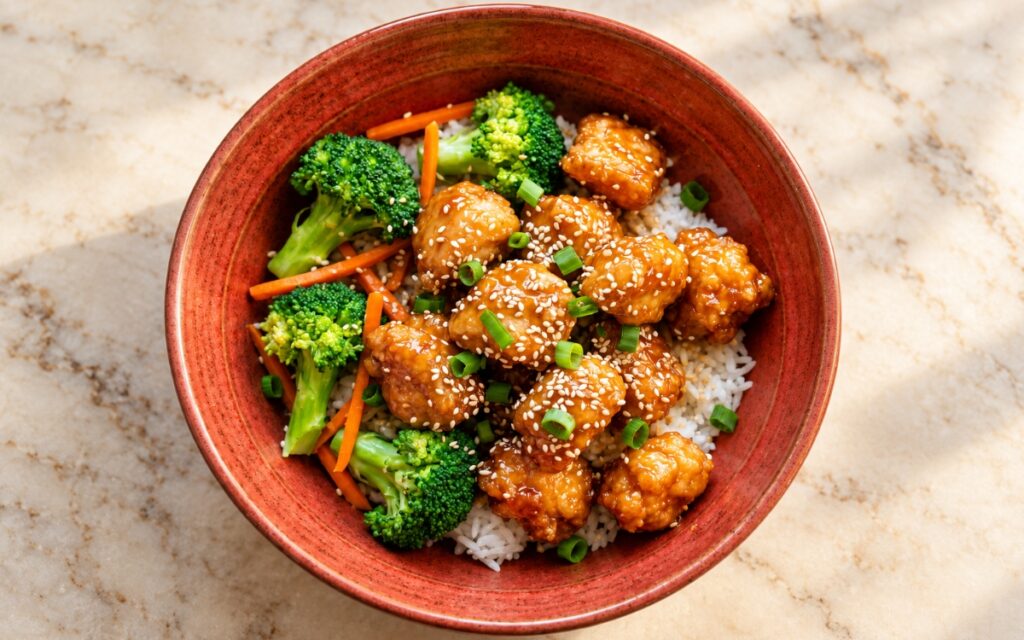
Honey Sesame Chicken Rice Bowl
Crisp fried chicken coated in thick glossy honey sesame glaze, served over jasmine rice with steamed broccoli, carrot strips, sesame seeds, and scallions.
-
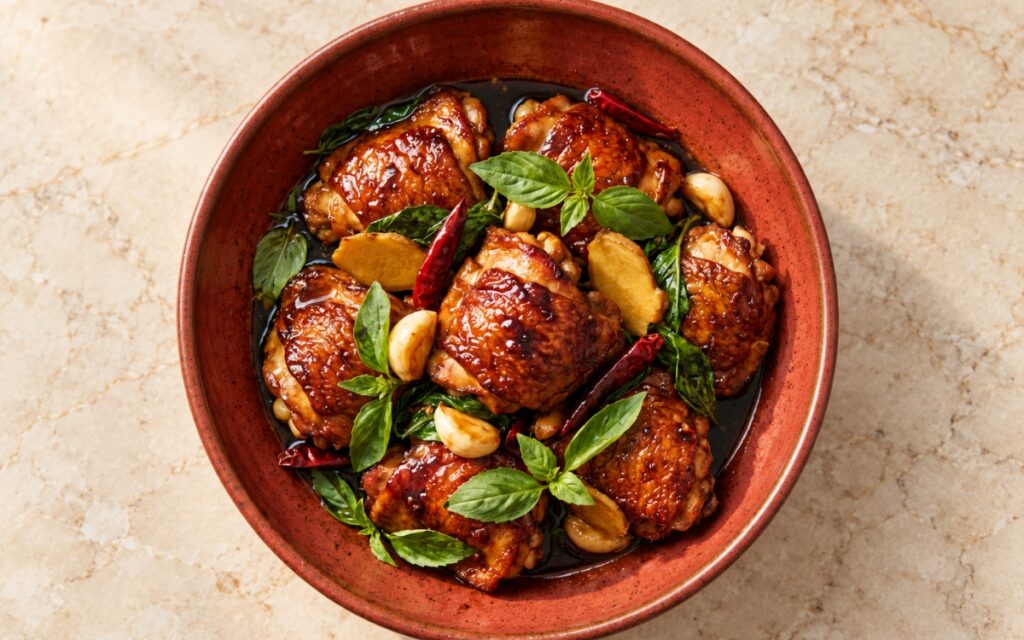
Taiwanese Three Cup Chicken (San Bei Ji)
Glossy soy-braised chicken thighs with whole garlic cloves, thick ginger, dried red chilies, and fresh Thai basil in a dark, syrupy sauce.
-
Mexican Pastel Azteca / Mexican Lasagna
Soft corn tortillas layered with shredded chicken, roasted poblano rajas, red tomato-chile sauce, crema, and melted cheese into a golden, sliceable Mexican casserole.

You might also like
You might also like
-
Korean Soy Garlic Fried Chicken
Crisp double-fried Korean chicken wings and drumettes in a glossy dark amber soy-garlic glaze, finished with toasted sesame seeds and sliced scallions.
-
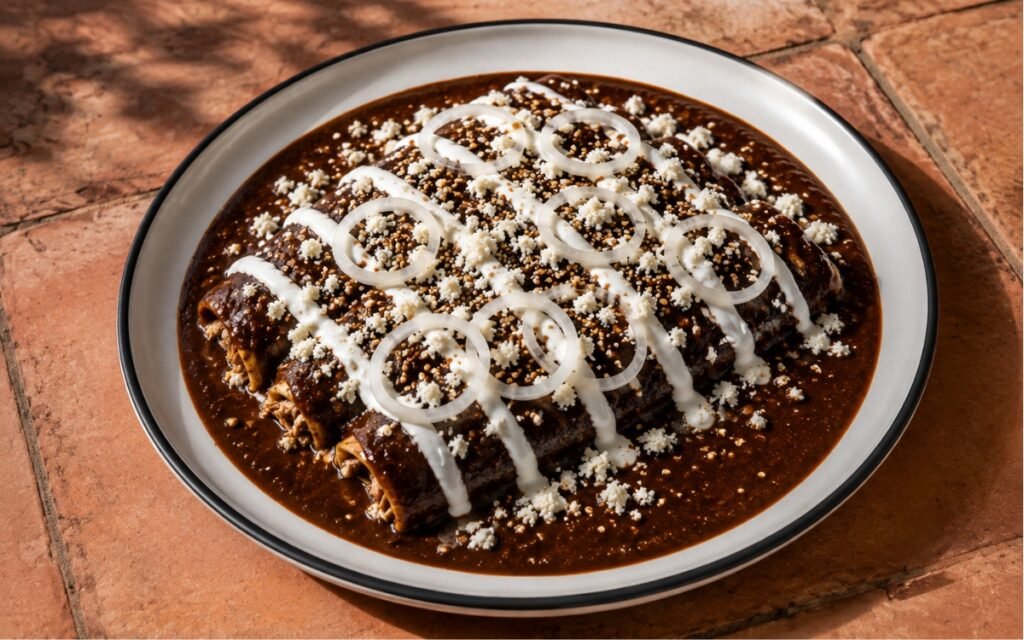
Chicken Enmoladas with Mole Poblano
Soft corn tortillas filled with tender shredded chicken, folded, and blanketed in glossy mole poblano, finished with crema and queso fresco.
-
Korean Army Stew / Budae Jjigae
Spicy red kimchi stew with ramen, luncheon meat, sausages, tofu, and mushrooms, topped with a layer of melted cheese.



Korean Spicy Chicken Dakgalbi Bowl
Ingredients
Method
- Rinse the 300g of rice in several changes of cold water until the water runs mostly clear, then drain well. Cook it in a rice cooker, or in a covered saucepan with water at your usual ratio for the rice, ideally while the chicken marinates so it is ready when the pan is. Rest it covered for 10 minutes, then fluff gently with a fork and keep it warm. The grains should stay fluffy and distinct, never sticky or wet. That covered rest is what lets residual steam settle evenly, keeping the rice genuinely separate enough to sit beneath a sticky glaze without turning to paste.
- In a large bowl, stir together the 4 tbsp gochujang, 1½ tbsp gochugaru, 2 tbsp soy sauce, 1½ tbsp brown sugar, 1 tbsp honey or corn syrup, 1½ tbsp mirin or rice wine, 1 tbsp sesame oil, 4 grated garlic cloves, 1 tsp grated ginger, ½ tsp black pepper, and 2 tbsp water. Mix until completely smooth, with no streaks of paste. The sauce should be genuinely thick but spoonable, clinging to the back of a spoon rather than running off it. That thickness is what lets it coat the chicken evenly now and later reduce into a glossy glaze rather than a thin, watery sauce.
- Cut the 700g of chicken thighs into large bite-size pieces so they stay juicy in the pan, add them to the sauce, and toss until every piece is evenly coated. Cover and leave for 20–30 minutes, refrigerating the bowl if the wait will run longer, and use the time to cook the rice and prepare the vegetables. The chicken should look deep red and fully coated. That short marination is what lets the meat take on colour and flavour before it touches the pan, so a longer wait is fine but not necessary.
- Peel the 300g of sweet potato and cut it into small bite-size chunks or thin half-moons, then slice the onion, cut the 300g of cabbage into rough bite-size pieces, and cut the 4 scallions into 4–5 cm lengths, keeping the whites and greens apart. If the sweet potato pieces are on the thicker side, microwave or steam them for 3–4 minutes until just starting to soften but still holding their shape. That head start matters because sweet potato takes the longest of all the vegetables, and pre-softening is what lets everything finish together without overcooking the chicken.
- Heat a wide sauté pan or skillet over medium-high heat with the 1½ tbsp neutral oil. Add the marinated chicken in one layer as much as possible, scraping in all the sauce from the bowl, and leave it largely untouched for 4–5 minutes until the outside is browned and lightly caramelised. Lower the heat slightly if the sauce darkens faster than the chicken colours, and do not stir constantly at the start. That steady contact with the hot pan is what builds caramelised flavour, since constant stirring or a crowded pan lets the chicken steam instead of sear.
- Add the sweet potato, onion, scallion whites, and cabbage to the pan and toss everything together with the chicken. Add 2–4 tbsp water if the pan looks dry, then cover for 3–4 minutes. Uncover and keep cooking, stirring often, for another 8–12 minutes, until the chicken is cooked through to 74°C in the thickest piece, the cabbage is wilted but still present in pieces, the onion is soft, and the sweet potato is tender when pierced. That covered start is what steams the vegetables through, and the uncovered cooking afterwards is what lets excess moisture cook off instead of pooling like a stew.
- Add the scallion greens and cook for 30–60 seconds more, stirring until the sauce turns glossy and clings tightly to the chicken and vegetables. The mixture should look thick and shiny, with no thin liquid pooling in the pan; if any remains, keep cooking over medium-high heat for another minute or two. The vegetables should be tender and glazed, not watery. That final reduction is what genuinely turns a loose sauce into a lacquer, which is the difference between dakgalbi and a spicy chicken stew.
- Divide the hot rice among 4 bowls, then spoon the dakgalbi mixture over the top, leaving some white rice visible around the edges. Scatter the 2 tsp of toasted sesame seeds and the thinly sliced extra scallion across the four bowls. Serve straight away, while the glaze is hot and sticky and the vegetables are still tender. That visible rice border is what keeps the dish eating like a rice bowl, with the glaze seasoning only the first layer of grains instead of soaking the whole base.