
Chicken Enmoladas with Mole Poblano
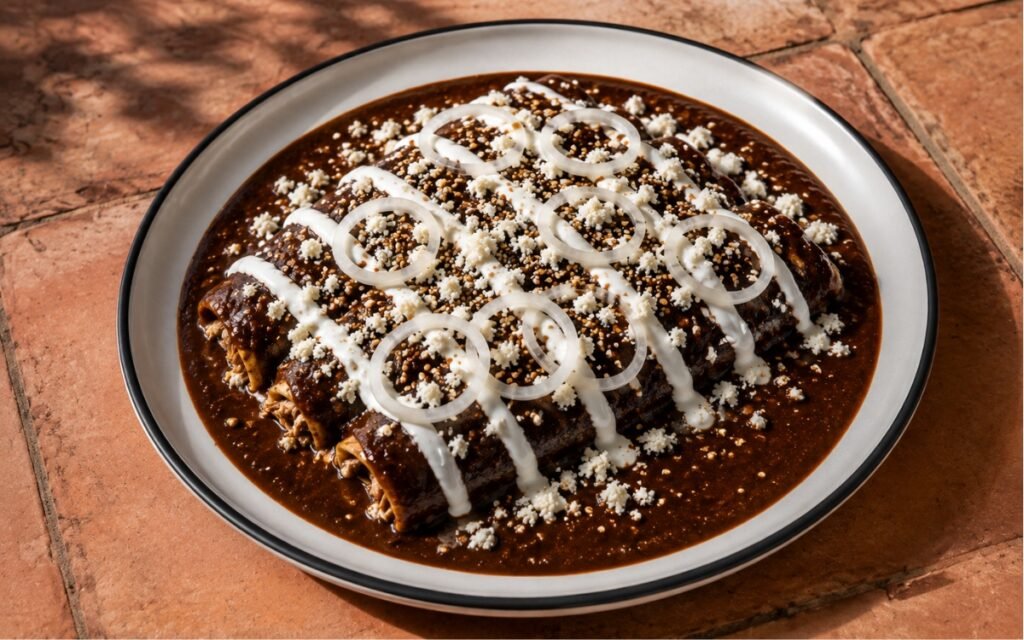
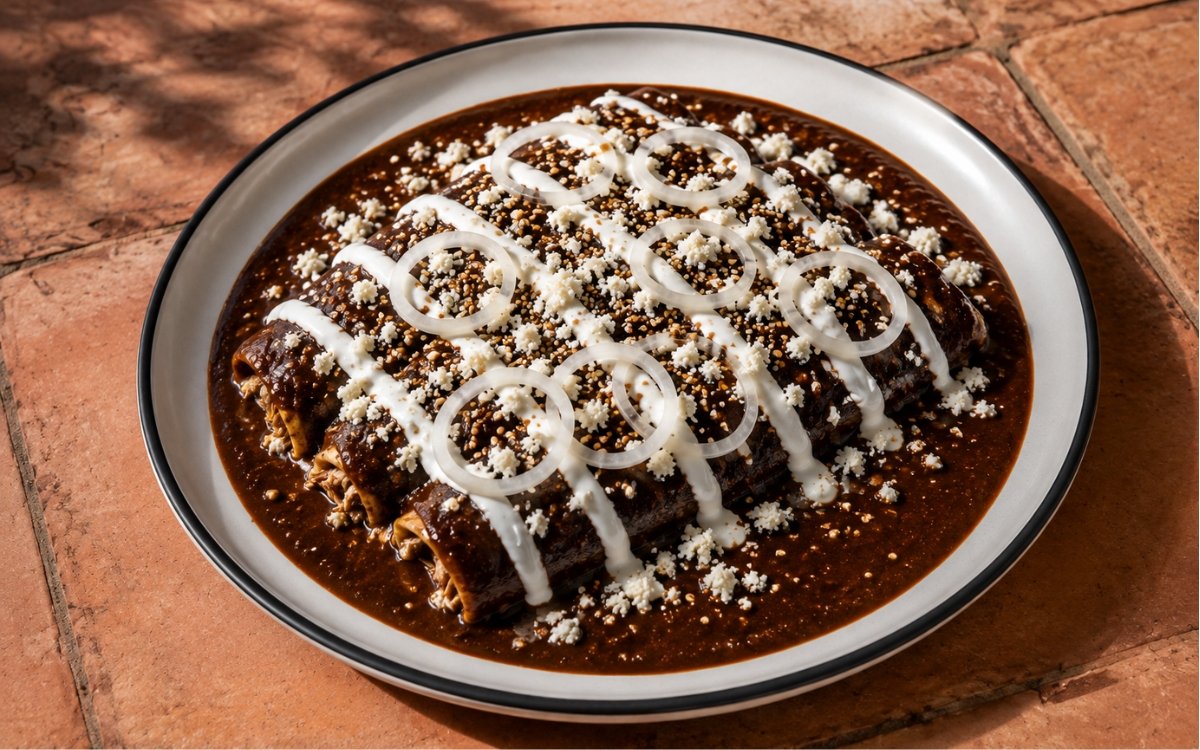
Chicken enmoladas are one of the most satisfying ways to serve mole poblano — soft corn tortillas lightly fried or warmed, filled with tender shredded chicken, folded, and completely coated in a deep glossy red-brown mole. They are finished classically with crema, crumbled queso fresco, toasted sesame seeds, and thin white onion rings. The key is keeping each component properly balanced: the tortillas must stay pliable without becoming greasy, the chicken should be moist and well-seasoned, and the mole should be fluid enough to blanket the tortillas generously without turning pasty or dull. Poaching the chicken at a genuine gentle simmer, never a hard boil, is the technique this whole dish depends on — chicken boiled aggressively turns tight and dry, a flaw that reads especially clearly in a simple, honest preparation like enmoladas, the same gentle-poach principle used elsewhere in this collection whenever tender, easily-shredded meat is the goal. Frying the tortillas only briefly, just enough to soften and lightly blister them without crisping, is what keeps them pliable enough to fold without cracking. Loosening the mole with reserved chicken cooking liquid until it falls from the spoon in thick ribbons, rather than sitting like stiff paste, is what lets it blanket the tortillas elegantly rather than smothering them. The payoff is a plate where soft, mole-coated tortillas sit glossy and inviting, finished with crema, queso fresco, sesame seeds, and thin onion rings.
Prep Time : 25 min
Cook Time : 35 min
Servings : 4
25 min
35 min
4
Ingredients
For the Chicken
• 700g boneless skinless chicken thighs or chicken breasts
• 8g fine sea salt
• Freshly ground black pepper, to taste
• 1 small white onion, about 100g, halved
• 2 garlic cloves, peeled
• 1 bay leaf
• 750ml water or light chicken stock
For the Mole
• 900ml to 1 litre Mole Poblano Sauce, prepared from your earlier recipe
• 150–300ml reserved chicken cooking liquid, as needed to loosen
• 1 tbsp neutral oil, lard, or chicken fat, if needed for reheating the mole
For the Tortillas
• 12 corn tortillas (3 per serving; store-bought or homemade — Homemade Corn Tortillas recipe works very well here)
• 60–80ml neutral oil, only if lightly frying the tortillas
• Fine sea salt, a small pinch if needed
For the Toppings
• 100g Mexican crema or sour cream loosened slightly with a little milk or water if very thick — this one on Amazon
• 100g queso fresco, crumbled — this one on Amazon
• 20–25g white sesame seeds
• 1 small white onion, sliced into very thin rings or half-moons
• Optional small handful fresh cilantro leaves, if you like, though the most classical finish is onion, crema, queso fresco, and sesame
This post may contain affiliate links. As an Amazon Associate I earn from qualifying purchases, at no additional cost to you.
Directions
- Poach the Chicken Gently
Place the chicken in a medium saucepan with the salt, a few grinds of black pepper, the halved onion, garlic, bay leaf, and water or light stock. Bring to a gentle simmer over medium heat. Once the liquid starts moving, reduce the heat so the chicken barely simmers rather than boils aggressively. Cook for 16–20 minutes, depending on thickness, until the chicken is just cooked through and tender. Transfer the chicken to a plate and let it cool just enough to handle. Reserve about 300ml of the cooking liquid — this is useful for keeping the mole fluid and the chicken moist. Shred the chicken into short, fine strands rather than large chunks. The chicken should shred easily and stay juicy. If it is boiled too hard, it will become tight and dry, which is noticeable in a simple preparation like enmoladas. A genuinely gentle simmer keeps the chicken’s own moisture intact through cooking — that moisture matters directly here since this dish has so few components that any dryness in the chicken has nowhere to hide. - Toast the Sesame Seeds
Add the sesame seeds to a dry skillet over medium-low heat. Toast, stirring constantly, for 2–3 minutes until lightly golden and fragrant. Transfer immediately to a bowl so they do not continue cooking in the hot pan. They should smell nutty and look pale golden, not dark brown. Burnt sesame will read bitter against the mole. Removing the seeds from the hot pan the instant they’re toasted protects them from continuing to darken under the pan’s own residual heat, even once the burner is off. - Warm and Adjust the Mole
Place the mole poblano in a wide saucepan or deep skillet over medium-low heat. If needed, add the tablespoon of oil or fat first, then add the mole. Warm it slowly, stirring often. Add some of the reserved chicken cooking liquid, starting with about 150ml, and stir until the sauce becomes smooth, glossy, and fluid enough to coat the tortillas generously. Add more broth a little at a time if needed. The final texture should be thick enough to cling well but loose enough to spread and pool around the enmoladas without feeling heavy or muddy. Taste and adjust seasoning if needed. Properly heated mole should fall from the spoon in thick ribbons, not sit like stiff paste. If it becomes too thick, it will smother the tortillas unpleasantly rather than coat them elegantly. Using the chicken’s own reserved cooking liquid to loosen the mole, rather than plain water, ties genuine savoury flavour directly back into the sauce rather than simply diluting it. - Moisten the Chicken Filling
Add 2–3 spoonfuls of the warm mole or a small splash of reserved broth to the shredded chicken and toss lightly. This should not turn the filling saucy — it is just to keep the chicken moist and flavorful inside the tortillas. The chicken should be lightly seasoned and juicy, not wet. A soaked filling can make the tortillas tear and the finished dish heavy. Tossing the chicken with only a small amount of mole, rather than a generous helping, gives it real flavour and moisture without introducing enough liquid to compromise the tortilla’s structure once it’s filled and folded. - Prepare the Tortillas
There are two classical approaches here: lightly fry the tortillas so they stay flexible and flavorful, or warm them on a dry skillet/comal if you want a lighter version. For the most traditional texture, lightly fry them. Heat a thin layer of neutral oil in a skillet over medium heat. Fry the tortillas one at a time for about 8–12 seconds per side — just enough to soften them and lightly blister them, not enough to crisp them. Transfer to a tray lined lightly with paper towel or a clean cloth. If not frying, warm the tortillas on a hot dry skillet until soft and pliable. Keep the tortillas covered with a towel so they stay warm and flexible. The tortillas must stay soft and bendable. If they crisp, they will crack when folded. If they sit too long uncovered, they will dry out and tear. This genuinely brief fry, just seconds per side, is calibrated specifically to soften and lightly blister the tortilla without pushing it toward the crispness that would make folding it impossible without cracking. - Fill and Fold the Enmoladas
Working while everything is warm, place a portion of shredded chicken down the center of each tortilla — about 55–60g per tortilla. Fold each tortilla in half, or roll loosely if you prefer that shape. Enmoladas are commonly folded in half rather than tightly rolled. Arrange 3 filled tortillas per plate, slightly overlapping, or place all 12 in a large serving platter if serving family-style. Do not overfill. Too much chicken makes the tortillas burst and prevents the mole from coating them neatly. Keeping the fill to this specific, moderate amount protects the tortilla’s structural integrity through both the fold and the subsequent mole coating — an overfilled tortilla has considerably less margin before it tears or splits open. - Coat with Mole and Garnish
Spoon the warm mole generously over the folded tortillas until they are fully covered. The tops should be completely blanketed, with a little extra mole pooling underneath and around them. Drizzle the crema across the top in thick lines. Scatter over the crumbled queso fresco and the toasted sesame seeds. Finish with the very thin white onion rings. Serve immediately while hot. The mole should still be glossy and hot when spooned over. If it sits too long and thickens, loosen it again before plating so the finish stays smooth and elegant rather than clumpy. Slicing the onion garnish especially thin, rather than a standard cut, is what lets it complement the mole with a light, sharp accent rather than dominating each bite with raw onion intensity.
*Notes :
- Poaching the chicken gently rather than boiling it hard deserves particular attention in a dish this simple. Enmoladas has genuinely few components — tortilla, mole, chicken, and a handful of classic garnishes — which means any flaw in one of them, like dry, overcooked chicken, has nowhere to hide the way it might in a more elaborately sauced or seasoned dish. Protecting the chicken’s moisture at this early stage matters proportionally more here than in a dish with more layers to distract from it.
- Frying the tortillas only very briefly, just enough to soften and lightly blister without crisping, is worth understanding as the technique responsible for whether the finished enmoladas can even be properly folded. A tortilla pushed toward crisp during this stage loses the flexibility this dish depends on entirely — once crisp, it will crack rather than fold cleanly around its filling, undermining the dish’s basic structure before it’s even sauced.
- Loosening the finished mole with reserved chicken cooking liquid, checking specifically for a texture that falls from the spoon in thick ribbons rather than sitting like stiff paste, is worth treating as a genuine, checkable target rather than a vague description. A mole that’s too thick doesn’t gently coat the tortillas the way this dish calls for — it smothers them instead, and that distinction between coating and smothering is exactly what separates an elegantly finished plate of enmoladas from a heavier, less refined one.
- The recipe’s explicit warning against overfilling the tortillas reflects a real structural limit worth respecting. Each tortilla, softened just enough to fold without a lot of extra reinforcement, can only hold so much shredded chicken before that filling works against the fold itself, risking a tear that would let both filling and mole spill out rather than staying contained as the dish is meant to be eaten.
Why This Recipe Works
This recipe works because the chicken is poached gently, protecting its own moisture in a dish simple enough that any dryness would be immediately noticeable. Sesame seeds are toasted with real attention and removed promptly to avoid bitterness.
The mole is warmed slowly and loosened with the chicken’s own reserved cooking liquid to a specific, checkable ribbon-like consistency, rather than left too thick to properly coat the tortillas.
Tortillas are fried only briefly enough to stay genuinely pliable, and filled with a moderate, carefully measured portion of chicken that protects the fold from tearing. Assembling and coating everything only once each component is properly warm and ready delivers the dish at its intended, elegant finish.
Ingredient Breakdown
Gently Poached, Finely Shredded Chicken
The filling — cooked at a genuine simmer to stay moist, since this simple dish has nowhere for dryness to hide.
Full Batch of Mole Poblano Sauce
The defining component — warmed slowly and loosened with reserved chicken liquid to a specific, elegant coating consistency.
Briefly Fried, Pliable Corn Tortillas
The structural base — softened and lightly blistered without ever crisping, protecting the fold from cracking.
Moderately Filled, Folded Tortillas
The assembly technique — a measured amount of chicken protects the fold’s integrity through sauce coating and serving.
Classic Finishing Garnishes (Crema, Queso Fresco, Sesame, Thin Onion)
The final layer — each added with restraint, complementing the mole without overwhelming it.
Flavor Structure Explained
This chicken enmoladas follows a layered balance model:
- Soft tortilla foundation (briefly fried corn tortillas)
- Moist savoury centre (gently poached, shredded chicken)
- Deep complex sauce (warmed, properly loosened mole poblano)
- Cool creamy finish (Mexican crema)
- Sharp salty-nutty accents (queso fresco, toasted sesame, thin onion)
Briefly fried, soft corn tortillas provide a pliable, mild foundation for the dish. Gently poached, finely shredded chicken fills that base with moist, savoury substance. The mole poblano, warmed and properly loosened, blankets everything in deep, complex, glossy flavour. A drizzle of cool Mexican crema softens and rounds out the mole’s richness. Crumbled queso fresco, toasted sesame seeds, and very thin white onion rings finish the dish with sharp, salty, nutty accents that keep each bite from feeling one-note.
Common Mistakes to Avoid
- Boiling the Chicken Hard Instead of Gently Poaching It – This produces tight, dry meat that’s especially noticeable in a simple dish. Always keep the poach at a genuine gentle simmer.
- Frying the Tortillas Until Crisp – This causes them to crack rather than fold. Always fry them only briefly, just enough to soften and lightly blister.
- Leaving the Mole Too Thick – This smothers the tortillas rather than coating them elegantly. Always loosen it with reserved chicken liquid to a proper ribbon-like consistency.
- Overfilling the Tortillas – This risks tearing the fold and spilling the filling. Always keep the chicken portion moderate and measured.
- Slicing the Onion Garnish Too Thick – This dominates the mole rather than accenting it. Always slice it very thin.
Variations
Breast Meat Version
Use chicken breast instead of thighs for a cleaner shred, accepting a slightly less naturally juicy result.
Lighter, Unfried Tortilla Version
Warm the tortillas on a dry skillet instead of frying for a lighter version of the same dish.
Extra-Garnished Version
Add the optional fresh cilantro alongside the classic onion, crema, queso fresco, and sesame for extra freshness.
Family-Style Platter Version
Arrange all 12 filled, mole-coated tortillas on one large serving platter instead of individual plates for shared, family-style serving.
Storage & Make-Ahead
The chicken can be poached and shredded a day ahead and refrigerated in some of its reserved cooking liquid to keep it moist.
If your mole was made in advance and chilled, reheat it slowly and always loosen it with broth or water before using. Cold mole thickens substantially.
Fully assembled, sauced enmoladas are not suitable for storage — assemble and coat with mole only right before serving, since the tortillas soften considerably once sauced.
Frequently Asked Questions
Why does the chicken need to be poached so gently for this particular dish?
Enmoladas has genuinely few components, meaning any flaw like dry, overcooked chicken has nowhere to hide the way it might in a more elaborate dish. A gentle simmer protects the chicken’s moisture, which matters proportionally more here than in a dish with more layers.
Why can’t the tortillas be fried until they’re crisp?
A crisp tortilla loses the flexibility this dish depends on entirely, cracking rather than folding cleanly around its filling. The brief fry specified here softens and lightly blisters the tortilla while keeping it genuinely pliable.
Why does the mole need to reach a specific ribbon-like consistency rather than just being thick and rich?
A mole that’s too thick doesn’t gently coat the tortillas — it smothers them instead. That distinction between coating and smothering is what separates an elegantly finished plate of enmoladas from a heavier, less refined one.
Why shouldn’t the tortillas be filled too generously with chicken?
Each softened tortilla can only hold so much filling before it works against the fold itself, risking a tear that lets both chicken and mole spill out. A moderate, measured portion protects that fold’s integrity.
Are there other mole sauces or mole-based dishes worth trying?
Mole Poblano Sauce, Mole Negro Sauce, Mole Coloradito Sauce, and Mole Verde Sauce all represent different classic Mexican mole traditions worth exploring on their own. Pipián Verde Chicken and Chicken Mole Poblano are both worth trying too as other complete, ready dishes built around a mole-style sauce.
Nutrition Facts
( per serving )
Calories
~680 kcal
Protein
38 g
Fat
36 g
Carbs
54 g
Calories
~680 kcal
Protein
38 g
Fat
36 g
Carbs
54 g
Related Recipes
Related Recipes

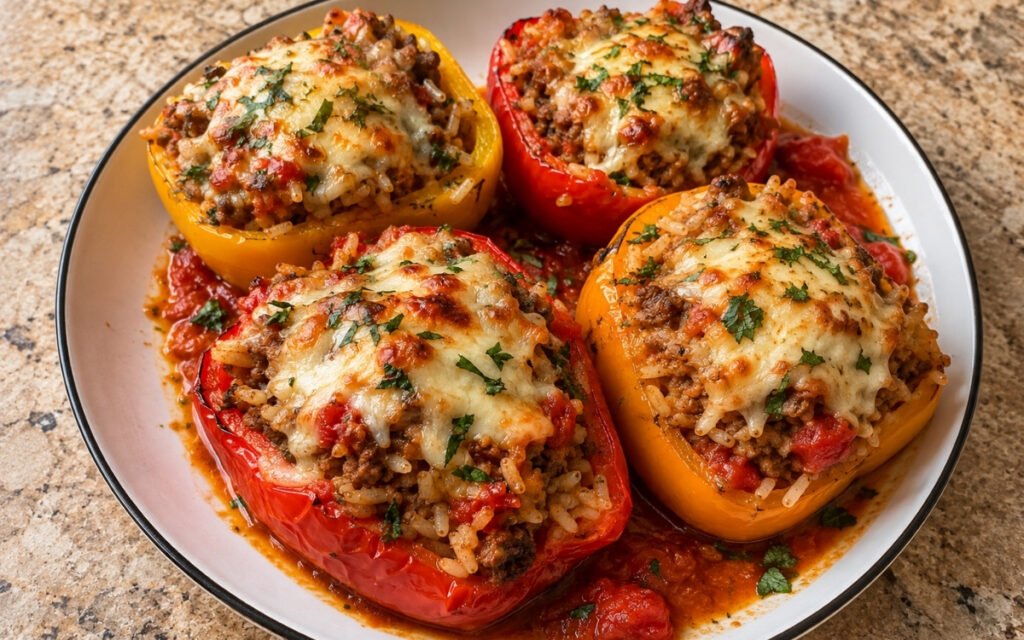
Italian Stuffed Peppers
Halved bell peppers filled with beef, pork, rice, onion, garlic, tomato sauce, herbs and cheese, baked over tomato sauce until tender.
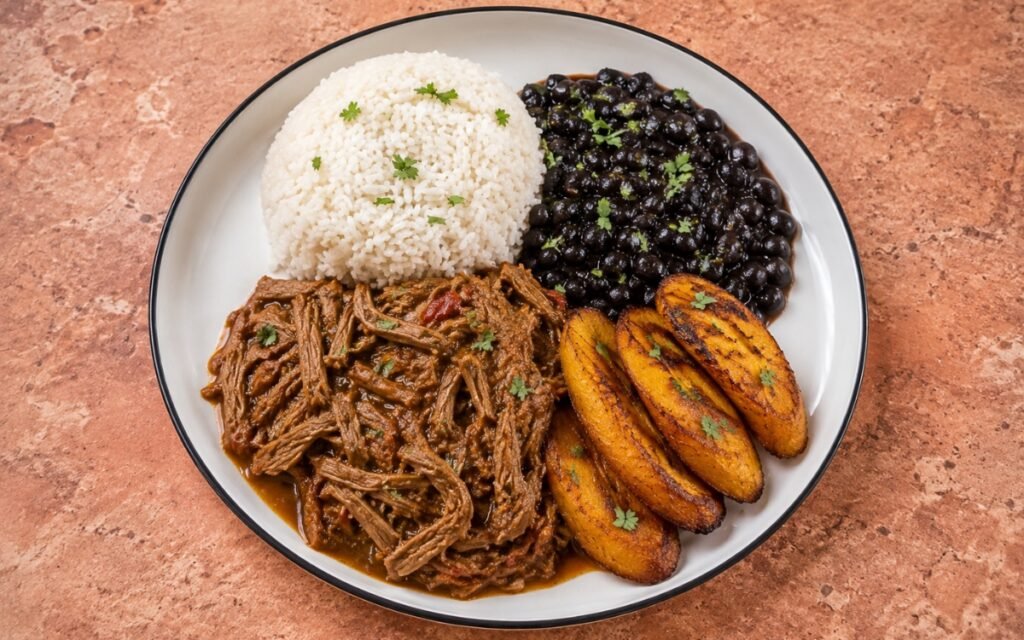
Pabellón Venezolano
Slow-braised, thinly shredded beef, fluffy white rice, glossy black beans, and sweet fried plantains, each kept distinct on the plate.
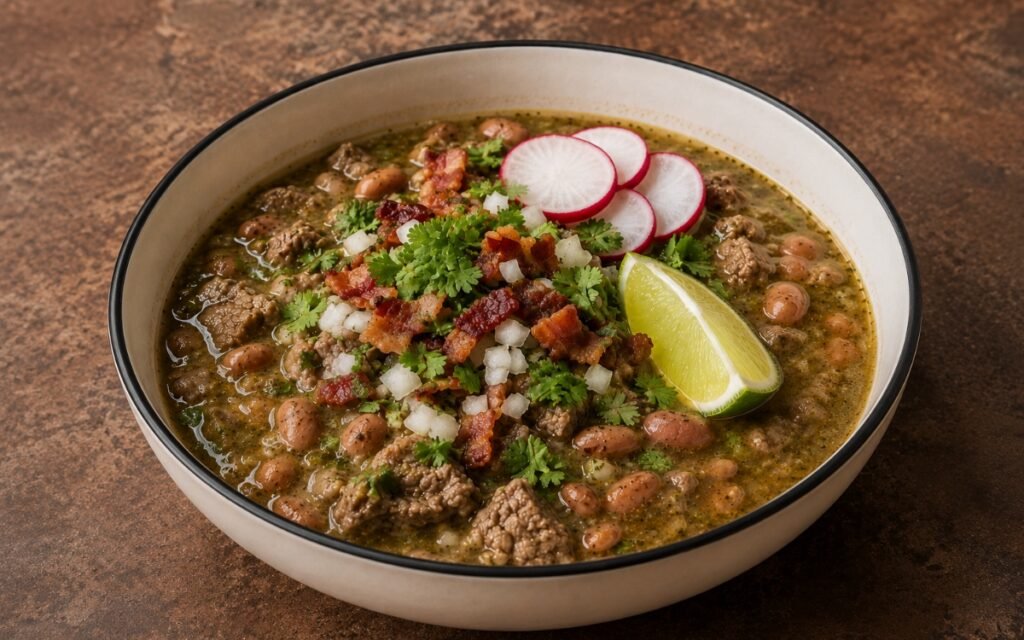
Carne en su Jugo
Finely chopped, batch-browned beef simmered briefly in a savory tomatillo broth with pinto beans, topped with crispy bacon and fresh garnishes.
You might also like
You might also like
Pipián Verde Chicken
Gently poached chicken finished in a vivid green pipián sauce of roasted tomatillos, pumpkin seeds, green chiles, and herbs.
Sicilian-Style Sheet Pan Pizza
Thick, airy, focaccia-like crust baked in a well-oiled pan, topped with mozzarella and rich tomato sauce, finished with crisp caramelized edges.
Risotto alla Milanese
Deep golden Carnaroli rice with saffron, white wine, and a Parmigiano-Reggiano mantecatura, finished to a loose, glossy all’onda texture.
Chicken Enmoladas with Mole Poblano
Ingredients
Method
- Place the chicken in a medium saucepan with the salt, a few grinds of black pepper, the halved onion, garlic, bay leaf, and water or light stock. Bring to a gentle simmer over medium heat. Once the liquid starts moving, reduce the heat so the chicken barely simmers rather than boils aggressively. Cook for 16–20 minutes, depending on thickness, until the chicken is just cooked through and tender. Transfer the chicken to a plate and let it cool just enough to handle. Reserve about 300ml of the cooking liquid — this is useful for keeping the mole fluid and the chicken moist. Shred the chicken into short, fine strands rather than large chunks. The chicken should shred easily and stay juicy. If it is boiled too hard, it will become tight and dry, which is noticeable in a simple preparation like enmoladas. A genuinely gentle simmer keeps the chicken’s own moisture intact through cooking — that moisture matters directly here since this dish has so few components that any dryness in the chicken has nowhere to hide.
- Add the sesame seeds to a dry skillet over medium-low heat. Toast, stirring constantly, for 2–3 minutes until lightly golden and fragrant. Transfer immediately to a bowl so they do not continue cooking in the hot pan. They should smell nutty and look pale golden, not dark brown. Burnt sesame will read bitter against the mole. Removing the seeds from the hot pan the instant they’re toasted protects them from continuing to darken under the pan’s own residual heat, even once the burner is off.
- Place the mole poblano in a wide saucepan or deep skillet over medium-low heat. If needed, add the tablespoon of oil or fat first, then add the mole. Warm it slowly, stirring often. Add some of the reserved chicken cooking liquid, starting with about 150ml, and stir until the sauce becomes smooth, glossy, and fluid enough to coat the tortillas generously. Add more broth a little at a time if needed. The final texture should be thick enough to cling well but loose enough to spread and pool around the enmoladas without feeling heavy or muddy. Taste and adjust seasoning if needed. Properly heated mole should fall from the spoon in thick ribbons, not sit like stiff paste. If it becomes too thick, it will smother the tortillas unpleasantly rather than coat them elegantly. Using the chicken’s own reserved cooking liquid to loosen the mole, rather than plain water, ties genuine savoury flavour directly back into the sauce rather than simply diluting it.
- Add 2–3 spoonfuls of the warm mole or a small splash of reserved broth to the shredded chicken and toss lightly. This should not turn the filling saucy — it is just to keep the chicken moist and flavorful inside the tortillas. The chicken should be lightly seasoned and juicy, not wet. A soaked filling can make the tortillas tear and the finished dish heavy. Tossing the chicken with only a small amount of mole, rather than a generous helping, gives it real flavour and moisture without introducing enough liquid to compromise the tortilla’s structure once it’s filled and folded.
- There are two classical approaches here: lightly fry the tortillas so they stay flexible and flavorful, or warm them on a dry skillet/comal if you want a lighter version. For the most traditional texture, lightly fry them. Heat a thin layer of neutral oil in a skillet over medium heat. Fry the tortillas one at a time for about 8–12 seconds per side — just enough to soften them and lightly blister them, not enough to crisp them. Transfer to a tray lined lightly with paper towel or a clean cloth. If not frying, warm the tortillas on a hot dry skillet until soft and pliable. Keep the tortillas covered with a towel so they stay warm and flexible. The tortillas must stay soft and bendable. If they crisp, they will crack when folded. If they sit too long uncovered, they will dry out and tear. This genuinely brief fry, just seconds per side, is calibrated specifically to soften and lightly blister the tortilla without pushing it toward the crispness that would make folding it impossible without cracking.
- Working while everything is warm, place a portion of shredded chicken down the center of each tortilla — about 55–60g per tortilla. Fold each tortilla in half, or roll loosely if you prefer that shape. Enmoladas are commonly folded in half rather than tightly rolled. Arrange 3 filled tortillas per plate, slightly overlapping, or place all 12 in a large serving platter if serving family-style. Do not overfill. Too much chicken makes the tortillas burst and prevents the mole from coating them neatly. Keeping the fill to this specific, moderate amount protects the tortilla’s structural integrity through both the fold and the subsequent mole coating — an overfilled tortilla has considerably less margin before it tears or splits open.
- Spoon the warm mole generously over the folded tortillas until they are fully covered. The tops should be completely blanketed, with a little extra mole pooling underneath and around them. Drizzle the crema across the top in thick lines. Scatter over the crumbled queso fresco and the toasted sesame seeds. Finish with the very thin white onion rings. Serve immediately while hot. The mole should still be glossy and hot when spooned over. If it sits too long and thickens, loosen it again before plating so the finish stays smooth and elegant rather than clumpy. Slicing the onion garnish especially thin, rather than a standard cut, is what lets it complement the mole with a light, sharp accent rather than dominating each bite with raw onion intensity.