
Enchiladas Rojas
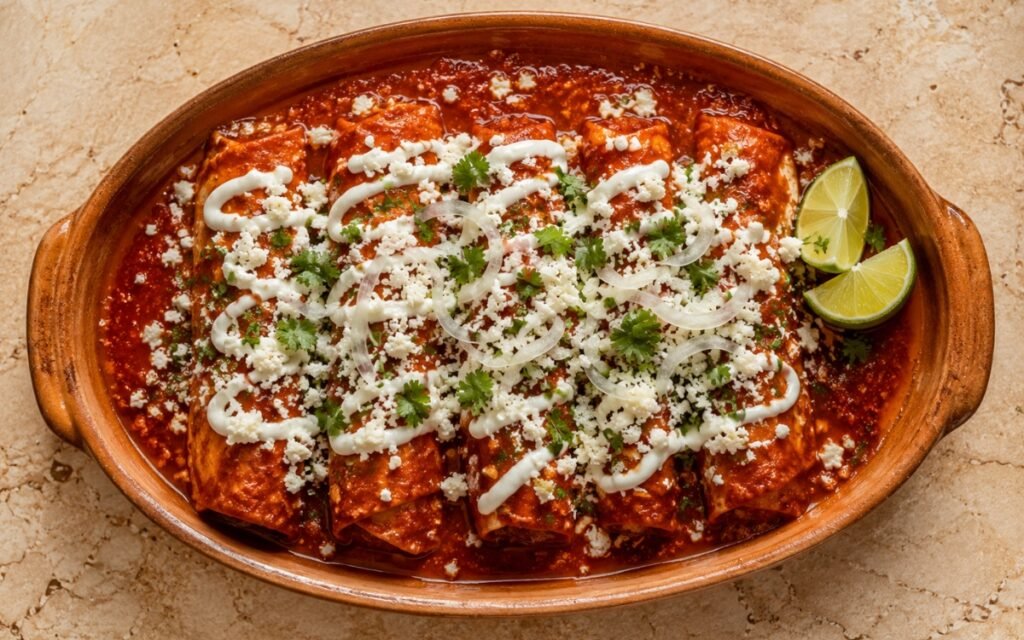
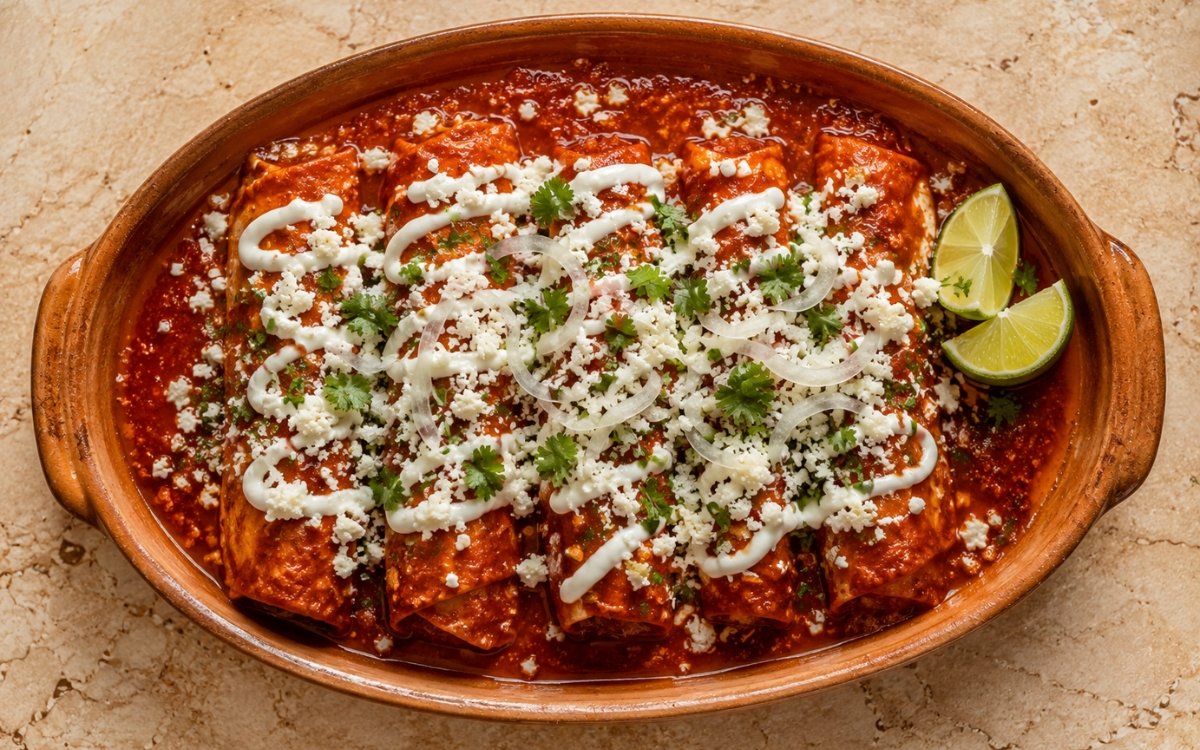
Rolled corn tortilla enchiladas filled with spiced ground beef and creamy refried black beans, arranged in a baking dish and fully coated in glossy deep red-orange chile sauce, finished with generous crumbled queso fresco, thick zigzag crema, thin white onion rings, and fresh cilantro leaves. The sauce is built the same way as elsewhere in this collection wherever a chile-based base needs real depth — dried chiles toasted and soaked, onion and garlic sweated, tomato paste briefly cooked to concentrate it, all blended together before a final butter-glossed simmer that turns it from a raw purée into something that genuinely coats the back of a spoon. Warming the tortillas before rolling isn’t optional here; cold, stiff masa cracks under the fold rather than wrapping cleanly around the filling, the same principle that governs any recipe calling for pliable corn tortillas. The beef and bean fillings are both deliberately kept on the drier side of moist, since a filling with too much liquid will seep through the tortilla and collapse the whole roll in the oven. The payoff is a dish coated edge to edge in glossy red sauce, with the queso fresco, crema, onion, and cilantro added only after baking so they stay bright, pale, and fresh against the deep red backdrop.
Prep Time : 45 min
Cook Time : 45 min
Servings : 4
45 min
45 min
4
Ingredients
For The Homemade Corn Tortillas
• 240g masa harina — this one on Amazon
• 3g fine sea salt
• 300g warm water, approximately 40°C
For the Red Enchilada Sauce
• 5 dried guajillo chiles, stems and seeds removed — this one on Amazon
• 2 dried ancho chiles, stems and seeds removed — this one on Amazon
• 1 dried chile de árbol, stem removed, optional for heat — this one on Amazon
• 30ml neutral oil
• 100g white onion, roughly chopped
• 4 garlic cloves, peeled
• 20g tomato paste
• 4g ground cumin — this one on Amazon
• 3g dried Mexican oregano — this one on Amazon
• 2g smoked paprika — this one on Amazon
• 1g ground coriander
• 500ml chicken stock or beef stock
• 15ml apple cider vinegar
• 5g brown sugar
• 6g kosher salt, plus more to taste
• 15g unsalted butter, for glossing the sauce at the end
For the Spiced Ground Beef
• 500g ground beef, preferably 80/20
• 15ml neutral oil
• 120g white onion, finely diced
• 3 garlic cloves, minced
• 8g tomato paste
• 5g ground cumin
• 4g smoked paprika
• 3g chilli powder
• 2g dried Mexican oregano
• 5g kosher salt
• 2g freshly cracked black pepper
• 80ml water or beef stock
For the Creamy Refried Black Beans
• 1 can black beans, about 425g, drained and rinsed
• 20ml neutral oil or lard
• 40g white onion, finely diced
• 1 garlic clove, minced
• 2g ground cumin
• 2g kosher salt, plus more to taste
• 80–120ml water or stock, as needed
• 15g unsalted butter, optional, for a creamier finish
For Assembling
• 8 homemade corn tortillas, from above
• Red enchilada sauce, from above
• Spiced ground beef, from above
• Creamy refried black beans, from above
• 15ml neutral oil, for lightly softening the tortillas if needed
For Garnishing and Serving
• 120g queso fresco, crumbled generously — this one on Amazon
• 120g Mexican crema or sour cream, loosened slightly if needed for drizzling
• 60g white onion, very thinly sliced into rings or half-rings
• 20g fresh cilantro leaves
• 1 lime, cut into wedges, optional for serving
This post may contain affiliate links. As an Amazon Associate I earn from qualifying purchases, at no additional cost to you.
Directions
- Prepare the Corn Tortillas
Prepare the Homemade Corn Tortilla dough according to its separate recipe. Mix the masa harina, salt, and warm water until the dough is soft, hydrated, and no dry masa remains. Rest covered for 20–30 minutes. Divide into 8 equal balls of about 67–68g each. Press each tortilla to about 20cm / 8 inches diameter. Cook on a dry hot skillet or comal until lightly charred, flexible, and cooked through. Stack immediately under a towel so the tortillas steam and stay pliable. Do not let them dry out, or they will crack when rolled. The larger 20cm diameter here, compared to a small taco tortilla, is specific to this format — enchiladas need enough surface area to wrap fully around a generous filling and still overlap at the seam. - Toast and Soften the Chiles
Toast the guajillo, ancho, and chile de árbol in a dry skillet over medium heat for 10–15 seconds per side, just until fragrant and flexible. Do not let them smoke or blacken; burned chiles will make the sauce bitter. Transfer the toasted chiles to a bowl, cover with hot water, and soak for 15 minutes until softened. Drain before blending. The brief dry toast blooms each chile’s aromatic oils before rehydration, which is a meaningfully different result than simply soaking raw dried chiles straight from the bag — the toasted version carries more roasted depth into the final blended sauce. - Make the Red Enchilada Sauce
Heat 30ml neutral oil in a saucepan over medium heat. Add the chopped onion and cook for 4–5 minutes until softened and lightly golden. Add the garlic and cook for 30 seconds. Add the tomato paste, cumin, oregano, smoked paprika, and coriander, then cook for 1 minute until the paste darkens slightly. Transfer everything to a blender with the softened chiles, stock, apple cider vinegar, brown sugar, and salt. Blend until completely smooth. Strain through a fine sieve into a clean saucepan if the sauce has visible chile skin or grit. Simmer the sauce for 8–10 minutes over medium-low heat until slightly thickened, glossy, and deep red-orange. Whisk in the butter at the end for shine. The sauce should coat the back of a spoon but still pour easily. If it becomes too thick, loosen with a splash of stock. Whisking in cold butter at the very end, off the heat’s most aggressive point, is what gives the sauce its final glossy sheen — this is the same finishing technique used in French pan sauces, and it’s a distinct step from the simmer itself, which is doing the actual thickening work. - Cook the Spiced Ground Beef
Heat 15ml neutral oil in a large skillet over medium-high heat. Add the ground beef and cook for 5–6 minutes, breaking it into small crumbles, until browned and no longer pink. If the pan has excessive fat, spoon off some but leave enough to keep the filling juicy. Add the diced onion and cook for 3–4 minutes until softened. Add the garlic and cook for 30 seconds. Stir in the tomato paste, cumin, smoked paprika, chilli powder, oregano, salt, and black pepper. Cook for 1 minute to bloom the spices. Add 80ml water or beef stock and simmer for 3–4 minutes until the beef is moist but not wet. The filling should be juicy enough to hold together but not saucy enough to leak through the tortillas. Browning the beef before adding the aromatics, rather than all at once, keeps the meat from steaming in its own released liquid — a hot, dry pan first is what produces genuine browned flavour rather than grey, boiled-tasting crumbles. - Make the Refried Black Beans
Heat the oil or lard in a small skillet over medium heat. Add the diced onion and cook for 3–4 minutes until soft. Add the garlic and cumin and cook for 30 seconds. Add the drained black beans, salt, and 80ml water or stock. Mash with a potato masher or fork until creamy but still slightly textured. Cook for 4–5 minutes, stirring often, until thick and spreadable. Add more water if the beans become too stiff. Stir in butter if using. The beans should be creamy enough to spread inside the tortillas without tearing them. Mashing rather than blending is a deliberate texture choice — a potato masher leaves some bean skins and small chunks intact, giving the filling a bit of body and interest rather than the uniform smoothness a blender would produce. - Prepare the Tortillas for Rolling
If the tortillas have cooled and feel stiff, warm them one at a time on a hot skillet for 10–15 seconds per side, or lightly brush with oil and warm briefly until flexible. This step matters. Cold or dry corn tortillas will split when rolled. Corn tortillas firm up and lose flexibility as they cool because the starches in the masa retrograde — this brief rewarming step reverses that just enough to make the tortilla pliable again without cooking it further. - Assemble the Enchiladas
Spread a thin layer of red enchilada sauce across the bottom of a baking dish. Working with one tortilla at a time, spread a spoonful of refried black beans down the centre, then add a portion of spiced ground beef. Roll tightly but gently and place seam-side down in the dish. Repeat with all 8 tortillas. Pour the remaining red sauce over the enchiladas, covering them completely. The tortillas should be coated edge to edge, with some sauce pooling around them. Placing each enchilada seam-side down is what keeps it rolled through baking — the weight of the tortilla and the pooling sauce both help hold the seam shut without needing a toothpick or additional binding. - Heat the Enchiladas
Place the dish over gentle heat if using a stovetop-safe clay dish, or bake at 190°C for 12–15 minutes until the sauce is hot, glossy, and bubbling lightly at the edges. Do not overbake. The goal is hot, saucy enchiladas, not dried-out tortillas. This is a heating and melding stage rather than a true bake — the tortillas and fillings are already fully cooked, so the oven time exists purely to bring the sauce to temperature and let it soak slightly into the tortilla’s surface without drying anything out. - Garnish and Serve
Scatter crumbled queso fresco generously over the hot enchiladas. Drizzle crema in thick zigzags across the top. Add thin white onion rings and fresh cilantro leaves. Serve 2 enchiladas per person with lime wedges if using. Serve immediately while the sauce is glossy and hot, the cheese is still fresh-looking, and the onion and cilantro remain crisp. Adding every garnish after the enchiladas come out of the heat, rather than before, keeps the queso fresco from melting into the sauce and the crema from breaking or thinning out — all four garnishes are meant to sit visually and texturally distinct on top of the hot dish.
*Notes :
- The red enchilada sauce follows the same layered-building principle used throughout this collection for chile-based sauces: toast, soak, sweat, briefly fry the tomato paste, blend, then simmer with a final butter finish. Skipping any one of those steps — particularly the toasting or the tomato paste frying — produces a sauce that tastes flatter and more one-dimensionally spicy rather than genuinely roasted and rounded. The butter whisked in at the very end is a small addition by volume but a meaningful one for mouthfeel, giving the sauce a glossy richness that a purely water-and-chile base wouldn’t have on its own.
- Keeping both fillings on the drier side of moist is a structural decision as much as a flavour one. Ground beef simmered down until juicy but not wet, and black beans mashed until spreadable but not runny, are both filling profiles built specifically to survive rolling and baking without leaking through the tortilla or turning the dish soupy. A wetter version of either filling might taste fine on its own, but it compromises the integrity of the rolled tortilla once it’s sitting in sauce in the oven.
- Warming the tortillas immediately before rolling is one of the easiest steps to skip and one of the most consequential to skip. Corn tortillas that have cooled past a certain point lose the flexibility that makes them rollable, and forcing a cold, stiff tortilla around a filling reliably cracks it, which then leaks filling and sauce through the crack during baking. The brief 10–15 second warm-up on each side restores that pliability cheaply, right before it’s needed.
- The garnishing sequence — queso fresco, crema, onion, cilantro, all added after the dish comes out hot from the oven — exists to preserve a visual and textural contrast that’s central to how enchiladas rojas are meant to look and eat. Adding any of these garnishes before baking would either melt them into the sauce or dull their fresh, bright appearance, undercutting the specific colour story of vivid red sauce against white cheese and cream that gives the dish its identity.
Why This Recipe Works
This recipe works because its red sauce is built through genuine layered technique — toasted chiles, sweated aromatics, briefly fried tomato paste, and a butter-glossed finish — rather than a single quick blend, giving it real roasted depth and a glossy, spoon-coating consistency.
Both fillings are deliberately kept moist but contained so they survive rolling and baking without compromising the tortilla, and every garnish is added only after the dish is hot from the oven, preserving the sharp visual and textural contrast between the deep red sauce and the pale, fresh toppings.
Ingredient Breakdown
Toasted Guajillo and Ancho Chiles
The sauce’s colour and flavour foundation — dry-toasted to bloom their aromatics before rehydrating and blending into a smooth, glossy purée.
Butter-Finished Enchilada Sauce
The final gloss technique — whisked in off the most aggressive heat to give the sauce shine and richness beyond what the simmer alone produces.
Spiced Ground Beef (Browned, Then Simmered)
The primary protein filling — browned first for real flavour, then simmered with stock just until moist but not wet.
Mashed, Not Blended, Black Beans
The bean filling’s texture — retains some body and slight chunkiness rather than a uniformly smooth purée.
Post-Bake Garnishes (Queso Fresco, Crema, Onion, Cilantro)
The fresh contrast layer — added only after heating to stay bright, pale, and textured against the hot red sauce.
Flavor Structure Explained
This enchiladas rojas follows a layered balance model:
- Deep chile-forward foundation (red enchilada sauce)
- Savoury spiced core (ground beef filling)
- Creamy earthy body (refried black beans)
- Rich salty-cool topping (queso fresco, crema)
- Fresh sharp finish (onion, cilantro, lime)
The red sauce defines the dish with roasted, glossy chile depth that coats every enchilada from edge to edge. The spiced ground beef layers in savoury, well-browned richness, while the mashed black beans add a creamy, earthy body underneath. Queso fresco and crema both cool and round out the dish once it’s hot from the oven, their mild saltiness and tang balancing the sauce’s chile-forward intensity. Thin onion rings, fresh cilantro, and a final squeeze of lime finish each bite with clean, sharp brightness that keeps the whole plate from feeling heavy.
Common Mistakes to Avoid
- Rolling Cold, Stiff Tortillas – Cold corn tortillas crack under the fold, leaking filling and sauce during baking. Always rewarm tortillas briefly until flexible right before rolling.
- Leaving the Chile Sauce Gritty – Unstrained chile skin produces a rough, unfinished-feeling sauce. Always strain through a fine sieve if any visible skin or grit remains after blending.
- Making the Fillings Too Wet – Overly saucy beef or loose refried beans will seep through the tortilla and collapse the roll. Always simmer the beef and cook the beans down until moist but not wet.
- Overbaking the Assembled Enchiladas – Extended oven time dries out the tortillas instead of just heating the sauce through. Always bake just until the sauce is hot and bubbling lightly, 12–15 minutes.
- Adding Garnishes Before Baking – Queso fresco, crema, onion, and cilantro added before heating will melt, wilt, or lose their fresh, distinct appearance. Always garnish only after the dish comes out of the oven.
Variations
Enchiladas Verdes
For a green version of the same rolling-and-saucing technique, follow the Enchiladas Verdes recipe elsewhere in this collection, which uses a roasted tomatillo and green chile base in place of the red sauce here.
With Shredded Chicken
Substitute 500g of shredded cooked chicken, tossed with the same spice blend used for the ground beef, for a lighter filling that follows the identical assembly and baking method.
Extra-Cheesy Version
Add 150g of shredded Monterey Jack or Chihuahua cheese scattered over the enchiladas before baking, in addition to the post-bake queso fresco, for a melted cheese layer beneath the fresh garnishes.
Nacho-Style Sheet Pan Version
Skip the rolling entirely — cut the tortillas into triangles, crisp them in the oven, then layer with the beef, beans, and red sauce for a red-sauce-based tortilla nachos version of the same core flavours.
Storage & Make-Ahead
The red enchilada sauce can be refrigerated in a sealed container for up to 5 days, or frozen for up to 3 months. The spiced ground beef filling can be refrigerated for up to 3 days. Reheat gently with a small splash of stock before assembling.
The refried black beans can be refrigerated for up to 4 days. Reheat with a splash of water to loosen before spreading. Tortilla dough is best used fresh the same day; pressed, cooked tortillas can be stacked and refrigerated for up to 2 days before assembling.
Assembled, unbaked enchiladas can be covered and refrigerated for up to 24 hours before baking; add 5–8 extra minutes to the bake time if going in cold. Fully baked and garnished enchiladas are best eaten immediately; the tortillas soften considerably on reheating and the fresh garnishes don’t hold up to storage.
Frequently Asked Questions
Why does the sauce need to be simmered and finished with butter rather than just blended and used straight away?
A freshly blended sauce still tastes raw and thin. Simmering for 8–10 minutes reduces and concentrates it, while whisking in butter at the end gives it a glossy, coating richness that a purely simmered sauce lacks. Both steps together are what produce a sauce that clings to the tortillas rather than sitting watery in the dish.
Why keep both the beef and bean fillings on the drier side rather than saucier?
A wetter filling has nowhere to go once it’s rolled inside a tortilla and covered in more sauce — it seeps through the masa and collapses the roll during baking. Keeping the beef juicy but not wet, and the beans creamy but not loose, is what lets the tortilla hold its shape through the full baking time.
Why warm the tortillas right before rolling instead of using them straight off the comal?
Corn tortillas firm up and lose pliability as they cool, since their starches begin to retrograde. A tortilla rolled while genuinely warm and flexible wraps cleanly around the filling, while a cooled, stiff one cracks at the fold and leaks.
Why add the garnishes only after the enchiladas come out of the oven?
Queso fresco, crema, onion, and cilantro are all meant to provide a fresh, cool, pale contrast to the hot red sauce. Added before baking, the cheese would melt into the sauce and the crema would break down, losing the distinct visual and textural layering that defines the finished dish.
What else is worth trying if I like this red-sauce-and-tortilla combination?
If you’d rather go green, Enchiladas Verdes follows the same rolling-and-baking technique with a roasted tomatillo sauce in place of the red one here. For a completely different format built around the same red sauce, Chilaquiles Rojos tosses crisp fried tortilla pieces directly in a red chile sauce instead of rolling them — and the same red sauce and crisped corn tortilla base here also works well reimagined as loaded red-sauce nachos, spooned generously over a tray of crisped tortilla triangles with the same beef, beans, and toppings.
Nutrition Facts
( per serving )
Calories
~680 kcal
Protein
36 g
Fat
38 g
Carbs
52 g
Calories
~680 kcal
Protein
36 g
Fat
38 g
Carbs
52 g
Related Recipes
Related Recipes

Enfrijoladas
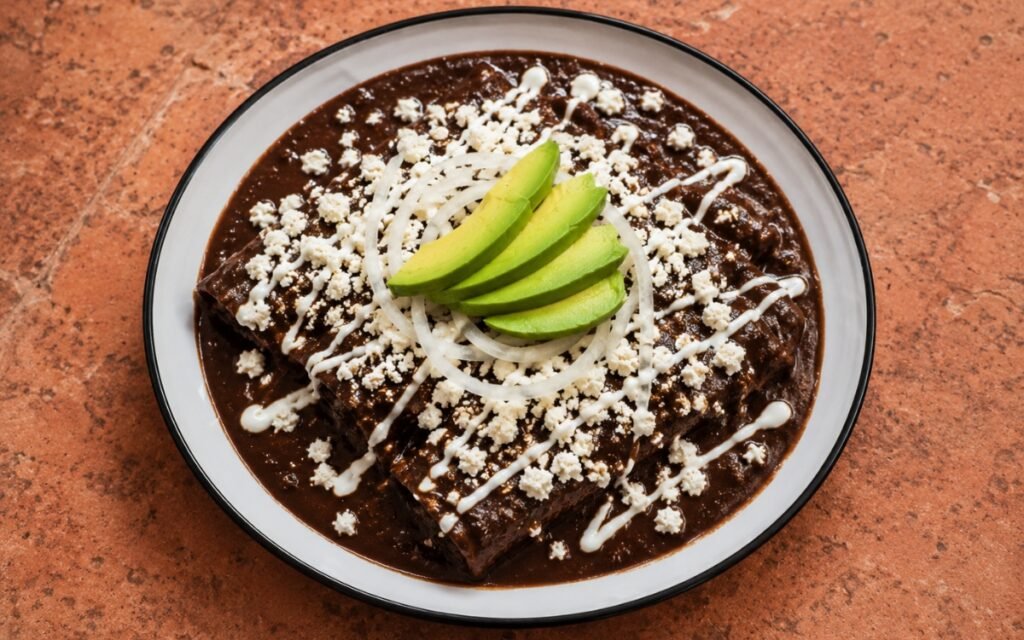
Soft corn tortillas lightly fried, dipped in glossy black bean sauce, folded around queso fresco, and finished with more cheese, crema, onion, and avocado.
Shrimp Tacos with Lime Crema
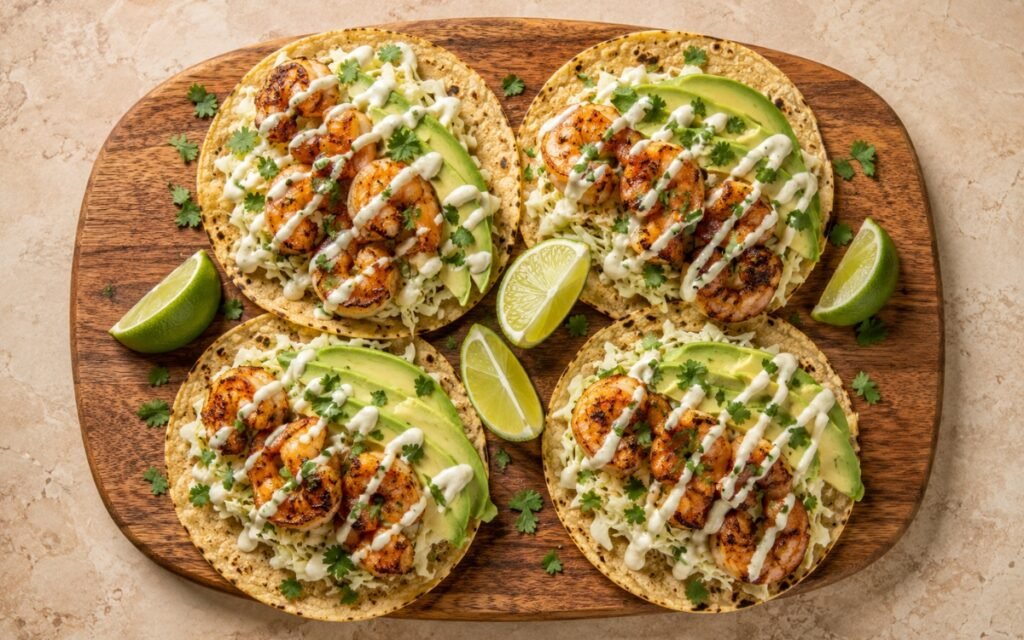
Large shrimp dried, spiced, and seared hot and fast, piled onto small corn tortillas with crisp cabbage, fanned avocado, and a thick lime crema drizzle.
Grilled Salmon Fillets
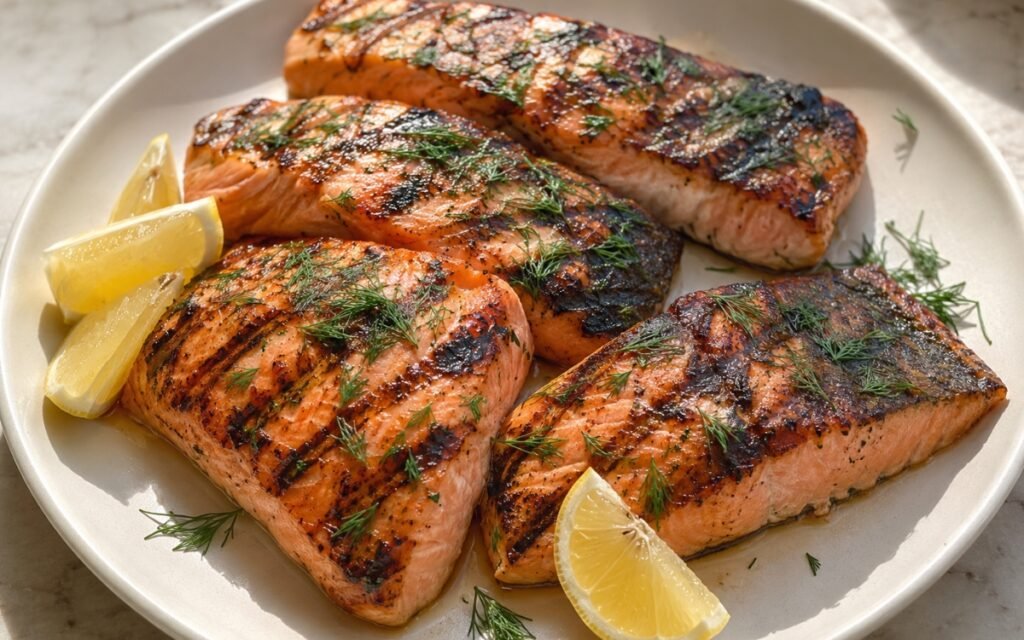
Salmon skin dried thoroughly, flesh seasoned, grilled skin-side down undisturbed until crisp. Finished with dill and lemon. Clean and moist.
You might also like
You might also like
Carne Asada Plate
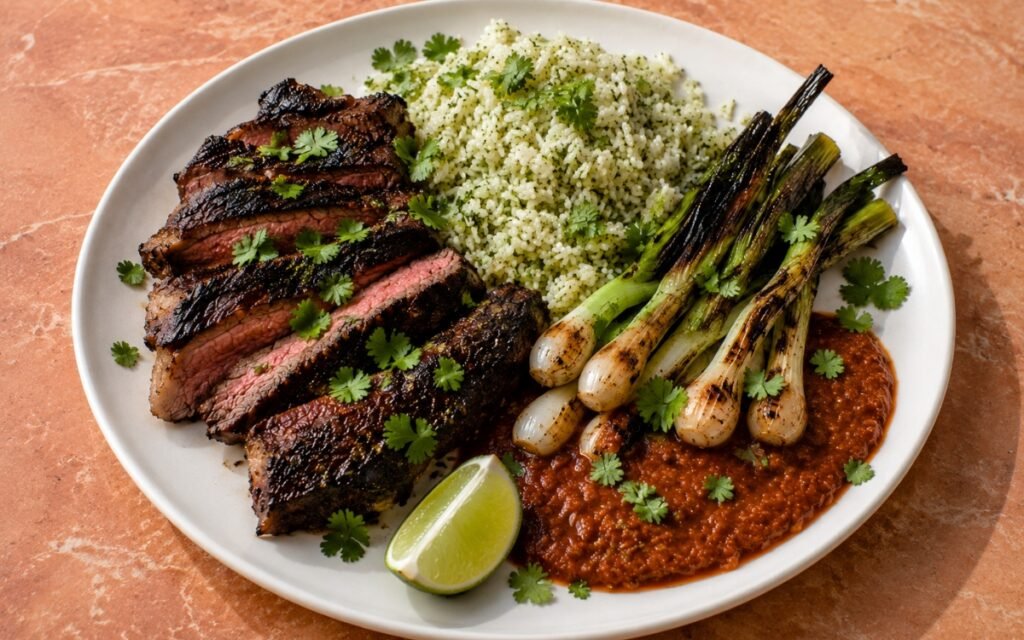
Citrus-soy marinated skirt steak grilled hard for deep char, rested, and sliced against the grain — served with cilantro-lime rice, salsa roja, and charred cebollitas.
Meatball Sub Sandwich
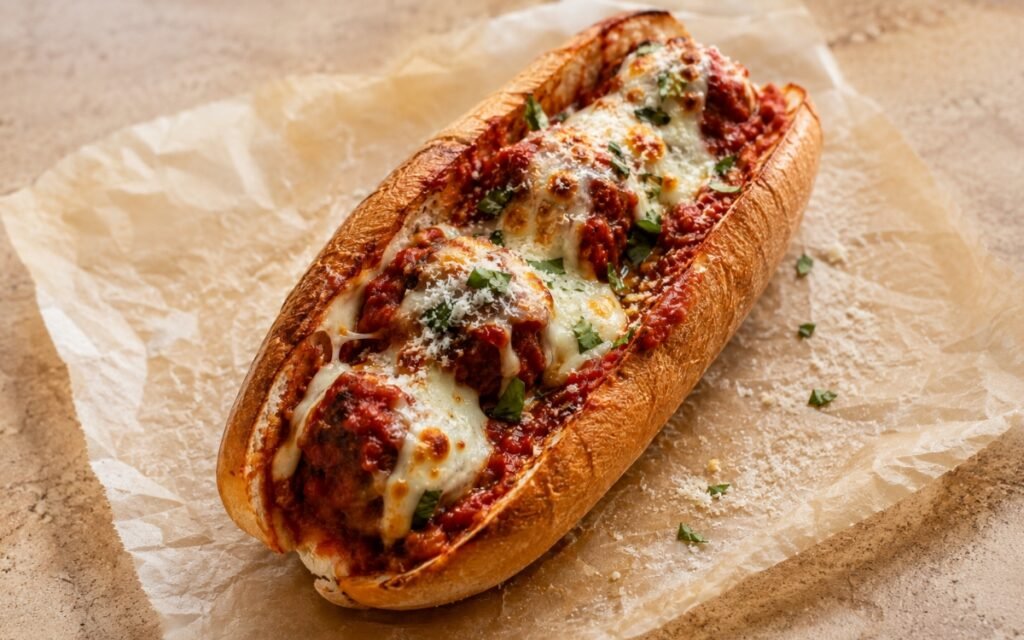
Tender panade-enriched beef meatballs in thick marinara, melted mozzarella and provolone, and fresh basil, in toasted long French rolls.
Juicy Beef Meatballs
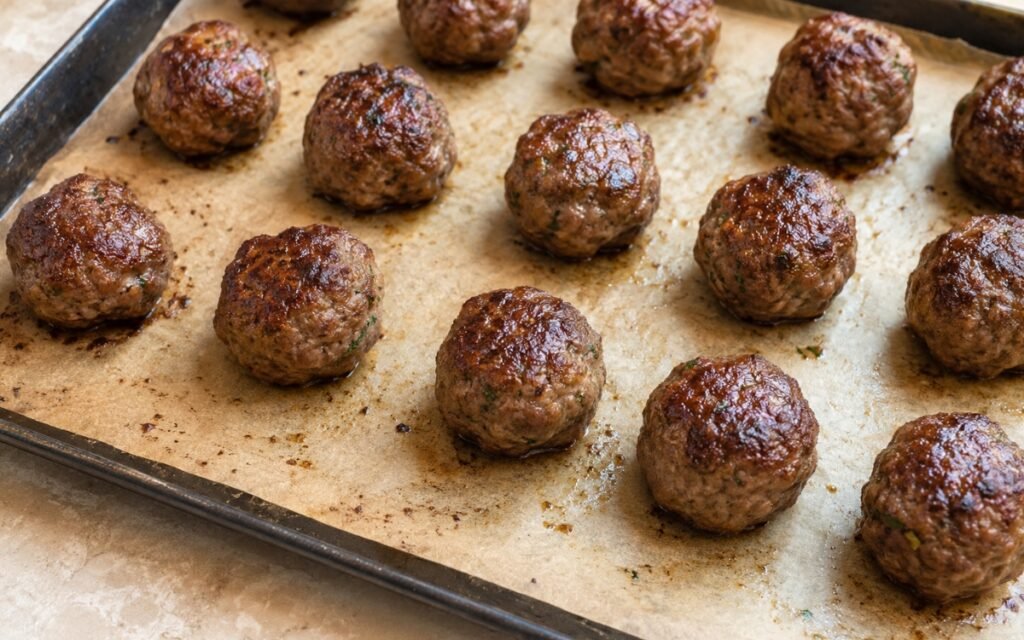
Ground beef combined with a breadcrumb-milk panade, mixed gently, portioned consistently, baked and rested. Tender and juicy.
Enchiladas Rojas
Ingredients
Method
- Prepare the Homemade Corn Tortilla dough according to its separate recipe. Mix the masa harina, salt, and warm water until the dough is soft, hydrated, and no dry masa remains. Rest covered for 20–30 minutes. Divide into 8 equal balls of about 67–68g each. Press each tortilla to about 20cm / 8 inches diameter. Cook on a dry hot skillet or comal until lightly charred, flexible, and cooked through. Stack immediately under a towel so the tortillas steam and stay pliable. Do not let them dry out, or they will crack when rolled. The larger 20cm diameter here, compared to a small taco tortilla, is specific to this format — enchiladas need enough surface area to wrap fully around a generous filling and still overlap at the seam.
- Toast the guajillo, ancho, and chile de árbol in a dry skillet over medium heat for 10–15 seconds per side, just until fragrant and flexible. Do not let them smoke or blacken; burned chiles will make the sauce bitter. Transfer the toasted chiles to a bowl, cover with hot water, and soak for 15 minutes until softened. Drain before blending. The brief dry toast blooms each chile’s aromatic oils before rehydration, which is a meaningfully different result than simply soaking raw dried chiles straight from the bag — the toasted version carries more roasted depth into the final blended sauce.
- Heat 30ml neutral oil in a saucepan over medium heat. Add the chopped onion and cook for 4–5 minutes until softened and lightly golden. Add the garlic and cook for 30 seconds. Add the tomato paste, cumin, oregano, smoked paprika, and coriander, then cook for 1 minute until the paste darkens slightly. Transfer everything to a blender with the softened chiles, stock, apple cider vinegar, brown sugar, and salt. Blend until completely smooth. Strain through a fine sieve into a clean saucepan if the sauce has visible chile skin or grit. Simmer the sauce for 8–10 minutes over medium-low heat until slightly thickened, glossy, and deep red-orange. Whisk in the butter at the end for shine. The sauce should coat the back of a spoon but still pour easily. If it becomes too thick, loosen with a splash of stock. Whisking in cold butter at the very end, off the heat’s most aggressive point, is what gives the sauce its final glossy sheen — this is the same finishing technique used in French pan sauces, and it’s a distinct step from the simmer itself, which is doing the actual thickening work.
- Heat 15ml neutral oil in a large skillet over medium-high heat. Add the ground beef and cook for 5–6 minutes, breaking it into small crumbles, until browned and no longer pink. If the pan has excessive fat, spoon off some but leave enough to keep the filling juicy. Add the diced onion and cook for 3–4 minutes until softened. Add the garlic and cook for 30 seconds. Stir in the tomato paste, cumin, smoked paprika, chilli powder, oregano, salt, and black pepper. Cook for 1 minute to bloom the spices. Add 80ml water or beef stock and simmer for 3–4 minutes until the beef is moist but not wet. The filling should be juicy enough to hold together but not saucy enough to leak through the tortillas. Browning the beef before adding the aromatics, rather than all at once, keeps the meat from steaming in its own released liquid — a hot, dry pan first is what produces genuine browned flavour rather than grey, boiled-tasting crumbles.
- Heat the oil or lard in a small skillet over medium heat. Add the diced onion and cook for 3–4 minutes until soft. Add the garlic and cumin and cook for 30 seconds. Add the drained black beans, salt, and 80ml water or stock. Mash with a potato masher or fork until creamy but still slightly textured. Cook for 4–5 minutes, stirring often, until thick and spreadable. Add more water if the beans become too stiff. Stir in butter if using. The beans should be creamy enough to spread inside the tortillas without tearing them. Mashing rather than blending is a deliberate texture choice — a potato masher leaves some bean skins and small chunks intact, giving the filling a bit of body and interest rather than the uniform smoothness a blender would produce.
- If the tortillas have cooled and feel stiff, warm them one at a time on a hot skillet for 10–15 seconds per side, or lightly brush with oil and warm briefly until flexible. This step matters. Cold or dry corn tortillas will split when rolled. Corn tortillas firm up and lose flexibility as they cool because the starches in the masa retrograde — this brief rewarming step reverses that just enough to make the tortilla pliable again without cooking it further.
- Spread a thin layer of red enchilada sauce across the bottom of a baking dish. Working with one tortilla at a time, spread a spoonful of refried black beans down the centre, then add a portion of spiced ground beef. Roll tightly but gently and place seam-side down in the dish. Repeat with all 8 tortillas. Pour the remaining red sauce over the enchiladas, covering them completely. The tortillas should be coated edge to edge, with some sauce pooling around them. Placing each enchilada seam-side down is what keeps it rolled through baking — the weight of the tortilla and the pooling sauce both help hold the seam shut without needing a toothpick or additional binding.
- Place the dish over gentle heat if using a stovetop-safe clay dish, or bake at 190°C for 12–15 minutes until the sauce is hot, glossy, and bubbling lightly at the edges. Do not overbake. The goal is hot, saucy enchiladas, not dried-out tortillas. This is a heating and melding stage rather than a true bake — the tortillas and fillings are already fully cooked, so the oven time exists purely to bring the sauce to temperature and let it soak slightly into the tortilla’s surface without drying anything out.
- Scatter crumbled queso fresco generously over the hot enchiladas. Drizzle crema in thick zigzags across the top. Add thin white onion rings and fresh cilantro leaves. Serve 2 enchiladas per person with lime wedges if using. Serve immediately while the sauce is glossy and hot, the cheese is still fresh-looking, and the onion and cilantro remain crisp. Adding every garnish after the enchiladas come out of the heat, rather than before, keeps the queso fresco from melting into the sauce and the crema from breaking or thinning out — all four garnishes are meant to sit visually and texturally distinct on top of the hot dish.