
Beef Empanadas
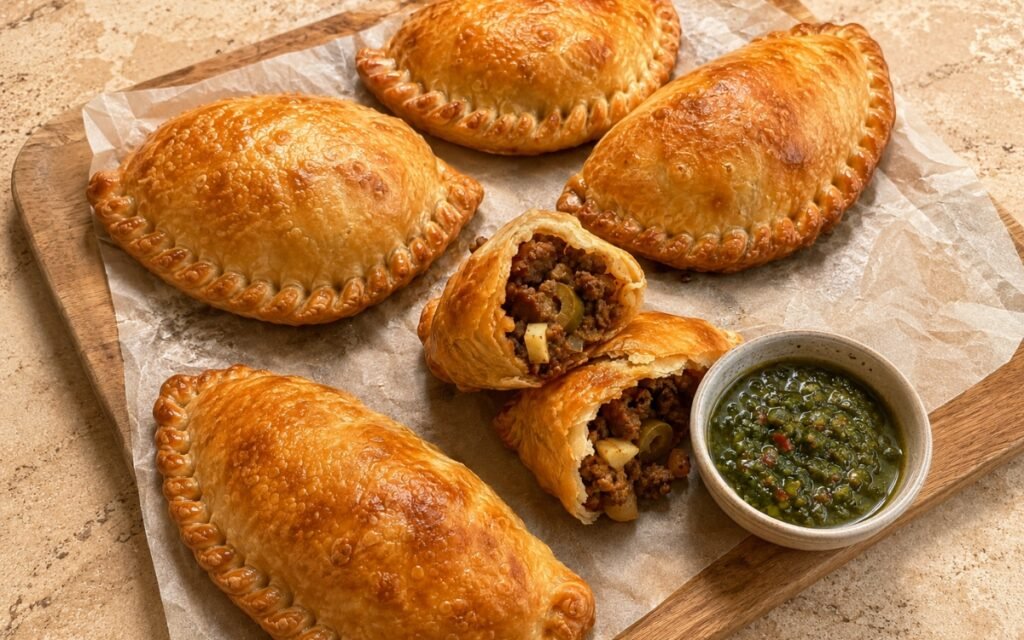
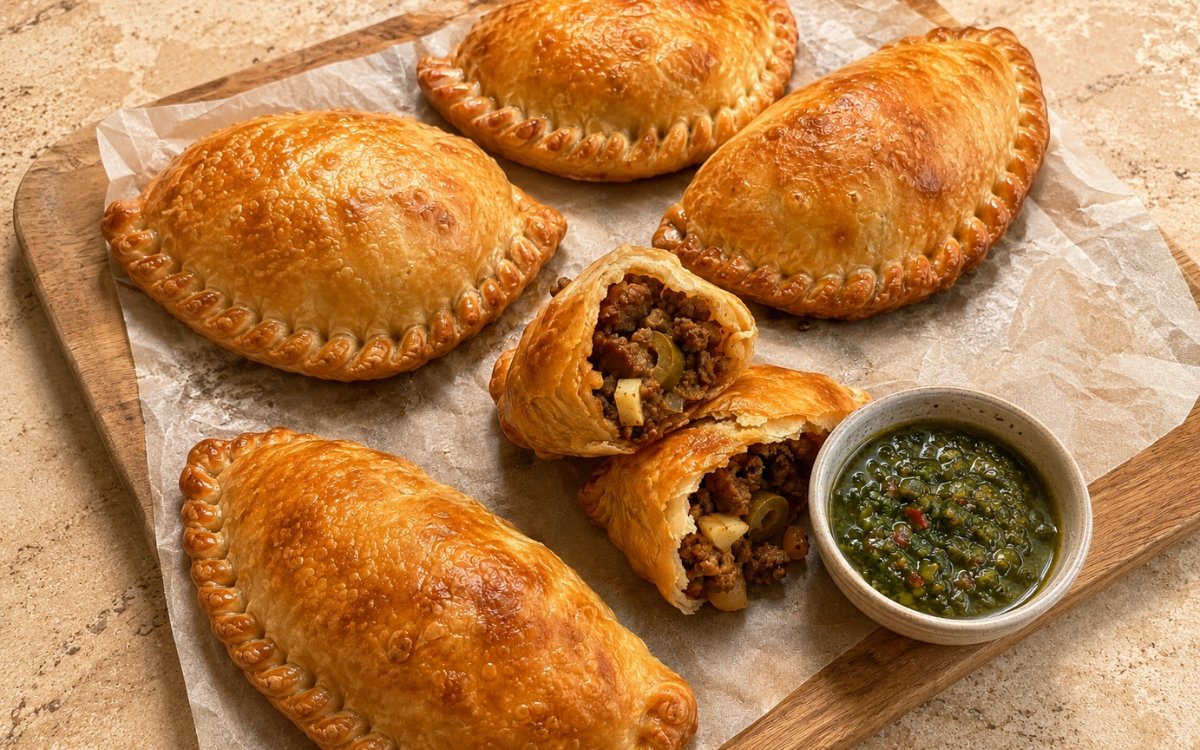
Golden baked beef empanadas with crimped edges, flaky blistered pastry, and a savory filling of ground beef, onion, paprika, cumin, green olives, and hard-boiled egg. The key is cooking the filling until moist but not wet, chilling it before shaping, and sealing the pastry firmly so the empanadas bake crisp instead of leaking. Chilling the beef filling fully before it ever meets the dough is the technique this whole recipe depends on for pastry that seals properly and bakes crisp — warm filling melts the fat suspended in the dough, working directly against the flakiness this pastry is built around, the same chill-the-filling-first principle used elsewhere in this collection whenever a warm, cooked filling needs to meet cold, fat-based pastry without compromising it. Cooking the beef until moist but genuinely not wet is what keeps the filling from leaking and softening the dough during baking. Resting the dough before rolling is what lets it stretch thin, seal cleanly, and shrink less in the oven. The payoff is an empanada with real textural integrity — deeply golden, blistered, flaky pastry sealed firmly around a rich, savoury filling.
Prep Time : 45 min
Cook Time : 30 min
Servings : 12 empanadas
45 min
30 min
12 empanadas
Ingredients
For the Empanada Dough
• 500g all-purpose flour — this one on Amazon
• 8g fine sea salt
• 100g cold unsalted butter or lard, diced — this one on Amazon
• 1 large egg
• 170 to 200ml cold water
• 15ml white vinegar
For the Beef Filling
• 600g ground beef, ideally 80/20
• 30ml olive oil — this one on Amazon
• 250g yellow onion, finely diced
• 1 small red bell pepper, finely diced, optional but classic in many versions
• 4 garlic cloves, minced
• 10g fine sea salt
• 3g black pepper
• 2 tsp sweet paprika — this one on Amazon
• 1 tsp smoked paprika, optional — this one on Amazon
• 1½ tsp ground cumin — this one on Amazon
• 1 tsp dried oregano — this one on Amazon
• 60g green olives, sliced
• 2 hard-boiled eggs, chopped
• 60ml beef stock or water
• 10g fresh parsley, finely chopped
For Finishing
• 1 egg
• 15ml milk or water
For Serving
• Classic Chimichurri Sauce, for serving
This post may contain affiliate links. As an Amazon Associate I earn from qualifying purchases, at no additional cost to you.
Directions
- Make the Dough
In a large bowl, mix the flour and salt. Add the cold butter or lard and rub it into the flour with your fingertips until the mixture looks sandy with a few small pea-sized pieces remaining. Whisk the egg, cold water, and vinegar together. Add most of the liquid to the flour mixture and mix until a dough forms. Add the remaining water only if the dough feels dry. Knead briefly for 1 to 2 minutes, just until smooth. Do not overwork the dough. Empanada pastry should be smooth and flexible, but still tender and flaky after baking. Keeping small, visible pieces of cold fat throughout the dry mixture, rather than fully blending it in, is exactly what creates the pockets of steam responsible for a genuinely flaky finished pastry once baked. - Rest the Dough
Wrap the dough and refrigerate for 1 hour. Rested dough rolls thinner, seals better, and shrinks less in the oven. That resting period lets the gluten formed during mixing and kneading relax fully, which is directly why rested dough stretches and rolls with far less resistance and far less tendency to spring back or shrink once it’s in the hot oven. - Start the Filling
Heat the olive oil in a large skillet over medium heat. Add the onion and red bell pepper if using. Cook for 6 to 8 minutes, until softened. Add the garlic and cook for 30 seconds. - Cook the Beef
Add the ground beef, salt, black pepper, paprika, cumin, and oregano. Cook for 8 to 10 minutes, breaking the meat apart, until the beef is browned and the spices smell warm. Add the beef stock or water and simmer for 3 to 4 minutes, until the filling looks juicy but not loose. The filling should be moist enough to taste rich, but not saucy. Wet filling leaks and softens the pastry. That final, brief simmer with a controlled amount of liquid builds real moisture and flavour into the filling while stopping well short of anything genuinely loose or saucy — the specific distinction this recipe is built around protecting. - Finish and Chill the Filling
Remove the pan from the heat. Stir in the sliced green olives, chopped hard-boiled eggs, and parsley. Let the filling cool completely, then chill it for at least 20 to 30 minutes. Cold filling is much easier to seal inside the dough. Warm filling melts the fat in the pastry and makes the empanadas harder to shape. Adding the olives, hard-boiled egg, and parsley only once the pan is off the heat protects each from any further cooking, keeping their own distinct texture and flavour intact within the finished filling. - Roll and Cut the Dough
Divide the dough into 12 equal pieces, about 65 to 70g each. Roll each piece into a circle about 13 to 14cm wide. Keep the rolled dough lightly covered so it does not dry out. Keeping the unrolled and rolled dough covered throughout protects it from drying out and cracking at the edges, which would compromise its ability to seal cleanly around the filling. - Fill the Empanadas
Place about 55 to 60g filling in the center of each dough circle. Fold the dough over into a half-moon shape. Press the edges firmly to seal, then crimp with your fingers or press with a fork. Do not overfill. A standard empanada should feel generous, but the edge still needs enough clean dough to seal properly. That specific, measured filling amount protects the dough’s own sealing edge from being overwhelmed — too much filling leaves too little clean dough at the border to actually press together and hold during baking. - Chill Before Baking
Place the shaped empanadas on a parchment-lined baking tray. Chill for 15 to 20 minutes while the oven heats. Preheat the oven to 210°C. This second, brief chill firms the butter or lard within the dough back up after all the handling during shaping, which is what protects the pastry’s flakiness right through into the hot oven. - Egg Wash
Beat the egg with the milk or water. Brush the empanadas lightly with egg wash. Use a thin, even coat. Too much egg wash can pool around the crimped edges and brown unevenly. A thin, even coat is what produces consistent, deep golden colour across the whole surface — pooled egg wash browns and darkens unevenly, especially right at the crimped seams. - Bake
Bake for 22 to 28 minutes, until the empanadas are deeply golden, crisp at the edges, and lightly blistered on top. Rotate the tray once if needed for even browning. That deep golden colour and light blistering are the visual cues confirming the pastry’s own fat has properly rendered and crisped, rather than staying pale and underbaked. - Serve
Let the empanadas rest for 5 minutes before serving. Serve warm with chimichurri on the side. That brief rest lets the filling’s own residual heat settle slightly, making the empanadas easier to handle and eat without the filling spilling out the moment they’re cut into.
*Notes :
- Chilling the beef filling fully before it ever meets the dough deserves genuine respect as the step most responsible for whether the finished empanadas bake crisp or leak and soften. Warm filling actively melts the small, distinct pieces of fat suspended throughout the cold dough, and once that fat melts prematurely, the pastry loses much of its ability to develop the flaky, blistered texture this recipe is specifically built around.
- Keeping visible, pea-sized pieces of cold fat throughout the dough mixture, rather than working it in completely smooth, is worth understanding as the technique directly responsible for the pastry’s flakiness. Those distinct fat pockets create steam as the dough bakes, and that steam is what physically separates the dough into the thin, flaky layers a properly made empanada crust is known for.
- Cooking the beef filling until moist but genuinely not wet deserves the same careful attention given to filling consistency throughout this collection’s other pastry-wrapped dishes. A filling with too much residual liquid actively works against the sealed dough during baking, softening and eventually breaking through the pastry rather than staying properly contained.
- The two separate chilling stages built into this recipe — resting the dough before rolling, and chilling the shaped empanadas again just before baking — deserve to be understood as two distinct, deliberate safeguards rather than redundant steps. The first relaxes gluten for easier rolling; the second re-firms the fat that softened during all the handling of shaping, protecting flakiness right through to the oven.
Why This Recipe Works
This recipe works because the dough is kept with visible pieces of cold fat throughout, building in the steam pockets responsible for real flakiness. The beef filling is cooked until rich and moist but genuinely not wet, protecting the pastry from leaking during baking.
Chilling the filling fully before shaping, and chilling the shaped empanadas again before baking, both protect the dough’s fat from melting prematurely at different stages. A thin, even egg wash produces consistent, deep golden colour, and a brief rest after baking lets the filling settle before serving.
Ingredient Breakdown
Cold, Visibly Fat-Flecked Empanada Dough
The critical pastry technique — distinct fat pieces create the steam pockets responsible for genuine flakiness.
Moist But Not Wet Beef Filling
The critical filling technique — rich and flavourful without the excess liquid that would leak and soften the pastry.
Fully Chilled Filling (Before Shaping)
The critical technique — protects the cold dough’s fat from melting prematurely during assembly.
Second Chill (Shaped Empanadas, Before Baking)
The finishing technique — re-firms the fat softened during handling, protecting flakiness into the oven.
Thin, Even Egg Wash
The finishing technique — produces consistent, deep golden colour without pooling unevenly at the crimped seams.
Flavor Structure Explained
This beef empanada follows a layered balance model:
- Flaky, blistered pastry foundation (cold, fat-flecked empanada dough)
- Rich savoury centre (browned, spiced ground beef)
- Warm background spice (paprika, cumin, oregano)
- Sharp briny accent (green olives)
- Hearty finishing texture (chopped hard-boiled egg)
The cold, fat-flecked empanada dough provides this pastry’s flaky, genuinely blistered foundation once baked. Browned, well-seasoned ground beef defines the filling’s rich, savoury centre. Paprika, cumin, and oregano add warm, classic background spice throughout. Sharp, briny green olives cut through the richness with real contrast, and chopped hard-boiled egg adds hearty, traditional texture that rounds out the classic filling.
Common Mistakes to Avoid
- Overworking the Dough – This loses the distinct fat pockets responsible for flakiness. Always mix and knead only until smooth.
- Skipping the Dough’s Resting Time – This makes it harder to roll thin and more prone to shrinking. Always rest for the full hour.
- Cooking the Filling Too Wet – This causes the pastry to leak and soften during baking. Always simmer until moist but not saucy.
- Filling the Empanadas While the Mixture Is Still Warm – This melts the dough’s fat prematurely. Always chill the filling fully first.
- Applying Egg Wash Too Heavily – This causes uneven browning, especially at the crimped edges. Always use a thin, even coat.
Variations
Lard Pastry Version
Substitute lard for butter for a more classic, savoury pastry texture, per the recipe’s own note.
Extra-Spicy Version
Add a pinch of chili flakes or diced fresh chile to the filling for background heat.
Olive-Free Version
Omit the green olives for those who prefer a milder, less briny filling, though this moves away from the classic character.
Extra-Blistered Version
Bake toward the higher end of the time range, watching closely, for a more deeply golden, dramatically blistered pastry.
Storage & Make-Ahead
Best served warm, but they also reheat well in the oven at 180°C until crisp again.
Shaped, unbaked empanadas can be refrigerated for several hours or frozen for longer storage, baked directly from cold with a slightly extended baking time.
The filling can be made a day ahead and refrigerated, ready to shape and bake when needed.
Frequently Asked Questions
Why does the filling need to be fully chilled before it’s used to fill the empanadas?
Warm filling actively melts the small, distinct pieces of fat suspended throughout the cold dough. Once that fat melts prematurely, the pastry loses much of its ability to develop the flaky, blistered texture this recipe depends on.
Why does the dough need to keep visible, pea-sized pieces of fat rather than being worked completely smooth?
Those distinct fat pockets create steam as the dough bakes, and that steam is what physically separates the pastry into thin, flaky layers. A fully smooth dough wouldn’t develop that same texture.
Why does the beef filling need to be cooked until moist but not wet?
A filling with too much residual liquid actively works against the sealed dough during baking, softening and eventually breaking through the pastry rather than staying properly contained inside it.
Why does the recipe call for chilling the empanadas twice — once for the dough, once after shaping?
These are two distinct safeguards. Resting the dough first relaxes gluten for easier rolling; chilling the shaped empanadas again re-firms the fat that softened during handling, protecting flakiness right through to the oven.
Are there other classic South American beef, pastry, or picadillo-style dishes worth trying?
Cuban Picadillo offers a related, spiced ground beef filling worth exploring in a different format. Argentine Milanesa Napolitana and Brazilian Coxinha are also worth trying for other classic South American dishes, and Beef Burrito Rice Bowl offers a different, casual seasoned beef direction worth exploring.
Nutrition Facts
( Per Serving — 3 empanadas )
Calories
~780 kcal
Protein
32 g
Fat
42 g
Carbs
68 g
Calories
~780 kcal
Protein
32 g
Fat
42 g
Carbs
68 g
Related Recipes
Related Recipes

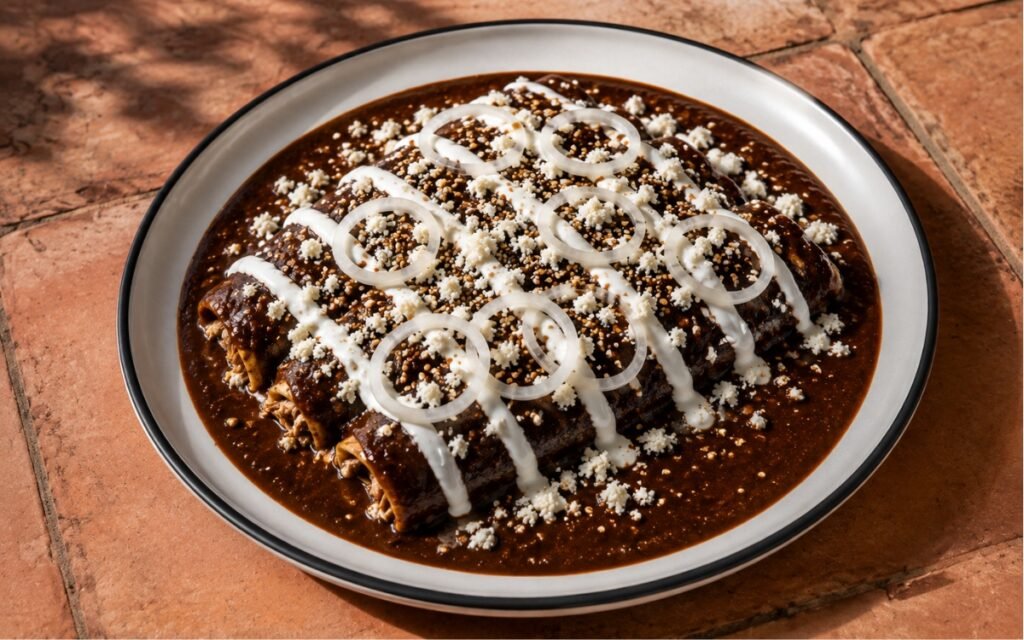
Chicken Enmoladas with Mole Poblano
Soft corn tortillas filled with tender shredded chicken, folded, and blanketed in glossy mole poblano, finished with crema and queso fresco.
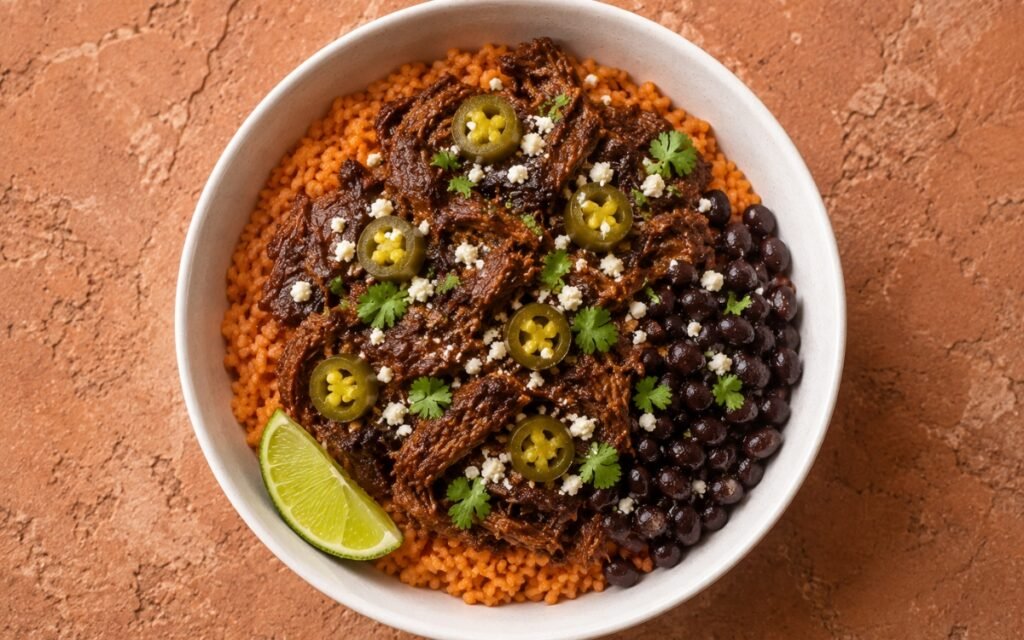
Mexican Barbacoa Rice Bowl
Beef chuck braised in a toasted chile sauce until tender, shredded and reduced until glossy, served over toasted tomato rice with whole black beans and cotija.
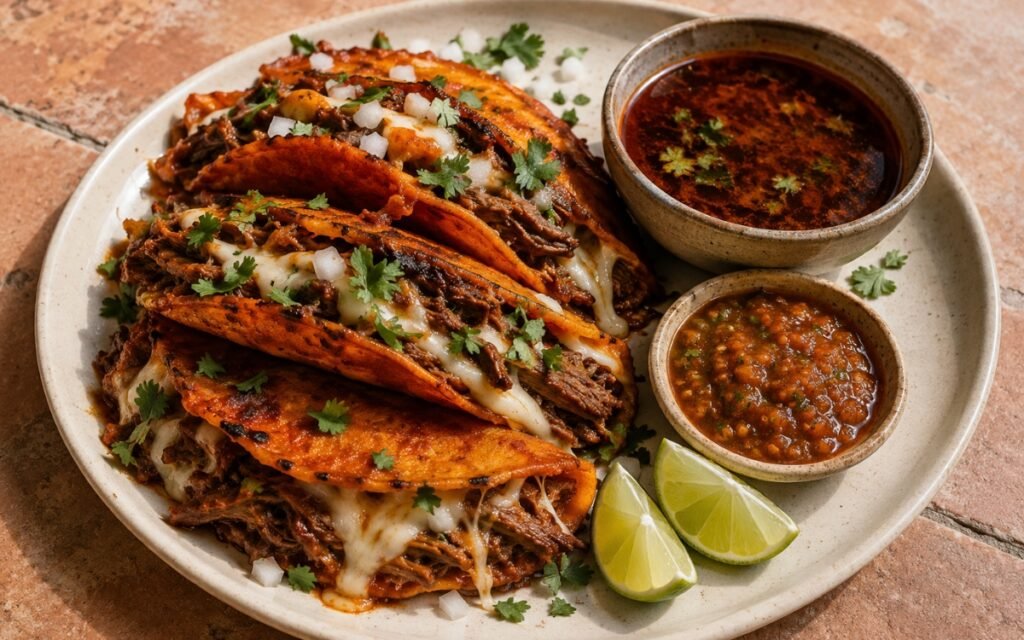
Birria Tacos with Consommé (Quesabirria)
Three-cut beef braised into a deep chile consommé, shredded, stuffed into small tortillas with Oaxaca cheese, and fried in birria fat until crisp and red-orange.
You might also like
You might also like
Classic British Fish and Chips
Beer-battered cod fried until crisp and puffed, served with fluffy double-fried chips, rustic mushy peas, and sharp tartar sauce.
Chicago-Style Hot Dog
A natural-casing all-beef frankfurter in a soft, steamed poppy-seed bun, dressed with mustard, relish, onion, tomato, and sport peppers.
Loaded Chili Cheese Fries
Double-fried thick-cut potatoes topped with rich, reduced beef chili, melted Mexican cheese, diced onion, pickled jalapeños, and sour cream.
Beef Empanadas
Ingredients
Method
- In a large bowl, mix the flour and salt. Add the cold butter or lard and rub it into the flour with your fingertips until the mixture looks sandy with a few small pea-sized pieces remaining. Whisk the egg, cold water, and vinegar together. Add most of the liquid to the flour mixture and mix until a dough forms. Add the remaining water only if the dough feels dry. Knead briefly for 1 to 2 minutes, just until smooth. Do not overwork the dough. Empanada pastry should be smooth and flexible, but still tender and flaky after baking. Keeping small, visible pieces of cold fat throughout the dry mixture, rather than fully blending it in, is exactly what creates the pockets of steam responsible for a genuinely flaky finished pastry once baked.
- Wrap the dough and refrigerate for 1 hour. Rested dough rolls thinner, seals better, and shrinks less in the oven. That resting period lets the gluten formed during mixing and kneading relax fully, which is directly why rested dough stretches and rolls with far less resistance and far less tendency to spring back or shrink once it’s in the hot oven.
- Heat the olive oil in a large skillet over medium heat. Add the onion and red bell pepper if using. Cook for 6 to 8 minutes, until softened. Add the garlic and cook for 30 seconds.
- Add the ground beef, salt, black pepper, paprika, cumin, and oregano. Cook for 8 to 10 minutes, breaking the meat apart, until the beef is browned and the spices smell warm. Add the beef stock or water and simmer for 3 to 4 minutes, until the filling looks juicy but not loose. The filling should be moist enough to taste rich, but not saucy. Wet filling leaks and softens the pastry. That final, brief simmer with a controlled amount of liquid builds real moisture and flavour into the filling while stopping well short of anything genuinely loose or saucy — the specific distinction this recipe is built around protecting.
- Remove the pan from the heat. Stir in the sliced green olives, chopped hard-boiled eggs, and parsley. Let the filling cool completely, then chill it for at least 20 to 30 minutes. Cold filling is much easier to seal inside the dough. Warm filling melts the fat in the pastry and makes the empanadas harder to shape. Adding the olives, hard-boiled egg, and parsley only once the pan is off the heat protects each from any further cooking, keeping their own distinct texture and flavour intact within the finished filling.
- Divide the dough into 12 equal pieces, about 65 to 70g each. Roll each piece into a circle about 13 to 14cm wide. Keep the rolled dough lightly covered so it does not dry out. Keeping the unrolled and rolled dough covered throughout protects it from drying out and cracking at the edges, which would compromise its ability to seal cleanly around the filling.
- Place about 55 to 60g filling in the center of each dough circle. Fold the dough over into a half-moon shape. Press the edges firmly to seal, then crimp with your fingers or press with a fork. Do not overfill. A standard empanada should feel generous, but the edge still needs enough clean dough to seal properly. That specific, measured filling amount protects the dough’s own sealing edge from being overwhelmed — too much filling leaves too little clean dough at the border to actually press together and hold during baking.
- Place the shaped empanadas on a parchment-lined baking tray. Chill for 15 to 20 minutes while the oven heats. Preheat the oven to 210°C. This second, brief chill firms the butter or lard within the dough back up after all the handling during shaping, which is what protects the pastry’s flakiness right through into the hot oven.
- Beat the egg with the milk or water. Brush the empanadas lightly with egg wash. Use a thin, even coat. Too much egg wash can pool around the crimped edges and brown unevenly. A thin, even coat is what produces consistent, deep golden colour across the whole surface — pooled egg wash browns and darkens unevenly, especially right at the crimped seams.
- Bake for 22 to 28 minutes, until the empanadas are deeply golden, crisp at the edges, and lightly blistered on top. Rotate the tray once if needed for even browning. That deep golden colour and light blistering are the visual cues confirming the pastry’s own fat has properly rendered and crisped, rather than staying pale and underbaked.
- Let the empanadas rest for 5 minutes before serving. Serve warm with chimichurri on the side. That brief rest lets the filling’s own residual heat settle slightly, making the empanadas easier to handle and eat without the filling spilling out the moment they’re cut into.