Ingredients
Method
Make the Dough
- In a large bowl, mix the flour and salt. Add the cold butter or lard and rub it into the flour with your fingertips until the mixture looks sandy with a few small pea-sized pieces remaining. Whisk the egg, cold water, and vinegar together. Add most of the liquid to the flour mixture and mix until a dough forms. Add the remaining water only if the dough feels dry. Knead briefly for 1 to 2 minutes, just until smooth. Do not overwork the dough. Empanada pastry should be smooth and flexible, but still tender and flaky after baking. Keeping small, visible pieces of cold fat throughout the dry mixture, rather than fully blending it in, is exactly what creates the pockets of steam responsible for a genuinely flaky finished pastry once baked.
Rest the Dough
- Wrap the dough and refrigerate for 1 hour. Rested dough rolls thinner, seals better, and shrinks less in the oven. That resting period lets the gluten formed during mixing and kneading relax fully, which is directly why rested dough stretches and rolls with far less resistance and far less tendency to spring back or shrink once it's in the hot oven.
Start the Filling
- Heat the olive oil in a large skillet over medium heat. Add the onion and red bell pepper if using. Cook for 6 to 8 minutes, until softened. Add the garlic and cook for 30 seconds.
Cook the Beef
- Add the ground beef, salt, black pepper, paprika, cumin, and oregano. Cook for 8 to 10 minutes, breaking the meat apart, until the beef is browned and the spices smell warm. Add the beef stock or water and simmer for 3 to 4 minutes, until the filling looks juicy but not loose. The filling should be moist enough to taste rich, but not saucy. Wet filling leaks and softens the pastry. That final, brief simmer with a controlled amount of liquid builds real moisture and flavour into the filling while stopping well short of anything genuinely loose or saucy — the specific distinction this recipe is built around protecting.
Finish and Chill the Filling
- Remove the pan from the heat. Stir in the sliced green olives, chopped hard-boiled eggs, and parsley. Let the filling cool completely, then chill it for at least 20 to 30 minutes. Cold filling is much easier to seal inside the dough. Warm filling melts the fat in the pastry and makes the empanadas harder to shape. Adding the olives, hard-boiled egg, and parsley only once the pan is off the heat protects each from any further cooking, keeping their own distinct texture and flavour intact within the finished filling.
Roll and Cut the Dough
- Divide the dough into 12 equal pieces, about 65 to 70g each. Roll each piece into a circle about 13 to 14cm wide. Keep the rolled dough lightly covered so it does not dry out. Keeping the unrolled and rolled dough covered throughout protects it from drying out and cracking at the edges, which would compromise its ability to seal cleanly around the filling.
Fill the Empanadas
- Place about 55 to 60g filling in the center of each dough circle. Fold the dough over into a half-moon shape. Press the edges firmly to seal, then crimp with your fingers or press with a fork. Do not overfill. A standard empanada should feel generous, but the edge still needs enough clean dough to seal properly. That specific, measured filling amount protects the dough's own sealing edge from being overwhelmed — too much filling leaves too little clean dough at the border to actually press together and hold during baking.
Chill Before Baking
- Place the shaped empanadas on a parchment-lined baking tray. Chill for 15 to 20 minutes while the oven heats. Preheat the oven to 210°C. This second, brief chill firms the butter or lard within the dough back up after all the handling during shaping, which is what protects the pastry's flakiness right through into the hot oven.
Egg Wash
- Beat the egg with the milk or water. Brush the empanadas lightly with egg wash. Use a thin, even coat. Too much egg wash can pool around the crimped edges and brown unevenly. A thin, even coat is what produces consistent, deep golden colour across the whole surface — pooled egg wash browns and darkens unevenly, especially right at the crimped seams.
Bake
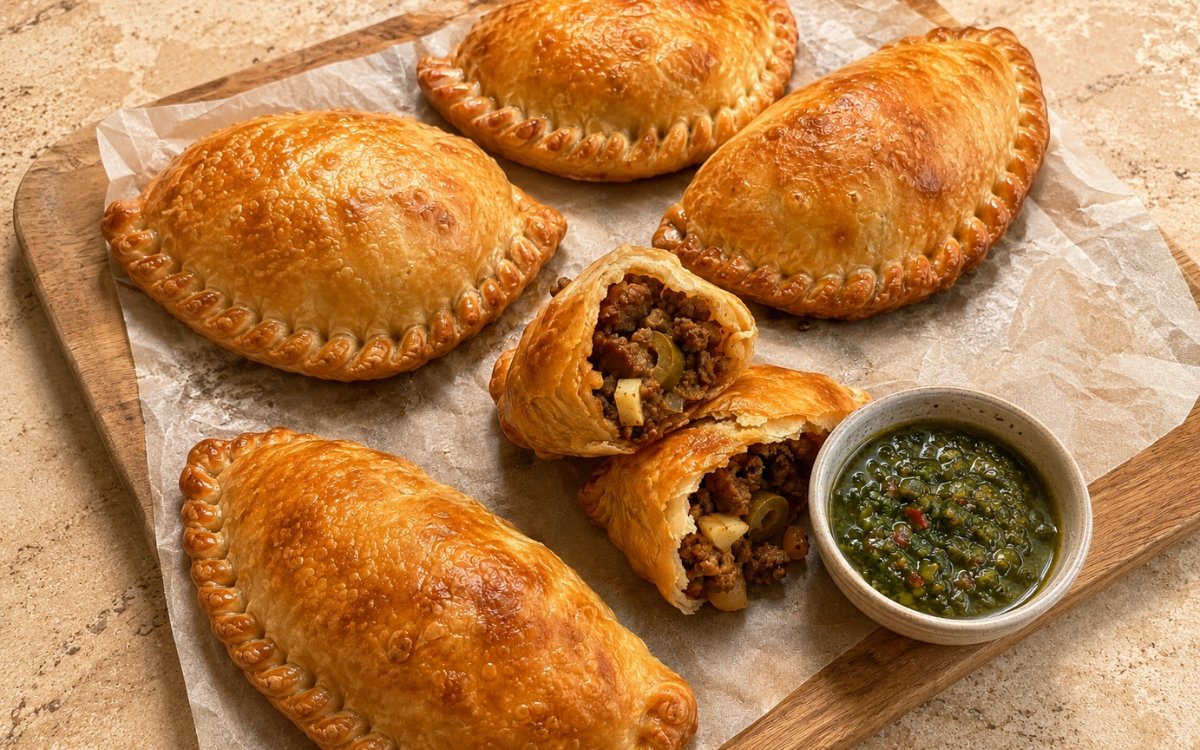
- Bake for 22 to 28 minutes, until the empanadas are deeply golden, crisp at the edges, and lightly blistered on top. Rotate the tray once if needed for even browning. That deep golden colour and light blistering are the visual cues confirming the pastry's own fat has properly rendered and crisped, rather than staying pale and underbaked.
Serve
- Let the empanadas rest for 5 minutes before serving. Serve warm with chimichurri on the side. That brief rest lets the filling's own residual heat settle slightly, making the empanadas easier to handle and eat without the filling spilling out the moment they're cut into.
Notes
Chilling the beef filling fully before it ever meets the dough deserves genuine respect as the step most responsible for whether the finished empanadas bake crisp or leak and soften. Warm filling actively melts the small, distinct pieces of fat suspended throughout the cold dough, and once that fat melts prematurely, the pastry loses much of its ability to develop the flaky, blistered texture this recipe is specifically built around.
Keeping visible, pea-sized pieces of cold fat throughout the dough mixture, rather than working it in completely smooth, is worth understanding as the technique directly responsible for the pastry's flakiness. Those distinct fat pockets create steam as the dough bakes, and that steam is what physically separates the dough into the thin, flaky layers a properly made empanada crust is known for.
Cooking the beef filling until moist but genuinely not wet deserves the same careful attention given to filling consistency throughout this collection's other pastry-wrapped dishes. A filling with too much residual liquid actively works against the sealed dough during baking, softening and eventually breaking through the pastry rather than staying properly contained.
The two separate chilling stages built into this recipe — resting the dough before rolling, and chilling the shaped empanadas again just before baking — deserve to be understood as two distinct, deliberate safeguards rather than redundant steps. The first relaxes gluten for easier rolling; the second re-firms the fat that softened during all the handling of shaping, protecting flakiness right through to the oven.