
Enchiladas Verdes
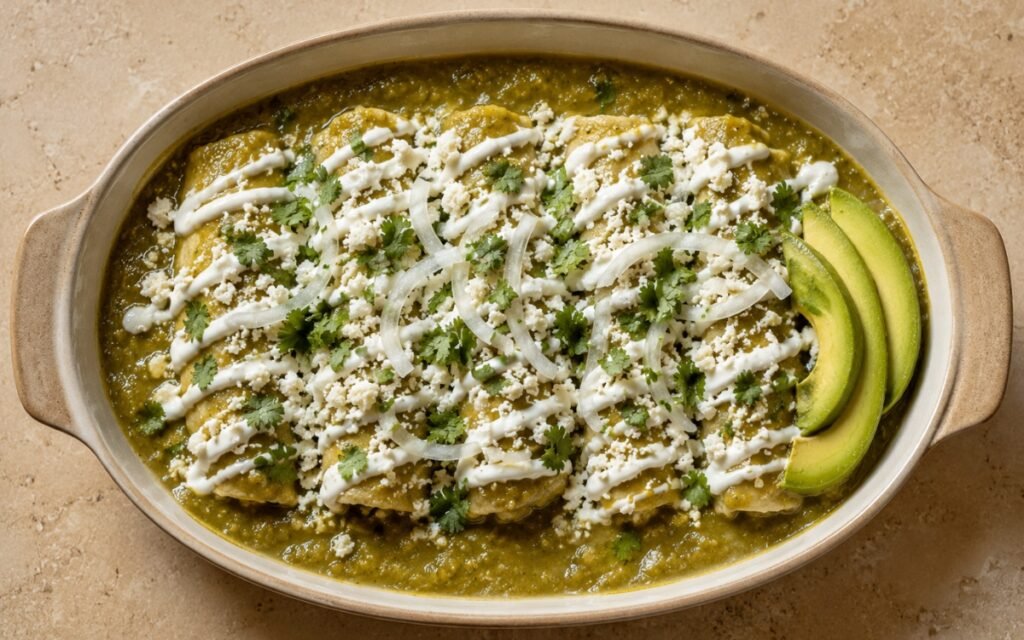
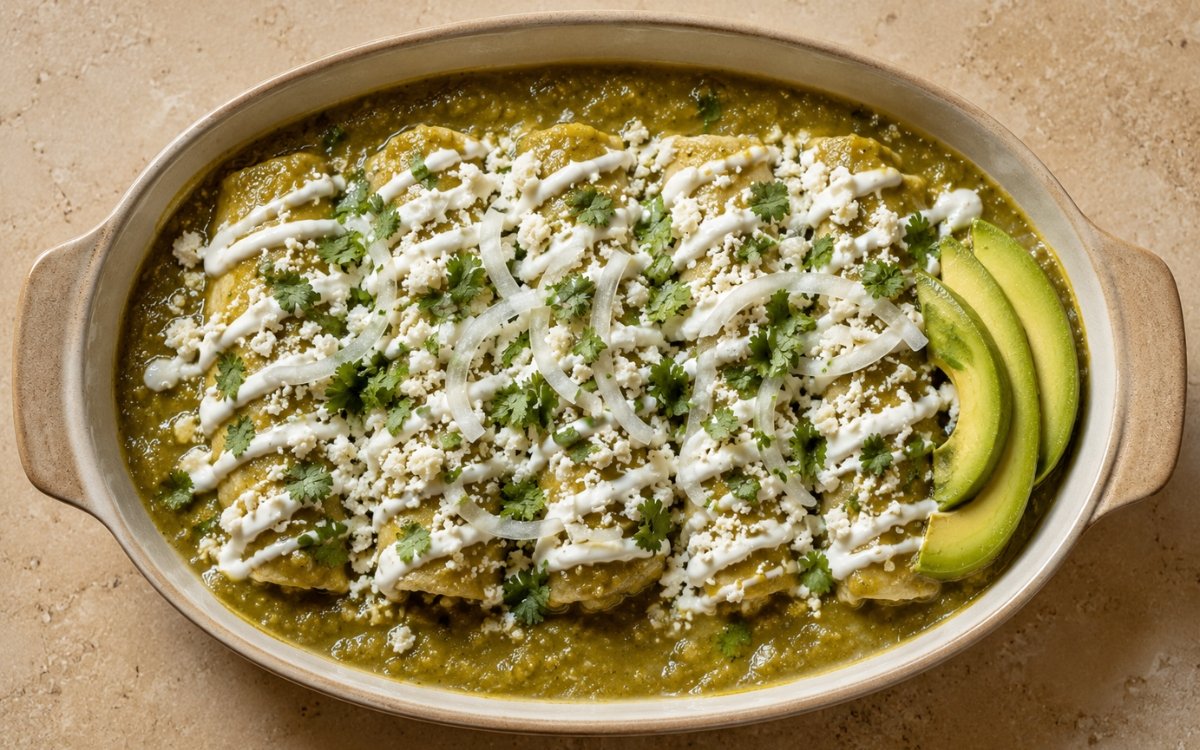
Rolled corn tortilla enchiladas filled with shredded chicken breast, arranged in a row and completely coated in vivid deep green tomatillo salsa verde sauce, finished with heavy crumbled queso fresco, zigzag crema, thin white onion rings, fresh cilantro, and avocado slices on the side. Roasting the tomatillos and aromatics only until softened and lightly blistered, rather than deeply browned, is the technique that protects this sauce’s defining colour — heavy browning dulls the bright green into something muddier, the same restrained-roast principle used elsewhere in this collection whenever a green sauce needs to stay vivid rather than deepening toward brown. Passing each tortilla briefly through hot oil before rolling matters just as much at this larger 20cm size, since dry corn tortillas crack readily when rolled, especially at a diameter this large. Keeping the shredded chicken filling moist but not wet protects the rolled tortillas from the inside, the same moisture-management principle that governs every rolled enchilada in this collection. The payoff is a dish coated edge to edge in glossy, vivid green sauce, with white queso fresco and crema, pale onion, and green avocado all staying visually distinct against it.
Prep Time : 35 min
Cook Time : 45 min
Servings : 4
35 min
45 min
4
Ingredients
For The Homemade Corn Tortillas — (Full recipe — see Homemade Corn Tortillas)
• 240g masa harina — this one on Amazon
• 3g fine sea salt
• 300g warm water, approximately 40°C
• Divide into 8 tortillas, about 67–68g raw dough each, pressed to about 20cm / 8 inches diameter
For the Shredded Chicken Filling
• 700g boneless, skinless chicken breasts
• 15ml neutral oil
• 120g white onion, finely diced
• 3 garlic cloves, minced
• 6g kosher salt
• 3g ground cumin — this one on Amazon
• 2g dried Mexican oregano — this one on Amazon
• 2g black pepper
• 120ml chicken stock or water
• 15ml lime juice
For the Green Enchilada Sauce
• 900g tomatillos, husked and rinsed
• 1 large white onion, cut into wedges
• 2 green jalapeños, deseeded and cut into chunks
• 3 garlic cloves, peeled
• 15ml neutral oil or olive oil
• 250ml chicken stock
• 25g fresh cilantro, leaves and tender stems
• 6g kosher salt, plus more to taste
• 2g ground cumin
• 15ml lime juice, optional, only if needed at the end
For Assembling the Enchiladas
• 30ml neutral oil, for lightly softening the tortillas
• 120ml additional chicken stock or water, only if needed to loosen the sauce slightly
For Garnishing and Serving
• 120g queso fresco, crumbled — this one on Amazon
• 100–120ml Mexican crema or sour cream, loosened slightly for drizzling
• 80g white onion, thinly sliced into rings or half-rings
• 20g fresh cilantro leaves
• 2 avocados, sliced
• Lime wedges, optional
This post may contain affiliate links. As an Amazon Associate I earn from qualifying purchases, at no additional cost to you.
Directions
- Prepare the Corn Tortillas
Prepare the Homemade Corn Tortilla dough according to its separate recipe, using 240g masa harina, 3g salt, and 300g warm water. Mix until a soft dough forms with no dry patches. Cover and rest for 20 minutes. Divide into 8 equal balls, about 67–68g each. Keep covered. Press each tortilla to about 20cm / 8 inches diameter and cook on a hot dry skillet or comal until just cooked through, flexible, and lightly speckled, about 45–60 seconds per side. Stack the cooked tortillas under a towel so they stay soft and pliable. This larger 20cm diameter is specific to the enchilada format — it needs enough surface area to wrap fully around a generous filling and still overlap cleanly at the seam. - Cook the Chicken
Heat the oil in a skillet or saucepan over medium heat. Add the onion and cook for 4–5 minutes until softened. Add the garlic and cook for 30 seconds. Add the chicken breasts, salt, cumin, oregano, and black pepper. Pour in the chicken stock or water. Cover and cook gently over medium-low heat for 12–15 minutes, turning once, until the chicken is fully cooked and reaches 74°C internally. Remove the chicken and rest for 5 minutes. Shred into medium strands, then return to the pan with any remaining cooking liquid. Add the lime juice and toss over low heat for 1–2 minutes until the chicken is moist but not wet. The filling should stay juicy but not loose. If it is watery, keep cooking briefly until the liquid reduces. A gentle covered simmer rather than a hard boil protects chicken breast specifically well here — this leaner cut dries out and toughens quickly under more aggressive heat, while the gentler approach keeps it moist right up to temperature. - Make the Green Enchilada Sauce
Place the tomatillos, onion wedges, jalapeños, and garlic on a tray. Toss lightly with the oil. Roast at 220°C / 425°F for 12–15 minutes, until the tomatillos soften and blister lightly. Do not roast until everything turns deeply browned. Heavy browning dulls the bright green colour and gives a muddy sauce. Transfer the roasted vegetables to a blender. Add the chicken stock, cilantro, salt, cumin, and blend until smooth. Pour into a saucepan and simmer gently for 5–7 minutes. Taste and adjust salt. Add the lime juice only if needed for brightness. The sauce should be vivid green, glossy, and thick enough to coat the back of a spoon. If it is too thick to coat the enchiladas evenly, loosen it with a small splash of stock or water. This is a narrower roasting window than many other roasted salsa bases in this collection — the goal is just enough char to soften the tomatillos and add light complexity, stopping well before the kind of deep browning that would push the finished sauce toward brown rather than staying vividly green. - Soften the Tortillas
Heat the neutral oil in a skillet over medium heat. Briefly pass each tortilla through the oil for about 5–8 seconds per side, just enough to make it flexible and resistant to cracking. Transfer to a plate lined with paper towel. This step matters. Dry corn tortillas crack when rolled, especially at this larger 20cm size. The larger diameter used here makes this step more consequential than it would be for a small taco tortilla — more surface area means more opportunity for a dry spot to crack under the stress of a tight roll, so the brief oil pass is worth doing for every single tortilla rather than skipping it for ones that look pliable enough already. - Fill and Roll the Enchiladas
Spoon some of the chicken filling across the lower third of each tortilla. Roll tightly and place seam-side down in a baking dish or large ovenproof pan. Do not overfill. Overstuffed enchiladas split and leak filling into the sauce. Placing each rolled enchilada seam-side down uses the tortilla’s own weight, along with the surrounding sauce, to help hold the seam closed through the oven stage without needing anything additional to secure it. - Sauce the Enchiladas
Pour enough green enchilada sauce over the rolled enchiladas to coat them completely. Reserve a little extra sauce for serving if you want more on the plate. The enchiladas should be covered generously, but they should not be drowning in a soupy layer. Coating completely but not drowning the enchiladas is a specific balance point — enough sauce to protect every exposed surface of tortilla from drying out in the oven, without so much that the dish becomes a soupy pool rather than distinct, sauced enchiladas. - Warm Through
Place the dish in a 180°C / 350°F oven for 10–12 minutes, just until the enchiladas are heated through and the sauce is bubbling lightly at the edges. You are not baking for browning here. This is just to heat, marry the sauce and filling, and keep the green sauce glossy and fresh-looking. This is a heating and melding stage rather than a true bake, since every component going into the dish is already fully cooked — the oven’s only job is bringing everything up to serving temperature while letting the sauce briefly soak into the tortilla’s surface. - Garnish and Serve
Top the hot enchiladas with crumbled queso fresco, a zigzag drizzle of crema, thinly sliced white onion, and plenty of fresh cilantro leaves. Serve with sliced avocado on the side. Serve immediately while hot. Adding every garnish only after the dish is hot from the oven keeps the queso fresco from melting into the sauce and the crema from breaking down, preserving the sharp visual contrast between the vivid green sauce and the pale, fresh toppings on top of it.
*Notes :
- The green enchilada sauce’s colour is worth protecting deliberately through both the roasting and simmering stages, since it’s essentially the entire visual identity of this dish. Tomatillos and their accompanying aromatics can easily be roasted past the point of usefulness here — pushed toward deep, dark browning the way many other roasted salsa bases in this collection are, the resulting sauce shifts from vivid green toward something duller and more brownish. The lighter roast specified, stopping at soft and lightly blistered, is what keeps the finished sauce genuinely vivid.
- Passing the tortillas through hot oil before rolling addresses a problem that becomes more pronounced the larger the tortilla is. A small taco tortilla can sometimes get away with skipping this step if it’s warm and pliable enough already, but at this recipe’s 20cm diameter, dry spots are considerably more likely to crack under the stress of a tight roll — the brief oil pass, taking only seconds per side, meaningfully reduces that risk across a larger surface area.
- Keeping the shredded chicken filling moist but not wet is a balance this recipe shares with virtually every other rolled or stuffed dish in this collection, and the underlying reasoning is identical. Excess liquid in the filling has nowhere to go once the tortilla is rolled and sauced except into the masa itself, which weakens the tortilla’s structure from the inside and can cause it to fall apart during the final oven stage.
- The final assembly sequence — sauce completely but not drowning, warm through briefly rather than truly baking, garnish only once hot — exists to preserve the dish’s specific balance of textures and colours. Each step protects something particular: enough sauce to keep every tortilla surface from drying out, a short oven time that heats without overcooking, and garnishes added late enough to stay fresh, pale, and visually distinct against the green.
Why This Recipe Works
This recipe works because its green sauce is built with real attention to preserving colour — roasted only until softened, never deeply browned, and simmered briefly rather than reduced hard. The shredded chicken filling is cooked gently to stay moist without becoming wet.
Tortillas are softened in oil before rolling to prevent cracking at this larger size, and every garnish is held back until the dish is fully heated, keeping the sharp visual contrast between vivid green sauce and pale, fresh toppings intact.
Ingredient Breakdown
Lightly Roasted Tomatillos and Aromatics
The sauce’s colour foundation — roasted just until softened and lightly blistered, protecting the bright green from dulling into brown.
Gently Simmered Shredded Chicken Breast
The filling — cooked covered and gently to keep a leaner cut moist, reduced briefly at the end until juicy but not wet.
Oil-Softened Large Tortillas
The rolling technique — briefly passed through hot oil to prevent cracking at the larger 20cm diameter this dish requires.
Generously but Not Excessively Sauced Enchiladas
The coating balance — enough green sauce to protect every tortilla surface without turning the dish into a soupy pool.
Post-Bake Fresh Garnishes
The finishing layer — queso fresco, crema, onion, and cilantro all added only once the dish is hot, staying visually distinct against the sauce.
Flavor Structure Explained
This enchiladas verdes follows a layered balance model:
- Bright tangy foundation (tomatillo salsa verde)
- Savoury tender centre (shredded chicken filling)
- Rich salty-cool topping (queso fresco, crema)
- Fresh sharp finish (onion, cilantro, avocado)
The vivid green tomatillo sauce defines the dish with bright, tangy acidity that coats every enchilada from edge to edge. The gently cooked shredded chicken filling contributes savoury, tender substance without competing with the sauce’s brightness. Queso fresco and crema both cool and round out the dish once it’s hot from the oven, their mild saltiness and tang balancing the sauce’s sharp tomatillo acidity. Thin onion rings, fresh cilantro, and sliced avocado finish the plate with clean, sharp, and creamy contrast that keeps the whole dish feeling fresh rather than heavy.
Common Mistakes to Avoid
- Roasting the Tomatillos Until Deeply Browned – This dulls the sauce’s colour toward brown instead of keeping it vivid green. Always roast just until softened and lightly blistered.
- Rolling Dry, Un-Softened Tortillas – Dry corn tortillas crack readily when rolled, especially at this larger 20cm size. Always pass each tortilla briefly through hot oil first.
- Making the Chicken Filling Too Wet – Excess liquid weakens the rolled tortillas from the inside. Always cook the shredded chicken down until moist but not wet.
- Drowning the Enchiladas in Sauce – Too much sauce turns the dish into a soupy pool rather than distinct, sauced enchiladas. Always coat completely but avoid flooding the baking dish.
- Adding Garnishes Before Baking – Queso fresco, crema, onion, and cilantro added too early will melt, wilt, or lose their fresh appearance. Always garnish only after the dish comes out of the oven.
Variations
Enchiladas Rojas
For a red version of the same rolling-and-saucing technique, follow the Enchiladas Rojas recipe elsewhere in this collection, which uses a toasted guajillo-ancho chile sauce in place of the tomatillo salsa verde here.
With Shredded Pork or Beef
Substitute the shredded chicken with the same-weight braised, shredded pork or beef used elsewhere in this collection, following the identical rolling and saucing method.
Extra-Cheesy Version
Add 150g of shredded Monterey Jack or Chihuahua cheese scattered over the enchiladas before baking, in addition to the post-bake queso fresco, for a melted cheese layer beneath the fresh garnishes.
Spicier Version
Increase the jalapeños in the sauce to 3 and leave the seeds in one of them for a noticeably sharper heat throughout.
Storage & Make-Ahead
The green enchilada sauce can be refrigerated in a sealed container for up to 5 days, or frozen for up to 3 months.
The shredded chicken filling can be refrigerated for up to 3 days. Reheat gently with a small splash of stock before assembling.
Tortilla dough is best used fresh the same day; pressed, cooked tortillas can be stacked and refrigerated for up to 2 days before assembling.
Assembled, unbaked enchiladas can be covered and refrigerated for up to 24 hours before baking; add 5–8 extra minutes to the bake time if going in cold.
Fully baked and garnished enchiladas are best eaten immediately; the tortillas soften considerably on reheating and the fresh garnishes don’t hold up to storage.
Frequently Asked Questions
Why does the sauce need to be roasted only until lightly blistered rather than deeply browned?
Heavy browning shifts the tomatillos’ colour toward brown, dulling the sauce’s signature vivid green. Stopping the roast once the tomatillos have softened and picked up light char preserves that bright colour while still developing some roasted flavour.
Why pass the tortillas through hot oil before rolling instead of using them straight off the comal?
At this larger 20cm size, dry spots on the tortilla are more likely to crack under the stress of a tight roll than they would be on a smaller taco tortilla. A brief pass through hot oil, just seconds per side, keeps the tortilla flexible enough to roll cleanly.
Why does the chicken filling need to stay moist but specifically not wet?
Excess liquid in the filling has nowhere to go once the tortilla is rolled and covered in sauce — it seeps into the masa and weakens the tortilla’s structure, risking a collapse during the final oven stage.
Why is the oven stage described as heating through rather than baking?
Every component going into the dish — the tortillas, the chicken, the sauce — is already fully cooked. The short oven time exists purely to bring everything up to serving temperature and let the sauce meld slightly with the tortilla’s surface, not to cook or brown anything further.
What else is worth trying if I like this rolled tortilla and salsa combination?
Enchiladas Rojas follows the exact same technique with a toasted guajillo-ancho red chile sauce in place of the salsa verde here, making it the direct twin of this recipe. If you’d rather not roll the tortillas, Chilaquiles Verdes uses the same broiled salsa verde base tossed with crispy tortilla chips instead, for a related but structurally different green-sauce dish.
Nutrition Facts
( per serving )
Calories
~620 kcal
Protein
38 g
Fat
30 g
Carbs
48 g
Calories
~620 kcal
Protein
38 g
Fat
30 g
Carbs
48 g
Related Recipes
Related Recipes

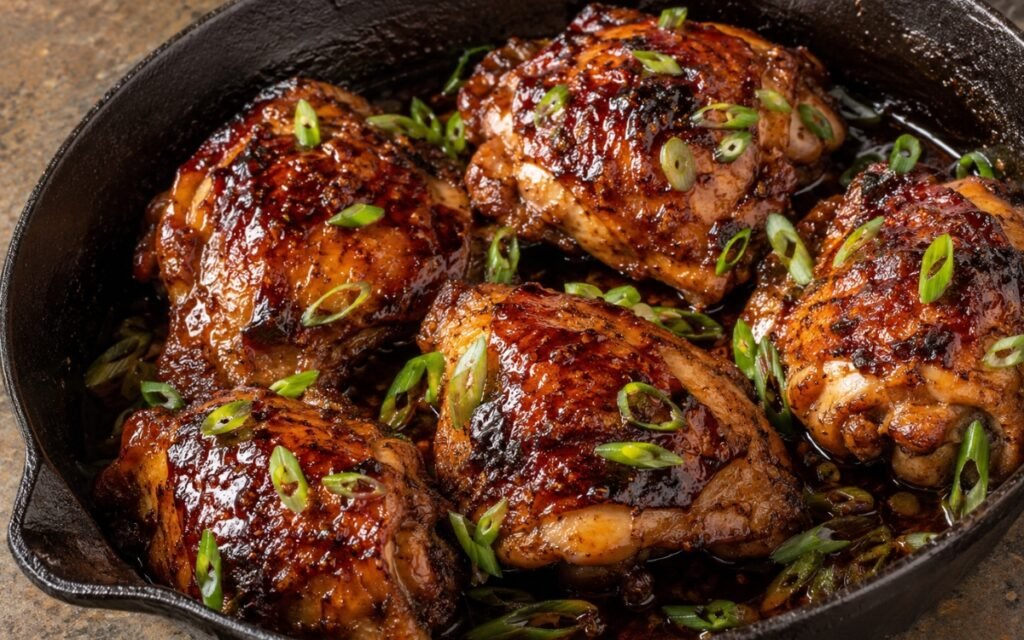
Chinese Five-Spice Chicken Thighs
Chicken thighs scored and marinated in five-spice, soy, ginger, and garlic — seared undisturbed, roasted until crispy, rested. Warm, aromatic, crispy-skinned.
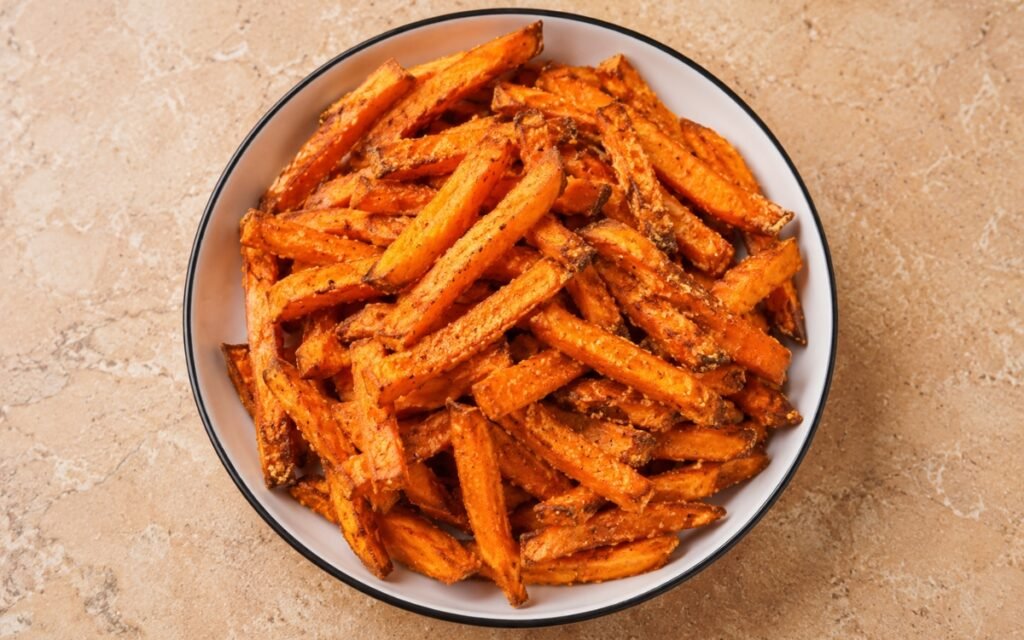
Crispy Sweet Potato Fries
Sweet potatoes soaked, dried, lightly coated in cornstarch, seasoned, and baked until golden and crisp. Sweet, savory, and satisfying.
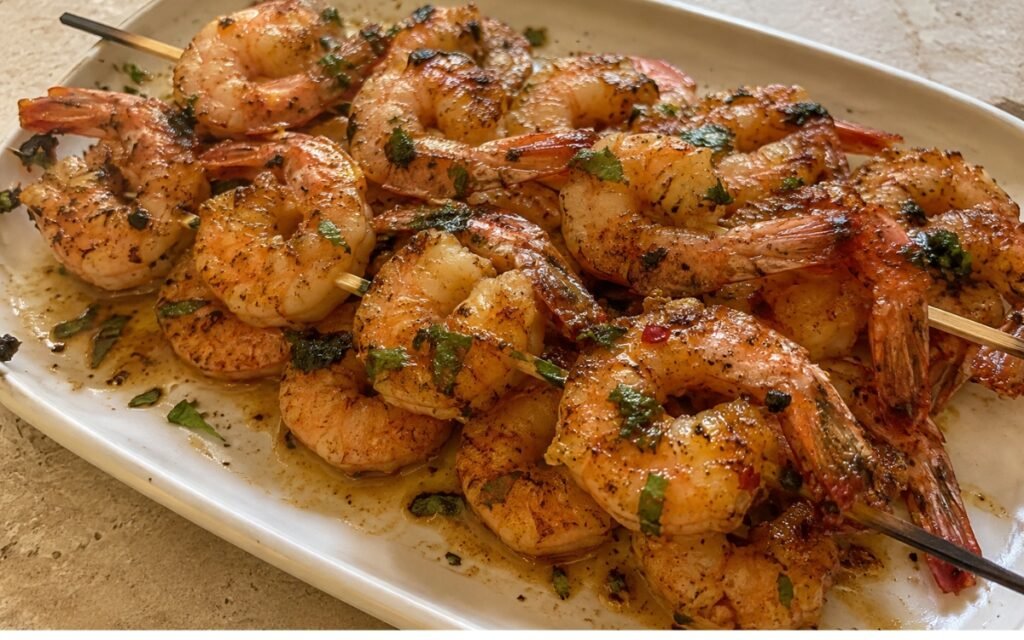
Garlic Shrimp Skewers
Shrimp marinated 30 minutes in garlic herb butter, threaded on double skewers, grilled fast with fresh butter basting until charred. Juicy and garlicky.
You might also like
You might also like
Birria Tacos with Consommé (Quesabirria)
Three-cut beef braised into a deep chile consommé, shredded, stuffed into small tortillas with Oaxaca cheese, and fried in birria fat until crisp and red-orange.
Crispy Buffalo Chicken Tenders
Chicken tenderloins breaded in three stages, fried until golden, oven-finished — tossed in buttery buffalo sauce just before serving. Crispy and tangy.
Bang Bang Chicken Rice Bowl
Crispy fried chicken in sweet-spicy bang bang sauce over jasmine rice with cucumber and scallions.
Enchiladas Verdes
Ingredients
Method
- Prepare the Homemade Corn Tortilla dough according to its separate recipe, using 240g masa harina, 3g salt, and 300g warm water. Mix until a soft dough forms with no dry patches. Cover and rest for 20 minutes. Divide into 8 equal balls, about 67–68g each. Keep covered. Press each tortilla to about 20cm / 8 inches diameter and cook on a hot dry skillet or comal until just cooked through, flexible, and lightly speckled, about 45–60 seconds per side. Stack the cooked tortillas under a towel so they stay soft and pliable. This larger 20cm diameter is specific to the enchilada format — it needs enough surface area to wrap fully around a generous filling and still overlap cleanly at the seam.
- Heat the oil in a skillet or saucepan over medium heat. Add the onion and cook for 4–5 minutes until softened. Add the garlic and cook for 30 seconds. Add the chicken breasts, salt, cumin, oregano, and black pepper. Pour in the chicken stock or water. Cover and cook gently over medium-low heat for 12–15 minutes, turning once, until the chicken is fully cooked and reaches 74°C internally. Remove the chicken and rest for 5 minutes. Shred into medium strands, then return to the pan with any remaining cooking liquid. Add the lime juice and toss over low heat for 1–2 minutes until the chicken is moist but not wet. The filling should stay juicy but not loose. If it is watery, keep cooking briefly until the liquid reduces. A gentle covered simmer rather than a hard boil protects chicken breast specifically well here — this leaner cut dries out and toughens quickly under more aggressive heat, while the gentler approach keeps it moist right up to temperature.
- Place the tomatillos, onion wedges, jalapeños, and garlic on a tray. Toss lightly with the oil. Roast at 220°C / 425°F for 12–15 minutes, until the tomatillos soften and blister lightly. Do not roast until everything turns deeply browned. Heavy browning dulls the bright green colour and gives a muddy sauce. Transfer the roasted vegetables to a blender. Add the chicken stock, cilantro, salt, cumin, and blend until smooth. Pour into a saucepan and simmer gently for 5–7 minutes. Taste and adjust salt. Add the lime juice only if needed for brightness. The sauce should be vivid green, glossy, and thick enough to coat the back of a spoon. If it is too thick to coat the enchiladas evenly, loosen it with a small splash of stock or water. This is a narrower roasting window than many other roasted salsa bases in this collection — the goal is just enough char to soften the tomatillos and add light complexity, stopping well before the kind of deep browning that would push the finished sauce toward brown rather than staying vividly green.
- Heat the neutral oil in a skillet over medium heat. Briefly pass each tortilla through the oil for about 5–8 seconds per side, just enough to make it flexible and resistant to cracking. Transfer to a plate lined with paper towel. This step matters. Dry corn tortillas crack when rolled, especially at this larger 20cm size. The larger diameter used here makes this step more consequential than it would be for a small taco tortilla — more surface area means more opportunity for a dry spot to crack under the stress of a tight roll, so the brief oil pass is worth doing for every single tortilla rather than skipping it for ones that look pliable enough already.
- Spoon some of the chicken filling across the lower third of each tortilla. Roll tightly and place seam-side down in a baking dish or large ovenproof pan. Do not overfill. Overstuffed enchiladas split and leak filling into the sauce. Placing each rolled enchilada seam-side down uses the tortilla’s own weight, along with the surrounding sauce, to help hold the seam closed through the oven stage without needing anything additional to secure it.
- Pour enough green enchilada sauce over the rolled enchiladas to coat them completely. Reserve a little extra sauce for serving if you want more on the plate. The enchiladas should be covered generously, but they should not be drowning in a soupy layer. Coating completely but not drowning the enchiladas is a specific balance point — enough sauce to protect every exposed surface of tortilla from drying out in the oven, without so much that the dish becomes a soupy pool rather than distinct, sauced enchiladas.
- Place the dish in a 180°C / 350°F oven for 10–12 minutes, just until the enchiladas are heated through and the sauce is bubbling lightly at the edges. You are not baking for browning here. This is just to heat, marry the sauce and filling, and keep the green sauce glossy and fresh-looking. This is a heating and melding stage rather than a true bake, since every component going into the dish is already fully cooked — the oven’s only job is bringing everything up to serving temperature while letting the sauce briefly soak into the tortilla’s surface.
- Top the hot enchiladas with crumbled queso fresco, a zigzag drizzle of crema, thinly sliced white onion, and plenty of fresh cilantro leaves. Serve with sliced avocado on the side. Serve immediately while hot. Adding every garnish only after the dish is hot from the oven keeps the queso fresco from melting into the sauce and the crema from breaking down, preserving the sharp visual contrast between the vivid green sauce and the pale, fresh toppings on top of it.