
Grilled Chicken Caesar Salad
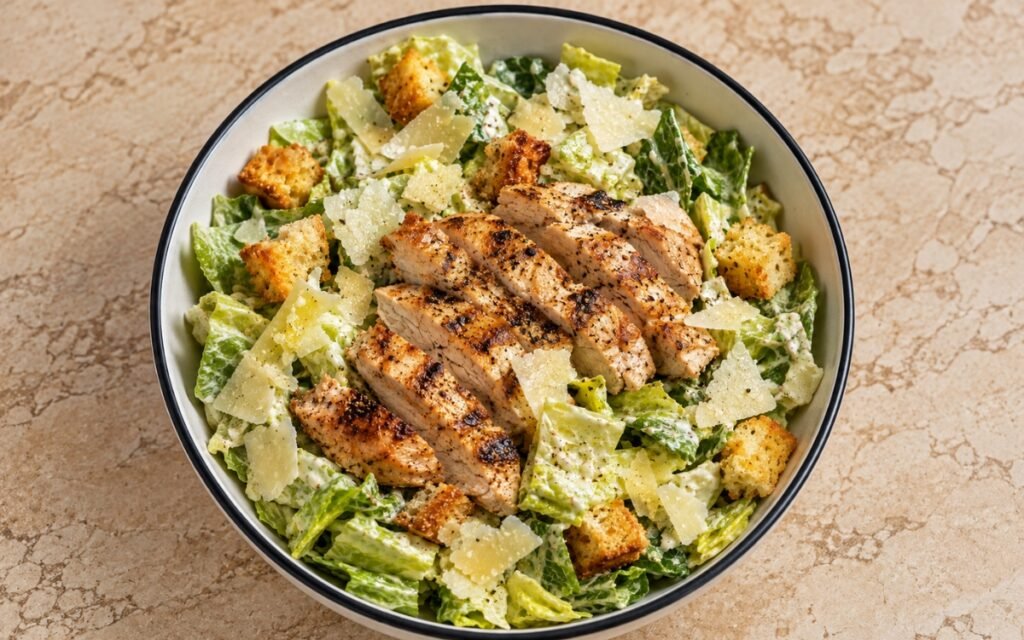
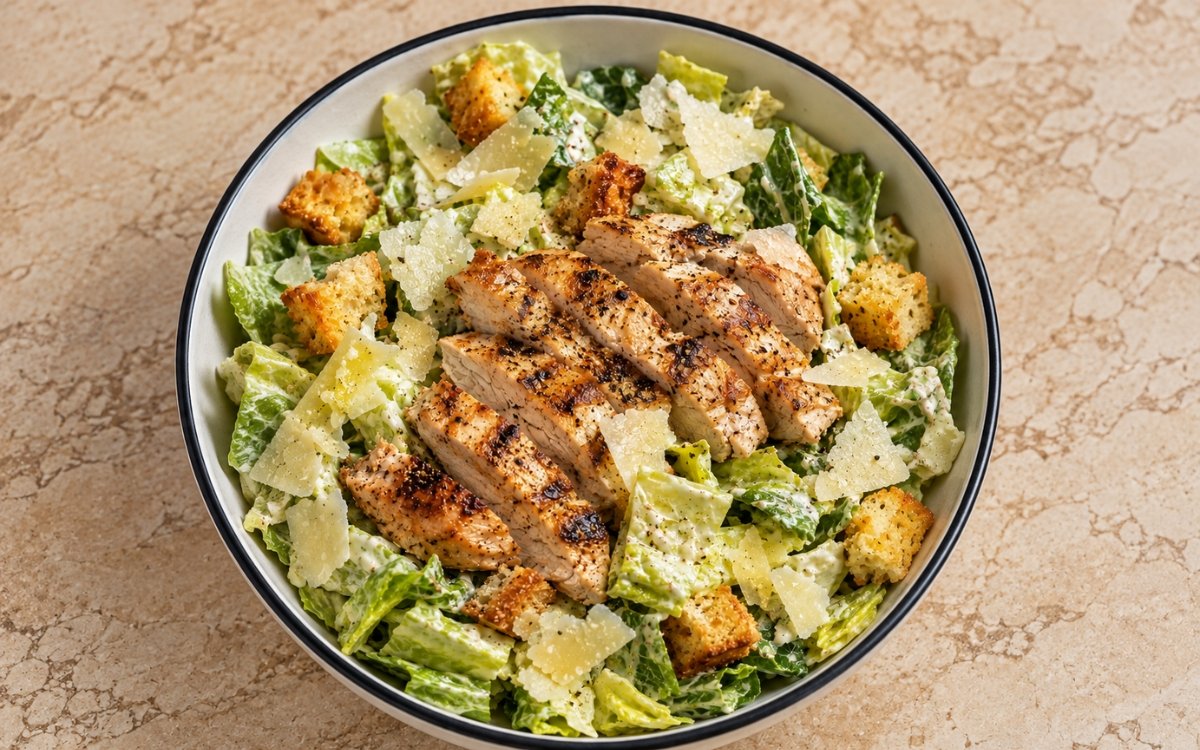
A classic chicken Caesar salad with grilled chicken breast, crisp romaine, golden croutons, shaved Parmesan, and a proper Caesar dressing made the old-school way — no cream, no mayonnaise, no “Americanized” shortcuts. The dressing should be savoury, lemony, garlicky, and emulsified, coating the lettuce lightly rather than drowning it. Drizzling the oil into the egg yolk base very slowly at first, then building speed, is the technique this whole dressing depends on for a genuine, stable emulsion — that gradual start lets the yolks properly absorb the fat before more is added, the same slow-drizzle-emulsification principle used elsewhere in this collection whenever egg yolks need to bind oil gradually rather than all at once. Drying the romaine thoroughly before dressing is what lets the dressing actually cling to the leaves rather than sliding off into a pool of diluted liquid. Resting the grilled chicken before slicing is what keeps its juices inside the meat rather than running out into the salad. The payoff is a salad with real, classic balance — crisp, dry romaine lightly coated in a bold, savoury, properly emulsified dressing, topped with juicy grilled chicken, crisp croutons, and shaved Parmesan.
Prep Time : 10 min
Cook Time : 0 min
Servings : 8
10 min
0 min
8
Ingredients
For the Chicken
• 600g skinless boneless chicken breasts (150g per serving)
• 15ml olive oil
• 6g fine sea salt
• 2g black pepper
• 2g garlic powder — this one on Amazon
• 1g dried oregano or Italian seasoning, optional
For the Croutons
• 180g rustic white bread or sourdough, cut into bite-size cubes
• 30ml olive oil
• 2g fine sea salt
• 1 garlic clove, finely grated or crushed
For the Caesar Dressing
• 2 egg yolks (preferably pasteurized if preferred for safety)
• 4 anchovy fillets — this one on Amazon
• 2 garlic cloves
• 20–25ml lemon juice
• 10ml Worcestershire sauce — this one on Amazon
• 5g Dijon mustard (optional but useful for a more stable emulsion) — this one on Amazon
• 60ml extra-virgin olive oil — this one on Amazon
• 60–80ml neutral oil or light olive oil
• 35g finely grated Parmesan
• 2–3 tbsp cold water, only if needed to loosen
• Black pepper, to taste
• Fine sea salt, only if needed
For the Salad
• 3 romaine hearts or about 650–700g romaine, washed and thoroughly dried
• 40–50g shaved Parmesan, for finishing — this one on Amazon
• Extra black pepper, for finishing
This post may contain affiliate links. As an Amazon Associate I earn from qualifying purchases, at no additional cost to you.
Directions
- Make the Croutons
Preheat the oven to 190°C. In a bowl, toss the bread cubes with the olive oil, salt, and garlic until evenly coated. Spread onto a tray in a single layer and bake for 10–15 minutes, turning once, until golden and crisp. Let cool completely. The croutons should be crisp all the way through, not just coloured on the outside. Soft-centered croutons go soggy too fast once dressed. That thorough, all-the-way-through crispness matters directly once the croutons meet the salad’s dressing — a crouton crisp only on the surface would soften from the inside out almost immediately. - Cook the Chicken
Pat the chicken breasts dry. If one end is much thicker than the other, lightly pound the thicker part so the breasts cook more evenly. Rub with olive oil, salt, black pepper, garlic powder, and oregano if using. Grill on a hot grill pan, cast iron pan, or outdoor grill over medium-high heat for about 5–7 minutes per side, depending on thickness, until nicely charred and the internal temperature reaches 74°C. Transfer to a plate and rest for 5–10 minutes, then slice across the grain. Do not slice immediately after cooking. Resting keeps the juices in the meat instead of running into the salad. During cooking, the chicken’s own juices are pushed toward the centre under real pressure, and that rest period lets them redistribute evenly back through the meat rather than spilling out the moment a knife cuts in too soon. - Make the Caesar Dressing
Using a mortar and pestle, or finely by hand and then mixed in a bowl, mash the anchovies and garlic into a smooth paste. Add the egg yolks, lemon juice, Worcestershire sauce, and Dijon if using. Whisk until combined. While whisking continuously, drizzle in the olive oil very slowly at first, then the neutral oil, building a smooth emulsified dressing. Once emulsified, whisk in the grated Parmesan. If the dressing feels too thick, loosen with 1–3 tablespoons cold water until it becomes pourable but still creamy enough to cling to the leaves. Taste and adjust with black pepper, more lemon if needed, and salt only if necessary. The dressing should be bold and concentrated before it hits the lettuce. Romaine dilutes flavour quickly, so under-seasoned dressing produces a flat salad. That slow initial drizzle is what lets the egg yolks’ own emulsifying capacity keep pace with the incoming fat — once enough oil has been successfully bound to establish a stable emulsion, the mixture can accept the remaining oil considerably faster without breaking. - Prepare the Romaine
Trim the romaine and cut or tear into large bite-size pieces. Wash and dry very thoroughly. A wet salad is not acceptable here — excess water weakens the dressing and makes it slide off the leaves instead of coating them. Any residual surface water on the leaves dilutes the dressing on contact and prevents it from actually adhering, which is exactly why this drying step is treated as non-negotiable rather than a quick rinse-and-go. - Dress the Salad
Place the romaine in a large bowl. Add enough dressing to coat the leaves lightly but thoroughly — start with about two-thirds, toss well, then add more only if needed. Add most of the croutons and a small handful of shaved Parmesan, then toss again briefly. Caesar salad should be coated, not saturated. The leaves should look glossy and lightly dressed, not heavy and wet. Adding the dressing gradually, tasting the coverage as you go, rather than pouring it all in at once, protects against oversaturating leaves that were specifically dried to actually hold a light, even coat. - Plate and Finish
Divide the salad among 4 bowls or plates, or transfer to a large serving bowl. Arrange the sliced grilled chicken on top. Finish with the remaining croutons, shaved Parmesan, and a crack of black pepper. Serve immediately. Reserving a portion of the croutons and Parmesan specifically for this final layer, rather than tossing everything in together, keeps those elements visible and crisp right at the top of the finished plate.
*Notes :
- Drizzling the oil into the egg yolk base very slowly at first deserves genuine respect as the single technique most responsible for whether this dressing emulsifies properly or splits. Egg yolks can only absorb and bind fat at a certain rate, and adding oil too quickly overwhelms that capacity before a stable emulsion has even begun to form — the gradual approach specified here lets the dressing build its own structure incrementally, becoming more tolerant of faster additions only once that structure is established.
- Drying the romaine thoroughly before dressing deserves the same attention this technique receives throughout this collection’s other dressed salads. Any residual surface water dilutes the dressing on contact and actively prevents it from clinging to the leaves — a properly dry leaf, by contrast, gives the dressing something to actually adhere to rather than sliding off into a pool at the bottom of the bowl.
- Resting the grilled chicken before slicing deserves genuine respect as a real, functional step rather than simple patience. During cooking, the chicken’s juices are pushed toward the centre under real pressure, and cutting in too soon releases them all at once onto the cutting board — or, in this case, directly into the salad — rather than letting them redistribute evenly back through the meat.
- The recipe’s own explicit emphasis on keeping the dressing bold and concentrated before it ever meets the lettuce deserves to be taken seriously as a genuine principle of Caesar salad specifically. Romaine’s own high water content dilutes flavour quickly once dressed, and an under-seasoned dressing that tastes fine on its own would read as noticeably flat once tossed through the leaves.
Why This Recipe Works
This recipe works because the dressing is built by drizzling oil into the egg yolk base gradually, producing a genuine, stable emulsion rather than a broken one. The croutons are baked until crisp all the way through, protecting them from going soggy once dressed. The chicken is rested properly before slicing, keeping its juices inside the meat.
The romaine is dried thoroughly, letting the dressing actually cling rather than slide off, and the dressing itself is seasoned boldly to survive being diluted by the lettuce’s own water content. Assembling with reserved croutons and Parmesan on top keeps the finished salad visually and texturally at its best.
Ingredient Breakdown
Gradually Emulsified Dressing
The critical technique — slow oil incorporation lets the egg yolks build a genuine, stable emulsion.
All-the-Way-Through Crisp Croutons
The critical technique — protects against sogginess once tossed with the dressing.
Rested, Sliced-Across-the-Grain Chicken
The critical technique — keeps juices inside the meat rather than spilling into the salad.
Thoroughly Dried Romaine
he critical technique — lets the dressing actually adhere rather than sliding off diluted leaves.
Boldly Seasoned Dressing
The critical technique — concentrated flavour survives the dilution romaine’s own water content would otherwise cause.
Flavor Structure Explained
This grilled chicken Caesar salad follows a layered balance model:
- Crisp, cold foundation (thoroughly dried romaine)
- Bold, emulsified richness (properly built Caesar dressing)
- Savoury seared protein (grilled, rested chicken)
- Crunchy textural contrast (crisp croutons)
- Sharp finishing note (shaved Parmesan, black pepper)
Thoroughly dried, crisp romaine provides this salad’s cold, crunchy foundation, ready to actually hold the dressing rather than repel it. A properly built, gradually emulsified Caesar dressing contributes bold, savoury richness throughout. Grilled, properly rested chicken adds real, juicy protein on top. Crisp croutons layer in genuine textural contrast, and shaved Parmesan with a final crack of black pepper finishes the salad with sharp, classic notes that tie every component together.
Common Mistakes to Avoid
- Adding the Oil Too Quickly to the Dressing – This overwhelms the yolks’ emulsifying capacity and can split the dressing. Always drizzle it in slowly, starting drop by drop.
- Skipping the Thorough Drying of the Romaine – This lets the dressing slide off rather than cling. Always dry the leaves completely.
- Slicing the Chicken Immediately After Cooking – This releases the juices into the salad instead of keeping them in the meat. Always rest for 5 to 10 minutes first.
- Pulling the Croutons Before They’re Crisp Throughout – This leaves them prone to going soggy quickly. Always bake until crisp all the way through.
- Underseasoning the Dressing – This produces a flat-tasting salad once diluted by the romaine. Always taste and adjust boldly before dressing the leaves.
Variations
Extra-Anchovy Version
Increase the anchovies slightly for a more pronounced savoury backbone, per the recipe’s own notes on their importance.
Hand-Mashed Version
Mash the dressing base by hand rather than blending it completely smooth, per the recipe’s own suggestion, for the most traditional texture.
Extra-Lemony Version
Increase the lemon juice slightly for a brighter, sharper finished dressing.
Make-Ahead Version
Keep the chicken, croutons, dressing, and lettuce separate and assemble only before serving, per the recipe’s own guidance.
Storage & Make-Ahead
This version keeps the dressing classical: no cream, no mayonnaise.
Use very cold, dry romaine for the crispest result.
If making ahead, keep the chicken, croutons, dressing, and lettuce separate and assemble only before serving.
Frequently Asked Questions
Why does the oil need to be drizzled into the dressing so slowly at first?
Egg yolks can only absorb and bind fat at a certain rate. Adding oil too quickly overwhelms that capacity before a stable emulsion has formed, which is why the gradual, drop-by-drop start matters so much.
Why does the romaine need to be dried so thoroughly before dressing?
Any residual surface water dilutes the dressing on contact and prevents it from actually adhering to the leaves. Properly dried romaine gives the dressing something real to cling to instead.
Why does the chicken need to rest before it’s sliced?
During cooking, the chicken’s juices are pushed toward the centre under real pressure. Resting lets them redistribute evenly back through the meat, rather than spilling out into the salad if sliced too soon.
Why does the dressing need to taste bold and concentrated on its own?
omaine’s high water content dilutes flavour quickly once dressed. A dressing that tastes properly seasoned before it meets the lettuce is what keeps the finished salad from tasting flat.
Are there other classic chicken salad or grilled chicken dishes worth trying?
Greek Chicken Salad with Tzatziki Dressing and Buffalo Chicken Chopped Salad both offer other classic chicken salad directions worth exploring. Grilled Chicken Skewers is also worth trying for another grilled chicken dish, and Classic Deli Coleslaw pairs naturally alongside this salad as a side.
Nutrition Facts
( per serving )
Calories
~520 kcal
Protein
42 g
Fat
32 g
Carbs
18 g
Calories
~520 kcal
Protein
42 g
Fat
32 g
Carbs
18 g
Related Recipes
Related Recipes

Roasted Beet and Citrus Salad
Earthy roasted beets with bright citrus segments, arugula, walnuts, and citrus vinaigrette.
Greek Tomato Cucumber Salad
Fresh tomatoes and cucumbers with feta, olives, and lemon-oregano dressing in Mediterranean style.
Peruvian Chopped Salad
Bright and flavorful Peruvian chopped salad with sweet corn, creamy avocado, and a zesty lime dressing with a hint of aji amarillo.
You might also like
You might also like
Flautas de Pollo
Spiced shredded chicken thighs rolled tightly in corn tortillas and fried until golden and crisp, served with chunky guacamole and bright salsa roja.
Italian Beef Sandwich
Thin-sliced roast beef warmed in a heavily seasoned au jus, piled into crusty homemade French rolls with sharp giardiniera and roasted peppers.
Chopped Cheese
Seared ground beef and caramelized onion chopped together with melted American cheese, piled into a soft hoagie roll with lettuce and tomato.

Grilled Chicken Caesar Salad
Ingredients
Method
- Preheat the oven to 190°C. In a bowl, toss the bread cubes with the olive oil, salt, and garlic until evenly coated. Spread onto a tray in a single layer and bake for 10–15 minutes, turning once, until golden and crisp. Let cool completely. The croutons should be crisp all the way through, not just coloured on the outside. Soft-centered croutons go soggy too fast once dressed. That thorough, all-the-way-through crispness matters directly once the croutons meet the salad’s dressing — a crouton crisp only on the surface would soften from the inside out almost immediately.
- Pat the chicken breasts dry. If one end is much thicker than the other, lightly pound the thicker part so the breasts cook more evenly. Rub with olive oil, salt, black pepper, garlic powder, and oregano if using. Grill on a hot grill pan, cast iron pan, or outdoor grill over medium-high heat for about 5–7 minutes per side, depending on thickness, until nicely charred and the internal temperature reaches 74°C. Transfer to a plate and rest for 5–10 minutes, then slice across the grain. Do not slice immediately after cooking. Resting keeps the juices in the meat instead of running into the salad. During cooking, the chicken’s own juices are pushed toward the centre under real pressure, and that rest period lets them redistribute evenly back through the meat rather than spilling out the moment a knife cuts in too soon.
- Using a mortar and pestle, or finely by hand and then mixed in a bowl, mash the anchovies and garlic into a smooth paste. Add the egg yolks, lemon juice, Worcestershire sauce, and Dijon if using. Whisk until combined. While whisking continuously, drizzle in the olive oil very slowly at first, then the neutral oil, building a smooth emulsified dressing. Once emulsified, whisk in the grated Parmesan. If the dressing feels too thick, loosen with 1–3 tablespoons cold water until it becomes pourable but still creamy enough to cling to the leaves. Taste and adjust with black pepper, more lemon if needed, and salt only if necessary. The dressing should be bold and concentrated before it hits the lettuce. Romaine dilutes flavour quickly, so under-seasoned dressing produces a flat salad. That slow initial drizzle is what lets the egg yolks’ own emulsifying capacity keep pace with the incoming fat — once enough oil has been successfully bound to establish a stable emulsion, the mixture can accept the remaining oil considerably faster without breaking.
- Trim the romaine and cut or tear into large bite-size pieces. Wash and dry very thoroughly. A wet salad is not acceptable here — excess water weakens the dressing and makes it slide off the leaves instead of coating them. Any residual surface water on the leaves dilutes the dressing on contact and prevents it from actually adhering, which is exactly why this drying step is treated as non-negotiable rather than a quick rinse-and-go.
- Place the romaine in a large bowl. Add enough dressing to coat the leaves lightly but thoroughly — start with about two-thirds, toss well, then add more only if needed. Add most of the croutons and a small handful of shaved Parmesan, then toss again briefly. Caesar salad should be coated, not saturated. The leaves should look glossy and lightly dressed, not heavy and wet. Adding the dressing gradually, tasting the coverage as you go, rather than pouring it all in at once, protects against oversaturating leaves that were specifically dried to actually hold a light, even coat.
- Divide the salad among 4 bowls or plates, or transfer to a large serving bowl. Arrange the sliced grilled chicken on top. Finish with the remaining croutons, shaved Parmesan, and a crack of black pepper. Serve immediately. Reserving a portion of the croutons and Parmesan specifically for this final layer, rather than tossing everything in together, keeps those elements visible and crisp right at the top of the finished plate.