Ingredients
Method
Make the Croutons
- Preheat the oven to 190°C. In a bowl, toss the bread cubes with the olive oil, salt, and garlic until evenly coated. Spread onto a tray in a single layer and bake for 10–15 minutes, turning once, until golden and crisp. Let cool completely. The croutons should be crisp all the way through, not just coloured on the outside. Soft-centered croutons go soggy too fast once dressed. That thorough, all-the-way-through crispness matters directly once the croutons meet the salad's dressing — a crouton crisp only on the surface would soften from the inside out almost immediately.
Cook the Chicken
- Pat the chicken breasts dry. If one end is much thicker than the other, lightly pound the thicker part so the breasts cook more evenly. Rub with olive oil, salt, black pepper, garlic powder, and oregano if using. Grill on a hot grill pan, cast iron pan, or outdoor grill over medium-high heat for about 5–7 minutes per side, depending on thickness, until nicely charred and the internal temperature reaches 74°C. Transfer to a plate and rest for 5–10 minutes, then slice across the grain. Do not slice immediately after cooking. Resting keeps the juices in the meat instead of running into the salad. During cooking, the chicken's own juices are pushed toward the centre under real pressure, and that rest period lets them redistribute evenly back through the meat rather than spilling out the moment a knife cuts in too soon.
Make the Caesar Dressing
- Using a mortar and pestle, or finely by hand and then mixed in a bowl, mash the anchovies and garlic into a smooth paste. Add the egg yolks, lemon juice, Worcestershire sauce, and Dijon if using. Whisk until combined. While whisking continuously, drizzle in the olive oil very slowly at first, then the neutral oil, building a smooth emulsified dressing. Once emulsified, whisk in the grated Parmesan. If the dressing feels too thick, loosen with 1–3 tablespoons cold water until it becomes pourable but still creamy enough to cling to the leaves. Taste and adjust with black pepper, more lemon if needed, and salt only if necessary. The dressing should be bold and concentrated before it hits the lettuce. Romaine dilutes flavour quickly, so under-seasoned dressing produces a flat salad. That slow initial drizzle is what lets the egg yolks' own emulsifying capacity keep pace with the incoming fat — once enough oil has been successfully bound to establish a stable emulsion, the mixture can accept the remaining oil considerably faster without breaking.
Prepare the Romaine
- Trim the romaine and cut or tear into large bite-size pieces. Wash and dry very thoroughly. A wet salad is not acceptable here — excess water weakens the dressing and makes it slide off the leaves instead of coating them. Any residual surface water on the leaves dilutes the dressing on contact and prevents it from actually adhering, which is exactly why this drying step is treated as non-negotiable rather than a quick rinse-and-go.
Dress the Salad
- Place the romaine in a large bowl. Add enough dressing to coat the leaves lightly but thoroughly — start with about two-thirds, toss well, then add more only if needed. Add most of the croutons and a small handful of shaved Parmesan, then toss again briefly. Caesar salad should be coated, not saturated. The leaves should look glossy and lightly dressed, not heavy and wet. Adding the dressing gradually, tasting the coverage as you go, rather than pouring it all in at once, protects against oversaturating leaves that were specifically dried to actually hold a light, even coat.
Plate and Finish
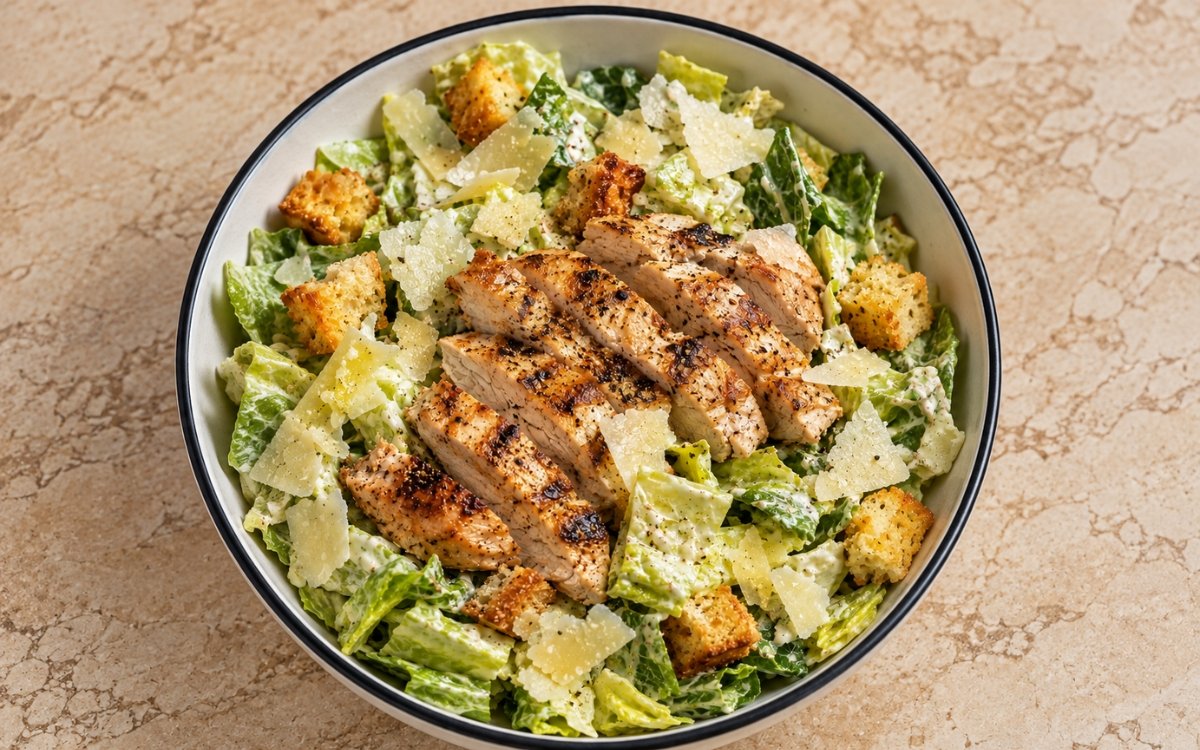
- Divide the salad among 4 bowls or plates, or transfer to a large serving bowl. Arrange the sliced grilled chicken on top. Finish with the remaining croutons, shaved Parmesan, and a crack of black pepper. Serve immediately. Reserving a portion of the croutons and Parmesan specifically for this final layer, rather than tossing everything in together, keeps those elements visible and crisp right at the top of the finished plate.
Notes
Drizzling the oil into the egg yolk base very slowly at first deserves genuine respect as the single technique most responsible for whether this dressing emulsifies properly or splits. Egg yolks can only absorb and bind fat at a certain rate, and adding oil too quickly overwhelms that capacity before a stable emulsion has even begun to form — the gradual approach specified here lets the dressing build its own structure incrementally, becoming more tolerant of faster additions only once that structure is established.
Drying the romaine thoroughly before dressing deserves the same attention this technique receives throughout this collection's other dressed salads. Any residual surface water dilutes the dressing on contact and actively prevents it from clinging to the leaves — a properly dry leaf, by contrast, gives the dressing something to actually adhere to rather than sliding off into a pool at the bottom of the bowl.
Resting the grilled chicken before slicing deserves genuine respect as a real, functional step rather than simple patience. During cooking, the chicken's juices are pushed toward the centre under real pressure, and cutting in too soon releases them all at once onto the cutting board — or, in this case, directly into the salad — rather than letting them redistribute evenly back through the meat.
The recipe's own explicit emphasis on keeping the dressing bold and concentrated before it ever meets the lettuce deserves to be taken seriously as a genuine principle of Caesar salad specifically. Romaine's own high water content dilutes flavour quickly once dressed, and an under-seasoned dressing that tastes fine on its own would read as noticeably flat once tossed through the leaves.