
Chilaquiles Verdes
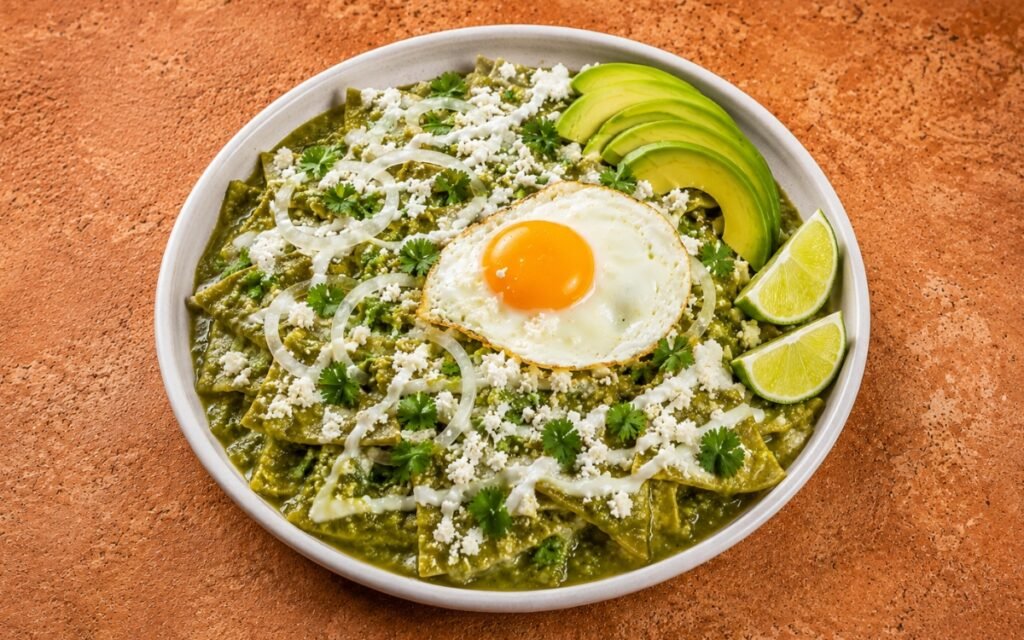
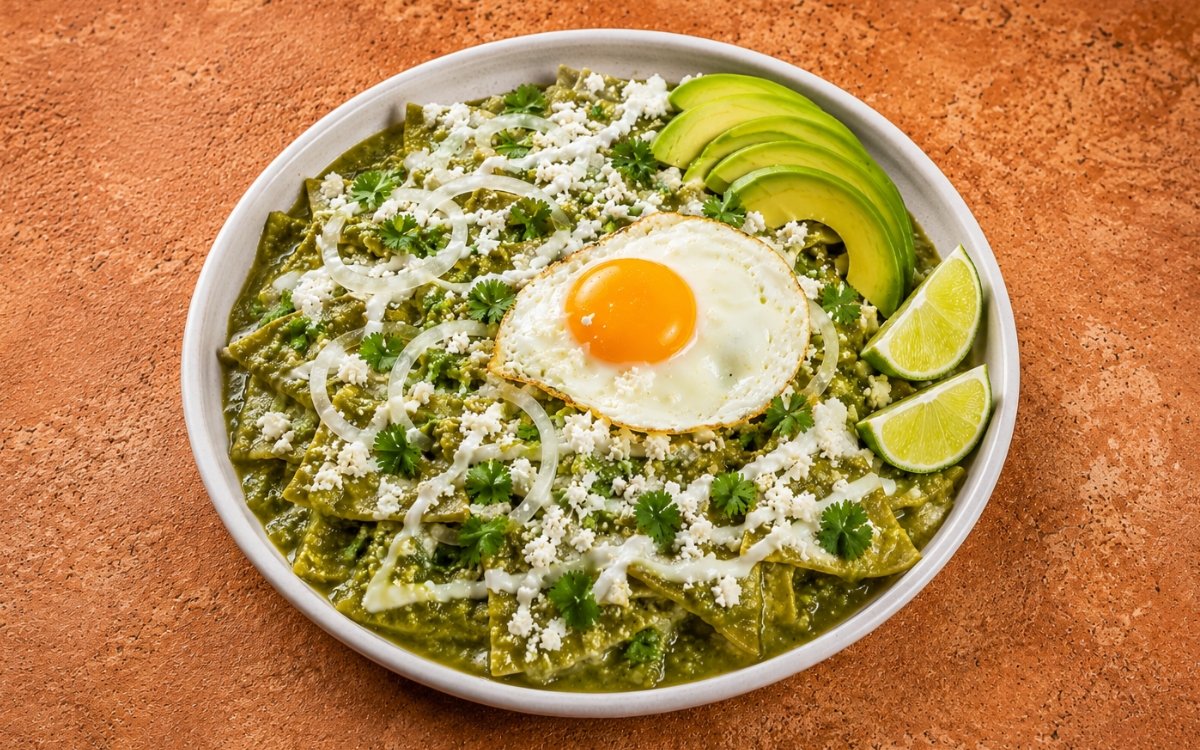
Crispy tortilla chip triangles piled generously and coated in vivid deep green salsa verde, with the base slightly softened and the top pieces still crisp, finished with crumbled cotija, thin white onion rings, white crema drizzle, fresh cilantro leaves, fanned avocado slices, and one fried egg per serving with a bright orange yolk. Timing is the entire dish here — every garnish has to be fully ready before the chips ever touch the hot salsa, since the window between coated-and-crisp and coated-and-soggy is measured in under a minute, the same narrow-timing principle used elsewhere in this collection whenever a crisp element meets a hot sauce. Folding rather than stirring the chips into the salsa is what keeps the triangles intact instead of breaking down into tortilla mush, preserving the specific texture contrast — softened at the base, still structured at the peaks — that defines good chilaquiles. The egg is fried separately and placed on top only at the very end, never buried in sauce, so its bright orange yolk stays visible against the green. The payoff is a bowl that’s genuinely hot, saucy, and vivid, with real textural range from soft to crisp in a single serving.
Prep Time : 25 min
Cook Time : 30 min
Servings : 45
25 min
30 min
45
Ingredients
For The Salsa Verde — full batch; (Full recipe — see Salsa Verde Mexican)
• 10–12 tomatillos, husked and washed
• 1 large sweet onion, cut into 8 wedges
• 2 green jalapeños, deseeded, cut into 4 chunks each
• 3 garlic cloves, peeled and lightly smashed
• 2 tbsp extra-virgin olive oil — this one on Amazon
• Salt to taste
• Large bunch of fresh cilantro, leaves and stems included
• Juice of 1 lime
• 3 tbsp water, plus more if needed to adjust consistency
For the Chilaquiles
• 220g thick corn tortilla chips, unsalted or lightly salted — see Homemade Corn Tortillas for making your own chips with no added salt or commercial flavouring
• 4 large eggs
• 1 tbsp lard, for frying the eggs
For the Garnishes
• 60g cotija cheese, crumbled — this one on Amazon
• 80ml Mexican crema
• 80g white onion, thinly sliced into rings or half-rings
• 1 large ripe avocado, sliced and divided into 4 portions
• 20g fresh cilantro leaves
• Lime wedges, optional
This post may contain affiliate links. As an Amazon Associate I earn from qualifying purchases, at no additional cost to you.
Directions
- Prepare the Salsa Verde
Toss the tomatillos, onion wedges, jalapeños, and garlic with olive oil and salt. Broil or roast on a hot tray until the tomatillos soften, collapse slightly, and develop charred spots, about 8–12 minutes depending on broiler strength. Transfer everything to a blender with the cilantro, lime juice, and 3 tbsp water. Blend until spoonable but still slightly textured. Add more water only if needed. Taste and adjust with salt or extra lime juice. For this recipe, use the full salsa verde batch even though it normally serves 8. The chips need enough salsa to coat generously and soften slightly at the base. Broiling the tomatillos and aromatics rather than simmering them develops a light char that adds real depth and a subtle smokiness the raw-blended version wouldn’t have — a meaningful difference for a salsa that’s about to become the entire visual and flavour identity of the dish. - Warm the Salsa Verde
Pour the salsa verde into a wide skillet or saucepan and bring it to a gentle simmer over medium heat. Cook for 3–5 minutes, stirring occasionally, until hot, glossy, and vivid green. Do not reduce it too far. Chilaquiles need enough loose salsa to coat the chips without turning into a dry paste. The goal of this warming step is temperature and looseness, not concentration — a salsa reduced too aggressively at this stage won’t have enough volume left to properly coat a full batch of chips. - Prepare the Garnishes
Slice the white onion very thinly. Crumble the cotija. Slice the avocado and divide it into 4 portions. Loosen the Mexican crema with a few drops of water or lime juice only if needed so it can drizzle in thick white zigzags. Keep everything ready before adding the chips to the sauce. Chilaquiles move fast once the chips hit the pan. Having every single garnish measured, sliced, and within arm’s reach before the chips ever meet the hot salsa is what makes the next several steps possible to execute in the narrow window they require — there’s no time to slice onion or crumble cheese once the chips are already in the pan. - Fry the Eggs
Heat the lard in a nonstick skillet over medium heat. Crack in the eggs and fry for 2–3 minutes, until the whites are just set and the yolks stay bright orange and runny. Season lightly with salt if needed. Do not overcook the yolks. The egg is part of the visual and should sit glossy on top of the green chilaquiles. Medium heat rather than high heat is what allows the whites to finish setting at roughly the same pace the yolks reach their ideal soft, glossy consistency — too hot, and the whites toughen well before the yolk has warmed through to that point. - Coat the Chips
Add the tortilla chips to the hot salsa verde and fold gently for 45–60 seconds, just until the chips are coated. The bottom chips should begin to soften, but the top edges should still have structure and some crunch. Do not stir aggressively. Broken chips turn this into green tortilla mush. Folding rather than stirring distributes the hot salsa across the chips without applying the kind of pressure that snaps them — this is the single step where the whole dish can go wrong fastest, since even a few extra seconds in the pan pushes every chip past crisp into soft. - Plate the Chilaquiles
Divide the salsa-coated chips among four shallow bowls. Spoon any remaining salsa verde around and over the chips so the bowl looks generous and glossy. Top each serving with one fried egg. Add a fan of avocado slices on one side. Scatter cotija heavily across the top. Add thin white onion rings, fresh cilantro leaves, and a thick zigzag drizzle of Mexican crema. Placing the egg on top of the fully plated chips, rather than folding it in or plating it first, is what keeps its yolk sitting glossy and visible rather than getting lost or broken beneath the other garnishes. - Serve
Serve immediately with lime wedges if using. The chilaquiles should be hot, saucy, and vivid green, with some tortilla pieces softened at the base and some still crisp at the peaks. Every minute this dish sits after plating erodes the specific textural contrast it’s built around, so serving without any delay is what preserves the difference between the softened base and the still-crisp top pieces.
*Notes :
- The timing sequence in this recipe deserves real attention rather than being treated as a loose guideline. Chilaquiles have almost no forgiveness once the chips meet the hot salsa — the entire point of the dish is a specific, narrow-window texture where the bottom layer has just begun to soften while the top pieces retain genuine crunch, and that window closes within roughly a minute of contact. Every step before that point, from warming the salsa to prepping every garnish, exists specifically to make sure nothing delays or interrupts the chip-coating stage once it begins.
- Broiling the tomatillos and aromatics for the salsa verde, rather than simmering them in water, is a small technique choice with an outsized effect on this particular dish. Since the salsa verde is essentially the entire visual and flavour identity of chilaquiles — there’s no competing sauce or protein diluting its presence — the brighter, more complex flavour that broiling produces compared to a simmered version matters more here than it might in a dish where the salsa plays a smaller supporting role.
- Folding the chips into the salsa, rather than stirring, is a deliberate technique for a fragile ingredient. Tortilla chips are inherently brittle, and any vigorous mixing motion will snap them into smaller fragments faster than the salsa can properly coat them. A gentle folding motion distributes the sauce while keeping the triangular shape of each chip largely intact, which matters both for the dish’s texture and for how it looks once plated — recognisable, coated triangles rather than a green tortilla porridge.
- Keeping the fried egg’s yolk visible and glossy, added only at the very final plating step, is as much about the dish’s identity as its flavour. A yolk broken or buried under the salsa loses its role as a bright visual anchor against the deep green — and functionally, the egg is meant to be broken and mixed in by the person eating it, at the table, rather than pre-mixed during plating.
Why This Recipe Works
This recipe works because it treats timing as the central organising principle rather than an afterthought: every garnish is fully prepared before the chips ever touch the hot salsa, the salsa itself is kept loose enough to coat without turning to paste, and the chips are folded gently for only as long as needed to coat without breaking.
The fried egg, added last with its yolk intentionally left runny and visible, anchors the dish visually on top of the vivid green base, while the specific texture contrast between softened base and crisp peaks is protected by moving quickly and decisively through the final assembly.
Ingredient Breakdown
Broiled Salsa Verde
The entire visual and flavour identity of the dish — charred under the broiler rather than simmered, for a brighter, more complex green sauce.
Thick Corn Tortilla Chips
The specified format — sturdy enough to hold some structure even after brief contact with hot salsa, unlike thinner chips that collapse instantly.
Gently Folded Chip Coating
The critical technique — folding rather than stirring preserves the triangular chip shape and the base-soft, top-crisp texture contrast.
Runny-Yolk Fried Egg (Added Last)
The visual anchor — fried separately and placed on top only at final plating, keeping the bright orange yolk visible against the green.
Full-Batch Salsa Verde Usage
The proportion adjustment — using the entire 8-serving salsa recipe rather than a partial batch, since the chips need generous volume to coat properly.
Flavor Structure Explained
This chilaquiles verdes follows a layered balance model:
- Bright tangy foundation (broiled salsa verde)
- Crisp-soft textural base (tortilla chips)
- Rich savoury centre (fried egg)
- Cool creamy contrast (avocado, crema)
- Sharp fresh finish (onion, cilantro, cotija)
The salsa verde defines the dish with vivid, tangy, gently smoky flavour that coats every chip. The tortilla chips themselves contribute a genuine textural range from softened base to crisp peak, unusual for a single component. The fried egg adds rich, savoury depth once its yolk breaks and mingles into the salsa. Avocado and Mexican crema both cool the dish down with fat-forward creaminess, while sharp white onion, fresh cilantro, and salty cotija finish each bite with clean, bright contrast against the rich, saucy base.
Common Mistakes to Avoid
- Adding the Chips Before Every Garnish Is Ready – Once the chips hit the hot salsa, there’s no time to prep anything else without overcooking the base. Always have every garnish fully ready before this step.
- Stirring the Chips Aggressively – Vigorous mixing breaks the chips into fragments, turning the dish into green tortilla mush. Always fold gently for no more than 45–60 seconds.
- SkiReducing the Salsa Verde Too Far – An over-thickened salsa doesn’t have enough volume to properly coat a full batch of chips. Always keep it loose and glossy rather than paste-like.
- Overcooking the Fried Eggs – Firm, fully set yolks lose the bright, glossy visual quality central to the dish. Always pull the eggs while the whites are just set and the yolks remain runny.
- Burying the Egg Under Other Garnishes – This hides the yolk and loses the visual anchor it provides against the green salsa. Always place the egg on top, after every other garnish, so it stays visible.
Variations
Chilaquiles Rojos
For a red version of the same technique, follow the Chilaquiles Rojos recipe elsewhere in this collection, which uses a roasted tomato-chipotle sauce in place of the salsa verde here.
With Shredded Chicken
Add 300g of shredded cooked chicken folded in alongside the chips for a heartier, more substantial version of the same dish.
Extra-Spicy Version
Leave the seeds in one of the jalapeños for the salsa verde for a noticeably sharper heat throughout the finished dish.
Vegan Version
Omit the fried egg and Mexican crema, replacing the crema with a loosened cashew or avocado-based cream, for a fully plant-based version of the same core flavours.
Storage & Make-Ahead
The salsa verde can be prepared and refrigerated in a sealed container for up to 5 days ahead, and warmed just before use.
Tortilla chips should be store-bought or freshly fried close to serving; pre-made chips that have gone soft will not produce the correct texture contrast.
Garnishes (sliced onion, cotija, loosened crema) can be prepped a few hours ahead and refrigerated until assembly.
The assembled, chip-coated chilaquiles are not suitable for storage — the entire texture depends on being eaten within minutes of coating. Assemble and serve only what will be eaten immediately.
Frequently Asked Questions
Why does every garnish need to be ready before the chips go into the salsa?
The window between chips just coated and still holding some crunch, and chips fully soggy, is under a minute. Any time spent slicing onion or crumbling cheese after the chips are already in the pan pushes them well past that window, so having everything ready in advance is what makes proper timing possible.
Why fold the chips gently rather than stirring them normally?
Tortilla chips are brittle and break easily under vigorous mixing. A gentle folding motion coats them in salsa while keeping their triangular shape mostly intact, preserving both the dish’s texture and its visual presentation as recognisable coated chips rather than crushed fragments.
Why does the salsa need to stay loose rather than being reduced further?
A more concentrated, paste-like salsa doesn’t have enough volume to coat a full batch of chips evenly. Keeping it glossy and loose, closer to a thick sauce than a paste, is what allows it to coat generously without the dish drying out.
Why place the fried egg on top only at the very end instead of folding it in?
The egg’s bright, glossy yolk is meant to serve as a visual anchor against the vivid green salsa beneath it. Placed on top after every other garnish, it stays fully visible; folded in or plated earlier, it either breaks prematurely or gets buried under the other toppings.
Are there similar recipes worth trying if I like this green salsa and crispy tortilla combination?
Chilaquiles Rojos is the direct twin of this recipe, following the identical technique with a roasted tomato-chipotle sauce in place of the salsa verde. If you’d rather roll than pile the tortillas, Enchiladas Verdes uses the same broiled salsa verde base wrapped around rolled, filled tortillas instead of tossed with crispy chips, for a related but structurally different green-sauce dish.
Nutrition Facts
( per serving )
Calories
~480 kcal
Protein
18 g
Fat
30 g
Carbs
38 g
Calories
~480 kcal
Protein
18 g
Fat
30 g
Carbs
38 g
Related Recipes
Related Recipes

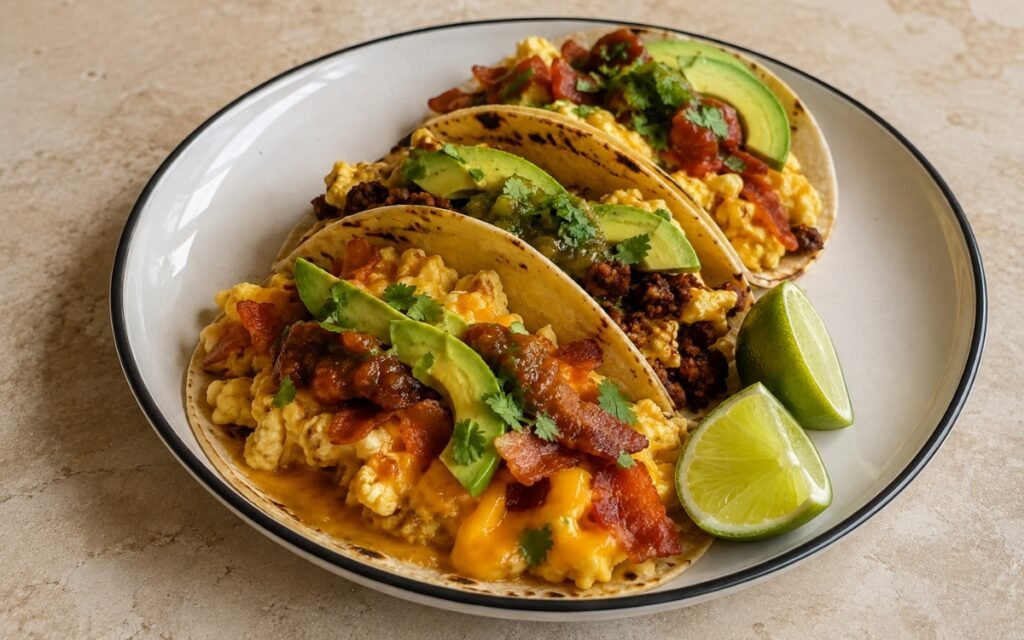
Breakfast Tacos
Warm corn tortillas with soft scrambled eggs, melted cheese, crispy bacon or crumbly chorizo, avocado, salsa, and lime.
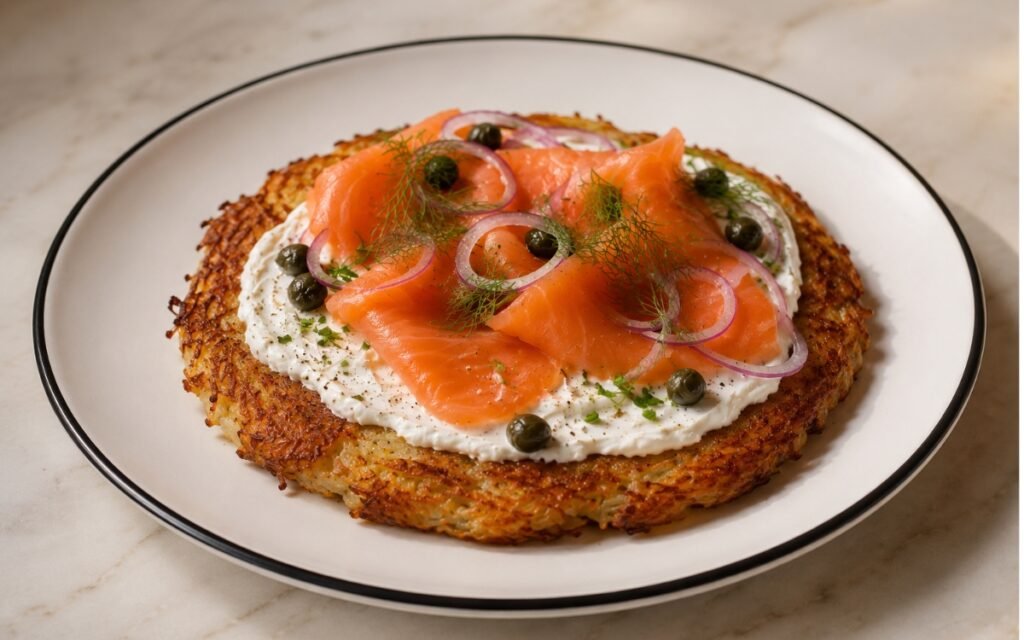
Crispy Potato Galette with Smoked Salmon
Whole Yukon Gold potatoes pressed in butter until deeply golden on both sides — crème fraîche, folded smoked salmon, soaked red onion, capers, and dill. The lox bagel as a crispy potato galette. Gluten-free.
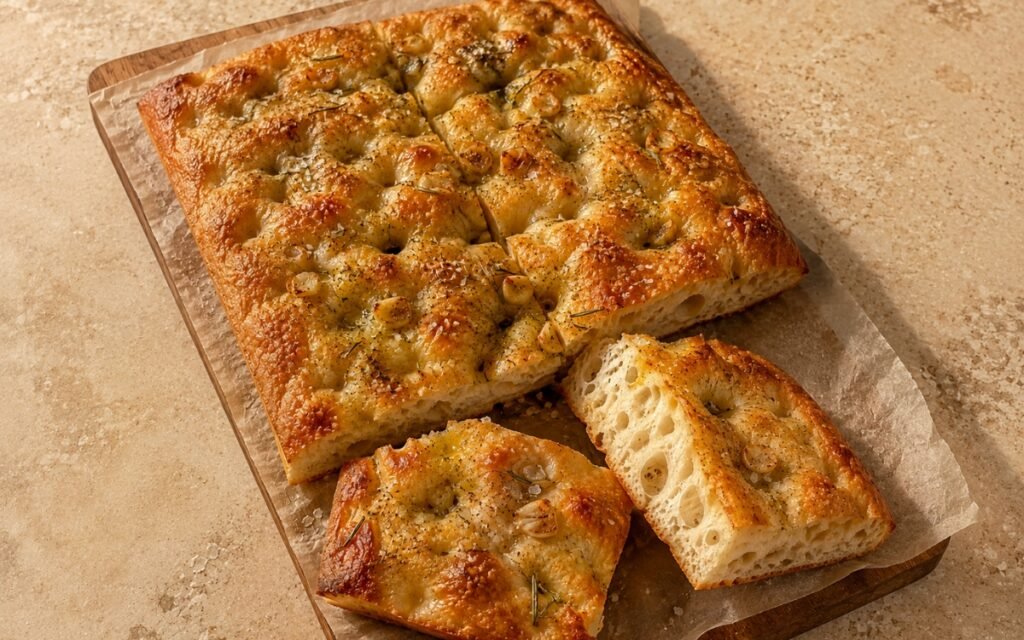
Garlic Butter Focaccia
A golden, high-hydration focaccia with a crisp fried bottom, deeply dimpled airy crumb, and glossy garlic rosemary butter, built over a 48–72 hour cold ferment.
You might also like
You might also like
White Chocolate Blueberry Muffins
Tender, bakery-style crumb packed with juicy blueberries, creamy white chocolate, and a buttery, golden crunch on top.
Creamy Parmesan Grits
Milk heated carefully in a heavy pan, stone-ground grits whisked in, simmered until tender, finished with butter, Parmesan, and cream. Velvety and indulgent.
Full English Breakfast
Fried eggs, browned pork sausages, crisp bacon rashers, grilled tomatoes, sautéed mushrooms, baked beans, buttered toast, and crisp hash browns.
Chilaquiles Verdes
Ingredients
Method
- Toss the tomatillos, onion wedges, jalapeños, and garlic with olive oil and salt. Broil or roast on a hot tray until the tomatillos soften, collapse slightly, and develop charred spots, about 8–12 minutes depending on broiler strength. Transfer everything to a blender with the cilantro, lime juice, and 3 tbsp water. Blend until spoonable but still slightly textured. Add more water only if needed. Taste and adjust with salt or extra lime juice. For this recipe, use the full salsa verde batch even though it normally serves 8. The chips need enough salsa to coat generously and soften slightly at the base. Broiling the tomatillos and aromatics rather than simmering them develops a light char that adds real depth and a subtle smokiness the raw-blended version wouldn’t have — a meaningful difference for a salsa that’s about to become the entire visual and flavour identity of the dish.
- Pour the salsa verde into a wide skillet or saucepan and bring it to a gentle simmer over medium heat. Cook for 3–5 minutes, stirring occasionally, until hot, glossy, and vivid green. Do not reduce it too far. Chilaquiles need enough loose salsa to coat the chips without turning into a dry paste. The goal of this warming step is temperature and looseness, not concentration — a salsa reduced too aggressively at this stage won’t have enough volume left to properly coat a full batch of chips.
- Slice the white onion very thinly. Crumble the cotija. Slice the avocado and divide it into 4 portions. Loosen the Mexican crema with a few drops of water or lime juice only if needed so it can drizzle in thick white zigzags. Keep everything ready before adding the chips to the sauce. Chilaquiles move fast once the chips hit the pan. Having every single garnish measured, sliced, and within arm’s reach before the chips ever meet the hot salsa is what makes the next several steps possible to execute in the narrow window they require — there’s no time to slice onion or crumble cheese once the chips are already in the pan.
- Heat the lard in a nonstick skillet over medium heat. Crack in the eggs and fry for 2–3 minutes, until the whites are just set and the yolks stay bright orange and runny. Season lightly with salt if needed. Do not overcook the yolks. The egg is part of the visual and should sit glossy on top of the green chilaquiles. Medium heat rather than high heat is what allows the whites to finish setting at roughly the same pace the yolks reach their ideal soft, glossy consistency — too hot, and the whites toughen well before the yolk has warmed through to that point.
- Add the tortilla chips to the hot salsa verde and fold gently for 45–60 seconds, just until the chips are coated. The bottom chips should begin to soften, but the top edges should still have structure and some crunch. Do not stir aggressively. Broken chips turn this into green tortilla mush. Folding rather than stirring distributes the hot salsa across the chips without applying the kind of pressure that snaps them — this is the single step where the whole dish can go wrong fastest, since even a few extra seconds in the pan pushes every chip past crisp into soft.
- Divide the salsa-coated chips among four shallow bowls. Spoon any remaining salsa verde around and over the chips so the bowl looks generous and glossy. Top each serving with one fried egg. Add a fan of avocado slices on one side. Scatter cotija heavily across the top. Add thin white onion rings, fresh cilantro leaves, and a thick zigzag drizzle of Mexican crema. Placing the egg on top of the fully plated chips, rather than folding it in or plating it first, is what keeps its yolk sitting glossy and visible rather than getting lost or broken beneath the other garnishes.
- Serve immediately with lime wedges if using. The chilaquiles should be hot, saucy, and vivid green, with some tortilla pieces softened at the base and some still crisp at the peaks. Every minute this dish sits after plating erodes the specific textural contrast it’s built around, so serving without any delay is what preserves the difference between the softened base and the still-crisp top pieces.