
Pork Tamales with Salsa Verde
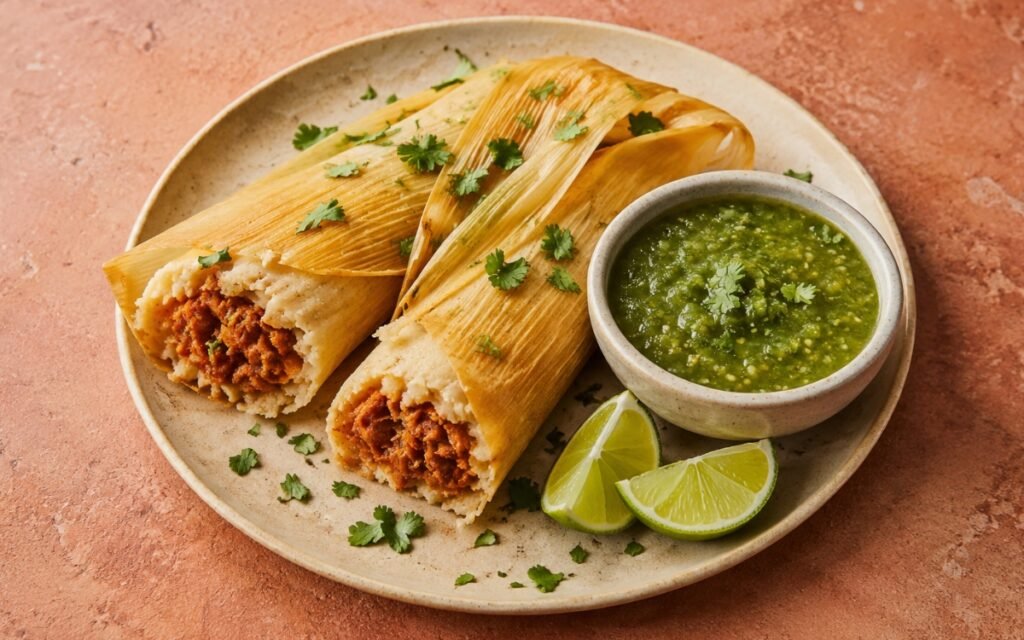
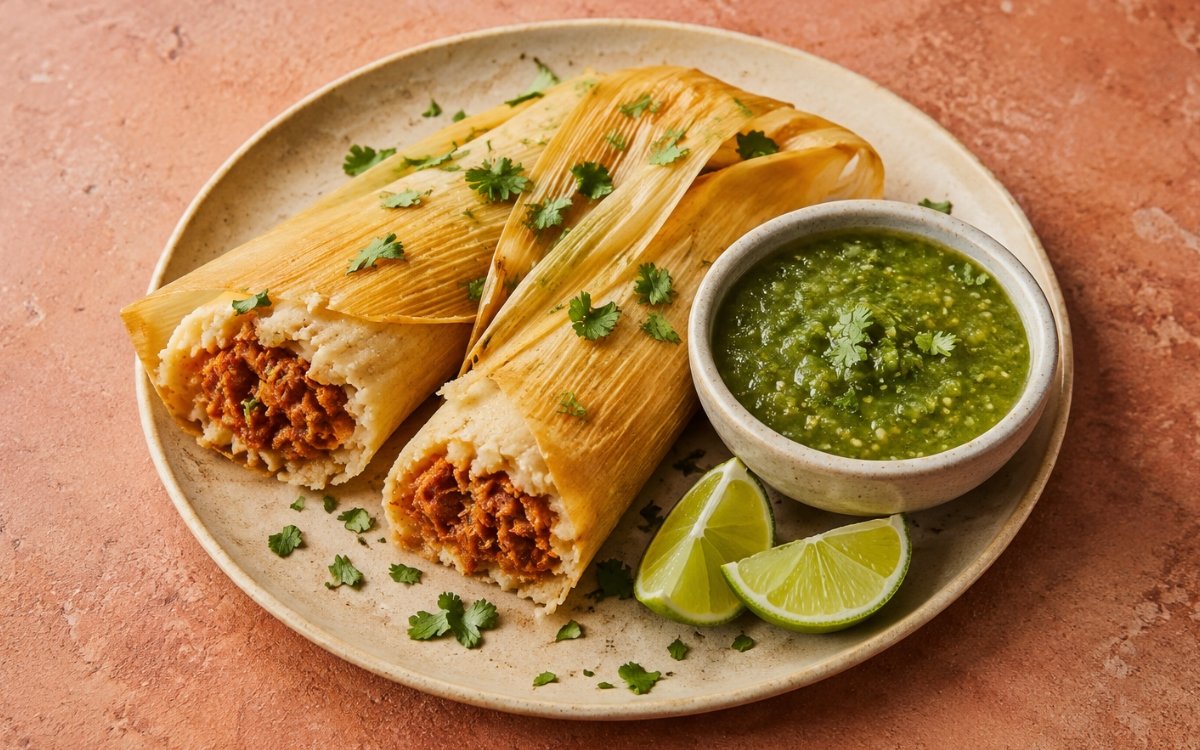
Pork tamales steamed in dried corn husks, with pale tender masa wrapped around juicy red chile pork made with ancho and guajillo chiles, partially unwrapped so the soft masa and red pork filling peek out at the open end. Served with salsa verde in a small bowl, fresh cilantro, and lime wedges for a traditional, generous home-cooking plate. Beating the lard before it meets the masa harina is the technique hinge here — the same aeration principle used elsewhere in this collection whenever a fat needs to lighten a dense base, and skipping it is the single most common reason home tamales turn out heavy rather than tender. The pork cooking broth does double duty, first as the braising liquid that becomes richly flavoured as the shoulder slowly tenderises, then as the warm hydrating liquid for the masa itself, so the tamale’s wrapper carries some of the same pork flavour as its filling. Reserving a spoonful of the red chile sauce to fold into the masa is a small addition that tints the dough a pale rose and threads a little of that chile depth through every bite, not just the centre. The payoff is a tamale with genuinely tender, spreadable masa giving way to juicy, glossy red chile pork, served alongside a bright, sharp salsa verde that cuts straight through the richness.
Prep Time : 1 hr
Cook Time : 2 hr, 45 min
Servings : 4
1 hr
2 hr, 45 min
4
Ingredients
For the Dried Corn Husks
• 20 dried corn husks
• Hot water, for soaking
For the Red Chile Pork Filling
• 800g boneless pork shoulder, cut into 5cm chunks
• 10g kosher salt
• 2g freshly cracked black pepper
• 15ml neutral oil
• ½ white onion, roughly chopped
• 4 garlic cloves, peeled and lightly smashed
• 2 bay leaves
• 750ml water or chicken stock, plus more if needed
For the Red Chile Sauce
• 4 dried guajillo chiles, stems and seeds removed — this one on Amazon
• 2 dried ancho chiles, stems and seeds removed — this one on Amazon
• ½ white onion, roughly chopped
• 3 garlic cloves, peeled
• 15g tomato paste
• 4g ground cumin — this one on Amazon
• 3g dried Mexican oregano — this one on Amazon
• 2g smoked paprika — this one on Amazon
• 15ml apple cider vinegar
• 250ml hot pork cooking broth, for blending
• 5g kosher salt, plus more to taste
• 15ml neutral oil, for frying the sauce
For the Tamale Masa
• 240g masa harina — this one on Amazon
• 5g baking powder
• 2 green jalapeños, deseeded, cut into 4 chunks each
• 80g lard, softened
• 300–330ml warm pork cooking broth, about 40°C
• 30ml red chile sauce, from above, optional for colour and flavour
For The Salsa Verde — (Full recipe — see Salsa Verde Mexican)
• 10–12 tomatillos, husked and washed
• 1 large sweet onion, cut into 8 wedges
• 2 green jalapeños, deseeded, cut into 4 chunks each
• 3 garlic cloves, peeled and lightly smashed
• 2 tbsp extra-virgin olive oil — this one on Amazon
• Salt to taste
• Large bunch of fresh cilantro, leaves and stems included
• Juice of 1 lime
• 3 tbsp water, plus more if needed to adjust consistency
For Garnishing and Serving
• Fresh cilantro leaves
• 2 limes, cut into wedges
• Salsa verde, from above
This post may contain affiliate links. As an Amazon Associate I earn from qualifying purchases, at no additional cost to you.
Directions
- Soak the Corn Husks
Place the dried corn husks in a large bowl or tray and cover with hot water. Weigh them down with a plate so they stay submerged. Soak for at least 30 minutes, until flexible and easy to fold. Tear a few smaller husks into thin strips for tying if needed. Drain and pat dry before assembling. Fully submerged, evenly soaked husks are what make clean folding possible — a husk that’s only partially rehydrated will crack right at the fold line, exactly where the tamale needs the most structural integrity. - Cook the Pork
Season the pork shoulder with salt and black pepper. Heat the neutral oil in a heavy pot over medium-high heat. Sear the pork in batches for 3–4 minutes per side, until browned. Do not crowd the pot. Add the onion, garlic, bay leaves, and water or chicken stock. Bring to a simmer, then reduce the heat to low. Cover and cook gently for 1 hour 45 minutes to 2 hours, until the pork shreds easily with a fork. The liquid should stay at a gentle simmer, not a hard boil. Add more water if the pot gets too dry. Searing the pork before it ever meets the braising liquid builds a foundation of browned flavour in both the meat and the broth — that same broth goes on to hydrate the masa later, so this early step is quietly seasoning two components of the finished tamale at once. - Toast and Soften the Chiles
Toast the guajillo and ancho chiles in a dry skillet over medium heat for 10–15 seconds per side, just until fragrant and pliable. Do not let them blacken or smoke. Burned chiles will make the filling bitter. Cover the toasted chiles with hot water and soak for 15 minutes until softened. Drain before blending. The brief dry toast blooms each chile’s specific aromatic character before rehydration — guajillo’s fruity tang and ancho’s raisin-like sweetness both come through more clearly toasted than simply soaked from raw. - Make the Red Chile Sauce
Blend the softened chiles with the onion, garlic, tomato paste, cumin, Mexican oregano, smoked paprika, apple cider vinegar, hot pork cooking broth, and salt until smooth. Strain if the sauce has visible chile skin or grit. Heat 15ml neutral oil in a skillet over medium heat. Add the blended sauce and fry for 5–7 minutes, stirring often, until darker, thicker, and glossy. The sauce should smell roasted and rich, not raw or dusty. Frying the blended sauce briefly in oil after blending, rather than using it straight from the blender, is what moves it from tasting like raw chile purée to something roasted and rounded — this step matters for both the pork filling and the small amount folded into the masa. - Shred and Sauce the Pork
Remove the cooked pork from the broth and rest for 10 minutes. Reserve the broth for the masa. Discard the bay leaves. Shred the pork into medium strands. Mix the shredded pork with enough red chile sauce to coat it generously, about 250–300ml. The filling should be juicy and glossy but not soupy. If it drips liquid heavily, cook it for a few minutes over medium heat to tighten it. The 10-minute rest firms the pork’s fibres just enough to shred into clean strands rather than tearing into mush, and reserving the broth at this exact point — before it’s reduced or seasoned further for any other purpose — is what keeps it available at the right consistency for hydrating the masa later. - Make the Tamale Masa
Whisk the masa harina, baking powder, and salt in a large bowl. In a separate bowl, beat the softened lard until lighter and creamy, about 2–3 minutes. Add the masa mixture to the lard, then gradually mix in 300ml warm pork broth. Add 30ml red chile sauce if using. Beat or mix until the dough is soft, spreadable, and slightly fluffy. Add more warm broth 15ml at a time if the masa feels stiff. The masa should spread easily with the back of a spoon but hold its shape. If it cracks when spread, it is too dry. If it runs, it is too wet. Beating the lard on its own first incorporates air into the fat before it ever meets the dry masa — that trapped air is what gives the finished masa its light, slightly fluffy texture rather than a dense, heavy one, and it’s not something that can be recovered by mixing harder once everything is combined. - Prepare the Salsa Verde
Toss the tomatillos, onion wedges, jalapeños, and garlic with olive oil and salt. Broil or roast on a hot tray until the tomatillos soften and collapse slightly, and the onion and garlic develop browned edges, about 8–12 minutes. Transfer everything to a blender with the cilantro, lime juice, and 3 tbsp water. Blend until spoonable but still slightly textured. Add more water only if needed. Taste and adjust with salt or extra lime juice. The salsa should be bright, tangy, and vivid green. Broiling rather than simmering the tomatillos and aromatics develops a light char that deepens and brightens the salsa’s flavour at the same time — a boiled version tends to taste flatter and more purely acidic by comparison. - Assemble the Tamales
Lay one softened corn husk flat with the wide end closest to you. Spread about 60–70g masa in a rectangle across the centre, leaving space at the narrow end and sides for folding. Add about 45–55g red chile pork filling down the centre of the masa. Fold one side of the husk over the filling, then fold the other side over to enclose it. Fold the narrow bottom end upward. Tie with a thin strip of corn husk if needed. Repeat with the remaining masa and filling. You should get about 8 tamales, or 2 tamales per serving. Leaving a clear margin of husk around the spread masa, rather than covering it edge to edge, is what allows a clean fold — masa spread too close to the edges squeezes out and mixes with the next tamale’s husk during steaming. - Steam the Tamales
Set up a steamer pot with water below the steamer basket. Arrange the tamales upright with the open ends facing up. Cover with extra soaked corn husks, then cover the pot. Steam over medium heat for 60–75 minutes, checking occasionally to make sure the pot does not run dry. The tamales are done when the masa pulls cleanly away from the husk and feels set, not wet or sticky. If the masa still clings heavily to the husk, steam for another 10–15 minutes and check again. Standing the tamales upright with the open end facing up keeps steam moving directly through each one from the top, cooking the masa evenly from the outside in — laid on their sides, they’d cook unevenly and the open ends would be prone to unwrapping in the steamer. - Rest the Tamales
Turn off the heat and let the tamales rest in the covered steamer for 10–15 minutes. This rest is important. Freshly steamed masa is fragile and firms as it sits. Masa straight off the steamer is still setting internally — cutting or unwrapping it immediately tears rather than pulls cleanly away from the husk, which is exactly the wet, broken look this rest period is designed to prevent. - Serve
Partially unwrap the tamales from their corn husks so the pale masa and red pork filling are visible at the open end. Arrange 2 tamales per serving on plates. Serve with salsa verde in a small bowl beside the tamales, fresh cilantro scattered over the plate, and lime wedges on the side. Serve warm. Partially unwrapping rather than fully removing the husk keeps the tamale intact and easy to handle while still showing off the contrast between the pale masa and the red pork filling at the open end.
*Notes :
- Beating the lard before it meets the dry masa is the single technique that separates genuinely tender, light tamale masa from dense, heavy masa, and it’s also the step most often skipped or rushed at home. Softened lard beaten on its own for a full 2–3 minutes traps air throughout the fat; once that aerated lard is combined with the masa harina and broth, the trapped air carries through into the finished dough, giving it a slightly fluffy quality that plain mixing after combining everything can’t replicate. Fat added flat, without this separate beating step, produces masa that steams up dense and compact instead.
- Using the pork’s own cooking broth to hydrate the masa, rather than plain water, threads the pork’s flavour through the wrapper as well as the filling. This is a small detail with an outsized effect — the masa on its own is fairly neutral in flavour, and hydrating it with a rich, well-seasoned broth means even the plainest bite, away from the filling itself, still carries genuine savoury depth rather than tasting like bare corn dough.
- The gap between “juicy and glossy” and “soupy” in the sauced pork filling is worth watching closely. A filling with too much liquid will seep out into the surrounding masa during the long steam, producing tamales that are soggy near the centre and structurally weaker overall. The brief stovetop tightening step, cooking the sauced pork down for a few minutes if it looks too loose, is a small adjustment that protects the texture of the entire tamale.
- The resting period after steaming is not a formality. Freshly steamed masa is at its most fragile state directly off the heat — still fully hot and not yet fully set — and cutting into or unwrapping it at that point tears the masa rather than releasing cleanly from the husk. The 10–15 minute rest, still covered in the residual steam of the pot, allows the masa to finish firming up so that unwrapping reveals a clean, intact tamale rather than a torn, wet-looking one.
Why This Recipe Works
This recipe works because it treats the masa with the same care as the filling rather than as a simple wrapper: beating the lard separately aerates it for genuine tenderness, the pork’s own broth hydrates the dough for flavour continuity, and a small addition of the red chile sauce tints and flavours the masa throughout.
The pork filling is built through a proper sear-then-braise sequence and sauced to a specific juicy-but-not-wet consistency that survives the long steam intact. Standing the tamales upright during steaming and resting them fully afterward are what deliver a tamale that unwraps clean, with tender masa and glossy red pork visible exactly as intended.
Ingredient Breakdown
Beaten, Aerated Lard
The masa’s tenderising technique — whipped separately before combining, trapping air that keeps the finished masa light rather than dense.
Pork Cooking Broth (Dual-Purpose)
The connective ingredient — first a braising liquid that builds flavour into the meat, then reused warm to hydrate and season the masa itself.
Fried Red Chile Sauce
The depth-building base — blended chiles and aromatics briefly fried in oil to move from raw-tasting to roasted, used both to sauce the pork and tint the masa.
Sauced, Not Soupy, Shredded Pork
The filling’s texture specification — juicy and glossy enough to coat every strand without so much liquid that it seeps into the surrounding masa.
Broiled Salsa Verde
The bright, tangy counterpoint — tomatillos and aromatics charred under the broiler for a more concentrated, complex green salsa served alongside.
Flavor Structure Explained
This pork tamale follows a layered balance model:
- Tender neutral foundation (pork-broth-hydrated masa)
- Rich savoury centre (red chile pork filling)
- Warm roasted chile depth (guajillo, ancho)
- Bright tangy contrast (salsa verde)
- Fresh sharp finish (cilantro, lime)
The masa forms a tender, mildly savoury base that carries the pork’s own broth flavour even before the filling is reached. The red chile pork filling defines the eating experience with deep, roasted chile flavour and juicy, well-seasoned meat. Guajillo and ancho chiles contribute warm, fruity depth without excessive heat. Salsa verde, served alongside rather than mixed in, cuts sharply through the richness of the pork and masa with bright, tangy acidity. Fresh cilantro and a final squeeze of lime finish the plate with clean, aromatic brightness.
Common Mistakes to Avoid
- Skipping the Separate Lard-Beating Step – Unbeaten lard mixed directly into the masa produces dense, heavy tamales instead of light, tender ones. Always beat the softened lard on its own for 2–3 minutes first.
- Using a Filling That’s Too Wet – Soupy pork filling seeps into the surrounding masa during steaming, making the tamales dense and soggy near the centre. Always tighten the filling on the stovetop if it looks too loose.
- Spreading Masa Too Close to the Husk’s Edges – This causes the masa to squeeze out during folding and steaming, sticking to neighbouring tamales. Always leave a clear margin around the spread masa.
- Unwrapping Tamales Immediately After Steaming – Freshly steamed masa is fragile and tears rather than releasing cleanly from the husk. Always rest for 10–15 minutes, covered, before serving.
- Packing the Steamer Too Tightly – Overcrowded tamales block steam circulation and cook unevenly. Always leave enough room between tamales for steam to move freely.
Variations
Chicken Tamales
Substitute 800g of bone-in chicken thighs for the pork shoulder, reducing the initial braise to 40–50 minutes until tender, then shred and sauce identically to the pork version.
Extra-Spicy Pork Tamales
Add 1 dried chile de árbol to the red chile sauce blend for a noticeably sharper heat throughout both the filling and the masa.
Vegetarian Filling
Substitute the pork with 600g of roasted, diced sweet potato and 200g black beans tossed in the red chile sauce for a meat-free filling using the same masa and assembly method.
Larger Batch
Double all quantities and freeze half the assembled, unsteamed tamales — steam directly from frozen, adding 20–25 extra minutes to the steaming time.
Storage & Make-Ahead
Raw pork can be braised and shredded up to 3 days ahead; refrigerate the sauced filling in an airtight container.
The tamale masa is best mixed fresh the same day it’s used; it can sit covered at room temperature for up to 2 hours before assembling.
Assembled, unsteamed tamales can be refrigerated, tightly wrapped, for up to 24 hours before steaming, or frozen for up to 3 months — steam directly from frozen, adding extra time.
Fully steamed tamales can be refrigerated for up to 4 days. Re-steam for 15–20 minutes to reheat, or microwave individually wrapped in a damp paper towel for 1–2 minutes. Salsa verde can be refrigerated in a sealed container for up to 5 days.
Frequently Asked Questions
Why beat the lard separately before adding it to the masa harina?
Beating softened lard on its own for a few minutes incorporates air throughout the fat. That trapped air carries through once the lard is mixed with the masa harina and broth, giving the finished tamale a light, slightly fluffy texture. Skipping this step and adding the lard flat produces noticeably denser, heavier masa.
Why use the pork’s cooking broth to hydrate the masa instead of water?
Masa harina on its own is fairly neutral in flavour. Hydrating it with the rich, well-seasoned broth left over from braising the pork means the wrapper itself carries some of the same savoury depth as the filling, rather than tasting like plain corn dough around a flavourful centre.
Why does the sauced pork filling need to be juicy but specifically not soupy?
Excess liquid in the filling has nowhere to go once the tamale is wrapped and steamed except into the surrounding masa, making it soggy and structurally weaker near the centre. Tightening the filling on the stovetop before assembling protects the texture of the finished tamale.
Why is resting the tamales after steaming so important?
Masa straight off the steamer is still hot and fragile, and cutting or unwrapping it immediately tears the dough rather than letting it release cleanly from the husk. A 10–15 minute rest, still covered, lets the masa finish firming up for a clean, intact result.
Is there a good second sauce to serve alongside the salsa verde?
Salsa verde’s sharp, tangy brightness pairs naturally with a second, contrasting option on the table. Salsa Roja offers a smokier, cooked-tomato alternative that echoes the red chile pork filling itself, giving guests a choice between a bright green sauce and a deeper red one. For something lighter and more herbal, a spoonful of Cilantro Lime Drizzle alongside the salsa verde adds a sharper, more citrus-forward brightness that’s especially good drizzled directly over the exposed pork filling.
Nutrition Facts
( per serving )
Calories
~610 kcal
Protein
32 g
Fat
36 g
Carbs
42 g
Calories
~610 kcal
Protein
32 g
Fat
36 g
Carbs
42 g
Related Recipes
Related Recipes

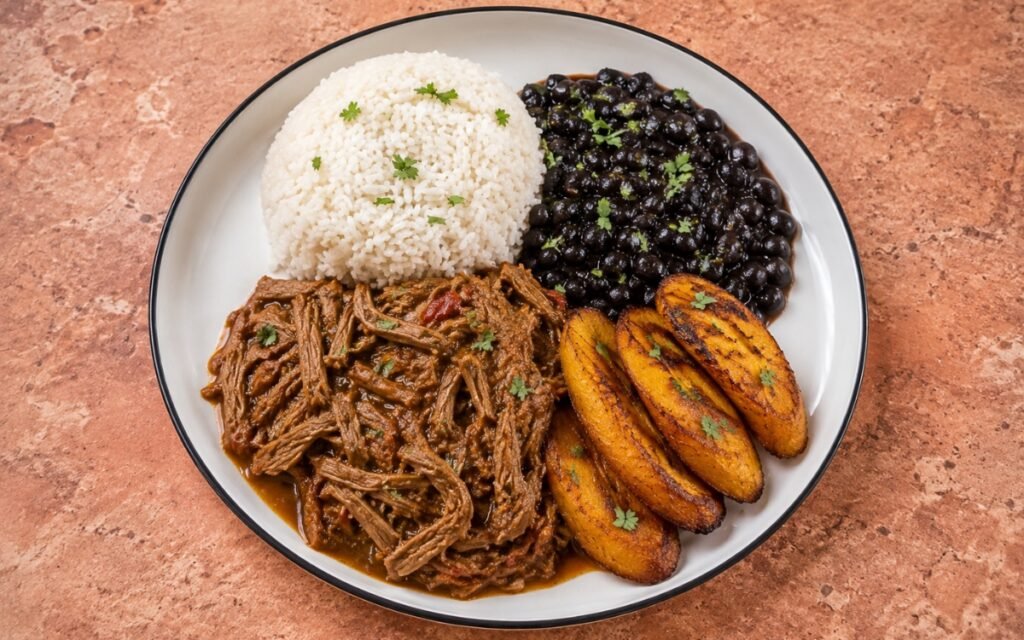
Pabellón Venezolano
Slow-braised, thinly shredded beef, fluffy white rice, glossy black beans, and sweet fried plantains, each kept distinct on the plate.
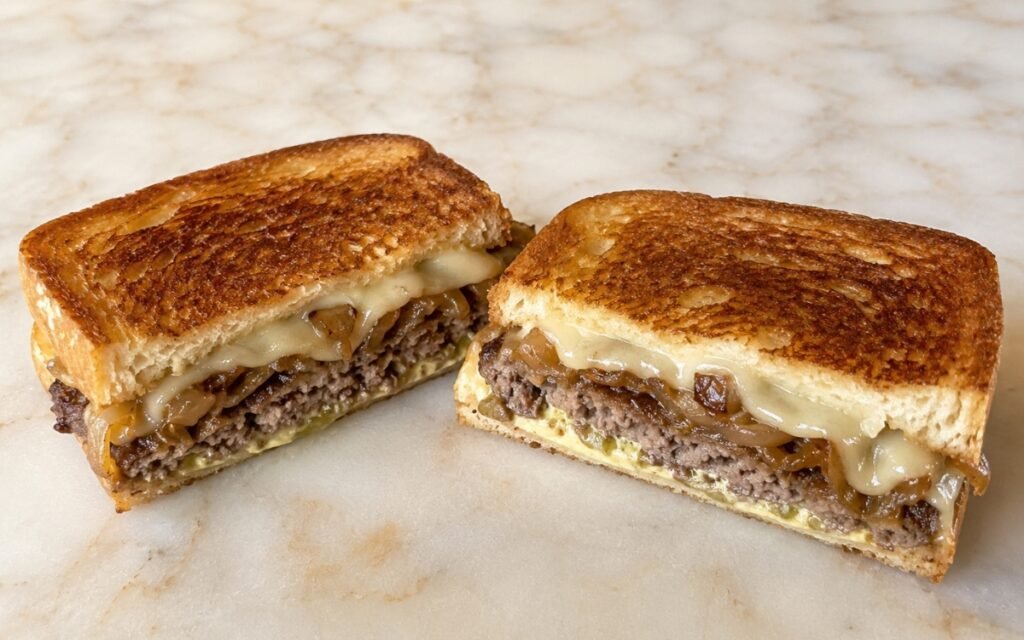
Patty Melt
A thin seared beef patty with slow-caramelized onions and melted Swiss cheese, griddled between brioche toast bread with a tangy pickle sauce.
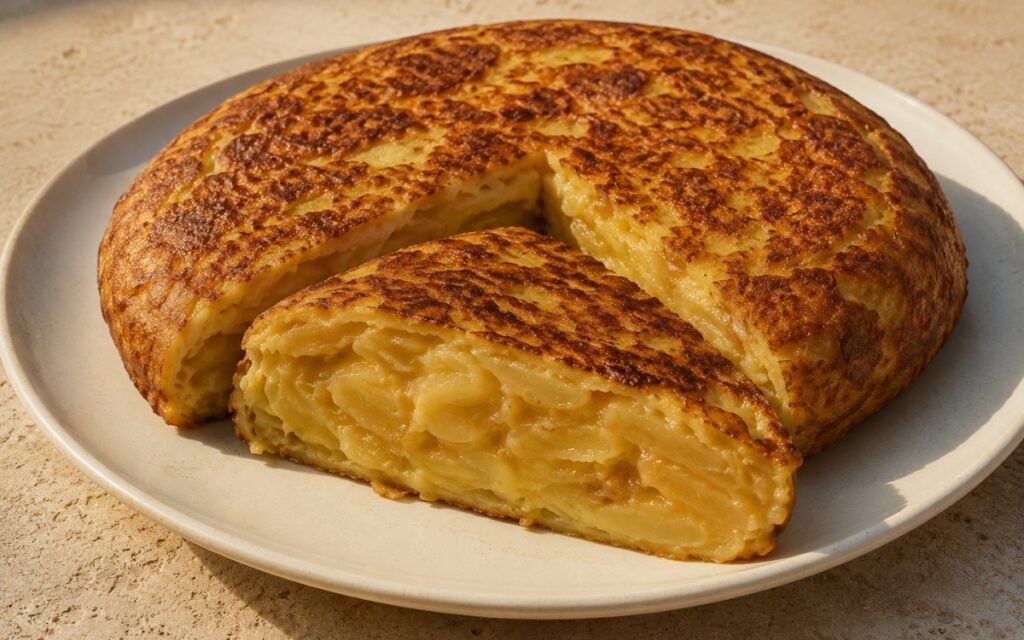
Spanish Tortilla / Tortilla Española
Thin potato slices gently cooked in olive oil, folded into beaten eggs, and cooked slowly for a golden exterior and soft, custardy centre.
You might also like
You might also like
Chiles Rellenos with Tomato Sauce
Roasted poblano peppers stuffed with melting cheese, coated in whipped egg batter, and pan-fried golden. Served over a glossy tomato-chipotle sauce.
Caldo Tlalpeño
A clear chipotle-tomato chicken broth with shredded chicken, chickpeas, carrots, and zucchini, finished with avocado and queso fresco.
Suadero Tacos
Slow-braised suadero beef crisped hot and fast in a skillet, mixed with crispy chicharrón, and piled onto blue corn tortillas with bright salsa verde.
Pork Tamales with Salsa Verde
Ingredients
Method
- Place the dried corn husks in a large bowl or tray and cover with hot water. Weigh them down with a plate so they stay submerged. Soak for at least 30 minutes, until flexible and easy to fold. Tear a few smaller husks into thin strips for tying if needed. Drain and pat dry before assembling. Fully submerged, evenly soaked husks are what make clean folding possible — a husk that’s only partially rehydrated will crack right at the fold line, exactly where the tamale needs the most structural integrity.
- Season the pork shoulder with salt and black pepper. Heat the neutral oil in a heavy pot over medium-high heat. Sear the pork in batches for 3–4 minutes per side, until browned. Do not crowd the pot. Add the onion, garlic, bay leaves, and water or chicken stock. Bring to a simmer, then reduce the heat to low. Cover and cook gently for 1 hour 45 minutes to 2 hours, until the pork shreds easily with a fork. The liquid should stay at a gentle simmer, not a hard boil. Add more water if the pot gets too dry. Searing the pork before it ever meets the braising liquid builds a foundation of browned flavour in both the meat and the broth — that same broth goes on to hydrate the masa later, so this early step is quietly seasoning two components of the finished tamale at once.
- Toast the guajillo and ancho chiles in a dry skillet over medium heat for 10–15 seconds per side, just until fragrant and pliable. Do not let them blacken or smoke. Burned chiles will make the filling bitter. Cover the toasted chiles with hot water and soak for 15 minutes until softened. Drain before blending. The brief dry toast blooms each chile’s specific aromatic character before rehydration — guajillo’s fruity tang and ancho’s raisin-like sweetness both come through more clearly toasted than simply soaked from raw.
- Blend the softened chiles with the onion, garlic, tomato paste, cumin, Mexican oregano, smoked paprika, apple cider vinegar, hot pork cooking broth, and salt until smooth. Strain if the sauce has visible chile skin or grit. Heat 15ml neutral oil in a skillet over medium heat. Add the blended sauce and fry for 5–7 minutes, stirring often, until darker, thicker, and glossy. The sauce should smell roasted and rich, not raw or dusty. Frying the blended sauce briefly in oil after blending, rather than using it straight from the blender, is what moves it from tasting like raw chile purée to something roasted and rounded — this step matters for both the pork filling and the small amount folded into the masa.
- Remove the cooked pork from the broth and rest for 10 minutes. Reserve the broth for the masa. Discard the bay leaves. Shred the pork into medium strands. Mix the shredded pork with enough red chile sauce to coat it generously, about 250–300ml. The filling should be juicy and glossy but not soupy. If it drips liquid heavily, cook it for a few minutes over medium heat to tighten it. The 10-minute rest firms the pork’s fibres just enough to shred into clean strands rather than tearing into mush, and reserving the broth at this exact point — before it’s reduced or seasoned further for any other purpose — is what keeps it available at the right consistency for hydrating the masa later.
- Whisk the masa harina, baking powder, and salt in a large bowl. In a separate bowl, beat the softened lard until lighter and creamy, about 2–3 minutes. Add the masa mixture to the lard, then gradually mix in 300ml warm pork broth. Add 30ml red chile sauce if using. Beat or mix until the dough is soft, spreadable, and slightly fluffy. Add more warm broth 15ml at a time if the masa feels stiff. The masa should spread easily with the back of a spoon but hold its shape. If it cracks when spread, it is too dry. If it runs, it is too wet. Beating the lard on its own first incorporates air into the fat before it ever meets the dry masa — that trapped air is what gives the finished masa its light, slightly fluffy texture rather than a dense, heavy one, and it’s not something that can be recovered by mixing harder once everything is combined.
- Toss the tomatillos, onion wedges, jalapeños, and garlic with olive oil and salt. Broil or roast on a hot tray until the tomatillos soften and collapse slightly, and the onion and garlic develop browned edges, about 8–12 minutes. Transfer everything to a blender with the cilantro, lime juice, and 3 tbsp water. Blend until spoonable but still slightly textured. Add more water only if needed. Taste and adjust with salt or extra lime juice. The salsa should be bright, tangy, and vivid green. Broiling rather than simmering the tomatillos and aromatics develops a light char that deepens and brightens the salsa’s flavour at the same time — a boiled version tends to taste flatter and more purely acidic by comparison.
- Lay one softened corn husk flat with the wide end closest to you. Spread about 60–70g masa in a rectangle across the centre, leaving space at the narrow end and sides for folding. Add about 45–55g red chile pork filling down the centre of the masa. Fold one side of the husk over the filling, then fold the other side over to enclose it. Fold the narrow bottom end upward. Tie with a thin strip of corn husk if needed. Repeat with the remaining masa and filling. You should get about 8 tamales, or 2 tamales per serving. Leaving a clear margin of husk around the spread masa, rather than covering it edge to edge, is what allows a clean fold — masa spread too close to the edges squeezes out and mixes with the next tamale’s husk during steaming.
- Set up a steamer pot with water below the steamer basket. Arrange the tamales upright with the open ends facing up. Cover with extra soaked corn husks, then cover the pot. Steam over medium heat for 60–75 minutes, checking occasionally to make sure the pot does not run dry. The tamales are done when the masa pulls cleanly away from the husk and feels set, not wet or sticky. If the masa still clings heavily to the husk, steam for another 10–15 minutes and check again. Standing the tamales upright with the open end facing up keeps steam moving directly through each one from the top, cooking the masa evenly from the outside in — laid on their sides, they’d cook unevenly and the open ends would be prone to unwrapping in the steamer.
- Turn off the heat and let the tamales rest in the covered steamer for 10–15 minutes. This rest is important. Freshly steamed masa is fragile and firms as it sits. Masa straight off the steamer is still setting internally — cutting or unwrapping it immediately tears rather than pulls cleanly away from the husk, which is exactly the wet, broken look this rest period is designed to prevent.
- Partially unwrap the tamales from their corn husks so the pale masa and red pork filling are visible at the open end. Arrange 2 tamales per serving on plates. Serve with salsa verde in a small bowl beside the tamales, fresh cilantro scattered over the plate, and lime wedges on the side. Serve warm. Partially unwrapping rather than fully removing the husk keeps the tamale intact and easy to handle while still showing off the contrast between the pale masa and the red pork filling at the open end.