
Turkish Adana Kebab with Tomato Couscous
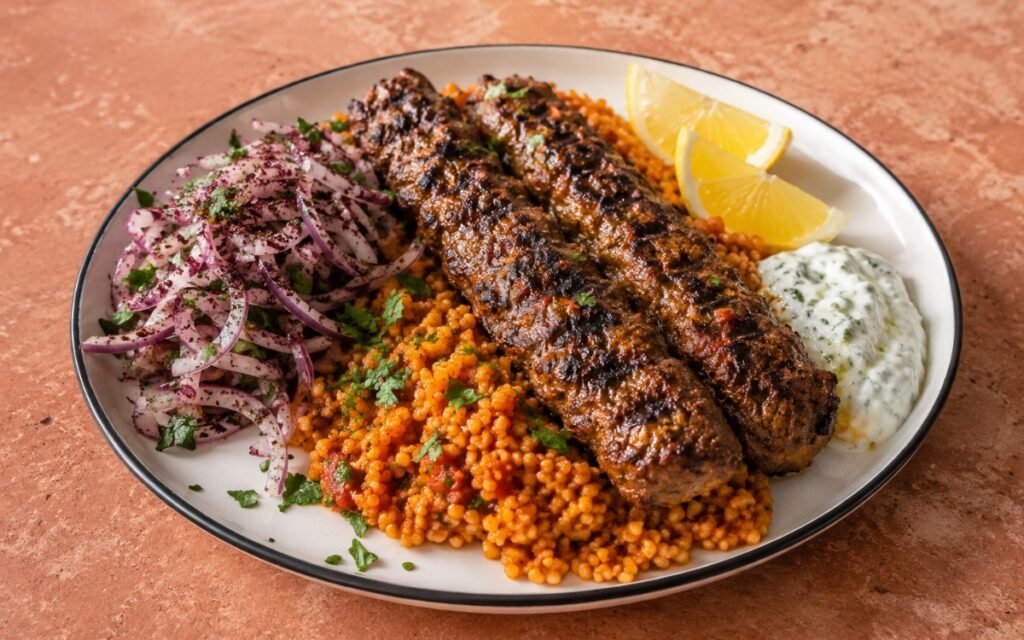
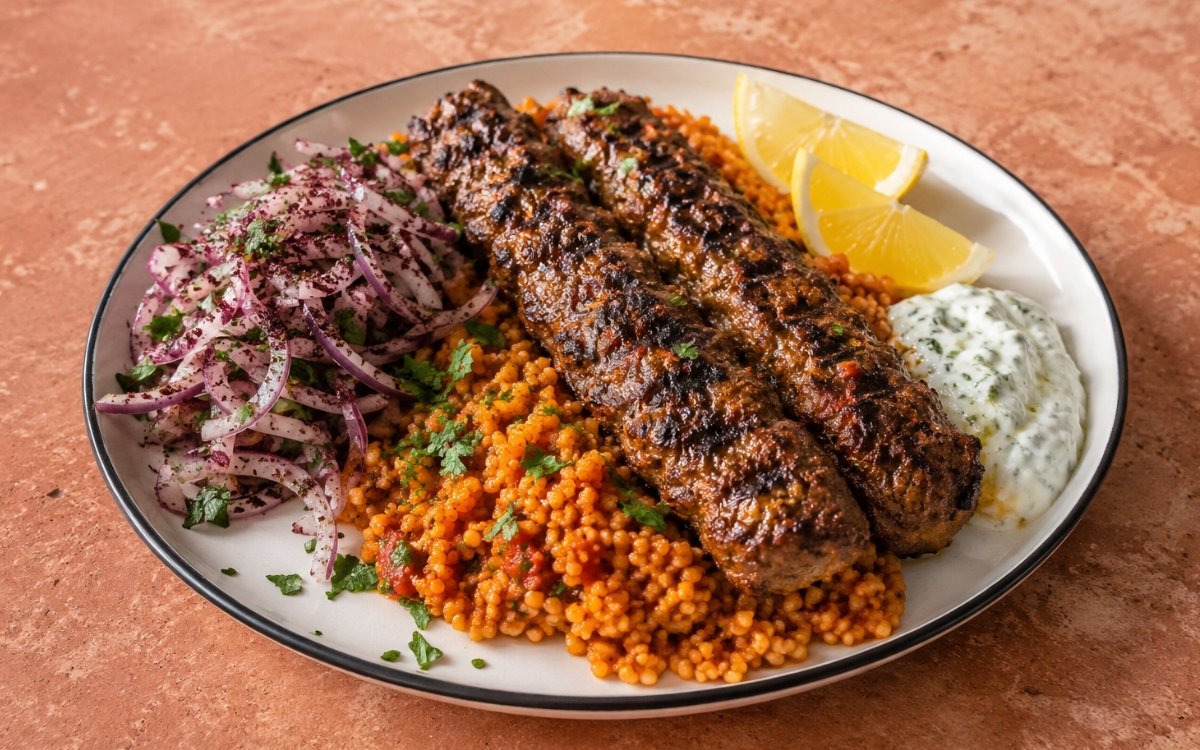
Classic Turkish Adana kebab of ground lamb shoulder, butter, pul biber and a pressed onion, garlic and parsley paste, shaped onto flat skewers and grilled until deeply charred, then served over spiced tomato couscous with sumac onions, tzatziki and lemon. Pressing the pulsed aromatic paste dry through cheesecloth, rather than adding it wet, is the technique this whole kebab depends on for holding its skewer — wet paste turns to steam on the grill, blocks the char and loosens the meat so it slides off before the surface sets, the same press-out-the-moisture principle that applies whenever watery aromatics go into a minced-meat mixture that has to keep its shape. Working the mixture by hand for 3–5 full minutes until sticky is what gives each kebab the protein binding to hold its long, rectangular form. Turning the skewers every 60–90 seconds and grilling until the centre reads at least 71°C is what delivers an even char with a safely cooked interior. The payoff is a kebab plate with real, smoky depth — charred, juicy lamb warmed by pul biber, fluffy tomato couscous, sharp sumac onions and cool, garlicky tzatziki.
Prep Time : 25 min
Cook Time : 10–15 min
Servings : 4
25 min
10–15 min
4
Ingredients
For the Adana Kebabs
• 800g ground lamb shoulder — not lean mince; the fat content is essential
• 1 medium white onion, roughly chopped
• 4 garlic cloves
• 15g fresh flat-leaf parsley leaves, about ½ cup
• 25g unsalted butter, softened to room temperature — this one on Amazon
• 2 tsp pul biber, Aleppo-style Turkish red pepper flakes — this one on Amazon
• 1½ tsp ground cumin — this one on Amazon
• 1 tsp sweet paprika
• 1½ tsp fine sea salt
• 1 tsp freshly cracked black pepper
• High-smoke-point oil, for oiling the grill grates
For the Tomato Couscous
• 300g couscous, uncooked
• 400ml hot chicken or vegetable stock
• 400g crushed or diced tomatoes
• 2 tbsp extra-virgin olive oil — this one on Amazon
• 3 garlic cloves, minced
• 1 tsp ground cumin
• 1 tsp sweet paprika
• ½ tsp ground coriander
• Pinch of cinnamon
• Fine sea salt and black pepper, to taste
• Fresh flat-leaf parsley and cilantro, chopped, to finish
For Serving
• Fresh flat-leaf parsley
• Lemon wedges
This post may contain affiliate links. As an Amazon Associate I earn from qualifying purchases, at no additional cost to you.
Directions
- Prepare and Press the Aromatic Base
Add the roughly chopped white onion, 4 garlic cloves and the 15g of parsley leaves to a food processor. Pulse until the mixture forms a coarse, wet paste with small pieces still visible, rather than a smooth purée. Tip it into a piece of cheesecloth or a fine-mesh sieve set over a bowl, then squeeze the cloth tightly or press repeatedly with the back of a spoon until no more liquid runs out. Expect a surprising amount of liquid from one medium onion. The pressed paste should feel noticeably drier, look slightly clumped and hold its shape when squeezed rather than spreading. If liquid still beads on the surface, press again. That thorough pressing is what stops the kebabs steaming on the grill and slipping off their skewers. - Mix the Kebab Mixture to Proper Binding
In a large bowl, combine the 800g of ground lamb shoulder, 25g of softened butter, the pressed aromatic paste, 2 tsp of pul biber, 1½ tsp of cumin, 1 tsp of paprika, 1½ tsp of fine sea salt and 1 tsp of black pepper. Work the mixture with both hands for a full 3–5 minutes, kneading, folding and pressing it against the bowl. It is ready when it looks more uniform, feels sticky and paste-like, and a pinched piece holds its shape between your fingers; if it still feels loose and crumbly, keep working. Cover the bowl and refrigerate for 30 minutes to 1 hour, and soak wooden skewers in water now if using them. That sustained kneading is what draws out the lamb’s binding proteins, and the chill is what firms the fat so the mixture shapes cleanly. - Prepare the Tomato Couscous
While the kebab mixture chills, light or preheat the grill, then make the couscous. Heat the 2 tbsp of olive oil in a saucepan over medium heat and cook the 3 minced garlic cloves for 30 seconds until fragrant. Add the 1 tsp of cumin, 1 tsp of paprika, ½ tsp of coriander and the pinch of cinnamon and toast for 20–30 seconds. Stir in the 400g of tomatoes and simmer for 5 minutes until slightly thickened. Pour in the 400ml of hot stock, bring to a boil, then stir in the 300g of couscous, cover and remove from the heat. Leave to steam for 5 minutes, then fluff with a fork, fold through the chopped parsley and cilantro, and season with salt and pepper. Keep covered until serving. That brief toasting of the spices in oil is what gives the couscous its warm, rounded depth. - Shape the Kebabs onto Skewers
Divide the chilled mixture into 8 equal portions, weighing them for consistency. With wet hands, re-wetting often from a bowl of cold water, press each portion firmly around a flat metal skewer or a soaked thick wooden skewer. Shape it along the skewer into a long, rectangular kebab about 15–18cm long and an even 2.5–3cm thick from end to end, pressing it tightly so the meat grips the skewer rather than sitting loosely around it. Pinch both ends firmly closed. If the mixture feels too soft to hold its shape, refrigerate the shaped skewers on a tray for 15–20 minutes before grilling. That even thickness is what lets every part of each kebab cook through at the same rate. - Preheat and Prepare the Grill
A charcoal or wood fire gives the most authentic result, because the lamb fat dripping onto the coals creates brief flare-ups that add smoke to the crust. Heat the grill thoroughly until the grates are very hot, and keep one area of the grill cooler, with fewer coals or a lower burner, so the kebabs can be moved there if needed. Brush or wipe the hot grates with a little high-smoke-point oil just before cooking. If a drop of water does not sizzle away almost instantly, keep heating. That fully preheated, oiled surface is what lets the meat sear and release rather than stick and tear. - Grill with Continuous Rotation
Lay the skewers over the hottest part of the grill and turn them every 60–90 seconds, so each of the four flat faces meets the direct heat in turn. After about 10 minutes, start checking each kebab by inserting an instant-read thermometer into the thickest part of the centre, close to but not touching the skewer. Keep grilling and turning until every kebab reads at least 71°C / 160°F; over a hot fire this usually takes 10–15 minutes, but fire heat, thickness and how cold the meat is all change the timing, so the thermometer decides, not the clock. If the outside chars too heavily before the centre is there, move the skewers to the cooler area and keep turning. Do not judge doneness by colour, because the pul biber and paprika keep cooked lamb reddish. That measured internal temperature is what confirms the minced lamb is safely cooked all the way through. - Rest and Plate
Move the kebabs to a warm plate, tent them loosely with foil and rest for 5 minutes so the juices settle back into the meat. Fluff the tomato couscous again and divide it among four plates as the base. Slide 2 kebabs per person off their skewers onto the couscous. Add a portion of sumac onions alongside to cut through the rich lamb, then a generous spoonful of tzatziki for cool, garlicky contrast. Scatter over the fresh parsley and place lemon wedges on each plate. That short rest is what keeps the juices in the kebab rather than running out onto the plate.
*Notes :
- Pressing the aromatic paste deserves genuine recognition as the technique most directly responsible for whether the kebabs hold on their skewers or fall into the coals. Onion is mostly water, and any liquid left in the paste turns to steam in the first minute on the grill — that steam stops the crust forming and loosens the meat from the skewer before its surface proteins can set.
- Working the mixture for 3–5 minutes deserves the same attention any shaped minced-meat skewer needs, because a gentle mix simply cannot hold an 18cm kebab on a flat blade. Kneading draws salt-soluble proteins, mainly myosin, out of the lamb into a sticky network that behaves rather like gluten in bread dough, and that network is what keeps each kebab intact through constant turning.
- Pul biber deserves genuine respect as the detail most directly responsible for making these kebabs taste distinctly Turkish rather than simply spiced grilled meat. These moderately hot, fruity and slightly oily red pepper flakes spread a gentle, building warmth through every bite, while standard chilli flakes at the same quantity give a sharper, less fruity heat without the same depth.
- The 71°C centre temperature deserves attention as a genuine, checkable readiness cue rather than a loose approximation. Mincing spreads surface bacteria right through the lamb, so the inside of every kebab must reach at least 71°C / 160°F on an instant-read thermometer — no grilling time can promise that on every fire, and the pepper-tinted meat stays reddish even when fully cooked.
Why This Recipe Works
This recipe works because it controls what holds Adana kebab together and what makes it safe to eat. Pressing the onion paste dry removes the water that would steam the meat and loosen it from the skewer.
Kneading the fatty lamb shoulder with butter and pul biber for several minutes builds the protein binding that keeps each long kebab in shape.
Constant rotation over a hot fire chars all four faces evenly, while the thermometer check confirms a centre of at least 71°C. Over warm tomato couscous with sumac onions and tzatziki, the result is smoky, juicy and balanced.
Ingredient Breakdown
Pressed Aromatic Paste
The critical technique — squeezing the water out of the onion, garlic and parsley paste lets the kebabs char and grip their skewers.
3–5 Minutes of Aggressive Mixing
The critical technique — sustained kneading develops the sticky protein network that holds each long, rectangular kebab together on the skewer.
Ground Lamb Shoulder (Not Lean Mince)
The critical ingredient choice — its fat bastes the kebabs from within and drips onto the coals for smoky flare-ups.
Instant-Read Thermometer Check (71°C)
The critical safeguard — measuring the centre of every kebab confirms the minced lamb is fully cooked, whatever the fire or timing.
Pul Biber
The defining flavour ingredient — fruity, moderately hot Turkish red pepper flakes give the mixture its gentle, unmistakably Adana warmth throughout.
Softened Butter
The finishing technique — its milk solids brown alongside the lamb fat on the grill, adding richness and deeper colour to the crust.
Spiced Tomato Couscous
The finishing touch — toasted cumin, paprika, coriander and cinnamon in tomato make a warm, fluffy base that carries the charred lamb.
Flavor Structure Explained
This Turkish Adana kebab plate follows a layered balance model:
- Charred, smoky core (grilled lamb shoulder and butter)
- Warm spiced depth (pul biber, cumin, paprika, black pepper)
- Sweet-acidic foundation (spiced tomato couscous)
- Sharp acidic contrast (sumac onions, lemon)
- Cool creamy balance (tzatziki)
The grilled lamb forms the charred, smoky core, rich with rendered fat and browned butter. Pul biber, cumin and paprika layer in earthy warmth and fruity heat that give the kebab its Turkish identity. The tomato couscous provides a warm, lightly sweet and acidic base that carries the stronger flavours. Sumac onions and lemon cut through the richness with sharp, bright acidity. Tzatziki then brings a cool, garlicky creaminess against the hot meat, the contrast that ties this plate together.
Common Mistakes to Avoid
- Not Pressing the Onion Paste – This leaves free water that steams instead of charring and loosens the kebabs on their skewers. Always press the paste through cheesecloth or a fine sieve until dry.
- Under-Mixing the Lamb – This leaves too little protein binding, so the kebabs crumble off the skewer at the first turn. Always work the mixture for the full 3–5 minutes until sticky.
- Using Lean Ground Lamb – This produces dry, pale kebabs without the fat drips that create smoky flare-ups on the coals. Always use ground lamb shoulder with its fat intact rather than lean mince.
- Grilling on an Underheated Grill – This makes the kebabs stick, tear and steam rather than char. Always preheat until the grates are very hot and oil them just before the skewers go on.
- Rotating Too Infrequently – This chars one face dark while the opposite face stays pale and cooks unevenly. Always turn the skewers every 60–90 seconds throughout grilling.
- Judging Doneness by Time or Colour – This risks undercooked minced lamb, because fires vary and the pul biber keeps cooked meat reddish. Always confirm every kebab reaches at least 71°C at the centre with an instant-read thermometer.
Variations
Lavash Wrap Version
Skip the tomato couscous and wrap each kebab in warm homemade lavash with sumac onions, tzatziki or toum and a spoonful of Turkish ezme for the street-food format of the same dish.
Spicier Version
Increase the pul biber to 3 tsp and add ½ tsp of cayenne to the mixture, so the heat builds clearly through each bite instead of sitting as background warmth.
Lamb and Beef Version
Replace 400g of the ground lamb with 400g of 80/20 ground beef for a milder, less gamey kebab, grilling it to the same minimum of 71°C at the centre.
Indoor Grill Pan Version
Heat a cast-iron grill pan over the highest heat for 3–4 minutes until smoking, oil it lightly and cook the skewers in batches of 3–4, turning every 60–90 seconds until each reaches 71°C.
Storage & Make-Ahead
The kebab mixture can be made up to 24 hours ahead and kept tightly covered in the coldest part of the fridge, where the longer chill firms the fat and makes shaping even easier.
Shaped raw kebabs can be refrigerated on a covered tray for up to 4 hours before grilling, kept on the bottom shelf away from the couscous, herbs and any other ready-to-eat foods.
Cool any leftover kebabs and couscous and refrigerate them within 2 hours of cooking, then keep the kebabs in an airtight container for up to 3 days.
Reheat leftover kebabs in a covered cast-iron pan over medium heat, turning them occasionally, until they are steaming and the centre reads 74°C / 165°F on an instant-read thermometer.
The tomato couscous keeps in an airtight container in the fridge for up to 4 days, and a splash of stock or water during reheating restores its fluffy texture before it is served piping hot.
Frequently Asked Questions
Why does the onion paste need to be pressed before it goes into the lamb?
Unpressed paste carries enough free water to turn to steam in the first minute on the grill, which stops the crust forming and loosens the meat around the skewer. Pressing removes that water before it can cause either problem.
Why is the lamb mixture kneaded for 3–5 minutes instead of mixed gently?
Kneading draws the lamb’s salt-soluble proteins into a sticky network that binds the mixture, much like gluten in bread dough. That binding is what holds each long kebab on its flat skewer through constant turning over high heat.
Why should the kebabs be checked with a thermometer instead of timed?
Mincing spreads surface bacteria through the whole mixture, so the centre must reach at least 71°C / 160°F, and fire heat, thickness and meat temperature all change how long that takes. The pepper-tinted lamb also stays reddish, so colour cannot confirm doneness.
Why are flat skewers better than round ones for Adana kebab?
A wide, flat blade gives the meat more surface to grip and stops it spinning when turned, so it keeps the rectangular shape with four flat faces for charring. On round skewers, press the shaped meat slightly flat to increase grill contact.
Are there other classic kebab, flatbread, or Turkish salad dishes worth trying?
Grilled Lamb Kebabs with Charred Veggies offers another classic grilled lamb direction worth exploring. Simple Beef Kofta Skewers and Turkish Ezme are also worth trying for another spiced skewer and a fresh Turkish relish, and Homemade Lavash (Flatbread) and Turkish Bulgur Salad (Kısır) offer other flatbread and grain salad dishes worth exploring.
Nutrition Facts
( per serving — 2 skewers with couscous )
Calories
~890 kcal
Protein
48 g
Fat
44 g
Carbs
75 g
Calories
~890 kcal
Protein
44 g
Fat
4 g
Carbs
75 g
Related Recipes
Related Recipes

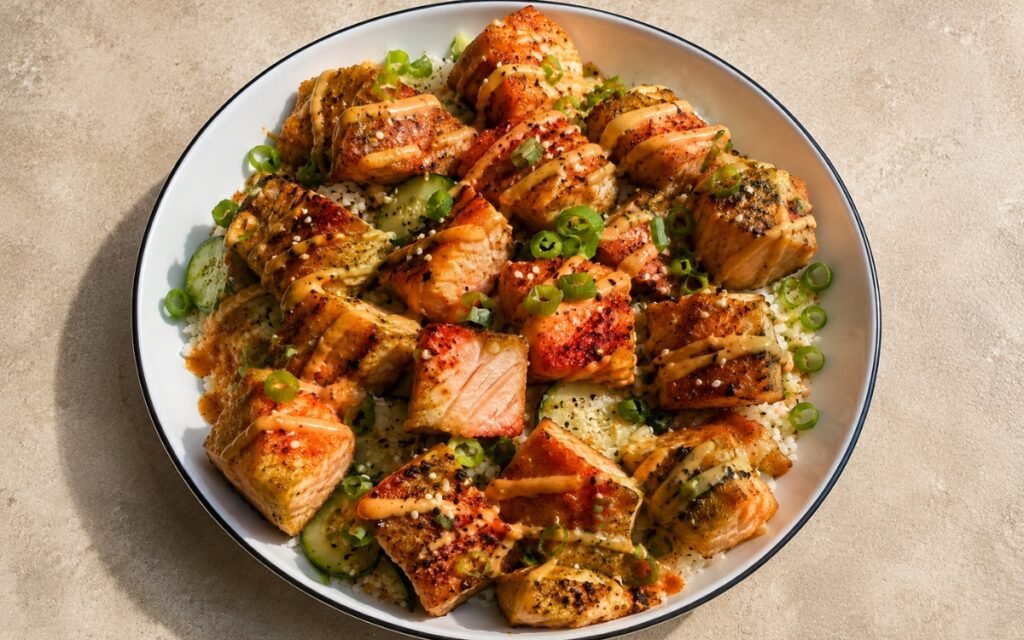
Crispy Salmon Bites with Spicy Mayo
Golden, caramelized salmon bites over jasmine rice with cucumber, scallions, sesame seeds, and a generous drizzle of spicy mayo.
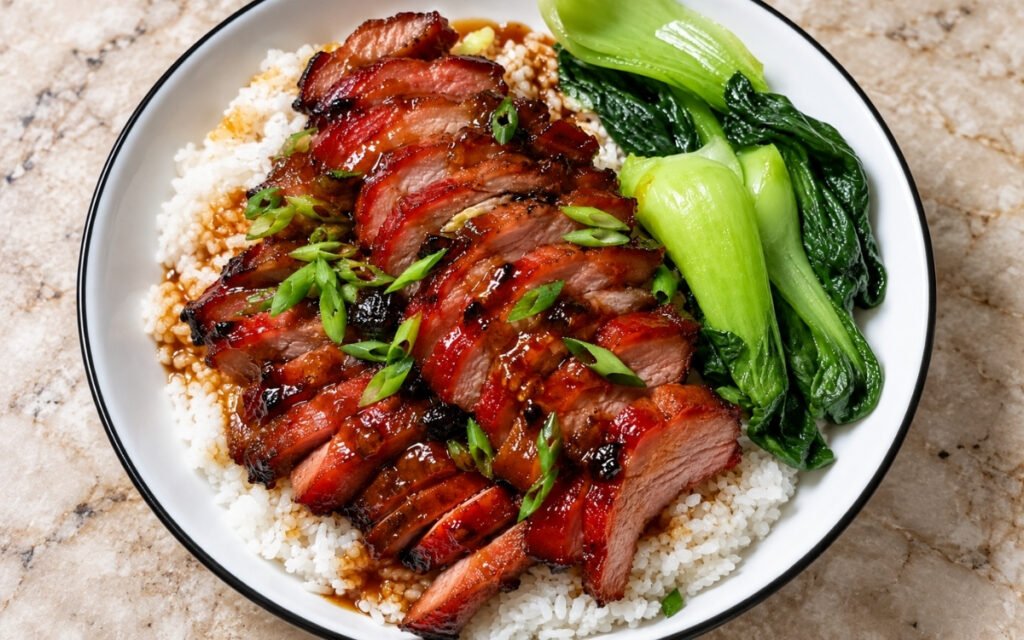
Char Siu — Chinese BBQ Pork over Rice
Glossy, caramelized Cantonese-style char siu pork sliced over jasmine rice with blanched bok choy and reduced glaze.
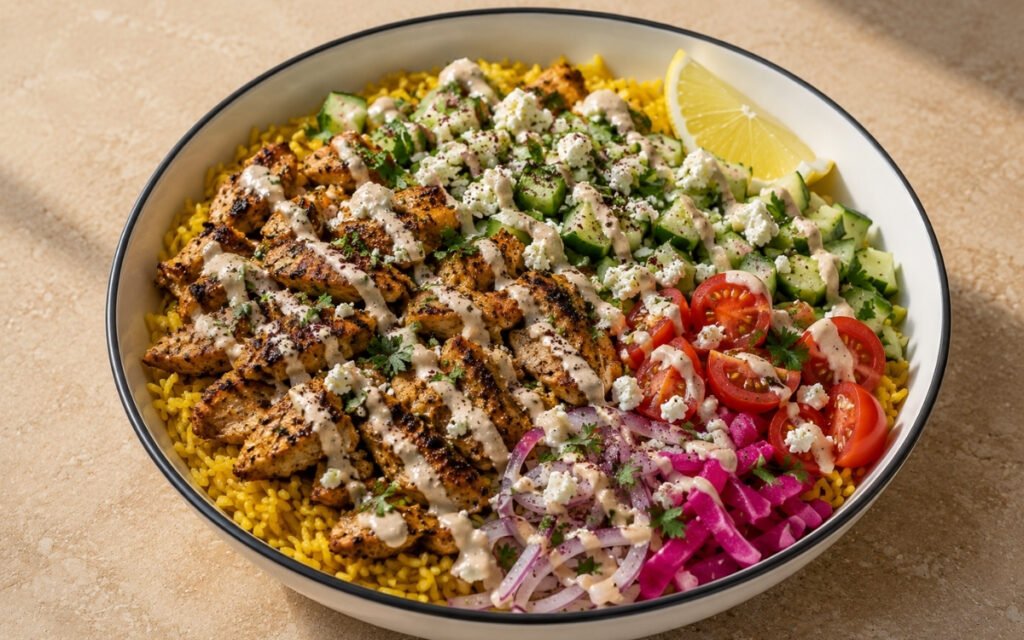
Lebanese Chicken Shawarma Rice Bowl
Chicken thighs marinated in yogurt and seven Lebanese spices, charred undisturbed in cast iron — over turmeric rice with cold-whisked tahini sauce and pickled turnips. 45 minutes.
You might also like
You might also like
Grilled Hot Honey Chicken Thighs
Grilled yogurt-marinated chicken thighs with charred edges and a sticky, glossy chili-infused hot honey glaze.
Calabrian Chili Penne Arrabbiata
Calabrian chili paste bloomed in olive oil with pale-golden garlic, hand-crushed tomatoes simmered glossy — penne finished in the sauce, 25 minutes.
Pork Chile Verde
Browned pork shoulder braised tender in a roasted tomatillo-green chile sauce, thick and glossy with poblano body.
Turkish Adana Kebab with Tomato Couscous
Ingredients
Method
- Add the roughly chopped white onion, 4 garlic cloves and the 15g of parsley leaves to a food processor. Pulse until the mixture forms a coarse, wet paste with small pieces still visible, rather than a smooth purée. Tip it into a piece of cheesecloth or a fine-mesh sieve set over a bowl, then squeeze the cloth tightly or press repeatedly with the back of a spoon until no more liquid runs out. Expect a surprising amount of liquid from one medium onion. The pressed paste should feel noticeably drier, look slightly clumped and hold its shape when squeezed rather than spreading. If liquid still beads on the surface, press again. That thorough pressing is what stops the kebabs steaming on the grill and slipping off their skewers.
- In a large bowl, combine the 800g of ground lamb shoulder, 25g of softened butter, the pressed aromatic paste, 2 tsp of pul biber, 1½ tsp of cumin, 1 tsp of paprika, 1½ tsp of fine sea salt and 1 tsp of black pepper. Work the mixture with both hands for a full 3–5 minutes, kneading, folding and pressing it against the bowl. It is ready when it looks more uniform, feels sticky and paste-like, and a pinched piece holds its shape between your fingers; if it still feels loose and crumbly, keep working. Cover the bowl and refrigerate for 30 minutes to 1 hour, and soak wooden skewers in water now if using them. That sustained kneading is what draws out the lamb’s binding proteins, and the chill is what firms the fat so the mixture shapes cleanly.
- While the kebab mixture chills, light or preheat the grill, then make the couscous. Heat the 2 tbsp of olive oil in a saucepan over medium heat and cook the 3 minced garlic cloves for 30 seconds until fragrant. Add the 1 tsp of cumin, 1 tsp of paprika, ½ tsp of coriander and the pinch of cinnamon and toast for 20–30 seconds. Stir in the 400g of tomatoes and simmer for 5 minutes until slightly thickened. Pour in the 400ml of hot stock, bring to a boil, then stir in the 300g of couscous, cover and remove from the heat. Leave to steam for 5 minutes, then fluff with a fork, fold through the chopped parsley and cilantro, and season with salt and pepper. Keep covered until serving. That brief toasting of the spices in oil is what gives the couscous its warm, rounded depth.
- Divide the chilled mixture into 8 equal portions, weighing them for consistency. With wet hands, re-wetting often from a bowl of cold water, press each portion firmly around a flat metal skewer or a soaked thick wooden skewer. Shape it along the skewer into a long, rectangular kebab about 15–18cm long and an even 2.5–3cm thick from end to end, pressing it tightly so the meat grips the skewer rather than sitting loosely around it. Pinch both ends firmly closed. If the mixture feels too soft to hold its shape, refrigerate the shaped skewers on a tray for 15–20 minutes before grilling. That even thickness is what lets every part of each kebab cook through at the same rate.
- A charcoal or wood fire gives the most authentic result, because the lamb fat dripping onto the coals creates brief flare-ups that add smoke to the crust. Heat the grill thoroughly until the grates are very hot, and keep one area of the grill cooler, with fewer coals or a lower burner, so the kebabs can be moved there if needed. Brush or wipe the hot grates with a little high-smoke-point oil just before cooking. If a drop of water does not sizzle away almost instantly, keep heating. That fully preheated, oiled surface is what lets the meat sear and release rather than stick and tear.
- Lay the skewers over the hottest part of the grill and turn them every 60–90 seconds, so each of the four flat faces meets the direct heat in turn. After about 10 minutes, start checking each kebab by inserting an instant-read thermometer into the thickest part of the centre, close to but not touching the skewer. Keep grilling and turning until every kebab reads at least 71°C / 160°F; over a hot fire this usually takes 10–15 minutes, but fire heat, thickness and how cold the meat is all change the timing, so the thermometer decides, not the clock. If the outside chars too heavily before the centre is there, move the skewers to the cooler area and keep turning. Do not judge doneness by colour, because the pul biber and paprika keep cooked lamb reddish. That measured internal temperature is what confirms the minced lamb is safely cooked all the way through.
- Move the kebabs to a warm plate, tent them loosely with foil and rest for 5 minutes so the juices settle back into the meat. Fluff the tomato couscous again and divide it among four plates as the base. Slide 2 kebabs per person off their skewers onto the couscous. Add a portion of sumac onions alongside to cut through the rich lamb, then a generous spoonful of tzatziki for cool, garlicky contrast. Scatter over the fresh parsley and place lemon wedges on each plate. That short rest is what keeps the juices in the kebab rather than running out onto the plate.