
Toum (Lebanese Garlic Sauce)
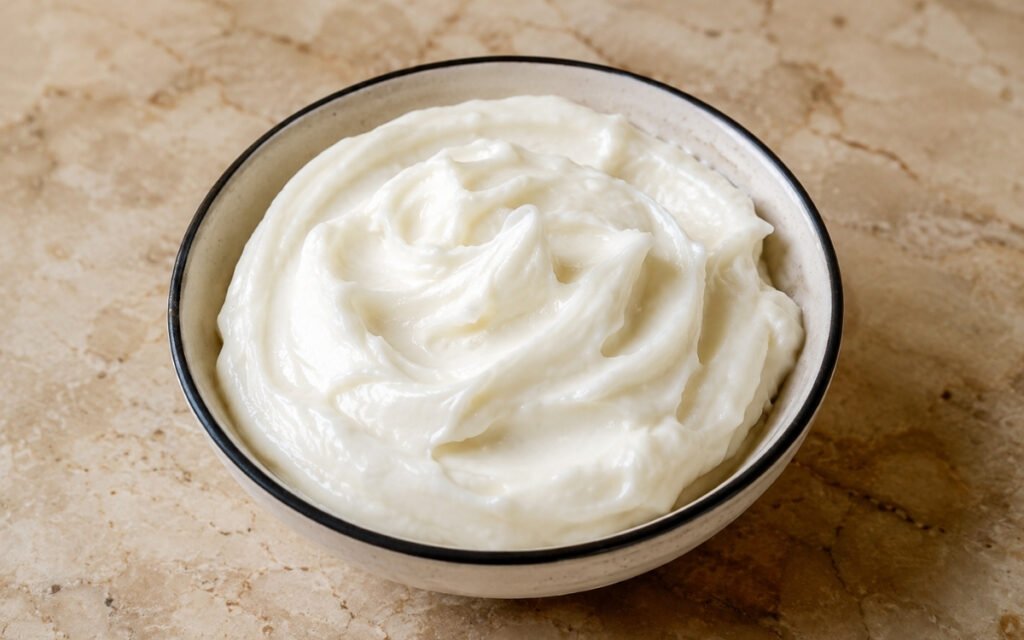
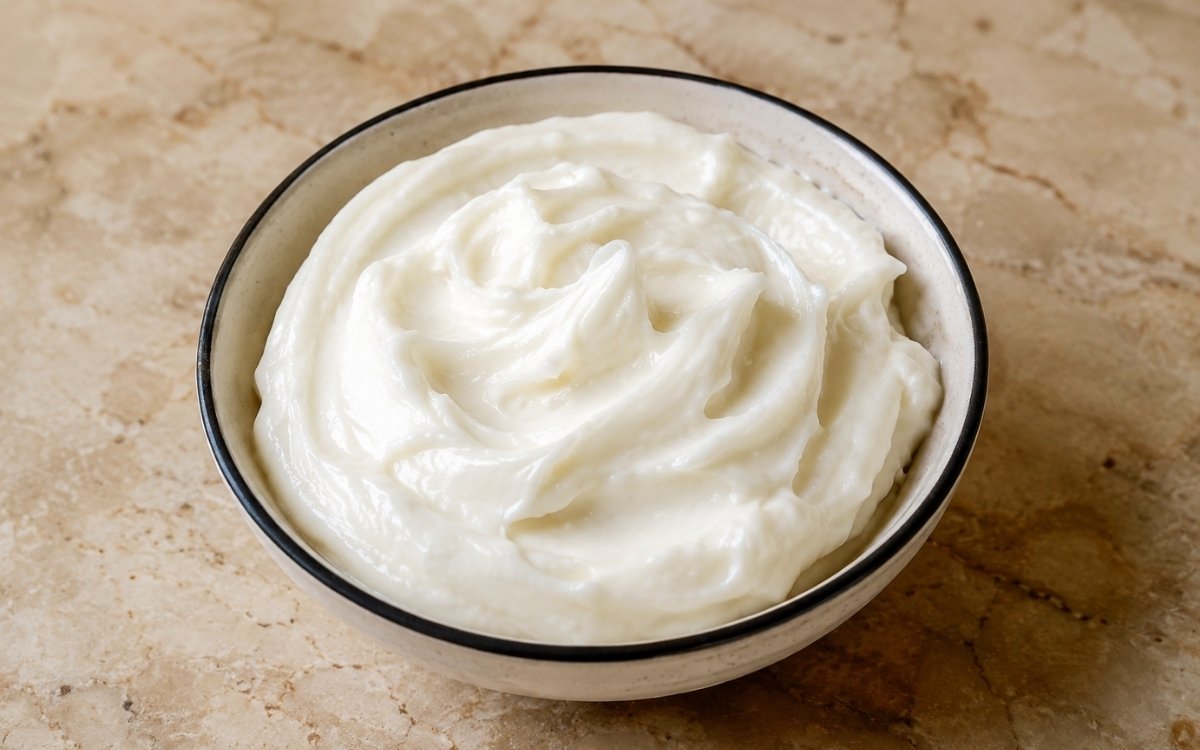
Four ingredients — garlic, salt, lemon juice, and neutral oil — emulsified into something that is none of them individually: a thick, pale, airy, intensely flavoured white spread with the specific structural glossiness of mayonnaise and a heat that is sharp on first contact and mellows to a rounded warmth after a few hours in the refrigerator. The technique is the recipe — the oil must enter the running processor almost drop by drop at first, building the emulsion gradually before the flow can be increased, because toum has no stabilising lecithin-rich egg yolk to anchor the emulsion. Alternating oil and lemon juice in small, incremental additions as the emulsion develops. The finished toum refrigerated for at least a few hours before serving so the sharpest garlic volatiles mellow and the flavour rounds into the balanced, complex result that distinguishes properly rested toum from freshly made. The Lebanese condiment that makes everything it touches more compelling.
Prep Time : 15 min
Cook Time : 0 min
Servings : 14
15 min
0 min
14
Ingredients
For The Toum
• 40g garlic cloves — approximately 1 large head, peeled, green inner sprouts removed
• 5g fine sea salt
• 45–55g fresh lemon juice — 45g for a milder, rounder result; 55g for a sharper, brighter result
• 320g neutral oil — canola, vegetable, grapeseed, or sunflower; not olive oil
Optional
• 15–30g ice-cold water — only if needed to stabilise or loosen the finished emulsion
For Splitting Recovery (if needed)
• 1–2 tbsp aquafaba — liquid from canned chickpeas; or 1 egg white if not keeping vegan
Directions
- Prepare the Garlic
Peel the garlic cloves and inspect each one for a green inner sprout — the small green shoot found in the centre of slightly older cloves. These sprouts contain higher concentrations of allyl compounds that produce a notably more bitter, more aggressively pungent flavour than the surrounding clove. Halve each clove and remove the sprout with the tip of a knife before processing. This step requires only 2–3 additional minutes and produces a noticeably less bitter, more pleasant finished toum. Garlic sourced very fresh — tight, firm, dry heads with no visible sprouting — will have minimal or absent sprouts. - Blend the Garlic to a Smooth Paste
Add the 40g of peeled, sprout-free garlic cloves and 5g of fine sea salt to a small food processor, mini chopper, or the tall, narrow container of an immersion blender. The container size matters: a large standard food processor bowl processes such a small quantity of garlic inefficiently — the blades cannot make consistent contact with only 40g of material. A mini chopper or the narrow container of an immersion blender maintains close contact between the blades and the small garlic quantity throughout processing. Process until the garlic is very finely minced and beginning to form a smooth, slightly wet paste — scraping down the sides of the container frequently to ensure every piece of garlic is processed equally. The goal at this stage is the smoothest possible garlic paste before any oil enters: visible garlic pieces in the finished toum produce uneven texture and inconsistent garlic-to-oil ratios in each spoonful. The salt draws moisture from the garlic cells during processing and assists in producing a finer, more uniform paste. - Begin Building the Emulsion — Drop-by-Drop Oil Addition
This is the most critical and most time-sensitive stage of the recipe. With the food processor or immersion blender running continuously without interruption, begin adding the neutral oil in the smallest possible stream — almost individual drops at first. Toum is an emulsion — a stable suspension of oil droplets within a water-based continuous phase (the lemon juice and garlic’s moisture). Unlike mayonnaise, toum contains no egg yolk and therefore no lecithin — the phospholipid emulsifier that makes mayonnaise relatively forgiving of irregular oil addition. Without lecithin, toum’s emulsion is maintained entirely by the mechanical action of the blades continuously breaking oil into smaller and smaller droplets and by the gradual build of an emulsification film from the garlic’s own proteins and saponins. This physical emulsification is dramatically less tolerant of rapid oil addition than lecithin-anchored mayonnaise — a sudden large pour of oil overwhelms the film’s ability to encapsulate incoming droplets, and the emulsion breaks into a separated pool of oily liquid. The drop-by-drop addition allows each small quantity of oil to be fully dispersed into the existing emulsion before the next quantity arrives — building the emulsion progressively rather than overwhelming it. - Alternate Oil and Lemon Juice in Small Additions
After 3–4 tablespoons of oil have been incorporated and the mixture appears creamy and stable — slightly thickened and paler than the initial garlic paste — begin the alternating oil-and-lemon-juice addition sequence. With the blender running, add a small amount of lemon juice — approximately 1 teaspoon — and allow it to fully incorporate. Then resume the slow oil drizzle for another 3–4 tablespoons. Then add another small amount of lemon juice. Continue alternating throughout the entire build. The alternating addition serves a specific structural function: lemon juice’s water content provides the aqueous phase that the oil droplets must be suspended within — it maintains the emulsion’s water-to-oil balance and prevents the oil phase from becoming dominant, which produces a sauce that is too dense and eventually breaks. The acid also provides the brightness that balances the garlic’s sharpness. Use 45g of lemon juice for a milder, rounder flavour — the lemon’s acid present as balance without being identifiable; or use up to 55g for a sharper, more assertively bright toum. As the emulsion builds and stabilises, you will see the toum becoming noticeably thicker, paler — whitening progressively from the initial pale yellow — and fluffier. The blades’ continuous mechanical action incorporates air into the emulsion alongside the oil, producing the characteristic whipped, airy texture that is the visual hallmark of correctly made toum. Once the emulsion appears stable — thick, glossy, and maintaining its structure — the oil addition can be increased from drops to a thin, slow stream. Never increase to a pour; continue working gradually until all 320g of oil and all the lemon juice are fully incorporated. - Adjust Consistency and Taste
The finished toum should have the texture of a thick, glossy spread — similar to mayonnaise but lighter, more aerated, and with more structure. It should hold its shape when a spoon is drawn through it and produce visible peaks when the blender or spatula is lifted. If the toum has become very thick during processing and the blades are struggling to maintain contact with the mixture, add 15–30g of ice-cold water — not room-temperature water, which can shock and break a fresh emulsion — in small increments while the blender runs. The ice water loosens the consistency without compromising the emulsion. Taste and adjust — additional lemon juice for more brightness, additional salt for flavour depth. Be conservative with adjustments; the flavour changes significantly after refrigeration and the freshly made toum will be considerably more pungent and sharp than the rested version. - Split Recovery (If Needed)
If the toum splits — visible as the mixture separating into a pool of oily liquid with white garlic pieces floating through it rather than forming a cohesive cream — the situation is recoverable. Transfer the split mixture to a separate container. Add 1–2 tbsp of aquafaba (the liquid from a can of chickpeas — a natural emulsifier used in vegan preparations) or 1 egg white if not keeping the recipe vegan, to a clean processor or blending cup. With the machine running, slowly drizzle the split toum back into the aquafaba or egg white — treating it exactly as you would fresh oil in step 3, gradually building a new emulsion using the aquafaba or egg white’s lecithin-like saponins as the stabilising agent. The split toum will re-emulsify within 2–3 minutes of careful addition. - Refrigerate Before Serving
Transfer the finished toum to a sealed container and refrigerate for a minimum of 2–4 hours before serving — overnight is better. Fresh toum is intensely, almost aggressively pungent — the garlic’s alliinase enzyme reactions have just occurred and the allicin and other sharp volatile compounds are at their maximum concentration. During refrigeration, these volatile compounds partially dissipate and the emulsion’s flavours integrate, producing the milder, more rounded, more balanced toum that is the correct final product. Toum served immediately from the processor is edible but noticeably sharper and harsher than properly rested toum.
*Notes :
- Toum’s emulsion mechanism without egg yolk is one of the most technically interesting phenomena in condiment making. The garlic cloves contain saponins — natural surfactant compounds that act as crude emulsifiers at a basic level — and the garlic proteins provide some additional interfacial film stability. These are significantly weaker emulsifiers than lecithin, which is why the drop-by-drop oil addition is non-negotiable rather than merely cautionary. A properly made, well-refrigerated toum holds its emulsion for 2–4 weeks in a sealed container — the cold temperature slowing the emulsion’s natural tendency to revert — while an improperly made toum may separate within hours.
- Neutral oil is specifically required rather than olive oil for two distinct reasons. First, olive oil’s polyphenols are partially responsible for its specific bitter, slightly peppery flavour — at the concentration used in toum (320g of oil to 40g of garlic), olive oil’s flavour is strongly present and competes with the garlic’s character rather than providing a neutral background. Second, olive oil’s emulsification behaviour in cold conditions is less stable than neutral oils — olive oil’s longer fatty acid chains partially solidify at refrigerator temperatures and can cause the emulsion to break during refrigerated storage. A neutral oil with shorter, more unsaturated fatty acid chains remains fluid and emulsion-stable through refrigeration.
Why This Recipe Works
This recipe works because it executes the emulsification technique correctly: drop-by-drop oil addition at the start before the flow is increased, alternating the oil and lemon juice additions to maintain the aqueous-to-oil balance, and refrigerating the finished toum to allow the sharp garlic volatiles to mellow into the balanced final flavour.
The removal of green sprouts before processing eliminates the bitterness that is the most common complaint about homemade toum. And the split recovery technique means a broken emulsion is always salvageable.
Ingredient Breakdown
Garlic (Sprout-Removed, Very Finely Processed)
The primary flavour and emulsification ingredient simultaneously — the garlic’s saponins and proteins provide the crude emulsifying film; the sprout removal eliminates the concentrated bitterness of the inner shoot.
Neutral Oil (320g — the Emulsion’s Continuous Dispersed Phase)
The body of the sauce — specifically neutral to avoid competing flavours; specifically stable at refrigerator temperatures to maintain the emulsion during storage.
Lemon Juice (Alternated with Oil, 45–55g)
he aqueous continuous phase of the emulsion and the acid balance — alternated rather than added all at once to maintain the water-to-oil balance throughout building; quantity determines brightness level.
Drop-by-Drop Initial Oil Addition
The non-negotiable technique — the physical emulsification without lecithin requires gradual droplet addition for the interfacial film to build faster than the incoming oil overwhelms it.
Refrigeration Before Serving
The resting step — dissipates the sharpest volatile allicin compounds and allows the flavours to integrate into the balanced, rounded result.
Flavor Structure Explained
This Toum follows a layered balance model:
- Pungent savory core (raw garlic)
- Bright acidic lift (lemon juice)
- Creamy neutral richness (oil emulsion)
- Rounded aromatic development (rested garlic)
- Airy whipped texture (emulsification structure)
Garlic defines the entire identity of toum with intense pungency, savory heat, and raw aromatic power concentrated throughout the sauce. Lemon cuts through that intensity with clean acidity, keeping the garlic vivid and balanced rather than harsh. Neutral oil transforms the mixture from aggressive paste into creamy emulsion, rounding and carrying the stronger flavors evenly. Refrigeration softens the sharpest garlic edges into deeper aromatic warmth, giving the sauce more complexity over time. The whipped emulsion texture is essential — light, airy, and smooth enough to make an otherwise overwhelming flavor profile feel luxurious and addictive.
Common Mistakes to Avoid
- Adding Oil Too Quickly at the Start – The drop-by-drop addition is the technique the recipe depends on. A fast pour at any early stage breaks the emulsion before it has stabilised. Even if the first few additions seem to be incorporating, always begin with drops.
- Not Removing the Green Sprouts – The sprouts contain disproportionately high concentrations of bitter allyl compounds. Their presence is the most common cause of bitter toum. Always inspect and remove.
- Using Olive Oil – Olive oil’s flavour competes with the garlic’s character and its cold-stability properties can cause emulsion breakdown during refrigerated storage. Always a neutral oil.
- Not Refrigerating Before Serving – Freshly made toum is aggressively pungent and sharp. The resting period is what produces the balanced, mellowed result. Always rest a minimum of 2 hours.
- Over-Processing After Full Emulsification – Continued processing after the emulsion is fully stable generates heat from the blades and can warm the emulsion to the point of breaking. Stop as soon as all the oil and lemon juice are incorporated.
Variations
Milder Toum
Use 35g of garlic rather than 40g and add 1 additional tablespoon of ice water at the end — the lower garlic concentration and additional dilution produce a version suitable for those sensitive to raw garlic’s intensity.
With Roasted Garlic
Replace half the raw garlic with roasted garlic — roasted at 180°C for 30–35 minutes until fully caramelised. The roasted garlic’s mellow, sweet depth produces a less aggressive version with a more rounded, complex flavour profile. Note that the emulsion is more difficult to achieve with partially cooked garlic — the raw garlic’s saponins are more effective emulsifiers.
Herb-Infused
Blend 15g of fresh flat-leaf parsley or cilantro into the finished toum — the herbs’ colour produces a pale green toum that is visually striking and provides a fresh aromatic counterpoint to the garlic’s intensity.
Storage & Make-Ahead
When refrigerated in a sealed container, it will keep for 2 to 4 weeks. The flavor mellows and improves noticeably over the first 48 hours. Always use a clean, dry spoon when serving to avoid introducing moisture or food particles that can speed up spoilage.
Freezing is not recommended, since it breaks the emulsion and leaves you with an oily, separated mixture that cannot be properly brought back together after thawing.
Frequently Asked Questions
Why does toum not need egg yolk like mayonnaise?
Toum is emulsified by the mechanical action of the blender continuously breaking the oil into smaller and smaller droplets, combined with the garlic’s own saponins and proteins providing a basic interfacial film. This physical emulsification is possible but requires more careful, slower oil addition than lecithin-stabilised mayonnaise because the emulsifying film is weaker without lecithin. The result holds because the cold storage temperature slows the emulsion’s natural tendency to revert.
Why must the oil be added almost drop by drop at first?
The oil must enter the existing aqueous phase (lemon juice and garlic moisture) in droplets small enough to be immediately surrounded by the interfacial film that garlic’s saponins provide. A large pour of oil produces many droplets simultaneously — more than the film can encapsulate — and the excess oil coalesces rather than emulsifying, breaking the sauce. Drop-by-drop gives the film time to encapsulate each small amount before more oil arrives.
Why does toum taste better after refrigerating?
Fresh toum contains allicin and other sulfur compounds at their maximum concentration — these are what produce garlic’s sharp, burning pungency. During refrigeration, these volatile compounds partially dissipate and the remaining compounds integrate with the lemon and oil, producing a more balanced, rounded flavour. Freshly made toum is edible but significantly harsher.
Can I fix split toum?
Yes — transfer the split toum to a separate container. Add 1–2 tbsp of aquafaba to a clean processor, run the blades, and slowly drizzle the split toum back in exactly as you would fresh oil when building the initial emulsion. The aquafaba’s saponins act as a stronger stabilising agent and re-emulsify the broken sauce within minutes.
What do you serve toum with?
Toum is the condiment of Lebanese grilling and mezze culture — spread generously alongside anything that benefits from a bold, cooling garlic hit. It pairs specifically well with Greek Chicken Souvlaki, where the chargrilled chicken’s smokiness is one of the best possible contrasts to toum’s sharp, cooling intensity. Homemade Chicken Shawarma is the classic pairing — shawarma’s spiced warmth and toum’s garlic richness are one of the foundational Lebanese flavour combinations. Simple Beef Kofta Skewers benefit from toum’s brightness against the lamb and beef’s richness. Beyond grilled meats, toum works as a dip for fries and roasted vegetables, a spread inside sandwiches and wraps, and the simplest possible use — spooned into warm pita or lavash straight from the refrigerator.
Nutrition Facts
( per serving )
Calories
~210 kcal
Protein
0 g
Fat
23 g
Carbs
1.5 g
Calories
~210 kcal
Protein
0 g
Fat
23 g
Carbs
1.5 g
Related Recipes
Related Recipes

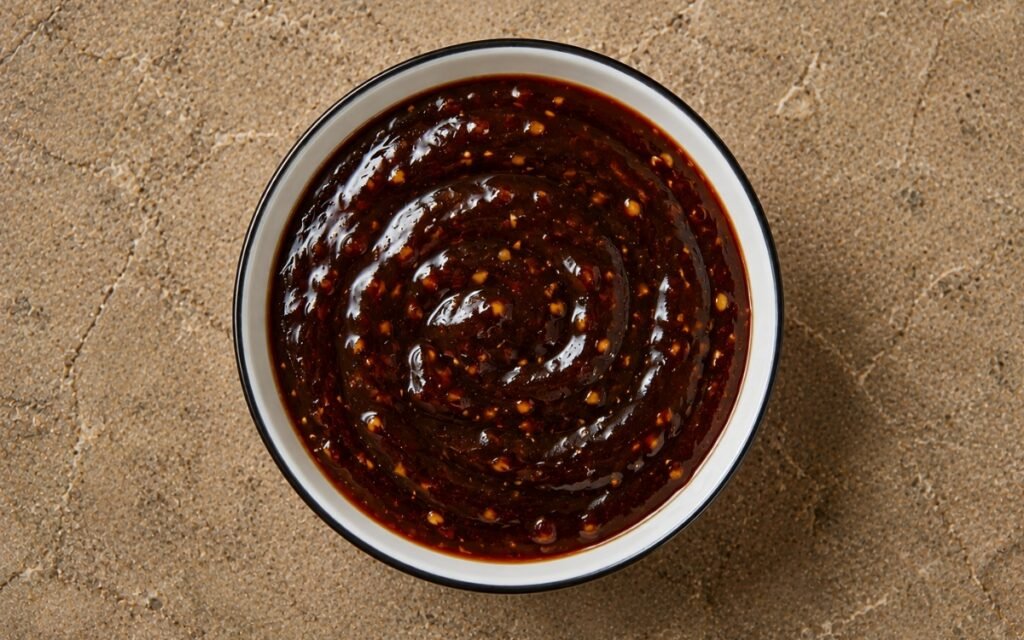
Soy Ginger Glaze
Glossy soy sauce, mirin, honey and fresh ginger reduce into a sticky 8-minute glaze for salmon, chicken and tofu.
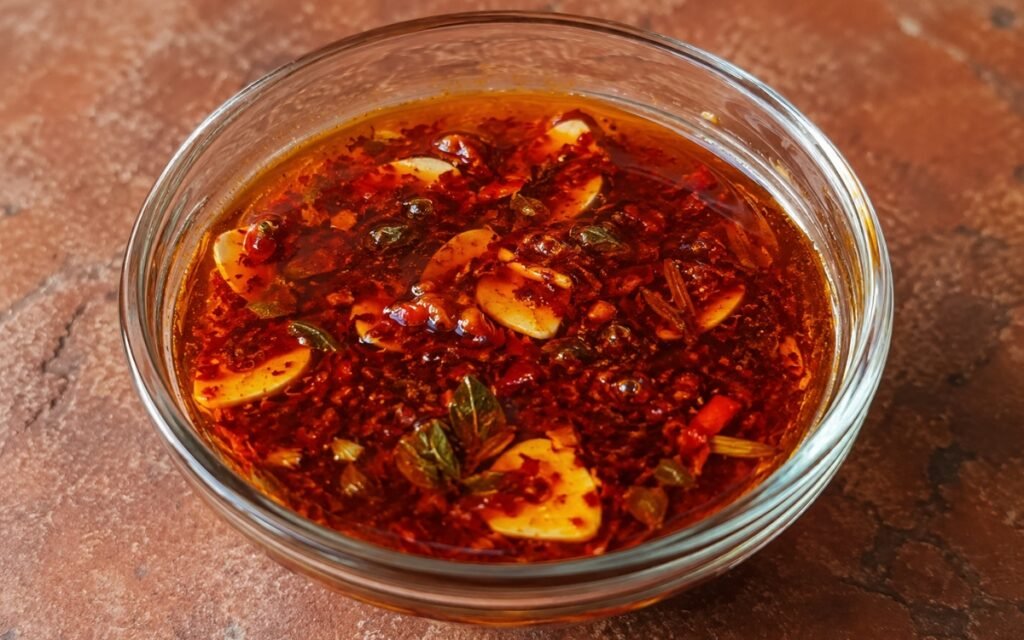
Calabrian Chili Oil Drizzle
Fruity-spicy chili oil with garlic and oregano. Instant flavor boost for pizza, pasta, and vegetables.
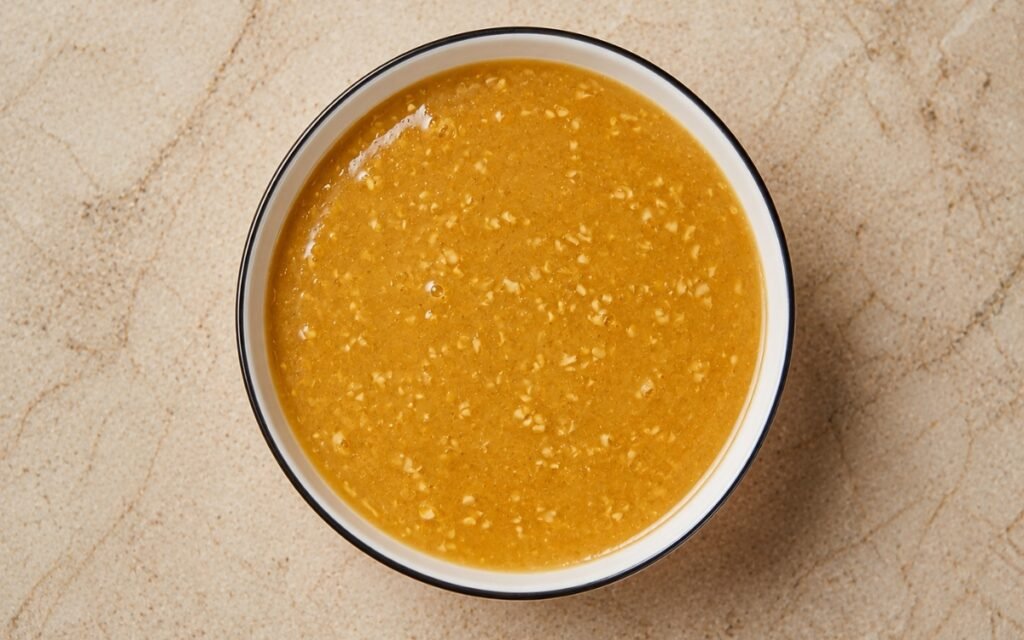
Miso Butter Sauce
Silky white miso and butter with lemon — a 10-minute umami-rich finishing sauce for everything.
You might also like
You might also like
Cucumber Lemonade
Cold-extracted lemon zest and juice combined with smooth strained cucumber juice for a light, pale green, refreshing lemonade.
Passion Fruit Mint Spritzer Mocktail
Raw passion fruit with lime, honey, and cold-infused mint over club soda — intensely tropical.
Watermelon Mint Fizz Mocktail
Blended strained watermelon with lime and cold-infused mint over club soda — vivid pink and cool.



Toum (Lebanese Garlic Sauce)
Ingredients
Method
- Peel the garlic cloves and inspect each one for a green inner sprout — the small green shoot found in the centre of slightly older cloves. These sprouts contain higher concentrations of allyl compounds that produce a notably more bitter, more aggressively pungent flavour than the surrounding clove. Halve each clove and remove the sprout with the tip of a knife before processing. This step requires only 2–3 additional minutes and produces a noticeably less bitter, more pleasant finished toum. Garlic sourced very fresh — tight, firm, dry heads with no visible sprouting — will have minimal or absent sprouts.
- Add the 40g of peeled, sprout-free garlic cloves and 5g of fine sea salt to a small food processor, mini chopper, or the tall, narrow container of an immersion blender. The container size matters: a large standard food processor bowl processes such a small quantity of garlic inefficiently — the blades cannot make consistent contact with only 40g of material. A mini chopper or the narrow container of an immersion blender maintains close contact between the blades and the small garlic quantity throughout processing. Process until the garlic is very finely minced and beginning to form a smooth, slightly wet paste — scraping down the sides of the container frequently to ensure every piece of garlic is processed equally. The goal at this stage is the smoothest possible garlic paste before any oil enters: visible garlic pieces in the finished toum produce uneven texture and inconsistent garlic-to-oil ratios in each spoonful. The salt draws moisture from the garlic cells during processing and assists in producing a finer, more uniform paste.
- This is the most critical and most time-sensitive stage of the recipe. With the food processor or immersion blender running continuously without interruption, begin adding the neutral oil in the smallest possible stream — almost individual drops at first. Toum is an emulsion — a stable suspension of oil droplets within a water-based continuous phase (the lemon juice and garlic’s moisture). Unlike mayonnaise, toum contains no egg yolk and therefore no lecithin — the phospholipid emulsifier that makes mayonnaise relatively forgiving of irregular oil addition. Without lecithin, toum’s emulsion is maintained entirely by the mechanical action of the blades continuously breaking oil into smaller and smaller droplets and by the gradual build of an emulsification film from the garlic’s own proteins and saponins. This physical emulsification is dramatically less tolerant of rapid oil addition than lecithin-anchored mayonnaise — a sudden large pour of oil overwhelms the film’s ability to encapsulate incoming droplets, and the emulsion breaks into a separated pool of oily liquid. The drop-by-drop addition allows each small quantity of oil to be fully dispersed into the existing emulsion before the next quantity arrives — building the emulsion progressively rather than overwhelming it.
- After 3–4 tablespoons of oil have been incorporated and the mixture appears creamy and stable — slightly thickened and paler than the initial garlic paste — begin the alternating oil-and-lemon-juice addition sequence. With the blender running, add a small amount of lemon juice — approximately 1 teaspoon — and allow it to fully incorporate. Then resume the slow oil drizzle for another 3–4 tablespoons. Then add another small amount of lemon juice. Continue alternating throughout the entire build. The alternating addition serves a specific structural function: lemon juice’s water content provides the aqueous phase that the oil droplets must be suspended within — it maintains the emulsion’s water-to-oil balance and prevents the oil phase from becoming dominant, which produces a sauce that is too dense and eventually breaks. The acid also provides the brightness that balances the garlic’s sharpness. Use 45g of lemon juice for a milder, rounder flavour — the lemon’s acid present as balance without being identifiable; or use up to 55g for a sharper, more assertively bright toum. As the emulsion builds and stabilises, you will see the toum becoming noticeably thicker, paler — whitening progressively from the initial pale yellow — and fluffier. The blades’ continuous mechanical action incorporates air into the emulsion alongside the oil, producing the characteristic whipped, airy texture that is the visual hallmark of correctly made toum. Once the emulsion appears stable — thick, glossy, and maintaining its structure — the oil addition can be increased from drops to a thin, slow stream. Never increase to a pour; continue working gradually until all 320g of oil and all the lemon juice are fully incorporated.
- The finished toum should have the texture of a thick, glossy spread — similar to mayonnaise but lighter, more aerated, and with more structure. It should hold its shape when a spoon is drawn through it and produce visible peaks when the blender or spatula is lifted. If the toum has become very thick during processing and the blades are struggling to maintain contact with the mixture, add 15–30g of ice-cold water — not room-temperature water, which can shock and break a fresh emulsion — in small increments while the blender runs. The ice water loosens the consistency without compromising the emulsion. Taste and adjust — additional lemon juice for more brightness, additional salt for flavour depth. Be conservative with adjustments; the flavour changes significantly after refrigeration and the freshly made toum will be considerably more pungent and sharp than the rested version.
- If the toum splits — visible as the mixture separating into a pool of oily liquid with white garlic pieces floating through it rather than forming a cohesive cream — the situation is recoverable. Transfer the split mixture to a separate container. Add 1–2 tbsp of aquafaba (the liquid from a can of chickpeas — a natural emulsifier used in vegan preparations) or 1 egg white if not keeping the recipe vegan, to a clean processor or blending cup. With the machine running, slowly drizzle the split toum back into the aquafaba or egg white — treating it exactly as you would fresh oil in step 3, gradually building a new emulsion using the aquafaba or egg white’s lecithin-like saponins as the stabilising agent. The split toum will re-emulsify within 2–3 minutes of careful addition.
- Transfer the finished toum to a sealed container and refrigerate for a minimum of 2–4 hours before serving — overnight is better. Fresh toum is intensely, almost aggressively pungent — the garlic’s alliinase enzyme reactions have just occurred and the allicin and other sharp volatile compounds are at their maximum concentration. During refrigeration, these volatile compounds partially dissipate and the emulsion’s flavours integrate, producing the milder, more rounded, more balanced toum that is the correct final product. Toum served immediately from the processor is edible but noticeably sharper and harsher than properly rested toum.