
Passion Fruit Mint Spritzer Mocktail
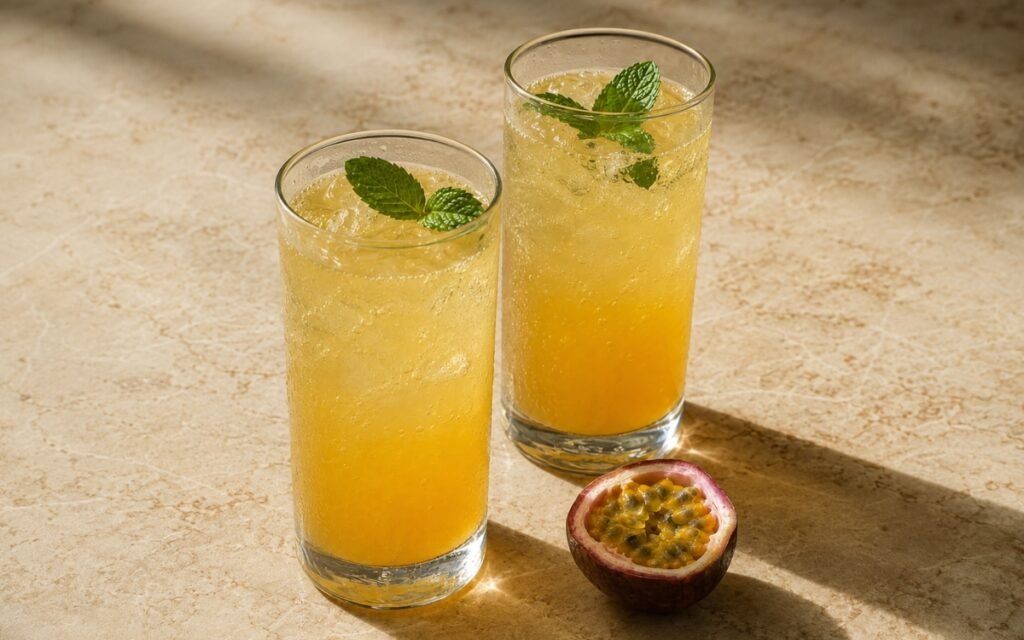
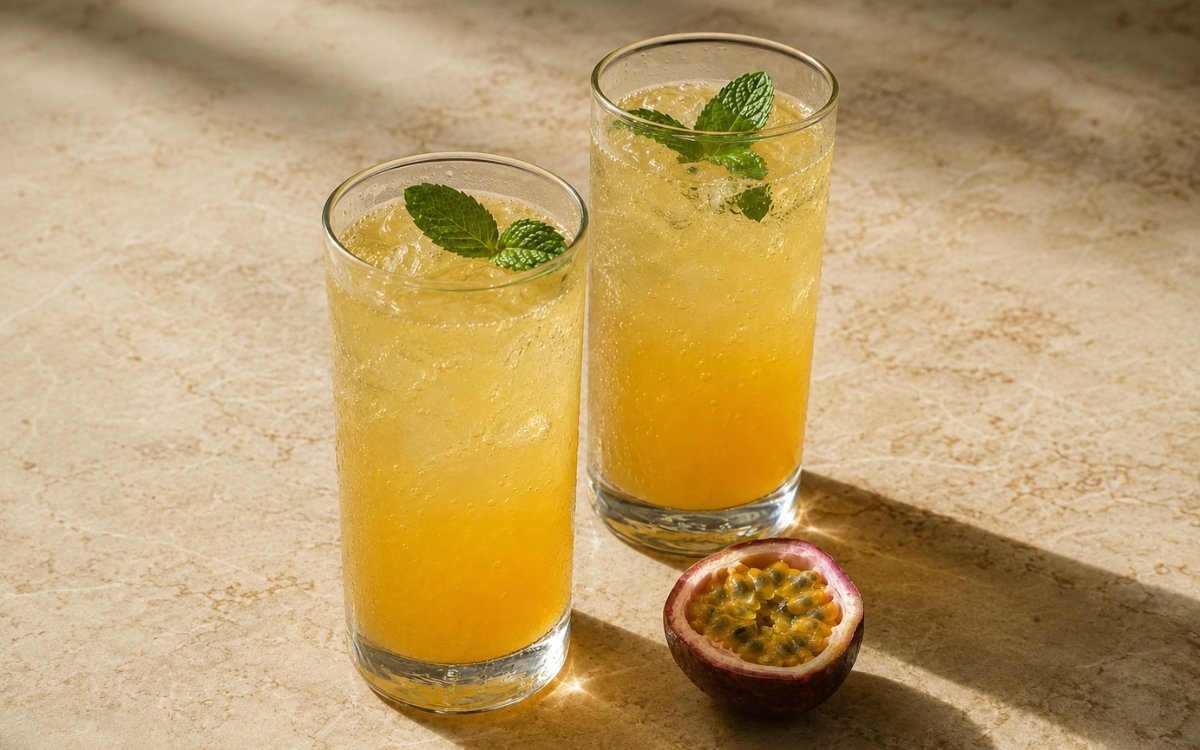
Passion fruit pulp worked directly with lime juice, honey, and a pinch of salt — no cooking, no syrup, no heat at any stage. The passion fruit’s character is so intensely concentrated in the raw pulp that it requires no simmer to produce a flavourful base; the challenge with passion fruit in a sparkling drink is specifically the opposite of under-flavoured ingredients — it is preserving the raw pulp’s specific golden, intensely tropical, floral, sharply acidic character without processing it into something flatter or more one-dimensional. The mint clapped and infused cold for 15–20 minutes alongside the lime zest, perfuming the tropical base with fresh herbal aromatics. The seeds mostly strained out — mostly, because scattered on the finished drink’s surface they are both visually beautiful and, if swallowed, contribute a small burst of the passion fruit’s raw pulp flavour that the strained juice alone does not provide. The tropical spritzer that brings full summer energy to any glass.
Prep Time : 10 min
Cook Time : 0 min
Servings : 4
10 min
0 min
4
Ingredients
For the Passion Fruit Base
• 8 ripe passion fruits — approximately 220g pulp total
• 30ml fresh lime juice
• Zest of 1 lime
• 35g honey — this one on Amazon
• 1 pinch fine sea salt
• 12 fresh mint leaves — clapped before adding
For the Garnish
• 4 small fresh mint sprigs
• Optional: reserved passion fruit seeds, for scattering over each glass
This post may contain affiliate links. As an Amazon Associate I earn from qualifying purchases, at no additional cost to you.
Directions
- Prepare the Passion Fruit Base
Cut each of the 8 passion fruits in half across the equator rather than from stem to base — the cross-cut exposes more of the seed-and-pulp interior simultaneously and allows more complete scooping with a spoon. Using a teaspoon, scoop the entire contents of each half — seeds, pulp, and all the clinging juice — into a medium bowl. Do not discard the seeds at this stage; the pulp is attached to and surrounding each seed and the first pressing will extract this pulp most efficiently with the seeds present rather than having separated them prematurely. Reserve a small amount of the pulp-and-seed mixture in a separate small bowl for the optional garnish. Add the 30ml of fresh lime juice, 35g of honey, and the pinch of fine sea salt to the bowl with the passion fruit pulp. Gently mash and stir — the mashing pressing each seed cluster slightly to release any remaining adherent pulp juice, and the stirring beginning the honey dissolution. Honey’s viscosity makes it resistant to simple stirring in a cold, wet mixture; the continued mashing motion works it into the surrounding liquid more effectively than stirring alone. Continue until the honey is visibly incorporated and no longer pooling separately. Add the zest of 1 lime and stir to distribute. - Cold Mint Infusion
Clap the 12 fresh mint leaves between your palms — the same technique from the watermelon mint fizz and the pineapple coconut mocktail. The palm-clap ruptures just the surface cells and releases the aromatic oils without the deeper bruising and chlorophyll extraction of muddling. Add the clapped mint leaves directly to the passion fruit mixture and stir gently to submerge them in the liquid. Cover the bowl and refrigerate for 15–20 minutes. At refrigerator temperature the mint’s volatile aromatic compounds diffuse slowly from the leaf surface into the surrounding passion fruit-lime medium — the cold infusion producing a specifically clean, fresh, aromatic mint character rather than the grassy, medicinal notes that warm steeping would develop. The passion fruit’s own specific floral, tropical volatiles are preserved throughout at the cold temperature. After 15–20 minutes, proceed immediately to straining rather than extending the infusion — beyond 20 minutes the mint’s influence deepens past the background-aromatic stage into a more prominent herbal note that begins to compete with the passion fruit’s primary tropical character. - Strain and Chill
Place a fine-mesh sieve over a clean jug. Pour the passion fruit, mint, and lime mixture into the sieve. Using the back of a spoon, press gently but firmly on the seed-and-pulp mass — extracting the maximum juice from the surrounding pulp while the seeds themselves remain in the sieve. The pressing should be firm enough to extract all available juice but not so aggressive that the seeds are cracked or their inner contents (which carry a slight bitterness) are forced through. The correctly strained base should be golden, cloudy-clear, and specifically fragrant — intensely tropical and floral from the passion fruit, with the bright lime and clean mint as distinct secondary aromatic notes. Discard the strained seeds and mint leaves, keeping the reserved decorative seeds aside. Transfer the base to the refrigerator and chill until cold — approximately 15–20 minutes. - Assemble and Serve
Fill four tall glasses generously with ice cubes. Divide the chilled passion fruit base evenly among the four glasses — approximately 80ml per glass. Stir briefly against the ice. Top each glass with approximately 125ml of chilled club soda, poured gently down the inner side of the glass to preserve the carbonation. Stir once or twice. If using the optional seed garnish, scatter 10–15 reserved passion fruit seeds — still carrying their small amount of golden pulp — directly onto the surface of the drink in each glass. The seeds float briefly and then settle through the ice, and each one encountered in a sip provides a small burst of raw passion fruit pulp flavour that contrasts with the strained base’s smoother, more homogeneous character. Rest a fresh mint sprig on the ice with the leaves above the rim. Serve immediately.
*Notes :
- The ripeness of the passion fruit determines the quality of this mocktail more directly than any technique decision. Ripe passion fruit — with a deeply wrinkled, dimpled skin — has significantly more concentrated, more aromatic, more specifically tropical-floral pulp than smooth-skinned under-ripe fruit. Smooth-skinned passion fruits are under-ripe; the wrinkled, collapsed appearance that might seem to indicate overripeness is in fact the correct indicator of peak flavour development. The pulp of a deeply wrinkled passion fruit is golden, fragrant, intensely sour-sweet, and specifically floral; the pulp of a smooth-skinned one is paler, milder, and significantly less aromatic.
- The pinch of salt follows the same principle as in the kiwi lime mocktail — at sub-threshold concentration it heightens the perception of the passion fruit’s tropical sweetness and amplifies the lime’s acidity into something more vivid. Passion fruit’s own acidity is already high, and the salt’s amplifying effect is particularly noticeable here.
Why This Mocktail Works
This recipe works because the no-heat approach preserves the raw passion fruit pulp’s specific golden, intensely floral, tropical character intact — cooking would convert these aromatics into a flatter, more concentrated but less vivid version.
The cold mint infusion adds herbal freshness without competing with the passion fruit’s primary tropical register. And the optional seed garnish provides a visual and flavour element that the strained base alone cannot replicate.
Ingredient Breakdown
Raw Passion Fruit Pulp (No Heat at Any Stage)
The primary vivid tropical character — the raw pulp’s volatile aromatic compounds preserved completely at cold temperature.
Honey (Worked In Through Mashing)
The aromatic sweetener — worked into the cold pulp through continued mashing rather than dissolving readily; its warmth complementing the passion fruit’s floral character.
Pinch of Fine Sea Salt
The sub-threshold flavour amplifier — heightening the tropical sweetness and sharpening the lime’s acidity below the tasting threshold.
Clapped Mint Cold-Infused (15–20 Minutes Maximum)
The background herbal freshness — surface aromatic oils only, providing a clean mint note as counterpoint to the passion fruit’s tropical intensity without competing.
Optional Seed Garnish
The visual and burst-flavour element — reserved seeds carrying pulp providing both visual appeal and a raw passion fruit moment in each sip that encounters them.
Flavor Structure Explained
This Passion fruit mint spritzer follows a layered balance model:
- Tropical floral core (passion fruit)
- Bright citrus lift (lime juice, zest)
- Cool herbal freshness (mint)
- Gentle floral sweetness (honey)
- Crisp sparkling finish (club soda)
Passion fruit defines the foundation with intense tropical sweetness, vivid acidity, and highly aromatic floral notes that immediately dominate the profile. Lime sharpens and amplifies those characteristics, adding citrus brightness and aromatic freshness that make the fruit feel even more vibrant. Mint contributes a subtle cooling layer that balances the passion fruit’s intensity and keeps the drink refreshing. Honey softens the sharper acidic edges with rounded sweetness and a faint floral quality that complements the fruit naturally. Club soda completes the structure with lively carbonation, creating a light, sparkling finish that lifts the tropical flavors and enhances the drink’s refreshing character.
Common Mistakes to Avoid
- Using Smooth-Skinned Under-Ripe Passion Fruits – Smooth skin indicates under-ripeness — the pulp is paler, milder, and less aromatic. Always deeply wrinkled, dimpled passion fruits.
- Cracking the Seeds During Pressing – Seeds pressed too hard release a slight bitterness. Always firm-but-not-aggressive pressing during straining.
- Leaving the Mint In Beyond 20 Minutes – Extended cold infusion develops a more prominent herbal note that begins competing with the passion fruit’s primary character. Always strain at 15–20 minutes.
- Not Mashing the Honey Fully Into the Cold Pulp – Honey pooled at the bottom produces uneven sweetness between glasses. Always continue mashing until completely incorporated.
- Not Using Wrinkled-Skin Passion Fruits – The wrinkled appearance is the indicator of peak ripeness and flavour concentration in passion fruit — not over-ripeness. Always the most wrinkled fruit available.
Variations
With Ginger
Add 5g of finely grated fresh ginger to the passion fruit mixture with the lime juice — the ginger’s warm sharpness extracted into the cold mixture over the 15–20 minute rest provides a subtle warming note alongside the tropical fruitiness.
With Coconut Water
Replace half the club soda at assembly with coconut water — the coconut water’s mild tropical sweetness producing a specifically more tropical, softer result in the same direction as the Pineapple Coconut Sparkling Mocktail.
With Basil Instead of Mint
Replace the 12 mint leaves with 10 fresh basil leaves, clapped and cold-infused the same way — basil’s sweet, anise-adjacent aromatic character is specifically well-suited to tropical fruit combinations and produces a more unusual, more specifically sophisticated result.
Frozen Version
Pour the strained passion fruit base (without club soda) into ice lolly moulds and freeze for 3–4 hours — the result is an intensely flavoured tropical ice lolly with visible seed clusters.
Storage & Make-Ahead
The strained passion fruit base, before the mint infusion, can be refrigerated for up to 2 days. However, its vivid floral aromas gradually fade during storage, so it is best used within 24 hours for maximum freshness and flavor.
Once the mint has been infused and removed, the base can be refrigerated for up to 24 hours. After that point, the flavor begins to lose some of its freshness.
Assembled drinks are not suitable for storage and should be served immediately after preparation.
Frequently Asked Questions
Why are wrinkled passion fruits better than smooth ones?
Wrinkled, dimpled passion fruit skin indicates the fruit has fully ripened — the natural drying and contraction of the skin as water evaporates concentrates the pulp’s flavour and aromatic compounds. Smooth-skinned passion fruits are under-ripe and have milder, less aromatic pulp regardless of their size. The wrinkled appearance that might suggest over-ripeness is in fact the correct indicator of peak flavour.
Why keep the seeds in during pressing?
Passion fruit pulp is attached to and surrounding each seed — pressing the seed mass extracts the pulp juice most efficiently when the seeds are present as the pressing medium. Seeds separated prematurely leave pulp behind in the discarded seed cluster. Always press with seeds present, then discard them.
Why cold infuse the mint rather than using warm steeping?
The cold infusion technique — applied consistently across this collection — extracts only the mint’s most volatile, most pleasant surface aromatic compounds at refrigerator temperature. Warm steeping extracts a broader range including the less pleasant, more medicinal compounds that compete with the passion fruit’s delicate floral character. The cold infusion is specifically more complementary to tropical fruit bases.
Why the optional seed garnish?
The strained juice alone provides smooth, homogeneous passion fruit flavour throughout. The seeds, still carrying small amounts of raw golden pulp, provide an occasional burst of raw-pulp intensity — a different, more direct tropical moment that the strained juice cannot provide. Visually they also specifically identify the drink as passion fruit to anyone unfamiliar with the fruit.
What other tropical, refreshing mocktails share this format?
The Mango Turmeric Tonic Mocktail shares the tropical fruit base and sparkling finish — built on a cooked mango syrup rather than a raw pulp base, producing a warmer, more earthy character alongside the tropical fruitiness. The Watermelon Mint Fizz shares the cold mint infusion technique and the sparkling club soda format — different primary fruit character but the same structural approach of cold-infused mint providing background herbal freshness against a raw fruit base.
Nutrition Facts
( per serving )
Calories
~80 kcal
Protein
0 g
Fat
0 g
Carbs
20 g
Calories
~80 kcal
Protein
0 g
Fat
0 g
Carbs
20 g
Related Recipes
Related Recipes

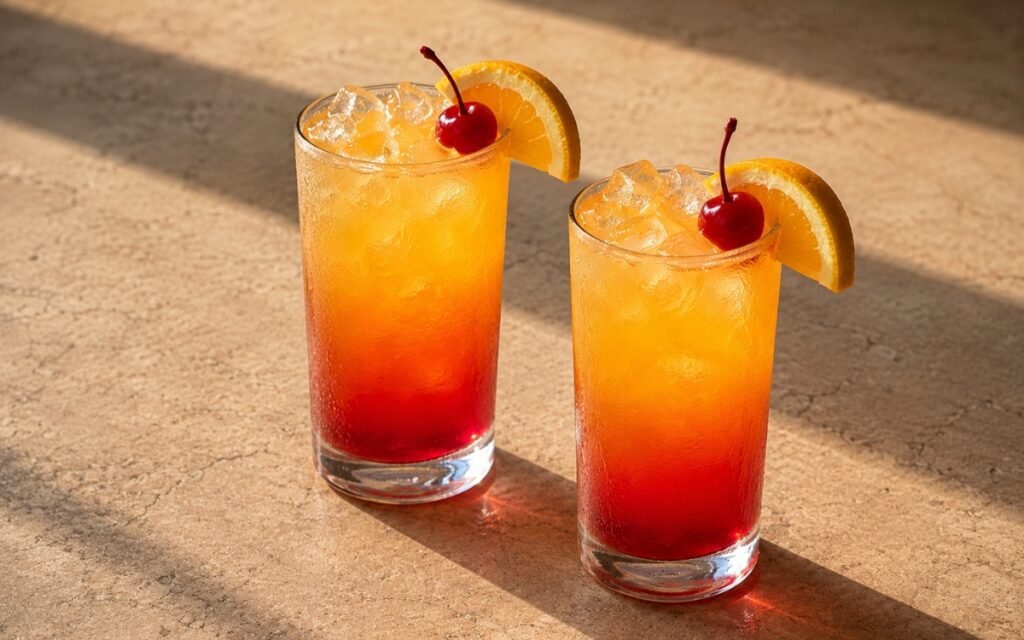
Virgin Tequila Sunrise Mocktail
Layered orange fizz with a slow grenadine sunrise, crisp, citrusy, visually iconic, and cleanly structured.
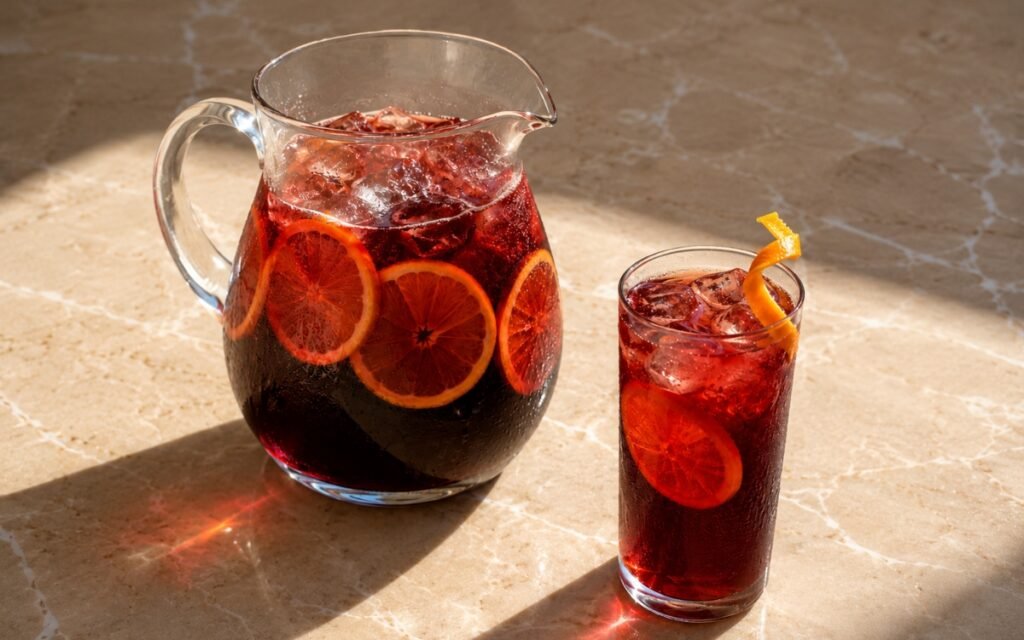
Virgin Spanish Sangria
Wine-like citrus mocktail with macerated fruit and verjus, lightly tannic, bright, festive, and convincingly grown-up.
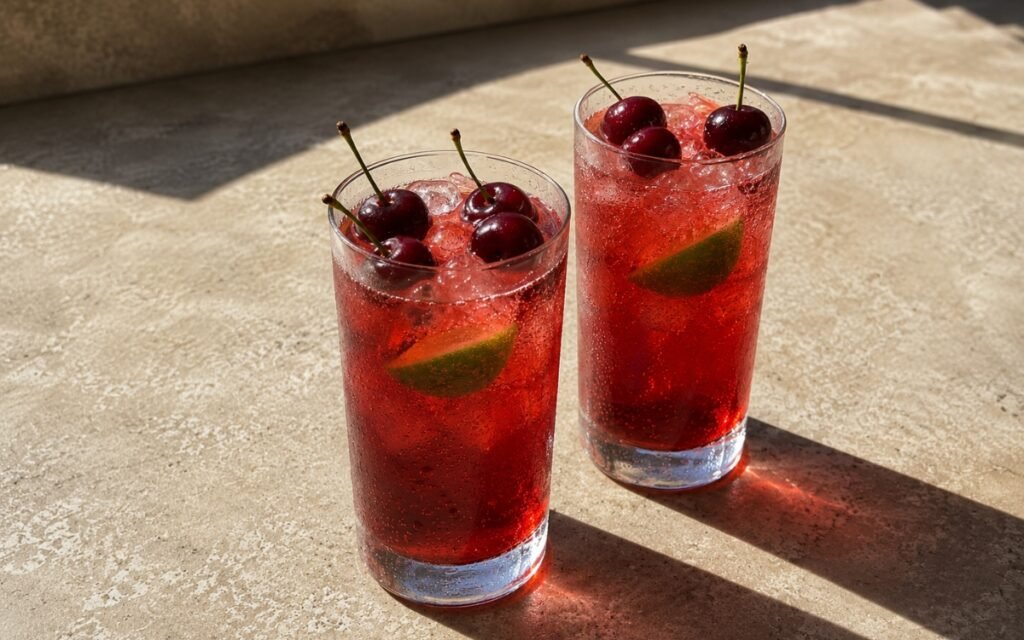
Cherry Lime Rickey Mocktail
Dark cherries with lime juice and white verjus over club soda — sharp, fruity, and classic.
You might also like
You might also like
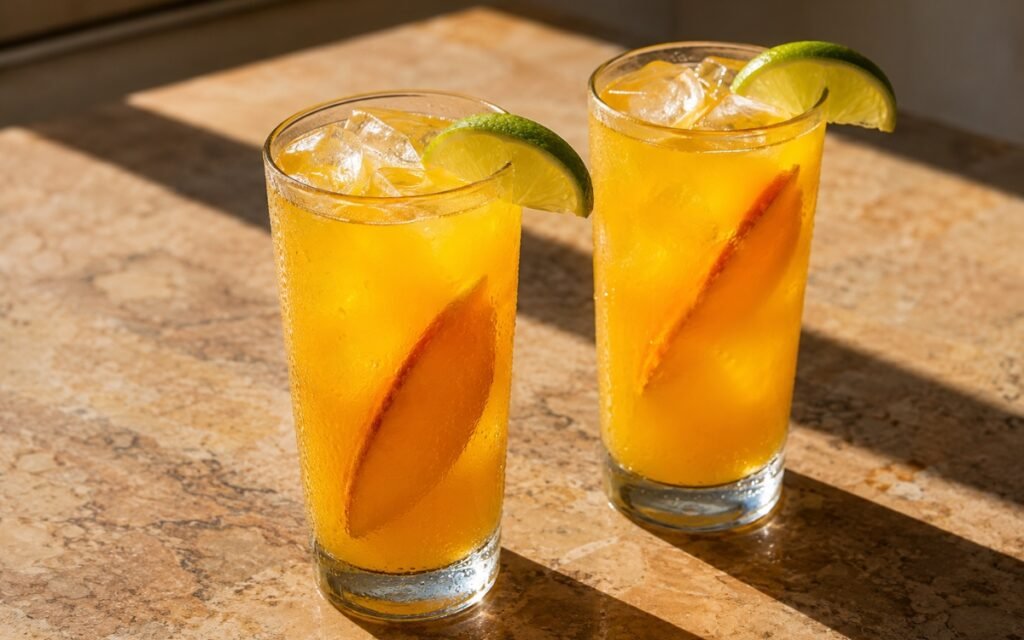
Fresh Mango Lemonade
Mango simmered at medium-low heat with lime zest, ginger off heat exactly 2 minutes — lemon and lime juice added cold, chilled. Tropical, golden, and bright.
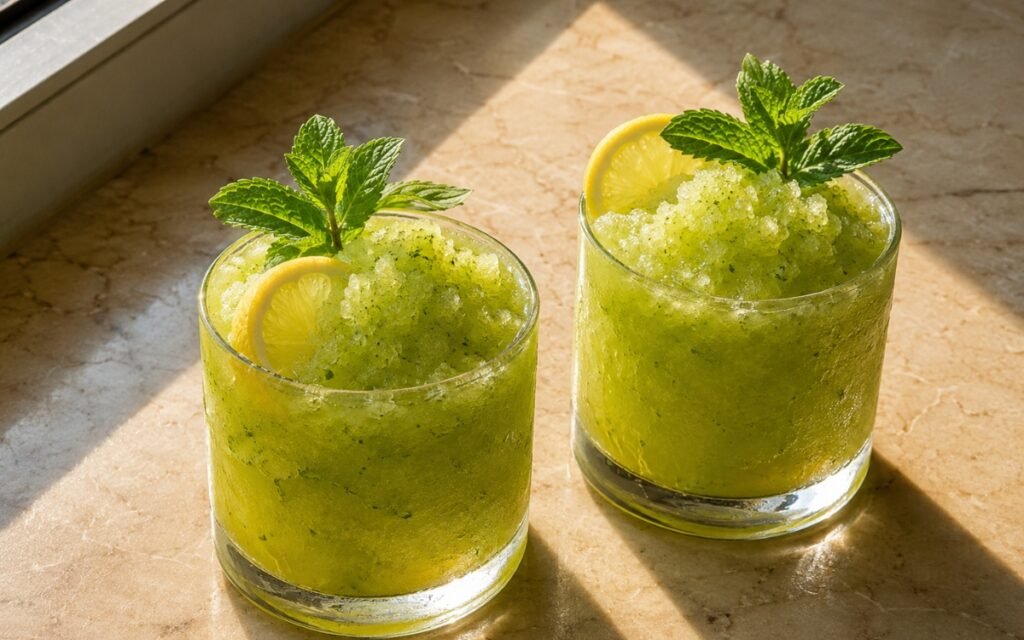
Mint Lemonade — Blended
Lemon zest syrup off heat, mint added last to blender — blended 15–25 seconds maximum, served immediately for slushy icy texture. Aromatic, cool, and bright.
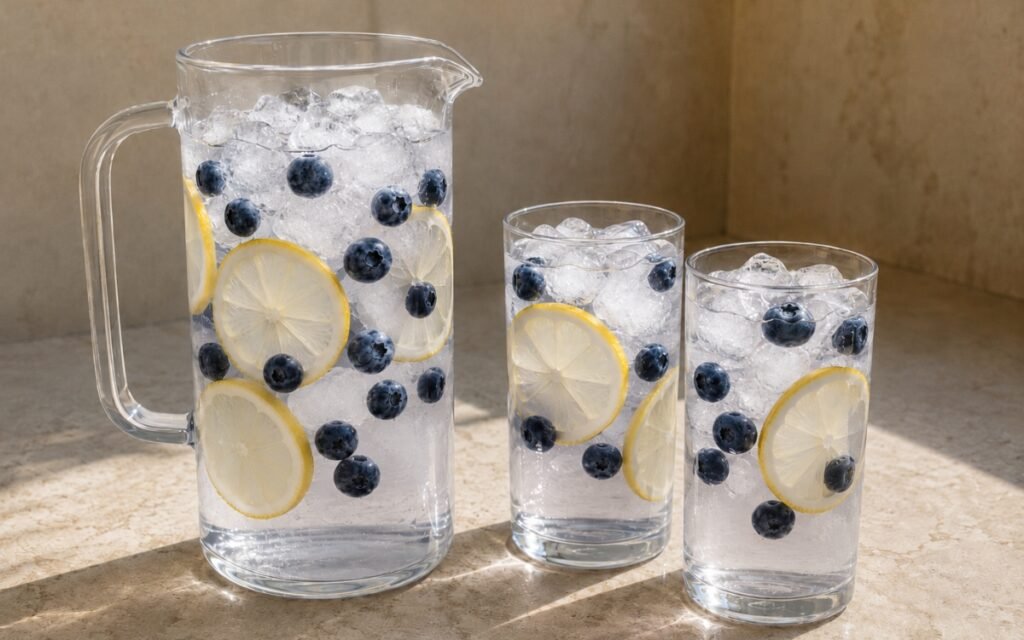
Blueberry Lemon Infused Water
Blueberries mashed for vivid colour, whole blueberries and lemon slices cold-infused in 3L water — removed after 4 hours. Vivid blue-purple to lavender and hydrating.
Passion Fruit Mint Spritzer Mocktail
Ingredients
Method
- Cut each of the 8 passion fruits in half across the equator rather than from stem to base — the cross-cut exposes more of the seed-and-pulp interior simultaneously and allows more complete scooping with a spoon. Using a teaspoon, scoop the entire contents of each half — seeds, pulp, and all the clinging juice — into a medium bowl. Do not discard the seeds at this stage; the pulp is attached to and surrounding each seed and the first pressing will extract this pulp most efficiently with the seeds present rather than having separated them prematurely. Reserve a small amount of the pulp-and-seed mixture in a separate small bowl for the optional garnish. Add the 30ml of fresh lime juice, 35g of honey, and the pinch of fine sea salt to the bowl with the passion fruit pulp. Gently mash and stir — the mashing pressing each seed cluster slightly to release any remaining adherent pulp juice, and the stirring beginning the honey dissolution. Honey’s viscosity makes it resistant to simple stirring in a cold, wet mixture; the continued mashing motion works it into the surrounding liquid more effectively than stirring alone. Continue until the honey is visibly incorporated and no longer pooling separately. Add the zest of 1 lime and stir to distribute.
- Clap the 12 fresh mint leaves between your palms — the same technique from the watermelon mint fizz and the pineapple coconut mocktail. The palm-clap ruptures just the surface cells and releases the aromatic oils without the deeper bruising and chlorophyll extraction of muddling. Add the clapped mint leaves directly to the passion fruit mixture and stir gently to submerge them in the liquid. Cover the bowl and refrigerate for 15–20 minutes. At refrigerator temperature the mint’s volatile aromatic compounds diffuse slowly from the leaf surface into the surrounding passion fruit-lime medium — the cold infusion producing a specifically clean, fresh, aromatic mint character rather than the grassy, medicinal notes that warm steeping would develop. The passion fruit’s own specific floral, tropical volatiles are preserved throughout at the cold temperature. After 15–20 minutes, proceed immediately to straining rather than extending the infusion — beyond 20 minutes the mint’s influence deepens past the background-aromatic stage into a more prominent herbal note that begins to compete with the passion fruit’s primary tropical character.
- Place a fine-mesh sieve over a clean jug. Pour the passion fruit, mint, and lime mixture into the sieve. Using the back of a spoon, press gently but firmly on the seed-and-pulp mass — extracting the maximum juice from the surrounding pulp while the seeds themselves remain in the sieve. The pressing should be firm enough to extract all available juice but not so aggressive that the seeds are cracked or their inner contents (which carry a slight bitterness) are forced through. The correctly strained base should be golden, cloudy-clear, and specifically fragrant — intensely tropical and floral from the passion fruit, with the bright lime and clean mint as distinct secondary aromatic notes. Discard the strained seeds and mint leaves, keeping the reserved decorative seeds aside. Transfer the base to the refrigerator and chill until cold — approximately 15–20 minutes.
- Fill four tall glasses generously with ice cubes. Divide the chilled passion fruit base evenly among the four glasses — approximately 80ml per glass. Stir briefly against the ice. Top each glass with approximately 125ml of chilled club soda, poured gently down the inner side of the glass to preserve the carbonation. Stir once or twice. If using the optional seed garnish, scatter 10–15 reserved passion fruit seeds — still carrying their small amount of golden pulp — directly onto the surface of the drink in each glass. The seeds float briefly and then settle through the ice, and each one encountered in a sip provides a small burst of raw passion fruit pulp flavour that contrasts with the strained base’s smoother, more homogeneous character. Rest a fresh mint sprig on the ice with the leaves above the rim. Serve immediately.