Ingredients
Method
Prepare the Passion Fruit Base
- Cut each of the 8 passion fruits in half across the equator rather than from stem to base — the cross-cut exposes more of the seed-and-pulp interior simultaneously and allows more complete scooping with a spoon. Using a teaspoon, scoop the entire contents of each half — seeds, pulp, and all the clinging juice — into a medium bowl. Do not discard the seeds at this stage; the pulp is attached to and surrounding each seed and the first pressing will extract this pulp most efficiently with the seeds present rather than having separated them prematurely. Reserve a small amount of the pulp-and-seed mixture in a separate small bowl for the optional garnish. Add the 30ml of fresh lime juice, 35g of honey, and the pinch of fine sea salt to the bowl with the passion fruit pulp. Gently mash and stir — the mashing pressing each seed cluster slightly to release any remaining adherent pulp juice, and the stirring beginning the honey dissolution. Honey's viscosity makes it resistant to simple stirring in a cold, wet mixture; the continued mashing motion works it into the surrounding liquid more effectively than stirring alone. Continue until the honey is visibly incorporated and no longer pooling separately. Add the zest of 1 lime and stir to distribute.
Cold Mint Infusion
- Clap the 12 fresh mint leaves between your palms — the same technique from the watermelon mint fizz and the pineapple coconut mocktail. The palm-clap ruptures just the surface cells and releases the aromatic oils without the deeper bruising and chlorophyll extraction of muddling. Add the clapped mint leaves directly to the passion fruit mixture and stir gently to submerge them in the liquid. Cover the bowl and refrigerate for 15–20 minutes. At refrigerator temperature the mint's volatile aromatic compounds diffuse slowly from the leaf surface into the surrounding passion fruit-lime medium — the cold infusion producing a specifically clean, fresh, aromatic mint character rather than the grassy, medicinal notes that warm steeping would develop. The passion fruit's own specific floral, tropical volatiles are preserved throughout at the cold temperature. After 15–20 minutes, proceed immediately to straining rather than extending the infusion — beyond 20 minutes the mint's influence deepens past the background-aromatic stage into a more prominent herbal note that begins to compete with the passion fruit's primary tropical character.
Strain and Chill
- Place a fine-mesh sieve over a clean jug. Pour the passion fruit, mint, and lime mixture into the sieve. Using the back of a spoon, press gently but firmly on the seed-and-pulp mass — extracting the maximum juice from the surrounding pulp while the seeds themselves remain in the sieve. The pressing should be firm enough to extract all available juice but not so aggressive that the seeds are cracked or their inner contents (which carry a slight bitterness) are forced through. The correctly strained base should be golden, cloudy-clear, and specifically fragrant — intensely tropical and floral from the passion fruit, with the bright lime and clean mint as distinct secondary aromatic notes. Discard the strained seeds and mint leaves, keeping the reserved decorative seeds aside. Transfer the base to the refrigerator and chill until cold — approximately 15–20 minutes.
Assemble and Serve
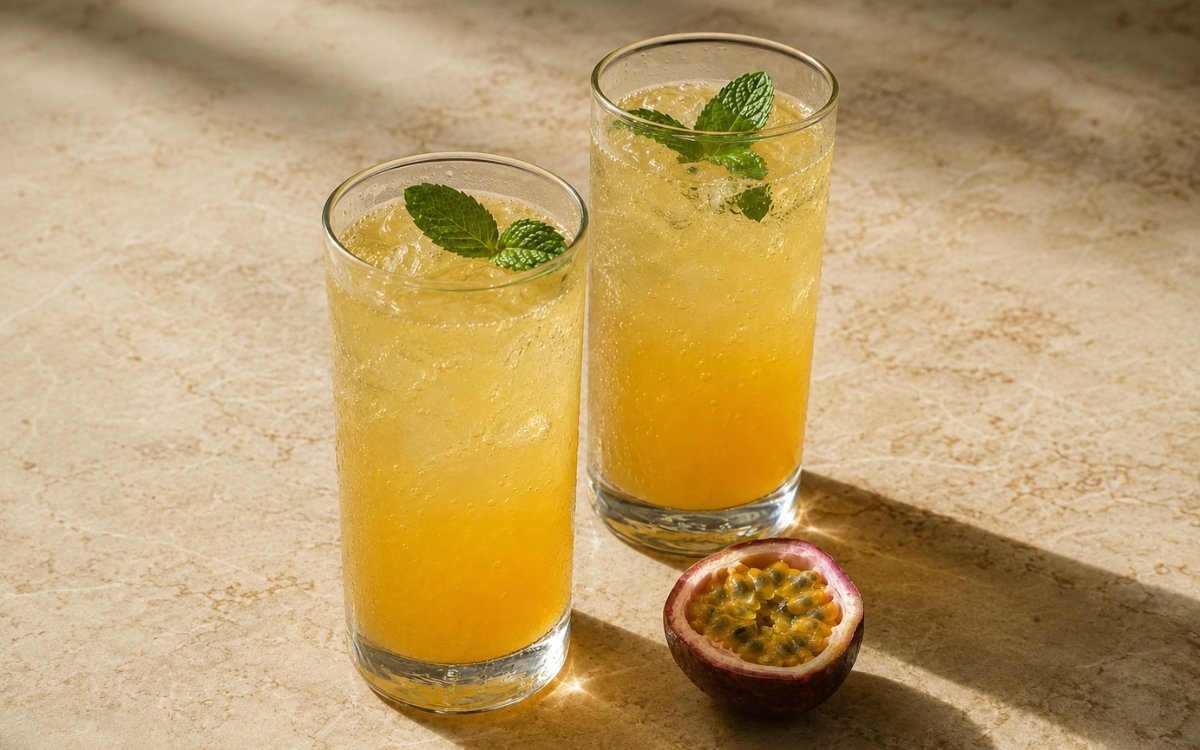
- Fill four tall glasses generously with ice cubes. Divide the chilled passion fruit base evenly among the four glasses — approximately 80ml per glass. Stir briefly against the ice. Top each glass with approximately 125ml of chilled club soda, poured gently down the inner side of the glass to preserve the carbonation. Stir once or twice. If using the optional seed garnish, scatter 10–15 reserved passion fruit seeds — still carrying their small amount of golden pulp — directly onto the surface of the drink in each glass. The seeds float briefly and then settle through the ice, and each one encountered in a sip provides a small burst of raw passion fruit pulp flavour that contrasts with the strained base's smoother, more homogeneous character. Rest a fresh mint sprig on the ice with the leaves above the rim. Serve immediately.
Notes
The ripeness of the passion fruit determines the quality of this mocktail more directly than any technique decision. Ripe passion fruit — with a deeply wrinkled, dimpled skin — has significantly more concentrated, more aromatic, more specifically tropical-floral pulp than smooth-skinned under-ripe fruit. Smooth-skinned passion fruits are under-ripe; the wrinkled, collapsed appearance that might seem to indicate overripeness is in fact the correct indicator of peak flavour development. The pulp of a deeply wrinkled passion fruit is golden, fragrant, intensely sour-sweet, and specifically floral; the pulp of a smooth-skinned one is paler, milder, and significantly less aromatic.
The pinch of salt follows the same principle as in the kiwi lime mocktail — at sub-threshold concentration it heightens the perception of the passion fruit's tropical sweetness and amplifies the lime's acidity into something more vivid. Passion fruit's own acidity is already high, and the salt's amplifying effect is particularly noticeable here.