
Ful Medames
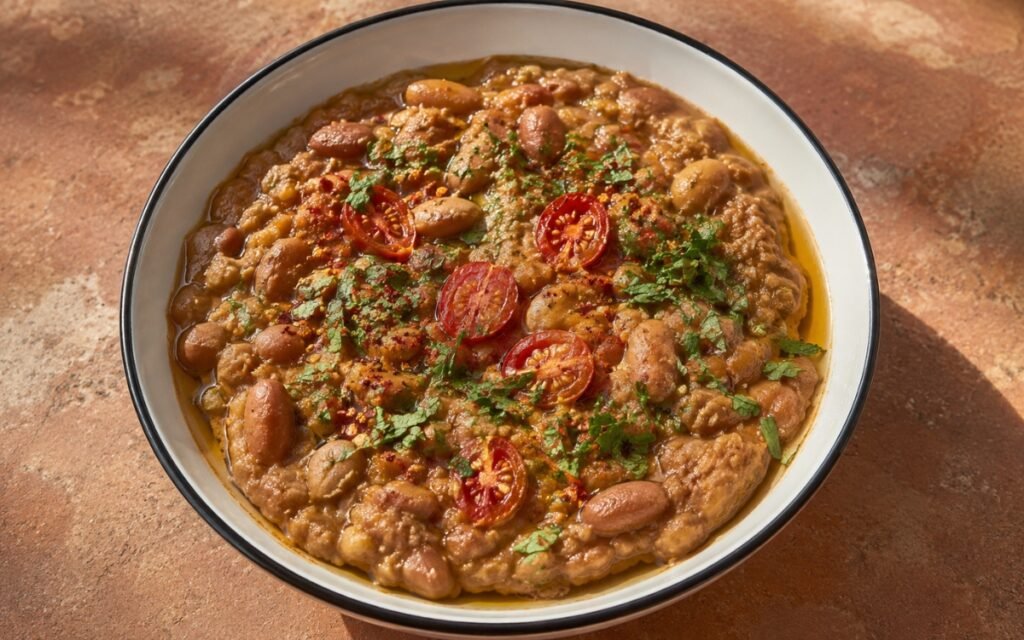
The tomato paste bloomed in olive oil for 2–3 minutes before anything else enters the pan — the step that converts raw tomato paste’s metallic, flat character into the sweet, rounded, deeply savoury base that the fava beans subsequently absorb. Garlic and spices added in the same hot oil so all three bloom simultaneously. The fava beans simmered in the spiced base with warm water until hot and softened, then half-mashed directly in the pan — the partial mash producing the specific texture that defines ful medames: thick, rustic, spoonable, with some whole beans for body and some crushed beans providing the cohesive, slightly creamy binding. Lemon juice and optional tahini folded through at the end. The Egyptian street food that has been eaten for breakfast, lunch, and dinner in the Middle East and North Africa for centuries — one of the oldest continuously prepared dishes in human food history — built from five ingredients, a single pan, and thirty minutes.
Prep Time : 10 min
Cook Time : 20 min
Servings : 8
10 min
20 min
8
Ingredients
For the Ful Medames
• 900g cooked fava beans, drained — canned is fine; reserve the liquid
• 3 tbsp extra-virgin olive oil — this one on Amazon
• 20g tomato paste
• 4 garlic cloves, finely minced
• 1½ tsp ground cumin — this one on Amazon
• 1 tsp chili flakes
• 30–45ml fresh lemon juice — start with 30ml, adjust at the end
• 120–180ml warm water or reserved bean liquid
• 1–2 tbsp tahini — optional, for a richer, creamier finish — this one on Amazon
• Fine sea salt, to taste
• Freshly cracked black pepper, to taste
For the Garnishes
• Fresh flat-leaf parsley, roughly chopped
• Extra-virgin olive oil, for drizzling
• Chili flakes
This post may contain affiliate links. As an Amazon Associate I earn from qualifying purchases, at no additional cost to you.
Directions
- Bloom the Tomato Paste
Heat the 3 tbsp of olive oil in a wide, heavy-bottomed pan over medium heat until shimmering. Add the 20g of tomato paste and begin stirring immediately — the paste will sizzle and crackle as it contacts the hot oil. Cook, stirring constantly, for 2–3 minutes until the paste visibly darkens from bright red to a deeper brick-red and the aroma shifts from raw and metallic to noticeably sweeter and more concentrated. This blooming step is the foundation of ful medames’ flavour — raw tomato paste added directly to liquid or to cold oil produces the metallic, slightly harsh flavour of uncooked tomato concentrate. The 2–3 minutes of high direct heat in the olive oil caramelises the paste’s sugars and drives off the raw volatile acids through the Maillard-adjacent reactions that produce the rounded, savoury depth the dish requires. Every subsequent ingredient is layered onto this bloomed base. - Add Garlic and Bloom the Spices
Add the 4 finely minced garlic cloves to the darkened tomato paste and oil. Stir continuously for approximately 30 seconds until fragrant and just beginning to show the faintest golden colour at the edges — the garlic must not brown. Immediately add the 1½ tsp of ground cumin, 1 tsp of chili flakes, and black pepper directly into the hot oil alongside the garlic and tomato paste. Stir continuously for 20–30 seconds. The spices bloom in the hot fat — their fat-soluble aromatic essential oils releasing into the surrounding oil at the elevated temperature, producing a more intense, more fully developed spice character than the same spices added to liquid would provide. The cumin’s earthy warmth and the chili flakes’ fruity heat are both specifically more vivid after 20–30 seconds of direct fat contact. Remove from heat or reduce immediately if the garlic or spices begin to darken beyond lightly golden — burnt garlic or spices cannot be corrected and produce bitterness throughout the finished dish. - Add the Fava Beans and Simmer
Add the 900g of drained fava beans directly to the spiced tomato base. Pour in 120ml of warm water or the reserved bean liquid — reserved liquid is specifically preferred when available because it carries dissolved starch and flavour compounds from the beans that warm water does not, producing a more cohesive, more flavourful final consistency. Stir to combine, bringing all the beans into contact with the spiced base. Increase the heat to medium and simmer for 5–8 minutes, stirring occasionally, until the beans are thoroughly heated through, noticeably softer than they were straight from the can, and have absorbed the spiced tomato base’s colour and character. The beans should be coated in the red-orange spiced oil and the liquid in the pan should have reduced slightly. - Partial Mash
Using a potato masher, a fork, or the back of a large spoon, mash approximately half the beans directly in the pan. Work across the pan in circular motions, pressing down firmly enough to break some beans completely and partially crush others while leaving the remaining half wholly intact. The finished texture — thick, slightly rough, with a mix of crushed beans providing cohesion and whole beans providing body — is the specifically correct texture for ful medames. Ful is not hummus and should not be processed smooth; it is not a whole bean stew either. The partial mash creates the thick, spoonable, rustically cohesive consistency that has been the dish’s specific character for centuries. If the mixture appears too thick after mashing, add additional warm water or bean liquid in small amounts until the consistency is thick and spoonable but not dry or stiff. - Add Lemon and Tahini
Add the 30ml of fresh lemon juice and, if using, the 1–2 tbsp of tahini. Stir well until fully incorporated and cohesive. The lemon juice provides the bright acid counterpoint that prevents the cumin and chili-spiced beans from tasting heavy and one-dimensional — its addition at this stage, after the mash, preserves its aromatic volatile freshness rather than simmering it into the dish where it would contribute acid without the citrus fragrance. Tahini’s addition is optional but specifically recommended for a richer, slightly nuttier, creamier result — its fat content binds the mashed bean mixture into a more cohesive, more satisfying consistency and provides the background sesame depth that appears in many regional versions of the dish. - Final Seasoning and Adjustment
Simmer for a further 1–2 minutes until the mixture is thick, rich, and cohesive. Season with fine sea salt — tasting carefully before adding, as the canned beans and tomato paste both carry sodium. Taste and adjust each dimension: more lemon juice if the brightness is insufficient and the beans taste flat or one-dimensional; more chili flakes for heat; more tahini for creaminess; more cumin if the spice depth needs amplification. The finished ful should taste assertively seasoned, bright from the lemon, warmly spiced, and satisfying rather than flat. - Plate and Garnish
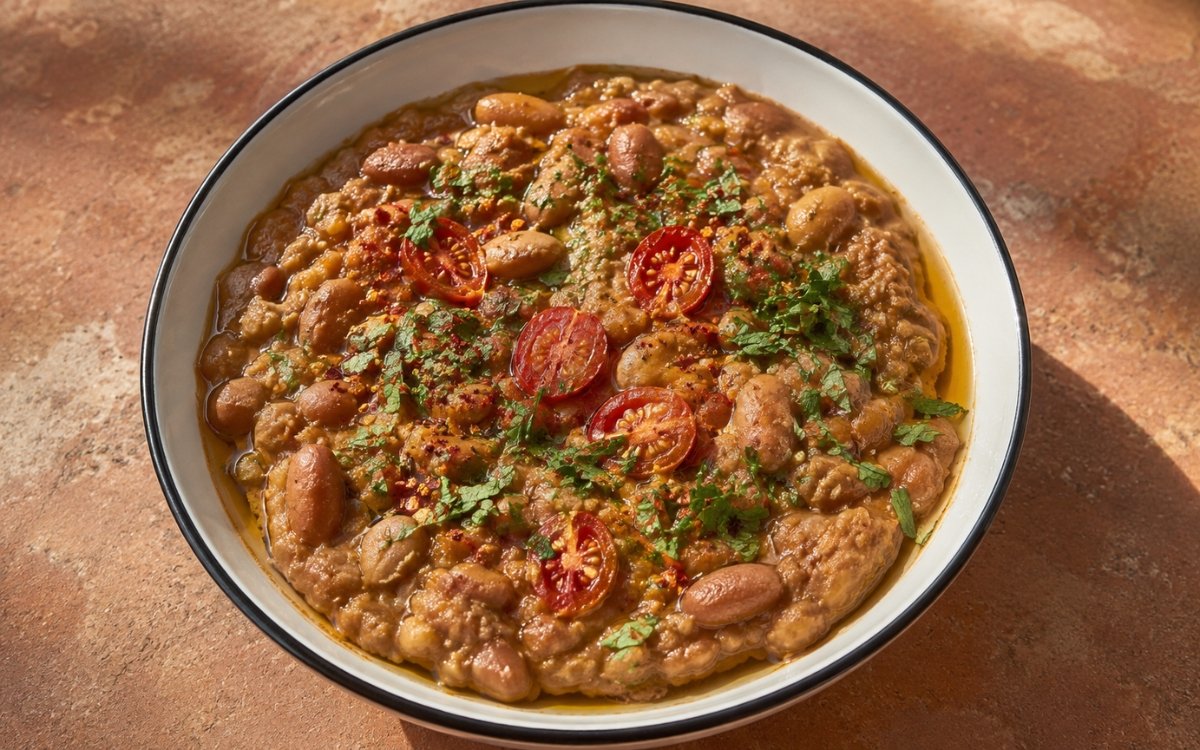
Transfer the ful medames into shallow serving bowls — wide and shallow rather than deep, for maximum surface area for the garnishes. Drizzle generously with extra-virgin olive oil — the raw olive oil’s fruity, slightly peppery character provides both flavour and the characteristic glistening surface that makes properly garnished ful visually appealing. Scatter freshly chopped flat-leaf parsley, a pinch of chili flakes, and the halved cherry tomatoes. The cherry tomatoes serve a specific function beyond visual appeal — their bright acidity and fresh, slightly sweet juice provide a vivid contrast against the warm, earthy, slightly heavy beans that makes each spoonful that includes a tomato half specifically more refreshing.
*Notes :
- Ful medames — فول مدمس — is one of the oldest continuously prepared dishes in human food history. Archaeological evidence places it in ancient Egypt; it appears in medieval Arabic cookbooks; it remains the foundational national breakfast of Egypt, eaten from street carts and in homes from Cairo to Alexandria at any hour of the day. The name foul means fava bean in Arabic; medames derives from the Arabic word for buried — referring to the ancient cooking method of burying a sealed clay pot of beans in the embers of a fire overnight to cook slowly. The modern version produces the same result through a stovetop preparation that takes thirty minutes rather than overnight.
- The fava bean’s specific character — earthy, slightly nutty, with a starchy, mealy body that absorbs spiced oil and lemon more completely than any other legume — is irreplaceable in this dish. Chickpeas and white beans are sometimes substituted but produce a different eating experience; ful made with fava beans has a specific density and the characteristic slightly grainy texture of a partially mashed fava that is the dish’s textural identity.
Why This Recipe Works
This recipe works because the tomato paste is bloomed first — removing the raw metallic character and producing the sweet, rounded base before any other ingredient enters the pan.
The spices are bloomed in the same hot fat at the same stage — releasing their aromatic essential oils directly into the oil that will subsequently coat every bean.
And the partial mash rather than a full mash or no mash produces the specific textural identity of ful medames rather than hummus or a whole bean preparation.
Ingredient Breakdown
Bloomed Tomato Paste (2–3 Minutes in Oil)
The flavour foundation — caramelised paste producing sweet, deep savoury character rather than the metallic flat taste of raw paste.
Cumin and Chili Bloomed in Fat
The spice technique — direct fat contact at elevated temperature releasing aromatic essential oils; more vivid and more fully developed than spices added to liquid.
Partial Mash (Half the Beans)
The texture identity — crushed beans provide cohesion and body, whole beans provide structure; together producing the specifically rustic, thick, spoonable ful consistency.
Lemon Juice Added After Mashing
The brightness preservation technique — added after the mash rather than during cooking to preserve the volatile citrus aromatics.
Reserved Bean Liquid
The flavour-concentrated hydration — dissolved starch and bean flavour compounds producing a more cohesive consistency than plain water.
Flavor Structure Explained
This Ful medames follows a layered balance model:
- Earthy rich core (fava beans)
- Warm spiced depth (cumin, chili oil)
- Sweet-savory tomato layer (bloomed tomato paste)
- Bright acidic contrast (lemon, fresh tomatoes)
- Fruity olive oil finish (cooked and raw olive oil)
Fava beans define the foundation with dense, earthy richness and starchy depth that anchor the entire dish. Cumin and chili bloom through oil to create warm aromatic spice that gives ful its unmistakably Middle Eastern identity. Tomato paste adds concentrated sweet-savory depth that softens and balances the beans’ heaviness. Lemon and fresh tomatoes cut through with acidity and freshness, keeping the dish vivid and balanced. Olive oil runs throughout as both cooking medium and finishing element, adding fruity richness and peppery complexity that complete the structure.
Common Mistakes to Avoid
- Not Blooming the Tomato Paste – Raw paste added directly to liquid produces a metallic, flat flavour that defines the finished dish negatively. Always cook for the full 2–3 minutes in oil first.
- Burning the Garlic or Spices – The 30-second garlic window and 20–30 second spice window are narrow — watch constantly and reduce heat or add the next ingredient immediately if browning begins.
- Fully Mashing All the Beans – Smooth ful is hummus. The partial mash is the textural identity of ful medames — always leave approximately half the beans whole.
- Not Adjusting After Tasting – The final taste-and-adjust step is where ful goes from acceptable to specifically good — canned beans, tomato paste, and regional feta all vary in salt. Always taste before adding salt.
- Not Adding Lemon at the End – Lemon added during the simmer loses its aromatic freshness. Add after the mash to preserve the citrus character.
Variations
With Fresh Vegetables
For a lighter, fresher version that counterbalances the beans’ richness — garnish each bowl with finely diced tomato, finely diced cucumber, and thinly sliced red onion or spring onion alongside or instead of the cherry tomatoes. The raw vegetables provide crunch, freshness, and additional acidity that makes the finished bowl feel more like a salad-adjacent preparation and less heavy — specifically recommended for those who find plain ful medames filling. Dress the vegetable mix with a small squeeze of extra lemon juice and a pinch of salt before scattering over the warm beans.
With Fried or Poached Egg
Slide one fried or poached egg onto each bowl over the finished ful — the breaking yolk mixing into the warm spiced beans is the most popular Egyptian breakfast serving style and provides additional protein and richness.
With More Tahini
Increase the tahini to 3–4 tbsp and stir in 30ml of additional warm water to compensate for the added thickness — this version is creamier, richer, and closer in character to a warm bean hummus.
Spicier Version
Add 1 small fresh jalapeño or green chili finely minced with the garlic, and increase the chili flakes to 2 tsp — the building heat alongside the cumin is more assertive and specifically well-suited to serving as a dip alongside bread.
Storage & Make-Ahead
When refrigerated in a sealed container, it will keep for 4 to 5 days. The flavor deepens and improves overnight as the spices continue to integrate. To reheat it, warm it gently with a splash of warm water to restore the proper consistency, since the ful thickens considerably in the refrigerator as the beans continue absorbing liquid.
It also freezes well for up to 2 months, as long as the fresh garnishes are added only after reheating. Thaw it overnight in the refrigerator and reheat it with a little additional warm water.
Frequently Asked Questions
What are fava beans?
Fava beans — also called broad beans — are large, starchy, earthy legumes that are one of the oldest cultivated crops in human history, originating in the Mediterranean and Middle East. Their dense, mealy texture and specifically earthy, slightly nutty flavour is what makes ful medames the dish it is — other beans do not produce the same result. Available canned (the most convenient option) at Middle Eastern grocery stores and increasingly at mainstream supermarkets.
Can I use dried fava beans instead of canned?
Yes — soak 500g of dried fava beans overnight in cold water with a generous pinch of baking soda. Cook in fresh water with another pinch of baking soda at a gentle simmer for 1–2 hours until very soft and easily crushed between fingers. Reserve the cooking liquid to use in the recipe.
Why is the tomato paste cooked in oil before the other ingredients?
Raw tomato paste — uncooked tomato concentrate — has a specifically metallic, acidic, flat flavour from its unconverted organic acids and raw volatile compounds. Two to three minutes of direct heat in olive oil caramelises the paste’s sugars and drives off the raw acids through thermal decomposition, producing the rounded, sweet-savoury depth that is the flavour foundation of the dish.
What to serve ful medames with?
For scooping, Homemade Pita Flatbread is the classic accompaniment — its soft, pillowy pocket specifically designed for scooping thick dips; Homemade Lavash Flatbread torn into pieces provides a thinner, crispier alternative that pairs well with the rustic, textured ful.
Is tahini necessary?
No — ful medames is equally authentic without tahini. With tahini it is creamier, slightly richer, and more cohesive. Without it the bean flavour is more direct, the texture slightly rougher. Both are correct versions; the choice depends on preference.
Nutrition Facts
( per serving )
Calories
~220 kcal
Protein
12 g
Fat
9 g
Carbs
26 g
Calories
~220 kcal
Protein
12 g
Fat
9 g
Carbs
26 g
Related Recipes
Related Recipes

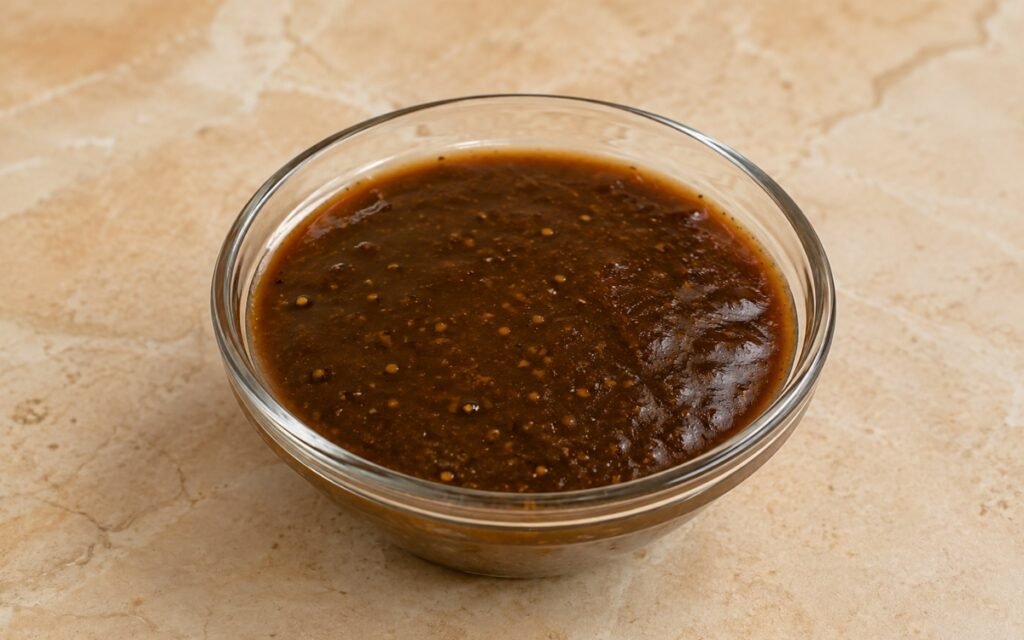
Balsamic Dijon Dressing
Rich aged balsamic and sharp Dijon emulsify into a bold, timeless 5-minute dressing.
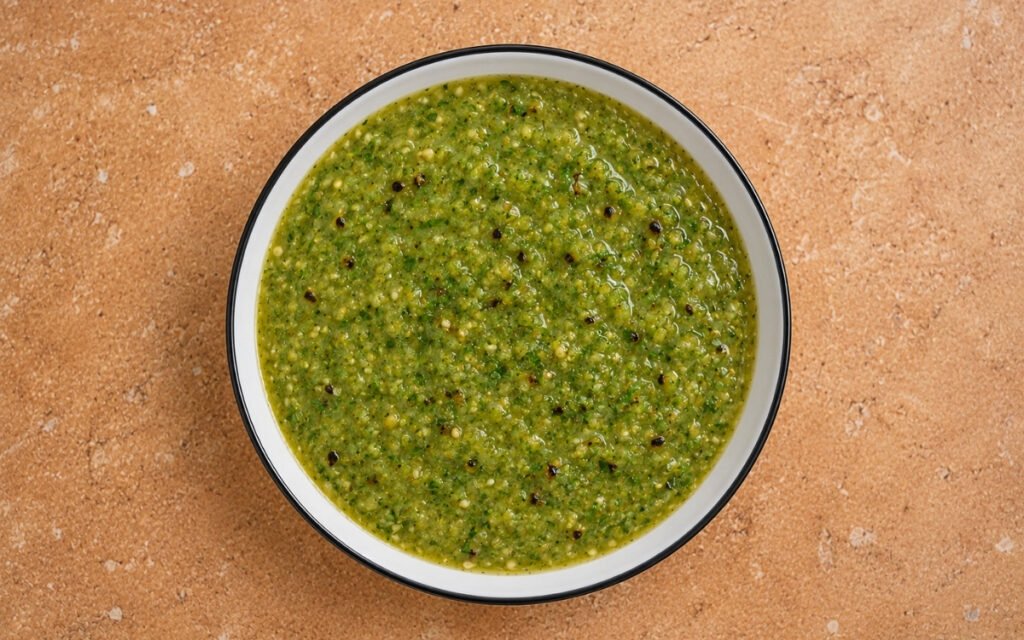
Salsa Verde
Broiled tomatillos and sweet onion blended with jalapeño, garlic, and fresh cilantro — rich, smoky, herby Mexican salsa verde ready in 30 minutes.
Champagne Vinegar Dressing
Delicate champagne vinegar creates an elegant, light dressing for refined salads — ready in 5 minutes.

You might also like
You might also like
Pomegranate Lemonade
Honey-lemon syrup with zest off heat, 500ml pure pomegranate juice — fresh lemon, salt for anti-astringency, cold water, chilled. Ruby-red and grown-up.
Chilaquiles Verdes
Crispy tortilla chips folded into hot, broiled salsa verde, topped with a runny-yolk fried egg, avocado, cotija, and crema drizzle.
Fresh Blueberry Lemonade
Blueberries simmered with lemon zest and salt for extraction — vivid purple syrup pressed and combined with fresh lemon juice cold. Deeply coloured and tart.



Ful Medames
Ingredients
Method
- Heat the 3 tbsp of olive oil in a wide, heavy-bottomed pan over medium heat until shimmering. Add the 20g of tomato paste and begin stirring immediately — the paste will sizzle and crackle as it contacts the hot oil. Cook, stirring constantly, for 2–3 minutes until the paste visibly darkens from bright red to a deeper brick-red and the aroma shifts from raw and metallic to noticeably sweeter and more concentrated. This blooming step is the foundation of ful medames’ flavour — raw tomato paste added directly to liquid or to cold oil produces the metallic, slightly harsh flavour of uncooked tomato concentrate. The 2–3 minutes of high direct heat in the olive oil caramelises the paste’s sugars and drives off the raw volatile acids through the Maillard-adjacent reactions that produce the rounded, savoury depth the dish requires. Every subsequent ingredient is layered onto this bloomed base.
- Add the 4 finely minced garlic cloves to the darkened tomato paste and oil. Stir continuously for approximately 30 seconds until fragrant and just beginning to show the faintest golden colour at the edges — the garlic must not brown. Immediately add the 1½ tsp of ground cumin, 1 tsp of chili flakes, and black pepper directly into the hot oil alongside the garlic and tomato paste. Stir continuously for 20–30 seconds. The spices bloom in the hot fat — their fat-soluble aromatic essential oils releasing into the surrounding oil at the elevated temperature, producing a more intense, more fully developed spice character than the same spices added to liquid would provide. The cumin’s earthy warmth and the chili flakes’ fruity heat are both specifically more vivid after 20–30 seconds of direct fat contact. Remove from heat or reduce immediately if the garlic or spices begin to darken beyond lightly golden — burnt garlic or spices cannot be corrected and produce bitterness throughout the finished dish.
- Add the 900g of drained fava beans directly to the spiced tomato base. Pour in 120ml of warm water or the reserved bean liquid — reserved liquid is specifically preferred when available because it carries dissolved starch and flavour compounds from the beans that warm water does not, producing a more cohesive, more flavourful final consistency. Stir to combine, bringing all the beans into contact with the spiced base. Increase the heat to medium and simmer for 5–8 minutes, stirring occasionally, until the beans are thoroughly heated through, noticeably softer than they were straight from the can, and have absorbed the spiced tomato base’s colour and character. The beans should be coated in the red-orange spiced oil and the liquid in the pan should have reduced slightly.
- Using a potato masher, a fork, or the back of a large spoon, mash approximately half the beans directly in the pan. Work across the pan in circular motions, pressing down firmly enough to break some beans completely and partially crush others while leaving the remaining half wholly intact. The finished texture — thick, slightly rough, with a mix of crushed beans providing cohesion and whole beans providing body — is the specifically correct texture for ful medames. Ful is not hummus and should not be processed smooth; it is not a whole bean stew either. The partial mash creates the thick, spoonable, rustically cohesive consistency that has been the dish’s specific character for centuries. If the mixture appears too thick after mashing, add additional warm water or bean liquid in small amounts until the consistency is thick and spoonable but not dry or stiff.
- Add the 30ml of fresh lemon juice and, if using, the 1–2 tbsp of tahini. Stir well until fully incorporated and cohesive. The lemon juice provides the bright acid counterpoint that prevents the cumin and chili-spiced beans from tasting heavy and one-dimensional — its addition at this stage, after the mash, preserves its aromatic volatile freshness rather than simmering it into the dish where it would contribute acid without the citrus fragrance. Tahini’s addition is optional but specifically recommended for a richer, slightly nuttier, creamier result — its fat content binds the mashed bean mixture into a more cohesive, more satisfying consistency and provides the background sesame depth that appears in many regional versions of the dish.
- Simmer for a further 1–2 minutes until the mixture is thick, rich, and cohesive. Season with fine sea salt — tasting carefully before adding, as the canned beans and tomato paste both carry sodium. Taste and adjust each dimension: more lemon juice if the brightness is insufficient and the beans taste flat or one-dimensional; more chili flakes for heat; more tahini for creaminess; more cumin if the spice depth needs amplification. The finished ful should taste assertively seasoned, bright from the lemon, warmly spiced, and satisfying rather than flat.
- Transfer the ful medames into shallow serving bowls — wide and shallow rather than deep, for maximum surface area for the garnishes. Drizzle generously with extra-virgin olive oil — the raw olive oil’s fruity, slightly peppery character provides both flavour and the characteristic glistening surface that makes properly garnished ful visually appealing. Scatter freshly chopped flat-leaf parsley, a pinch of chili flakes, and the halved cherry tomatoes. The cherry tomatoes serve a specific function beyond visual appeal — their bright acidity and fresh, slightly sweet juice provide a vivid contrast against the warm, earthy, slightly heavy beans that makes each spoonful that includes a tomato half specifically more refreshing.