
Thai Basil Beef Noodles
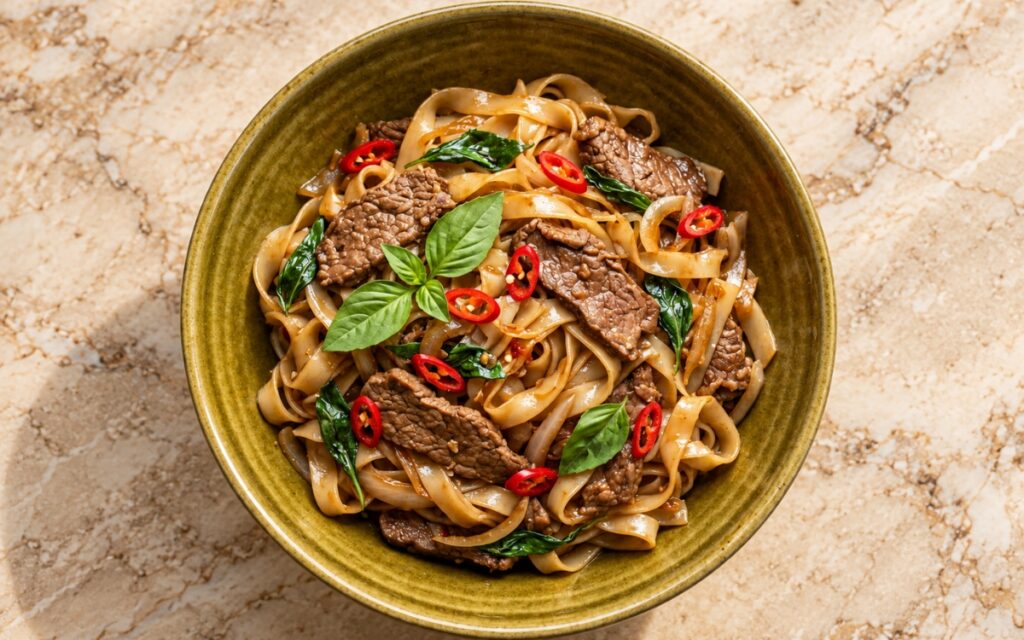
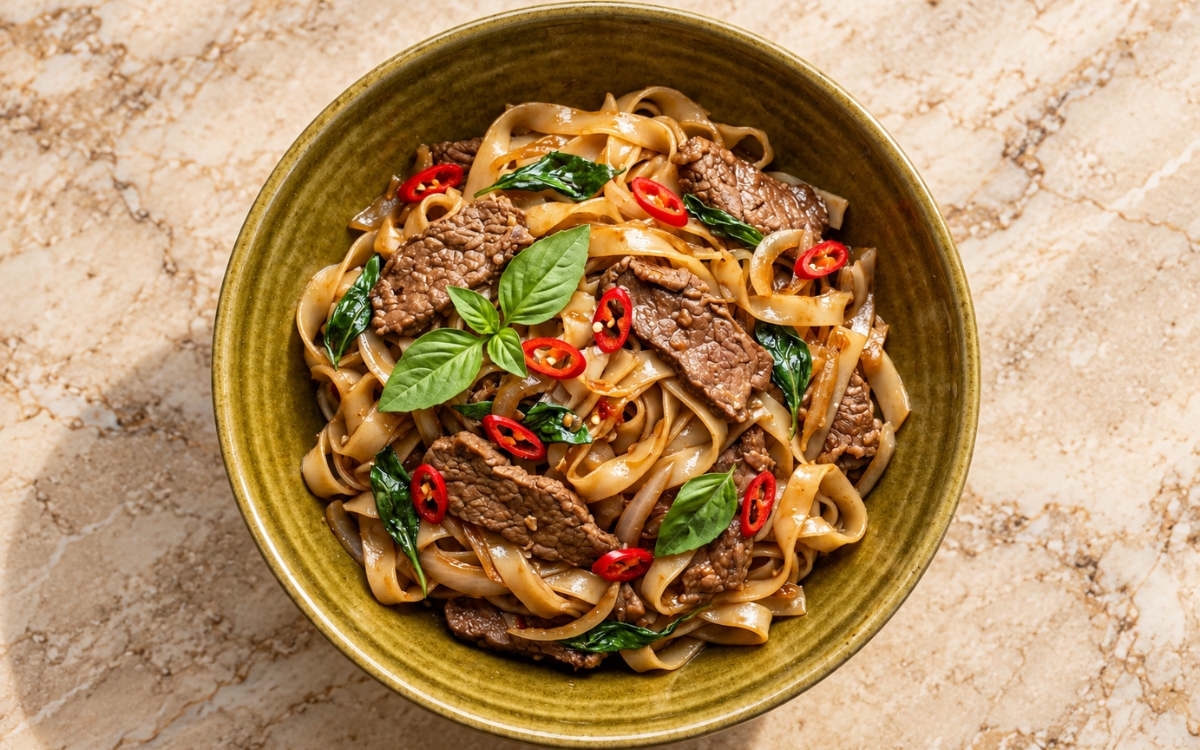
A fast, wok-style Thai noodle dish of tender seared beef, wide rice noodles, sliced onion, red chillies and Thai basil tossed in a dark, glossy oyster and soy sauce, the key being slippery, well-coated noodles set against properly browned beef. Searing the beef in 2 quick batches and setting it aside, rather than cooking it alongside the noodles from the start, is the technique this whole dish depends on for its browned, tender meat — a crowded wok releases moisture and steams the slices grey, while beef left in for the whole stir-fry tightens and turns chewy, the same sear-first-return-last principle used elsewhere in this collection whenever thin slices of meat share a wok with noodles. Pouring a deliberately strong sauce around the edges of the wok, rather than into one spot, is what lets the noodles absorb it evenly and catch a little caramelised colour. Tossing the Thai basil in just before the wok leaves the heat is what keeps its peppery, anise-like aroma bright instead of dark and dulled. The payoff is a beef noodle stir-fry with real, bold wok character — slippery, glossy noodles, tender seared beef, softened onion, noticeable chilli heat and fragrant basil throughout.
Prep Time : 20 min
Total Time : 50 min
Servings : 4
20 min
50 min
4
Ingredients
For the Beef
• 800g beef steak, such as sirloin, flank, rump or ribeye, thinly sliced against the grain
• 1 tbsp light soy sauce
• 1 tbsp oyster sauce
• 1 tsp fish sauce
• 1 tsp cornstarch
• 1 tsp neutral oil
• ¼ tsp white or black pepper
For the Noodles
• 800g cooked wide rice noodles, about 200g per serving, or enough dried wide rice noodles to yield about 800g cooked
• 1–2 tsp neutral oil, only if needed to keep the noodles from sticking
For the Sauce
• 3 tbsp oyster sauce
• 2 tbsp light soy sauce
• 1 tbsp dark soy sauce
• 1½ tbsp fish sauce
• 1½ tbsp brown sugar or palm sugar, grated if from a block
• 2–3 tbsp water or low-sodium stock
For the Stir-Fry
• 3 tbsp neutral oil, divided
• 6 garlic cloves, finely chopped
• 4–8 red chillies, thinly sliced, to taste
• 2 medium onions, halved and sliced
• 40–50g Thai basil leaves, picked from the stems
For Serving
• A small handful of extra Thai basil leaves
• A few extra red chillies, thinly sliced
Directions
- Prepare the Noodles
If using fresh wide rice noodles, separate the strands gently by hand. If they are cold and stuck together, warm them very briefly in the microwave or over steam, just until they loosen without breaking. If using dried wide rice noodles, cook them according to the package until just tender, then drain well, rinsing only if needed to stop the cooking, and drain thoroughly again. You need 800g cooked noodles in total. If the strands begin to stick, toss them with 1–2 tsp neutral oil, using only as much as they genuinely need. The noodles should be pliable and fully separated before they reach the wok. That separation matters because clumped noodles tear, cook unevenly and never absorb the sauce properly. - Marinate the Beef
Place the 800g sliced beef in a bowl and add the 1 tbsp light soy sauce, 1 tbsp oyster sauce, 1 tsp fish sauce, 1 tsp cornstarch, 1 tsp neutral oil and ¼ tsp pepper. Mix well until every slice is evenly coated and no dry patches of cornstarch remain visible. Leave it to stand for 15 minutes. The beef should look lightly glossy and clinging rather than sitting in a pool of liquid; if a little marinade gathers at the bottom of the bowl, stir it back through just before cooking. That short marinade is what seasons the beef and improves its browning, while the cornstarch and oil form a thin layer that genuinely protects the slices during the fierce sear. - Mix the Sauce
In a small bowl, stir together the 3 tbsp oyster sauce, 2 tbsp light soy sauce, 1 tbsp dark soy sauce, 1½ tbsp fish sauce, 1½ tbsp brown or palm sugar and 2 tbsp of the water or low-sodium stock. Keep stirring until the sugar has dissolved completely and no grains settle at the bottom. Taste it: it should be savoury, salty and a little sweet, and slightly too strong on its own. If it feels too thick to pour easily, loosen it with the remaining 1 tbsp water or stock. Keep the dark soy to the measured amount, since it is there for colour and a little depth. That deliberately assertive seasoning is what lets one bowl of sauce flavour a full wok of noodles, beef and onion. - Prep the Aromatics
Halve the 2 onions and slice them into half-moons about 5mm thick so they soften quickly but keep their shape. Thinly slice the 4–8 red chillies, using fewer for a milder result, then slice the few extra chillies for serving and keep them separate. Finely chop the 6 garlic cloves and pick the 40–50g Thai basil leaves from their stems, setting the small handful of extra leaves aside for the garnish. Arrange the beef, noodles, sauce, oil and aromatics beside the stove in the order they will go into the wok. That complete setup matters because this is a very fast stir-fry, and once the wok is hot there is genuinely no time left to slice or measure anything. - Sear the Beef
Heat a wok or large heavy skillet over high heat until very hot and just beginning to smoke. Add 1 tbsp of the neutral oil and swirl it around the pan. Lay half the beef in a single layer and sear for 45–90 seconds, turning only as needed, until browned on the outside but still slightly pink inside. Transfer it to a plate, then repeat with another 1 tbsp oil and the remaining beef. If the slices release liquid and turn grey, the pan is crowded or not hot enough, so let it reheat fully before the next batch goes in. That brief, very hot sear is what browns the beef without overcooking it, since it finishes heating through later with the noodles. - Stir-Fry the Aromatics
Keep the wok over high heat and add the remaining 1 tbsp neutral oil. Add the garlic and sliced chillies and stir-fry for 10–15 seconds, just until fragrant and before the garlic takes on any real colour. Add the onions and cook for 1–2 minutes, stirring often, until they have softened slightly at the edges but still hold their shape and a little bite. They should look glossy and lightly softened rather than deeply caramelised. If the garlic starts to darken too quickly, add the onions at once to cool the pan. That short, hot stir-fry is what releases the garlic and chilli aroma into the oil while keeping the onions sweet and distinct. - Toss the Noodles and Sauce
Add the 800g noodles to the wok, then pour the sauce around the edges of the pan rather than directly onto one spot. Using tongs or a wok spatula, lift and toss the noodles gently until they are evenly coated and glossy. Between tosses, let them sit against the hot surface for a few seconds at a time so some edges pick up a little caramelised colour. Cook for 1–2 minutes in total. The noodles should absorb and hold the sauce, with nothing pooling at the bottom of the wok. If liquid collects, the heat is too low or the pan is overcrowded; with a small wok, toss the noodles in 2 batches, dividing the sauce between them. That short contact with the hot metal is what gives the noodles their glossy coating and lightly charred, genuinely stir-fried edges. - Return the Beef and Add the Basil
Return the seared beef and any juices from the plate to the wok. Toss for 30–60 seconds, until the beef is just heated through and evenly mixed through the noodles and onions. Add the 40–50g Thai basil leaves and toss just until they wilt, which takes only a few seconds. Remove the wok from the heat immediately. The basil should look bright and glossy rather than dark or slimy, and the beef should still be tender and juicy rather than dry. That last-moment addition is what keeps the Thai basil aromatic, because longer cooking dulls its flavour and darkens the leaves too much. - Serve
Divide the noodles between 4 bowls, about 200g of noodles and a quarter of the beef in each, with an even share of the onions and basil. Top each bowl with a few of the extra Thai basil leaves and the extra sliced red chillies. Serve immediately, while the noodles are still hot, glossy and slippery. The finished dish should be a coated stir-fry rather than a wet or soupy one, with tender beef and visible basil throughout. If the noodles look dry and stiff, they spent too long in the wok, so pull them sooner next time. That immediate serving is what keeps the noodles slippery and the basil fragrant, since both lose their appeal quickly as the dish cools.
*Notes :
- Searing the beef in 2 batches deserves genuine recognition as the technique most directly responsible for whether the meat tastes browned or boiled. The recipe’s own instruction to “Do not crowd the pan” explains why — a full 800g of cold beef drops the wok’s temperature so sharply that the slices release moisture and steam, turning grey and tough instead of developing a savoury, caramelised surface.
- Separating the noodles before they reach the wok deserves the same attention this technique receives throughout this collection’s other wok-fried noodle dishes, because wide rice noodles are fragile once cold. The recipe’s own warning that “Clumped noodles tear, cook unevenly, and do not absorb sauce properly” reflects how warm, loose strands slide over the hot metal and take the sauce evenly, while a cold block breaks into short, patchy pieces.
- Adding the Thai basil only in the final seconds deserves genuine respect as the detail most directly responsible for the dish’s defining aroma. The recipe’s own note that “Regular basil is not the same” explains why the timing matters so much — Thai basil’s peppery, anise-like scent is volatile, so even a minute too long over the heat darkens the leaves and flattens the whole dish.
- The coating on the noodles deserves attention as a genuine, checkable readiness cue rather than a loose approximation. Glossy strands over a dry wok base mean the sauce has been absorbed, matching the recipe’s own target of “a coated stir-fry, not wet or soupy” — a pool of liquid means the wok has cooled or been overfilled, which leaves the noodles limp, pale and under-seasoned.
Why This Recipe Works
This recipe works because every stage protects the heat of the wok and the texture of each component. A short cornstarch marinade seasons the beef and shields it, so 2 fast batches can brown the slices without cooking them through. Garlic, chillies and onion then get just enough time to perfume the oil while the onions keep their shape. Loose, pliable noodles absorb a deliberately strong sauce poured around the hot edges, picking up caramelised spots instead of turning soggy. Finally, the beef returns only to reheat and the basil wilts in at the end, so every bowl tastes glossy, savoury and genuinely fragrant.
Ingredient Breakdown
Two-Batch Sear
The critical technique — searing half the beef at a time keeps the wok hot enough to brown the slices, not steam them.
Loosened Wide Rice Noodles
The critical ingredient choice — pliable, separated strands coat evenly and caramelise lightly without tearing into short, clumped pieces.
Cornstarch and Oil Marinade
The critical safeguard — a thin, seasoned coating protects the beef during the fierce sear and keeps every slice tender.
Savoury Three-Sauce Blend
The flavour foundation — oyster, soy and fish sauce pitched strongly enough to season 800g of noodles.
Dark Soy Sauce (Just 1 Tbsp)
The defining flavour ingredient — one spoonful adds deep brown colour and gentle depth without overpowering.
Garlic and Red Chillies
The core flavour-building stage — stir-fried for 10–15 seconds, they release the bold heat that runs through every bite.
Last-Second Thai Basil
The finishing technique — wilted in only as the wok leaves the heat, the leaves keep their peppery, anise-like fragrance.
Flavor Structure Explained
This Thai basil beef noodle dish follows a layered balance model:
- Slippery, chewy foundation (wide rice noodles)
- Savoury, seared centrepiece (marinated beef, oyster sauce)
- Salty-sweet umami backbone (light and dark soy sauce, fish sauce, brown sugar)
- Bold, pungent heat (red chillies, garlic)
- Soft, sweet contrast (lightly softened onions)
- Fragrant herbal finish (Thai basil)
Wide rice noodles provide the slippery, chewy foundation that carries the rest of the dish. Seared beef, seasoned with oyster sauce in its marinade, brings the savoury centrepiece, while light and dark soy, fish sauce and brown sugar build the salty-sweet umami backbone that turns everything glossy. Red chillies and garlic add the bold, pungent heat, and lightly softened onions offer a soft, sweet contrast. Thai basil then lands as the fragrant herbal finish that ties these noodles together.
Common Mistakes to Avoid
- Searing All the Beef at Once – This floods the wok with moisture, so the slices stew grey instead of browning. Always sear the beef in 2 batches, spread out in a single layer.
- Tipping Cold, Stuck Noodles Into the Wok – This tears them into short pieces that cook unevenly and stay pale. Always loosen and separate the noodles before cooking begins.
- Pouring the Sauce Into One Spot – This soaks a single clump of noodles while the rest stay bland and pale. Always pour it around the edges of the wok and toss gently to coat.
- Leaving the Beef in for the Whole Stir-Fry – This overcooks the thin slices until they turn dry and chewy. Always remove the beef after searing and return it only for the final 30–60 seconds.
- Cooking the Basil Over the Heat Too Long – This darkens the leaves and dulls their peppery fragrance. Always add the basil last and take the wok off the heat as soon as it wilts.
Variations
Milder Version
Use 4 red chillies, the lower end of the range, per the recipe’s own note, keeping the noticeable chilli presence this dish needs while making it friendlier for anyone sensitive to heat.
Dried Noodle Version
Cook dried wide rice noodles until just tender, rinsing only if needed to stop the cooking and draining them thoroughly, per the recipe’s own instruction, for a pantry-friendly bowl with the same glossy coating.
Palm Sugar Version
Use grated palm sugar instead of brown sugar in the sauce, as the recipe allows, for a rounder, caramel-like sweetness that sits more softly against the salty fish sauce.
Stock Version
Use low-sodium stock instead of water in the sauce, as the recipe allows, for a slightly deeper, more savoury coating on the noodles without adding any extra salt to the dish.
Storage & Make-Ahead
Choose a tender, quick-cooking cut such as sirloin, flank, rump or ribeye, and freeze it for 20–30 minutes before slicing if needed, per the recipe’s own note, because firm beef slices thinly and cleanly against the grain.
Buy fresh wide rice noodles as close to cooking as possible and keep them out of the fridge, because cold storage hardens them into a brittle block that needs warming before it will separate without breaking.
The sauce can be mixed up to 3 days ahead and kept in a sealed jar in the fridge, and the beef can be sliced up to 1 day ahead, then marinated for its 15 minutes just before cooking.
Slice the onions and chillies and chop the garlic a few hours ahead, keeping them covered in the fridge, but pick the Thai basil only shortly before cooking, since the leaves bruise and blacken quickly once handled.
These noodles are genuinely best eaten straight from the wok, but leftovers keep in an airtight container in the fridge for up to 2 days and reheat best tossed briefly in a very hot pan with 1–2 tbsp water.
Frequently Asked Questions
Why is the beef seared and removed before the noodles go in?
Thin slices cook through in under 2 minutes, so leaving them in the wok while the aromatics and noodles cook turns them dry and chewy. Searing first and returning the beef for the final 30–60 seconds keeps it browned and tender.
Why does the beef marinade include cornstarch and oil?
Together they form a thin coating that shields each slice from the fierce heat of the wok and holds in moisture. The short 15-minute marinade also seasons the beef and helps the surface brown quickly during its 45–90 second sear.
Why should the sauce taste slightly too strong on its own?
It has to season 800g of noodles, the beef and the onions in one quick toss. A sauce that tastes balanced in the bowl turns genuinely flat once it spreads across the whole wok, so it is deliberately pitched savoury, salty and a little sweet.
Why is the Thai basil added only at the very end?
Thai basil’s peppery, anise-like aroma is genuinely fragile and fades fast with heat. Tossing it in just until wilted and then pulling the wok off the heat keeps the leaves bright and fragrant, while longer cooking darkens them and dulls their flavour.
Are there other classic Thai stir-fry, noodle, or salad dishes worth trying?
Pad Krapao — Thai Basil Stir-Fry offers another classic basil-led stir-fry direction worth exploring. Pad Kee Mao / Thai Drunken Noodles and Spicy Thai Beef Salad (Yam Neua) are also worth trying for other bold Thai directions, and Mongolian Beef and Noodles and Spicy Asian Cucumber Salad offer other savoury and fresh dishes worth exploring.
Nutrition Facts
( Per Serving — 1 bowl )
Calories
~720 kcal
Protein
47 g
Fat
30 g
Carbs
66 g
Calories
~720 kcal
Protein
47 g
Fat
30 g
Carbs
66 g
Related Recipes
Related Recipes
-

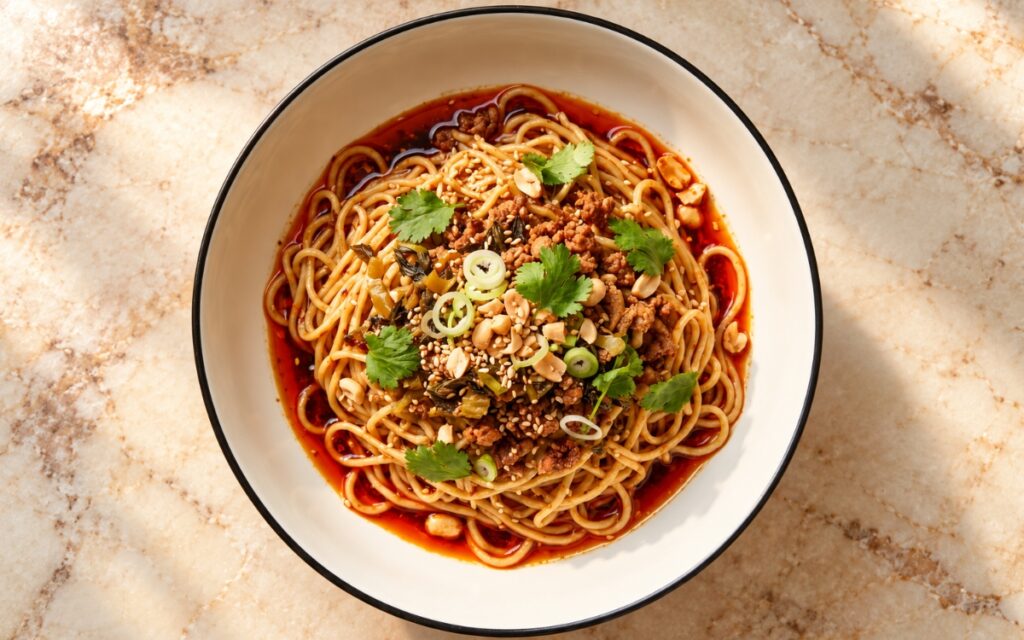
Dan Dan Noodles
Springy wheat noodles tossed in a glossy chili oil and sesame sauce, topped with browned pork, preserved greens, peanuts and scallions.
-
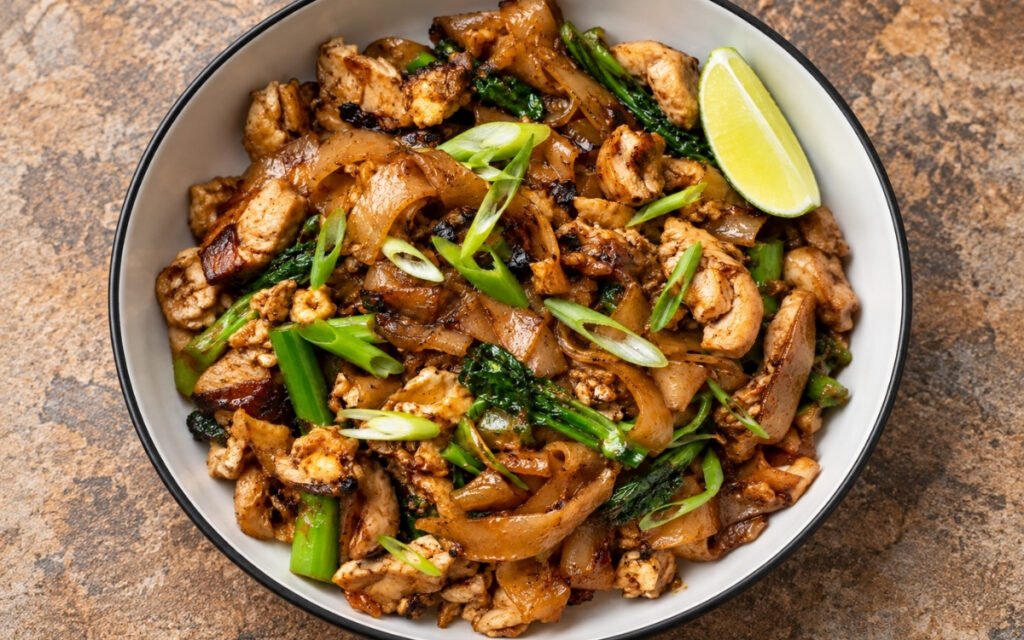
Pad See Ew — Thai Stir-Fried Wide Noodles
Wide rice noodles stir-fried with dark soy sauce, Chinese broccoli, sliced chicken, and egg over high heat for smoky wok-hei char.
-
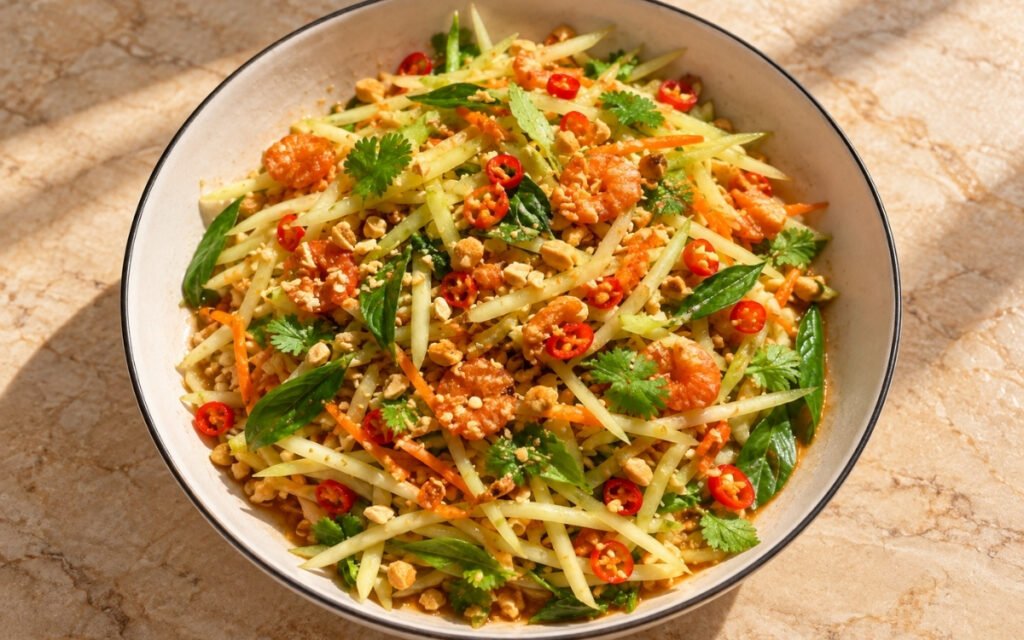
Thai Green Mango Salad with Peanuts & Chili
Crisp julienned unripe mango and carrot with dried shrimp, roasted peanuts, bird’s eye chili, and fresh herbs in a sour-salty-sweet dressing.
You might also like
You might also like
-
Turkish Adana Kebab with Tomato Couscous
Charred ground lamb Adana kebabs with pul biber on flat skewers, served over spiced tomato couscous with sumac onions.
-
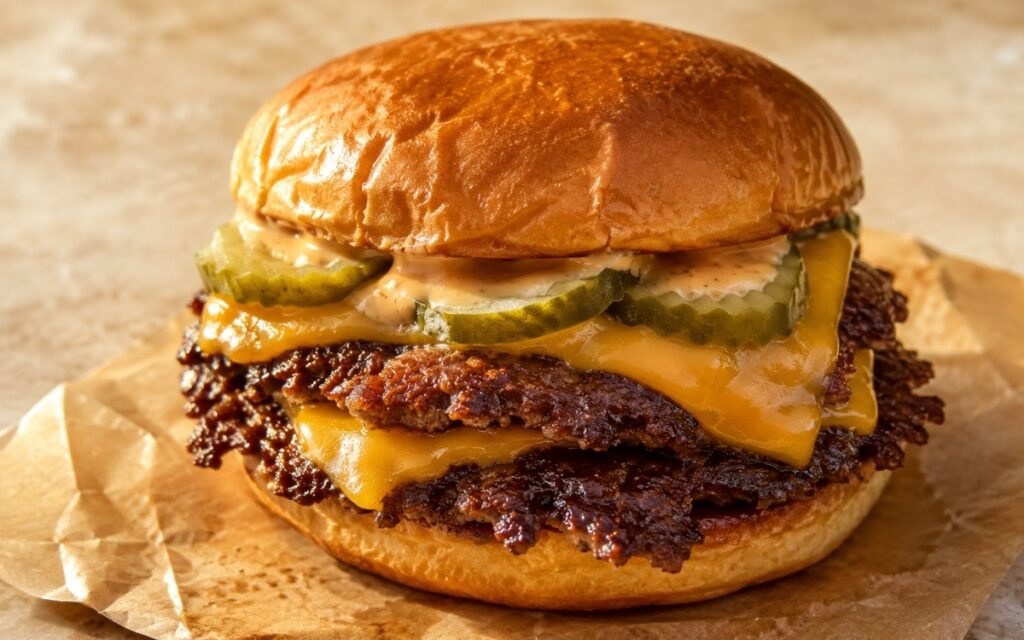
Double Smash Burger
Two thin smashed beef patties with melted American cheese, tangy burger sauce and dill pickle planks on a butter-toasted bun.
-
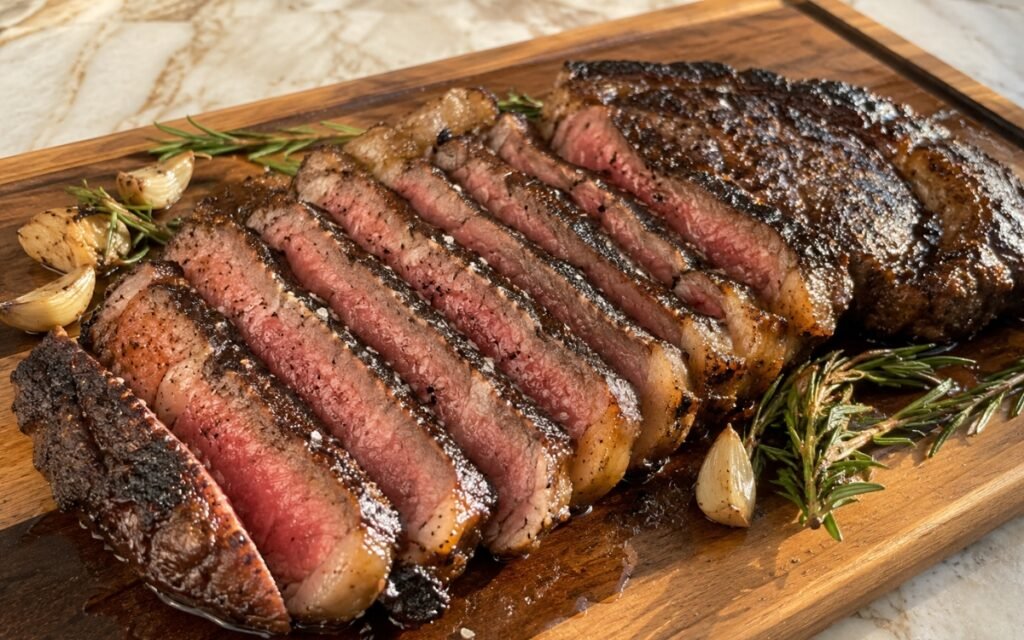
Classic Ribeye Steak
Marbled ribeye seared to perfection and basted with garlic herb butter for steakhouse flavor.

Thai Basil Beef Noodles
Ingredients
Method
- If using fresh wide rice noodles, separate the strands gently by hand. If they are cold and stuck together, warm them very briefly in the microwave or over steam, just until they loosen without breaking. If using dried wide rice noodles, cook them according to the package until just tender, then drain well, rinsing only if needed to stop the cooking, and drain thoroughly again. You need 800g cooked noodles in total. If the strands begin to stick, toss them with 1–2 tsp neutral oil, using only as much as they genuinely need. The noodles should be pliable and fully separated before they reach the wok. That separation matters because clumped noodles tear, cook unevenly and never absorb the sauce properly.
- Place the 800g sliced beef in a bowl and add the 1 tbsp light soy sauce, 1 tbsp oyster sauce, 1 tsp fish sauce, 1 tsp cornstarch, 1 tsp neutral oil and ¼ tsp pepper. Mix well until every slice is evenly coated and no dry patches of cornstarch remain visible. Leave it to stand for 15 minutes. The beef should look lightly glossy and clinging rather than sitting in a pool of liquid; if a little marinade gathers at the bottom of the bowl, stir it back through just before cooking. That short marinade is what seasons the beef and improves its browning, while the cornstarch and oil form a thin layer that genuinely protects the slices during the fierce sear.
- In a small bowl, stir together the 3 tbsp oyster sauce, 2 tbsp light soy sauce, 1 tbsp dark soy sauce, 1½ tbsp fish sauce, 1½ tbsp brown or palm sugar and 2 tbsp of the water or low-sodium stock. Keep stirring until the sugar has dissolved completely and no grains settle at the bottom. Taste it: it should be savoury, salty and a little sweet, and slightly too strong on its own. If it feels too thick to pour easily, loosen it with the remaining 1 tbsp water or stock. Keep the dark soy to the measured amount, since it is there for colour and a little depth. That deliberately assertive seasoning is what lets one bowl of sauce flavour a full wok of noodles, beef and onion.
- Halve the 2 onions and slice them into half-moons about 5mm thick so they soften quickly but keep their shape. Thinly slice the 4–8 red chillies, using fewer for a milder result, then slice the few extra chillies for serving and keep them separate. Finely chop the 6 garlic cloves and pick the 40–50g Thai basil leaves from their stems, setting the small handful of extra leaves aside for the garnish. Arrange the beef, noodles, sauce, oil and aromatics beside the stove in the order they will go into the wok. That complete setup matters because this is a very fast stir-fry, and once the wok is hot there is genuinely no time left to slice or measure anything.
- Heat a wok or large heavy skillet over high heat until very hot and just beginning to smoke. Add 1 tbsp of the neutral oil and swirl it around the pan. Lay half the beef in a single layer and sear for 45–90 seconds, turning only as needed, until browned on the outside but still slightly pink inside. Transfer it to a plate, then repeat with another 1 tbsp oil and the remaining beef. If the slices release liquid and turn grey, the pan is crowded or not hot enough, so let it reheat fully before the next batch goes in. That brief, very hot sear is what browns the beef without overcooking it, since it finishes heating through later with the noodles.
- Keep the wok over high heat and add the remaining 1 tbsp neutral oil. Add the garlic and sliced chillies and stir-fry for 10–15 seconds, just until fragrant and before the garlic takes on any real colour. Add the onions and cook for 1–2 minutes, stirring often, until they have softened slightly at the edges but still hold their shape and a little bite. They should look glossy and lightly softened rather than deeply caramelised. If the garlic starts to darken too quickly, add the onions at once to cool the pan. That short, hot stir-fry is what releases the garlic and chilli aroma into the oil while keeping the onions sweet and distinct.
- Add the 800g noodles to the wok, then pour the sauce around the edges of the pan rather than directly onto one spot. Using tongs or a wok spatula, lift and toss the noodles gently until they are evenly coated and glossy. Between tosses, let them sit against the hot surface for a few seconds at a time so some edges pick up a little caramelised colour. Cook for 1–2 minutes in total. The noodles should absorb and hold the sauce, with nothing pooling at the bottom of the wok. If liquid collects, the heat is too low or the pan is overcrowded; with a small wok, toss the noodles in 2 batches, dividing the sauce between them. That short contact with the hot metal is what gives the noodles their glossy coating and lightly charred, genuinely stir-fried edges.
- Return the seared beef and any juices from the plate to the wok. Toss for 30–60 seconds, until the beef is just heated through and evenly mixed through the noodles and onions. Add the 40–50g Thai basil leaves and toss just until they wilt, which takes only a few seconds. Remove the wok from the heat immediately. The basil should look bright and glossy rather than dark or slimy, and the beef should still be tender and juicy rather than dry. That last-moment addition is what keeps the Thai basil aromatic, because longer cooking dulls its flavour and darkens the leaves too much.
- Divide the noodles between 4 bowls, about 200g of noodles and a quarter of the beef in each, with an even share of the onions and basil. Top each bowl with a few of the extra Thai basil leaves and the extra sliced red chillies. Serve immediately, while the noodles are still hot, glossy and slippery. The finished dish should be a coated stir-fry rather than a wet or soupy one, with tender beef and visible basil throughout. If the noodles look dry and stiff, they spent too long in the wok, so pull them sooner next time. That immediate serving is what keeps the noodles slippery and the basil fragrant, since both lose their appeal quickly as the dish cools.