
Dan Dan Noodles
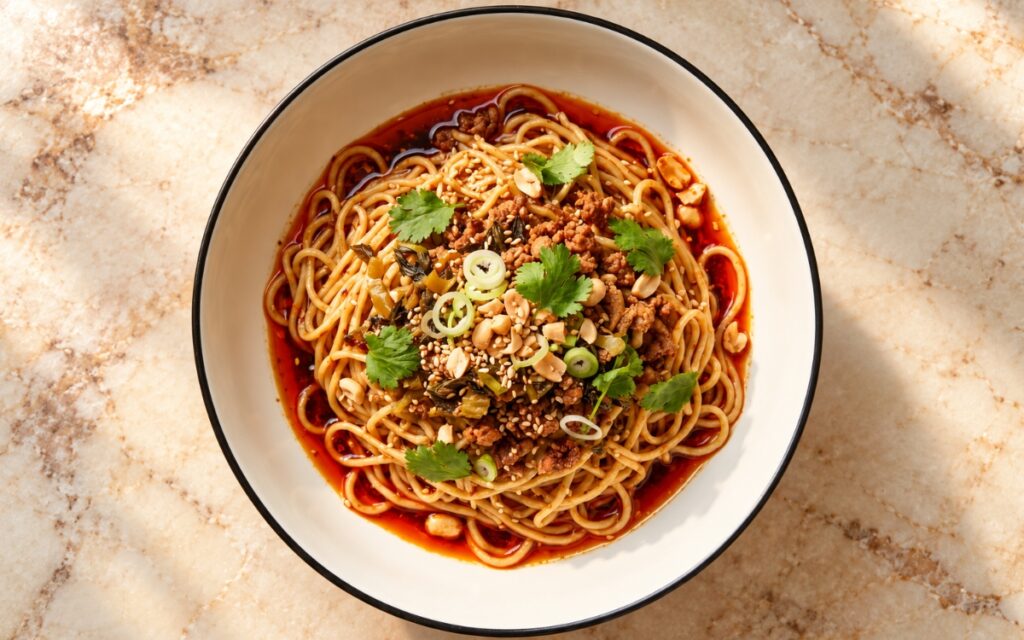
A classic Sichuan-style noodle bowl of springy wheat noodles tossed in a glossy, deep red chili oil and sesame sauce, crowned with browned ground pork, preserved mustard greens, scallions, crushed peanuts and toasted sesame seeds, the key being a sauce that clings to every strand while a little red oil pools around the edges. Loosening the sesame paste gradually with hot stock or noodle water until it turns thick but pourable, rather than leaving it as a dense, pasty base, is the technique this whole dish depends on for its silky coating — a stiff sauce clumps on the first few noodles and leaves the rest bare, while a properly loosened one emulsifies with the hot strands and coats them evenly, the same loosen-to-coat principle used elsewhere in this collection whenever a nut or seed paste has to dress hot noodles. Frying the pork well past grey until it browns and crisps in spots is what gives the topping its concentrated, savoury depth. Tossing the noodles the moment they leave the pot is what lets the sauce cling and turn glossy. The payoff is a noodle bowl with real, layered intensity — nutty, savoury, spicy and gently numbing sauce, bouncy noodles, crisp pork and crunchy peanuts.
Prep Time : 25 min
Total Time : 45 min
Servings : 4
25 min
45 min
4
Ingredients
For the Pork Topping
• 600g ground pork
• 2 tsp neutral oil, only if the pork is very lean
• 2 cloves garlic, finely minced
• 1 tsp fresh ginger, finely minced
• 120g preserved mustard greens (ya cai preferred), finely chopped
• 1 tbsp light soy sauce
• 1 tbsp Shaoxing wine
• 1 tsp sugar
• ¼ tsp white pepper
For the Dan Dan Sauce
• 6 tbsp Chinese sesame paste (or 4 tbsp Chinese sesame paste + 2 tbsp smooth tahini)
• 6 tbsp Sichuan chili oil
• 4 tbsp light soy sauce
• 2 tbsp dark soy sauce
• 4 tbsp Chinkiang black vinegar
• 2 tsp sugar
• 2 tsp roasted ground Sichuan pepper
• 3 cloves garlic, finely grated or crushed to a paste
• 240–320ml hot unsalted stock or hot noodle cooking water, added as needed to loosen
For the Noodles and Bowl Toppings
• 600g wheat noodles
• 4 scallions, thinly sliced
• 60g roasted peanuts, roughly crushed
• 2 tbsp toasted sesame seeds
• A small handful of fresh cilantro leaves
• Extra Sichuan chili oil, to finish, only if needed
Directions
- Prepare the Toppings
Finely chop the 120g preserved mustard greens, squeezing out any loose brine with your hands first so they fry rather than steam later. Thinly slice the 4 scallions and roughly crush the 60g roasted peanuts with the flat of a knife or in a bag with a rolling pin, leaving some pieces the size of half a peanut. If the sesame seeds are raw, toast the 2 tbsp in a dry pan over medium heat for 2–3 minutes, shaking often, until golden and fragrant, then tip them out to stop the cooking. Pick the cilantro leaves from their stems. Set everything out in small bowls beside the stove. That complete setup matters because the noodles must be tossed and topped within moments of draining, with no time left to chop anything. - Mix the Dan Dan Sauce
Stir the jar of Chinese sesame paste well first, since the oil separates on standing, then measure 6 tbsp into a mixing bowl (or 4 tbsp sesame paste plus 2 tbsp smooth tahini). Add the 6 tbsp Sichuan chili oil, 4 tbsp light soy sauce, 2 tbsp dark soy sauce, 4 tbsp Chinkiang black vinegar, 2 tsp sugar, 2 tsp roasted ground Sichuan pepper and the 3 grated garlic cloves. Stir until smooth. Heat the stock until steaming, then whisk it in a few tablespoons at a time, using 240ml to start. The paste may seize and thicken at first; keep whisking and it will turn silky. Stop when the sauce is genuinely thick but pourable, like loose yoghurt, and save the remaining stock for later; if using noodle water instead, loosen the sauce partly now and finish it once the noodles are boiling. Taste it: salty, nutty, spicy, slightly tangy and lightly numbing. That gradual loosening is what turns a stiff paste into a glossy sauce that can coat every noodle. - Brown the Pork
Heat a wok or wide skillet over medium-high heat until hot. Add the 2 tsp neutral oil only if the pork is very lean; ordinary ground pork renders enough fat on its own. Add the 600g ground pork and break it into small crumbles with a spatula. Cook for 5–7 minutes, stirring and pressing it against the pan, until the released moisture has evaporated, the fat begins to render and sizzle, and the crumbles start to brown. If liquid is still pooling, keep cooking with the heat high rather than draining it, so the juices reduce back into the meat. Do not stop at grey, merely cooked pork; real browning is the goal. That patient browning is what concentrates the pork’s flavour and builds the crisp edges the finished topping needs. - Season the Pork Topping
Push the pork to one side, add the 2 minced garlic cloves and 1 tsp minced ginger to the cleared space and stir-fry for 20–30 seconds, just until fragrant, then mix them through the meat. Add the chopped preserved mustard greens, 1 tbsp light soy sauce, 1 tbsp Shaoxing wine, 1 tsp sugar and ¼ tsp white pepper. Stir-fry for 2–3 minutes more, until the pork is well browned and slightly crisp in spots and the greens have fried into the mixture and smell savoury rather than raw and briny. The topping should look moist but not wet, with no liquid in the base of the wok; if any remains, give it another 30 seconds over the heat. Keep it warm off the heat. That final fry is what removes the greens’ raw edge and stops excess liquid from diluting the noodle sauce. - Cook the Noodles
While the pork cooks, bring a large pot of unsalted water to a rolling boil. Add the 600g wheat noodles, stir at once to separate the strands and cook until just tender and springy, about 2–4 minutes for fresh noodles or as the packet directs for dried, tasting a strand 30 seconds before the time is up. Pull them while they still have a slight bite, since they keep softening in the hot sauce. Before draining, scoop out about 250ml of the cooking water and keep it hot. Drain the noodles well, shaking off the excess water, but do not rinse unless your noodle type absolutely requires it. That slight undercooking is what keeps the noodles bouncy and chewy once they meet the sauce. - Build the Bowls
Give the sauce a quick stir and divide it among 4 warmed serving bowls. If it has thickened while standing, loosen it with some of the remaining hot stock or 1–2 tbsp of the reserved noodle water per bowl, until each bowl holds a loose, glossy layer of sauce at the bottom rather than a stiff paste. Work quickly, so the noodles do not sit in the colander for more than a minute; drained noodles left standing start to clump and lose their surface gloss. Have the pork topping and the prepared garnishes within reach. That loose layer of sauce is what lets the hot noodles absorb it and emulsify it into a coating in the next step. - Toss and Serve
Divide the hot noodles among the bowls, about 150g in each, and immediately toss them thoroughly in the sauce with chopsticks or tongs, lifting from the bottom, until every strand is evenly coated and glossy. The finished texture should be genuinely glossy, not dry and not soupy; if a bowl looks dry, add another splash of hot noodle water and toss again. Spoon a quarter of the browned pork over each bowl, then scatter over the scallions, crushed peanuts, toasted sesame seeds and a few cilantro leaves. Finish with a little extra Sichuan chili oil, only if needed, so a small amount of red oil pools lightly around the noodles. Serve at once and toss again at the table. That fast toss while the noodles are hot is what lets the sauce emulsify and cling instead of sliding to the bottom.
*Notes :
- Loosening the sesame sauce gradually deserves genuine recognition as the technique most directly responsible for whether the noodles end up coated or clumped. The recipe’s own warning that “The sauce must not stay pasty” explains why — sesame paste seizes when hot liquid first hits it, then smooths out only as more liquid is whisked in, and a sauce left stiff grabs the first strands it touches and leaves the rest bare.
- Browning the pork until it is crisp in spots deserves the same attention this technique receives throughout this collection’s other ground-meat toppings, because colour is where the flavour lives. The recipe’s own instruction, “Do not stop at grey cooked pork”, reflects how the meat must first boil off its own moisture before the rendered fat can fry it, which is what builds the concentrated, savoury crumbles that sit on top of the noodles.
- Frying the preserved mustard greens into the pork deserves genuine respect as the detail most directly responsible for the topping’s deep, slightly sweet savouriness. Ya cai, which the recipe prefers over zha cai, carries a briny, raw edge straight from the jar — a short fry in the pork fat mellows it and drives off liquid, keeping the topping moist but never wet enough to dilute the sauce.
- The coating on the noodles deserves attention as a genuine, checkable readiness cue rather than a loose approximation. The recipe’s own target of “glossy, not dry and not soupy” is easy to read in the bowl — dull strands mean the sauce is too tight and needs a splash of hot noodle water, while sauce sloshing at the bottom means too much liquid went in and the noodles will taste thin.
Why This Recipe Works
This recipe works because every component is built to meet the noodles at exactly the right moment. A sesame paste loosened with hot liquid becomes a pourable sauce that can coat every strand, balanced by soy, black vinegar, chili oil and Sichuan pepper. Pork browned well past grey, then fried with garlic, ginger and preserved greens, adds a dry, concentrated topping that seasons each bite without watering the bowl down. Slightly undercooked noodles stay bouncy, and tossing them while they are still steaming emulsifies the sauce into a glossy coating. Peanuts, scallions and sesame seeds then finish each bowl with genuine crunch and freshness.
Ingredient Breakdown
Gradually Loosened Sesame Sauce
The critical technique — hot liquid whisked in slowly turns stiff paste into a silky, genuinely clinging coating.
Pork Browned Past Grey
The critical technique — frying off the moisture in rendered fat builds crisp, concentrated, deeply savoury crumbles.
Ya Cai (Preserved Mustard Greens)
The defining flavour ingredient — fried into the pork, it adds the sweet, briny depth of a classic topping.
Chinese Sesame Paste (Not Only Tahini)
The critical ingredient choice — ground from toasted seeds, it tastes deeper and roastier than tahini.
Roasted Ground Sichuan Pepper
The flavour foundation — its tingling, citrusy numbness turns chili oil heat into the genuine Sichuan málà balance.
Hot-Tossed, Slightly Firm Noodles
The critical timing technique — strands tossed straight from the pot emulsify the sauce and stay bouncy.
Peanuts, Scallions and Sesame Seeds
The finishing touch — crunchy, fresh and toasty garnishes cut through the rich sauce and give every bite contrast.
Flavor Structure Explained
This dan dan noodle dish follows a layered balance model:
- Springy, chewy foundation (wheat noodles)
- Rich, nutty base (Chinese sesame paste)
- Spicy, numbing heat (Sichuan chili oil, roasted ground Sichuan pepper)
- Savoury, tangy depth (light and dark soy sauce, Chinkiang black vinegar, preserved mustard greens, browned pork)
- Crunchy, fresh finish (crushed peanuts, scallions, toasted sesame seeds, cilantro)
Wheat noodles provide the springy, chewy foundation that carries everything else. Chinese sesame paste brings the rich, nutty base that thickens the sauce, while Sichuan chili oil and roasted Sichuan pepper add the spicy, numbing heat. Soy sauce, black vinegar, preserved mustard greens and browned pork then build a savoury, tangy depth that keeps the richness from turning heavy. Crushed peanuts, scallions, sesame seeds and cilantro land as the crunchy, fresh finish that ties these noodles together.
Common Mistakes to Avoid
- Leaving the Sauce Thick and Pasty – This clumps the sauce onto a few noodles and leaves the rest bare. Always whisk in hot liquid gradually until thick but pourable.
- Stopping When the Pork Turns Grey – This leaves the topping bland and watery instead of crisp. Always keep cooking until the moisture evaporates and the crumbles brown properly.
- Adding the Greens Without Frying Them – This leaves a raw, briny edge and extra liquid that dilutes the sauce. Always stir-fry the greens with the pork for 2–3 minutes.
- Overcooking the Noodles – This turns them limp as they keep absorbing the hot sauce in the bowl. Always pull them while they still have a slight bite.
- Letting the Drained Noodles Sit – This makes the strands clump and lose the gloss the sauce needs to cling. Always toss them in the sauce immediately after draining.
Variations
Zha Cai Version
Use 120g finely chopped zha cai instead of ya cai, per the recipe’s own note, for a crunchier, saltier topping that still fries into a savoury crumble but tastes a little less sweet.
Sesame and Tahini Version
Use 4 tbsp Chinese sesame paste plus 2 tbsp smooth tahini, as the recipe allows, for a lighter, milder nuttiness when Chinese sesame paste runs short, loosened to the same pourable consistency.
Freshly Ground Sichuan Pepper Version
Toast whole Sichuan peppercorns in a dry pan, then grind 2 tsp just before mixing the sauce, per the recipe’s own note, for a cleaner numbing aroma than pre-ground pepper.
Milder Version
Use 4 tbsp Sichuan chili oil and 2 tbsp neutral oil in the sauce, with only 1 tsp roasted ground Sichuan pepper, keeping the glossy coating while genuinely softening the heat and tingle.
Storage & Make-Ahead
Look for ya cai, the Sichuan preserved mustard greens, at a Chinese grocer, and use finely chopped zha cai only if it is unavailable, since ya cai is closer in its sweet, savoury flavour.
The dan dan sauce can be mixed up to 3 days ahead and kept in a sealed jar in the fridge, but it will set firm, so bring it to room temperature and whisk in fresh hot liquid before serving.
The pork topping keeps in an airtight container in the fridge for up to 3 days and reheats best in a hot wok for 2–3 minutes, which brings back its crisp edges rather than steaming it soft.
Crush the peanuts, toast the sesame seeds and slice the scallions a few hours ahead, keeping the dry garnishes airtight at room temperature, but always cook the noodles fresh just before serving.
If the sauce tightens after standing, loosen it with 1–2 tbsp hot noodle water per bowl just before serving, per the recipe’s own note, and store any leftover noodles separately from the sauce for no more than 1 day.
Frequently Asked Questions
Why does the sesame sauce seem to seize when the hot liquid first goes in?
Sesame paste is mostly ground seeds and oil, so the first splash of liquid makes it tighten and thicken before it can emulsify. Whisking in more hot liquid gradually smooths it into a glossy, pourable sauce that coats the noodles evenly.
Why should the pork be cooked until it browns rather than just until it is done?
Grey pork is cooked but still genuinely bland and wet. Letting its moisture evaporate and the rendered fat fry the crumbles builds browned, concentrated flavour and crisp edges, and keeps the topping from releasing liquid that dilutes the sauce.
Why are the noodles cooked slightly firm instead of fully soft?
They keep softening as they absorb the hot sauce in the bowl. Pulling them while they still have a slight bite means they arrive at the table bouncy and chewy rather than limp, swollen and sticky.
Why is hot noodle water the best liquid for adjusting the sauce?
The starch released by the noodles helps the sesame sauce emulsify and cling to the strands, and its heat keeps the sauce loose. That makes it ideal for thinning a sauce that has tightened while standing, a splash at a time.
Are there other classic Sichuan, noodle, or chili oil dishes worth trying?
Sichuan Chili Oil Wontons offers another classic Sichuan chili oil direction worth exploring. Mapo Tofu and Spicy Chili Garlic Oil Noodles are also worth trying for other bold, spicy directions, and Shanghai Scallion Oil Noodles and Chili Garlic Oil offer other aromatic noodle and condiment dishes worth exploring.
Nutrition Facts
( Per Serving — 1 bowl )
Calories
~1210 kcal
Protein
51 g
Fat
70 g
Carbs
95 g
Calories
~1210 kcal
Protein
51 g
Fat
70 g
Carbs
95 g
Related Recipes
Related Recipes
-

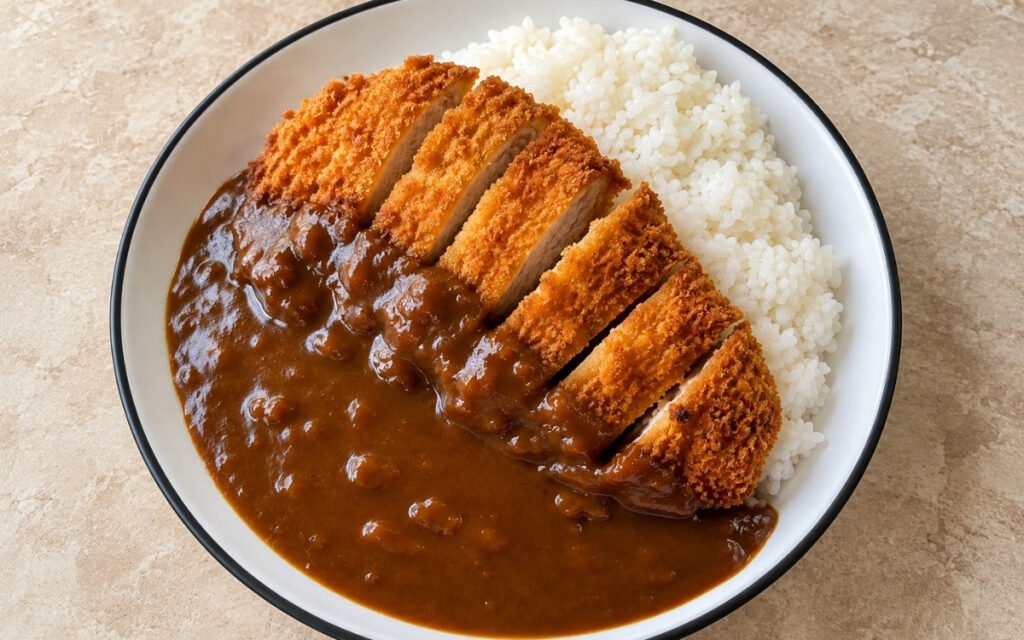
Katsu Curry — Japanese Pork Cutlet Curry
Crisp golden panko-breaded pork cutlets, fluffy white rice, and a thick glossy dark-brown curry sauce, savory-sweet and rich.
-
Indian Butter Chickpea Bowl
Tender chickpeas in a smooth, buttery tomato-cashew masala with cream and kasuri methi, spooned over fluffy basmati rice in four hearty bowls.
-
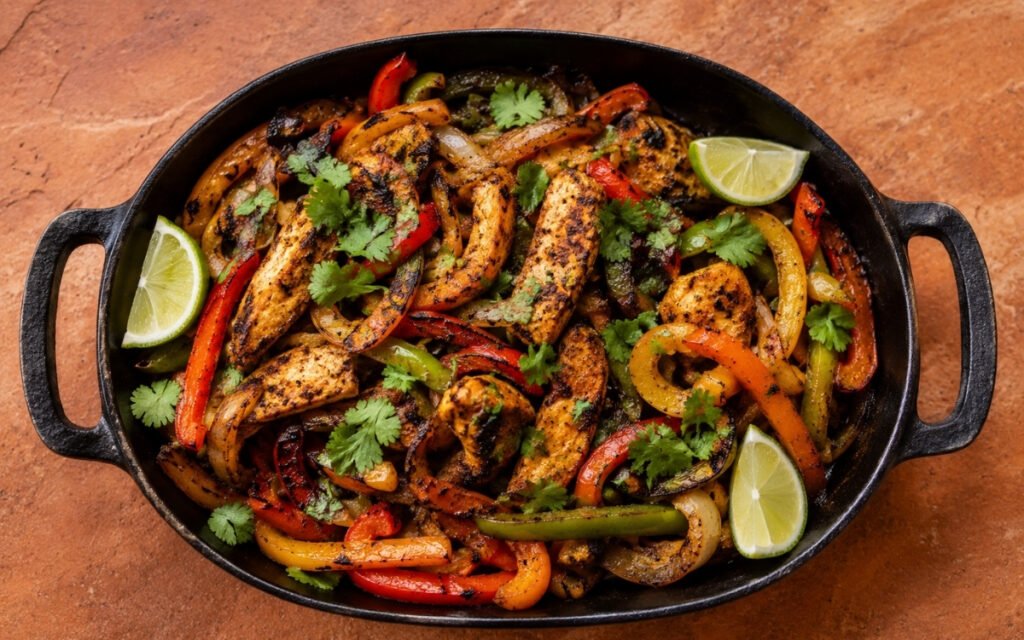
Chicken Fajita
Smoked paprika and cumin-marinated chicken thighs seared in cast iron with charred tri-colour peppers and caramelised onions — the complete Tex-Mex fajita in 35 minutes.

You might also like
You might also like
-
Miso Butter Corn Ramen
Springy noodles in creamy golden miso broth topped with sweet corn, melting butter, sprouts, and a jammy egg.
-
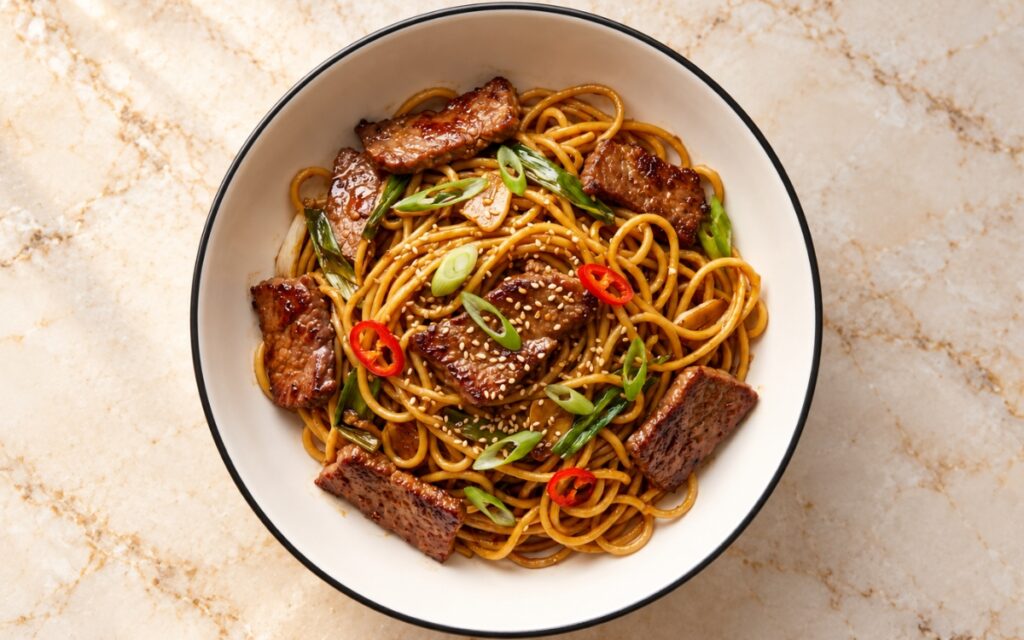
Mongolian Beef and Noodles
Lo mein-style wheat noodles tossed with seared beef, scallions, garlic and ginger in a dark, glossy savoury-sweet Mongolian-style sauce.
-
Vietnamese Caramelized Pork Bowl
A Vietnamese-inspired rice bowl of glossy pork belly in fish sauce caramel over jasmine rice, with cucumber, cilantro and scallion.



Dan Dan Noodles
Ingredients
Method
- Finely chop the 120g preserved mustard greens, squeezing out any loose brine with your hands first so they fry rather than steam later. Thinly slice the 4 scallions and roughly crush the 60g roasted peanuts with the flat of a knife or in a bag with a rolling pin, leaving some pieces the size of half a peanut. If the sesame seeds are raw, toast the 2 tbsp in a dry pan over medium heat for 2–3 minutes, shaking often, until golden and fragrant, then tip them out to stop the cooking. Pick the cilantro leaves from their stems. Set everything out in small bowls beside the stove. That complete setup matters because the noodles must be tossed and topped within moments of draining, with no time left to chop anything.
- Stir the jar of Chinese sesame paste well first, since the oil separates on standing, then measure 6 tbsp into a mixing bowl (or 4 tbsp sesame paste plus 2 tbsp smooth tahini). Add the 6 tbsp Sichuan chili oil, 4 tbsp light soy sauce, 2 tbsp dark soy sauce, 4 tbsp Chinkiang black vinegar, 2 tsp sugar, 2 tsp roasted ground Sichuan pepper and the 3 grated garlic cloves. Stir until smooth. Heat the stock until steaming, then whisk it in a few tablespoons at a time, using 240ml to start. The paste may seize and thicken at first; keep whisking and it will turn silky. Stop when the sauce is genuinely thick but pourable, like loose yoghurt, and save the remaining stock for later; if using noodle water instead, loosen the sauce partly now and finish it once the noodles are boiling. Taste it: salty, nutty, spicy, slightly tangy and lightly numbing. That gradual loosening is what turns a stiff paste into a glossy sauce that can coat every noodle.
- Heat a wok or wide skillet over medium-high heat until hot. Add the 2 tsp neutral oil only if the pork is very lean; ordinary ground pork renders enough fat on its own. Add the 600g ground pork and break it into small crumbles with a spatula. Cook for 5–7 minutes, stirring and pressing it against the pan, until the released moisture has evaporated, the fat begins to render and sizzle, and the crumbles start to brown. If liquid is still pooling, keep cooking with the heat high rather than draining it, so the juices reduce back into the meat. Do not stop at grey, merely cooked pork; real browning is the goal. That patient browning is what concentrates the pork’s flavour and builds the crisp edges the finished topping needs.
- Push the pork to one side, add the 2 minced garlic cloves and 1 tsp minced ginger to the cleared space and stir-fry for 20–30 seconds, just until fragrant, then mix them through the meat. Add the chopped preserved mustard greens, 1 tbsp light soy sauce, 1 tbsp Shaoxing wine, 1 tsp sugar and ¼ tsp white pepper. Stir-fry for 2–3 minutes more, until the pork is well browned and slightly crisp in spots and the greens have fried into the mixture and smell savoury rather than raw and briny. The topping should look moist but not wet, with no liquid in the base of the wok; if any remains, give it another 30 seconds over the heat. Keep it warm off the heat. That final fry is what removes the greens’ raw edge and stops excess liquid from diluting the noodle sauce.
- While the pork cooks, bring a large pot of unsalted water to a rolling boil. Add the 600g wheat noodles, stir at once to separate the strands and cook until just tender and springy, about 2–4 minutes for fresh noodles or as the packet directs for dried, tasting a strand 30 seconds before the time is up. Pull them while they still have a slight bite, since they keep softening in the hot sauce. Before draining, scoop out about 250ml of the cooking water and keep it hot. Drain the noodles well, shaking off the excess water, but do not rinse unless your noodle type absolutely requires it. That slight undercooking is what keeps the noodles bouncy and chewy once they meet the sauce.
- Give the sauce a quick stir and divide it among 4 warmed serving bowls. If it has thickened while standing, loosen it with some of the remaining hot stock or 1–2 tbsp of the reserved noodle water per bowl, until each bowl holds a loose, glossy layer of sauce at the bottom rather than a stiff paste. Work quickly, so the noodles do not sit in the colander for more than a minute; drained noodles left standing start to clump and lose their surface gloss. Have the pork topping and the prepared garnishes within reach. That loose layer of sauce is what lets the hot noodles absorb it and emulsify it into a coating in the next step.
- Divide the hot noodles among the bowls, about 150g in each, and immediately toss them thoroughly in the sauce with chopsticks or tongs, lifting from the bottom, until every strand is evenly coated and glossy. The finished texture should be genuinely glossy, not dry and not soupy; if a bowl looks dry, add another splash of hot noodle water and toss again. Spoon a quarter of the browned pork over each bowl, then scatter over the scallions, crushed peanuts, toasted sesame seeds and a few cilantro leaves. Finish with a little extra Sichuan chili oil, only if needed, so a small amount of red oil pools lightly around the noodles. Serve at once and toss again at the table. That fast toss while the noodles are hot is what lets the sauce emulsify and cling instead of sliding to the bottom.