
Japanese Pork Gyoza — Pan-Fried Dumplings
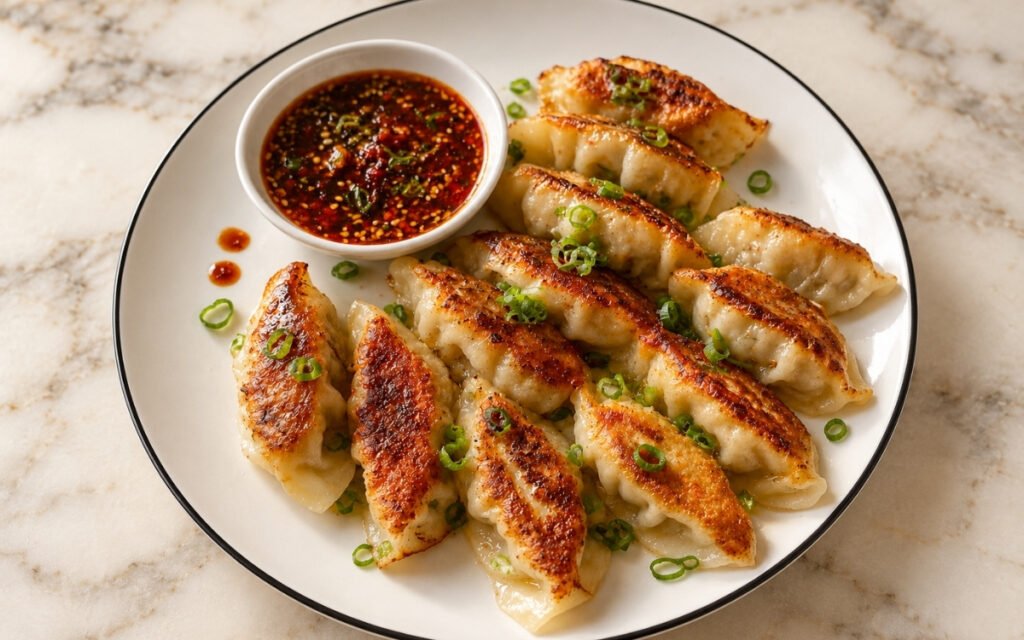
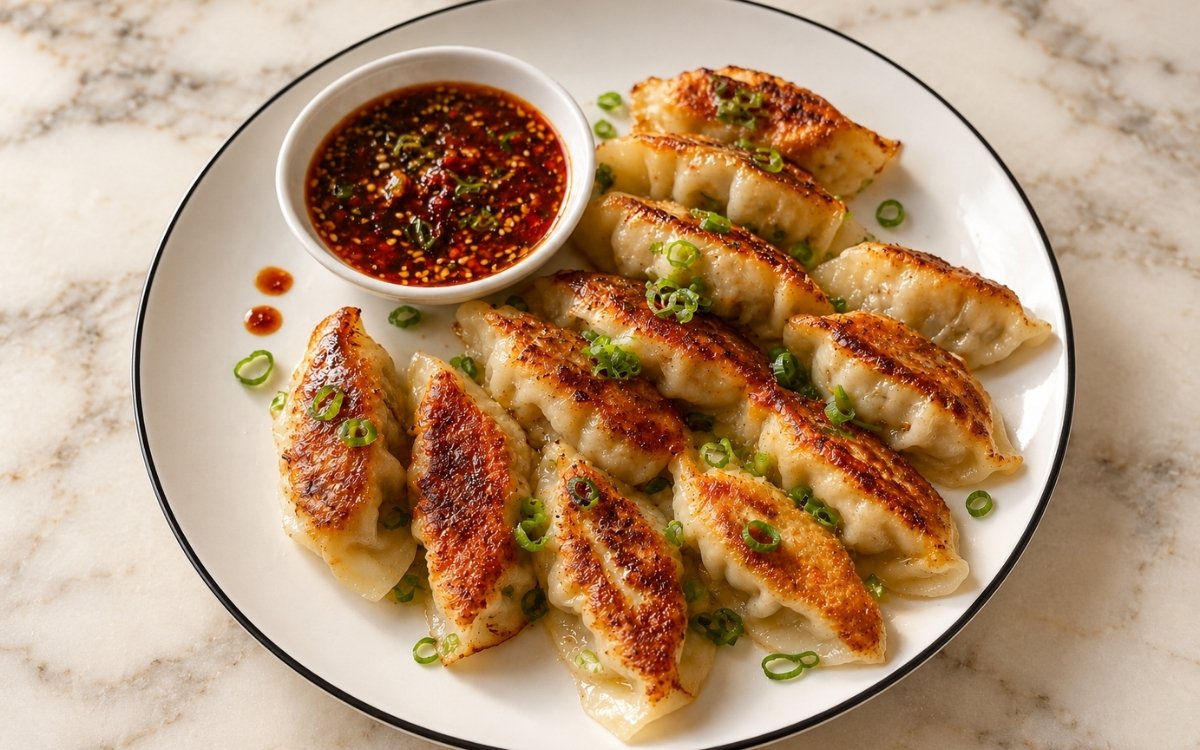
Classic Japanese pork gyoza with a juicy pork, napa cabbage, chive and ginger filling wrapped in thin dumpling skins, then pan-fried until the bottoms are deeply golden and crisp and steamed until the tops turn tender and translucent, served with a soy-vinegar-chili dipping sauce. Salting and thoroughly squeezing the napa cabbage before it ever meets the pork is the technique this whole filling depends on for real, cohesive texture — cabbage left unsqueezed releases its own water directly into the mixture, turning the filling watery and risking split wrappers or soggy dumplings, the same salt-and-squeeze-first principle used elsewhere in this collection whenever a watery vegetable’s own moisture needs to be drawn out before it joins a ground meat filling. Mixing the filling vigorously until genuinely sticky and cohesive, not loose and crumbly, is what lets it bind together cleanly inside each wrapper. Adding water to the pan only once the bottoms are already properly browned, then letting it fully evaporate afterward, is what delivers gyoza’s signature contrast between crisp, golden base and tender, steamed top. The payoff is a dumpling with real, classic Japanese contrast — a deeply golden, crisp base beneath tender, translucent skin, wrapped around a juicy, well-seasoned pork and cabbage filling.
Prep Time : 45 min
Cook Time : 25 min
Servings : 4
45 min
25 min
4
Ingredients
For the Filling
• 450g ground pork, preferably about 20% fat
• 250g napa cabbage / Chinese cabbage, very finely chopped
• 6g salt, for the cabbage
• 60g garlic chives / nira, finely sliced
• 40g scallions, finely sliced
• 18g fresh ginger, finely grated
• 12g garlic, finely grated
• 30ml soy sauce
• 15ml sake
• 10ml toasted sesame oil — this one on Amazon
• 8g sugar
• 2g white pepper — this one on Amazon
• 10g cornstarch or potato starch
For Wrapping
• 40 round gyoza wrappers
• Small bowl of water, for sealing
For Pan-Frying
• Neutral oil, as needed
• 180–240ml water, for steaming, divided between batches
For the Dipping Sauce
• 60ml soy sauce — this one on Amazon
• 40ml rice vinegar — this one on Amazon
• 15–20ml chili oil or rayu — this one on Amazon
• 1 tsp toasted sesame seeds
• 1 scallion, very thinly sliced, optional
This post may contain affiliate links. As an Amazon Associate I earn from qualifying purchases, at no additional cost to you.
Directions
- Salt and Drain the Cabbage
Place the finely chopped napa cabbage in a bowl and toss with the 6g salt. Let sit for 15–20 minutes until wilted and releasing moisture. Squeeze the cabbage very firmly by hand or in a clean kitchen towel to remove as much liquid as possible. The cabbage must be well drained or the filling will turn watery and can split the wrappers or make the dumplings soggy. That aggressive squeezing removes moisture the cabbage would otherwise release directly into the filling once mixed, protecting both the filling’s own texture and the wrappers it’s about to be sealed inside. - Make the Filling
In a mixing bowl combine the ground pork, squeezed cabbage, garlic chives, scallions, ginger, garlic, soy sauce, sake, sesame oil, sugar, white pepper, and cornstarch or potato starch. Mix vigorously for 2–3 minutes until the filling becomes sticky, cohesive and slightly tacky. The filling should bind together and cling to the bowl slightly. If it still looks loose and crumbly, keep mixing a little longer. That vigorous, sustained mixing works the pork’s own proteins into a genuinely cohesive matrix, which is directly what lets the filling hold its shape cleanly once it’s spooned into individual wrappers. - Fill and Shape the Gyoza
Keep the wrappers covered so they do not dry out. Place one wrapper in your palm. Add about 1 heaped teaspoon to 1 tablespoon filling to the center, depending on wrapper size. Moisten the edge lightly with water. Fold into a half-moon and pleat the front edge toward the center, pressing firmly to seal. Keep the bottom fairly flat so the gyoza sit upright in the pan. Set the formed dumplings on a tray lightly dusted with starch or lined with parchment. Keep covered with a towel or plastic wrap. Press out excess air while sealing. Any gaps will open during steaming. Deliberately pressing out trapped air before sealing each pleat protects the dumpling from a real, specific risk — any pocket of air left inside would expand under the steaming stage’s own heat, forcing the seal open. - Make the Dipping Sauce
Mix together the soy sauce, rice vinegar, chili oil and sesame seeds. Add scallion if using. Set aside. Having the sauce fully mixed and ready well before the dumplings ever hit the pan means it’s simply waiting at the table the moment the first hot batch is ready to serve. - Pan-Fry and Steam the Gyoza
Cook in batches. Heat a nonstick or well-seasoned skillet over medium heat. Add enough neutral oil to thinly coat the base. Arrange the gyoza flat-side down in the pan, close together but not crushed. Fry for 2–3 minutes until the bottoms are evenly golden brown. Add 60–80ml water to the pan and immediately cover with a lid. Steam for 3–4 minutes, until the wrappers turn slightly translucent and the filling is cooked through. Uncover and let the remaining water evaporate. Cook 1–2 minutes more so the bottoms re-crisp. Transfer to a plate with the browned side showing. Repeat with the remaining dumplings. Add the water only after the bottoms are properly browned. Do not move the dumplings too early or the skins may tear. The final uncovered stage is what brings back the crisp base. That specific sequence — brown first, then steam, then re-crisp — is what delivers both textures in the same dumpling: a genuinely crisp base developed before any moisture is introduced, and a tender, cooked-through top and filling from the covered steaming stage that follows. - Serve
Serve hot with the dipping sauce. Serving each batch immediately, straight from the pan, delivers the dumplings at their intended contrast — that crisp, just-recrisped base begins softening the moment the gyoza sit, working against the whole point of the final uncovered cooking stage.
*Notes :
- Salting and thoroughly squeezing the napa cabbage before it ever joins the pork deserves genuine recognition as the technique most directly responsible for whether these gyoza turn out cohesive or watery. The recipe’s own explicit warning that unsqueezed cabbage can split the wrappers or make the dumplings soggy reflects a real, common failure point — that aggressive squeezing removes real, considerable moisture before it ever has the chance to work against the filling’s own texture.
- Mixing the filling vigorously until it turns genuinely sticky and cohesive deserves the same attention this technique receives throughout this collection’s other ground meat dumpling fillings. That sustained mixing develops the pork’s own protein structure into something that actually binds and holds shape, rather than staying loose and crumbly once it’s portioned into individual wrappers.
- Pressing out excess trapped air while sealing each dumpling deserves genuine attention as a small but consequential detail specific to gyoza’s own two-stage cooking method. Any air pocket left behind expands under the steaming stage’s heat, and that expansion is exactly what forces weak seals open — thorough sealing at this stage protects the dumpling right through both frying and steaming.
- The specific sequence of pan-frying, then steaming, then uncovering to re-crisp deserves recognition as the technique responsible for gyoza’s whole defining textural contrast. Each stage does genuinely distinct work — browning the base first, steaming the top and filling through, then re-crisping the base once more — and skipping or reordering any one of these stages would compromise the finished dumpling’s signature combination of crisp bottom and tender top.
Why This Recipe Works
This recipe works because the napa cabbage is salted and squeezed thoroughly, protecting the filling from turning watery. Vigorous mixing develops real cohesion in the pork mixture, letting it hold its shape once wrapped.
Careful sealing, with excess air pressed out, protects each dumpling from opening during steaming.
The specific three-stage cooking sequence — brown, steam, then re-crisp — delivers gyoza’s whole defining contrast between crisp base and tender top, and serving each batch immediately captures that texture at its freshest and best.
Ingredient Breakdown
Salted, Thoroughly Squeezed Napa Cabbage
The critical technique — removes real moisture that would otherwise turn the filling watery and risk splitting the wrappers.
Vigorously Mixed Pork Filling
The critical technique — develops real cohesion, letting the mixture bind and hold its shape once wrapped.
Air-Pressed, Firmly Sealed Wrappers
The critical technique — protects each dumpling from opening under the steaming stage’s own internal pressure.
Pan-Fry-Then-Steam-Then-Re-Crisp Sequence
The critical technique — the specific three-stage cooking method that delivers gyoza’s signature crisp-base, tender-top contrast.
Ground Pork with 20% Fat
The critical ingredient choice — delivers the classically juicy filling texture leaner pork wouldn’t achieve.
Garlic Chives (Nira)
The defining flavour ingredient — more traditional than regular chives and central to gyoza’s characteristic taste.
Flavor Structure Explained
This Japanese pork gyoza follows a layered balance model:
- Crisp, golden foundation (pan-fried, re-crisped base)
- Tender, steamed exterior (translucent top wrapper)
- Juicy, savoury centre (pork and cabbage filling)
- Aromatic background depth (ginger, garlic, sesame oil, garlic chives)
- Sharp, tangy dipping accent (soy-vinegar-chili sauce)
A pan-fried, re-crisped base provides this dumpling’s crisp, genuinely golden foundation, distinct from its tender, steamed top. Squeezed napa cabbage folded through seasoned ground pork forms a juicy, savoury centre. Ginger, garlic, sesame oil, and garlic chives layer in real, classic aromatic depth throughout the filling. A sharp, tangy soy-vinegar-chili dipping sauce finishes each gyoza with real acidic contrast that cuts through the filling’s own richness.
Common Mistakes to Avoid
- Skipping or Rushing the Cabbage’s Salting and Squeezing – This leaves the filling watery and risks splitting the wrappers. Always give it the full 15 to 20 minutes and squeeze thoroughly.
- Undermixing the Filling – This leaves it loose and crumbly rather than cohesive. Always mix vigorously until it feels sticky and binds together.
- Leaving Air Trapped While Sealing – This risks the wrapper opening during steaming. Always press out excess air as you pleat and seal each dumpling.
- Adding Water Before the Bottoms Are Properly Browned – This skips the real crisp base this dish depends on. Always fry first, then add water.
- Skipping the Final Uncovered Re-Crisping Stage – This leaves the base soft rather than crisp. Always let the remaining water evaporate before serving.
Variations
Frozen Make-Ahead Version
Freeze the shaped, uncooked gyoza in a single layer until firm before bagging, per the recipe’s own guidance, cooking directly from frozen with 1 to 2 extra minutes added to the steaming stage.
Lacy Bottom Version
Add a thin slurry of water plus a little flour or starch during the steaming stage, per the recipe’s own optional suggestion, for a more elaborately crisp, lacy bottom than classical everyday gyoza typically feature.
Extra-Spicy Dipping Sauce Version
Increase the chili oil or rayu in the dipping sauce for a more assertive, lingering heat that cuts even more sharply through the rich pork filling.
Leaner Pork Version
Use pork with less fat than the recommended 20%, accepting that the finished filling will taste noticeably drier than the classical, juicier version this fat percentage is specifically chosen to achieve.
Storage & Make-Ahead
Standard gyoza wrappers around 9 to 10cm work best for this recipe, and pork with around 20% fat gives the most classical, juicy filling, since leaner pork will taste noticeably drier once cooked.
Napa cabbage should be chopped very finely so the filling stays compact and genuinely easy to pleat, and garlic chives, or nira, are more traditional than regular chives, giving this dish its characteristic gyoza flavour rather than a more generic onion note.
Cornstarch or potato starch worked into the filling helps it bind properly and retain its own juices throughout cooking, both of which are essential to keeping the finished dumplings tasting genuinely moist rather than dry.
If making ahead, shape the gyoza and freeze them in a single layer until firm before transferring to a bag, and cook them directly from frozen, adding 1 to 2 extra minutes to the steaming stage to account for the difference.
For food safety, the filling needs to be fully cooked through with no pink remaining at the center, and if you want a crisper, lacy bottom, a thin flour or starch slurry can be added during steaming, though classical everyday gyoza don’t require it.
Frequently Asked Questions
Why does the napa cabbage need to be salted and squeezed so thoroughly before it’s added to the filling?
Unsqueezed cabbage releases considerable water directly into the mixture. That excess moisture can turn the finished filling watery, risking split wrappers or soggy dumplings once cooked.
Why does the filling need to be mixed so vigorously rather than just combined?
That sustained mixing develops the pork’s own protein structure into something genuinely cohesive and sticky. A filling mixed only briefly stays loose and crumbly, making it considerably harder to hold its shape once wrapped.
Why does excess air need to be pressed out while sealing each dumpling?
Any trapped air pocket expands under the heat of the later steaming stage, and that expansion is exactly what forces a weak seal open. Thorough sealing protects the dumpling through both frying and steaming.
Why is water added to the pan only after the bottoms are already browned?
Adding water any earlier would prevent the base from ever properly crisping in the first place. This specific sequence — brown first, then steam — is what delivers gyoza’s whole defining contrast between crisp bottom and tender top.
Are there other classic Japanese fried, steamed, or curry dishes worth trying?
Karaage offers another classic Japanese fried dish worth exploring. Japanese Cucumber Salad (Sunomono) and Yaki Udon Stir-Fry are also worth trying for other classic Japanese sides and noodle dishes, and Katsu Curry and Chili Garlic Oil offer other satisfying Japanese and pairing condiments worth exploring.
Nutrition Facts
( Per Serving — 10 gyoza )
Calories
~520 kcal
Protein
26 g
Fat
24 g
Carbs
48 g
Calories
~520 kcal
Protein
26 g
Fat
24 g
Carbs
48 g
Related Recipes
Related Recipes

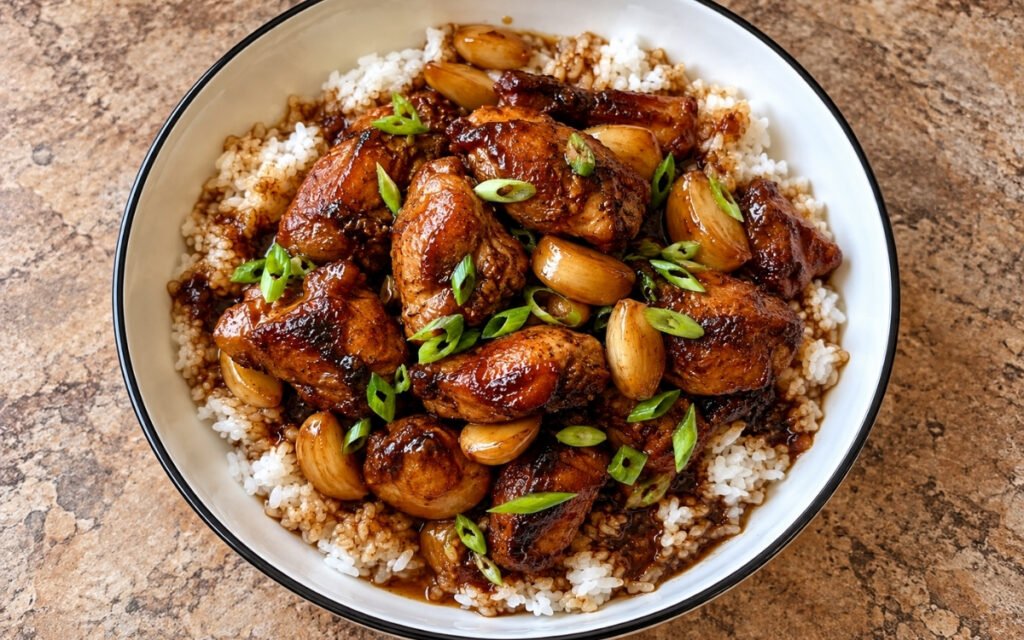
Chicken Adobo Rice Bowl
Boneless chicken thighs braised in soy sauce, vinegar, garlic, bay leaf and black pepper until deeply savory and glossy, spooned over rice.
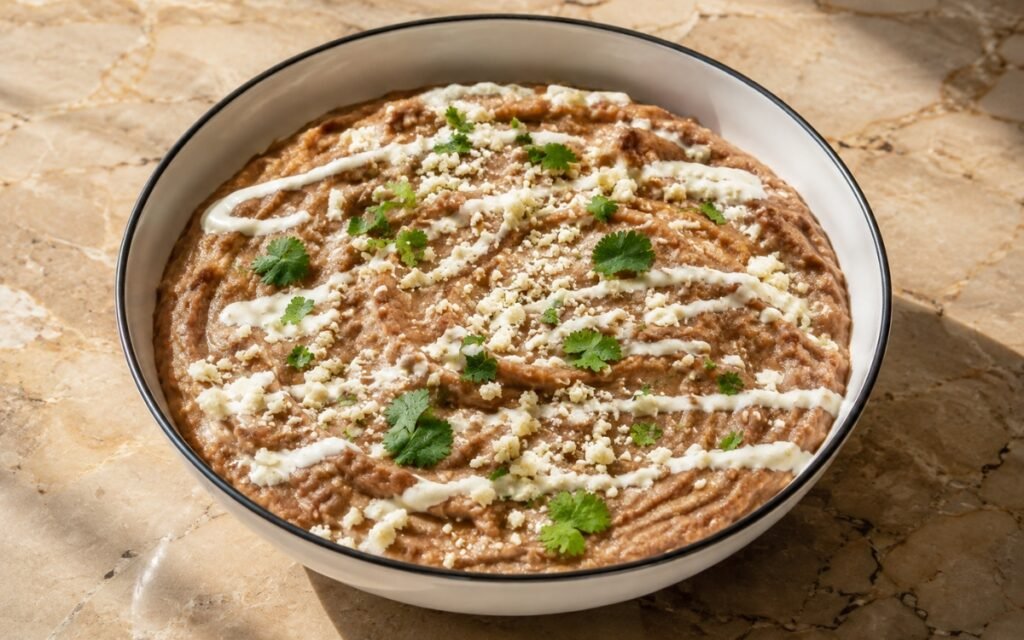
Refried Beans
Creamy pinto beans simmered slowly, mashed and fried in lard with onion and garlic until glossy and spreadable.
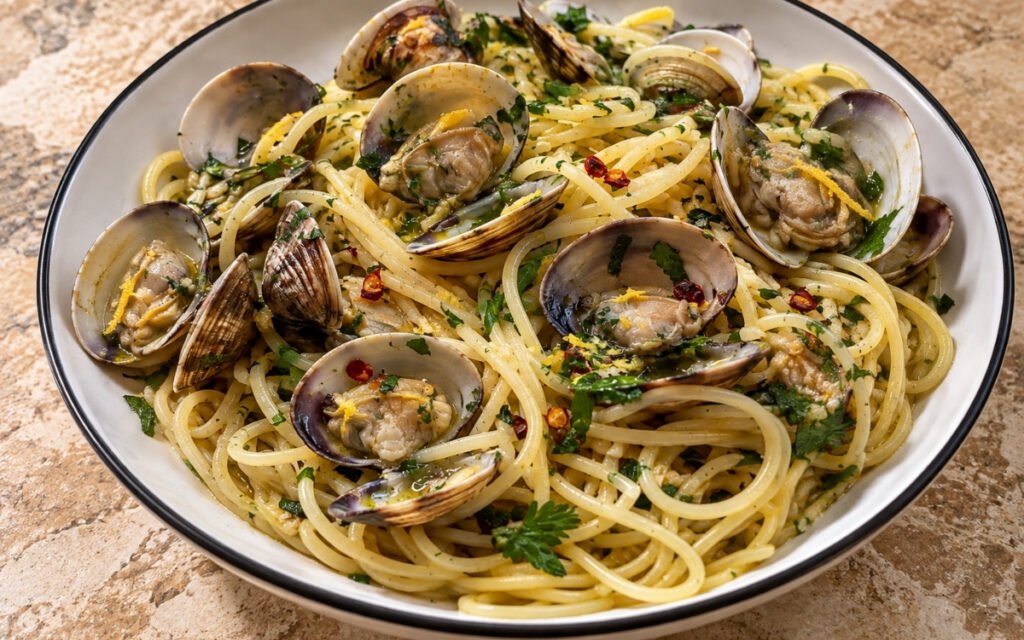
Spaghetti alle Vongole
Fresh clams in a light olive-oil, white wine, and garlic emulsion with parsley and lemon zest, tossed with al dente spaghetti.
You might also like
You might also like
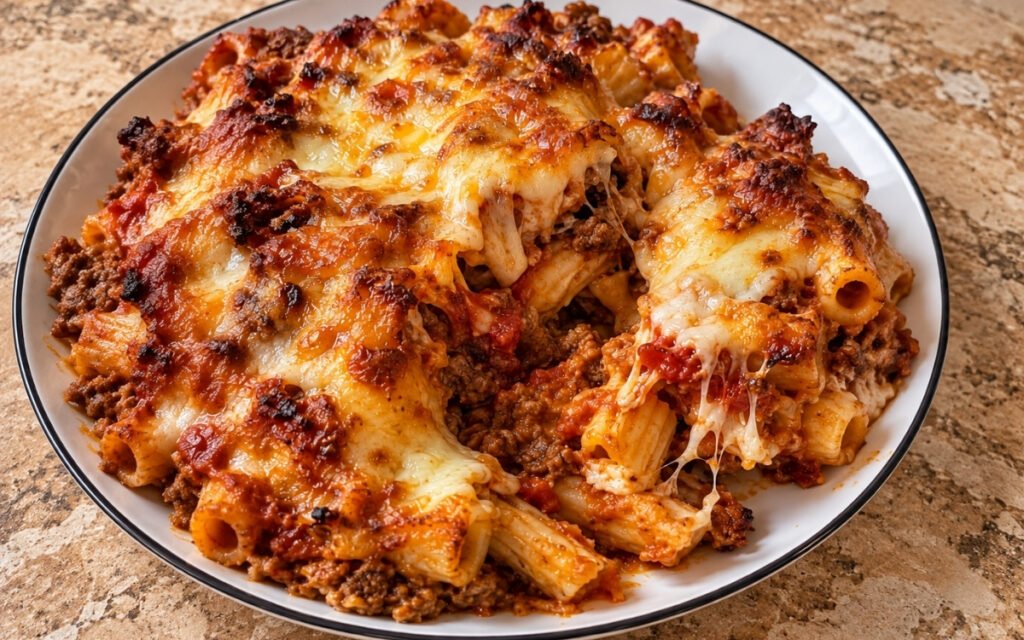
Pasta al Forno
Rigatoni or penne in a rich beef and pork tomato sauce with melted mozzarella and a browned cheesy top, baked until bubbling.
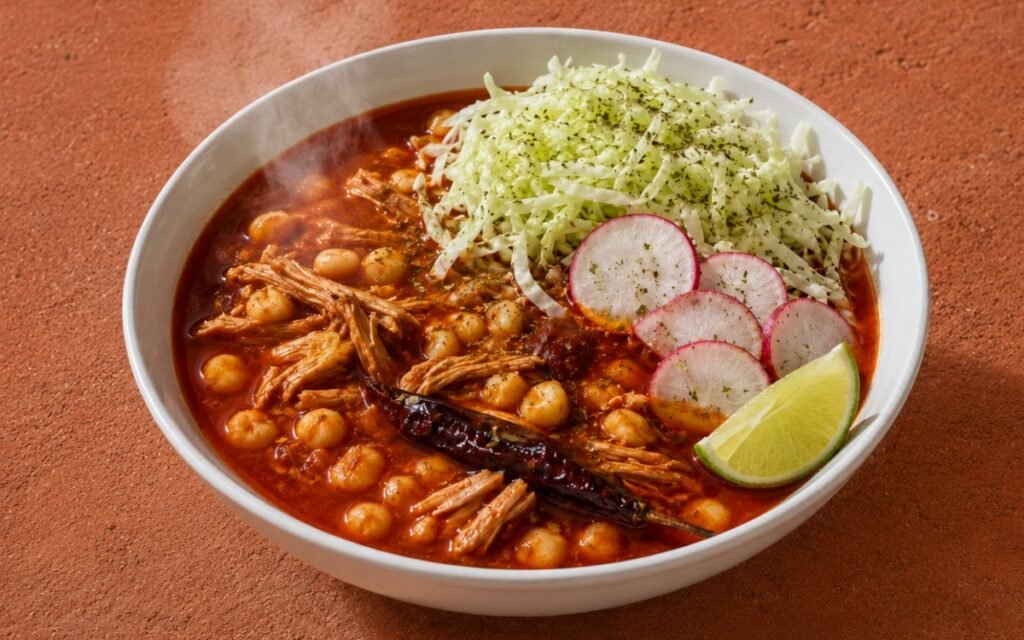
Pozole Rojo
Bone-in pork shoulder simmered clean, combined with a toasted guajillo-ancho chile base until deep ruby red, finished with hominy, cabbage, and radish.
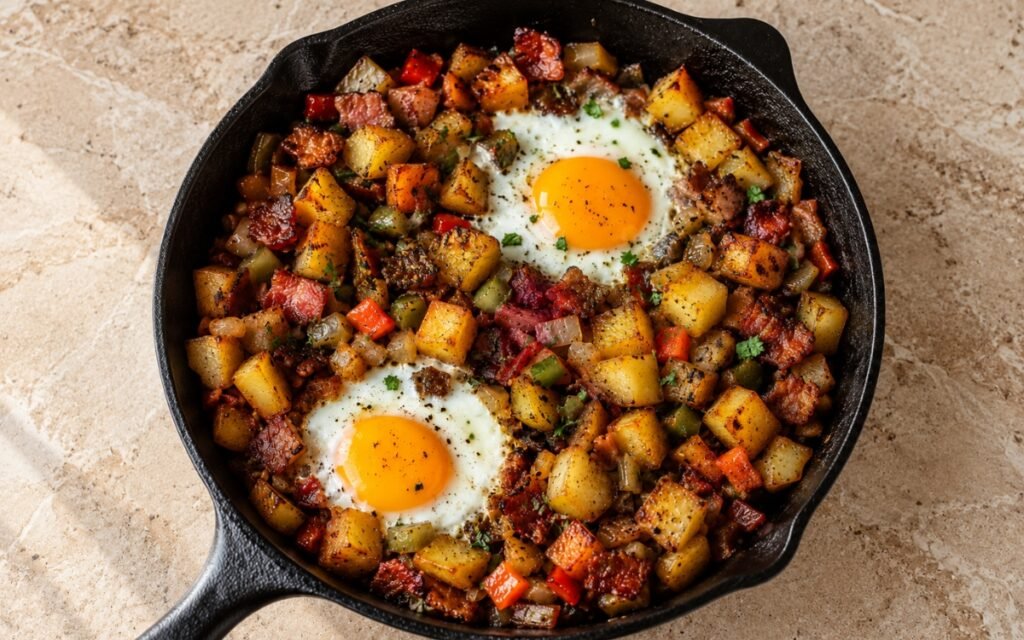
Breakfast Hash with Eggs and Potatoes
Crispy diced potatoes, browned breakfast sausage, crisp bacon, peppers, onions, and eggs cooked directly into the hash with runny yolks.
Japanese Pork Gyoza — Pan-Fried Dumplings
Ingredients
Method
- Place the finely chopped napa cabbage in a bowl and toss with the 6g salt. Let sit for 15–20 minutes until wilted and releasing moisture. Squeeze the cabbage very firmly by hand or in a clean kitchen towel to remove as much liquid as possible. The cabbage must be well drained or the filling will turn watery and can split the wrappers or make the dumplings soggy. That aggressive squeezing removes moisture the cabbage would otherwise release directly into the filling once mixed, protecting both the filling’s own texture and the wrappers it’s about to be sealed inside.
- In a mixing bowl combine the ground pork, squeezed cabbage, garlic chives, scallions, ginger, garlic, soy sauce, sake, sesame oil, sugar, white pepper, and cornstarch or potato starch. Mix vigorously for 2–3 minutes until the filling becomes sticky, cohesive and slightly tacky. The filling should bind together and cling to the bowl slightly. If it still looks loose and crumbly, keep mixing a little longer. That vigorous, sustained mixing works the pork’s own proteins into a genuinely cohesive matrix, which is directly what lets the filling hold its shape cleanly once it’s spooned into individual wrappers.
- Keep the wrappers covered so they do not dry out. Place one wrapper in your palm. Add about 1 heaped teaspoon to 1 tablespoon filling to the center, depending on wrapper size. Moisten the edge lightly with water. Fold into a half-moon and pleat the front edge toward the center, pressing firmly to seal. Keep the bottom fairly flat so the gyoza sit upright in the pan. Set the formed dumplings on a tray lightly dusted with starch or lined with parchment. Keep covered with a towel or plastic wrap. Press out excess air while sealing. Any gaps will open during steaming. Deliberately pressing out trapped air before sealing each pleat protects the dumpling from a real, specific risk — any pocket of air left inside would expand under the steaming stage’s own heat, forcing the seal open.
- Mix together the soy sauce, rice vinegar, chili oil and sesame seeds. Add scallion if using. Set aside. Having the sauce fully mixed and ready well before the dumplings ever hit the pan means it’s simply waiting at the table the moment the first hot batch is ready to serve.
- Cook in batches. Heat a nonstick or well-seasoned skillet over medium heat. Add enough neutral oil to thinly coat the base. Arrange the gyoza flat-side down in the pan, close together but not crushed. Fry for 2–3 minutes until the bottoms are evenly golden brown. Add 60–80ml water to the pan and immediately cover with a lid. Steam for 3–4 minutes, until the wrappers turn slightly translucent and the filling is cooked through. Uncover and let the remaining water evaporate. Cook 1–2 minutes more so the bottoms re-crisp. Transfer to a plate with the browned side showing. Repeat with the remaining dumplings. Add the water only after the bottoms are properly browned. Do not move the dumplings too early or the skins may tear. The final uncovered stage is what brings back the crisp base. That specific sequence — brown first, then steam, then re-crisp — is what delivers both textures in the same dumpling: a genuinely crisp base developed before any moisture is introduced, and a tender, cooked-through top and filling from the covered steaming stage that follows.
- Serve hot with the dipping sauce. Serving each batch immediately, straight from the pan, delivers the dumplings at their intended contrast — that crisp, just-recrisped base begins softening the moment the gyoza sit, working against the whole point of the final uncovered cooking stage.