
Tonkotsu Ramen
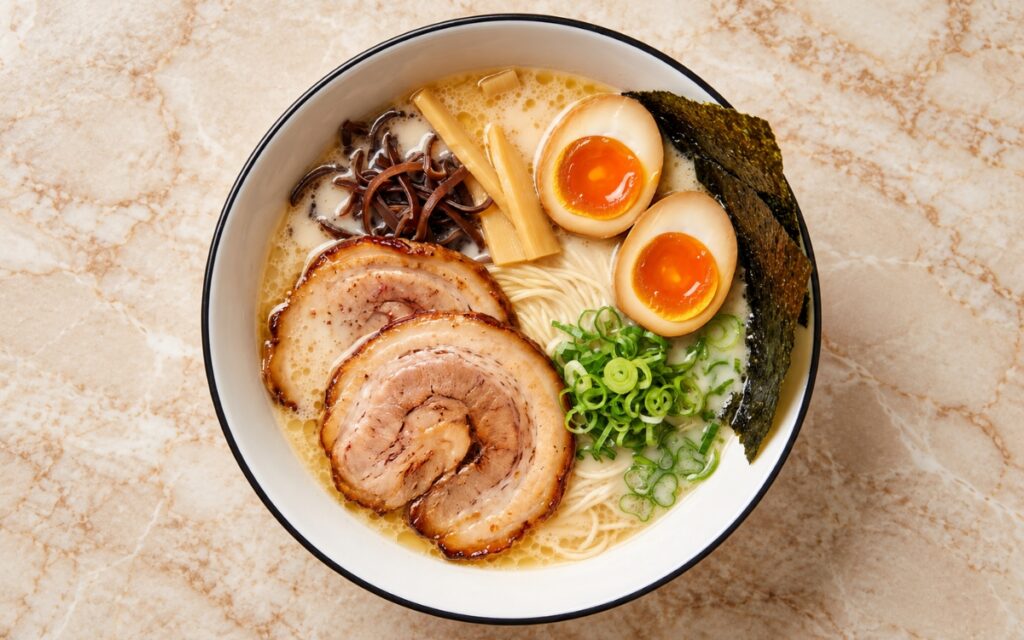
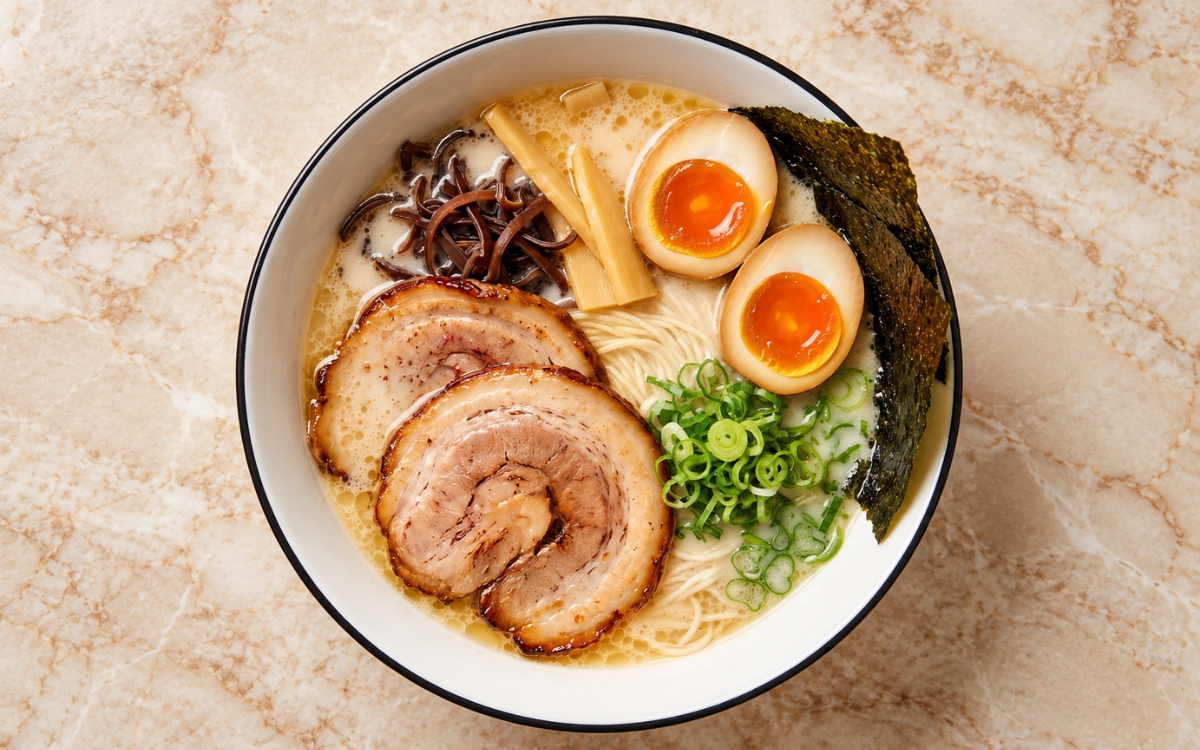
A classic Japanese Hakata-style tonkotsu ramen of thin, straight noodles in a rich, opaque pork bone broth, topped with rolled pork belly chashu, soy-marinated ajitama eggs, wood ear mushrooms, bamboo shoots, scallions, and nori, the key being a creamy ivory broth set against neat, restrained toppings. Boiling the cleaned bones hard for 8–10 hours, rather than holding them at a gentle simmer, is the technique this whole ramen depends on for its creamy body — only turbulence emulsifies collagen, marrow, and fat into the water, while a lazy simmer leaves the broth thin, clear, and greasy, the same boil-to-emulsify principle used elsewhere in this collection whenever a bone stock must turn rich and opaque. Blanching and scrubbing the bones before the real boil begins is what keeps the broth clean-tasting instead of muddy and grey. Braising the rolled pork belly gently, then chilling it before slicing, is what gives tender chashu in tight, even spirals and a braising liquid that doubles as the tare and the egg marinade. The payoff is a tonkotsu ramen with real, ramen-shop depth — a creamy ivory broth, springy thin noodles, tender chashu, jammy deep-orange yolks, and crunchy wood ear and bamboo shoots arranged in neat sections.
Prep Time : 45 min
Total Time : 18 hr 45 min
Servings : 4
45 min
18 hr 45 min
4
Ingredients
For the Tonkotsu Broth
• 2,500g pork leg or femur bones, cut to expose the marrow
• 1,000g pork neck bones and/or trotters
• 300g pork back fat or fat trimmings, optional but useful for a richer body
• 1 large onion, halved
• 1 whole head of garlic, halved crosswise
• 40g fresh ginger, sliced
• 1 leek or 4 scallions
• Water, as needed for boiling
For the Chashu Pork Belly
• 900g skinless pork belly, rolled and tied
• 750ml water
• 150ml soy sauce
• 120ml sake
• 80ml mirin
• 40g sugar
• 4 scallions, cut into lengths
• 25g fresh ginger, sliced
• 4 garlic cloves, lightly crushed
For the Ajitama Eggs
• 4 large eggs
• About 200ml cooled, strained chashu braising liquid, enough to submerge the eggs
• Ice water, for chilling the eggs
For the Tare
• 120ml strained chashu braising liquid
• 30ml light soy sauce, if needed for adjustment
• 1–2 tsp salt, only if needed after tasting
• 1 tsp mirin, optional, if the tare needs rounding
For the Noodles and Bowl Toppings
• 520–600g fresh thin straight ramen noodles, about 130–150g per bowl
• 40g dried wood ear mushrooms (kikurage)
• 160–200g seasoned bamboo shoots (menma), drained
• 4 sheets nori, cut in half or left whole
• 4–5 scallions, very thinly sliced
• Reserved pork fat from the broth, optional, for extra richness
Directions
- Blanch and Clean the Bones
Rinse the 3,500g of pork bones well under cold water, scrubbing off any loose blood clots. Put them in a large stockpot, cover with cold water, and bring to a hard boil, then boil for 15–20 minutes. Drain completely, wash the bones under running water, and remove every loose grey impurity and coagulated bit. Scrub the pot clean as well, since the real broth starts in a fresh pot. The bones should look much cleaner and lighter. That thorough cleaning is what keeps the broth tasting clean instead of dirty and muddy, however long it cooks afterwards. - Boil the Tonkotsu Broth
Return the cleaned bones to the clean pot with the 300g of pork fat, if using, and cover generously with fresh water. Bring to a vigorous boil, not a lazy simmer, then add the halved onion, the halved garlic head, the 40g of ginger, and the leek or scallions. Boil aggressively for 8–10 hours, partly covered or uncovered as needed, stirring and moving the bones occasionally and topping up with boiling water whenever the level drops too far. The broth should gradually turn opaque, creamy, and ivory-white. That constant rolling turbulence, kept going with hot water only, is what emulsifies the collagen, marrow, and fat into the broth. - Braise the Chashu
Early in the broth cook, roll and tie the 900g of pork belly tightly. Sear it lightly in a Dutch oven or deep pan on several sides until the outside picks up a pale golden-brown colour. Add the 750ml of water, the soy sauce, sake, mirin, sugar, 4 scallions, 25g of ginger, and the crushed garlic, and bring to a gentle simmer. Cover with a drop lid or parchment cartouche, or keep the pork mostly submerged, and braise very gently for 75–90 minutes, turning once or twice, until tender but still sliceable. Cool the pork in its liquid for at least 1 hour, then chill it in some of the liquid for several hours or overnight. That gentle braise and long chill are what keep the pork tender yet firm enough to slice into tight, tidy spirals. - Make the Ajitama Eggs
Strain and reserve the chashu braising liquid, and let it cool completely. Bring a pot of water to a boil, lower in the 4 eggs, and cook for 6½ to 7 minutes for jammy yolks. Transfer them immediately to ice water and chill completely, then peel carefully. Place the eggs in a container or zip bag with about 200ml of the cooled braising liquid, enough to coat and submerge them, and marinate in the refrigerator for 6–24 hours. The yolks should stay soft and deep orange, never hard-cooked. That full chilling before peeling is what keeps the whites from tearing, and the long marinade is what seasons them through. - Prep the Toppings
Soak the 40g of dried wood ear mushrooms in warm water for 20–30 minutes, until fully rehydrated, then drain, squeeze dry, trim any hard ends, and slice thinly. Drain the 160–200g of menma well, slice the 4–5 scallions very thinly, and cut the nori if needed. Slice the chilled chashu into thin rounds, planning 2–3 slices per bowl. Plan for 1 egg, halved, a small mound of wood ear, a small bundle of menma, a generous pinch of scallions, and 1 nori sheet or 2 half-sheets in each bowl. That restraint is what keeps the broth visible and the bowl looking clean. - Season the Tare and Reheat
Taste the reserved chashu braising liquid and measure out 120ml for the tare, adjusting with a little of the 30ml of light soy sauce, a pinch of the salt, or the 1 tsp of mirin only if needed. The tare should taste stronger and saltier than is pleasant on its own, because it seasons the underseasoned broth. Reheat the strained broth until very hot, and warm the sliced chashu gently in a little broth or braising liquid so it never goes onto the ramen cold. Keep the broth hot right up until assembly. That strong tare is what decides whether the bowl tastes flat or properly balanced. - Cook the Noodles
Bring a large pot of unsalted water to a boil and cook the fresh thin ramen noodles in small batches or bowl by bowl, just until springy and barely done, usually 30–60 seconds depending on the noodle. Lift them out and drain extremely well, shaking off every drop of water. The noodles should still have a firm, springy bite. That short cook and thorough drain are what stop these fast-softening noodles from turning soft and from diluting the creamy broth. - Assemble and Serve
For each bowl, add about 1½ tbsp of tare to the bottom, pour in 350–400ml of very hot broth, and stir. Add one portion of noodles, then arrange 2–3 slices of chashu, 2 egg halves facing upward, a small mound of wood ear, the menma, and a pinch of scallions in distinct sections, with a spoonful of the optional reserved pork fat if you like. Stand the nori upright at the edge of the bowl and serve immediately. That exposed, creamy broth between neat toppings is what shows the ramen was assembled the way a ramen shop would.
*Notes :
- Maintaining a vigorous, rolling boil for 8–10 hours deserves genuine recognition as the technique most directly responsible for whether this ramen ends creamy and ivory or thin and clear. The recipe’s own explicit instruction that “Tonkotsu needs a hard boil, not a classic gentle stock simmer” reflects the fact that only turbulence emulsifies collagen, marrow, and fat into suspension, whereas a lazy simmer leaves them separate.
- Blanching and scrubbing the bones deserves the same attention this technique receives throughout this collection’s other long-cooked stocks and broths. A 15–20 minute boil drives blood and coagulated impurities off the bones and out of the marrow, and without that wash the broth clouds grey and tastes muddy no matter how many hours it cooks afterwards.
- The tare deserves genuine respect as the detail most directly responsible for the final seasoning of every bowl, because the broth itself is left underseasoned. The recipe’s own explicit note that “Final ramen balance depends on tare” reflects how too little leaves the broth flat and too much turns the bowl salty, which is why the 120ml of chashu liquid is tasted before use.
- Timing the eggs and noodles to the minute deserves attention as a genuine, checkable readiness cue rather than a loose approximation. Under 6½ minutes leaves the yolk runny and past 7 minutes pushes it toward set, while thin Hakata-style noodles overcook very fast, so even an extra half minute turns them soft in the hot broth.
Why This Recipe Works
This recipe works because the pork bones are blanched and scrubbed first, so the broth starts clean rather than muddy. A hard, rolling boil for 8–10 hours then emulsifies collagen, marrow, and fat into an opaque, creamy ivory broth, topped up only with boiling water so the boil never stalls. The rolled belly braises gently in soy, sake, and mirin, chills for clean spiral slices, and hands its strained liquid to both the tare and the eggs. Fast-cooked thin noodles and restrained toppings keep the creamy broth visible. The result is a deeply savoury, silky bowl.
Ingredient Breakdown
Hard Rolling Boil (8–10 Hours)
The critical technique — constant turbulence emulsifies collagen, marrow, and fat, turning clear stock into opaque, creamy tonkotsu broth.
Blanched and Scrubbed Pork Bones
The critical safeguard — a 15–20 minute boil and a thorough scrub remove blood and grey impurities that would muddy the broth.
Leg Bones, Neck Bones, and Back Fat
The structural foundation — marrow-rich leg bones, collagen-heavy neck bones or trotters, and optional fat give the broth body and richness.
Chilled Pork Belly Chashu
The centrepiece — gentle braising keeps the belly tender, and chilling it in its liquid sets it for thin, tidy spiral slices.
Strained Chashu Braising Liquid
The flavour foundation — one soy, sake, and mirin braise becomes both the tare for the bowls and the marinade for the eggs.
Ajitama Eggs (6½–7 Minutes)
The finishing touch — a jammy centre, an ice bath, and a 6–24 hour soak give a soy-seasoned white and a deep orange yolk.
Thin Straight Hakata-Style Noodles
The critical timing technique — 30–60 seconds in unsalted water keeps them springy, and thorough draining protects the broth from dilution.
Wood Ear, Menma, Scallions, and Nori
The finishing elements — crunchy, pale, and fresh toppings add contrast in neat sections without burying the broth.
Flavor Structure Explained
This tonkotsu ramen follows a layered balance model:
- Creamy, collagen-rich foundation (pork leg bones, neck bones, back fat)
- Deep savoury seasoning (chashu braising liquid tare, light soy sauce)
- Tender, sweet-salty richness (rolled pork belly chashu, mirin, sugar)
- Jammy umami accent (soy-marinated ajitama egg yolk)
- Crunchy, clean contrast (wood ear mushrooms, bamboo shoots)
- Fresh, toasted finish (sliced scallions, nori)
The bones and fat give the broth a creamy, collagen-rich foundation that carries every other flavour. The tare adds deep savoury seasoning that turns the plain broth into a finished soup, while the chashu brings tender, sweet-salty richness and the marinated egg adds a jammy umami accent. Wood ear and bamboo shoots supply crunchy, clean contrast that keeps the richness from feeling heavy, and scallions and nori finish the bowl with a fresh, toasted lift that ties the tonkotsu ramen together.
Common Mistakes to Avoid
- Skipping the Bone Blanch – This leaves blood and grey impurities in the pot, making the finished broth taste dirty and muddy. Always boil the bones for 15–20 minutes, then scrub them and the pot clean.
- Holding the Broth at a Gentle Simmer – This leaves the collagen and fat separate, giving a thin, greasy broth instead of a creamy one. Always keep the pot at a vigorous, rolling boil for 8–10 hours.
- Topping Up With Cold Water – This stalls the boil each time the level drops, interrupting the emulsifying turbulence. Always add hot or boiling water, never letting the broth reduce until salty.
- Slicing the Chashu Warm – This tears the soft belly and loses the tight spiral shape. Always chill the pork in some of its liquid for several hours or overnight, then slice thin and warm it gently.
- Overcooking the Noodles – This turns the thin noodles soft and sends excess water into the broth. Always cook for 30–60 seconds, drain extremely well, and serve the bowl immediately.
Variations
Rich Pork Fat Version
Spoon a little of the optional reserved pork fat from the broth over each assembled bowl for extra richness, giving a glossier, more indulgent surface and a rounder, fattier finish.
Trotter-Forward Version
Use pork trotters for the full 1,000g neck bone portion to push the collagen content higher, giving a broth that coats the lips and sets more firmly when chilled.
Leaner Broth Version
Leave out the optional 300g of pork back fat for a lighter, less greasy broth, which still turns creamy and opaque from the bones and the hard boil.
Firmer Yolk Version
Cook the eggs for the full 7 minutes instead of 6½ for a yolk that is thicker and just starting to set, which is easier to handle while still soft.
Storage & Make-Ahead
Braise the chashu early in the broth cook and refrigerate it in some of its liquid for several hours or overnight, then slice it cold and warm it gently in broth or braising liquid just before serving.
Marinate the peeled ajitama eggs in cooled braising liquid for 6–24 hours in the refrigerator, and keep any leftover eggs chilled in that liquid, eating them within 2 days while the whites are seasoned but not too salty.
Cool the strained broth promptly and refrigerate it in airtight containers for up to 3 days, or freeze it for up to 3 months, and expect it to set firmly like jelly, which is a good sign of collagen extraction.
Reheat the broth until very hot and keep it hot until assembly, and cook the thin noodles only at the last minute, bowl by bowl or in small batches, since they soften quickly and do not store.
Soak and slice the wood ear, drain the menma, and slice the scallions a few hours ahead, then add the nori only at the end so it stays upright and crisp rather than soaking from the start.
Frequently Asked Questions
Why does the broth need a hard boil rather than a gentle simmer?
Turbulence is what emulsifies collagen, marrow, and fat into the water, turning the broth opaque, creamy, and ivory. A gentle simmer leaves them separate, so the broth stays thin, clear, and greasy.
Why must the bones be blanched and scrubbed before the real broth begins?
Boiling for 15–20 minutes pushes blood and coagulated impurities off the bones, and scrubbing removes what remains. Skipping it leaves the broth tasting dirty and smelling muddy, however long it cooks afterwards.
Why is the chashu chilled before slicing and warmed again before serving?
Chilling in its liquid firms the tender belly so it slices thin and keeps its tight spiral shape instead of falling apart. Warming it gently in broth or braising liquid keeps it from cooling the bowl.
Why is the tare made from the chashu braising liquid instead of just salting the broth?
The braising liquid carries soy, sake, mirin, and pork flavour, so it seasons the bowl with depth rather than plain salt. Added by the spoonful at assembly, it also lets you adjust each bowl.
Are there other classic Japanese ramen, Vietnamese noodle soup, or dumpling dishes worth trying?
Bun Bo Hue Inspired Spicy Beef Noodle Soup offers another classic noodle soup direction, and Pho Soup / Vietnamese Beef Pho is worth trying for a beef contrast. Miso Butter Corn Ramen and Pork Soup Dumplings / Xiao Long Bao are worth trying for other ramen and soup-filled dishes, and Vietnamese Chicken Pho / Phở Gà adds a chicken direction.
Nutrition Facts
( Per Serving — 1 ramen bowl )
Calories
~900 kcal
Protein
46 g
Fat
45 g
Carbs
80 g
Calories
~900 kcal
Protein
46 g
Fat
45 g
Carbs
80 g
Related Recipes
Related Recipes
-

Vietnamese Shaking Beef / Bò Lúc Lắc
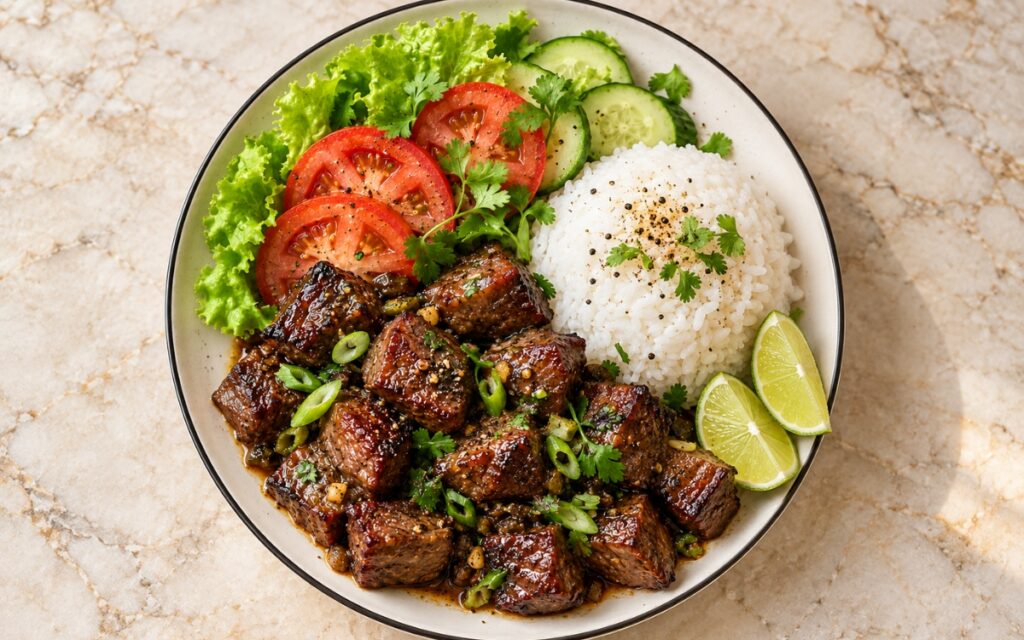
Seared Vietnamese beef cubes in a glossy garlic and oyster sauce glaze, served with jasmine rice, lettuce, tomato, cucumber and lime.
-
Broken Rice with Grilled Pork (Cơm Tấm)
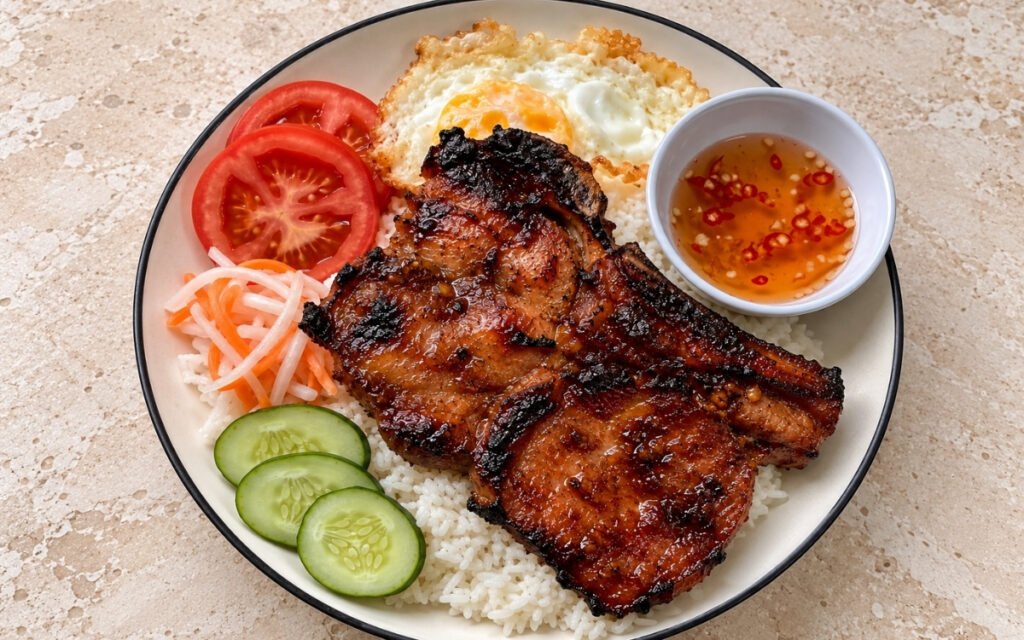
Grilled lemongrass pork chop over broken rice with a fried egg, quick pickled carrot and daikon, cucumber, tomato, and nước chấm.
-
Italian Stuffed Peppers
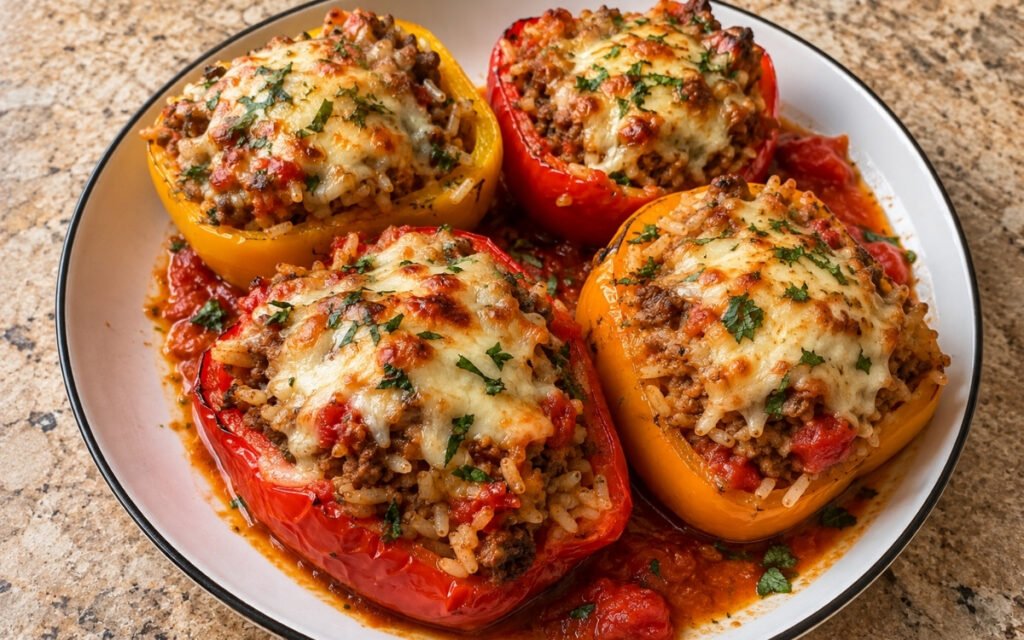
Halved bell peppers filled with beef, pork, rice, onion, garlic, tomato sauce, herbs and cheese, baked over tomato sauce until tender.
You might also like
You might also like
-
Banh Mi Rice Bowl
A Vietnamese-inspired rice bowl of seared lemongrass pork, jasmine rice, quick-pickled carrot and daikon, cucumber, fresh herbs and nước chấm-style sauce.
-
Steam-Roasted Pork Belly with Vietnamese-ish Herb Sauce
Skin-on pork belly steam-roasted for tender meat, finished hot for deep crackling, sliced thick and served with a sharp herb sauce.
-
Vietnamese Shaking Beef / Bò Lúc Lắc
Seared Vietnamese beef cubes in a glossy garlic and oyster sauce glaze, served with jasmine rice, lettuce, tomato, cucumber and lime.

Tonkotsu Ramen
Ingredients
Method
- Rinse the 3,500g of pork bones well under cold water, scrubbing off any loose blood clots. Put them in a large stockpot, cover with cold water, and bring to a hard boil, then boil for 15–20 minutes. Drain completely, wash the bones under running water, and remove every loose grey impurity and coagulated bit. Scrub the pot clean as well, since the real broth starts in a fresh pot. The bones should look much cleaner and lighter. That thorough cleaning is what keeps the broth tasting clean instead of dirty and muddy, however long it cooks afterwards.
- Return the cleaned bones to the clean pot with the 300g of pork fat, if using, and cover generously with fresh water. Bring to a vigorous boil, not a lazy simmer, then add the halved onion, the halved garlic head, the 40g of ginger, and the leek or scallions. Boil aggressively for 8–10 hours, partly covered or uncovered as needed, stirring and moving the bones occasionally and topping up with boiling water whenever the level drops too far. The broth should gradually turn opaque, creamy, and ivory-white. That constant rolling turbulence, kept going with hot water only, is what emulsifies the collagen, marrow, and fat into the broth.
- Early in the broth cook, roll and tie the 900g of pork belly tightly. Sear it lightly in a Dutch oven or deep pan on several sides until the outside picks up a pale golden-brown colour. Add the 750ml of water, the soy sauce, sake, mirin, sugar, 4 scallions, 25g of ginger, and the crushed garlic, and bring to a gentle simmer. Cover with a drop lid or parchment cartouche, or keep the pork mostly submerged, and braise very gently for 75–90 minutes, turning once or twice, until tender but still sliceable. Cool the pork in its liquid for at least 1 hour, then chill it in some of the liquid for several hours or overnight. That gentle braise and long chill are what keep the pork tender yet firm enough to slice into tight, tidy spirals.
- Strain and reserve the chashu braising liquid, and let it cool completely. Bring a pot of water to a boil, lower in the 4 eggs, and cook for 6½ to 7 minutes for jammy yolks. Transfer them immediately to ice water and chill completely, then peel carefully. Place the eggs in a container or zip bag with about 200ml of the cooled braising liquid, enough to coat and submerge them, and marinate in the refrigerator for 6–24 hours. The yolks should stay soft and deep orange, never hard-cooked. That full chilling before peeling is what keeps the whites from tearing, and the long marinade is what seasons them through.
- Soak the 40g of dried wood ear mushrooms in warm water for 20–30 minutes, until fully rehydrated, then drain, squeeze dry, trim any hard ends, and slice thinly. Drain the 160–200g of menma well, slice the 4–5 scallions very thinly, and cut the nori if needed. Slice the chilled chashu into thin rounds, planning 2–3 slices per bowl. Plan for 1 egg, halved, a small mound of wood ear, a small bundle of menma, a generous pinch of scallions, and 1 nori sheet or 2 half-sheets in each bowl. That restraint is what keeps the broth visible and the bowl looking clean.
- Taste the reserved chashu braising liquid and measure out 120ml for the tare, adjusting with a little of the 30ml of light soy sauce, a pinch of the salt, or the 1 tsp of mirin only if needed. The tare should taste stronger and saltier than is pleasant on its own, because it seasons the underseasoned broth. Reheat the strained broth until very hot, and warm the sliced chashu gently in a little broth or braising liquid so it never goes onto the ramen cold. Keep the broth hot right up until assembly. That strong tare is what decides whether the bowl tastes flat or properly balanced.
- Bring a large pot of unsalted water to a boil and cook the fresh thin ramen noodles in small batches or bowl by bowl, just until springy and barely done, usually 30–60 seconds depending on the noodle. Lift them out and drain extremely well, shaking off every drop of water. The noodles should still have a firm, springy bite. That short cook and thorough drain are what stop these fast-softening noodles from turning soft and from diluting the creamy broth.
- For each bowl, add about 1½ tbsp of tare to the bottom, pour in 350–400ml of very hot broth, and stir. Add one portion of noodles, then arrange 2–3 slices of chashu, 2 egg halves facing upward, a small mound of wood ear, the menma, and a pinch of scallions in distinct sections, with a spoonful of the optional reserved pork fat if you like. Stand the nori upright at the edge of the bowl and serve immediately. That exposed, creamy broth between neat toppings is what shows the ramen was assembled the way a ramen shop would.