Ingredients
Method
Blanch and Clean the Bones
- Rinse the 3,500g of pork bones well under cold water, scrubbing off any loose blood clots. Put them in a large stockpot, cover with cold water, and bring to a hard boil, then boil for 15–20 minutes. Drain completely, wash the bones under running water, and remove every loose grey impurity and coagulated bit. Scrub the pot clean as well, since the real broth starts in a fresh pot. The bones should look much cleaner and lighter. That thorough cleaning is what keeps the broth tasting clean instead of dirty and muddy, however long it cooks afterwards.
Boil the Tonkotsu Broth
- Return the cleaned bones to the clean pot with the 300g of pork fat, if using, and cover generously with fresh water. Bring to a vigorous boil, not a lazy simmer, then add the halved onion, the halved garlic head, the 40g of ginger, and the leek or scallions. Boil aggressively for 8–10 hours, partly covered or uncovered as needed, stirring and moving the bones occasionally and topping up with boiling water whenever the level drops too far. The broth should gradually turn opaque, creamy, and ivory-white. That constant rolling turbulence, kept going with hot water only, is what emulsifies the collagen, marrow, and fat into the broth.
Braise the Chashu
- Early in the broth cook, roll and tie the 900g of pork belly tightly. Sear it lightly in a Dutch oven or deep pan on several sides until the outside picks up a pale golden-brown colour. Add the 750ml of water, the soy sauce, sake, mirin, sugar, 4 scallions, 25g of ginger, and the crushed garlic, and bring to a gentle simmer. Cover with a drop lid or parchment cartouche, or keep the pork mostly submerged, and braise very gently for 75–90 minutes, turning once or twice, until tender but still sliceable. Cool the pork in its liquid for at least 1 hour, then chill it in some of the liquid for several hours or overnight. That gentle braise and long chill are what keep the pork tender yet firm enough to slice into tight, tidy spirals.
Make the Ajitama Eggs
- Strain and reserve the chashu braising liquid, and let it cool completely. Bring a pot of water to a boil, lower in the 4 eggs, and cook for 6½ to 7 minutes for jammy yolks. Transfer them immediately to ice water and chill completely, then peel carefully. Place the eggs in a container or zip bag with about 200ml of the cooled braising liquid, enough to coat and submerge them, and marinate in the refrigerator for 6–24 hours. The yolks should stay soft and deep orange, never hard-cooked. That full chilling before peeling is what keeps the whites from tearing, and the long marinade is what seasons them through.
Prep the Toppings
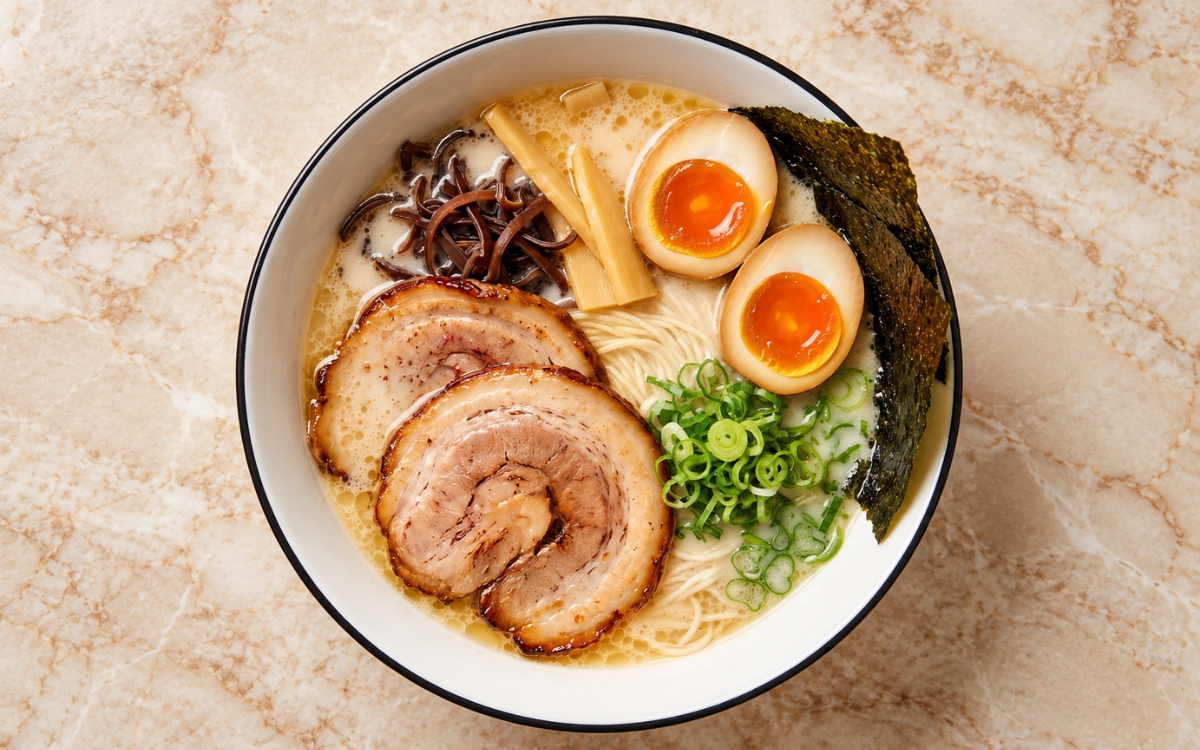
- Soak the 40g of dried wood ear mushrooms in warm water for 20–30 minutes, until fully rehydrated, then drain, squeeze dry, trim any hard ends, and slice thinly. Drain the 160–200g of menma well, slice the 4–5 scallions very thinly, and cut the nori if needed. Slice the chilled chashu into thin rounds, planning 2–3 slices per bowl. Plan for 1 egg, halved, a small mound of wood ear, a small bundle of menma, a generous pinch of scallions, and 1 nori sheet or 2 half-sheets in each bowl. That restraint is what keeps the broth visible and the bowl looking clean.
Season the Tare and Reheat
- Taste the reserved chashu braising liquid and measure out 120ml for the tare, adjusting with a little of the 30ml of light soy sauce, a pinch of the salt, or the 1 tsp of mirin only if needed. The tare should taste stronger and saltier than is pleasant on its own, because it seasons the underseasoned broth. Reheat the strained broth until very hot, and warm the sliced chashu gently in a little broth or braising liquid so it never goes onto the ramen cold. Keep the broth hot right up until assembly. That strong tare is what decides whether the bowl tastes flat or properly balanced.
Cook the Noodles
- Bring a large pot of unsalted water to a boil and cook the fresh thin ramen noodles in small batches or bowl by bowl, just until springy and barely done, usually 30–60 seconds depending on the noodle. Lift them out and drain extremely well, shaking off every drop of water. The noodles should still have a firm, springy bite. That short cook and thorough drain are what stop these fast-softening noodles from turning soft and from diluting the creamy broth.
Assemble and Serve
- For each bowl, add about 1½ tbsp of tare to the bottom, pour in 350–400ml of very hot broth, and stir. Add one portion of noodles, then arrange 2–3 slices of chashu, 2 egg halves facing upward, a small mound of wood ear, the menma, and a pinch of scallions in distinct sections, with a spoonful of the optional reserved pork fat if you like. Stand the nori upright at the edge of the bowl and serve immediately. That exposed, creamy broth between neat toppings is what shows the ramen was assembled the way a ramen shop would.
Notes
Maintaining a vigorous, rolling boil for 8–10 hours deserves genuine recognition as the technique most directly responsible for whether this ramen ends creamy and ivory or thin and clear. The recipe’s own explicit instruction that “Tonkotsu needs a hard boil, not a classic gentle stock simmer” reflects the fact that only turbulence emulsifies collagen, marrow, and fat into suspension, whereas a lazy simmer leaves them separate.
Blanching and scrubbing the bones deserves the same attention this technique receives throughout this collection’s other long-cooked stocks and broths. A 15–20 minute boil drives blood and coagulated impurities off the bones and out of the marrow, and without that wash the broth clouds grey and tastes muddy no matter how many hours it cooks afterwards.
The tare deserves genuine respect as the detail most directly responsible for the final seasoning of every bowl, because the broth itself is left underseasoned. The recipe’s own explicit note that “Final ramen balance depends on tare” reflects how too little leaves the broth flat and too much turns the bowl salty, which is why the 120ml of chashu liquid is tasted before use.
Timing the eggs and noodles to the minute deserves attention as a genuine, checkable readiness cue rather than a loose approximation. Under 6½ minutes leaves the yolk runny and past 7 minutes pushes it toward set, while thin Hakata-style noodles overcook very fast, so even an extra half minute turns them soft in the hot broth.