
Banh Mi Rice Bowl
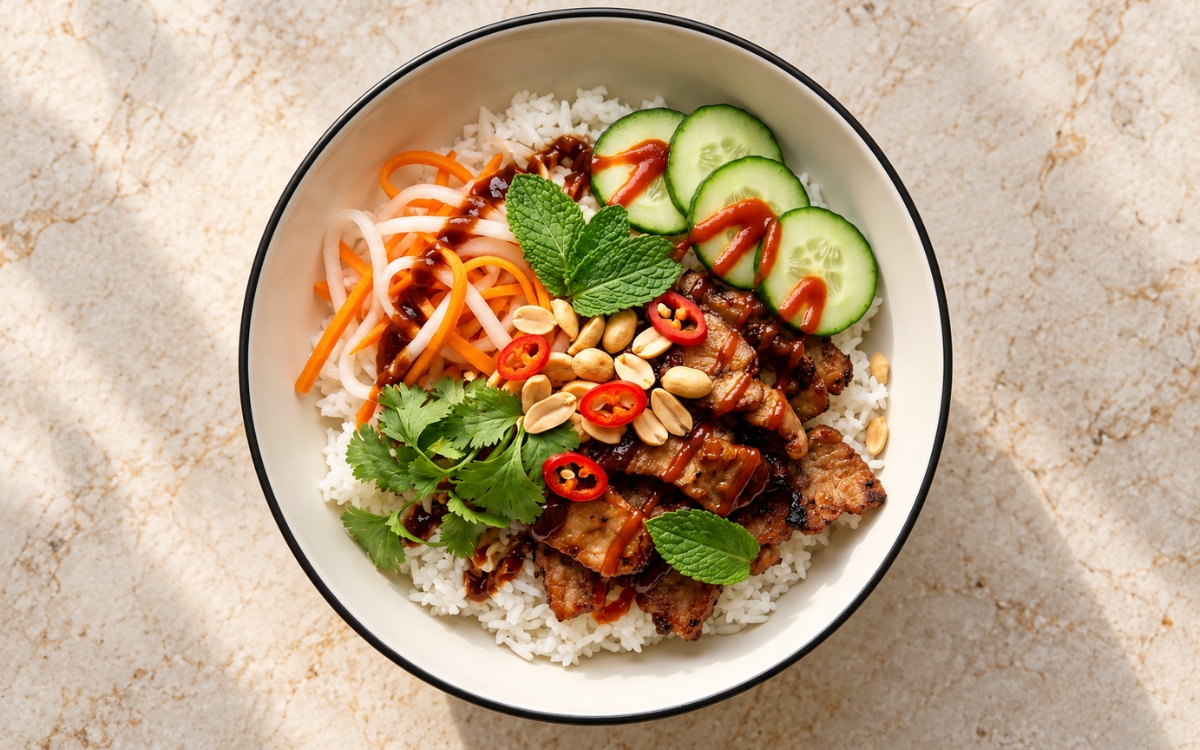
A Vietnamese-inspired rice bowl built around classic banh mi flavours, with fluffy jasmine rice topped with seared lemongrass pork, quick-pickled carrot and daikon, cool cucumber, cilantro, mint and a light nước chấm-style sauce, the key being caramelised, savoury-sweet pork against sharp, crisp pickles. Searing the thinly sliced pork in small batches in a very hot pan, rather than tipping all 700g in at once, is the technique this whole bowl depends on for its browned, lightly charred edges — a crowded pan pools the lemongrass marinade into liquid that boils the slices pale and grey, the same sear-in-batches principle used elsewhere in this collection whenever a sugary marinade meets thin, quick-cooking meat. A short, cold quick-pickle is what keeps the carrot and daikon crisp, tangy and lightly sweet rather than soft and sour. Rinsing the jasmine rice and steaming it with a measured amount of water is what gives loose, separate grains that hold the toppings without turning wet. The payoff is a bowl with real, layered contrast — warm, caramelised pork and fluffy rice against crunchy pickles, cool cucumber, fresh herbs and a salty, tangy drizzle.

Prep Time : 30 min
Total Time : 1 hr 25 min
Servings : 4
30 min
1 hr 25 min
4
Ingredients
For the Lemongrass Pork
• 700g pork shoulder or pork tenderloin, thinly sliced against the grain
• 2 lemongrass stalks, tender inner part only, very finely minced
• 4 garlic cloves, finely grated or minced
• 1 small shallot, finely minced
• 2 tbsp fish sauce
• 1 tbsp soy sauce
• 1 tbsp neutral oil, plus 1–2 tsp extra for the pan, only if needed
• 1 tbsp brown sugar or white sugar
• 1 tsp black pepper
• ½ tsp salt
• 1 tsp sesame oil, optional, omit for a stricter version
For the Jasmine Rice
• 300g jasmine rice
• 375ml water
• A pinch of salt, optional
For the Quick-Pickled Carrot and Daikon
• 150g carrot, cut into thin matchsticks or julienned
• 200g daikon radish, cut into thin matchsticks or julienned
• 120ml rice vinegar
• 120ml warm water
• 2 tbsp sugar
• 1 tsp salt
For the Nước Chấm-Style Sauce
• 3 tbsp fish sauce
• 2 tbsp lime juice
• 2 tbsp warm water
• 1½ tbsp sugar
• 1 garlic clove, finely minced
• 1 small red chilli, finely sliced
• A little extra lime juice, sugar, water or fish sauce, to adjust, only if needed
For the Bowl Vegetables and Herbs
• 1 medium cucumber, thinly sliced
• 20–25g cilantro
• A small handful of mint leaves, optional
• 1–2 red chillies, thinly sliced
• Lime wedges, for serving
Optional Finishing Touches (Not classical banh mi, so keep them light)
• Roasted peanuts, roughly chopped, to taste
• A little chilli sauce or chilli oil, for drizzling
Directions
- Quick-Pickle the Carrot and Daikon
In a bowl or wide jar, combine the 120ml rice vinegar, 120ml warm water, 2 tbsp sugar and 1 tsp salt, stirring until both the sugar and salt have fully dissolved and the brine looks clear. Add the 150g carrot and 200g daikon matchsticks and press them down firmly so every piece sits under the brine. Leave them to pickle for at least 20–30 minutes at room temperature while everything else is prepared, or cover and refrigerate for longer if making ahead. Do not heat the brine or the vegetables at any point. They are ready when they taste bright, lightly sweet, lightly salty and sharply tangy but still snap when bitten. That cold, short soak is what seasons the vegetables right through while keeping the genuine crunch the whole bowl relies on. - Marinate the Pork
If the pork is not already sliced, cut the 700g pork shoulder or tenderloin thinly against the grain, about 3–5mm thick, leaving no large or thick chunks. In a large bowl, combine the very finely minced lemongrass, 4 garlic cloves, shallot, 2 tbsp fish sauce, 1 tbsp soy sauce, 1 tbsp neutral oil, 1 tbsp sugar, 1 tsp black pepper and ½ tsp salt, adding the 1 tsp sesame oil if using. Add the pork and mix very thoroughly with your hands so every slice is coated in the aromatic paste. Cover and marinate for at least 30 minutes; tenderloin needs no more than 30–45 minutes, while shoulder benefits from 1–2 hours in the fridge if there is time. The marinade should smell strongly of lemongrass and garlic and taste savoury-sweet. That thin, cross-grain slicing is what keeps every piece tender and lets it cook fast enough to caramelise before it dries out. - Cook the Jasmine Rice
As soon as the pork is marinating, rinse the 300g jasmine rice in cold water 3–4 times, swirling it with your fingers, until the water runs mostly clear, then drain well. Combine the rice, 375ml water and the pinch of salt, if using, in a medium saucepan and bring to a boil over medium-high heat. Stir once, cover tightly, reduce to the lowest heat and cook for 12–13 minutes, until the water has been absorbed and small steam holes dot the surface. Turn off the heat and leave it to rest, still covered, for 10 minutes without lifting the lid, then fluff gently with a fork. The grains should be fluffy and separate, never wet, sticky or mushy. That measured water and undisturbed rest is what gives the loose rice a composed bowl needs. - Make the Nước Chấm-Style Sauce
While the rice cooks, stir the 1½ tbsp sugar into the 2 tbsp warm water in a small bowl until it has completely dissolved. Add the 3 tbsp fish sauce, 2 tbsp lime juice, the finely minced garlic clove and the sliced small red chilli, and stir again. Taste carefully and adjust only if needed: a little more lime for brightness, a little more sugar if it tastes too sharp, a splash more water if it is too intense, or a few drops more fish sauce if it needs depth. The finished sauce should taste salty, tangy, lightly sweet and punchy, with no single element dominating. Set it aside so the garlic and chilli can infuse while the pork cooks. That careful balance is what lets a small drizzle season the whole bowl. - Prep the Fresh Components
While the rice rests, lift the pickled carrot and daikon from the brine and drain them lightly in a sieve, leaving them moist but not dripping. Pick the 20–25g cilantro into small sprigs and pick the mint leaves, if using, discarding any tough stems. Thinly slice the 1–2 red chillies and cut the lime wedges. Slice the cucumber thinly last, as close to serving as possible, so it stays cold and crisp. Arrange every component in separate small piles or bowls beside the stove, ready for assembly. Once the pork starts cooking, there is no time to stop and chop. That advance preparation is what allows the pork to go straight from the pan into the bowls while it is still genuinely hot and glossy. - Sear the Lemongrass Pork
Heat a large skillet, frying pan or grill pan over high heat for 2–3 minutes, until very hot and just beginning to smoke; add 1–2 tsp extra neutral oil only if the pan looks dry. Add about a third of the pork in a single layer and let it sear undisturbed for about 1 minute, then turn and keep cooking for 2–4 minutes in total per batch, until browned in spots, lightly caramelised and just cooked through with no pink in the thickest slice. Let a few edges char slightly for a grilled banh mi feel. Transfer to a plate, let the pan reheat fully and repeat with the remaining batches. If liquid pools heavily, the batches are too large. Remove tenderloin as soon as it is cooked, while shoulder can take stronger browning. Return all the pork for 30–60 seconds and toss. That brief final toss is what evens out the seasoning and gloss across every slice. - Assemble the Bowls
Divide the warm, fluffy rice between 4 bowls. Top each bowl with a quarter of the hot lemongrass pork, then arrange the pickled carrot and daikon, cucumber slices, cilantro, a few mint leaves if using and the sliced red chilli in separate sections around it, keeping the bowl visually sectioned rather than tossed. Drizzle each bowl lightly with about 1–2 tbsp of the nước chấm-style sauce, just enough to season and brighten, and serve the rest on the side. Tuck lime wedges alongside. If using the optional finishing touches, add only a few chopped peanuts or a small drizzle of chilli sauce or chilli oil. The rice should look moist where the sauce touches it, never soupy. That restrained finish is what keeps the bowl reading clearly as banh mi-inspired rather than as a different style of rice bowl.
*Notes :
- Searing the pork in small batches deserves genuine recognition as the technique most directly responsible for whether this bowl tastes grilled or stewed. The recipe’s own warning that “If liquid pools heavily, the meat will boil instead of sear” explains why — 700g of cold, sugary, marinated slices drops the pan temperature so sharply that the juices flood out, leaving pale pork that tastes weaker and less like banh mi.
- Thin, cross-grain slicing and very fine lemongrass deserve the same attention this technique receives throughout this collection’s other quick-seared marinated meats, because both decide the texture of every bite. The recipe’s own instruction to use “only the tender lower inner part” of the lemongrass matters as much as the knife work — tough outer layers stay genuinely stringy, while thick chunks of pork cook too slowly to caramelise before drying out.
- Keeping the pickles cold and short deserves genuine respect as the detail most directly responsible for the bowl’s crunch and acidity. The recipe’s own note that the pickles “are not meant to soften deeply like long pickles” explains the method — heat or a long soak breaks down the carrot and daikon, while 20–30 minutes in room-temperature brine seasons them through and leaves them sharp, sweet and genuinely crisp.
- The amount of sauce on each bowl deserves attention as a genuine, checkable readiness cue rather than a loose approximation. The recipe’s own reminder to “not drown the bowl” gives the test — about 1–2 tbsp per bowl should glisten on the pork and lightly moisten the rice, while sauce pooling in the bottom means the rice will turn soupy and the pickles will lose their contrast.
Why This Recipe Works
This recipe works because every component is prepared to keep its own texture and flavour until the moment of assembly. Thin, cross-grain slices of pork take on lemongrass, garlic and fish sauce quickly, then brown in small, uncrowded batches so the sugar caramelises instead of stewing. The carrot and daikon pickle cold and briefly, so they stay crunchy and sharp, while rinsed jasmine rice steams into loose, separate grains. A punchy, balanced sauce added sparingly ties everything together, letting the warm, savoury pork, crisp pickles, cool cucumber and fresh herbs each stay genuinely distinct in every spoonful.
Ingredient Breakdown
Small-Batch High-Heat Sear
The critical technique — a third of the pork at a time keeps the pan genuinely hot enough to caramelise, not boil.
Thin Cross-Grain Pork Slices
The structural choice — 3–5mm slices cut against the grain stay tender and brown before drying out.
Finely Minced Lemongrass (Inner Part Only)
The defining flavour ingredient — the tender core gives citrusy aroma without stringy, fibrous pieces.
Cold Quick-Pickled Carrot and Daikon
The critical technique — an unheated brine makes the vegetables tangy and lightly sweet while keeping their crunch.
Fluffy Rinsed Jasmine Rice
The structural foundation — rinsing and a measured 375ml water give separate grains that support the toppings without turning wet.
Nước Chấm-Style Sauce
The finishing technique — fish sauce, lime, sugar, garlic and chilli make a salty, tangy, genuinely punchy drizzle.
Cucumber, Cilantro and Mint
The finishing touch — cool cucumber and fresh herbs bring a clean, green lift that balances the rich, caramelised pork.
Flavor Structure Explained
This banh mi rice bowl follows a layered balance model:
- Soft, neutral foundation (fluffy jasmine rice)
- Savoury, caramelised centrepiece (seared pork, fish sauce, soy sauce, sugar, black pepper)
- Aromatic backbone (lemongrass, garlic, shallot)
- Sharp, crunchy contrast (quick-pickled carrot and daikon)
- Bright, punchy dressing (fish sauce, lime juice, sugar, garlic, chilli)
- Cool, fresh lift (cucumber, cilantro, mint, red chilli, lime)
Fluffy jasmine rice forms the soft, neutral foundation that absorbs the sauce without going soggy. Seared pork brings the savoury, caramelised centrepiece, deepened by fish sauce, soy sauce, sugar and black pepper, while lemongrass, garlic and shallot build the aromatic backbone. The pickled carrot and daikon add sharp crunch, and the nước chấm-style sauce supplies a bright, genuinely punchy dressing. Cucumber, cilantro, mint, chilli and lime then deliver the cool, fresh lift that ties this banh mi rice bowl together.
Common Mistakes to Avoid
- Overcrowding the Pan – This releases the marinade into a pool of liquid that boils the pork pale instead of searing it. Always cook in batches in a very hot pan.
- Cutting the Pork Into Thick Chunks – This slows the cooking so the outside dries before it can caramelise. Always slice the pork thinly, about 3–5mm, against the grain.
- Using the Tough Outer Lemongrass – This leaves stringy, fibrous pieces clinging to the pork that never soften in the pan. Always peel down to the tender inner core and mince it very finely.
- Heating or Over-Soaking the Pickles – This softens the carrot and daikon until they lose the genuine crunch that defines the bowl. Always pickle them cold for 20–30 minutes or chill them briefly.
- Drowning the Bowl in Sauce – This turns the rice soupy and washes out the contrast between pork, pickles and herbs. Always drizzle lightly and serve the remaining sauce on the side.
Variations
Pork Tenderloin Version
Use pork tenderloin, per the recipe’s own note, for a leaner bowl, marinating it for 30–45 minutes and lifting each batch from the pan the moment it is cooked through so it stays juicy.
Long-Marinated Shoulder Version
Marinate the pork shoulder for 1–2 hours in the fridge, as the recipe suggests when time allows, for deeper lemongrass and garlic flavour and richer, more strongly browned edges.
Peanut Crunch Version
Scatter a few roughly chopped roasted peanuts over each bowl for extra crunch, keeping the amount small, since the recipe’s own note frames them as acceptable but not classical banh mi.
Stricter Classic Version
Leave out the sesame oil, peanuts and chilli oil and rely on lemongrass, fish sauce, pickles, cucumber and cilantro alone for a cleaner bowl that sits closer to the classic banh mi profile.
Storage & Make-Ahead
The quick-pickled carrot and daikon can be made up to 3 days ahead and kept submerged in their brine in a sealed jar in the fridge, though they are crispest within the first day or two.
The nước chấm-style sauce can be mixed up to 2 days ahead and refrigerated in a sealed jar, then stirred and tasted again before serving, since the garlic and chilli grow stronger as it sits.
The pork can be sliced and marinated up to 1 day ahead in a covered container in the fridge, but it should be seared only just before serving so the edges stay caramelised and the slices stay juicy.
Slice the cucumber and pick the cilantro and mint as close to serving as possible, because cut cucumber weeps and softens and the herbs wilt quickly once they sit under warm rice and sauce.
Leftover pork and rice keep separately in airtight containers in the fridge for up to 2 days, and the pork reheats best tossed for only 30–60 seconds in a very hot pan so it does not toughen.
Frequently Asked Questions
Why does the pork need to be sliced so thinly?
Thin slices cook in 2–4 minutes, fast enough for the sugar in the marinade to caramelise before the inside dries out. Thick chunks need longer in the pan, so they either stay pale or turn genuinely tough and chewy.
Why are the carrot and daikon pickled without heating the brine?
Heat softens the vegetables and dulls their fresh, sharp flavour. A cold, short soak in the vinegar brine seasons them through in 20–30 minutes while keeping the crisp snap that gives the bowl its banh mi character.
Why is the jasmine rice rinsed before cooking?
Rinsing washes away loose surface starch that would otherwise turn the cooking water gluey. The grains then steam into fluffy, separate rice that holds the pork, pickles and sauce instead of becoming wet or sticky.
Why is the sugar dissolved in warm water before mixing the sauce?
Sugar dissolves slowly in cold fish sauce and lime juice, leaving the sauce gritty and unevenly sweet. Warm water melts it completely first, so the salty, tangy and sweet elements blend into one balanced, punchy drizzle.
Are there other classic Vietnamese sandwich, rice bowl, or salad dishes worth trying?
Crispy Pork Bánh Mì Sandwich is the natural sandwich behind these flavours, and Vietnamese Caramelized Pork Bowl offers another pork-centred rice bowl worth exploring. Vietnamese Lemongrass Chicken Rice Bowl and Pho Sandwich are also worth trying for other Vietnamese-inspired meals, while Spicy Asian Cucumber Salad makes a crisp, fresh side worth making.
Nutrition Facts
( Per Serving — 1 bowl )
Calories
~750 kcal
Protein
38 g
Fat
30 g
Carbs
81 g
Calories
~750 kcal
Protein
38 g
Fat
30 g
Carbs
81 g
Related Recipes
Related Recipes
-

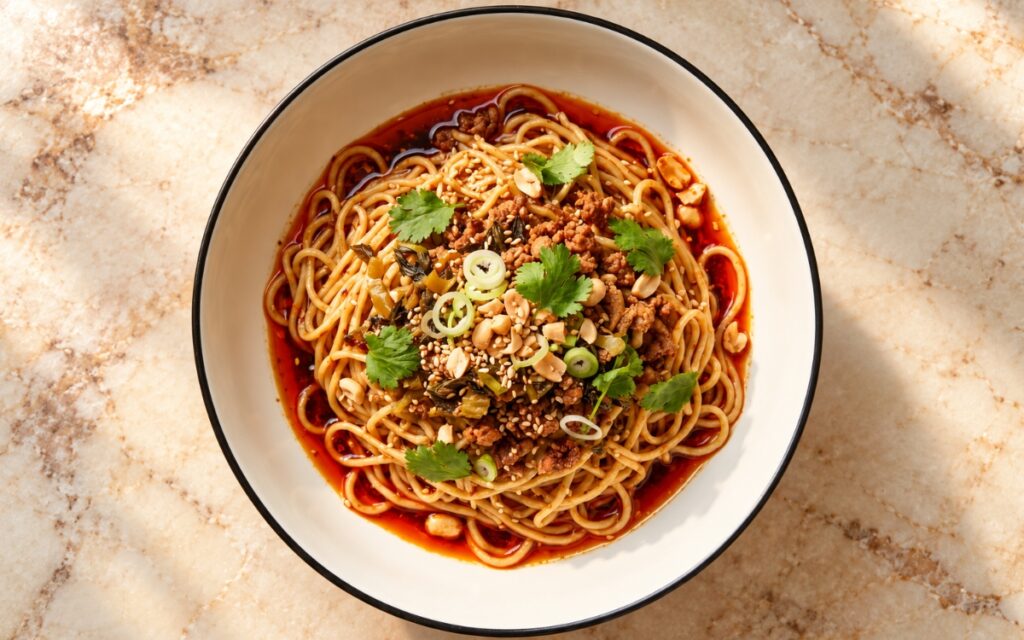
Dan Dan Noodles
Springy wheat noodles tossed in a glossy chili oil and sesame sauce, topped with browned pork, preserved greens, peanuts and scallions.
-
Tacos de Canasta
Soft steamed corn tacos stained orange-red with chile oil, filled with potato, beans, and chicharrón, topped with salsa verde.
-
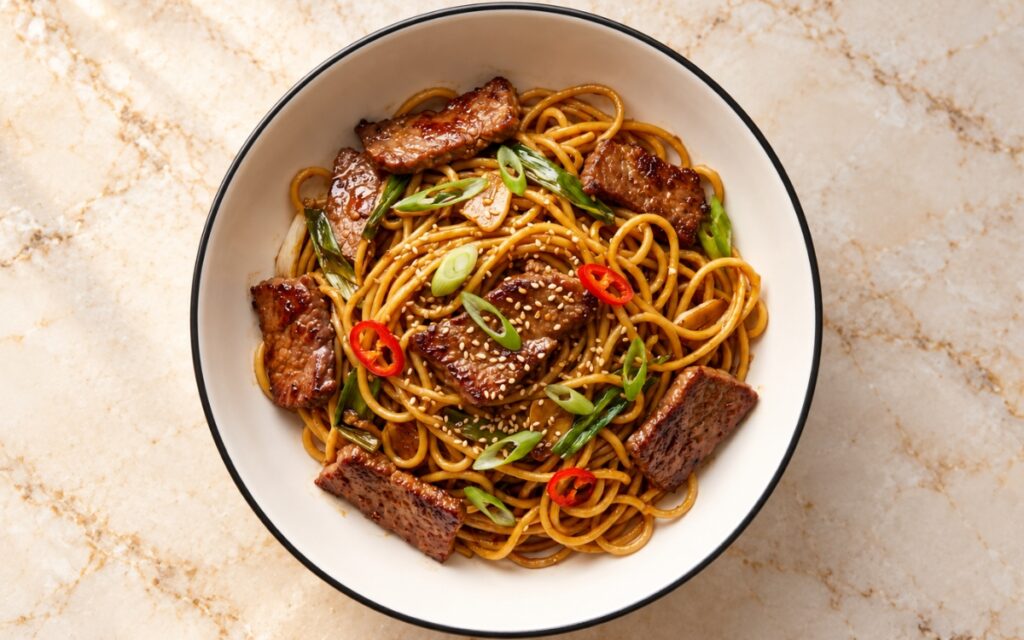
Mongolian Beef and Noodles
Lo mein-style wheat noodles tossed with seared beef, scallions, garlic and ginger in a dark, glossy savoury-sweet Mongolian-style sauce.

You might also like
You might also like
-
Puerto Rican Arroz con Gandules
Golden-orange Puerto Rican rice cooked in one pot with pigeon peas, sofrito, green olives, red bell pepper, and browned pork shoulder cubes.
-
Tonkatsu with Cabbage Slaw
Golden panko-crusted pork cutlet, sliced and served over fine cabbage with fluffy rice, glossy sauce, and lemon.
-
Vietnamese Caramelized Pork Bowl
A Vietnamese-inspired rice bowl of glossy pork belly in fish sauce caramel over jasmine rice, with cucumber, cilantro and scallion.


Banh Mi Rice Bowl
Ingredients
Method
- In a bowl or wide jar, combine the 120ml rice vinegar, 120ml warm water, 2 tbsp sugar and 1 tsp salt, stirring until both the sugar and salt have fully dissolved and the brine looks clear. Add the 150g carrot and 200g daikon matchsticks and press them down firmly so every piece sits under the brine. Leave them to pickle for at least 20–30 minutes at room temperature while everything else is prepared, or cover and refrigerate for longer if making ahead. Do not heat the brine or the vegetables at any point. They are ready when they taste bright, lightly sweet, lightly salty and sharply tangy but still snap when bitten. That cold, short soak is what seasons the vegetables right through while keeping the genuine crunch the whole bowl relies on.
- If the pork is not already sliced, cut the 700g pork shoulder or tenderloin thinly against the grain, about 3–5mm thick, leaving no large or thick chunks. In a large bowl, combine the very finely minced lemongrass, 4 garlic cloves, shallot, 2 tbsp fish sauce, 1 tbsp soy sauce, 1 tbsp neutral oil, 1 tbsp sugar, 1 tsp black pepper and ½ tsp salt, adding the 1 tsp sesame oil if using. Add the pork and mix very thoroughly with your hands so every slice is coated in the aromatic paste. Cover and marinate for at least 30 minutes; tenderloin needs no more than 30–45 minutes, while shoulder benefits from 1–2 hours in the fridge if there is time. The marinade should smell strongly of lemongrass and garlic and taste savoury-sweet. That thin, cross-grain slicing is what keeps every piece tender and lets it cook fast enough to caramelise before it dries out.
- As soon as the pork is marinating, rinse the 300g jasmine rice in cold water 3–4 times, swirling it with your fingers, until the water runs mostly clear, then drain well. Combine the rice, 375ml water and the pinch of salt, if using, in a medium saucepan and bring to a boil over medium-high heat. Stir once, cover tightly, reduce to the lowest heat and cook for 12–13 minutes, until the water has been absorbed and small steam holes dot the surface. Turn off the heat and leave it to rest, still covered, for 10 minutes without lifting the lid, then fluff gently with a fork. The grains should be fluffy and separate, never wet, sticky or mushy. That measured water and undisturbed rest is what gives the loose rice a composed bowl needs.
- While the rice cooks, stir the 1½ tbsp sugar into the 2 tbsp warm water in a small bowl until it has completely dissolved. Add the 3 tbsp fish sauce, 2 tbsp lime juice, the finely minced garlic clove and the sliced small red chilli, and stir again. Taste carefully and adjust only if needed: a little more lime for brightness, a little more sugar if it tastes too sharp, a splash more water if it is too intense, or a few drops more fish sauce if it needs depth. The finished sauce should taste salty, tangy, lightly sweet and punchy, with no single element dominating. Set it aside so the garlic and chilli can infuse while the pork cooks. That careful balance is what lets a small drizzle season the whole bowl.
- While the rice rests, lift the pickled carrot and daikon from the brine and drain them lightly in a sieve, leaving them moist but not dripping. Pick the 20–25g cilantro into small sprigs and pick the mint leaves, if using, discarding any tough stems. Thinly slice the 1–2 red chillies and cut the lime wedges. Slice the cucumber thinly last, as close to serving as possible, so it stays cold and crisp. Arrange every component in separate small piles or bowls beside the stove, ready for assembly. Once the pork starts cooking, there is no time to stop and chop. That advance preparation is what allows the pork to go straight from the pan into the bowls while it is still genuinely hot and glossy.
- Heat a large skillet, frying pan or grill pan over high heat for 2–3 minutes, until very hot and just beginning to smoke; add 1–2 tsp extra neutral oil only if the pan looks dry. Add about a third of the pork in a single layer and let it sear undisturbed for about 1 minute, then turn and keep cooking for 2–4 minutes in total per batch, until browned in spots, lightly caramelised and just cooked through with no pink in the thickest slice. Let a few edges char slightly for a grilled banh mi feel. Transfer to a plate, let the pan reheat fully and repeat with the remaining batches. If liquid pools heavily, the batches are too large. Remove tenderloin as soon as it is cooked, while shoulder can take stronger browning. Return all the pork for 30–60 seconds and toss. That brief final toss is what evens out the seasoning and gloss across every slice.
- Divide the warm, fluffy rice between 4 bowls. Top each bowl with a quarter of the hot lemongrass pork, then arrange the pickled carrot and daikon, cucumber slices, cilantro, a few mint leaves if using and the sliced red chilli in separate sections around it, keeping the bowl visually sectioned rather than tossed. Drizzle each bowl lightly with about 1–2 tbsp of the nước chấm-style sauce, just enough to season and brighten, and serve the rest on the side. Tuck lime wedges alongside. If using the optional finishing touches, add only a few chopped peanuts or a small drizzle of chilli sauce or chilli oil. The rice should look moist where the sauce touches it, never soupy. That restrained finish is what keeps the bowl reading clearly as banh mi-inspired rather than as a different style of rice bowl.