
Pho Sandwich
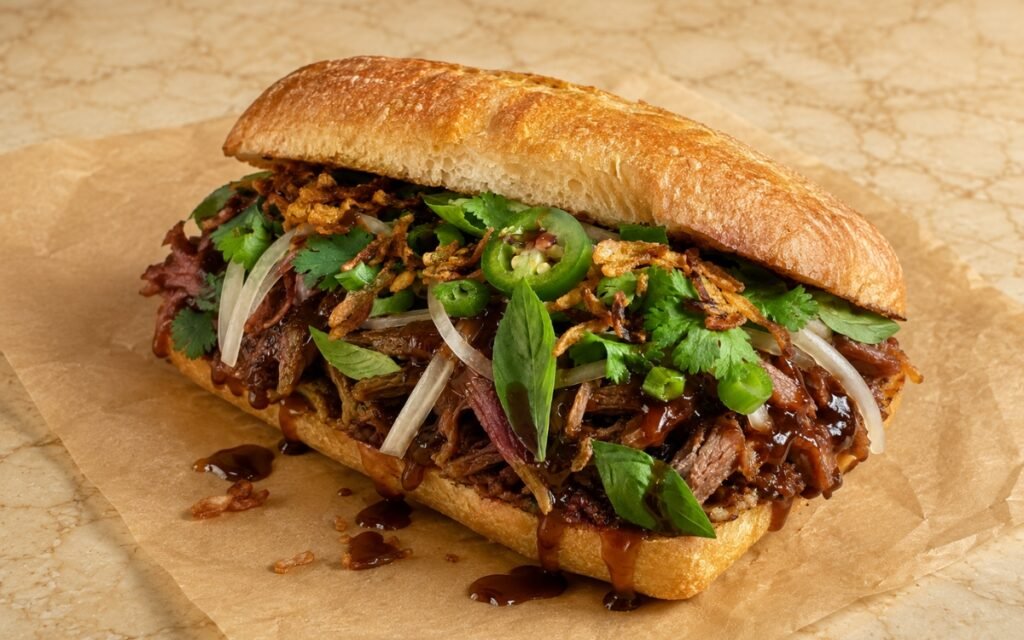
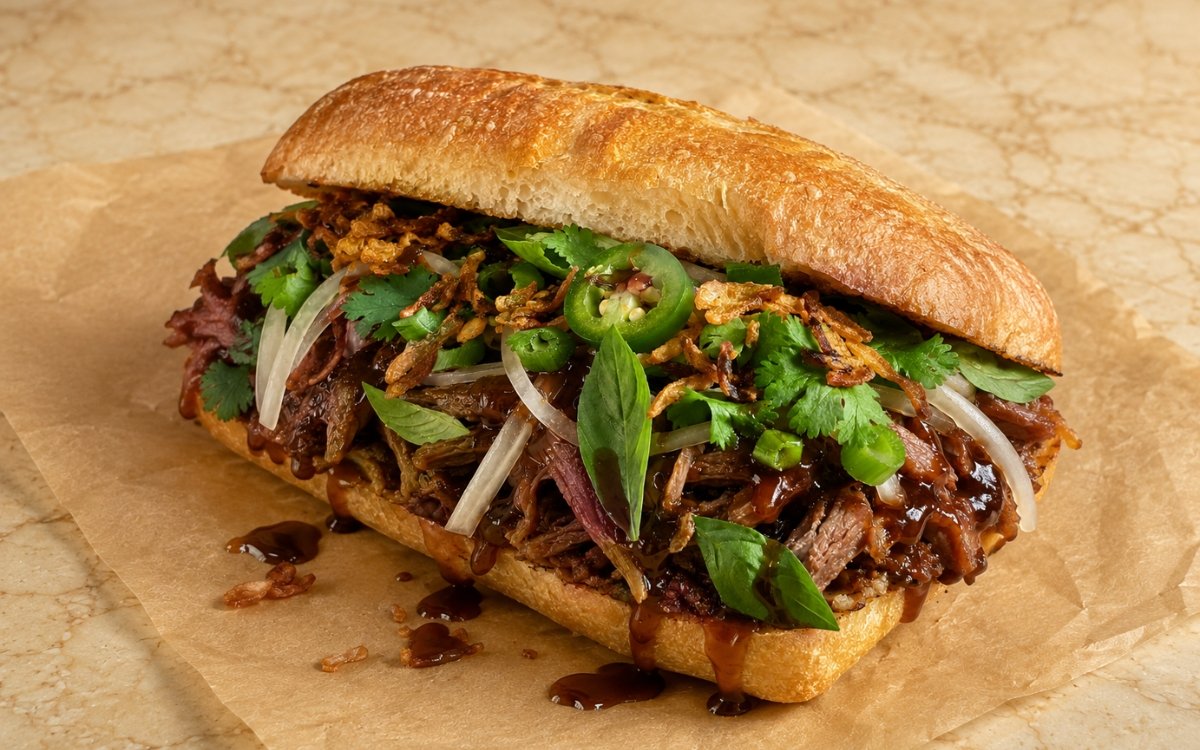
A pho-inspired sandwich on a crusty baguette filled with slow-braised beef in a fragrant pho-style flavor base, topped with thin white onion, scallions, cilantro, Thai basil, thin jalapeño slices, crispy fried shallots, and a drizzle of hoisin. It keeps the core aromatic profile of beef pho, but turns it into a rich, juicy, herb-loaded sandwich. Charring the onion, ginger, and garlic before they ever meet the braising liquid is the technique this sandwich depends on for its recognisably pho-like base — that direct char builds a smoky, roasted sweetness that a gently cooked aromatic base simply doesn’t develop, the same char-first principle used elsewhere in this collection whenever a broth or braise needs genuine depth rather than a flat, plain-tasting foundation. Reducing the strained braising liquid separately after the beef comes out, rather than serving it as-is, is what turns a thin braising liquid into a concentrated, glossy jus that seasons the meat without ever soaking through the bread. Adding the crispy fried shallots only at the very last moment protects the one texture in this sandwich with genuinely no tolerance for delay. The payoff is a sandwich that eats like a bridge between pho and bánh mì — rich, glazed beef against fresh herbs, raw onion, chili heat, and a controlled drizzle of hoisin.
Prep Time : 30 min
Cook Time : 3 hr, 15 min
Servings : 4
30 min
3 hr, 15 min
4
Ingredients
For the Bread
• 4 crusty baguette sections, about 18–20cm each, or 1 full batch from Classic French Baguette
For the Pho-Spiced Braised Beef
• 800g beef chuck roast, beef shoulder, or brisket, cut into 2–3 large pieces
• 12g fine sea salt
• 1 tsp freshly ground black pepper
• 2 tbsp neutral oil
• 1 large yellow onion, halved
• 60g fresh ginger, halved lengthwise
• 4 garlic cloves, lightly crushed
• 3 whole star anise — this one on Amazon
• 1 cinnamon stick
• 1 tsp coriander seeds — this one on Amazon
• 3 whole cloves — this one on Amazon
• 1 tbsp fish sauce — this one on Amazon
• 1 tbsp soy sauce — this one on Amazon
• 1 tbsp brown sugar — this one on Amazon
• 750ml beef stock
• 250ml water, or more as needed
For the Sandwich Toppings
• 1 small white onion, very thinly sliced
• 4 scallions, thinly sliced
• 1 large handful fresh cilantro leaves and tender stems
• 1 large handful Thai basil leaves
• 1–2 jalapeños, thinly sliced
• 60–80g crispy fried shallots
For Finishing
• 80–100g hoisin sauce — this one on Amazon
• 1–2 tbsp hot braising jus, per sandwich if needed for extra moisture
This post may contain affiliate links. As an Amazon Associate I earn from qualifying purchases, at no additional cost to you.
Directions
- Char the Aromatics
Place the onion halves and ginger cut-side down in a dry skillet, under a broiler, or directly over a gas flame. Char until deeply browned and lightly blackened in spots. Add the garlic for the final 2–3 minutes so it softens and takes on a little color without burning. This step matters because the onion and ginger need that lightly smoky, sweet, roasted edge that gives the beef a recognizably pho-like base rather than a plain pot-roast flavor. Set aside. Direct charring caramelises the onion’s natural sugars and blooms the ginger’s aromatic oils in a way gentle sautéing never achieves — that smoky, roasted character is what carries this braise’s flavour firmly into pho territory rather than reading as an ordinary beef stew. - Toast the Spices
Place the star anise, cinnamon stick, coriander seeds, and cloves in a dry pan over medium-low heat for 45–60 seconds, just until fragrant. Do not darken or burn them. The goal is to wake up the oils in the spices, not make them bitter. Set aside. This brief dry toast is enough to release the spices’ aromatic oils without pushing them anywhere near the point where those same compounds turn acrid — the window here is short and worth watching closely rather than walking away. - Sear the Beef
Pat the beef dry and season it all over with the salt and black pepper. Heat the neutral oil in a heavy pot or Dutch oven over medium-high heat. Sear the beef well on all sides until deeply browned. Work in batches if needed so the meat browns rather than steams. The beef should develop a proper crust. That browning is what gives the finished sandwich depth and a richer savory edge once the braising liquid reduces. Remove the beef to a plate. Searing in properly spaced batches, rather than crowding the pot, is what allows genuine contact between the meat’s surface and the hot pot — crowded beef releases moisture and simmers rather than developing the dark crust that becomes the foundation of everything the braising liquid builds on afterward. - Build the Pho-Style Braising Base
Lower the heat to medium. Add the charred onion, ginger, and garlic to the pot briefly. Add the toasted spices, fish sauce, soy sauce, and brown sugar. Stir for a few seconds, then pour in the beef stock and water, scraping up everything stuck to the bottom. Return the beef to the pot. The liquid should come about ⅔ of the way up the beef; add a little more water if needed. Bring just to a gentle simmer, then cover with the lid slightly ajar and braise on very low heat for about 2½ to 3 hours, until the beef is fully tender. The liquid should never boil aggressively. A quiet, slow braise keeps the beef tender and lets the spice profile stay clean and aromatic. Keeping the liquid at roughly two-thirds up the beef rather than fully submerging it concentrates the braise’s flavour into a smaller volume — a fully submerged braise dilutes both the meat and the eventual jus, producing a thinner result even after the same amount of later reduction. - Reduce and Slice the Beef
Lift the beef out of the braising liquid and rest it for 10 minutes. Strain the braising liquid and discard the aromatics and whole spices. Return the strained liquid to the pot and simmer uncovered until slightly reduced and glossy. It should taste concentrated, beefy, lightly sweet, aromatic, and balanced, not watery. Slice the beef thinly against the grain. Return the sliced beef to a little of the reduced braising liquid and toss gently so it stays juicy and lightly glazed. The beef should be moist and richly flavored, not dry, shredded to threads, or swimming in broth. This is a sandwich filling, so it needs to be juicy but controlled. Resting the beef before slicing lets the juices that redistributed through the meat during the long braise settle back evenly rather than spilling onto the board the moment a knife goes in, and reducing the strained liquid separately afterward is what turns a thin braising liquid into something that clings to the sliced beef rather than soaking straight through the bread. - Prepare the Toppings
Thinly slice the white onion, scallions, and jalapeños. Pick the cilantro and Thai basil leaves. Measure out the crispy fried shallots and hoisin. Keep the herbs fresh and dry so they stay lively in the sandwich and do not collapse into the hot beef immediately. Prepping every fresh topping fully before the beef is even sliced means the assembly stage moves quickly once the meat is hot and ready, rather than competing with last-minute prep for the person’s attention. - Prepare the Bread
Split the baguette sections lengthwise without cutting all the way through if you want a hinged sandwich. If desired, lightly toast the cut sides until just crisp. Do not over-toast. The bread should stay crusty outside but still have enough give inside to hold the juicy beef and toppings without shattering. A light toast gives the baguette real, if modest, resistance against the beef’s own moisture and the reduced jus, without pushing the bread toward a harder, more resistant crust that would fight the bite. - Assemble the Pho Sandwiches
Divide the hot sliced braised beef evenly among the 4 baguette sections, about 200g per sandwich. Top each with thin white onion, scallions, cilantro, Thai basil, thin jalapeño slices, and a generous sprinkle of crispy fried shallots. Drizzle hoisin sauce over the top. If the meat needs a little more moisture, spoon over 1–2 tablespoons of the hot reduced braising jus before closing the sandwich. The final sandwich should eat like a bridge between pho and bánh mì: rich beef, aromatic spice, fresh herbs, raw onion brightness, chili heat, and just enough hoisin sweetness to pull it together. Serve immediately. Adding the crispy fried shallots as the very last topping, right before the sandwich closes, protects them from the beef’s residual heat and moisture — even a minute or two of earlier contact would soften their defining crunch.
*Notes :
- Charring the onion, ginger, and garlic before they ever enter the braising liquid is worth understanding as the single technique most responsible for this sandwich reading as genuinely pho-inspired rather than simply a beef sandwich with warm spices. That direct, high-heat char develops a smoky, roasted sweetness in the aromatics that gentle sautéing in the pot never produces — skipping this step and adding the same aromatics raw would still make a decent braise, but it would lack the specific flavour signature this recipe is built around.
- Reducing the strained braising liquid separately, after the beef has already come out and rested, deserves to be treated as a genuine, non-optional finishing step rather than something to skip in the interest of time. The braising liquid as it exists straight from the pot is too thin and diluted to properly season the sliced beef or hold together as a sandwich filling — that separate reduction is what concentrates it into something that clings to the meat and adds real flavour without soaking straight through the bread.
- The specific instruction against over-reducing — aiming for a concentrated jus rather than a sticky glaze — is worth taking as seriously as the instruction to reduce at all. Pushed too far, that same liquid loses the loose, moistening quality that’s meant to keep the sliced beef juicy, turning instead into something closer to a thick, cloying coating. The target here is a genuine middle point, not simply “as reduced as possible.”
- Timing the crispy fried shallots to go on only at the very last moment, after every other component is already in place, reflects the same principle that governs crisp toppings throughout this collection. Their appeal is entirely textural, and that texture is fragile — even brief contact with the hot, moist beef beneath them begins softening the shallots almost immediately, which is exactly why they’re specified as the final addition rather than something layered in earlier.
Why This Recipe Works
This recipe works because the aromatics are charred directly before ever meeting the braising liquid, building the smoky, roasted depth that gives this sandwich its distinctly pho-inspired identity.
The beef is seared thoroughly first, braised gently in a shallow, concentrated liquid, and then rested and sliced thin before that same braising liquid is reduced separately into a proper glossy jus — a jus deliberately stopped short of a sticky glaze so the meat stays moist rather than candy-coated.
Fresh herbs and onion, prepped fully in advance, go on quickly at assembly, and the crispy fried shallots are added only at the very last moment to protect their crunch through to serving.
Ingredient Breakdown
Charred Onion, Ginger, and Garlic
The aromatic foundation — direct heat builds a smoky, roasted sweetness that defines the sandwich’s pho-inspired flavour profile.
Seared, Shallow-Braised Beef Chuck
The protein — browned thoroughly first, then braised in a concentrated, only partially submerged liquid for maximum flavour.
Separately Reduced Braising Jus
The critical finishing sauce — concentrated after straining, stopped at glossy rather than sticky, to season the meat without soaking the bread.
Fresh Herbs (Cilantro, Thai Basil) and Raw Onion
The core aromatic identity — treated as essential components rather than garnish, central to the pho flavour profile.
Last-Added Crispy Fried Shallots
The finishing crunch — added only at final assembly to protect their texture from the hot beef’s residual moisture.
Flavor Structure Explained
This pho sandwich follows a layered balance model:
- Rich savoury foundation (seared, braised beef)
- Warm smoky-sweet aromatics (charred onion, ginger, garlic)
- Complex warm spice (star anise, cinnamon, coriander, clove)
- Fresh sharp herbal lift (cilantro, Thai basil, raw onion, jalapeño)
- Sweet finishing glaze (hoisin, crispy shallots)
The seared, slow-braised beef defines the sandwich with deep, savoury richness built over a long, careful cook. Charred onion, ginger, and garlic contribute warm, smoky sweetness that runs through both the meat and its reduced jus. Star anise, cinnamon, coriander, and clove layer in complex, warm spice character specific to pho. Fresh cilantro, Thai basil, raw onion, and thin jalapeño slices cut sharply through that richness with genuine herbal brightness and chili heat. A final drizzle of hoisin and a scatter of crispy fried shallots finish the sandwich with sweet, crunchy contrast that ties every layer together.
Common Mistakes to Avoid
- Skipping the Char on the Aromatics – Raw or gently sautéed onion and ginger produce a flatter, more ordinary pot-roast flavour rather than a recognisably pho-inspired one. Always char them directly first.
- Fully Submerging the Beef During Braising – This dilutes the braise’s flavour into a larger volume of liquid. Always keep it at roughly two-thirds up the meat.
- Skipping the Separate Jus Reduction – The braising liquid straight from the pot is too thin to season the beef properly or hold together as a filling. Always reduce it separately after straining.
- Over-Reducing the Jus Into a Sticky Glaze – This loses the loose, moistening quality meant to keep the beef juicy. Always stop at concentrated and glossy, not sticky.
- Adding the Crispy Shallots Too Early – Even brief contact with the hot beef softens their crunch. Always add them as the very last topping before closing the sandwich.
Variations
Spicier Version
Increase the jalapeño slices and add a spoonful of chili oil drizzled alongside the hoisin for a sharper heat throughout.
With Pickled Carrot and Daikon
Add a small handful of quick-pickled carrot and daikon alongside the fresh herbs for extra brightness and crunch, leaning further into bánh mì territory.
Brisket Version
Substitute beef brisket for the chuck roast, following the identical searing, braising, and reduction method.
Extra-Herbed Version
Add a handful of fresh mint alongside the cilantro and Thai basil for additional herbal complexity.
Storage & Make-Ahead
The seared, braised beef with its reduced jus can be refrigerated in an airtight container for up to 4 days, or frozen for up to 3 months; the flavour often deepens after a day resting in the jus.
Fresh herbs, sliced onion, and sliced jalapeño are best prepped close to serving to stay crisp and vibrant.
Crispy fried shallots should be stored in an airtight container at room temperature and added only right before serving.
Fully assembled sandwiches are not suitable for storage — assemble only what will be eaten immediately, given how quickly the bread softens and the shallots lose their crunch.
Frequently Asked Questions
Why char the onion, ginger, and garlic before they go into the braising liquid?
Direct charring develops a smoky, roasted sweetness in the aromatics that gentle sautéing never produces. That specific char is what gives this braise a recognisably pho-inspired flavour rather than tasting like an ordinary beef stew or pot roast.
Why reduce the strained braising liquid separately instead of using it as-is?
The braising liquid straight from the pot is too thin and diluted to properly season the sliced beef or function as a proper sandwich filling. Reducing it separately after straining concentrates it into a jus that clings to the meat without soaking straight through the bread.
Why is it important not to over-reduce the jus into a sticky glaze?
The jus is meant to keep the sliced beef juicy and moist, and pushing the reduction too far loses that loose, moistening quality, turning it into something closer to a thick, cloying coating instead.
Why do the crispy fried shallots go on only at the very last moment?
Their entire appeal is textural, and that crunch is fragile — even brief contact with the hot, moist beef beneath them begins softening them almost immediately. Adding them last, right before the sandwich closes, protects that crunch through to serving.
Are there other braised beef sandwiches worth trying?
Crispy Pork Bánh Mì Sandwich shares this sandwich’s Vietnamese flavour direction, built instead around crackling roasted pork belly. Italian Beef Sandwich follows a related slow-braised beef technique with a completely different Chicago-style flavour profile. French Dip Sandwich and Reuben Sandwich are both worth exploring too if you enjoy this kind of substantial, juice-soaked beef sandwich.
Nutrition Facts
( per serving )
Calories
~720 kcal
Protein
44 g
Fat
30 g
Carbs
62 g
Calories
~720 kcal
Protein
44 g
Fat
30 g
Carbs
62 g
Related Recipes
Related Recipes

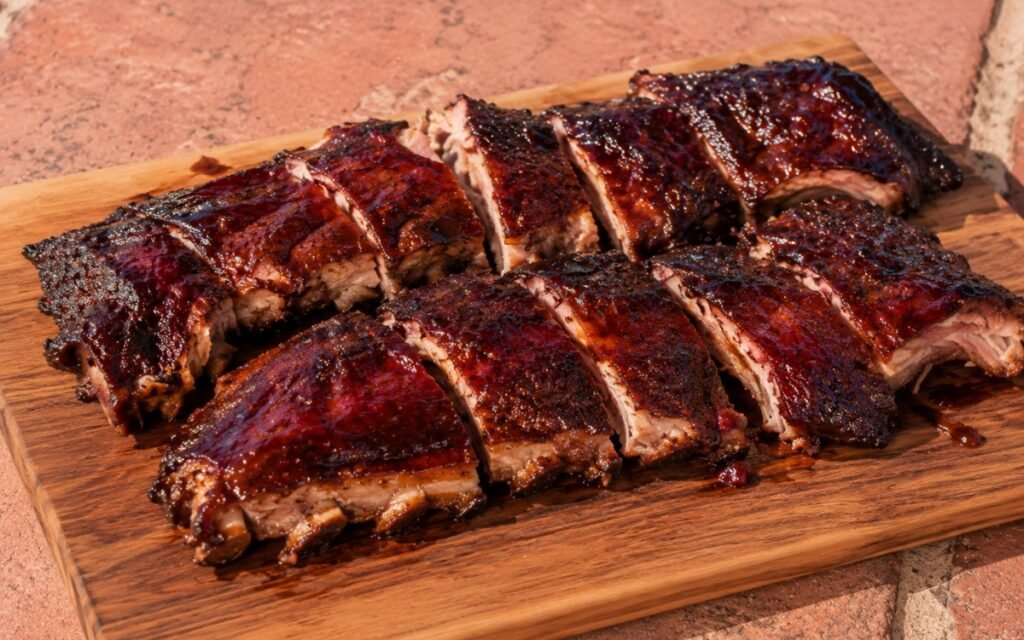
BBQ Baby Back Ribs
Spice-rubbed baby back ribs slow-baked until tender, then grilled and glazed in layers with a smoky chipotle barbecue sauce.
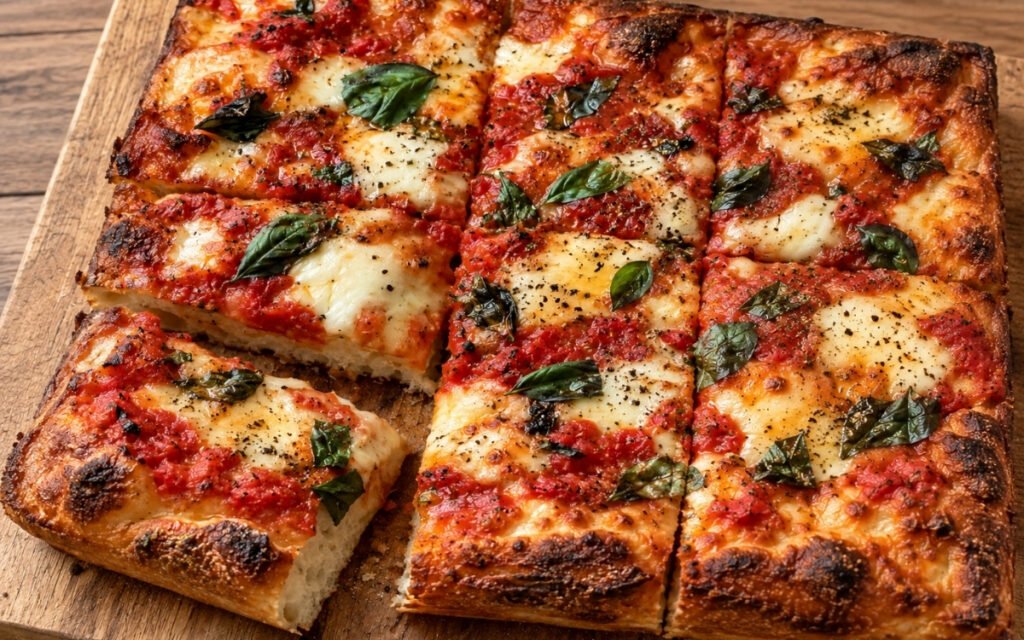
Focaccia Pizza with Tomato and Mozzarella
Thick, airy focaccia-style pizza with a crisp, olive-oil-rich bottom, soft cloud-like interior, thick tomato sauce, melted mozzarella, and fresh basil.
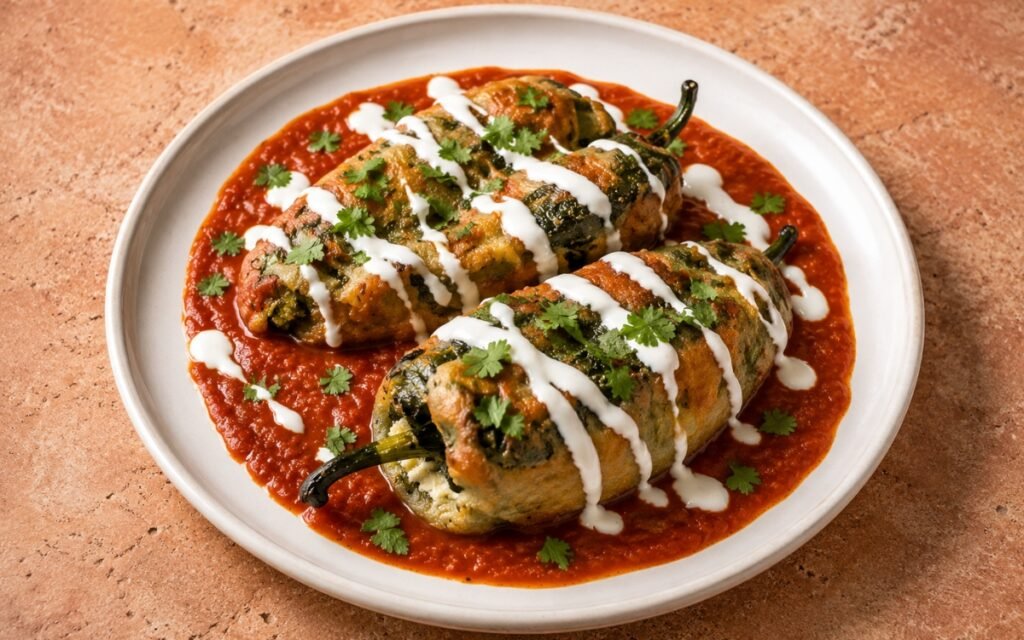
Chiles Rellenos with Tomato Sauce
Roasted poblano peppers stuffed with melting cheese, coated in whipped egg batter, and pan-fried golden. Served over a glossy tomato-chipotle sauce.
You might also like
You might also like
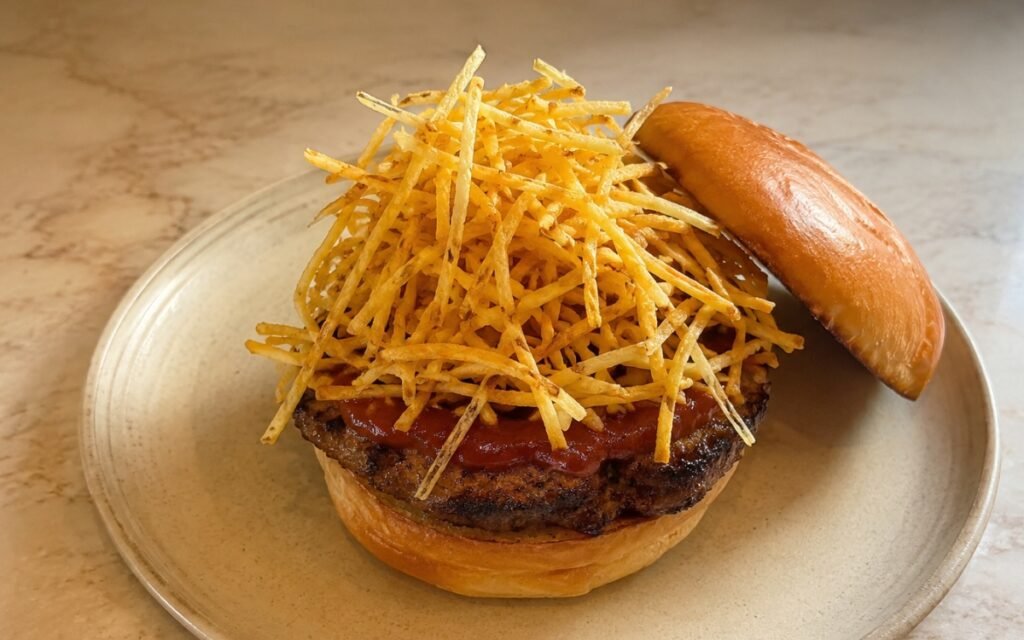
Cuban Frita Burger
A paprika-red chorizo-beef patty glazed in tangy frita sauce, piled high with crispy thin shoestring potatoes on a toasted brioche bun.
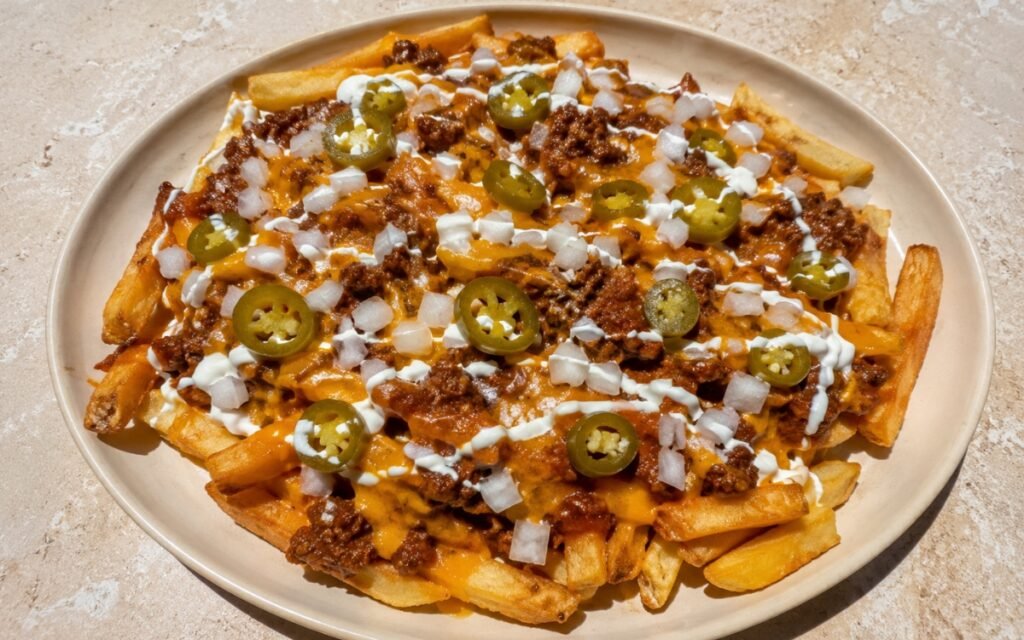
Loaded Chili Cheese Fries
Double-fried thick-cut potatoes topped with rich, reduced beef chili, melted Mexican cheese, diced onion, pickled jalapeños, and sour cream.
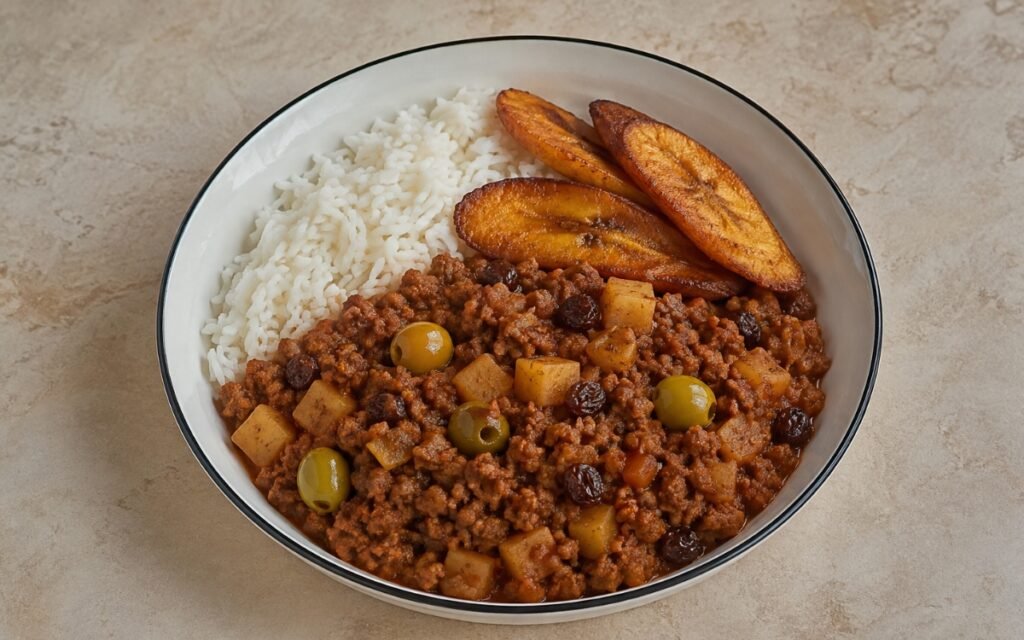
Cuban Picadillo
Seasoned ground beef simmered in a savory tomato sauce with green olives, raisins, and tender diced potatoes.
Pho Sandwich
Ingredients
Method
- Place the onion halves and ginger cut-side down in a dry skillet, under a broiler, or directly over a gas flame. Char until deeply browned and lightly blackened in spots. Add the garlic for the final 2–3 minutes so it softens and takes on a little color without burning. This step matters because the onion and ginger need that lightly smoky, sweet, roasted edge that gives the beef a recognizably pho-like base rather than a plain pot-roast flavor. Set aside. Direct charring caramelises the onion’s natural sugars and blooms the ginger’s aromatic oils in a way gentle sautéing never achieves — that smoky, roasted character is what carries this braise’s flavour firmly into pho territory rather than reading as an ordinary beef stew.
- Place the star anise, cinnamon stick, coriander seeds, and cloves in a dry pan over medium-low heat for 45–60 seconds, just until fragrant. Do not darken or burn them. The goal is to wake up the oils in the spices, not make them bitter. Set aside. This brief dry toast is enough to release the spices’ aromatic oils without pushing them anywhere near the point where those same compounds turn acrid — the window here is short and worth watching closely rather than walking away.
- Pat the beef dry and season it all over with the salt and black pepper. Heat the neutral oil in a heavy pot or Dutch oven over medium-high heat. Sear the beef well on all sides until deeply browned. Work in batches if needed so the meat browns rather than steams. The beef should develop a proper crust. That browning is what gives the finished sandwich depth and a richer savory edge once the braising liquid reduces. Remove the beef to a plate. Searing in properly spaced batches, rather than crowding the pot, is what allows genuine contact between the meat’s surface and the hot pot — crowded beef releases moisture and simmers rather than developing the dark crust that becomes the foundation of everything the braising liquid builds on afterward.
- Lower the heat to medium. Add the charred onion, ginger, and garlic to the pot briefly. Add the toasted spices, fish sauce, soy sauce, and brown sugar. Stir for a few seconds, then pour in the beef stock and water, scraping up everything stuck to the bottom. Return the beef to the pot. The liquid should come about ⅔ of the way up the beef; add a little more water if needed. Bring just to a gentle simmer, then cover with the lid slightly ajar and braise on very low heat for about 2½ to 3 hours, until the beef is fully tender. The liquid should never boil aggressively. A quiet, slow braise keeps the beef tender and lets the spice profile stay clean and aromatic. Keeping the liquid at roughly two-thirds up the beef rather than fully submerging it concentrates the braise’s flavour into a smaller volume — a fully submerged braise dilutes both the meat and the eventual jus, producing a thinner result even after the same amount of later reduction.
- Lift the beef out of the braising liquid and rest it for 10 minutes. Strain the braising liquid and discard the aromatics and whole spices. Return the strained liquid to the pot and simmer uncovered until slightly reduced and glossy. It should taste concentrated, beefy, lightly sweet, aromatic, and balanced, not watery. Slice the beef thinly against the grain. Return the sliced beef to a little of the reduced braising liquid and toss gently so it stays juicy and lightly glazed. The beef should be moist and richly flavored, not dry, shredded to threads, or swimming in broth. This is a sandwich filling, so it needs to be juicy but controlled. Resting the beef before slicing lets the juices that redistributed through the meat during the long braise settle back evenly rather than spilling onto the board the moment a knife goes in, and reducing the strained liquid separately afterward is what turns a thin braising liquid into something that clings to the sliced beef rather than soaking straight through the bread.
- Thinly slice the white onion, scallions, and jalapeños. Pick the cilantro and Thai basil leaves. Measure out the crispy fried shallots and hoisin. Keep the herbs fresh and dry so they stay lively in the sandwich and do not collapse into the hot beef immediately. Prepping every fresh topping fully before the beef is even sliced means the assembly stage moves quickly once the meat is hot and ready, rather than competing with last-minute prep for the person’s attention.
- Split the baguette sections lengthwise without cutting all the way through if you want a hinged sandwich. If desired, lightly toast the cut sides until just crisp. Do not over-toast. The bread should stay crusty outside but still have enough give inside to hold the juicy beef and toppings without shattering. A light toast gives the baguette real, if modest, resistance against the beef’s own moisture and the reduced jus, without pushing the bread toward a harder, more resistant crust that would fight the bite.
- Divide the hot sliced braised beef evenly among the 4 baguette sections, about 200g per sandwich. Top each with thin white onion, scallions, cilantro, Thai basil, thin jalapeño slices, and a generous sprinkle of crispy fried shallots. Drizzle hoisin sauce over the top. If the meat needs a little more moisture, spoon over 1–2 tablespoons of the hot reduced braising jus before closing the sandwich. The final sandwich should eat like a bridge between pho and bánh mì: rich beef, aromatic spice, fresh herbs, raw onion brightness, chili heat, and just enough hoisin sweetness to pull it together. Serve immediately. Adding the crispy fried shallots as the very last topping, right before the sandwich closes, protects them from the beef’s residual heat and moisture — even a minute or two of earlier contact would soften their defining crunch.