
French Dip Sandwich
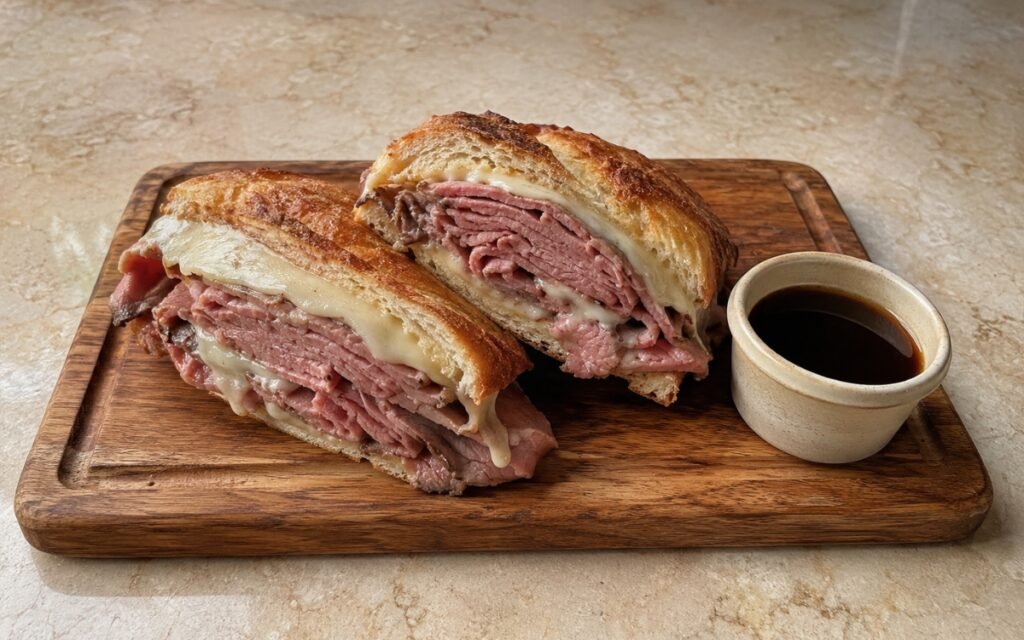
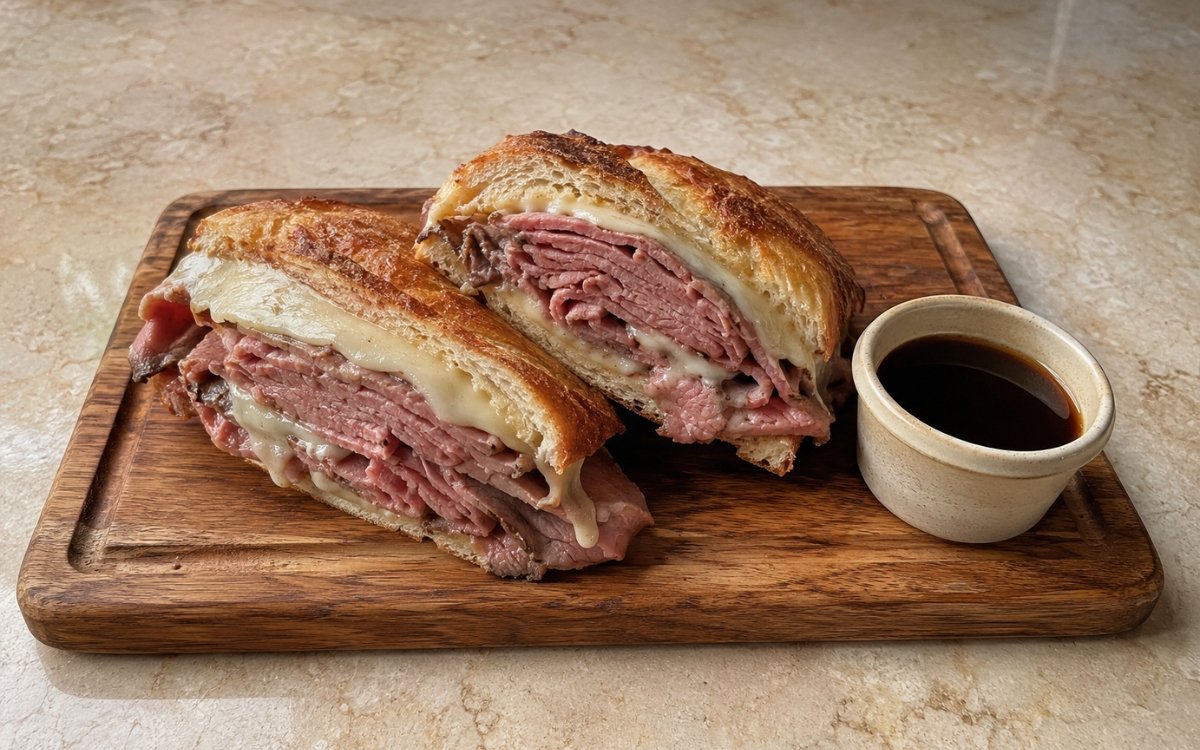
A classic French dip sandwich made on crusty toasted homemade hoagie rolls, filled with thinly sliced pink roast beef, melted Swiss and provolone, and served with a dark amber au jus for dipping. Searing the beef hard before it ever goes into the oven is the technique that gives the au jus its real depth — pale, unbrowned roast beef leaves a weak, thin jus with none of the savoury foundation this dish depends on, the same sear-then-braise principle used elsewhere in this collection whenever a roasting liquid needs to carry real, developed flavour rather than tasting flat. Warming the sliced beef gently in the hot jus rather than boiling it protects the pink, medium-rare interior this sandwich is built around, since a hard boil would push the meat toward grey and tough. Toasting the rolls before they meet the beef and jus matters just as much, since untoasted bread simply collapses once hot beef and dipping liquid hit it. The payoff is a sandwich with genuine structural clarity — thin, juicy pink beef and melted cheese in a crisp, toasted roll, served alongside a thin, intensely savoury jus meant for dipping bite by bite.
Prep Time : 35 min
Cook Time : 1 hr, 15 min
Servings : 4
35 min
1 hr, 15 min
4
Ingredients
For the Homemade Hoagie Rolls
• 240ml whole milk, warmed to 35°C
• 8g active dry yeast, about 2½ tsp
• 34g granulated sugar
• 450g all-purpose flour— this one on Amazon
• 3g fine sea salt
• 2 whole eggs
• 58g unsalted butter, softened— this one on Amazon
For the Roast Beef
• 800g beef sirloin roast, top sirloin, ribeye roast, or top round — use enough to yield about 600g sliced roast beef, about 150g per sandwich
• 12g kosher salt
• 3g freshly cracked black pepper
• 3g garlic powder— this one on Amazon
• 2g onion powder— this one on Amazon
• 15ml neutral oil
For the Au Jus
• 20g unsalted butter
• 80g shallots or yellow onion, thinly sliced
• 2 garlic cloves, lightly smashed
• 15g all-purpose flour, optional, only for a slightly fuller jus
• 720ml beef stock
• 120ml dry red wine, optional, or extra beef stock
• 15ml Worcestershire sauce
• 10ml soy sauce
• 1 bay leaf
• 2 sprigs fresh thyme, or 1g dried thyme
• Freshly cracked black pepper, to taste
• Salt, only if needed
For Assembling the Sandwiches
• 160g Swiss cheese, sliced— this one on Amazon
• 160g provolone cheese, sliced— this one on Amazon
• 30g unsalted butter, softened, for toasting the rolls
• Optional horseradish cream, for serving on the side only
This post may contain affiliate links. As an Amazon Associate I earn from qualifying purchases, at no additional cost to you.
Directions
- Make the Hoagie Dough
Combine the warm milk, active dry yeast, and sugar in a bowl. Let sit for 5–10 minutes until lightly foamy. Add the flour, salt, eggs, and softened butter. Mix until a rough dough forms, then knead for 8–10 minutes until smooth, elastic, and slightly tacky. Kneading to a smooth, elastic consistency is what develops the gluten structure needed to trap gas evenly during rising, which is directly responsible for a roll with an open, soft crumb rather than a dense one. - First Rise
Place the dough in a lightly greased bowl, cover, and let rise until doubled, about 1 hour to 1 hour 15 minutes. Do not rush the rise. Underproofed rolls bake dense and squat instead of soft and open. Letting the dough reach a genuine doubling, rather than cutting the time short, gives the yeast enough time to produce the volume of gas needed for a properly light, airy crumb once baked. - Shape the Rolls
Divide the dough into 4 equal pieces. Shape each piece into a tight hoagie roll, about 18–20cm long. Place on a parchment-lined tray. Cover and let rise again for 45–60 minutes, until puffy and visibly lighter. Shaping the dough tightly, rather than loosely, is what gives the finished roll a cohesive, even crumb structure and a defined shape that holds together well once sliced and loaded with beef. - Bake the Hoagie Rolls
Preheat the oven to 190°C. Bake the rolls for 18–22 minutes, until golden-brown and cooked through. Cool before slicing. If you cut hot bread, the crumb compresses and turns gummy. Bread continues setting internally for a period after it leaves the oven — slicing while still hot disrupts that final structural setting, compressing the still-soft crumb into a denser, gummier texture than the same bread would have once fully cooled. - Season the Beef
Pat the beef dry. Season all over with kosher salt, black pepper, garlic powder, and onion powder. Let it sit at room temperature for 30–45 minutes before roasting. Cold beef cooks unevenly and gives you an overdone outside with a cold centre. A roast straight from the refrigerator has a large temperature gradient to overcome — letting it temper first narrows that gap, so the exterior doesn’t overcook by the time the heat has fully penetrated to the centre. - Sear the Beef
Heat the neutral oil in a heavy skillet or roasting pan over medium-high heat. Sear the beef on all sides until browned, about 6–8 minutes total. This browning is where the au jus gets depth. Pale roast beef gives weak jus. The fond left behind on the pan’s surface after this sear becomes the foundation the au jus is built on — scraping that browned residue up later during the jus-making process carries directly into the finished dipping liquid’s flavour. - Roast the Beef
Transfer the beef to a 160°C oven and roast until the centre reaches 50–52°C for medium-rare, or 54–56°C for medium. Rest for 20 minutes before slicing. After resting, slice as thinly as possible against the grain. Do not overcook the beef. French dip with grey, dry beef is a waste of bread and cheese. The extended 20-minute rest matters more here than for many other roasts given how thin the beef will eventually be sliced — a properly rested roast holds its juices through that thin slicing, while an unrested one loses much of that moisture onto the board the moment it’s cut. - Make the Au Jus
In the same pan, melt the butter over medium heat. Add the shallots or onion and cook for 4–5 minutes until softened and lightly browned. Add the garlic and cook for 30 seconds. If using flour for a slightly fuller jus, sprinkle it in and cook for 1 minute. Add the red wine and scrape up the browned bits from the pan. Simmer for 2–3 minutes. Add the beef stock, Worcestershire sauce, soy sauce, bay leaf, thyme, and black pepper. Simmer for 15–20 minutes until savoury and dark amber. Strain if you want a clean dipping jus. Taste and add salt only if needed. The au jus should be thin, savoury, and beefy — not thick gravy. Turning it into gravy misses the point. Using the same pan the beef was seared in means every bit of that browned fond gets deglazed and dissolved directly into the jus — this is the single most direct way the beef’s own concentrated flavour ends up in the dipping liquid rather than staying stuck to the pan. - Warm the Beef in the Jus
Add the sliced roast beef to a shallow pan with a few ladles of hot au jus. Warm gently for 30–60 seconds. Do not boil the sliced beef. Boiling ruins the pink interior and turns the meat tough. This brief warming is about bringing the already-cooked, thinly sliced beef back up to serving temperature, not cooking it any further — a hard boil at this stage would push the meat past medium-rare and tighten its texture considerably. - Toast the Rolls
Split the hoagie rolls. Spread the cut sides lightly with butter and toast under the broiler or in a skillet until golden and lightly crisp. The roll needs structure. Untoasted bread will collapse once it hits hot beef and jus. A lightly crisped interior surface gives the roll real resistance against both the warm beef’s residual moisture and any jus that soaks in during dipping, buying it considerably more structural integrity than an untoasted roll would have. - Assemble the Sandwiches
Pile about 150g warm sliced beef into each toasted roll. Add Swiss and provolone over the beef. Place under the broiler for 1–2 minutes, just until the cheese melts and pulls slightly. Do not broil so long that the beef cooks further and dries out. This brief broiler stage is calibrated purely to melt the cheese quickly — the beef is already at its correct doneness and temperature, so extended broiling only risks drying it out further with no benefit. - Serve
Cut each sandwich in half. Serve immediately with a small cup of hot au jus beside each sandwich for dipping. Serving the jus separately for dipping, rather than pouring it directly over the assembled sandwich, is what keeps the roll’s edges crisp between bites — dip as you eat so the roll stays crisp at the edges.
*Notes :
- Searing the beef thoroughly before it ever reaches the oven is worth treating as the foundation of the entire au jus rather than a preliminary step disconnected from the sauce. The browned fond left on the pan’s surface after searing is concentrated, developed beef flavour, and it’s specifically that fond, scraped up and dissolved during the jus-building process, that gives the finished dipping liquid its depth. A roast that goes into the oven pale, without a proper sear, simply doesn’t leave behind the same foundation, and the resulting jus tastes noticeably thinner and less savoury regardless of how carefully the rest of the sauce is built.
- The distinction between warming the sliced beef in hot jus and actually cooking it further is one worth being precise about. This beef has already been roasted to its correct internal temperature and rested properly — the brief dip into hot jus exists purely to bring it back up to serving temperature after slicing, not to finish cooking it. Treating this step like a simmer rather than a brief warm-through is one of the more common ways a French dip ends up with grey, overcooked beef despite a properly roasted starting point.
- Toasting the rolls addresses a structural vulnerability that’s specific to this sandwich’s format. Unlike many sandwiches where moisture exposure is incidental, a French dip is explicitly meant to be dipped repeatedly into liquid throughout the eating experience. An untoasted roll has nowhere near enough resistance to survive that intended use, while a lightly crisped interior surface holds up considerably longer against both the beef’s juices and the deliberate dipping.
- Keeping the au jus genuinely thin rather than thickening it into a fuller gravy, even with the optional flour addition, preserves the specific character this dish depends on. The point of a dipping jus is that it soaks briefly into the bread with each dip, seasoning and moistening it without ever fully saturating or dissolving it — a thick, gravy-like sauce would coat rather than penetrate, changing the entire experience of eating the sandwich.
Why This Recipe Works
This recipe works because the beef is seared thoroughly before roasting specifically to build the foundation the au jus depends on, and that same pan is used to build the jus so all that concentrated fond ends up in the dipping liquid.
The beef is rested properly given how thin it will be sliced, and warmed only briefly in hot jus afterward rather than cooked further, preserving its pink, medium-rare interior.
Toasted rolls provide real structural resistance against a sandwich explicitly built for repeated dipping, and keeping the jus thin rather than thickened preserves the specific dip-and-eat experience this dish is known for.
Ingredient Breakdown
Homemade Hoagie Rolls
The specified bread — kneaded and proofed for a soft, open crumb, then toasted for structure against dipping.
Thoroughly Seared Beef Roast
The protein’s foundation — browning built here becomes the fond that gives the au jus its real depth once deglazed.
Rested, Thinly Sliced Roast Beef
The filling — rested a full 20 minutes to hold its juices through thin slicing, kept pink at medium-rare.
Fond-Built Au Jus
The dipping sauce — built in the same pan the beef was seared in, carrying that concentrated flavour directly into the finished liquid.
Toasted Hoagie Roll (Structural Prep)
The final bread preparation — lightly crisped specifically to survive a sandwich meant for repeated dipping.
Flavor Structure Explained
This French dip follows a layered balance model:
- Crisp buttery foundation (toasted hoagie roll)
- Rich savoury centre (thinly sliced roast beef)
- Melted creamy body (Swiss and provolone)
- Deep beefy dipping liquid (au jus)
- Warm herbal undertone (thyme, garlic, bay leaf)
The toasted hoagie roll provides a crisp, sturdy foundation built specifically to survive dipping. Thinly sliced, pink roast beef delivers the sandwich’s central rich, savoury flavour. Melted Swiss and provolone, used together, contribute nutty depth and a cleaner melt than either cheese alone would provide. The au jus, built from the same pan the beef was seared in, brings a deep, intensely beefy dipping liquid that seasons each bite anew. Thyme, garlic, and bay leaf simmered into the jus round out the whole experience with warm, herbal background depth.
Common Mistakes to Avoid
- Skipping or Rushing the Sear Before Roasting – Pale beef leaves behind little fond, producing a weak, thin-tasting au jus. Always sear thoroughly on all sides first.
- Boiling the Sliced Beef in the Jus – This pushes the meat past medium-rare and toughens its texture. Always warm it gently for only 30–60 seconds.
- Serving with Untoasted Rolls – Soft bread collapses quickly once it meets hot beef and repeated dipping. Always toast the rolls before assembling.
- Thickening the Au Jus Into a Full Gravy – This changes the dish’s fundamental character, coating rather than soaking into the bread. Always keep it thin and savoury.
- Slicing the Bread While Still Hot – This compresses the crumb into a dense, gummy texture. Always let the rolls cool before slicing.
Variations
With Caramelized Onions
Add a layer of slow-caramelized onions to the sandwich alongside the beef and cheese for extra sweetness and depth.
Spicier Version
Add a few thin slices of pickled jalapeño or a dash of hot sauce to the au jus for a sharper kick.
Horseradish-Forward Version
Spread a thin layer of horseradish cream directly inside the roll before adding the beef for built-in heat rather than serving it only on the side.
Slow Cooker Version
After searing, transfer the beef and jus ingredients to a slow cooker and cook on low for 6–7 hours for a more hands-off approach, adjusting doneness expectations accordingly.
Storage & Make-Ahead
Baked hoagie rolls can be stored at room temperature, wrapped, for up to 2 days, or frozen for up to 1 month.
Roasted, unsliced beef can be refrigerated in an airtight container for up to 4 days; slice thin just before serving for the best texture.
The au jus can be refrigerated in a sealed container for up to 5 days, or frozen for up to 3 months; reheat gently before using.
Fully assembled sandwiches are not suitable for storage — assemble and broil only what will be eaten immediately, given the dish’s explicit dipping format.
Frequently Asked Questions
Why does the beef need to be seared thoroughly before roasting?
The browned fond left on the pan’s surface after a proper sear is concentrated, developed flavour, and it’s specifically that fond that gets deglazed and dissolved into the au jus later. A roast that goes into the oven pale leaves behind far less of that foundation, producing a noticeably weaker jus.
Why is the sliced beef only briefly warmed in the jus rather than simmered?
The beef has already been roasted and rested to its correct doneness. A hard boil or extended simmer at this stage would cook it further, pushing it past medium-rare and toughening the texture — the brief warm-through exists only to bring it back to serving temperature.
Why does the au jus need to stay thin rather than being thickened into a gravy?
A thin jus is meant to soak briefly into the bread with each dip, seasoning it without fully saturating it. A thicker, gravy-like sauce would coat the bread instead of penetrating it, changing the entire dipping experience this sandwich is built around.
Why toast the rolls before assembling the sandwich?
This sandwich is explicitly meant to be dipped repeatedly into hot jus while eating. An untoasted roll has far less structural resistance to that repeated moisture exposure, while a lightly crisped interior holds up considerably longer.
Are there other roast beef or deli-style sandwiches worth trying?
Philly Cheesesteak Hoagie Rolls offers another approach to building a sturdy roll for a juicy, cheese-topped beef filling. Chopped Cheese and Reuben Sandwich are both worth exploring as well if you enjoy this style of substantial beef sandwich — Chopped Cheese built on a griddled beef-and-onion filling folded into melted cheese, and the Reuben built around griddled rye, corned beef, and sauerkraut instead.
Nutrition Facts
( per serving )
Calories
~820 kcal
Protein
52 g
Fat
38 g
Carbs
58 g
Calories
~820 kcal
Protein
52 g
Fat
38 g
Carbs
58 g
Related Recipes
Related Recipes

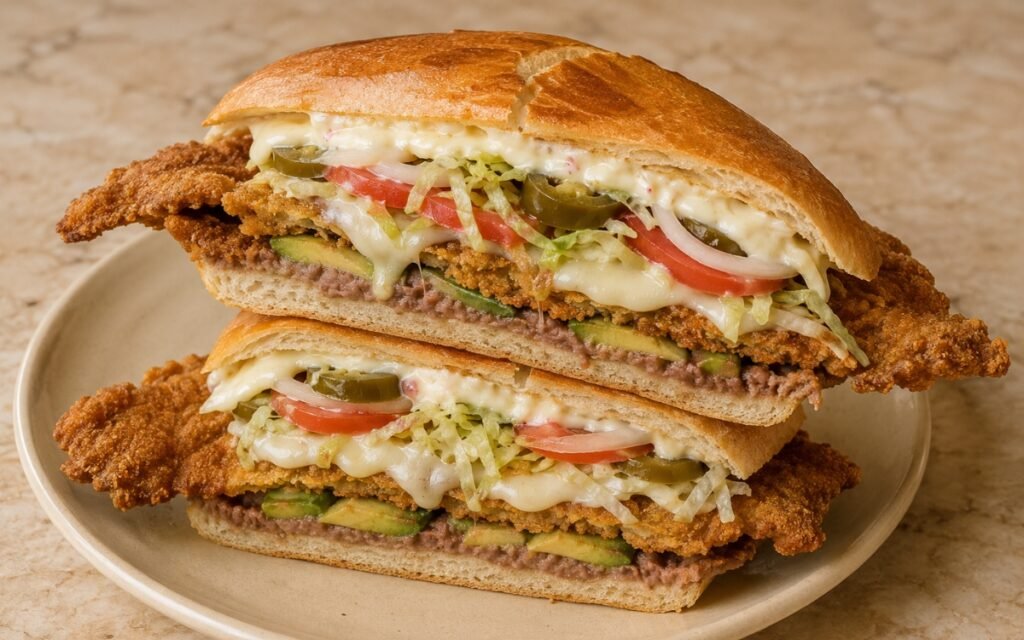
Torta de Milanesa Sandwich
Crispy breaded beef milanesa with melted Oaxaca cheese, refried beans, crema, and fresh vegetables, piled onto a toasted telera roll.
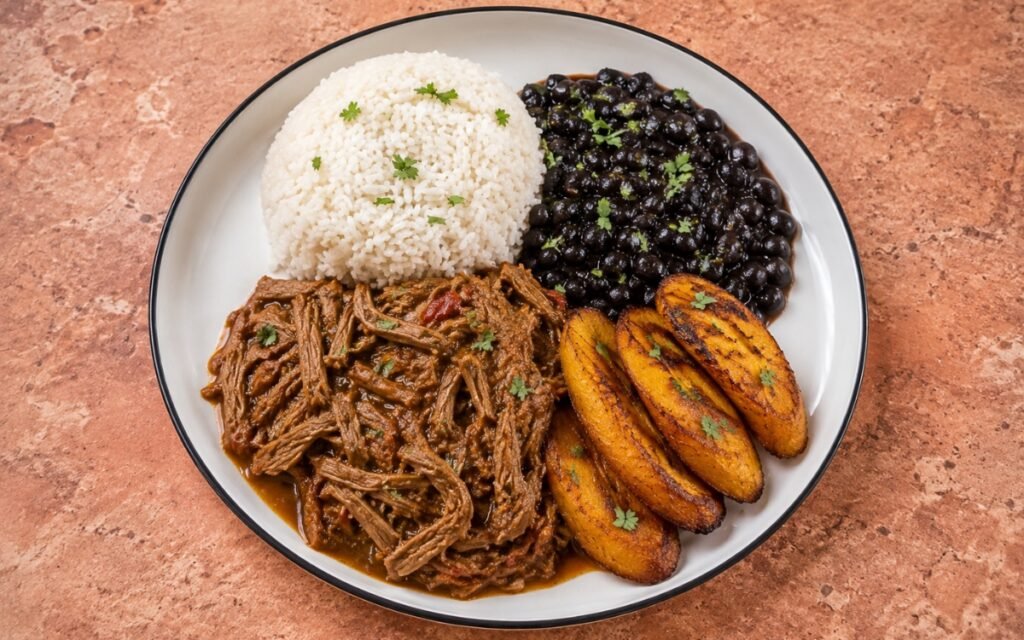
Pabellón Venezolano
Slow-braised, thinly shredded beef, fluffy white rice, glossy black beans, and sweet fried plantains, each kept distinct on the plate.
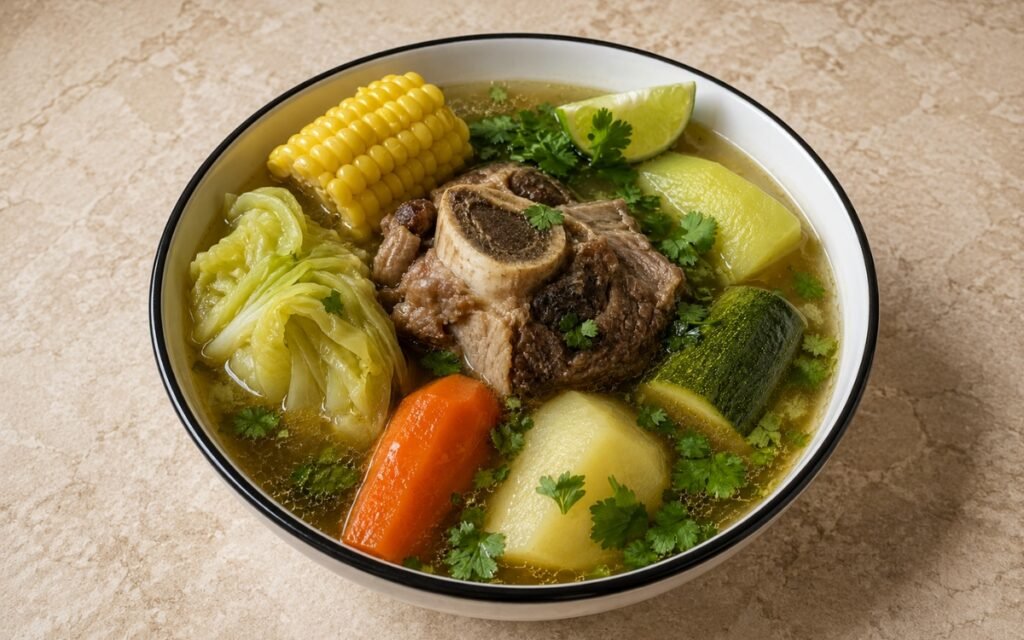
Caldo de Res
A clear, golden Mexican beef soup with gently simmered beef shank and large, staged vegetables — corn, potato, carrot, chayote, zucchini, and cabbage.
You might also like
You might also like
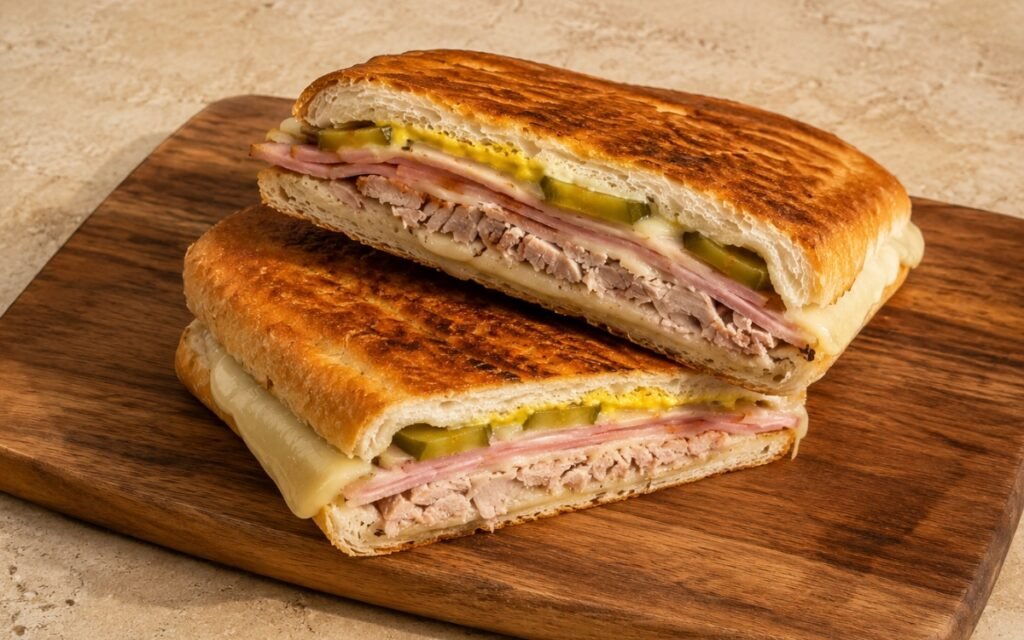
Cuban Sandwich (Cubano)
Citrus-marinated pork roasted in its own mojo marinade, layered with ham, Swiss cheese, and pickles on homemade Cuban bread, pressed until crisp and golden.
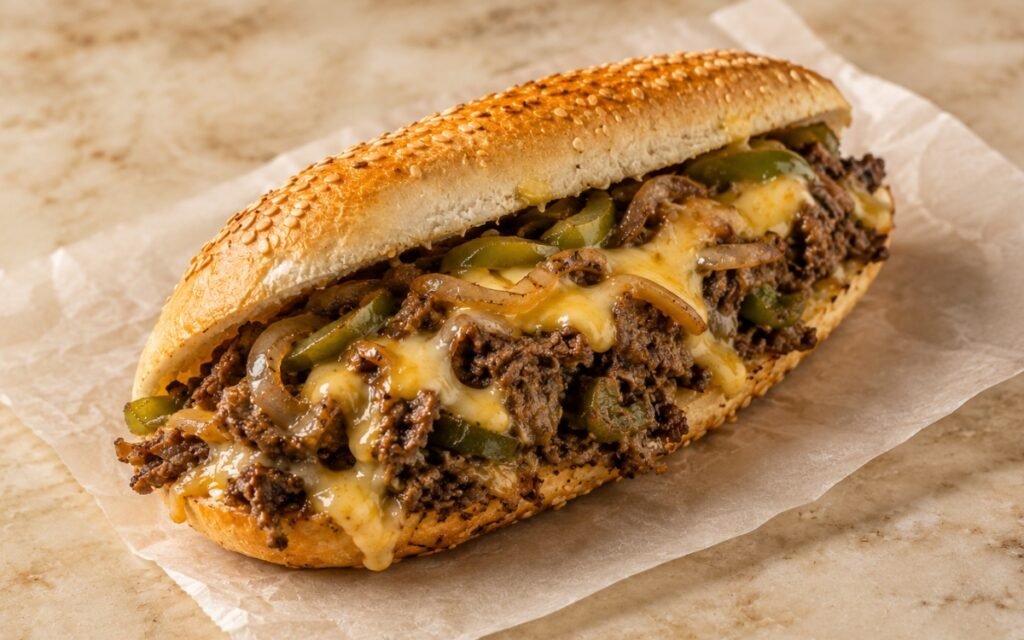
Philly Cheesesteak Sandwich
Seared beef, caramelized onions, peppers, and molten cheese piled into a soft, warm hoagie roll.
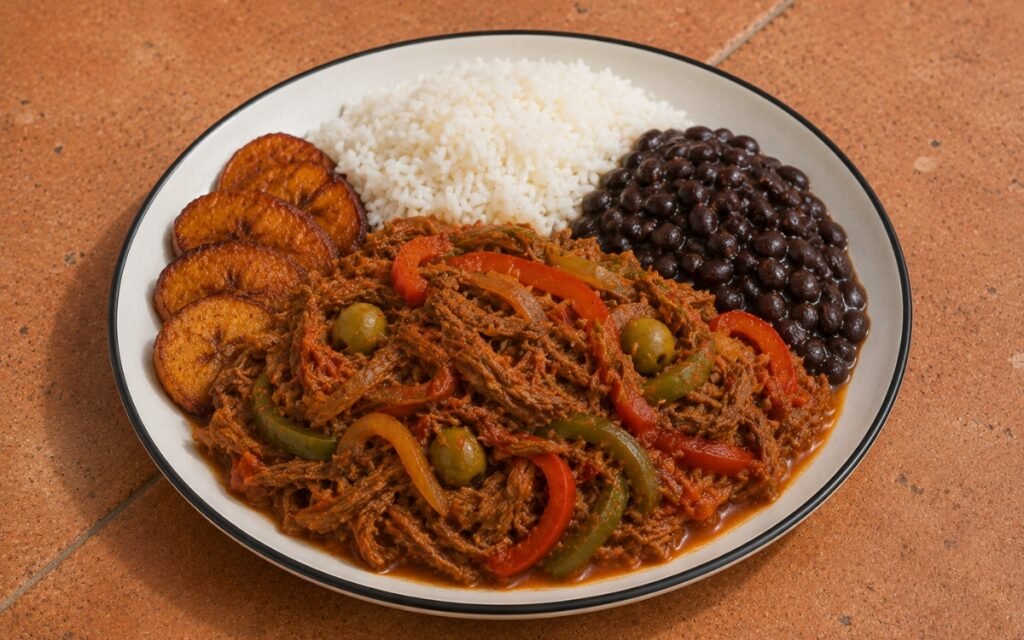
Ropa Vieja Cubana
Slow-braised, shredded beef simmered in a rich tomato sauce with peppers, onion, and green olives, served with white rice, black beans, and fried plantains.
French Dip Sandwich
Ingredients
Method
- Combine the warm milk, active dry yeast, and sugar in a bowl. Let sit for 5–10 minutes until lightly foamy. Add the flour, salt, eggs, and softened butter. Mix until a rough dough forms, then knead for 8–10 minutes until smooth, elastic, and slightly tacky. Kneading to a smooth, elastic consistency is what develops the gluten structure needed to trap gas evenly during rising, which is directly responsible for a roll with an open, soft crumb rather than a dense one.
- Place the dough in a lightly greased bowl, cover, and let rise until doubled, about 1 hour to 1 hour 15 minutes. Do not rush the rise. Underproofed rolls bake dense and squat instead of soft and open. Letting the dough reach a genuine doubling, rather than cutting the time short, gives the yeast enough time to produce the volume of gas needed for a properly light, airy crumb once baked.
- Divide the dough into 4 equal pieces. Shape each piece into a tight hoagie roll, about 18–20cm long. Place on a parchment-lined tray. Cover and let rise again for 45–60 minutes, until puffy and visibly lighter. Shaping the dough tightly, rather than loosely, is what gives the finished roll a cohesive, even crumb structure and a defined shape that holds together well once sliced and loaded with beef.
- Preheat the oven to 190°C. Bake the rolls for 18–22 minutes, until golden-brown and cooked through. Cool before slicing. If you cut hot bread, the crumb compresses and turns gummy. Bread continues setting internally for a period after it leaves the oven — slicing while still hot disrupts that final structural setting, compressing the still-soft crumb into a denser, gummier texture than the same bread would have once fully cooled.
- Pat the beef dry. Season all over with kosher salt, black pepper, garlic powder, and onion powder. Let it sit at room temperature for 30–45 minutes before roasting. Cold beef cooks unevenly and gives you an overdone outside with a cold centre. A roast straight from the refrigerator has a large temperature gradient to overcome — letting it temper first narrows that gap, so the exterior doesn’t overcook by the time the heat has fully penetrated to the centre.
- Heat the neutral oil in a heavy skillet or roasting pan over medium-high heat. Sear the beef on all sides until browned, about 6–8 minutes total. This browning is where the au jus gets depth. Pale roast beef gives weak jus. The fond left behind on the pan’s surface after this sear becomes the foundation the au jus is built on — scraping that browned residue up later during the jus-making process carries directly into the finished dipping liquid’s flavour.
- Transfer the beef to a 160°C oven and roast until the centre reaches 50–52°C for medium-rare, or 54–56°C for medium. Rest for 20 minutes before slicing. After resting, slice as thinly as possible against the grain. Do not overcook the beef. French dip with grey, dry beef is a waste of bread and cheese. The extended 20-minute rest matters more here than for many other roasts given how thin the beef will eventually be sliced — a properly rested roast holds its juices through that thin slicing, while an unrested one loses much of that moisture onto the board the moment it’s cut.
- In the same pan, melt the butter over medium heat. Add the shallots or onion and cook for 4–5 minutes until softened and lightly browned. Add the garlic and cook for 30 seconds. If using flour for a slightly fuller jus, sprinkle it in and cook for 1 minute. Add the red wine and scrape up the browned bits from the pan. Simmer for 2–3 minutes. Add the beef stock, Worcestershire sauce, soy sauce, bay leaf, thyme, and black pepper. Simmer for 15–20 minutes until savoury and dark amber. Strain if you want a clean dipping jus. Taste and add salt only if needed. The au jus should be thin, savoury, and beefy — not thick gravy. Turning it into gravy misses the point. Using the same pan the beef was seared in means every bit of that browned fond gets deglazed and dissolved directly into the jus — this is the single most direct way the beef’s own concentrated flavour ends up in the dipping liquid rather than staying stuck to the pan.
- Add the sliced roast beef to a shallow pan with a few ladles of hot au jus. Warm gently for 30–60 seconds. Do not boil the sliced beef. Boiling ruins the pink interior and turns the meat tough. This brief warming is about bringing the already-cooked, thinly sliced beef back up to serving temperature, not cooking it any further — a hard boil at this stage would push the meat past medium-rare and tighten its texture considerably.
- Split the hoagie rolls. Spread the cut sides lightly with butter and toast under the broiler or in a skillet until golden and lightly crisp. The roll needs structure. Untoasted bread will collapse once it hits hot beef and jus. A lightly crisped interior surface gives the roll real resistance against both the warm beef’s residual moisture and any jus that soaks in during dipping, buying it considerably more structural integrity than an untoasted roll would have.
- Pile about 150g warm sliced beef into each toasted roll. Add Swiss and provolone over the beef. Place under the broiler for 1–2 minutes, just until the cheese melts and pulls slightly. Do not broil so long that the beef cooks further and dries out. This brief broiler stage is calibrated purely to melt the cheese quickly — the beef is already at its correct doneness and temperature, so extended broiling only risks drying it out further with no benefit.
- Cut each sandwich in half. Serve immediately with a small cup of hot au jus beside each sandwich for dipping. Serving the jus separately for dipping, rather than pouring it directly over the assembled sandwich, is what keeps the roll’s edges crisp between bites — dip as you eat so the roll stays crisp at the edges.