
Ropa Vieja Cubana
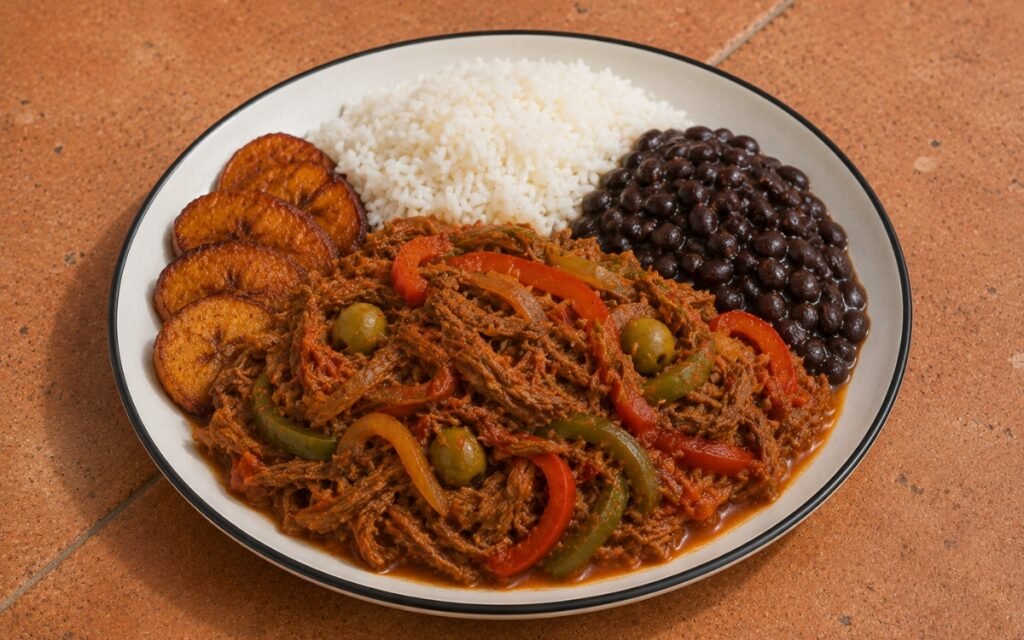
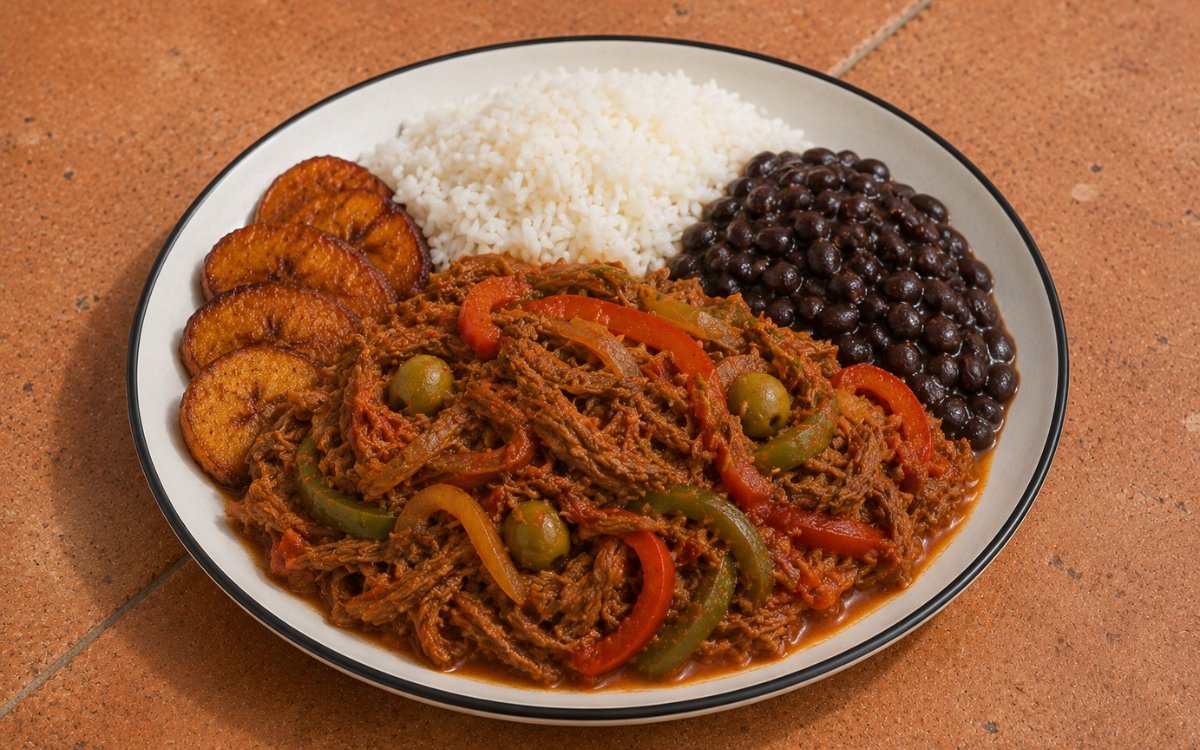
Classic Cuban ropa vieja made with beef slowly braised until shreddable, then simmered in a rich tomato sauce with red and green peppers, onion, garlic, and green olives. Served with white rice, black beans, and fried sweet plantains for the traditional plate. Searing the beef to a deep, even crust before braising builds the base flavour of the dish — that caramelisation adds depth that pale, unseared beef wouldn’t provide. Keeping the peppers cooked only to softened and sweetened, never collapsed, preserves ropa vieja’s classic look — visible strips of pepper running through the finished dish rather than disappearing into the sauce. Finishing the shredded beef in its own sauce over low heat, rather than simply stirring it through once, lets the strands become glossy, juicy, and cohesive. The result is a plate of deliberate contrast — rich, saucy shredded beef with visible peppers and briny olives, alongside fluffy rice, glossy black beans, and sweet caramelised plantains.
Prep Time : 30 min
Cook Time : 3 hr, 15 min
Servings : 4
30 min
3 hr, 15 min
4
Ingredients
For the Braised Beef
• 1.2kg flank steak or chuck roast, cut into 2–3 large pieces
• 12g fine sea salt
• 1 tsp freshly ground black pepper
• 2 tbsp neutral oil
• 1 medium white onion, halved
• 4 garlic cloves, lightly smashed
• 1 bay leaf
• 1.2L water or light beef stock
For the Ropa Vieja Cubana Sauce
• 2 tbsp olive oil — this one on Amazon
• 1 large white onion, thinly sliced
• 1 medium red bell pepper, thinly sliced
• 1 medium green bell pepper, thinly sliced
• 4 garlic cloves, finely chopped
• 2 medium tomatoes, finely chopped
• 2 tbsp tomato paste
• 1 can crushed tomatoes, 400g
• 1 tsp ground cumin — this one on Amazon
• 1 tsp dried oregano — this one on Amazon
• ½ tsp sweet paprika — this one on Amazon
• 1 bay leaf
• 2 tbsp dry white wine
• 1 tbsp Worcestershire sauce — this one on Amazon
• 120–180ml reserved beef braising liquid, plus more as needed
• 100g pitted green olives, sliced or halved
• 1 tsp red wine vinegar
• 1 tsp sugar, optional, only if needed to balance acidity
• Fine sea salt, to taste
• Freshly ground black pepper, to taste
For the White Rice
• 300g long-grain white rice
• 540ml water
• 1 tbsp neutral oil or butter
• 1 tsp fine sea salt
For the Black Beans
• 2 tbsp olive oil or neutral oil
• 1 small white onion, finely diced
• 3 garlic cloves, finely chopped
• 2 cans black beans, 400g each, with liquid — this one on Amazon
• 1 bay leaf
• 1 tsp ground cumin
• ½ tsp dried oregano
• 1 tsp sugar
• 1 tbsp red wine vinegar or white vinegar — this one on Amazon
• 1 tsp fine sea salt, or to taste
• Freshly ground black pepper, to taste
• 60–120ml water, if needed
For the Fried Plantains
• 2 large very ripe plantains, yellow with plenty of black spots
• 3–4 tbsp neutral oil
• Pinch of fine sea salt, optional
This post may contain affiliate links. As an Amazon Associate I earn from qualifying purchases, at no additional cost to you.
Directions
- Braise the Beef
Pat the beef dry and season with the salt and black pepper. Heat the neutral oil in a heavy pot or Dutch oven over medium-high heat. Sear the beef for 3–4 minutes per side until well browned. The browning should be deep and even, because that caramelization builds the final flavour. Add the halved onion, smashed garlic, bay leaf, and the water or stock. Bring to a gentle simmer, skimming off any foam in the first few minutes. Cover, reduce to low, and simmer for 2½–3 hours until the beef is completely tender and can be pulled apart easily with a fork. Do not rush this stage. If the beef still feels resistant or tight, keep cooking in 15–20 minute increments. Remove the beef and set aside until cool enough to handle. Strain and reserve at least 250ml of the braising liquid. Discard the spent onion, garlic, and bay leaf. Skimming diligently during those first few minutes of simmering keeps the braising liquid clean — that same liquid is reserved and later worked directly into the finished sauce, so its clarity matters well beyond just this early stage. - Shred the Beef
Using two forks or your hands, shred the beef into long thin strands. For proper ropa vieja texture, the beef should be finely shredded rather than left in chunky pieces. Remove any large pieces of fat or tough connective tissue. The shredded beef should still feel moist from the braise. If it seems dry while waiting, toss it with 1–2 tablespoons of the reserved braising liquid. Tossing the shredding beef with a little of its own reserved liquid, rather than leaving it to sit dry while the sauce comes together, keeps the strands from drying out or toughening before they’re even added to the finished sauce. - Build the Sofrito-Style Sauce
Heat the olive oil in a wide sauté pan or pot over medium heat. Add the sliced onion and both bell peppers. Cook for 8–10 minutes, stirring often, until softened and lightly sweet. Add the chopped garlic and cook for 30 seconds. Add the chopped tomatoes and tomato paste and cook for 3–4 minutes until the tomatoes begin to break down and the paste darkens slightly. Add the cumin, oregano, paprika, and bay leaf, and stir for 20–30 seconds until fragrant. Pour in the white wine and let it reduce for about 1 minute. Add the crushed tomatoes, Worcestershire sauce, and 120ml reserved braising liquid. Bring to a gentle simmer and cook uncovered for 10–12 minutes until the sauce thickens slightly and loses its raw tomato edge. The sauce should be rich and spoon-coating, not watery. If it thickens too much before the beef is added, loosen it with another splash of braising liquid. Stopping the peppers at softened and lightly sweet, rather than pushing them further, preserves the visible pepper strips running through the finished dish — cooked past this point, they’d lose that defining structure and disappear into the sauce instead. - Finish the Ropa Vieja
Add the shredded beef and olives to the sauce. Stir well so the strands are fully coated and cook over low heat for 15–20 minutes, stirring occasionally, until the beef absorbs the sauce and becomes glossy, juicy, and cohesive. Add the vinegar and taste. Adjust with salt, black pepper, and, only if needed, the sugar to round out acidity. The finished ropa vieja should be saucy but not soupy. The beef should hold together in rich strands, with visible peppers and olives throughout. This long, low simmer lets the beef’s thin strands absorb the sauce rather than just sitting coated in it, which gives ropa vieja its moist, cohesive texture. - Cook the White Rice
Rinse the rice under cold water until the water runs mostly clear. Add the rice, water, oil or butter, and salt to a saucepan. Bring to a boil over medium-high heat. Stir once, cover tightly, reduce the heat to low, and cook for 15 minutes. Turn off the heat and let the rice rest, covered, for 10 minutes. Fluff gently with a fork. The grains should be tender, dry on the surface, and separate rather than sticky or wet. Rinsing away surface starch before cooking keeps the finished grain separate rather than clumping together into something stickier. - Cook the Black Beans
Heat the oil in a saucepan over medium heat. Add the diced onion and cook for 4–5 minutes until softened. Add the garlic, cumin, and oregano and cook for 30 seconds. Add the black beans with their liquid, bay leaf, sugar, vinegar, salt, and black pepper. Simmer gently for 15–20 minutes, stirring occasionally. Mash a small portion of the beans against the side of the pan to thicken the mixture slightly, but keep most of the beans whole. If the beans become too thick, add a splash of water. The final texture should be glossy and spoonable, with enough body to sit neatly beside the rice. Mashing only a small portion, rather than the whole pot, thickens the surrounding liquid naturally while preserving most of the beans’ own texture and bite. - Fry the Plantains
Peel the plantains and slice them diagonally into long pieces about 1.5cm thick. Heat the oil in a skillet over medium heat. Fry the plantains in batches for 2–3 minutes per side until deeply golden brown and caramelized at the edges. Transfer to a plate or rack. The plantains should be soft and sweet in the centre with browned, lightly crisp edges. Sprinkle with a tiny pinch of salt if desired. Very ripe plantains, heavily spotted with black, have the natural sugar this caramelisation needs, so the outside browns deeply while the inside softens and sweetens. - Plate and Serve
Spoon the white rice onto one side of each plate. Add the black beans beside it. Add a generous portion of ropa vieja next to the rice and beans, and finish with the fried plantains. Serve immediately while the beef is hot and glossy, the rice is fluffy, the beans are soft and creamy, and the plantains are still warm and sweet.
*Notes :
- Sear the beef to a deep, even crust before it goes into the braising liquid. The browning adds richness that pale, unseared beef can’t make up for later, however carefully the braise and sauce are handled.
- Stopping the peppers at softened and lightly sweet, rather than cooking them until they collapse, is worth understanding as a deliberate, defining choice for this specific dish. Ropa vieja’s classic look depends on visible strips of pepper running throughout the finished sauce and beef — overcooked peppers lose that structure entirely, blending into the sauce rather than remaining a distinct, recognisable component of the dish’s texture and appearance.
- Don’t cut short the final low simmer once the shredded beef and olives join the sauce. That extended time isn’t simply for warming through — it lets the beef’s thin strands absorb the sauce and turn from separate shreds into the moist, cohesive, glossy texture ropa vieja is known for.
- Green olives are more than a garnish here. Their salty, briny character balances the sweetness running through the dish — from the peppers to the tomatoes to the plantains served alongside — and omitting them would leave the whole plate’s flavour profile noticeably less balanced than the classic version calls for.
Why This Recipe Works
This recipe works because the beef is seared to a deep crust before braising, building real flavour depth that carries through the entire dish. A patient, hours-long gentle braise produces beef tender enough to shred easily, and the peppers in the sauce are cooked only to softened and sweet, preserving the visible strips that define ropa vieja’s classic look.
A final, extended low simmer lets the shredded beef absorb the sauce rather than just sitting coated on top, producing the dish’s characteristic moist, cohesive texture. Briny green olives balance the sauce’s sweetness, and every component — rice, beans, beef, plantains — is cooked to its own proper finish for a complete, traditional plate.
Ingredient Breakdown
Well-Seared, Slow-Braised Beef
The centrepiece — deep browning before braising builds flavour that carries through the finished dish.
Softened, Not Collapsed Bell Peppers
The visual and textural signature — cooked only until sweet, preserving the visible strips that define ropa vieja’s classic appearance.
Reserved Braising Liquid
The connective element — worked into both the sauce and the resting shredded beef, tying the braise’s own flavour directly into the finished dish.
Extended Final Simmer (Beef in Sauce)
Lets the thin shredded strands absorb the sauce, producing a moist, cohesive texture.
Green Olives
The balancing ingredient — their salty, briny character offsets the dish’s overall sweetness from tomatoes, peppers, and the plantains served alongside.
Flavor Structure Explained
The flavours work in layers:
- Deep savoury centre (seared, slow-braised, shredded beef)
- Sweet vegetable body (softened peppers, onion, tomato)
- Warm background spice (cumin, oregano, paprika)
- Briny sharp accent (green olives)
- Sweet caramelised side (fried ripe plantains)
Seared, slow-braised, and finely shredded beef provides this dish’s deep, savoury centre, its flavour concentrated further through a final simmer in its own sauce. Softened peppers, onion, and tomato build a sweet, aromatic vegetable body that stays visibly distinct rather than dissolving. Cumin, oregano, and paprika layer in warm, background spice. Briny green olives cut sharply through the dish’s overall sweetness, providing real contrast. Sweet, caramelised fried plantains finish the plate alongside fluffy rice and glossy black beans, rounding out this classic, contrast-driven Cuban meal.
Common Mistakes to Avoid
- Searing the Beef Only Lightly – This loses real flavour depth that carries through the whole dish. Always sear to a deep, even crust.
- Overcooking the Peppers Until They Collapse – This loses the visible strips that define ropa vieja’s classic look. Always stop at softened and lightly sweet.
- Rushing the Final Simmer Once the Beef Joins the Sauce – This misses the chance for the strands to absorb the sauce. Always give it the full 15–20 minutes.
- Omitting the Green Olives – This leaves the dish’s overall sweetness unbalanced. Always include them for their essential briny contrast.
- Using Plantains That Aren’t Ripe – These won’t caramelise properly. Always use plantains with heavy black spotting.
Variations
Chuck Roast Version
se chuck roast instead of flank steak for a slightly easier, more forgiving braise.
Extra-Briny Version
Increase the olives slightly for a more pronounced, saltier contrast against the sweet sauce.
Spicier Version
Add a pinch of red pepper flakes to the sauce for a subtle background heat.
Extra-Rich Version
Increase the Worcestershire sauce slightly for a deeper, more savoury finished flavour.
Storage & Make-Ahead
This dish reheats very well. In fact, the beef is often even better the next day after the flavours settle. Reheat gently with a splash of reserved braising liquid if needed.
The white rice and black beans can both be made ahead and reheated gently, with the rice loosened with a splash of water.
Fried plantains are best made fresh close to serving, since they lose their characteristic texture upon reheating.
Frequently Asked Questions
Why does the beef need to be seared to such a deep, even crust before braising?
That caramelisation isn’t just cosmetic — the compounds it develops contribute directly to the finished dish’s overall richness. Beef that goes into the braise pale and unseared produces a noticeably flatter final flavour, regardless of how carefully the rest of the dish is handled.
Why shouldn’t the peppers be cooked until fully soft and collapsed?
Ropa vieja’s classic look depends on visible strips of pepper running throughout the finished sauce and beef. Overcooked peppers lose that structure entirely, blending into the sauce rather than remaining a distinct, recognisable part of the dish.
Why does the shredded beef need a further simmer in the sauce rather than just being stirred through once?
That long, low simmer lets the beef’s thin strands absorb the sauce, producing the moist, cohesive texture ropa vieja depends on. Without it, the beef would stay merely coated rather than truly saturated with flavour.
Why are the green olives described as essential rather than optional?
Their salty, briny character balances the sweetness of the peppers, tomatoes and plantains. Omitting them leaves the whole plate’s flavour profile noticeably less balanced.
Are there other classic Cuban beef or plate-style dishes worth trying?
Cuban Bistec Empanizado, Vaca Frita, and Cuban Picadillo all offer other classic Cuban beef preparations worth exploring. Cuban Sandwich (Cubano) is also worth trying for a different classic Cuban dish, and Pabellón Venezolano offers a closely related Venezuelan shredded beef plate built on a similar principle of distinct, contrasting components.
Nutrition Facts
( per serving )
Calories
~900 kcal
Protein
54 g
Fat
34 g
Carbs
90 g
Calories
~900 kcal
Protein
54 g
Fat
45 g
Carbs
90 g
Related Recipes
Related Recipes

Beef Stroganoff
Tender seared beef, properly browned mushrooms, and a rich, glossy sour cream sauce over buttery egg noodles.
Risotto alla Milanese
Deep golden Carnaroli rice with saffron, white wine, and a Parmigiano-Reggiano mantecatura, finished to a loose, glossy all’onda texture.
BBQ Baby Back Ribs
Spice-rubbed baby back ribs slow-baked until tender, then grilled and glazed in layers with a smoky chipotle barbecue sauce.
You might also like
You might also like
Carne en su Jugo
Finely chopped, batch-browned beef simmered briefly in a savory tomatillo broth with pinto beans, topped with crispy bacon and fresh garnishes.
Paris Steak Frites
Seared medium-rare steak with a deep crust, double-fried shoestring frites, and a rich café de Paris-style herb butter sauce.
Pasta al Forno
Rigatoni or penne in a rich beef and pork tomato sauce with melted mozzarella and a browned cheesy top, baked until bubbling.
Ropa Vieja Cubana
Ingredients
Method
- Pat the beef dry and season with the salt and black pepper. Heat the neutral oil in a heavy pot or Dutch oven over medium-high heat. Sear the beef for 3–4 minutes per side until well browned. The browning should be deep and even, because that caramelization builds the final flavour. Add the halved onion, smashed garlic, bay leaf, and the water or stock. Bring to a gentle simmer, skimming off any foam in the first few minutes. Cover, reduce to low, and simmer for 2½–3 hours until the beef is completely tender and can be pulled apart easily with a fork. Do not rush this stage. If the beef still feels resistant or tight, keep cooking in 15–20 minute increments. Remove the beef and set aside until cool enough to handle. Strain and reserve at least 250ml of the braising liquid. Discard the spent onion, garlic, and bay leaf. Skimming diligently during those first few minutes of simmering keeps the braising liquid clean — that same liquid is reserved and later worked directly into the finished sauce, so its clarity matters well beyond just this early stage.
- Using two forks or your hands, shred the beef into long thin strands. For proper ropa vieja texture, the beef should be finely shredded rather than left in chunky pieces. Remove any large pieces of fat or tough connective tissue. The shredded beef should still feel moist from the braise. If it seems dry while waiting, toss it with 1–2 tablespoons of the reserved braising liquid. Tossing the shredding beef with a little of its own reserved liquid, rather than leaving it to sit dry while the sauce comes together, keeps the strands from drying out or toughening before they’re even added to the finished sauce.
- Heat the olive oil in a wide sauté pan or pot over medium heat. Add the sliced onion and both bell peppers. Cook for 8–10 minutes, stirring often, until softened and lightly sweet. Add the chopped garlic and cook for 30 seconds. Add the chopped tomatoes and tomato paste and cook for 3–4 minutes until the tomatoes begin to break down and the paste darkens slightly. Add the cumin, oregano, paprika, and bay leaf, and stir for 20–30 seconds until fragrant. Pour in the white wine and let it reduce for about 1 minute. Add the crushed tomatoes, Worcestershire sauce, and 120ml reserved braising liquid. Bring to a gentle simmer and cook uncovered for 10–12 minutes until the sauce thickens slightly and loses its raw tomato edge. The sauce should be rich and spoon-coating, not watery. If it thickens too much before the beef is added, loosen it with another splash of braising liquid. Stopping the peppers at softened and lightly sweet, rather than pushing them further, preserves the visible pepper strips running through the finished dish — cooked past this point, they’d lose that defining structure and disappear into the sauce instead.
- Add the shredded beef and olives to the sauce. Stir well so the strands are fully coated and cook over low heat for 15–20 minutes, stirring occasionally, until the beef absorbs the sauce and becomes glossy, juicy, and cohesive. Add the vinegar and taste. Adjust with salt, black pepper, and, only if needed, the sugar to round out acidity. The finished ropa vieja should be saucy but not soupy. The beef should hold together in rich strands, with visible peppers and olives throughout. This long, low simmer lets the beef’s thin strands absorb the sauce rather than just sitting coated in it, which gives ropa vieja its moist, cohesive texture.
- Rinse the rice under cold water until the water runs mostly clear. Add the rice, water, oil or butter, and salt to a saucepan. Bring to a boil over medium-high heat. Stir once, cover tightly, reduce the heat to low, and cook for 15 minutes. Turn off the heat and let the rice rest, covered, for 10 minutes. Fluff gently with a fork. The grains should be tender, dry on the surface, and separate rather than sticky or wet. Rinsing away surface starch before cooking keeps the finished grains separate rather than clumping together into something stickier.
- Heat the oil in a saucepan over medium heat. Add the diced onion and cook for 4–5 minutes until softened. Add the garlic, cumin, and oregano and cook for 30 seconds. Add the black beans with their liquid, bay leaf, sugar, vinegar, salt, and black pepper. Simmer gently for 15–20 minutes, stirring occasionally. Mash a small portion of the beans against the side of the pan to thicken the mixture slightly, but keep most of the beans whole. If the beans become too thick, add a splash of water. The final texture should be glossy and spoonable, with enough body to sit neatly beside the rice. Mashing only a small portion, rather than the whole pot, thickens the surrounding liquid naturally while preserving most of the beans’ own texture and bite.
- Peel the plantains and slice them diagonally into long pieces about 1.5cm thick. Heat the oil in a skillet over medium heat. Fry the plantains in batches for 2–3 minutes per side until deeply golden brown and caramelized at the edges. Transfer to a plate or rack. The plantains should be soft and sweet in the centre with browned, lightly crisp edges. Sprinkle with a tiny pinch of salt if desired. Very ripe plantains, heavily spotted with black, have the natural sugar this caramelisation needs, so the outside browns deeply while the inside softens and sweetens.
- Spoon the white rice onto one side of each plate. Add the black beans beside it. Add a generous portion of ropa vieja next to the rice and beans, and finish with the fried plantains. Serve immediately while the beef is hot and glossy, the rice is fluffy, the beans are soft and creamy, and the plantains are still warm and sweet.