
Crispy Pork Bánh Mì Sandwich
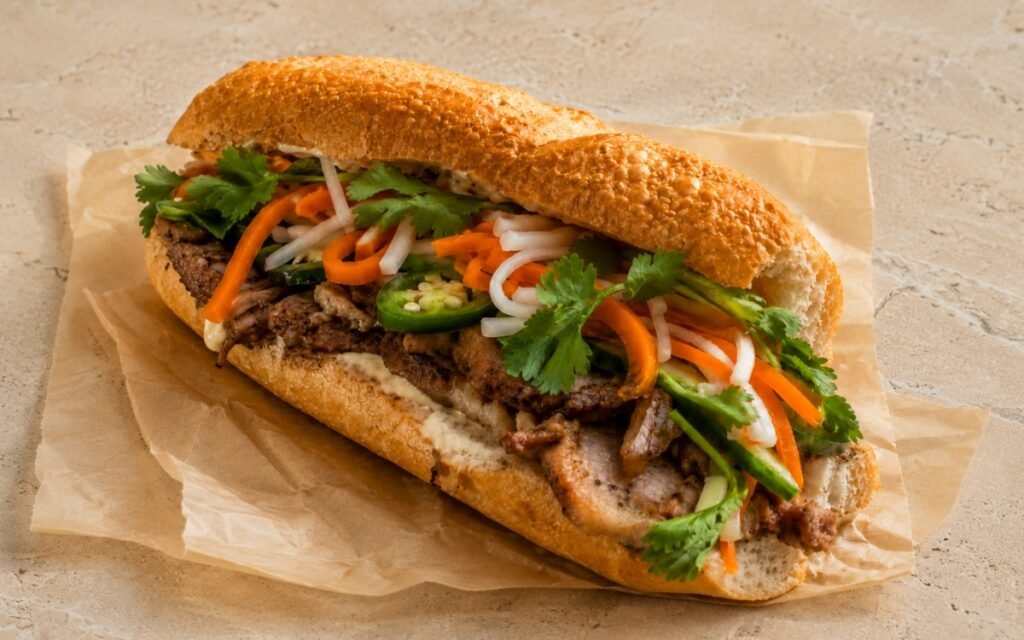
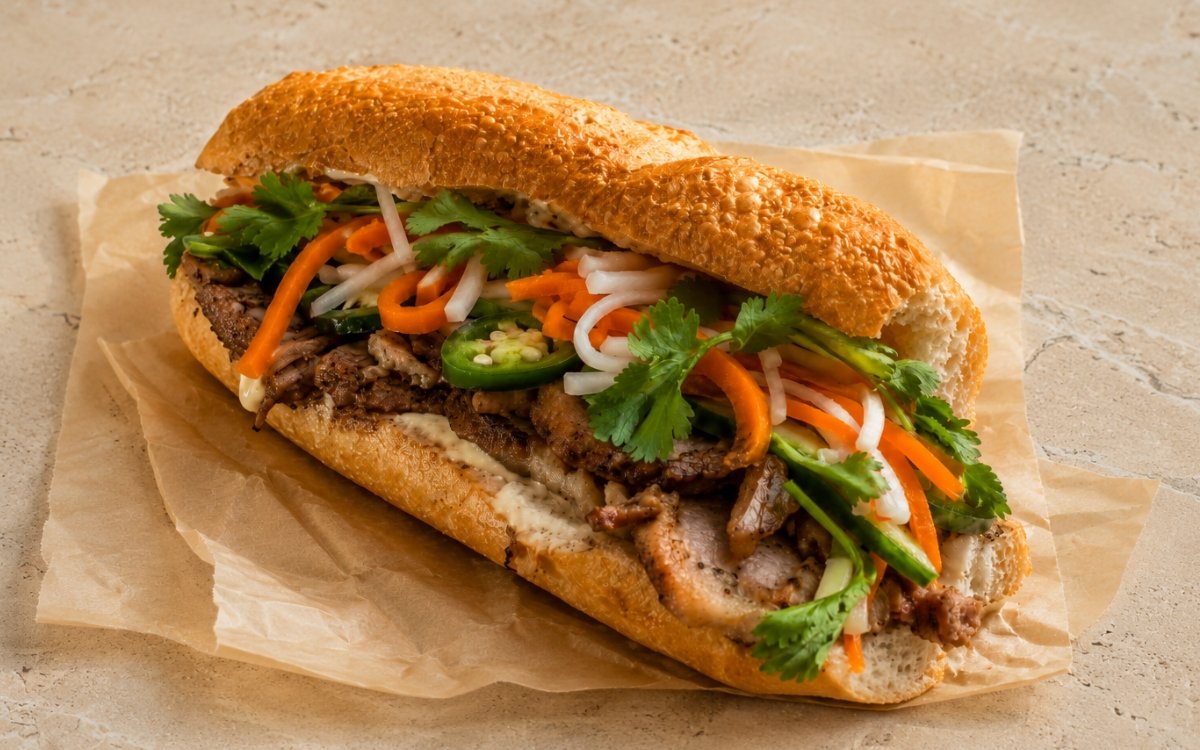
A Vietnamese bánh mì built on a crisp baguette with roast pork belly, creamy mayo, quick-pickled carrot and daikon, cucumber batons, fresh cilantro, thin jalapeño slices, and a light splash of seasoning sauce. Drying the pork skin uncovered overnight is the technique this whole sandwich depends on for its defining crispy pork — wet skin simply won’t puff properly under high heat, the same overnight-dry principle used elsewhere in this collection whenever a skin needs to blister and crackle rather than stay leathery. Keeping the wet marinade strictly on the meat side while the skin gets only dry salt and a vinegar brush is what protects that same skin from the moisture that would prevent it from crisping. Roasting in two stages — a gentler cook to render the fat and tenderise the meat, then a hot finish to blister the skin — is what produces tender pork under genuinely crackling crackling rather than one or the other. The payoff is a sandwich with real textural range: crisp bread, crunchy pork skin, juicy meat, sharp pickles, cool cucumber, fresh herbs, and chili heat all in the same bite.
Prep Time : 35 min
Cook Time : 1 hr, 45 min
Servings : 4
35 min
1 hr, 45 min
4
Ingredients
For the Bread
• 2 classic French baguettes, cut into 4 sandwich-length pieces, or 4 good-quality store-bought baguette rolls, or homemade baguette from Classic French Baguette
For the Crispy Pork Belly
• 1.2kg skin-on pork belly, in one even slab
• 12g fine sea salt
• 8g sugar
• 1 tsp five-spice powder — this one on Amazon
• 1 tsp garlic powder — this one on Amazon
• ½ tsp white pepper — this one on Amazon
• 15ml fish sauce — this one on Amazon
• 15ml light soy sauce
• 10ml rice vinegar, for brushing the skin
• Extra fine sea salt, for the skin
For the Pickled Carrot and Daikon
• 180g carrot, cut into thin matchsticks
• 220g daikon radish, cut into thin matchsticks
• 8g fine sea salt
• 25g sugar
• 120ml rice vinegar — this one on Amazon
• 120ml warm water
For the Sandwich Sauce
• 120g mayonnaise
• 1 small garlic clove, finely grated
• 10ml lime juice
• 5ml fish sauce
• 1 tsp sriracha, optional
For Assembly
• ½ cucumber, cut into thin batons
• 1–2 jalapeños, thinly sliced
• 1 large handful fresh cilantro sprigs
• Maggi seasoning, soy sauce, or fish sauce, for a light splash
• Extra mayonnaise, if needed
This post may contain affiliate links. As an Amazon Associate I earn from qualifying purchases, at no additional cost to you.
Directions
- Score and Season the Pork Belly
Pat the pork belly very dry. Place it skin-side up. Using a sharp skewer, cake tester, or the tip of a small knife, prick the skin all over without cutting deeply into the meat. Flip the pork belly meat-side up. Mix the salt, sugar, five-spice, garlic powder, white pepper, fish sauce, and soy sauce. Rub this seasoning into the meat side and sides only. Do not rub wet seasoning onto the skin. Flip skin-side up again. Brush the skin lightly with rice vinegar, then sprinkle with a thin, even layer of fine sea salt. Place the pork belly uncovered on a rack set over a tray and refrigerate for 8 hours minimum, ideally overnight. The skin needs to look dry and slightly tightened before roasting. Wet pork skin will not puff properly. If the skin is still damp, keep drying it uncovered longer. Pricking the skin creates small channels that let trapped fat and moisture escape during roasting, which is what allows the skin to blister into individual bubbles rather than staying flat and dense. - Make the Pickled Carrot and Daikon
Place the carrot and daikon matchsticks in a bowl. Toss with the salt and let sit for 10 minutes. Rinse briefly and squeeze out excess water. In a clean bowl or jar, combine the sugar, rice vinegar, and warm water. Stir until the sugar dissolves. Add the carrot and daikon and let pickle for at least 45 minutes. The pickles should be flexible, lightly sharp, lightly sweet, and still crisp. If they taste flat, they need a little more salt or vinegar. The initial salting and rinsing step draws out some of the vegetables’ raw water content before they ever meet the sweet vinegar brine, which is what lets the pickle penetrate more effectively rather than being diluted by the vegetables’ own moisture. - Roast the Pork Belly
Preheat the oven to 160°C. Place the pork belly skin-side up on a rack set over a tray. Roast for 1 hour 15 minutes to 1 hour 30 minutes, until the meat is tender and the fat has rendered. Increase the oven to 240°C, or use a broiler, and continue cooking until the skin bubbles, blisters, and turns crisp, about 15–25 minutes. Rotate the tray if needed so the skin crisps evenly. The pork is not finished just because it is cooked through. The target is tender meat plus crisp, blistered skin. If the skin is still leathery, it needs more high heat. If parts are darkening too fast, shield those spots loosely with foil. This two-stage roast mirrors the same render-then-crisp logic used for other skin-on pork preparations throughout this collection — the gentler first stage gives the substantial fat layer real time to melt away, and only once that rendering is essentially complete does the aggressive high heat step in to finish the skin quickly. - Rest and Slice the Pork
Transfer the pork belly to a board and rest for 15 minutes. Slice into thick bite-size strips or thin slabs that fit the baguette. Keep the skin attached to the meat where possible. Resting matters. If sliced immediately, the juices run out and the pork eats dry even if it was cooked correctly. This rest lets the juices that redistributed through the meat during roasting settle back evenly rather than spilling out onto the board the moment a knife goes in. - Make the Sandwich Sauce
In a small bowl, mix the mayonnaise, grated garlic, lime juice, fish sauce, and sriracha if using. The sauce should be creamy, lightly salty, lightly acidic, and rich enough to coat the bread. This sauce carries the sandwich’s foundational savoury-tangy layer, spread directly against the bread rather than relying on the fillings alone to season the crust. - Prepare the Bread
Cut each baguette portion lengthwise, leaving a hinge if possible. Warm or lightly toast the bread until the crust is crisp and the interior is soft. If the baguette is very dense, pull out a little of the interior crumb so the fillings fit properly. Bánh mì bread should crackle outside but not fight your teeth. A rock-hard baguette makes a bad sandwich. Removing some of an overly dense crumb creates genuine room for the generous fillings this sandwich calls for, without needing to compress everything into a cavity that wasn’t built to hold it. - Assemble the Sandwiches
Spread the sandwich sauce inside each baguette. Add a generous layer of sliced crispy pork belly. Top with pickled carrot and daikon, cucumber batons, jalapeño slices, and fresh cilantro. Add a very light splash of Maggi seasoning, soy sauce, or fish sauce over the filling. Close the sandwich gently without crushing it. The finished sandwich should have crisp bread, crunchy pork skin, juicy pork belly, sharp pickles, cool cucumber, fresh herbs, and chili heat in the same bite. That final light splash of seasoning sauce is a small, characteristic finishing touch — enough to season the fresh vegetables and herbs directly, tying the whole sandwich together without needing to be built into any single component beforehand.
*Notes :
- Keeping wet marinade strictly confined to the meat side while the skin receives only dry salt and a light vinegar brush is worth understanding as a rule with no real exceptions in this recipe. Any wet marinade that touches the skin directly works against the entire point of the overnight dry — moisture on the skin is precisely what prevents it from blistering and crisping properly, regardless of how thoroughly it’s dried afterward. The careful separation between the two sides during seasoning is what sets up the drying stage to actually succeed.
- The overnight drying period deserves to be treated as genuinely non-negotiable rather than a flexible suggestion, since it’s directly responsible for whether the skin crisps at all. Pork skin holds real surface moisture, and that moisture has to be drawn out and evaporated before high heat can properly blister it — rushing or skipping this step is one of the most common reasons homemade crispy pork belly ends up chewy rather than crackling.
- The two-stage roast — a longer, gentler cook followed by a short, aggressive finish — solves a genuine tension specific to skin-on pork belly. Going straight to high heat would char the skin’s exterior long before the substantial fat layer beneath it has had time to render out, leaving chewy, greasy fat under a burnt surface. The gentler first stage handles that rendering fully, so the hot finish can focus entirely on the skin without needing to also cook the meat through.
- The bright, sharp pickled carrot and daikon, along with the fresh cucumber, herbs, and chili, aren’t simply garnish in this sandwich — they’re doing genuine structural work against the pork belly’s richness. Without that acidic, crisp, herbal counterpoint, a sandwich built around fatty, crispy-skinned pork would read as heavy rather than balanced; the pickles and fresh vegetables are what keep the whole sandwich feeling bright rather than one-note.
Why This Recipe Works
This recipe works because the pork belly is prepared with real attention to keeping its skin dry throughout — seasoned only with dry salt and vinegar rather than wet marinade, then rested uncovered overnight to fully dry before roasting.
The two-stage roast lets the fat render fully at moderate heat before a hot finish blisters the skin without overcooking the meat, and resting before slicing protects the meat’s juiciness.
The bright pickled vegetables, fresh herbs, and light seasoning splash together cut through the pork’s richness, keeping the whole sandwich balanced rather than heavy.
Ingredient Breakdown
Skin-On Pork Belly, Skin Kept Dry
The specified cut and prep — wet marinade confined strictly to the meat side, skin treated only with dry salt and vinegar for proper crisping.
Overnight Uncovered Drying
The critical prep step — draws moisture out of the skin, without which proper blistering and crisping simply won’t happen.
Two-Stage Roast (Render, Then Blister)
The cooking technique — moderate heat renders the fat fully, aggressive finishing heat crisps the skin without overcooking the meat.
Salted, Vinegar-Pickled Carrot and Daikon
The bright, crunchy counterpoint — pre-salted to draw out moisture before pickling for a cleaner, sharper result.
Fresh Herbs, Cucumber, and Chili
The finishing layer — provides the cool, sharp, herbal contrast that keeps the fatty pork belly from feeling heavy.
Flavor Structure Explained
This bánh mì follows a layered balance model:
- Crisp savoury foundation (crackling pork skin)
- Rich juicy centre (tender roasted pork belly)
- Sharp sweet-tangy contrast (pickled carrot and daikon)
- Cool fresh crunch (cucumber, cilantro)
- Sharp finishing heat (jalapeño, seasoning splash)
The crackling pork skin defines the sandwich with genuine crunch and deep savoury flavour from the five-spice and salt seasoning. Tender, juicy pork belly beneath it provides rich, fatty satisfaction as the centrepiece. Pickled carrot and daikon cut sharply through that richness with sweet-tangy acidity. Cool cucumber batons and fresh cilantro sprigs add clean, herbal crunch, while thin jalapeño slices and a final light splash of seasoning sauce finish every bite with sharp, savoury heat.
Common Mistakes to Avoid
- Getting Wet Marinade on the Skin – This directly prevents proper crisping regardless of subsequent drying. Always keep marinade confined to the meat side only.
- Skipping or Shortening the Overnight Dry – Wet skin won’t blister properly under high heat. Always dry uncovered for at least 8 hours, ideally overnight.
- Going Straight to High Heat for the Whole Roast – This chars the skin before the substantial fat layer has rendered. Always start at moderate heat before finishing hot.
- Slicing the Pork Immediately Off the Rack – This releases the meat’s juices onto the board rather than keeping them in the meat. Always rest for 15 minutes first.
- Chopping the Cilantro Into Small Pieces – This loses the fresh, distinct presence whole sprigs or large leaves provide. Always use it in larger, more visible pieces.
Variations
With Pâté
Spread a thin layer of pork pâté beneath the mayo for a richer, more traditional deli-style bánh mì.
Spicier Version
Increase the jalapeño slices and add a few dashes of extra sriracha to the sandwich sauce for a sharper heat throughout.
Grilled Pork Bánh Mì
Substitute thin-sliced, marinated pork shoulder grilled hot and fast for the roasted belly, for a different but related bánh mì style.
Extra Herbs
Add a handful of fresh mint or Thai basil alongside the cilantro for additional herbal complexity.
Storage & Make-Ahead
Raw, seasoned pork belly must dry uncovered in the refrigerator for the full 8 hours, ideally overnight, before roasting.
Roasted, unsliced pork belly can be refrigerated for up to 3 days; the skin will soften somewhat and is best re-crisped briefly under a hot broiler before serving.
Pickled carrot and daikon can be refrigerated in their brine for up to 2 weeks. The sandwich sauce can be refrigerated in a sealed container for up to 5 days.
Fully assembled sandwiches are not suitable for storage — assemble only what will be eaten immediately, given how quickly the pork skin and baguette lose their texture with mayo and pickles inside.
Frequently Asked Questions
Why does the pork skin need to dry uncovered overnight before roasting?
Pork skin holds real surface moisture, and that moisture has to evaporate before high heat can properly blister and crisp it. Skipping or shortening this step is one of the most common reasons homemade crispy pork belly turns out chewy rather than crackling.
Why does the wet marinade need to stay off the skin entirely?
Any moisture touching the skin directly works against the entire point of the overnight dry, regardless of how thoroughly it’s dried afterward. Keeping the marinade confined strictly to the meat side protects the skin’s ability to crisp properly.
Why roast the pork belly in two stages instead of one consistent temperature?
Going straight to high heat would char the skin before the substantial fat layer beneath it has had time to render out, leaving chewy fat under a burnt surface. The gentler first stage handles that rendering fully, so the hot finish can focus entirely on crisping the skin.
Why does the pork need to rest before slicing?
Cutting into it immediately releases the meat’s juices onto the board rather than keeping them in the meat, producing a drier result even if the pork was cooked correctly. The 15-minute rest lets those juices settle back evenly first.
Are there other braised or roasted meat sandwiches worth trying?
Pho Sandwich takes a related idea in a different direction, built around slow-braised beef in a fragrant pho-style flavour base rather than crispy pork belly. Cuban Sandwich (Cubano) offers another pressed sandwich built around citrus-marinated roast pork. Portuguese Pork Bifana and Torta de Milanesa Sandwich are both worth exploring too — the Bifana built around thin, marinated pork cutlets, and the Torta around a crispy breaded beef milanesa.
Nutrition Facts
( per serving )
Calories
~880 kcal
Protein
38 g
Fat
58 g
Carbs
52 g
Calories
~880 kcal
Protein
38 g
Fat
58 g
Carbs
52 g
Related Recipes
Related Recipes

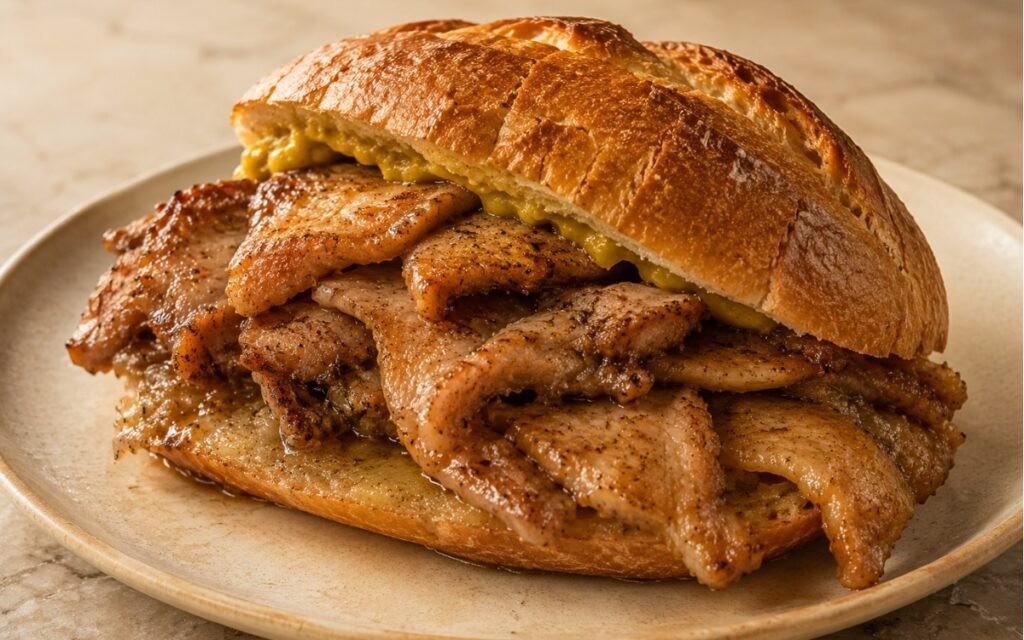
Portuguese Pork Bifana
Thin pork slices marinated in garlic and white wine, simmered until glossy and tender, piled into crusty homemade papo-seco rolls.
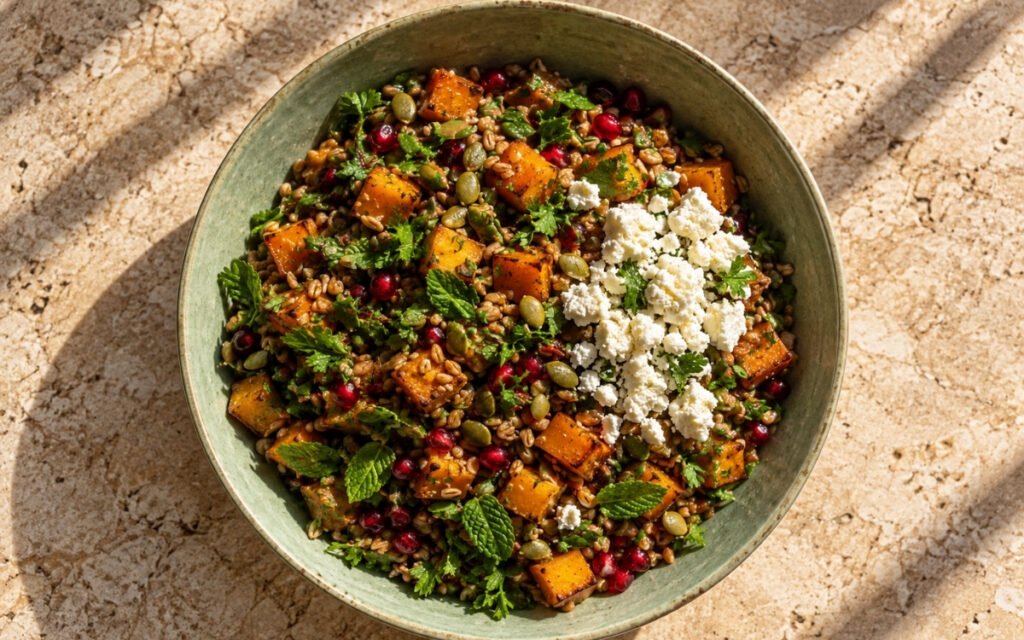
Freekeh Grain Salad with Pomegranate, Squash & Feta
Smoky chewy freekeh grains, caramelized roasted butternut squash, pomegranate seeds, toasted pumpkin seeds, parsley, mint, and crumbled feta.
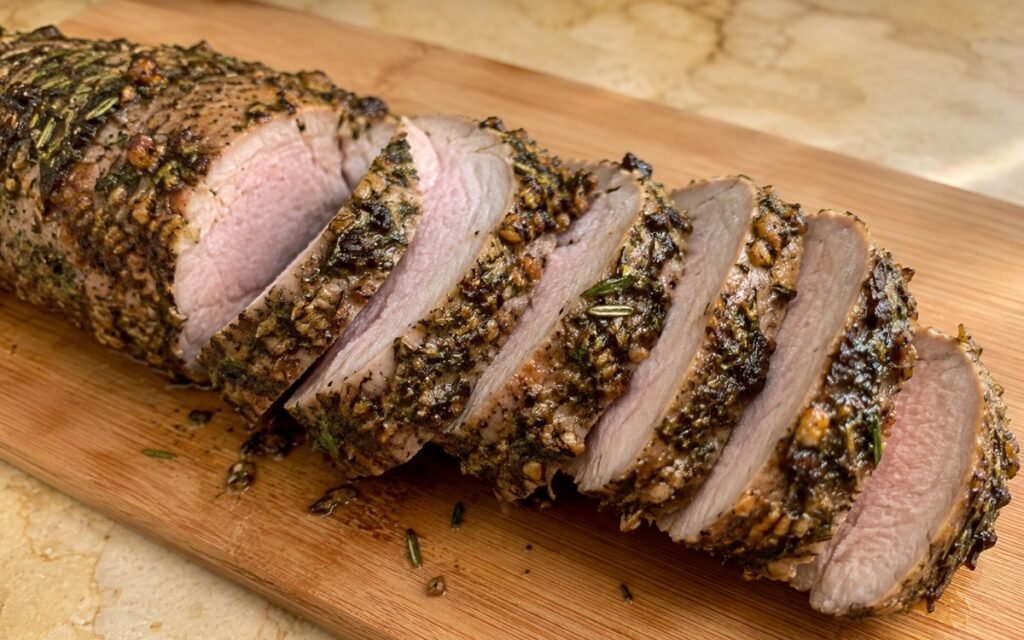
Garlic Herb Pork Tenderloin
Pork tenderloin trimmed, coated in Dijon mustard and fresh herb paste — seared for color, roasted precisely, rested and sliced. Elegant and aromatic.
You might also like
You might also like
Pad See Ew — Thai Stir-Fried Wide Noodles
Wide rice noodles stir-fried with dark soy sauce, Chinese broccoli, sliced chicken, and egg over high heat for smoky wok-hei char.
Pork Tamales with Salsa Verde
Braised, shredded pork in a glossy red chile sauce, wrapped in tender, broth-hydrated masa, and steamed in corn husks. Served with bright salsa verde.
Southern Biscuits and Sausage Gravy
Tender buttermilk biscuits split open and covered with thick, creamy sausage gravy loaded with browned breakfast sausage and black pepper.

Crispy Pork Bánh Mì Sandwich
Ingredients
Method
- Pat the pork belly very dry. Place it skin-side up. Using a sharp skewer, cake tester, or the tip of a small knife, prick the skin all over without cutting deeply into the meat. Flip the pork belly meat-side up. Mix the salt, sugar, five-spice, garlic powder, white pepper, fish sauce, and soy sauce. Rub this seasoning into the meat side and sides only. Do not rub wet seasoning onto the skin. Flip skin-side up again. Brush the skin lightly with rice vinegar, then sprinkle with a thin, even layer of fine sea salt. Place the pork belly uncovered on a rack set over a tray and refrigerate for 8 hours minimum, ideally overnight. The skin needs to look dry and slightly tightened before roasting. Wet pork skin will not puff properly. If the skin is still damp, keep drying it uncovered longer. Pricking the skin creates small channels that let trapped fat and moisture escape during roasting, which is what allows the skin to blister into individual bubbles rather than staying flat and dense.
- Place the carrot and daikon matchsticks in a bowl. Toss with the salt and let sit for 10 minutes. Rinse briefly and squeeze out excess water. In a clean bowl or jar, combine the sugar, rice vinegar, and warm water. Stir until the sugar dissolves. Add the carrot and daikon and let pickle for at least 45 minutes. The pickles should be flexible, lightly sharp, lightly sweet, and still crisp. If they taste flat, they need a little more salt or vinegar. The initial salting and rinsing step draws out some of the vegetables’ raw water content before they ever meet the sweet vinegar brine, which is what lets the pickle penetrate more effectively rather than being diluted by the vegetables’ own moisture.
- Preheat the oven to 160°C. Place the pork belly skin-side up on a rack set over a tray. Roast for 1 hour 15 minutes to 1 hour 30 minutes, until the meat is tender and the fat has rendered. Increase the oven to 240°C, or use a broiler, and continue cooking until the skin bubbles, blisters, and turns crisp, about 15–25 minutes. Rotate the tray if needed so the skin crisps evenly. The pork is not finished just because it is cooked through. The target is tender meat plus crisp, blistered skin. If the skin is still leathery, it needs more high heat. If parts are darkening too fast, shield those spots loosely with foil. This two-stage roast mirrors the same render-then-crisp logic used for other skin-on pork preparations throughout this collection — the gentler first stage gives the substantial fat layer real time to melt away, and only once that rendering is essentially complete does the aggressive high heat step in to finish the skin quickly.
- Transfer the pork belly to a board and rest for 15 minutes. Slice into thick bite-size strips or thin slabs that fit the baguette. Keep the skin attached to the meat where possible. Resting matters. If sliced immediately, the juices run out and the pork eats dry even if it was cooked correctly. This rest lets the juices that redistributed through the meat during roasting settle back evenly rather than spilling out onto the board the moment a knife goes in.
- In a small bowl, mix the mayonnaise, grated garlic, lime juice, fish sauce, and sriracha if using. The sauce should be creamy, lightly salty, lightly acidic, and rich enough to coat the bread. This sauce carries the sandwich’s foundational savoury-tangy layer, spread directly against the bread rather than relying on the fillings alone to season the crust.
- Cut each baguette portion lengthwise, leaving a hinge if possible. Warm or lightly toast the bread until the crust is crisp and the interior is soft. If the baguette is very dense, pull out a little of the interior crumb so the fillings fit properly. Bánh mì bread should crackle outside but not fight your teeth. A rock-hard baguette makes a bad sandwich. Removing some of an overly dense crumb creates genuine room for the generous fillings this sandwich calls for, without needing to compress everything into a cavity that wasn’t built to hold it.
- Spread the sandwich sauce inside each baguette. Add a generous layer of sliced crispy pork belly. Top with pickled carrot and daikon, cucumber batons, jalapeño slices, and fresh cilantro. Add a very light splash of Maggi seasoning, soy sauce, or fish sauce over the filling. Close the sandwich gently without crushing it. The finished sandwich should have crisp bread, crunchy pork skin, juicy pork belly, sharp pickles, cool cucumber, fresh herbs, and chili heat in the same bite. That final light splash of seasoning sauce is a small, characteristic finishing touch — enough to season the fresh vegetables and herbs directly, tying the whole sandwich together without needing to be built into any single component beforehand.