
Freekeh Grain Salad with Pomegranate, Squash & Feta
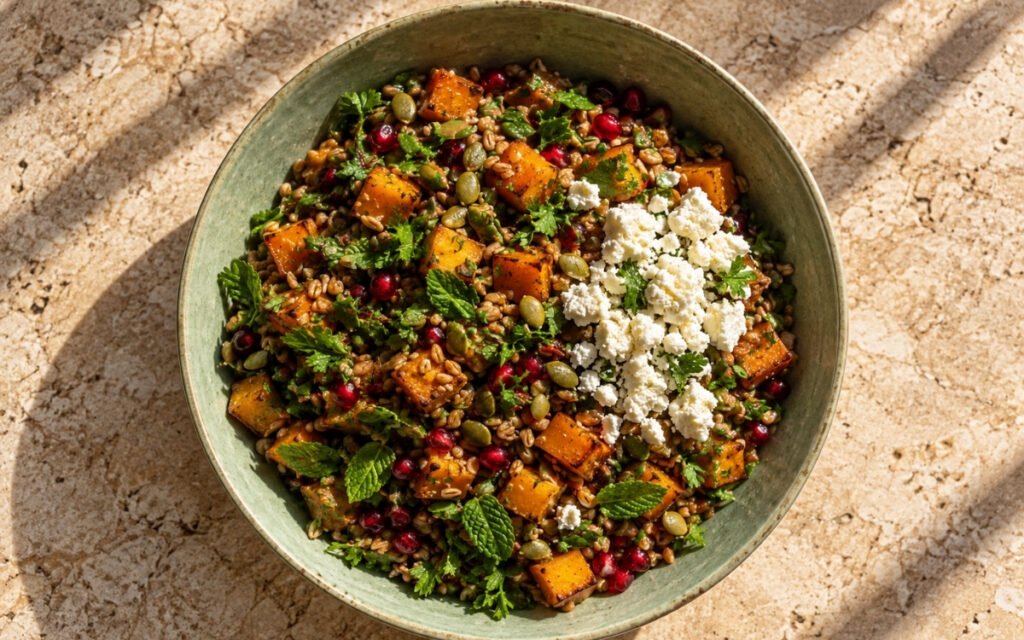
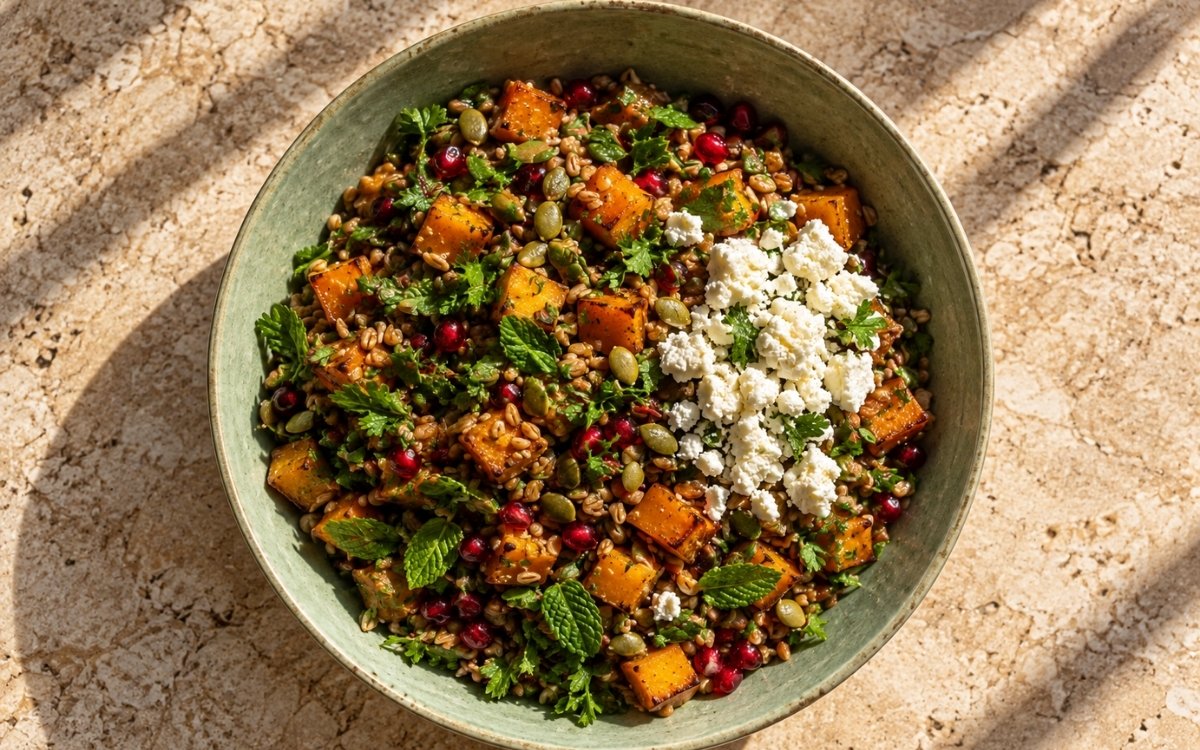
A hearty Middle Eastern-style freekeh salad with smoky chewy grains, caramelized roasted butternut squash, pomegranate seeds, toasted pumpkin seeds, parsley, mint, lemon-olive oil dressing, and crumbled feta, the texture staying loose and glossy, with distinct grains, sweet roasted squash, fresh herbs, and salty cheese. Cooking the freekeh only until tender but still genuinely chewy, then draining and cooling it, is the technique this whole salad depends on for real, distinct grains — freekeh left sitting in its own cooking liquid or cooked past chewy would turn wet and mushy, the same drain-and-cool-the-grain principle used elsewhere in this collection whenever a chewy whole grain’s own defining texture depends on real, deliberate handling right after cooking. Building the dressing deliberately strong before it ever meets the grains is what lets it actually season freekeh, which absorbs acidity and salt quickly. Dressing the freekeh before the herbs and feta are added is what seasons the base properly without bruising the more delicate finishing ingredients. The payoff is a salad with real, hearty Middle Eastern character — smoky, chewy freekeh against sweet caramelized squash, juicy pomegranate, crunchy pumpkin seeds, and creamy-salty feta.
Prep Time : 20 min
Cook Time : 35–40 min
Servings : 4
20 min
35–40 min
4
Ingredients
For the Freekeh Base
• 220g freekeh, preferably cracked freekeh — this one on Amazon
• 700ml water or light vegetable stock
• ½ tsp fine salt
• 1 tbsp olive oil
• 1 bay leaf, optional
For the Roasted Squash
• 600g peeled butternut squash, cut into 2cm cubes
• 2 tbsp olive oil
• ¾ tsp fine salt
• ½ tsp black pepper
• ½ tsp ground cumin — this one on Amazon
• ½ tsp ground coriander — this one on Amazon
• ¼ tsp cinnamon, optional but good
For the Lemon-Olive Oil Dressing
• 50ml extra-virgin olive oil — this one on Amazon
• 35ml fresh lemon juice
• 1 tbsp pomegranate molasses — this one on Amazon
• 1 small garlic clove, finely grated
• ½ tsp fine salt
• ¼ tsp black pepper
For the Salad Finish
• 120g pomegranate seeds
• 50g pumpkin seeds
• 120g feta, crumbled — this one on Amazon
• 25g flat-leaf parsley, roughly chopped
• 15g fresh mint leaves, roughly torn or chopped
• Extra lemon juice, to taste
• Extra olive oil, to finish
This post may contain affiliate links. As an Amazon Associate I earn from qualifying purchases, at no additional cost to you.
Directions
- Rinse and Cook the Freekeh
Rinse the freekeh well under cold water, then drain. Pick through it quickly for any hard bits. Add the freekeh, water or stock, salt, olive oil, and bay leaf if using to a saucepan. Bring to a boil, then reduce to a low simmer. Cook until tender but still chewy: cracked freekeh about 18–25 minutes, whole freekeh about 35–45 minutes. Drain off any excess liquid. Spread the cooked freekeh on a tray or wide plate and let it cool for 10–15 minutes. Freekeh should be chewy and separate, not wet or mushy. If it is cooked but still sitting in liquid, drain it immediately. That immediate draining and spreading onto a tray is exactly what prevents the grains from continuing to sit in their own residual moisture, protecting them from turning wet and mushy while they cool. - Roast the Squash
Heat the oven to 220°C / 425°F. Toss the butternut squash with olive oil, salt, black pepper, cumin, coriander, and cinnamon if using. Spread on a tray in a single layer. Roast for 25–30 minutes, turning once halfway, until the squash is tender inside and caramelized at the edges. The squash should have browned corners and a sweet roasted smell. Pale steamed squash will make the salad taste flat. That real, developed caramelization at the edges reflects genuine Maillard browning having taken place — squash pulled while still pale would still taste noticeably flatter despite being technically cooked through. - Toast the Pumpkin Seeds
Toast the pumpkin seeds in a dry pan over medium heat for 2–4 minutes, stirring often, until they puff slightly and smell nutty. Transfer to a plate to cool. Remove them from the hot pan as soon as they are toasted. Pumpkin seeds can turn bitter if overcooked. That immediate transfer off the hot pan protects the seeds from their own narrow margin between properly toasted and genuinely bitter, given how quickly residual heat alone can push them past that point. - Make the Dressing
Whisk together the olive oil, lemon juice, pomegranate molasses, grated garlic, salt, and black pepper. Taste the dressing. It should be bright, tangy, lightly sweet, and slightly sharp. The dressing needs to be strong before mixing because freekeh absorbs acidity and salt quickly. That deliberately intense early seasoning accounts for real, predictable absorption — freekeh’s own porous, chewy structure soaks up considerable acidity and salt quickly, meaning a milder dressing would read as noticeably flatter once actually tossed through the grain. - Dress the Freekeh
Place the cooled freekeh in a large bowl. Add about two-thirds of the dressing and toss well. Let it sit for 5 minutes so the grains absorb the flavor. Dress the grains before adding herbs and feta. This seasons the base properly without bruising the fresh ingredients. That deliberate sequencing, dressing the grain first, lets the vinaigrette actually work into every kernel before the more fragile parsley, mint, and feta are ever introduced to the tossing process. - Assemble the Salad
Add the roasted squash, most of the pomegranate seeds, most of the pumpkin seeds, parsley, and mint to the freekeh. Toss gently. Fold in about half of the feta, keeping the rest for the top. Taste and adjust with more dressing, lemon juice, salt, or olive oil. Transfer to a wide bowl. Finish with the remaining feta, pomegranate seeds, pumpkin seeds, herbs, and a small drizzle of olive oil. Reserving a portion of every finishing element specifically for this final stage keeps those elements genuinely visible and fresh right at the surface of the finished salad.
*Notes :
- Cooking the freekeh only until tender but genuinely chewy, then draining and spreading it to cool, deserves recognition as the technique most directly responsible for this salad’s whole intended texture. The recipe’s own explicit warning that freekeh “sitting in liquid” should be “drained immediately” reflects a real, common failure point — that deliberate handling right after cooking is what protects the grains from turning wet and mushy.
- Building the dressing deliberately strong before it ever meets the freekeh deserves genuine attention as a real, functional necessity rather than a matter of taste. The recipe’s own explicit note that “freekeh absorbs acidity and salt quickly” reflects real understanding of how much dilution this particular grain causes — a milder dressing would be absorbed and disappear rather than actually seasoning the finished salad.
- Dressing the freekeh before the herbs and feta are ever added deserves the same attention this technique receives throughout this collection’s other grain-based salads. That deliberate sequencing lets the grain fully absorb the dressing while protecting the more delicate parsley, mint, and crumbled feta from unnecessary bruising during that earlier tossing stage.
- Roasting the squash until it develops real, genuine caramelization at the edges, rather than staying pale, deserves genuine respect as the detail responsible for whether this salad tastes flat or properly sweet and developed. The recipe’s own explicit warning that “pale steamed squash will make the salad taste flat” reflects real understanding of how much real browning actually contributes to this dish’s overall flavour.
Why This Recipe Works
This recipe works because the freekeh is cooked only until genuinely chewy, then drained and cooled to protect its own distinct texture. The squash is roasted until it develops real, genuine caramelization, protecting the salad from tasting flat. The dressing is built deliberately strong, accounting for how quickly freekeh absorbs both acidity and salt.
Dressing the grain first, before the herbs and feta are added, protects those more delicate ingredients from unnecessary bruising. Reserving a portion of every finishing element for the final assembly stage delivers the salad at its freshest, most visually complete.
Ingredient Breakdown
Chewy, Properly Drained Freekeh
The critical technique — cooked only until tender but genuinely chewy, then drained and cooled to protect its distinct texture.
Deeply Caramelized Roasted Squash
The critical technique — real browning at the edges protects the salad from tasting flat and steamed.
Deliberately Strong Dressing
The critical technique — intentional intensity accounts for how quickly freekeh absorbs both acidity and salt.
Grain Dressed Before Herbs and Feta
The critical technique — lets the freekeh fully absorb the dressing while protecting the more delicate finishing ingredients.
Immediately Transferred Pumpkin Seeds
The critical technique — protects against the seeds turning bitter from overcooking.
Reserved Finishing Portions (Feta, Pomegranate, Pumpkin Seeds, Herbs)
The finishing technique — kept back for the final stage, staying genuinely fresh and visible.
Flavor Structure Explained
This freekeh grain salad follows a layered balance model:
- Smoky, chewy foundation (properly cooked and drained freekeh)
- Sweet, caramelized depth (deeply roasted butternut squash)
- Bright, tangy dressing (lemon, olive oil, pomegranate molasses)
- Juicy, sweet-tart pop (pomegranate seeds)
- Crunchy, toasted finish (pumpkin seeds)
- Creamy, salty accent (crumbled feta)
- Fresh herbal lift (parsley, mint)
Properly cooked and drained freekeh provides this salad’s smoky, genuinely chewy foundation, its texture protected through careful cooking and handling. Deeply roasted butternut squash contributes sweet, caramelized depth throughout. A bright, tangy dressing of lemon, olive oil, and pomegranate molasses ties the grain and squash together with classic Middle Eastern character. Pomegranate seeds add a juicy, sweet-tart pop, and pumpkin seeds contribute crunchy, toasted finish. Crumbled feta adds a creamy, salty accent, and fresh parsley and mint, added only once the base has cooled, tie the whole hearty salad together with bright herbal lift.
Common Mistakes to Avoid
- Letting the Cooked Freekeh Sit in Its Own Liquid – This causes it to turn wet and mushy. Always drain and cool it immediately after cooking.
- Pulling the Squash Before It Develops Real Caramelization – This produces a pale, flat-tasting result. Always roast until the edges are genuinely browned.
- Underseasoning the Dressing – This produces a flat-tasting salad once absorbed by the freekeh. Always build it deliberately strong.
- Adding the Herbs and Feta Before the Freekeh Is Dressed – This risks bruising the delicate ingredients and produces less even flavour. Always dress the grain first.
- Overdressing the Finished Salad – This makes it look wet rather than glossy. Always add dressing gradually, tasting as you go.
Variations
Whole Freekeh Version
Use whole freekeh instead of cracked, per the recipe’s own note on it needing longer cooking, for a chewier, more traditional texture.
Extra-Feta Version
Increase the crumbled feta for a more pronounced, creamy-salty presence throughout the finished salad.
Meal-Prep Version
Cook the freekeh and roast the squash ahead of time, per the recipe’s own guidance, adding the herbs, feta, seeds, and pomegranate close to serving.
Extra-Spiced Squash Version
Include the optional cinnamon in the squash’s roasting spices, per the recipe’s own note, for a warmer, more rounded roasted flavour.
Storage & Make-Ahead
Cracked freekeh is the easiest choice for salads since it cooks faster and mixes more evenly, while whole freekeh works too but needs considerably longer cooking time to reach the same tenderness.
The dressing needs to be strong before mixing because freekeh absorbs acidity and salt quickly, so build it with real intensity rather than seasoning it as if for a lighter, less absorbent base.
Crumble the feta into medium chunks so it stays visible against the dark grains and orange squash, and add the herbs only once the freekeh and squash are no longer hot, since heat would wilt and dull them.
Do not overdress the finished salad; it should look glossy rather than wet, so add the dressing gradually and taste as you go rather than pouring it all in at once.
The freekeh and squash can both be cooked and roasted well ahead of time, but add the herbs, feta, seeds, and pomegranate close to serving so everything stays fresh, and serve the finished dish at room temperature or slightly warm rather than fridge-cold.
Frequently Asked Questions
Why does the freekeh need to be drained and spread to cool immediately after cooking?
Freekeh left sitting in its own cooking liquid continues absorbing moisture, turning wet and mushy rather than staying chewy and distinct. Immediate draining and spreading protects that intended texture.
Why does the dressing need to taste so strong before it’s tossed with the freekeh?
Freekeh’s own porous, chewy structure absorbs considerable acidity and salt quickly. A milder dressing would be absorbed and largely disappear rather than actually seasoning the finished salad’s overall flavour.
Why is the freekeh dressed before the herbs and feta are ever added?
That sequencing lets the grain fully absorb the dressing’s own flavour while protecting the more delicate parsley, mint, and crumbled feta from unnecessary bruising during that earlier stage of tossing.
Why does the squash need to develop real caramelization rather than just cooking through?
Pale, steamed-looking squash tastes noticeably flatter than properly caramelized squash. That real, developed browning is what actually builds sweet, roasted depth into the finished salad.
Are there other classic Middle Eastern grain, chickpea, or couscous dishes worth trying?
Turkish Bulgur Salad (Kısır) offers another classic grain-based salad direction worth exploring. Egyptian Balela and Roasted Cauliflower & Chickpea Salad are also worth trying for other classic Middle Eastern legume dishes, and Classic Tabbouleh Salad and Lemon Herb Couscous offer other classic grain-forward Middle Eastern dishes worth exploring.
Nutrition Facts
( per serving )
Calories
~520 kcal
Protein
16 g
Fat
26 g
Carbs
58 g
Calories
~520 kcal
Protein
16 g
Fat
26 g
Carbs
58 g
Related Recipes
Related Recipes

Panzanella Salad
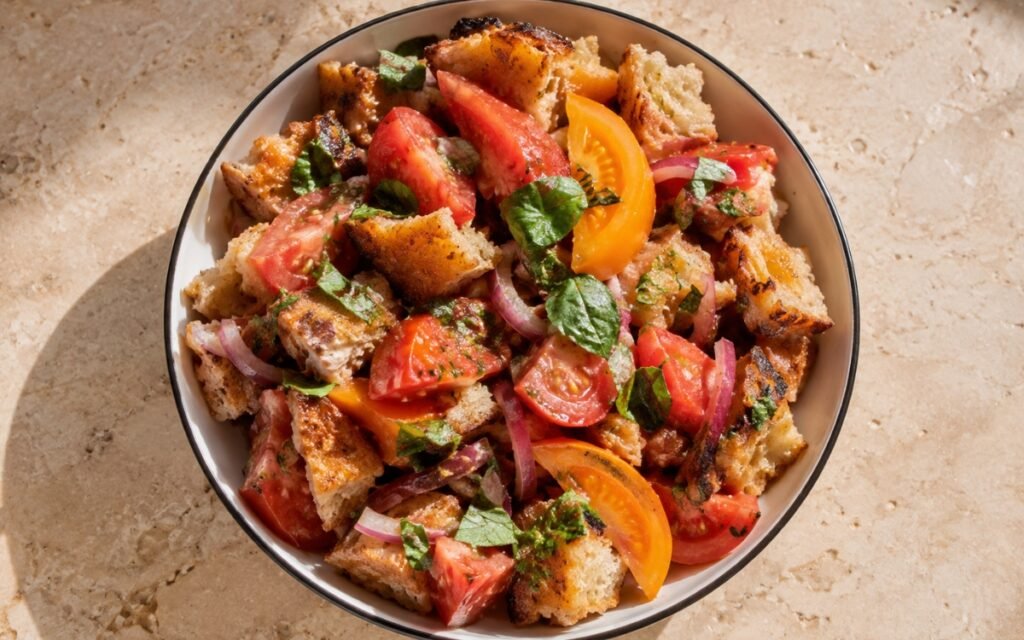
Heirloom tomatoes salted for juice, torn sourdough toasted to crust-and-chew, red onion macerated in red wine vinegar — assembled and rested 10 minutes. The Tuscan summer salad built on timing.
Sicilian Caponata Salad
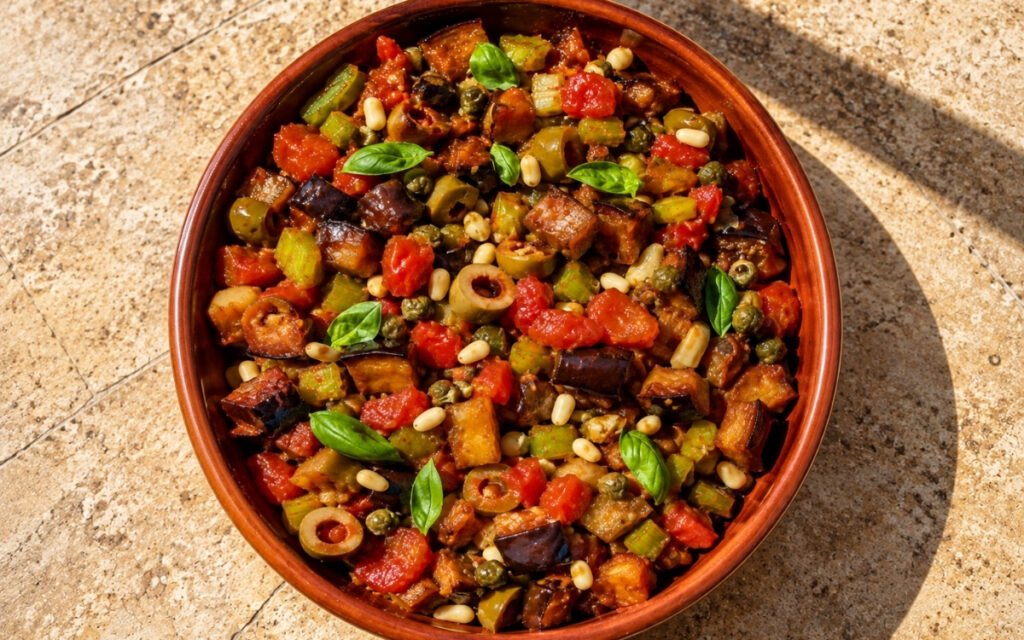
Soft golden eggplant, slightly firm celery, onion, tomatoes, green olives, capers, pine nuts, and basil in a glossy agrodolce dressing.
Arugula Pear Salad with Honey vinaigrette
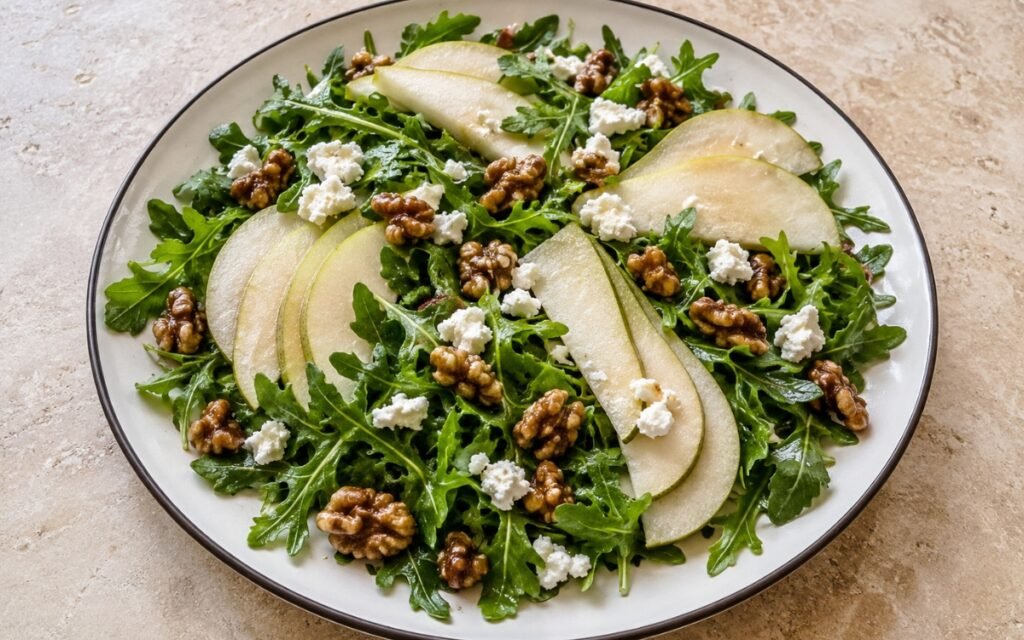
Peppery arugula with sweet pears, creamy goat cheese, candied walnuts, and honey vinaigrette dressing.
You might also like
You might also like
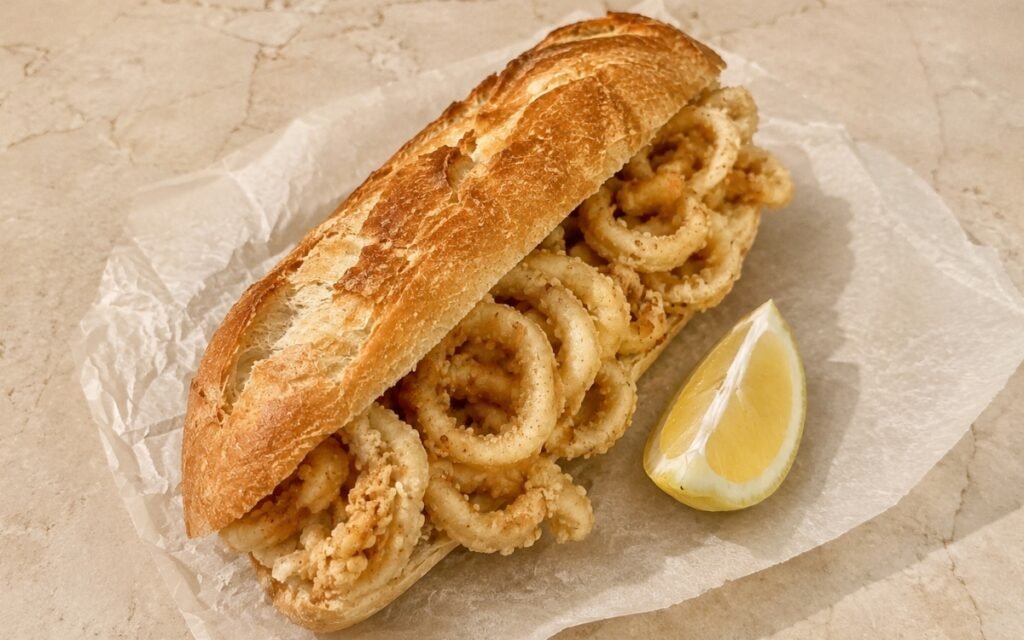
Bocadillo de Calamares
Crusty baguette-style bread filled generously with pale golden, crisp fried calamari rings, brightened with a squeeze of lemon.
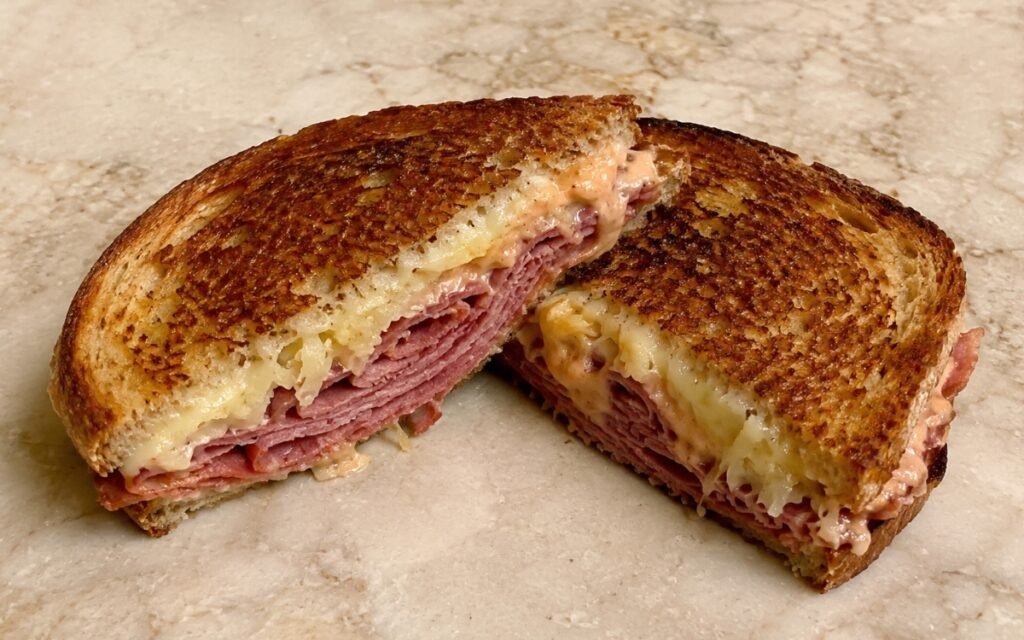
Reuben Sandwich
Griddled rye bread layered with warm corned beef, melted Swiss cheese, well-drained sauerkraut, and Russian dressing, pressed until crisp and golden.
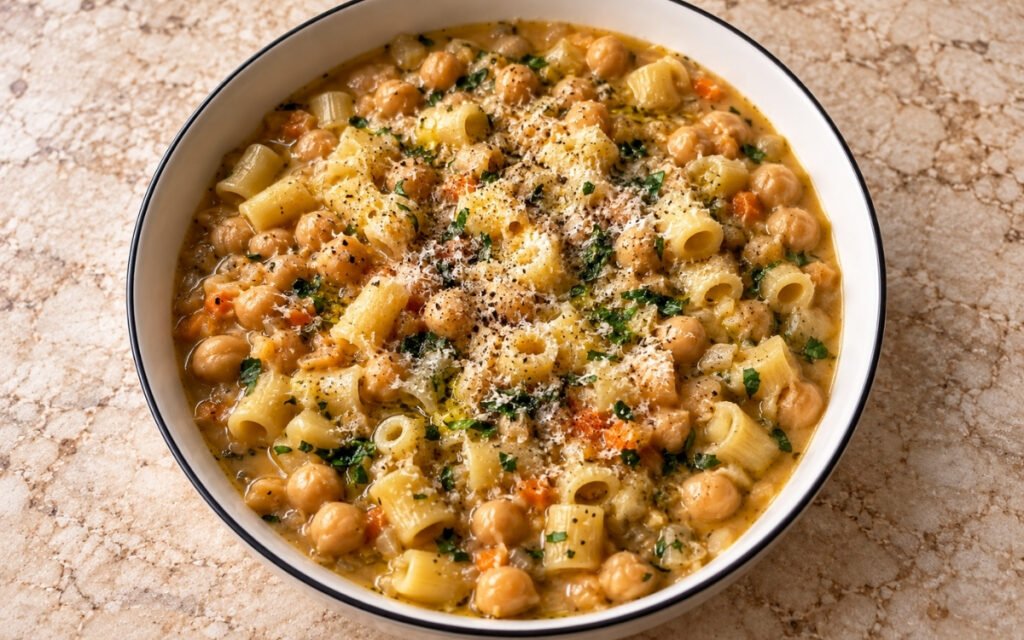
Pasta e Ceci
Small pasta and chickpeas in a thick, creamy brothy base with soffritto, garlic, and rosemary. Rustic Italian comfort food.
Freekeh Grain Salad with Pomegranate, Squash & Feta
Ingredients
Method
- Rinse the freekeh well under cold water, then drain. Pick through it quickly for any hard bits. Add the freekeh, water or stock, salt, olive oil, and bay leaf if using to a saucepan. Bring to a boil, then reduce to a low simmer. Cook until tender but still chewy: cracked freekeh about 18–25 minutes, whole freekeh about 35–45 minutes. Drain off any excess liquid. Spread the cooked freekeh on a tray or wide plate and let it cool for 10–15 minutes. Freekeh should be chewy and separate, not wet or mushy. If it is cooked but still sitting in liquid, drain it immediately. That immediate draining and spreading onto a tray is exactly what prevents the grains from continuing to sit in their own residual moisture, protecting them from turning wet and mushy while they cool.
- Heat the oven to 220°C / 425°F. Toss the butternut squash with olive oil, salt, black pepper, cumin, coriander, and cinnamon if using. Spread on a tray in a single layer. Roast for 25–30 minutes, turning once halfway, until the squash is tender inside and caramelized at the edges. The squash should have browned corners and a sweet roasted smell. Pale steamed squash will make the salad taste flat. That real, developed caramelization at the edges reflects genuine Maillard browning having taken place — squash pulled while still pale would still taste noticeably flatter despite being technically cooked through.
- Toast the pumpkin seeds in a dry pan over medium heat for 2–4 minutes, stirring often, until they puff slightly and smell nutty. Transfer to a plate to cool. Remove them from the hot pan as soon as they are toasted. Pumpkin seeds can turn bitter if overcooked. That immediate transfer off the hot pan protects the seeds from their own narrow margin between properly toasted and genuinely bitter, given how quickly residual heat alone can push them past that point.
- Whisk together the olive oil, lemon juice, pomegranate molasses, grated garlic, salt, and black pepper. Taste the dressing. It should be bright, tangy, lightly sweet, and slightly sharp. The dressing needs to be strong before mixing because freekeh absorbs acidity and salt quickly. That deliberately intense early seasoning accounts for real, predictable absorption — freekeh’s own porous, chewy structure soaks up considerable acidity and salt quickly, meaning a milder dressing would read as noticeably flatter once actually tossed through the grain.
- Place the cooled freekeh in a large bowl. Add about two-thirds of the dressing and toss well. Let it sit for 5 minutes so the grains absorb the flavor. Dress the grains before adding herbs and feta. This seasons the base properly without bruising the fresh ingredients. That deliberate sequencing, dressing the grain first, lets the vinaigrette actually work into every kernel before the more fragile parsley, mint, and feta are ever introduced to the tossing process.
- Add the roasted squash, most of the pomegranate seeds, most of the pumpkin seeds, parsley, and mint to the freekeh. Toss gently. Fold in about half of the feta, keeping the rest for the top. Taste and adjust with more dressing, lemon juice, salt, or olive oil. Transfer to a wide bowl. Finish with the remaining feta, pomegranate seeds, pumpkin seeds, herbs, and a small drizzle of olive oil. Reserving a portion of every finishing element specifically for this final stage keeps those elements genuinely visible and fresh right at the surface of the finished salad.