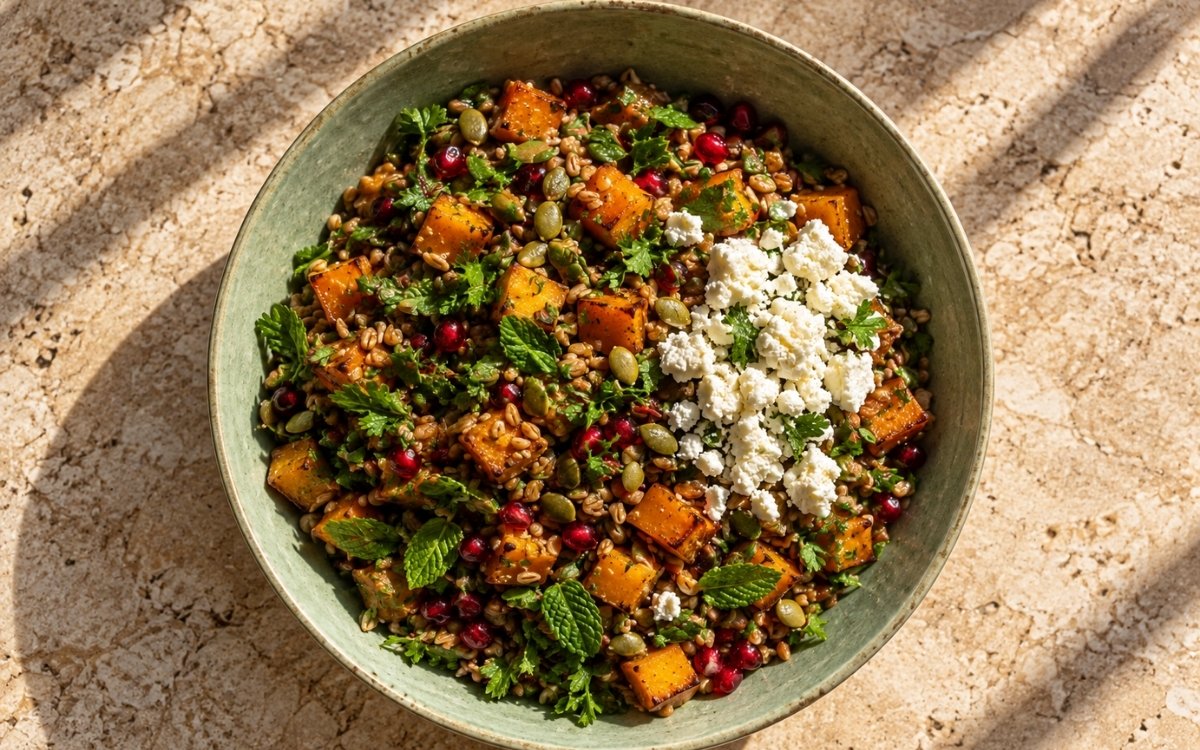
Ingredients
Method
Rinse and Cook the Freekeh
- Rinse the freekeh well under cold water, then drain. Pick through it quickly for any hard bits. Add the freekeh, water or stock, salt, olive oil, and bay leaf if using to a saucepan. Bring to a boil, then reduce to a low simmer. Cook until tender but still chewy: cracked freekeh about 18–25 minutes, whole freekeh about 35–45 minutes. Drain off any excess liquid. Spread the cooked freekeh on a tray or wide plate and let it cool for 10–15 minutes. Freekeh should be chewy and separate, not wet or mushy. If it is cooked but still sitting in liquid, drain it immediately. That immediate draining and spreading onto a tray is exactly what prevents the grains from continuing to sit in their own residual moisture, protecting them from turning wet and mushy while they cool.
Roast the Squash
- Heat the oven to 220°C / 425°F. Toss the butternut squash with olive oil, salt, black pepper, cumin, coriander, and cinnamon if using. Spread on a tray in a single layer. Roast for 25–30 minutes, turning once halfway, until the squash is tender inside and caramelized at the edges. The squash should have browned corners and a sweet roasted smell. Pale steamed squash will make the salad taste flat. That real, developed caramelization at the edges reflects genuine Maillard browning having taken place — squash pulled while still pale would still taste noticeably flatter despite being technically cooked through.
Toast the Pumpkin Seeds
- Toast the pumpkin seeds in a dry pan over medium heat for 2–4 minutes, stirring often, until they puff slightly and smell nutty. Transfer to a plate to cool. Remove them from the hot pan as soon as they are toasted. Pumpkin seeds can turn bitter if overcooked. That immediate transfer off the hot pan protects the seeds from their own narrow margin between properly toasted and genuinely bitter, given how quickly residual heat alone can push them past that point.
Make the Dressing
- Whisk together the olive oil, lemon juice, pomegranate molasses, grated garlic, salt, and black pepper. Taste the dressing. It should be bright, tangy, lightly sweet, and slightly sharp. The dressing needs to be strong before mixing because freekeh absorbs acidity and salt quickly. That deliberately intense early seasoning accounts for real, predictable absorption — freekeh's own porous, chewy structure soaks up considerable acidity and salt quickly, meaning a milder dressing would read as noticeably flatter once actually tossed through the grain.
Dress the Freekeh
- Place the cooled freekeh in a large bowl. Add about two-thirds of the dressing and toss well. Let it sit for 5 minutes so the grains absorb the flavor. Dress the grains before adding herbs and feta. This seasons the base properly without bruising the fresh ingredients. That deliberate sequencing, dressing the grain first, lets the vinaigrette actually work into every kernel before the more fragile parsley, mint, and feta are ever introduced to the tossing process.
Assemble the Salad
- Add the roasted squash, most of the pomegranate seeds, most of the pumpkin seeds, parsley, and mint to the freekeh. Toss gently. Fold in about half of the feta, keeping the rest for the top. Taste and adjust with more dressing, lemon juice, salt, or olive oil. Transfer to a wide bowl. Finish with the remaining feta, pomegranate seeds, pumpkin seeds, herbs, and a small drizzle of olive oil. Reserving a portion of every finishing element specifically for this final stage keeps those elements genuinely visible and fresh right at the surface of the finished salad.
Notes
Cooking the freekeh only until tender but genuinely chewy, then draining and spreading it to cool, deserves recognition as the technique most directly responsible for this salad's whole intended texture. The recipe's own explicit warning that freekeh "sitting in liquid" should be "drained immediately" reflects a real, common failure point — that deliberate handling right after cooking is what protects the grains from turning wet and mushy.
Building the dressing deliberately strong before it ever meets the freekeh deserves genuine attention as a real, functional necessity rather than a matter of taste. The recipe's own explicit note that "freekeh absorbs acidity and salt quickly" reflects real understanding of how much dilution this particular grain causes — a milder dressing would be absorbed and disappear rather than actually seasoning the finished salad.
Dressing the freekeh before the herbs and feta are ever added deserves the same attention this technique receives throughout this collection's other grain-based salads. That deliberate sequencing lets the grain fully absorb the dressing while protecting the more delicate parsley, mint, and crumbled feta from unnecessary bruising during that earlier tossing stage.
Roasting the squash until it develops real, genuine caramelization at the edges, rather than staying pale, deserves genuine respect as the detail responsible for whether this salad tastes flat or properly sweet and developed. The recipe's own explicit warning that "pale steamed squash will make the salad taste flat" reflects real understanding of how much real browning actually contributes to this dish's overall flavour.