
Egyptian Balela Salad
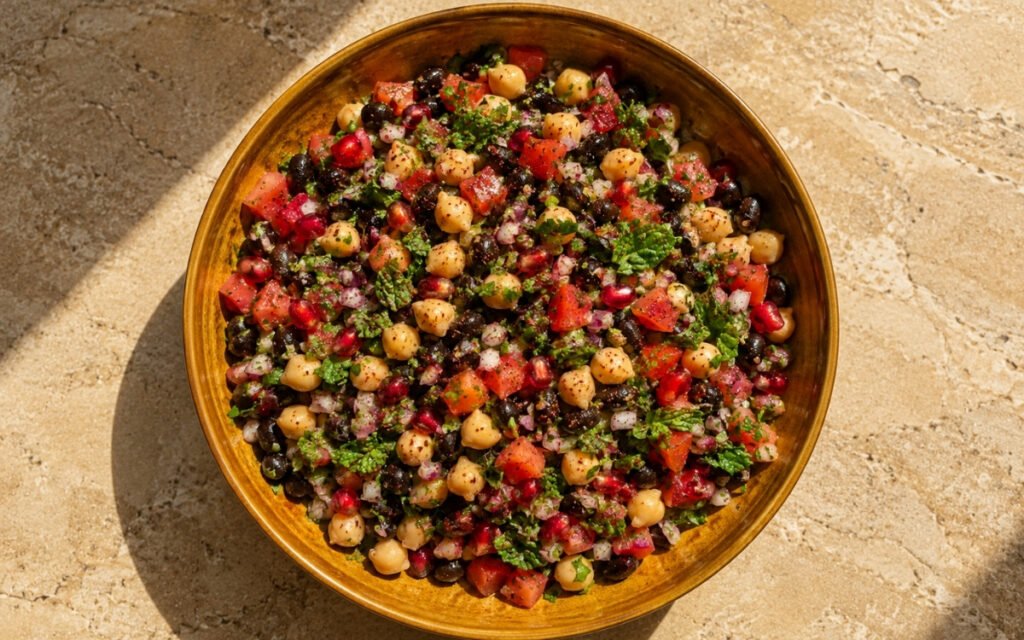
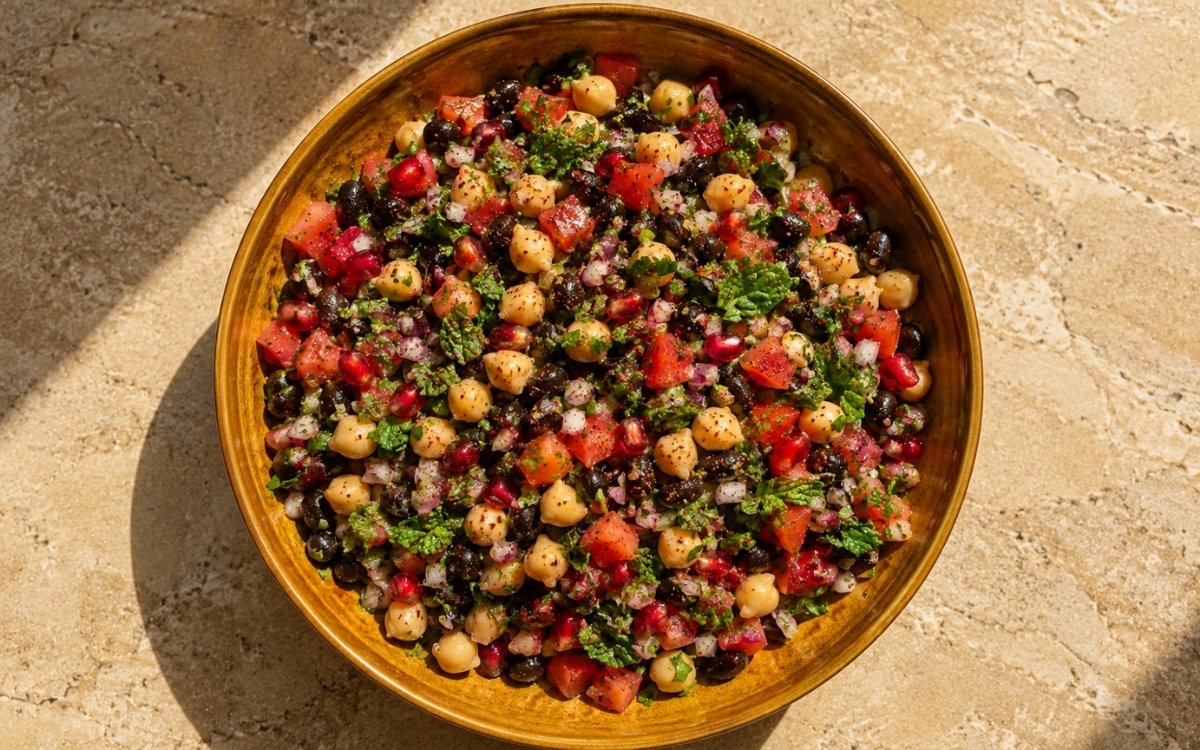
An Egyptian-style chickpea salad built in the classic style, with chickpeas and black beans tossed with tomato, red onion, parsley, mint, lemon, olive oil, cumin, and sumac, then finished with pomegranate seeds, the texture staying fresh and distinct, never wet or mushy, with bright acidity and a lightly spiced, herb-forward finish. Draining and drying the beans thoroughly before they ever meet the dressing is the technique this whole salad depends on for real, distinct texture — wet beans dilute the dressing and turn the salad watery, the same drain-and-dry-first principle used elsewhere in this collection whenever a canned or cooked legume’s own surface moisture needs to be removed before it can properly absorb a dressing rather than simply diluting it. Letting the diced red onion sit briefly in the dressing before anything else joins is what takes off its raw, harsh edge while lightly pickling it. Building the dressing deliberately strong is what lets it actually season the beans’ own naturally mild flavour rather than tasting flat once tossed. The payoff is a salad with real, bright Egyptian character — distinct chickpeas and black beans against juicy tomato, crisp pickled onion, fresh herbs, and bursts of pomegranate, all brightened by a lemony, cumin-and-sumac dressing.
Prep Time : 20 min
Cook Time : 0 min
Servings : 4
20 min
0 min
4
Ingredients
For the Beans and Base
• 300g cooked chickpeas, drained very well
• 300g cooked black beans, drained very well
• 250g ripe tomatoes, seeded if very juicy, cut into small dice
• 100g red onion, finely diced
• 20g flat-leaf parsley, finely chopped
• 10–12g mint leaves, finely chopped
• 70–80g pomegranate seeds
For the Dressing
• 45ml fresh lemon juice
• 30ml extra-virgin olive oil — this one on Amazon
• 1 small garlic clove, very finely grated or crushed to a paste
• 1 tsp ground cumin — this one on Amazon
• 1–1½ tsp sumac, plus extra for finishing — this one on Amazon
• ¾ tsp fine salt, or to taste
• ¼ tsp black pepper
Optional for Balancing
• ½ tsp sugar or honey, only if tomatoes are very sharp
• 1–2 tbsp cold water, only if you want a slightly lighter dressing
This post may contain affiliate links. As an Amazon Associate I earn from qualifying purchases, at no additional cost to you.
Directions
- Prepare the Beans
If using canned chickpeas and black beans, rinse them well under cold water and drain thoroughly. Spread them on a tray or towel and let them dry for a few minutes. If using dried chickpeas, cook them until tender but not falling apart. Cool completely before using. The beans must be fully drained and fairly dry on the surface. Wet beans dilute the dressing and make the salad watery. That thorough draining and drying is what protects the finished dressing’s own concentration — any residual surface moisture would work against it the moment the beans are tossed in. - Prepare the Vegetables and Herbs
Dice the tomatoes small. If they are very juicy, remove the seeds and watery pulp first. Finely dice the red onion. Finely chop the parsley and mint. Collect the pomegranate seeds and keep them separate for the final mix. Keep all cuts fairly small and even so the salad eats as a balanced mix, not as large chunks scattered through beans. That consistent, small dice matters directly for how the finished salad actually eats — evenly sized pieces let every bite carry a genuine mix of components rather than landing on one ingredient at a time. - Make the Dressing
In a large mixing bowl, whisk together the lemon juice, olive oil, garlic, cumin, sumac, salt, and black pepper. Add the sugar or honey only if needed to round the acidity. Taste the dressing. It should be bright, lemony, slightly earthy from cumin, and lightly tangy from sumac. Season the dressing strongly enough before adding the beans. Chickpeas especially need assertive seasoning or the salad will taste flat. That deliberately bold early seasoning accounts for real, predictable dilution once the beans, tomato, and herbs all join — a milder dressing would read as noticeably flat by the time everything is actually combined. - Briefly Soften the Onion
Add the diced red onion to the dressing and let it sit for 10 minutes. This takes the raw harsh edge off the onion and lightly pickles it. This step makes a noticeable difference. Skipping it can leave the onion too aggressive compared with the delicate herbs and beans. That brief soak in the dressing’s own acidity genuinely mellows the onion’s sharpest, most sulfurous notes, letting it sit comfortably alongside the salad’s more delicate components rather than overwhelming them. - Assemble the Salad
Add the chickpeas, black beans, and tomatoes to the bowl with the dressing and onions. Toss gently until evenly coated. Fold in most of the parsley, most of the mint, and most of the pomegranate seeds. Reserve a little of each for finishing. Taste and adjust with more salt, lemon juice, or sumac as needed. Toss gently. Overmixing can break the chickpeas and make the salad cloudy and heavy. That deliberately gentle tossing protects the beans’ own distinct, whole shape — vigorous mixing would begin breaking them down, clouding the dressing and working against the salad’s whole intended texture. - Finish and Serve
Transfer to a wide shallow serving bowl. Scatter over the reserved herbs and pomegranate seeds. Dust lightly with extra sumac. Serve immediately, or let it sit for 10–15 minutes at cool room temperature so the beans absorb the dressing. Reserving a final portion of herbs and pomegranate specifically for this finishing stage keeps those elements genuinely vivid and visible right at the surface, rather than buried throughout the tossed salad beneath.
*Notes :
- Draining and drying the beans thoroughly before they ever meet the dressing deserves genuine recognition as the technique most directly responsible for whether this salad stays properly textured or turns watery. The recipe’s own explicit warning that “wet beans dilute the dressing and make the salad watery” reflects a real, common failure point — that thorough drying protects the dressing’s own concentration right from the very first stage.
- Letting the diced red onion sit briefly in the dressing before anything else is added deserves the same attention this technique receives throughout this collection’s other salads built around raw onion. The recipe’s own explicit note that skipping this step “can leave the onion too aggressive compared with the delicate herbs and beans” reflects real understanding of how directly this one stage affects the salad’s overall balance.
- Building the dressing deliberately strong before it ever meets the beans deserves genuine attention as a real, functional necessity rather than a matter of personal taste. The recipe’s own explicit warning that chickpeas “need assertive seasoning or the salad will taste flat” reflects how much dilution this particular combination of mild beans and juicy tomato actually causes.
- Tossing the finished salad only gently, rather than mixing vigorously, deserves genuine respect as the detail responsible for protecting the beans’ own distinct, whole shape. The recipe’s own explicit warning that overmixing “can break the chickpeas and make the salad cloudy and heavy” reflects a real, physical risk this gentle handling is specifically meant to avoid.
Why This Recipe Works
This recipe works because the beans are drained and dried thoroughly, protecting the dressing’s own concentration from dilution. The onion is given a brief, deliberate soak in the dressing, mellowing its raw sharpness before the rest of the salad joins.
The dressing itself is built assertively, accounting for real dilution across a large volume of mild beans and juicy tomato.
Gentle tossing protects the chickpeas and black beans from breaking apart, keeping the salad’s texture genuinely distinct, and reserving a portion of herbs and pomegranate for the final finish delivers real visual and flavour freshness right at serving.
Ingredient Breakdown
Thoroughly Drained, Dried Beans
The critical technique — removes surface moisture that would otherwise dilute the dressing and turn the salad watery.
Onion Pre-Soaked in Dressing
The critical technique — a brief soak mellows the onion’s raw sharpness before it joins the rest of the salad.
Deliberately Assertive Dressing
The critical technique — intentional strength accounts for real dilution across the mild beans and juicy tomato.
Gentle Tossing
The critical technique — protects the chickpeas and black beans from breaking apart into a cloudy, heavy mixture.
Seeded Tomatoes (If Juicy)
The critical technique — removes excess watery pulp that would otherwise wash out the dressing.
Last-Minute Garnish (Herbs, Pomegranate)
The finishing technique — keeps a genuinely fresh, vivid portion visible right at the surface.
Flavor Structure Explained
This Egyptian balela salad follows a layered balance model:
- Hearty, distinct base (drained chickpeas and black beans)
- Bright, juicy freshness (seeded tomato)
- Sharp, mellowed aromatic (pre-soaked red onion)
- Herbal lift (parsley, mint)
- Sweet-tart pop (pomegranate seeds)
- Earthy, tangy dressing (cumin, sumac, lemon, olive oil)
Drained chickpeas and black beans provide this salad’s hearty, genuinely distinct base, their texture protected through careful drying and gentle handling. Seeded tomato adds bright, juicy freshness without watering down the dressing. Red onion, pre-soaked in the dressing, contributes a sharp but genuinely mellowed aromatic note. Parsley and mint layer in real herbal lift throughout. Pomegranate seeds add a sweet-tart pop of contrast, and a cumin, sumac, lemon, and olive oil dressing ties the whole salad together with earthy, tangy brightness central to its classic Egyptian character.
Common Mistakes to Avoid
- Skipping the Beans’ Draining and Drying Step – This dilutes the dressing and turns the salad watery. Always drain and dry them thoroughly first.
- Skipping the Onion’s Brief Dressing Soak – This leaves it too raw and aggressive against the delicate herbs and beans. Always let it sit in the dressing for 10 minutes first.
- Underseasoning the Dressing – This produces a flat-tasting salad once diluted by the beans and vegetables. Always build it deliberately assertive.
- Tossing the Salad Too Vigorously – This breaks the beans apart, making the salad cloudy and heavy. Always toss gently.
- Not Seeding Watery Tomatoes – This washes out the dressing with excess liquid. Always remove the seeds and pulp if the tomatoes are very juicy.
Variations
Classic Chickpea-Only Version
Use chickpeas alone rather than the chickpea-black bean combination, per the recipe’s own note on this being the most classical direction, for a more traditional, singularly focused balela.
Dried Chickpea Version
Soak dried chickpeas overnight and cook them until tender but intact, per the recipe’s own guidance, for a noticeably better, more polished texture than canned chickpeas provide.
Extra-Herbal Version
Increase the parsley slightly while keeping mint present but not dominant, per the recipe’s own note that “parsley should still lead,” for a more classically balanced herb profile.
Lighter Dressing Version
Add the optional 1 to 2 tablespoons cold water to the dressing, per the recipe’s own suggestion, for a slightly lighter, less concentrated finished flavour.
Storage & Make-Ahead
The most classical direction for this dish centers on chickpeas, lemon, cumin, garlic, and parsley, and while black beans and pomegranate are included here to match a particular style, keep in mind the traditional version leans more singularly on chickpeas alone.
The texture target throughout is genuinely distinct whole beans, juicy but controlled tomato, crisp onion, fresh herbs, and pops of pomegranate, never soupy, so keep every component’s own individual character intact rather than letting anything collapse into mush.
Cumin is essential for the classic balela profile and should be noticeable but not muddy, while sumac contributes both acidity and colour, so use some in the dressing itself and a little more scattered on top for the visual finish.
You can combine the beans and dressing up to a few hours ahead of time, but add the tomatoes, herbs, and pomegranate closer to serving for the best possible freshness across every component.
This salad is best served slightly cool or at room temperature rather than fridge-cold, and if using dried chickpeas, soak them overnight and cook until tender but intact, since properly cooked chickpeas give noticeably better texture than canned if you’re after the most polished result.
Frequently Asked Questions
Why do the beans need to be drained and dried so thoroughly before they’re used?
Wet beans dilute the dressing directly and make the finished salad watery. Thorough draining and drying protects the dressing’s own concentration right from the very first stage of assembly.
Why does the red onion need to sit in the dressing before the rest of the salad is added?
That brief soak genuinely mellows the onion’s raw, sharp edge and lightly pickles it. Skipping this step leaves the onion considerably too aggressive compared with the salad’s more delicate herbs and beans.
Why does the dressing need to taste so assertive before the beans are ever added?
Chickpeas in particular need genuinely strong seasoning, or the finished salad tastes flat once diluted by such a large volume of mild beans. Building the dressing boldly accounts for that real dilution.
Why does the salad need to be tossed so gently rather than mixed thoroughly?
Overmixing physically breaks the chickpeas and black beans apart, clouding the dressing and making the finished salad heavy rather than staying distinct and fresh. Gentle tossing protects that whole texture.
Are there other classic Middle Eastern grain, chickpea, or fresh salad dishes worth trying?
Freekeh Grain Salad offers another classic grain-based salad direction worth exploring. Classic Tabbouleh Salad and Za’atar White Bean Salad are also worth trying for other classic Middle Eastern salads, and Roasted Cauliflower & Chickpea Salad and Classic Hummus offer other chickpea-forward dishes worth exploring.
Nutrition Facts
( per serving )
Calories
~320 kcal
Protein
14 g
Fat
10 g
Carbs
46 g
Calories
~320 kcal
Protein
14 g
Fat
10 g
Carbs
46 g
Related Recipes
Related Recipes

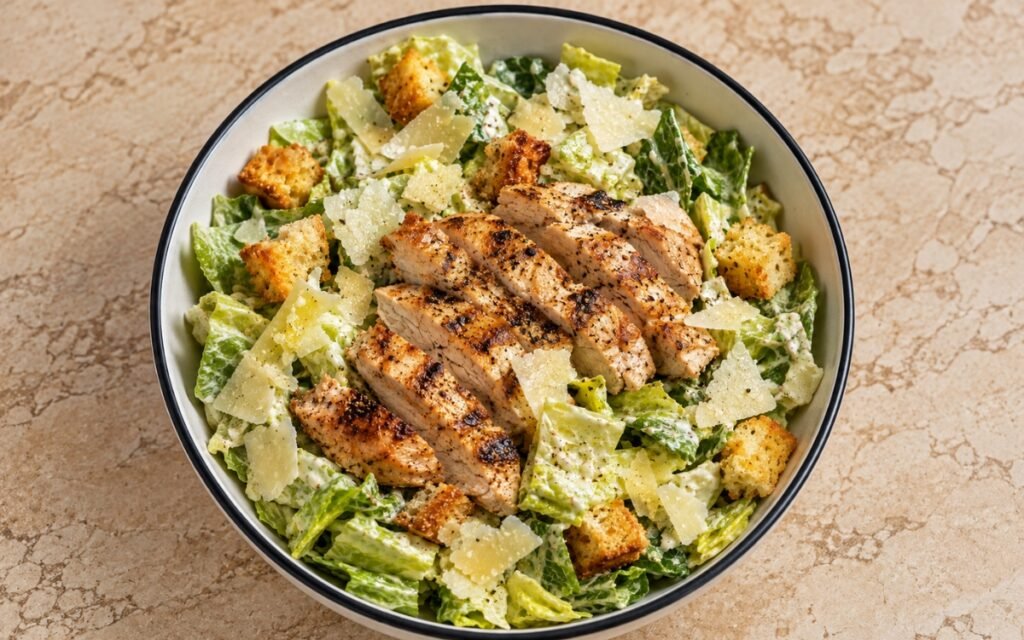
Grilled Chicken Caesar Salad
Grilled chicken breast, crisp romaine, golden croutons, shaved Parmesan, and a proper old-school Caesar dressing with no cream or mayonnaise.
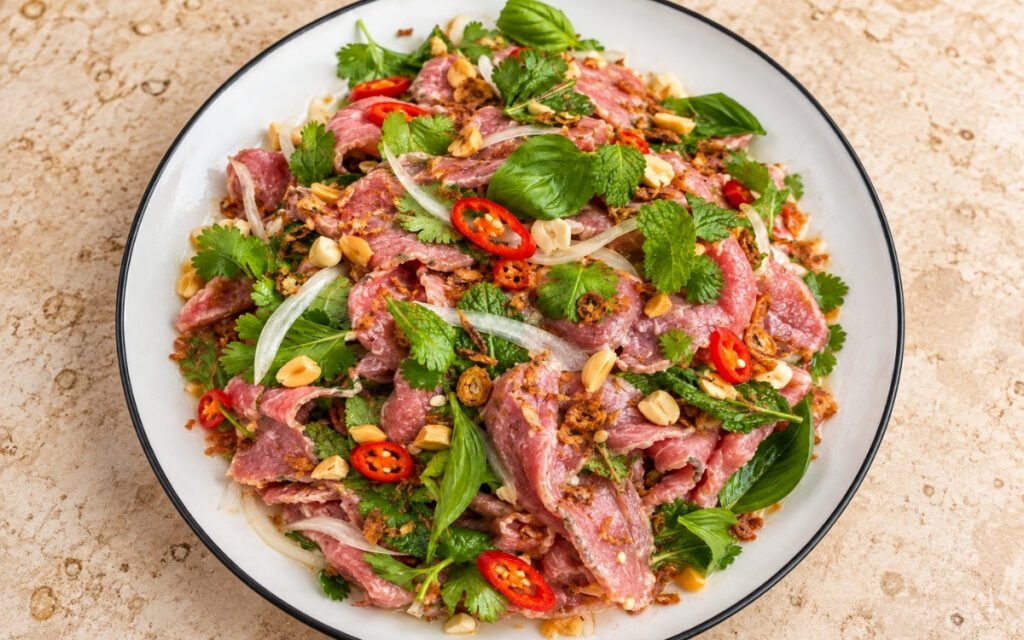
Vietnamese Rare Beef Salad — Bò Tái Chanh
Very thinly sliced tender beef briefly cured in lime juice, tossed with fish sauce dressing, fresh herbs, roasted peanuts and crispy fried shallots.
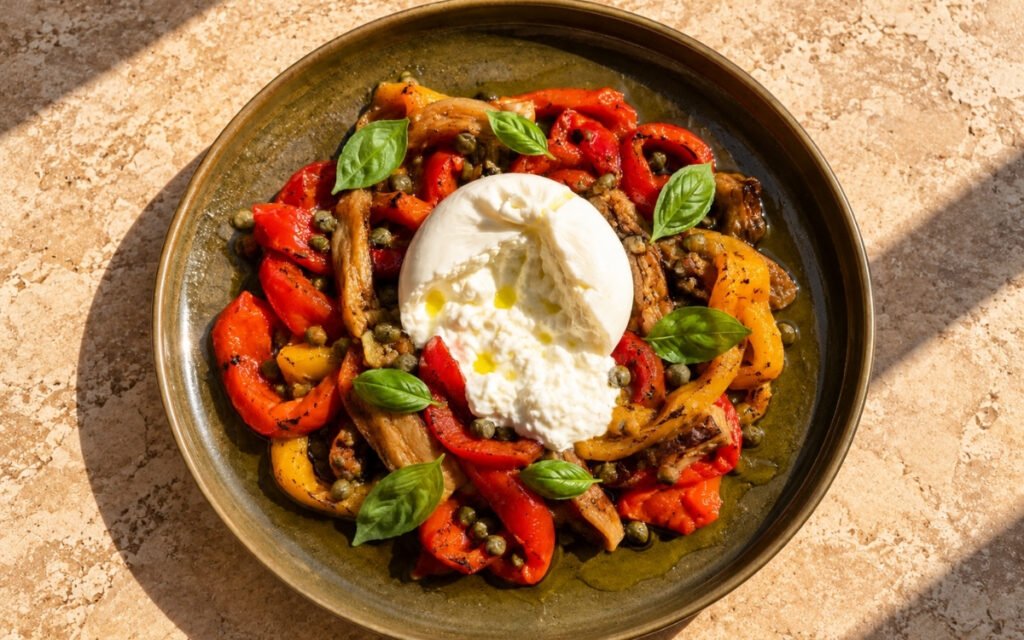
Spanish Escalivada with Burrata & Capers
Fully roasted peppers, eggplant, and onion, peeled and torn into soft smoky strips, dressed with olive oil, finished with torn burrata, capers, and basil.
You might also like
You might also like
Jambon-Beurre
Fresh crusty baguette, a generous layer of softened butter, and thinly folded slices of pale pink French ham.
Pomegranate Lemonade
Honey-lemon syrup with zest off heat, 500ml pure pomegranate juice — fresh lemon, salt for anti-astringency, cold water, chilled. Ruby-red and grown-up.
Crispy Rice Salad (Nam Khao Tod)
Deeply fried red-curry-scented rice croquettes broken into crunchy clusters, tossed with cured sausage, herbs, peanuts, and a sharp lime-fish sauce dressing.


Egyptian Balela Salad
Ingredients
Method
- If using canned chickpeas and black beans, rinse them well under cold water and drain thoroughly. Spread them on a tray or towel and let them dry for a few minutes. If using dried chickpeas, cook them until tender but not falling apart. Cool completely before using. The beans must be fully drained and fairly dry on the surface. Wet beans dilute the dressing and make the salad watery. That thorough draining and drying is what protects the finished dressing’s own concentration — any residual surface moisture would work against it the moment the beans are tossed in.
- Dice the tomatoes small. If they are very juicy, remove the seeds and watery pulp first. Finely dice the red onion. Finely chop the parsley and mint. Collect the pomegranate seeds and keep them separate for the final mix. Keep all cuts fairly small and even so the salad eats as a balanced mix, not as large chunks scattered through beans. That consistent, small dice matters directly for how the finished salad actually eats — evenly sized pieces let every bite carry a genuine mix of components rather than landing on one ingredient at a time.
- In a large mixing bowl, whisk together the lemon juice, olive oil, garlic, cumin, sumac, salt, and black pepper. Add the sugar or honey only if needed to round the acidity. Taste the dressing. It should be bright, lemony, slightly earthy from cumin, and lightly tangy from sumac. Season the dressing strongly enough before adding the beans. Chickpeas especially need assertive seasoning or the salad will taste flat. That deliberately bold early seasoning accounts for real, predictable dilution once the beans, tomato, and herbs all join — a milder dressing would read as noticeably flat by the time everything is actually combined.
- Add the diced red onion to the dressing and let it sit for 10 minutes. This takes the raw harsh edge off the onion and lightly pickles it. This step makes a noticeable difference. Skipping it can leave the onion too aggressive compared with the delicate herbs and beans. That brief soak in the dressing’s own acidity genuinely mellows the onion’s sharpest, most sulfurous notes, letting it sit comfortably alongside the salad’s more delicate components rather than overwhelming them.
- Add the chickpeas, black beans, and tomatoes to the bowl with the dressing and onions. Toss gently until evenly coated. Fold in most of the parsley, most of the mint, and most of the pomegranate seeds. Reserve a little of each for finishing. Taste and adjust with more salt, lemon juice, or sumac as needed. Toss gently. Overmixing can break the chickpeas and make the salad cloudy and heavy. That deliberately gentle tossing protects the beans’ own distinct, whole shape — vigorous mixing would begin breaking them down, clouding the dressing and working against the salad’s whole intended texture.
- Transfer to a wide shallow serving bowl. Scatter over the reserved herbs and pomegranate seeds. Dust lightly with extra sumac. Serve immediately, or let it sit for 10–15 minutes at cool room temperature so the beans absorb the dressing. Reserving a final portion of herbs and pomegranate specifically for this finishing stage keeps those elements genuinely vivid and visible right at the surface, rather than buried throughout the tossed salad beneath.