
Sicilian Caponata Salad
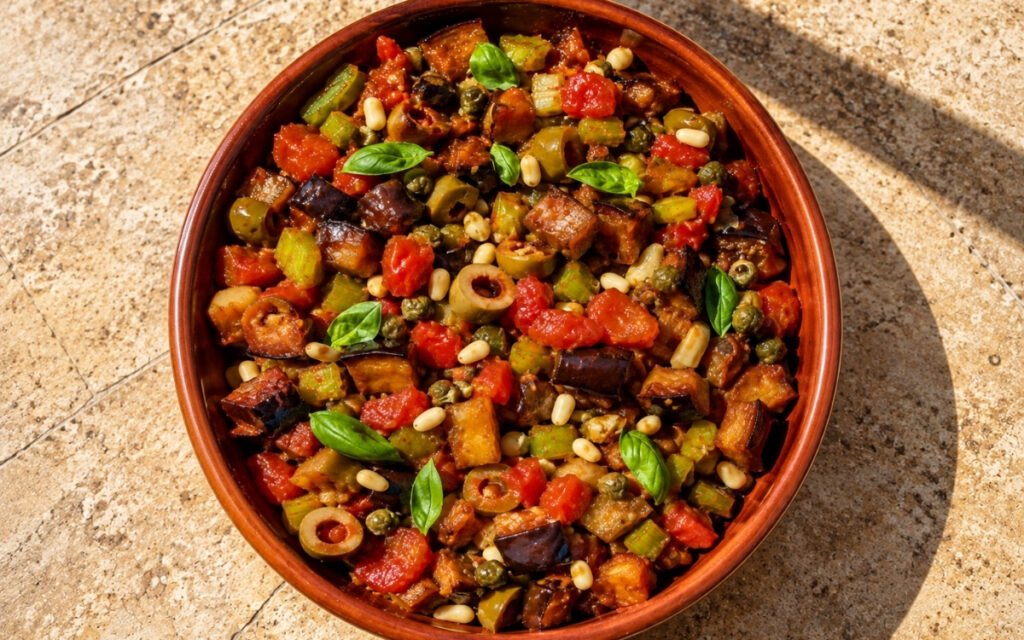
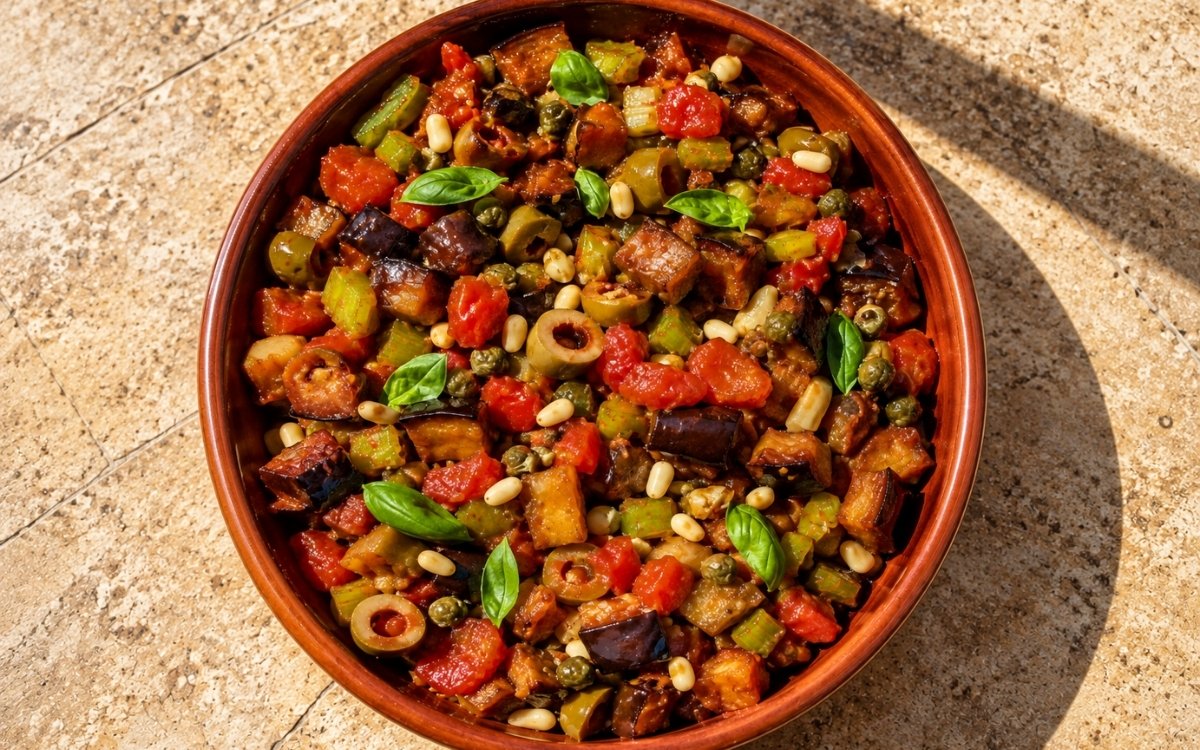
A classic Sicilian sweet-and-sour eggplant salad with soft golden eggplant, slightly firm celery, onion, tomatoes, green olives, capers, pine nuts, and basil, all coated in a glossy agrodolce dressing, the vegetables staying chunky and distinct, with a balanced sweet-sour finish rather than a stewy texture. Salting and thoroughly drying the eggplant before it ever meets the hot oil is the technique this whole dish depends on for real, proper browning — wet eggplant steams instead of browning and absorbs considerably more oil, the same salt-and-dry-first principle used elsewhere in this collection whenever a genuinely watery vegetable’s own moisture needs to be drawn out before it can fry properly. Blanching the celery briefly before it ever joins the rest of the vegetables is what keeps it vivid and slightly firm rather than floppy and dull. Returning the browned eggplant to the pan and folding it in gently, without mashing, is what keeps the finished caponata chunky and spoonable rather than stewy. The payoff is a dish with real, classic Sicilian contrast — soft, golden eggplant against briny olives, capers, crunchy pine nuts, and a glossy sweet-sour tomato base.
Prep Time : 20 min
Cook Time : 35–40 min
Servings : 4
20 min
35–40 min
4
Ingredients
For the Main Vegetables
• 700g eggplant, cut into 2cm cubes
• 2 tsp fine salt, for salting the eggplant
• 120g celery, cut into small 1cm pieces
• 120g yellow onion, finely diced
• 250g ripe tomatoes, diced, or 200g canned chopped tomatoes
• 2 tbsp olive oil, plus more as needed — this one on Amazon
• Neutral oil, for frying or shallow frying the eggplant
For the Caponata Flavorings
• 80g green olives, pitted and halved
• 2 tbsp capers, drained — this one on Amazon
• 30g pine nuts
• 1½ tbsp sugar
• 3 tbsp white wine vinegar or red wine vinegar — this one on Amazon
• 2 tbsp tomato paste, optional, for deeper color and body
• 6–8 basil leaves, torn
• Freshly ground black pepper, to taste
To Finish
• Extra olive oil, as needed
• Extra basil leaves, for serving
This post may contain affiliate links. As an Amazon Associate I earn from qualifying purchases, at no additional cost to you.
Directions
- Salt the Eggplant
Place the eggplant cubes in a colander and toss with the salt. Let sit for 30 minutes. Rinse quickly if heavily salted, then dry very well with paper towels or a clean kitchen towel. Do not leave the eggplant wet. Dry eggplant browns properly and absorbs less oil. That salting stage draws out real, considerable moisture through osmosis, and the thorough drying that follows removes it before it ever has the chance to interfere with proper browning or cause excess oil absorption. - Cook the Celery
Bring a small pot of salted water to a boil. Blanch the celery for 2–3 minutes until just slightly tender but still with bite. Drain and set aside. Celery should stay vivid and slightly firm, not soft and floppy. That genuinely brief blanching time is calibrated specifically to soften the celery just enough while protecting both its own vivid colour and its crisp-tender bite from turning dull and limp. - Toast the Pine Nuts
Toast the pine nuts in a dry pan over medium-low heat for 2–4 minutes, stirring often, until lightly golden. Remove immediately and set aside. That immediate transfer off the hot pan protects the pine nuts from their own real, narrow margin between properly toasted and burnt, given how quickly residual heat alone can push them past that point. - Brown the Eggplant
Heat a generous layer of neutral oil in a wide skillet over medium-high heat. Fry or shallow-fry the eggplant in batches until golden-brown and softened, about 6–8 minutes per batch. Transfer to a tray or plate lined lightly to drain excess oil. Do not overcrowd the pan. If the pan is crowded, the eggplant steams instead of browning. The goal is a soft interior, caramelized edges, cubes still holding shape. Frying in properly small, uncrowded batches protects the oil’s own temperature from dropping too far when multiple pieces are added at once — a significant drop lets the eggplant absorb excess oil rather than actually browning and developing colour. - Build the Base
Discard excess oil from the skillet and add 2 tbsp olive oil. Cook the onion over medium heat for 4–5 minutes until softened but not deeply browned. Add the tomatoes and tomato paste if using. Cook for 5–7 minutes until the tomatoes break down and the mixture thickens slightly. Add the blanched celery, olives, and capers. Cook for 2 minutes. Cooking these aromatics in the same skillet the eggplant just used means the base picks up real, residual flavour from whatever fond was left behind, rather than starting from a clean, neutral pan. - Make the Agrodolce
In a small bowl or cup, stir together the sugar and vinegar until mostly dissolved. Pour this into the pan and simmer for 1–2 minutes so the sharp raw vinegar edge cooks off slightly. The result should taste balanced — clearly sweet-sour, but not harshly vinegary and not dessert-sweet. That brief simmer is what lets the vinegar’s own sharpest, rawest edge actually cook off into the air, protecting the finished agrodolce from tasting harsh rather than properly balanced. - Finish the Caponata
Return the eggplant to the pan and fold gently to coat without mashing it. Add most of the toasted pine nuts and the torn basil. Cook for 1 minute, then remove from the heat. Taste and adjust with black pepper, a little more vinegar, or a pinch more sugar if needed. Let cool for at least 20–30 minutes before serving. Caponata is best warm-room temperature or fully room temperature, not piping hot. That deliberately gentle folding protects the eggplant’s own real, browned structure from being mashed apart — vigorous stirring at this stage would break the cubes down into something closer to a puree, losing the distinct, chunky texture caponata is specifically built around.
*Notes :
- Salting and thoroughly drying the eggplant before it ever meets the hot oil deserves genuine recognition as the technique most directly responsible for whether this dish achieves real, proper browning. The recipe’s own explicit warning that wet eggplant “browns properly” only once dried reflects a real, common failure point — that combination of salting and drying removes the moisture that would otherwise steam the eggplant instead of frying it.
- Blanching the celery briefly before it ever joins the rest of the vegetables deserves the same attention this technique receives throughout this collection’s other dishes built around distinct, textured vegetables. That genuinely short window is calibrated precisely to soften the celery just enough while protecting its own vivid colour and crisp-tender bite from turning dull and floppy.
- Frying the eggplant in properly small, uncrowded batches deserves genuine respect as the technique responsible for real, developed colour rather than a pale, oily result. The recipe’s own explicit warning that a crowded pan causes the eggplant to steam instead of brown reflects a real, direct trade-off this careful batching protects against.
- Folding the browned eggplant back into the finished sauce only gently, without mashing, deserves attention as the detail most responsible for this dish’s whole intended texture. The recipe’s own explicit emphasis that “texture is everything” and that caponata should stay “chunky, glossy, and spoonable, not watery and not a puree” reflects real, deliberate care about protecting each component’s own distinct shape right through to serving.
Why This Recipe Works
This recipe works because the eggplant is salted and dried thoroughly, protecting its ability to fry properly rather than steaming and absorbing excess oil. The celery is blanched only briefly, staying vivid and crisp. The eggplant itself is fried in small, uncrowded batches, developing real, genuine browning.
The agrodolce is simmered just long enough to cook off the vinegar’s raw edge while staying balanced. Folding the browned eggplant back in gently, without mashing, protects the dish’s whole intended chunky texture, and a genuine resting period before serving lets the flavours settle and round out.
Ingredient Breakdown
Salted, Thoroughly Dried Eggplant
The critical technique — removes moisture that would otherwise prevent proper browning and cause excess oil absorption.
Briefly Blanched Celery
The critical technique — keeps it vivid and slightly firm rather than dull and floppy.
Small-Batch Fried Eggplant
The critical technique — protects against steaming, letting the cubes develop real, genuine colour.
Simmered Agrodolce
The critical technique — a brief simmer cooks off the vinegar’s raw edge, protecting the sweet-sour balance.
Gently Folded Eggplant (Never Mashed)
The critical technique — protects the dish’s whole intended chunky, spoonable texture.
Genuine Resting Period Before Serving
The finishing technique — lets the flavours settle and round out as the dish cools to room temperature.
Flavor Structure Explained
This Sicilian caponata follows a layered balance model:
- Soft, golden foundation (salted, dried, fried eggplant)
- Crisp, distinct texture (blanched celery)
- Sweet-sour glossy body (agrodolce, tomato base)
- Briny, sharp accents (green olives, capers)
- Crunchy, nutty finish (toasted pine nuts)
- Fresh herbal lift (basil)
Salted, dried, and fried eggplant provides this dish’s soft, genuinely golden foundation, its texture protected through careful moisture control and small-batch frying. Blanched celery contributes crisp, distinct texture that stays vivid rather than dull. A sweet-sour agrodolce and tomato base ties the whole dish together with glossy, classic Sicilian balance. Green olives and capers add real, briny, sharp accents throughout. Toasted pine nuts contribute crunchy, nutty finish, and fresh basil ties every component of this classic dish together with bright herbal lift.
Common Mistakes to Avoid
- Skipping the Eggplant’s Salting and Drying Step – This leaves it wet, causing it to steam and absorb excess oil rather than browning. Always salt, rest, and thoroughly dry it first.
- Overcooking the Celery – This leaves it soft and floppy rather than crisp and vivid. Always blanch it only briefly.
- Crowding the Pan While Frying the Eggplant – This causes it to steam rather than develop real, golden colour. Always fry in properly spaced batches.
- Skipping the Agrodolce’s Brief Simmer – This leaves the vinegar tasting harsh rather than balanced. Always let it cook for 1 to 2 minutes before proceeding.
- Mashing the Eggplant When Folding It Back In – This turns the finished dish into something closer to a puree rather than chunky and spoonable. Always fold gently.
Variations
Tomato Paste-Enriched Version
Include the optional tomato paste, per the recipe’s own note on it giving deeper colour and body, for a richer, more developed finished sauce.
Extra-Briny Version
Increase the green olives and capers for a sharper, more assertive briny contrast against the sweet-sour eggplant.
Bruschetta-Topped Version
Spoon the finished caponata onto toasted bread, per the recipe’s own serving suggestion, for a classic antipasto-style presentation.
Make-Ahead Version
Prepare the caponata several hours ahead or the day before, per the recipe’s own note that “the flavors improve after resting,” for a dish that only gets better with time.
Storage & Make-Ahead
Texture is genuinely everything in this recipe: caponata should be chunky, glossy, and spoonable, never watery and never puréed, so protect that distinction at every stage from salting the eggplant through to the final gentle fold.
Room temperature is the classic serving choice here, since the flavour becomes rounder and more balanced as the dish sits, which is directly why this recipe recommends letting it cool for at least 20 to 30 minutes before serving.
Salting the eggplant helps it brown better and keeps the finished dish from tasting greasy, while blanching the celery first keeps it tender-crisp and bright rather than raw or stringy.
Start with the listed sugar and vinegar for the agrodolce, then adjust carefully, since Sicilian caponata should have a genuinely noticeable sweet-sour profile rather than leaning too far in either direction.
This dish is genuinely excellent made several hours ahead or even the day before, since the flavours continue improving after resting, and it works well served as a salad, antipasto, side dish, or spooned onto toasted bread.
Frequently Asked Questions
Why does the eggplant need to be salted and dried so thoroughly before frying?
Wet eggplant steams rather than browning and absorbs considerably more oil in the process. Salting and thorough drying removes that moisture, protecting the eggplant’s own ability to fry properly and develop real, golden colour.
Why does the celery need to be blanched only briefly rather than cooked longer?
A longer cook would leave it soft and floppy rather than staying vivid and slightly firm. That genuinely brief blanching window protects both the celery’s colour and its distinct, crisp-tender bite.
Why does the agrodolce need a brief simmer before the eggplant is returned to the pan?
That simmer lets the vinegar’s own sharpest, rawest edge cook off into the air. Skipping it would leave the finished sauce tasting harshly vinegary rather than properly balanced between sweet and sour.
Why is the eggplant folded back in gently rather than stirred more thoroughly?
Vigorous stirring at this stage would mash the browned eggplant apart, turning the dish into something closer to a puree. Gentle folding protects the distinct, chunky texture caponata is specifically built around.
Are there other classic Sicilian eggplant, roasted vegetable, or grain salad dishes worth trying?
Pasta alla Norma offers another classic Sicilian eggplant dish worth exploring. Eggplant Parmesan is also worth trying for a different, baked eggplant direction, and Spanish Escalivada with Burrata & Capers, Italian Farro Salad, and Italian Bruschetta al Pomodoro offer other classic Mediterranean vegetable and grain dishes worth exploring.
Nutrition Facts
( per serving )
Calories
~320 kcal
Protein
5 g
Fat
22 g
Carbs
26 g
Calories
~320 kcal
Protein
5 g
Fat
22 g
Carbs
26 g
Related Recipes
Related Recipes

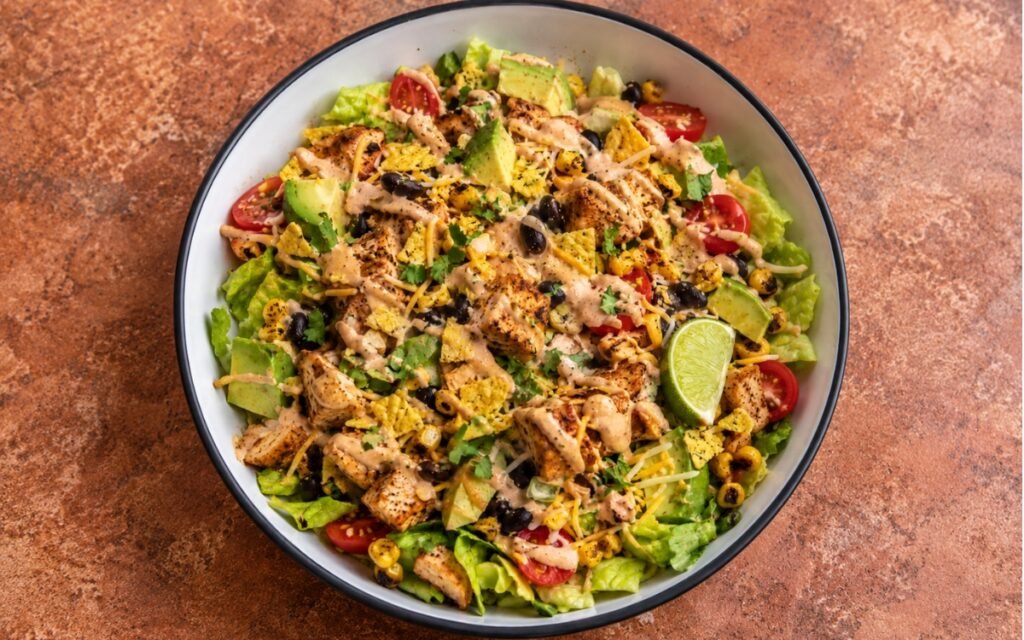
Mexican Chicken Taco Salad
Seasoned chicken breast, chopped lettuce, black beans, charred corn, cherry tomatoes, avocado, shredded cheese, and crushed tortilla chips with chipotle crema.
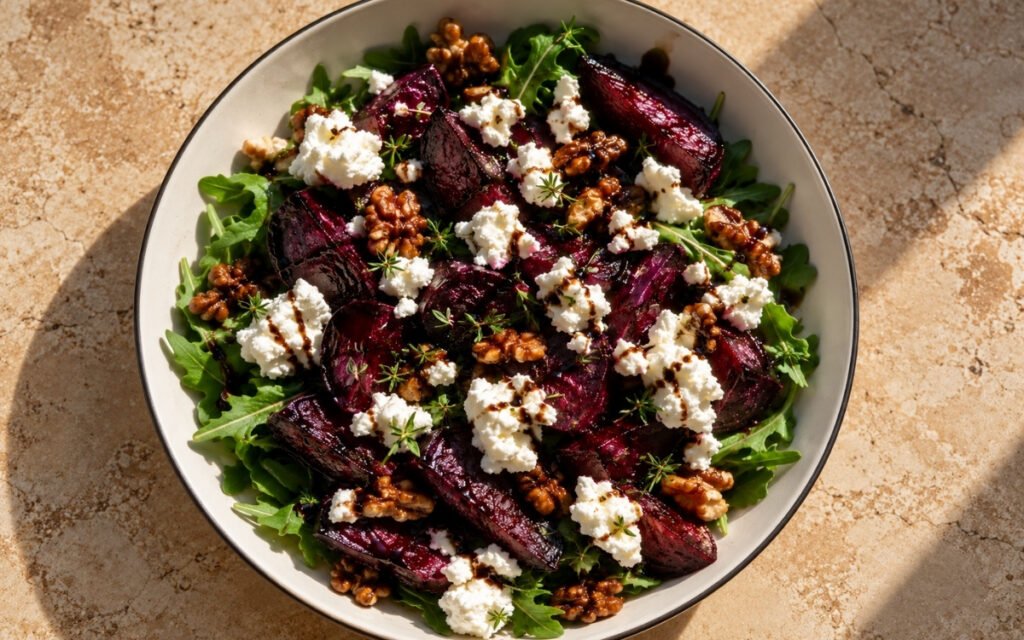
Roasted Beetroot and Goat Cheese Salad
Deep caramelized beet wedges with peppery rocket, creamy goat cheese, candied walnuts, thyme, and a dark balsamic reduction.
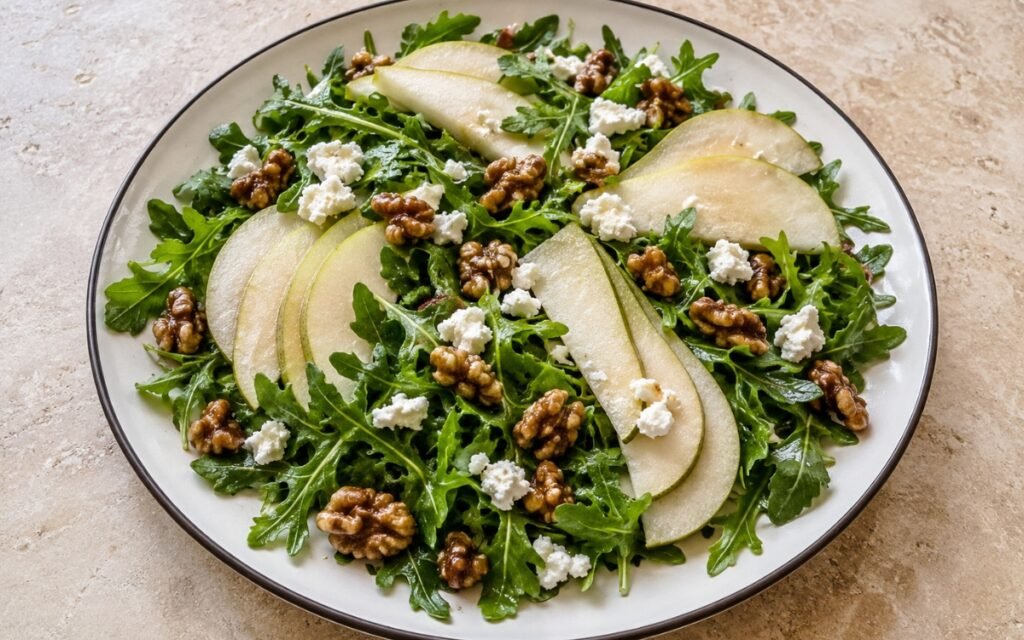
Arugula Pear Salad with Honey vinaigrette
Peppery arugula with sweet pears, creamy goat cheese, candied walnuts, and honey vinaigrette dressing.
You might also like
You might also like
Crispy Hash Brown Potatoes
Shredded potatoes rinsed, wrung completely dry, seasoned, pressed into a cake, fried undisturbed until golden on both sides. Crisp and tender.
Portuguese Custard Tarts (Pastéis de Nata)
Rolled, laminated puff pastry shells filled with a silky cinnamon-lemon custard, baked at extreme heat for signature dark caramelised spots.
Greek Chicken Gyro Rice Bowl
Chicken thighs marinated fifteen minutes, seared in a single layer, rested and sliced — basmati, cucumber-tomato salad, tzatziki, feta.

Sicilian Caponata Salad
Ingredients
Method
- Place the eggplant cubes in a colander and toss with the salt. Let sit for 30 minutes. Rinse quickly if heavily salted, then dry very well with paper towels or a clean kitchen towel. Do not leave the eggplant wet. Dry eggplant browns properly and absorbs less oil. That salting stage draws out real, considerable moisture through osmosis, and the thorough drying that follows removes it before it ever has the chance to interfere with proper browning or cause excess oil absorption.
- Bring a small pot of salted water to a boil. Blanch the celery for 2–3 minutes until just slightly tender but still with bite. Drain and set aside. Celery should stay vivid and slightly firm, not soft and floppy. That genuinely brief blanching time is calibrated specifically to soften the celery just enough while protecting both its own vivid colour and its crisp-tender bite from turning dull and limp.
- Toast the pine nuts in a dry pan over medium-low heat for 2–4 minutes, stirring often, until lightly golden. Remove immediately and set aside. That immediate transfer off the hot pan protects the pine nuts from their own real, narrow margin between properly toasted and burnt, given how quickly residual heat alone can push them past that point.
- Heat a generous layer of neutral oil in a wide skillet over medium-high heat. Fry or shallow-fry the eggplant in batches until golden-brown and softened, about 6–8 minutes per batch. Transfer to a tray or plate lined lightly to drain excess oil. Do not overcrowd the pan. If the pan is crowded, the eggplant steams instead of browning. The goal is a soft interior, caramelized edges, cubes still holding shape. Frying in properly small, uncrowded batches protects the oil’s own temperature from dropping too far when multiple pieces are added at once — a significant drop lets the eggplant absorb excess oil rather than actually browning and developing colour.
- Discard excess oil from the skillet and add 2 tbsp olive oil. Cook the onion over medium heat for 4–5 minutes until softened but not deeply browned. Add the tomatoes and tomato paste if using. Cook for 5–7 minutes until the tomatoes break down and the mixture thickens slightly. Add the blanched celery, olives, and capers. Cook for 2 minutes. Cooking these aromatics in the same skillet the eggplant just used means the base picks up real, residual flavour from whatever fond was left behind, rather than starting from a clean, neutral pan.
- In a small bowl or cup, stir together the sugar and vinegar until mostly dissolved. Pour this into the pan and simmer for 1–2 minutes so the sharp raw vinegar edge cooks off slightly. The result should taste balanced — clearly sweet-sour, but not harshly vinegary and not dessert-sweet. That brief simmer is what lets the vinegar’s own sharpest, rawest edge actually cook off into the air, protecting the finished agrodolce from tasting harsh rather than properly balanced.
- Return the eggplant to the pan and fold gently to coat without mashing it. Add most of the toasted pine nuts and the torn basil. Cook for 1 minute, then remove from the heat. Taste and adjust with black pepper, a little more vinegar, or a pinch more sugar if needed. Let cool for at least 20–30 minutes before serving. Caponata is best warm-room temperature or fully room temperature, not piping hot. That deliberately gentle folding protects the eggplant’s own real, browned structure from being mashed apart — vigorous stirring at this stage would break the cubes down into something closer to a puree, losing the distinct, chunky texture caponata is specifically built around.