
Italian Farro Salad with Roasted Vegetables
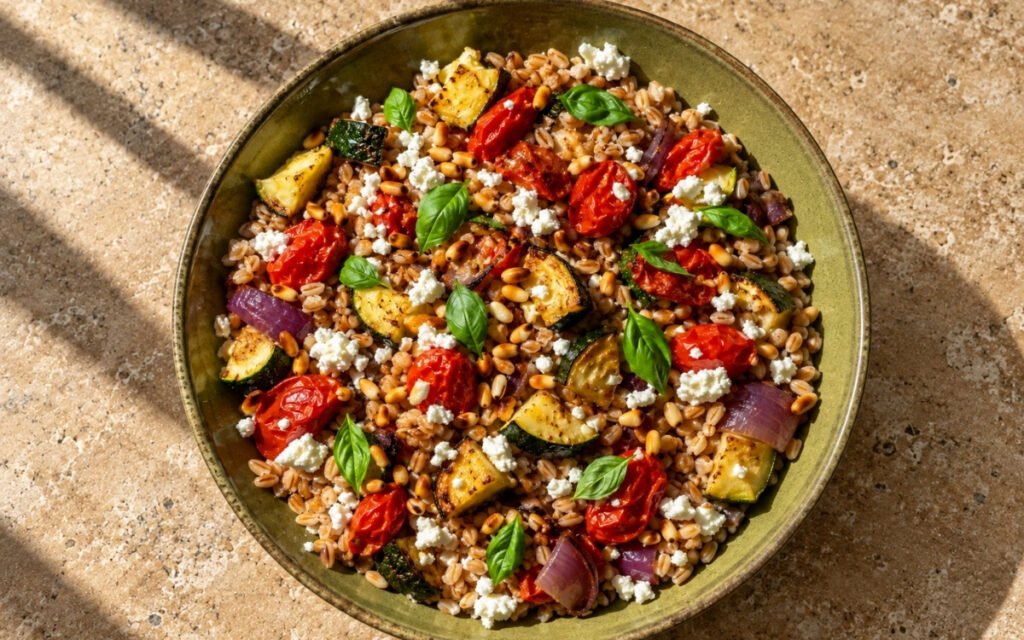
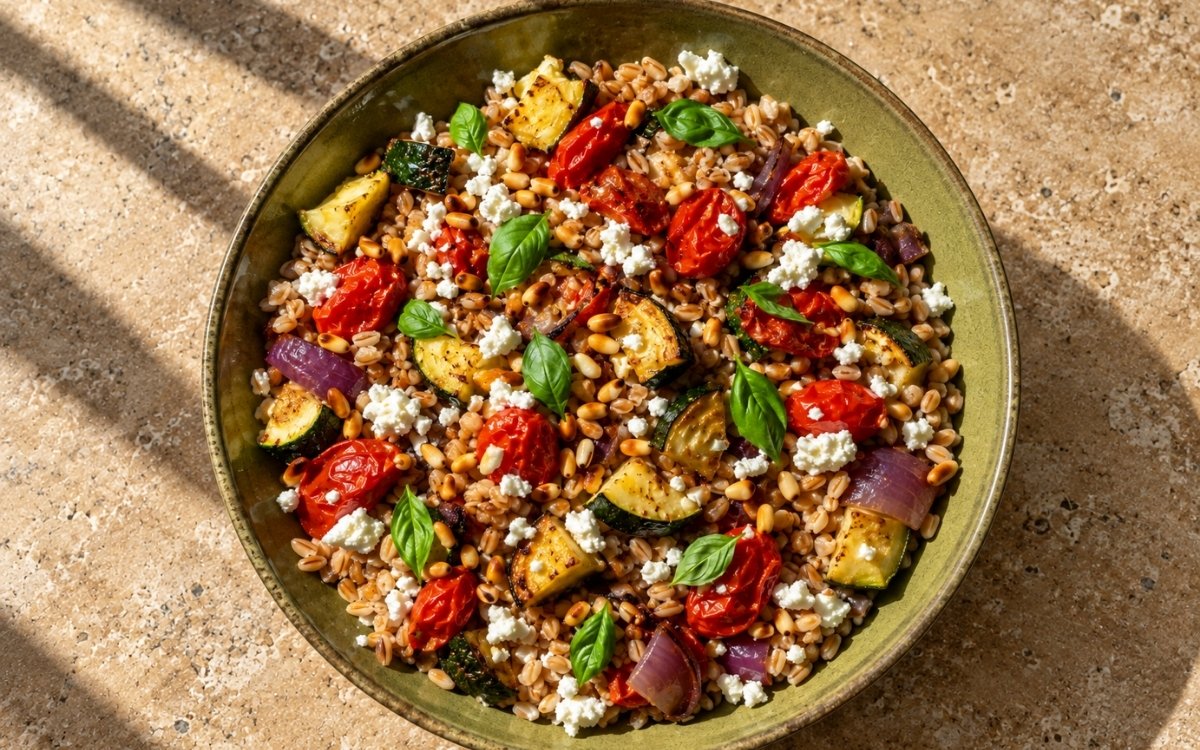
A hearty Italian-style farro salad with chewy nutty farro, roasted zucchini, burst cherry tomatoes, roasted red onion, fresh basil, toasted pine nuts, crumbled ricotta salata, and a sharp red wine vinaigrette, the salad feeling abundant, glossy, and fresh, with warm roasted vegetables folded through a grain base that still stays loose and defined. Cooking the farro only until tender but still genuinely chewy, never soft like porridge, is the technique this whole salad depends on for keeping the grain base loose and defined — overcooked farro turns the salad heavy and wet, the same chewy-not-mushy grain principle used elsewhere in this collection whenever a whole grain’s own distinct, separate texture needs protecting from the softening a longer cook would cause. Dressing the farro before the cheese and basil ever go in is what lets the grains fully absorb the vinaigrette without bruising the more delicate ingredients still to come. Roasting the vegetables until their sweetness concentrates, without letting them collapse entirely, is what keeps every component visually and texturally distinct in the finished salad. The payoff is a salad with real, hearty Italian character — chewy farro folded with caramelized vegetables, creamy-salty ricotta salata, crunchy pine nuts, and fresh basil.
Prep Time : 20 min
Cook Time : 35–40 min
Servings : 4
20 min
35–40 min
4
Ingredients
For the Farro
• 250g pearled or semi-pearled farro — this one on Amazon
• 1.5L water
• 1½ tsp fine salt
• 1 bay leaf, optional
• 1 tbsp olive oil, for tossing after cooking
For the Roasted Vegetables
• 350g zucchini, cut into chunky half-moons or bite-size pieces
• 300g cherry tomatoes
• 200g red onion, cut into chunky pieces or wedges
• 3 tbsp olive oil
• 1 tsp fine salt
• ½ tsp black pepper
• 1 tsp dried oregano — this one on Amazon
For the Red Wine Vinaigrette
• 45ml extra-virgin olive oil — this one on Amazon
• 25ml red wine vinegar — this one on Amazon
• 1 tsp Dijon mustard — this one on Amazon
• 1 small garlic clove, finely grated
• ½ tsp honey or sugar
• ½ tsp fine salt
• Black pepper, to taste
For Finishing
• 100g ricotta salata, crumbled — this one on Amazon
• 50g pine nuts
• 20g fresh basil leaves
• Extra olive oil, for finishing
• Extra black pepper, to finish
This post may contain affiliate links. As an Amazon Associate I earn from qualifying purchases, at no additional cost to you.
Directions
- Cook the Farro
Bring the water to a boil with the salt and bay leaf if using. Add the farro and simmer uncovered for 22–30 minutes, depending on the type, until tender but still chewy. Drain well. Remove the bay leaf. Spread the farro on a tray and toss with 1 tbsp olive oil. Let it cool for 10–15 minutes. Farro should be chewy and separate, not soft like porridge. If it is overcooked, the salad becomes heavy and wet. That genuinely chewy, distinct texture protects the entire salad’s own intended lightness — grains cooked past this point would begin breaking down, turning the whole dish considerably heavier and wetter than intended. - Roast the Vegetables
Heat the oven to 220°C / 425°F. Place the zucchini, cherry tomatoes, and red onion on a large baking tray. Toss with olive oil, salt, black pepper, and oregano. Roast for 22–28 minutes, turning once, until zucchini is golden at the edges, tomatoes are blistered and slightly collapsed, and onion is softened and lightly charred. Let the vegetables cool for 5–10 minutes before mixing. The vegetables should be roasted enough to concentrate their sweetness, but not so soft that they fall apart completely in the salad. That specific, checkable target — real colour and softening without full collapse — protects each vegetable’s own distinct identity in the finished salad, rather than letting them dissolve into an undifferentiated mass. - Toast the Pine Nuts
Toast the pine nuts in a dry pan over medium-low heat for 2–4 minutes, stirring often, until golden and fragrant. Transfer immediately to a plate. Pine nuts burn very quickly. Remove them from the pan as soon as they are golden. That immediate transfer off the hot pan protects the pine nuts from their own real, narrow margin between properly toasted and burnt — leaving them in even briefly longer, on residual pan heat alone, risks tipping them into real bitterness. - Make the Vinaigrette
Whisk together olive oil, red wine vinegar, Dijon mustard, garlic, honey, salt, and black pepper. Taste and adjust. It should be bright, tangy, and slightly sharp because the farro will absorb some of the acidity. That deliberate sharpness accounts for real, predictable dilution once the grains soak up a portion of the dressing’s own acidity, protecting the finished salad from tasting flat. - Dress the Farro
Place the warm or room-temperature farro in a large bowl. Add about two-thirds of the vinaigrette and toss well. Let it sit for 5 minutes so the grains absorb the dressing. Dressing the farro before adding the cheese and basil gives better flavor without bruising the delicate ingredients. That deliberate sequencing, dressing the grain first, lets the vinaigrette actually work into every kernel before the more fragile basil and crumbled cheese are ever introduced to the tossing process. - Assemble the Salad
Add the roasted zucchini, tomatoes, and red onion to the dressed farro. Toss gently. Fold in most of the basil, most of the ricotta salata, and most of the pine nuts. Transfer to a wide serving bowl. Finish with the remaining ricotta salata, pine nuts, basil leaves, a little extra olive oil, and black pepper. Serve slightly warm, room temperature, or lightly chilled. Reserving a portion of ricotta salata, pine nuts, and basil specifically for this final finish keeps those elements genuinely visible and fresh right at the surface of the finished salad.
*Notes :
- Cooking the farro only until tender but genuinely chewy deserves recognition as the technique most directly responsible for this salad’s whole intended texture. The recipe’s own explicit warning that overcooked farro “becomes heavy and wet” reflects a real, common failure point — that distinct, separate chew is specifically what keeps the finished salad feeling loose and defined rather than dense and porridge-like.
- Dressing the farro before the cheese and basil are added deserves the same attention this technique receives throughout this collection’s other grain-based salads. The recipe’s own explicit note that this sequencing gives “better flavor without bruising the delicate ingredients” reflects real, deliberate ordering — the grains genuinely absorb dressing more fully when given that dedicated stage, while the more fragile basil and cheese are spared unnecessary handling.
- Roasting the vegetables to a specific, checkable point — real colour and softening without full collapse — deserves genuine attention as a deliberate technique protecting each component’s own visual and textural identity. Vegetables roasted past this point would dissolve into an undifferentiated mass, losing the distinct contrast this salad is built around.
- Removing the pine nuts from the pan the moment they turn golden deserves respect as the detail responsible for protecting the whole dish from real, dominant bitterness. Pine nuts carry a genuinely narrow margin between properly toasted and burnt, and even residual pan heat after the heat source is removed can push them past that point if they’re left sitting even briefly.
Why This Recipe Works
This recipe works because the farro is cooked only until genuinely chewy, protecting the salad’s whole intended lightness. The vegetables are roasted to a specific point that concentrates their sweetness without letting them collapse entirely. The pine nuts are toasted and transferred immediately, protecting them from burning.
The vinaigrette is built deliberately sharp, accounting for the acidity the farro will absorb, and dressing the grains first, before the cheese and basil are added, protects those more delicate ingredients from bruising. Reserving a portion of the finishing elements for the very end delivers the salad at its freshest and most visually complete.
Ingredient Breakdown
Chewy, Not-Overcooked Farro
The critical technique — a distinct, separate texture protects the salad from turning heavy and wet.
Roasted Vegetables (Concentrated, Not Collapsed)
The critical technique — a specific point that develops real sweetness while keeping every component visually distinct.
Immediately Transferred Pine Nuts
The critical technique — protects against burning given their genuinely narrow toasting margin.
Deliberately Sharp Vinaigrette
The critical technique — accounts for real acidity absorption by the farro, protecting against a flat-tasting finish.
Farro Dressed Before Cheese and Basil
The critical technique — lets the grain fully absorb the dressing while protecting the more delicate finishing ingredients from bruising.
Reserved Finishing Portions (Ricotta Salata, Pine Nuts, Basil)
The finishing technique — kept back for the final stage, staying genuinely fresh and visible.
Flavor Structure Explained
This Italian farro salad follows a layered balance model:
- Chewy, nutty foundation (properly cooked farro)
- Caramelized vegetable depth (roasted zucchini, tomato, red onion)
- Sharp, tangy dressing (red wine vinaigrette)
- Creamy, salty accent (ricotta salata)
- Crunchy, toasted finish (pine nuts)
- Fresh herbal lift (basil)
Properly cooked, genuinely chewy farro provides this salad’s nutty, hearty foundation, its texture protected through careful, watched cooking. Roasted zucchini, cherry tomato, and red onion contribute real, caramelized vegetable depth. A sharp red wine vinaigrette ties the grain and vegetables together with classic Italian acidity. Creamy, salty ricotta salata adds a rich, distinct accent throughout. Toasted pine nuts contribute crunchy, nutty finish, and fresh basil, added at the very end, ties the whole hearty salad together with bright herbal lift.
Common Mistakes to Avoid
- Overcooking the Farro – This makes it soft like porridge, turning the whole salad heavy and wet. Always pull it while still genuinely chewy.
- Roasting the Vegetables Until They Collapse Completely – This loses each vegetable’s own distinct identity in the finished salad. Always stop once colour and softening develop without full collapse.
- Leaving the Pine Nuts in the Pan After They’re Golden – This risks burning from residual heat alone. Always transfer them immediately.
- Adding the Cheese and Basil Before the Farro Is Dressed – This risks bruising the delicate ingredients and produces less even flavour. Always dress the grain first.
- Underseasoning the Vinaigrette – This produces a flat-tasting salad once the farro absorbs some of its acidity. Always build it deliberately sharp and tangy.
Variations
Whole Farro Version
Use whole farro instead of pearled or semi-pearled, per the recipe’s own note that it takes much longer and may need soaking, accepting a longer cook time for a more traditional, chewier grain.
Feta Substitute Version
Substitute feta for ricotta salata if needed, per the recipe’s own note, accepting that this shifts the salad’s character toward a more Greek-style rather than distinctly Italian direction.
Extra-Vegetable Version
Add roasted bell pepper alongside the zucchini and tomatoes, following the same roasting technique, for a more colourful, varied vegetable base.
Meal-Prep Version
Prepare the farro and roasted vegetables ahead of time, per the recipe’s own guidance, adding the basil, pine nuts, and ricotta salata shortly before serving for the freshest possible finish.
Storage & Make-Ahead
Pearled or semi-pearled farro is genuinely the easiest and most reliable choice for salads, while whole farro takes considerably longer to cook and may need soaking beforehand.
Ricotta salata is the recommended cheese for this dish’s most authentic Italian character, though feta can work as a substitute, accepting that it shifts the finished salad toward a more Greek-style direction.
Cherry tomatoes should blister and wrinkle during roasting rather than fully dissolving into sauce, and zucchini should be cut chunky enough that it genuinely browns during roasting without collapsing entirely.
Basil should be added near the end of assembly so it stays green and genuinely fresh, rather than being folded in too early and losing its own vivid colour and aroma.
The farro and roasted vegetables can both be prepared well ahead of time, with the basil, pine nuts, and ricotta salata added only shortly before serving, and this dish works equally well as a main salad, a side dish, or a meal-prep grain salad throughout the week.
Frequently Asked Questions
Why does the farro need to stay chewy rather than being cooked until fully soft?
Overcooked farro turns soft like porridge, making the whole salad heavy and wet. That genuine chewiness is what keeps the finished dish feeling loose, distinct, and properly textured throughout.
Why is the farro dressed with vinaigrette before the cheese and basil are added?
That sequencing lets the grains fully absorb the dressing’s own flavour, while protecting the more delicate cheese and basil from unnecessary bruising or handling during that earlier tossing stage.
Why do the roasted vegetables need to stop at a specific point rather than roasting until fully soft?
Vegetables roasted past that point would collapse and lose their own distinct identity within the salad, dissolving into an undifferentiated mass rather than staying visually and texturally distinct components.
Why do the pine nuts need to be transferred immediately once they’re golden?
Pine nuts carry a genuinely narrow margin between properly toasted and burnt. Even the pan’s own residual heat, if they’re left sitting even briefly after the heat source is removed, can push them into real bitterness.
Are there other classic Italian roasted vegetable, chickpea, or fresh salad dishes worth trying?
Sicilian Caponata offers another classic Italian roasted vegetable dish worth exploring. Spanish Escalivada with Burrata & Capers and Sicilian Orange & Fennel Salad are also worth trying for other classic Mediterranean directions, and Roasted Cauliflower & Chickpea Salad and Panzanella with Heirloom Tomatoes offer other hearty, vegetable-forward salads worth exploring.
Nutrition Facts
( per serving )
Calories
~520 kcal
Protein
16 g
Fat
28 g
Carbs
56 g
Calories
~520 kcal
Protein
16 g
Fat
28 g
Carbs
56 g
Related Recipes
Related Recipes

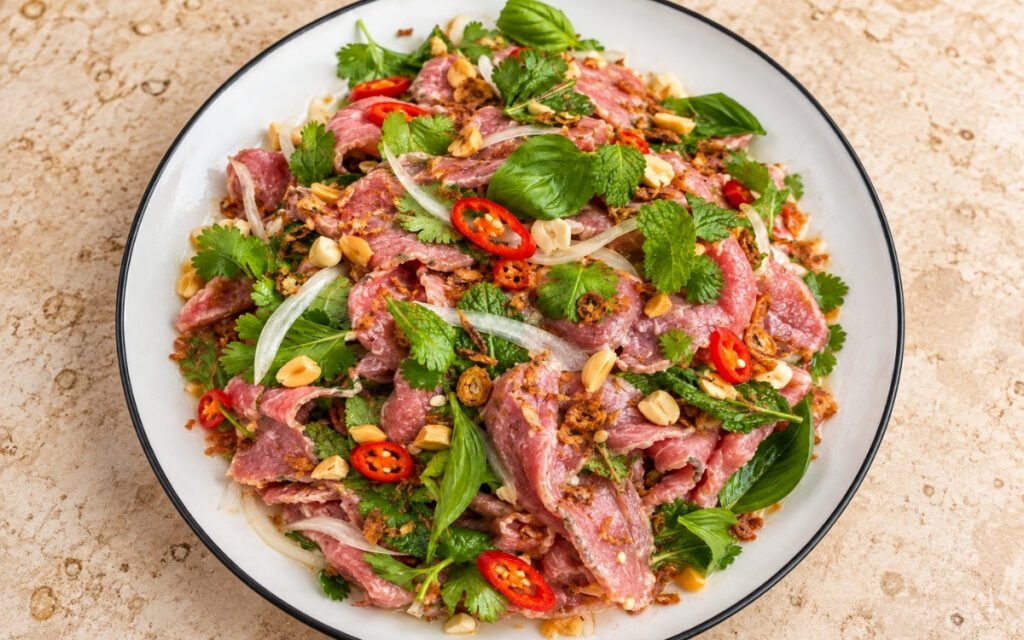
Vietnamese Rare Beef Salad — Bò Tái Chanh
Very thinly sliced tender beef briefly cured in lime juice, tossed with fish sauce dressing, fresh herbs, roasted peanuts and crispy fried shallots.
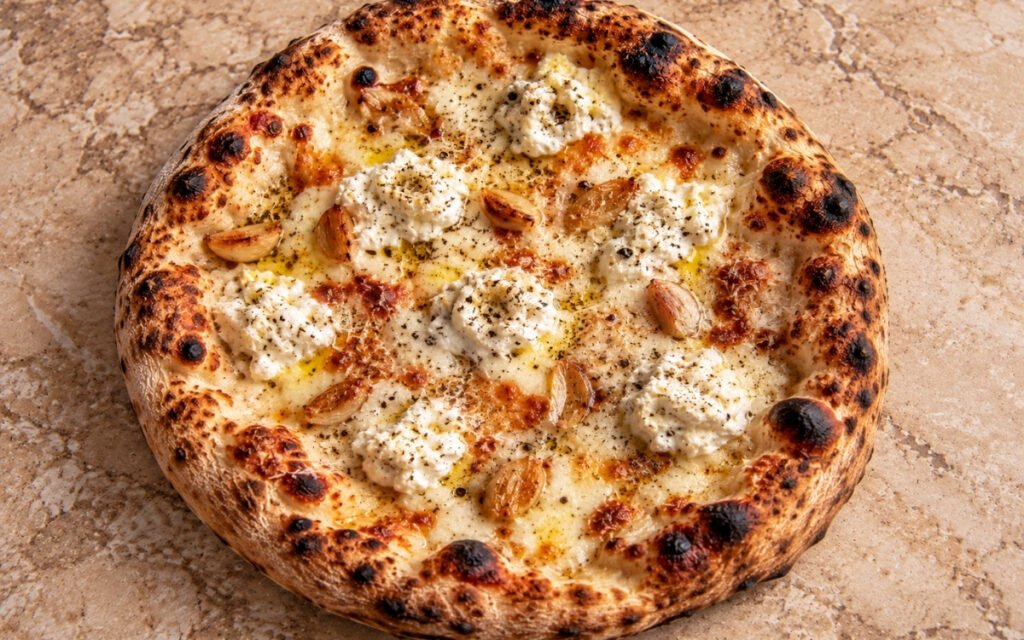
White Pizza with Ricotta and Garlic
Melted mozzarella, soft ricotta dollops, sweet mellow garlic, Parmesan, cracked black pepper, and olive oil over a blistered, airy crust.
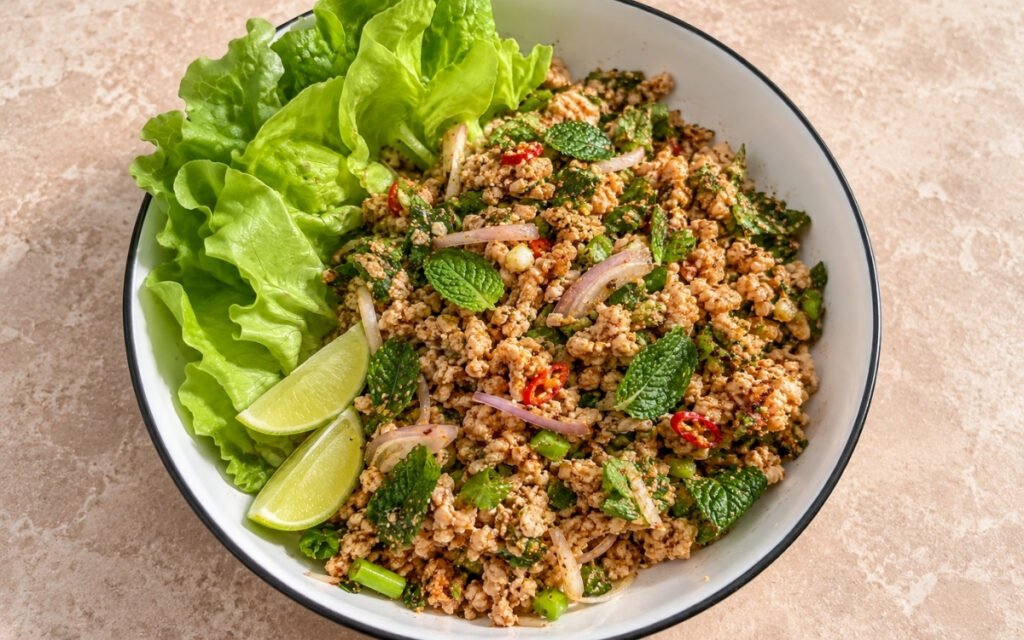
Larb Gai — Thai Minced Chicken Salad
Gently cooked minced chicken tossed with lime juice, fish sauce, roasted chili, toasted rice powder, shallots, scallions, and fresh mint.
You might also like
You might also like
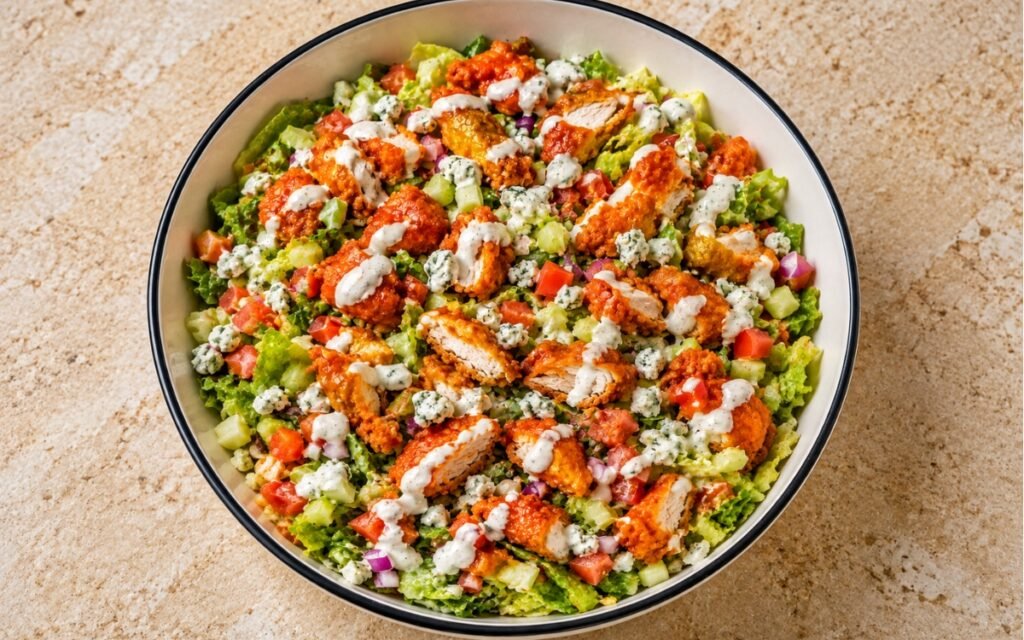
Buffalo Chicken Chopped Salad
Crispy Buffalo chicken pieces over chopped lettuce with celery, tomato, red onion, blue cheese crumbles, and creamy homemade ranch dressing.
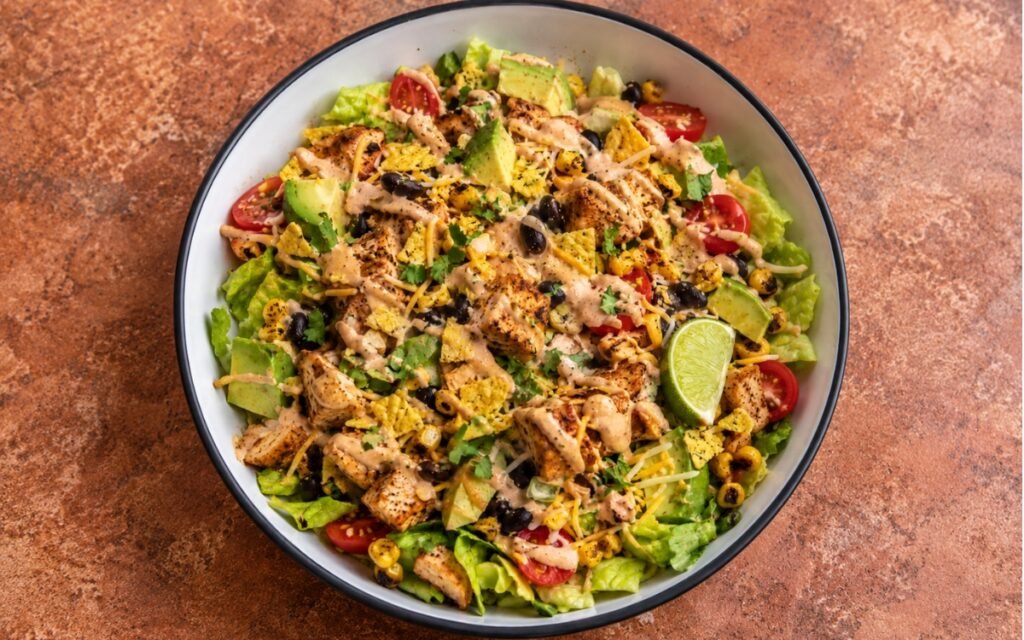
Mexican Chicken Taco Salad
Seasoned chicken breast, chopped lettuce, black beans, charred corn, cherry tomatoes, avocado, shredded cheese, and crushed tortilla chips with chipotle crema.
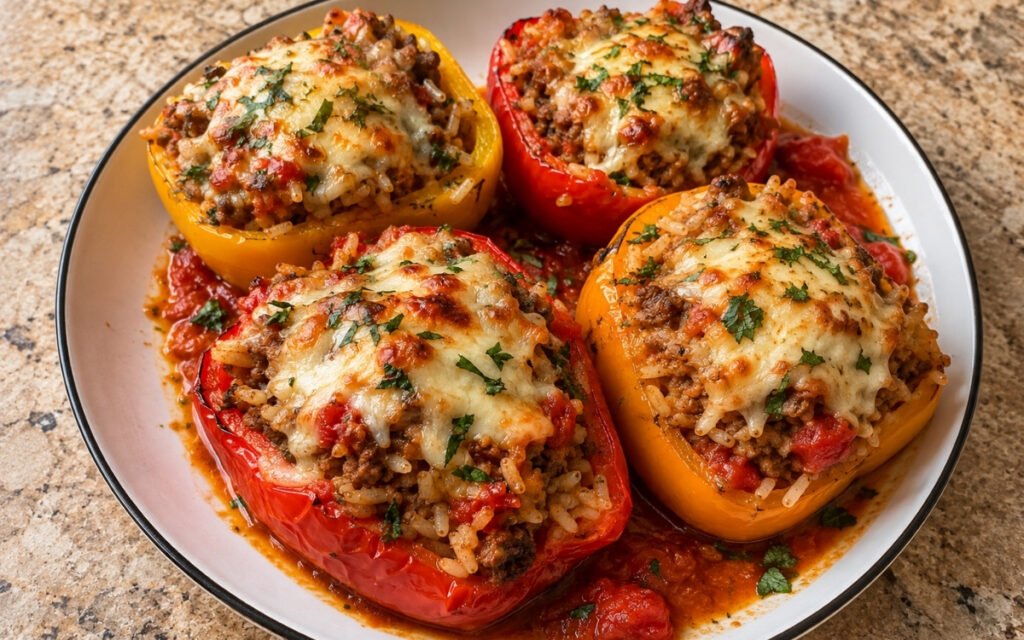
Italian Stuffed Peppers
Halved bell peppers filled with beef, pork, rice, onion, garlic, tomato sauce, herbs and cheese, baked over tomato sauce until tender.
Italian Farro Salad with Roasted Vegetables
Ingredients
Method
- Bring the water to a boil with the salt and bay leaf if using. Add the farro and simmer uncovered for 22–30 minutes, depending on the type, until tender but still chewy. Drain well. Remove the bay leaf. Spread the farro on a tray and toss with 1 tbsp olive oil. Let it cool for 10–15 minutes. Farro should be chewy and separate, not soft like porridge. If it is overcooked, the salad becomes heavy and wet. That genuinely chewy, distinct texture protects the entire salad’s own intended lightness — grains cooked past this point would begin breaking down, turning the whole dish considerably heavier and wetter than intended.
- Heat the oven to 220°C / 425°F. Place the zucchini, cherry tomatoes, and red onion on a large baking tray. Toss with olive oil, salt, black pepper, and oregano. Roast for 22–28 minutes, turning once, until zucchini is golden at the edges, tomatoes are blistered and slightly collapsed, and onion is softened and lightly charred. Let the vegetables cool for 5–10 minutes before mixing. The vegetables should be roasted enough to concentrate their sweetness, but not so soft that they fall apart completely in the salad. That specific, checkable target — real colour and softening without full collapse — protects each vegetable’s own distinct identity in the finished salad, rather than letting them dissolve into an undifferentiated mass.
- Toast the pine nuts in a dry pan over medium-low heat for 2–4 minutes, stirring often, until golden and fragrant. Transfer immediately to a plate. Pine nuts burn very quickly. Remove them from the pan as soon as they are golden. That immediate transfer off the hot pan protects the pine nuts from their own real, narrow margin between properly toasted and burnt — leaving them in even briefly longer, on residual pan heat alone, risks tipping them into real bitterness.
- Whisk together olive oil, red wine vinegar, Dijon mustard, garlic, honey, salt, and black pepper. Taste and adjust. It should be bright, tangy, and slightly sharp because the farro will absorb some of the acidity. That deliberate sharpness accounts for real, predictable dilution once the grains soak up a portion of the dressing’s own acidity, protecting the finished salad from tasting flat.
- Place the warm or room-temperature farro in a large bowl. Add about two-thirds of the vinaigrette and toss well. Let it sit for 5 minutes so the grains absorb the dressing. Dressing the farro before adding the cheese and basil gives better flavor without bruising the delicate ingredients. That deliberate sequencing, dressing the grain first, lets the vinaigrette actually work into every kernel before the more fragile basil and crumbled cheese are ever introduced to the tossing process.
- Add the roasted zucchini, tomatoes, and red onion to the dressed farro. Toss gently. Fold in most of the basil, most of the ricotta salata, and most of the pine nuts. Transfer to a wide serving bowl. Finish with the remaining ricotta salata, pine nuts, basil leaves, a little extra olive oil, and black pepper. Serve slightly warm, room temperature, or lightly chilled. Reserving a portion of ricotta salata, pine nuts, and basil specifically for this final finish keeps those elements genuinely visible and fresh right at the surface of the finished salad.