
Lasagne alla Bolognese
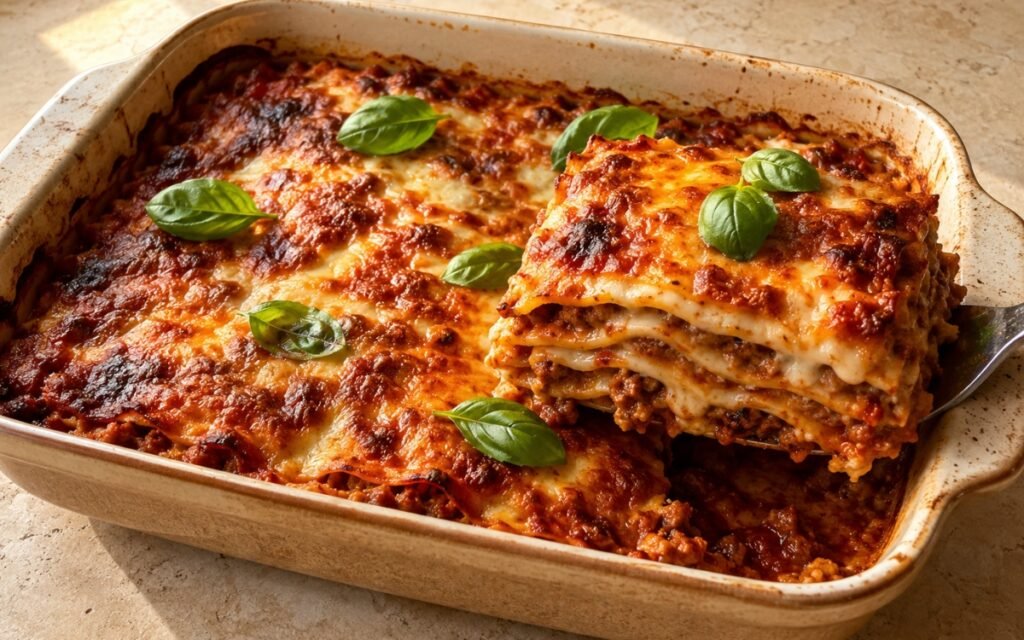
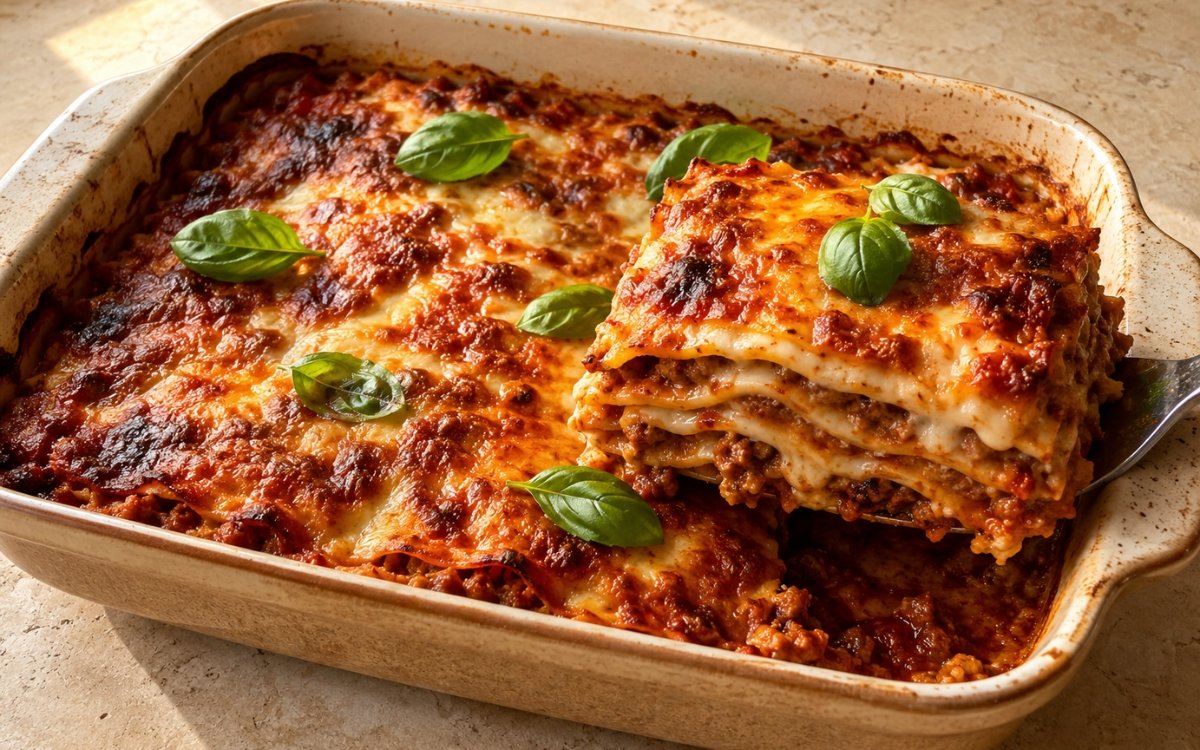
The version of lasagne worth making on a weekend — a proper ragù alla Bolognese built from ground beef and veal, pancetta-rendered fat, a 12–15 minute soffritto, caramelised tomato paste, red wine reduced to syrup, beef stock and whole milk, and 3 hours in a 175°C oven until the sauce has thickened, darkened, and developed the specific depth that only a long braise produces. Layered with a ricotta-egg mixture, freshly grated mozzarella and Parmesan, and tender pasta sheets, then baked under foil and uncovered until the top is golden and bubbling. The kind of dish that fills the house with the smell of something genuinely worth waiting for.
Prep Time : 45 min
Cook Time : 4 hr
Servings : 8
45 min
4 hr
8
Ingredients
For the Ragù alla Bolognese
• 454 g ground beef
• 454 g ground veal
• 300 g onion, finely diced
• 150 g carrot, finely diced
• 120 g celery, finely diced
• 225 g pancetta, finely diced — this one on Amazon
• 15g garlic, about 5 cloves, minced
• 240 g tomato paste
• 240–480 ml dry red wine
• 960 ml beef stock
• 480 ml whole milk
• 50 g Parmigiano Reggiano, finely grated
• 30 ml olive oil — this one on Amazon
• 30 g unsalted butter — this one on Amazon
• 10g kosher salt, plus more to taste
Ricotta Layer
• 425 g ricotta cheese
• 1 large egg, approximately 50g
• 3 g kosher salt
• 2 g black pepper
Cheese Mixture
• 170 g low-moisture mozzarella, freshly grated
• 100 g Parmesan cheese, finely grated — this one on Amazon
Assembly
• 9 lasagna sheets (≈270 g dry pasta)
• 15 ml olive oil (for noodles if needed)
This post may contain affiliate links. As an Amazon Associate I earn from qualifying purchases, at no additional cost to you.
Directions
- Render the Pancetta
Heat a large, heavy Dutch oven over medium heat and add the 30ml of olive oil. Add the 225g of finely diced pancetta. Cook for 6–8 minutes, stirring occasionally, until the fat has rendered completely and the pancetta is turning lightly golden. The pancetta’s rendered fat is the cooking medium for the soffritto — it carries the cured pork’s savoury, slightly sweet character into the vegetable base that will subsequently cook in it. Do not drain the fat. - Build the Soffritto
Add the finely diced onion, carrot, celery, and minced garlic to the Dutch oven with the rendered pancetta and fat. Season lightly with salt. Cook over medium heat for 12–15 minutes, stirring occasionally. The vegetables should be cut very small — roughly the size of coarse crumbs — so they melt into the sauce during the 3-hour braise rather than remaining as identifiable vegetable pieces. During the 12–15 minutes of cooking, the vegetables release their moisture, soften completely, and begin to caramelise, their natural sugars concentrating into the sweet, mellow aromatic foundation of the ragù. The bottom of the pot will develop a layer of fond — browned bits from the caramelising vegetables and pancetta fat — which adds significant depth to the sauce. - Brown the Meat Separately
While the soffritto cooks, heat a separate large skillet over medium-high heat. Add the 454g of ground beef and 454g of ground veal together. Break the meat apart with a wooden spoon into very fine pieces — the Bolognese tradition favours a fine-textured sauce where the meat is barely distinguishable from the sauce rather than the chunky minced meat texture of a standard meat sauce. Cook for 10–12 minutes, breaking down the pieces continuously. The meat must go through two distinct phases: first, it releases moisture and appears grey and steamed; then, as the moisture evaporates, it begins to fry in its own fat and develops the deep, caramelised browning that produces the Maillard reaction compounds responsible for the ragù’s depth. Do not rush the second phase — pale, grey meat transfers no depth to the sauce. The meat should be deeply browned, not merely cooked through. - Combine Meat and Vegetables, Add Tomato Paste
Transfer the browned meat to the Dutch oven with the soffritto. Stir to combine and cook together for 3–4 minutes, allowing additional fond to develop as the two components integrate. Add the 240g of tomato paste and stir it thoroughly into the meat-and-vegetable mixture. Cook for 3–5 minutes, stirring frequently and pressing the paste against the hot pot surface — the tomato paste undergoes its own Maillard caramelisation during this direct-heat contact, converting its raw acidity and sharpness into concentrated, slightly sweet tomato depth. The paste should visibly darken from bright red to brick-red during this time. - Deglaze with Red Wine
Pour in the red wine — use 240ml for a moderate wine presence and up to 480ml for a more wine-forward ragù. Scrape the bottom of the pot firmly to dissolve all the accumulated fond into the wine. Allow to reduce at medium-high heat until nearly syrupy — 5–7 minutes — the wine concentrated to a deep, fruity, slightly tannic liquid with the raw alcohol completely cooked off. The wine reduction is the stage where the ragù’s background complexity is established; an under-reduced wine produces a sharp, alcoholic sauce character that the subsequent braise cannot fully resolve. - Add Stock and Milk
Pour in the 960ml of beef stock and 480ml of whole milk. Stir to combine fully. The whole milk is the traditionally Bolognese addition that distinguishes this ragù from simpler tomato-and-meat sauces — its fat content softens the tomato’s acidity and rounds the wine’s tannins into a smoother, more cohesive sauce character, and its proteins add slight body to the braising liquid. Bring to a gentle, steady simmer. - Braise for 3 Hours
Transfer the Dutch oven uncovered to a preheated 175°C oven. Braise for 3 hours, stirring every 30–40 minutes. The uncovered oven braise is the technique that makes this ragù different from a stovetop version — the steady, all-around oven heat produces a more even, slower reduction than stovetop direct heat, with significantly less risk of scorching at the base of the pot. During the 3 hours the sauce will reduce considerably, darken to a deep, rich brownish-red, and develop the complex, long-cooked depth that the earlier steps cannot produce in any other way. By the 2.5-hour mark, the sauce should have developed a noticeably thick, concentrated, slightly glossy character. By 3 hours it should look deeply rich, coat the back of a spoon heavily, and smell of the specific caramelised, meaty, tomato depth that defines a proper Bolognese. - Finish the Ragù
Remove the pot from the oven. Stir in the 30g of butter and the 50g of finely grated Parmigiano Reggiano until both are fully melted and incorporated. The butter adds the smooth, slightly sweet finishing richness that rounds the concentrated sauce. The Parmigiano adds savoury depth and a slight textural body. Taste and adjust with additional salt. Allow the sauce to cool slightly before assembling — very hot sauce makes layering difficult and can partially cook the ricotta during assembly. - Prepare the Ricotta and Cheese Mixtures
In a medium bowl, combine the 425g of ricotta, the egg, 3g of salt, and 2g of black pepper. Whisk until completely smooth and uniform — no visible egg streaks, no lumps of ricotta. The egg binds the ricotta during baking, preventing it from becoming watery and separating through the pasta layers. In a second bowl, combine the 170g of freshly grated low-moisture mozzarella and 100g of finely grated Parmesan cheese. Stir to distribute evenly. - Cook the Pasta Sheets
Bring a large pot of generously salted water to a full rolling boil. Cook the 9 lasagna sheets for 1 minute less than the package instructions — they will continue cooking during the 55–60 minutes of baking and must be underdone at this stage to avoid a soft, overcooked result in the finished lasagne. Drain and lay on a lightly oiled baking sheet in a single layer to prevent sticking — do not stack. - Assemble the Lasagne
Preheat the oven to 190°C. Spread approximately 250ml of ragù across the bottom of a 23 × 33cm baking dish — this base layer prevents the pasta from sticking to the dish and ensures the bottom layer is sauced. Add the first layer of pasta sheets. Spread one-third of the ricotta mixture evenly across the pasta. Scatter one-third of the cheese mixture over the ricotta. Add another layer of ragù. Repeat the layering sequence two more times: pasta sheets, one-third ricotta, one-third cheese mixture, ragù. Finish with a final layer of pasta sheets, a thin layer of ragù spread across the top, and the remaining cheese scattered over the surface. - Bake and Rest
Cover the baking dish with aluminium foil — grease the underside lightly to prevent the foil from adhering to the melting cheese. Bake covered at 190°C for 25 minutes. Remove the foil and continue baking uncovered for 30–35 minutes until the top is deeply golden, visibly bubbling at the edges, and the cheese surface shows patches of golden-brown caramelisation. Remove from the oven and allow to rest for 15–20 minutes before cutting. The resting period allows the molten layers to firm slightly and set — cutting a freshly baked lasagne immediately produces a collapsed, formless serving regardless of how well it was constructed. After 15–20 minutes, a sharp knife produces clean-edged portions where the layers are visible and intact.
*Notes :
- The dual-meat combination — equal parts ground beef and ground veal — is the traditional Bolognese formula, and the veal’s specific contribution is worth understanding. Ground veal has less flavour of its own than beef but more collagen in its muscle structure — during the 3-hour braise, this collagen converts to gelatin, which progressively enriches the braising liquid and produces the specific silky, slightly sticky mouthfeel that distinguishes a Bolognese from a plain meat sauce. The beef provides the primary flavour; the veal provides the texture and body. Ground pork is a common and acceptable substitute for the veal, contributing fat and a slightly sweeter flavour rather than the veal’s collagen-based body.
- The 3-hour oven braise at 175°C is the minimum for a genuinely well-developed Bolognese. The ragù can be prepared one day in advance — refrigerated overnight, the flavours deepen and integrate significantly as the fat solidifies, the salt distributes more completely through the sauce, and the wine’s tannins mellow. A day-ahead ragù is objectively better than same-day ragù for lasagne assembly, and the make-ahead approach also splits the project into manageable stages across two days.
- Low-moisture mozzarella rather than fresh mozzarella is specified specifically for baked pasta applications. Fresh mozzarella releases significant water content during baking, producing pools of liquid between layers that dilute the sauce and prevent the cheese from developing its characteristic stretchy melt. Low-moisture mozzarella melts evenly and without excess water release — the correct format for a baked lasagne.
Why This Recipe Works
This recipe works because it applies the correct technique at each of the four stages that determine Bolognese ragù quality: the soffritto cooked for the full 12–15 minutes to develop sweet, mellow aromatics; the meat browned separately to ensure deep Maillard caramelisation rather than steaming in the vegetables’ moisture; the tomato paste caramelised in the pot for 3–5 minutes; and the 3-hour oven braise that no shorter cooking method can replicate.
The assembly uses low-moisture mozzarella to prevent watery layers, a ricotta-egg binding mixture that holds its structure during baking, and the 15–20 minute rest that allows the layers to set before cutting.
Ingredient Breakdown
Ground Beef and Veal (Equal Parts)
The two-meat system — beef for primary flavour and depth, veal for collagen that converts to gelatin and produces the sauce’s silky body during the long braise.
Pancetta (Fat Rendered First)
The aromatic fat base — rendered before the soffritto, its cured pork fat carries savoury depth through every subsequent stage of the sauce.
Soffritto (12–15 Minutes)
The aromatic foundation — onion, carrot, celery, and garlic cooked until fully caramelised, producing the sweet, mellow base that prevents the ragù from tasting one-dimensionally meaty.
Tomato Paste (3–5 Minutes Direct Heat)
The concentrated depth element — caramelised in the pot before liquid is added, its Maillard-reacted sugars provide concentrated sweetness that canned tomatoes alone cannot produce in this sauce.
Whole Milk
The traditional Bolognese dairy addition — softens the tomato’s acidity and the wine’s tannins, rounds the sauce character, and adds slight body.
3-Hour Oven Braise
The irreplaceable depth development stage — steady, even heat produces the concentrated, darkened, complex sauce character that stovetop cooking cannot replicate.
Ricotta-Egg Mixture
The binding layer — egg stabilises the ricotta during baking, preventing water separation through the pasta layers.
Low-Moisture Mozzarella
The baking-specific cheese — no water release during the oven stage, uniform melt, and the stretchy cheese layer without diluting the sauce.
Flavor Structure Explained
This Lasagne alla Bolognese follows a layered balance model:
- Aromatic savory foundation (pancetta, soffritto)
- Deep braised meat core (beef, veal)
- Sweet-acidic body (tomato, wine)
- Creamy dairy richness (milk, ricotta, mozzarella, Parmesan)
- Integrated layered structure (assembled lasagne)
Pancetta and soffritto establish the base with rendered fat, sweetness, and aromatic depth that support the entire dish. Long-braised meat forms the dominant core, delivering concentrated savory richness and gelatin-driven silkiness. Tomato and wine create the body, balancing that depth with acidity and sweetness. The dairy layer runs throughout the structure, adding creaminess, salt, and cohesion at every level. Because the lasagne is built in stacked layers, all registers combine in each bite, producing a fully integrated, deeply developed flavor profile.
Common Mistakes to Avoid
- Not Browning the Meat Sufficiently – Grey, under-browned meat transfers no Maillard depth to the sauce. The 10–12 minutes of browning until deeply caramelised is essential, not optional.
- Rushing the Soffritto – Under-cooked vegetables in a 3-hour braise still produce a sharper, less sweet base than the fully caramelised 12–15 minute version. Take the full time.
- Adding Raw Tomato Paste Directly to Liquid: 3–5 minutes of direct-heat caramelisation converts the paste’s raw acidity into concentrated depth. Skipping this produces a noticeably flatter sauce.
- Using Fresh Mozzarella – Fresh mozzarella releases water during baking, producing watery, diluted layers. Low-moisture only.
- Not Resting After Baking – Cutting a hot lasagne produces formless, collapsing portions. The 15–20 minute rest is the difference between clean, layered slices and a disassembled mound.
- Not Greasing the Foil Before Covering – The cheese on the top layer adheres to ungreased foil and tears away when the foil is removed, taking the golden crust with it.
Variations
Pork and Beef Version
Replace the ground veal with equal-weight ground pork — pork contributes more fat and a slightly sweeter flavour rather than the veal’s gelatin-based body. A common and delicious variation.
Lasagne With Béchamel
Replace the ricotta layer entirely with a classic béchamel — equal parts butter and flour cooked together with milk into a smooth, white sauce. The traditional Northern Italian lasagne uses béchamel rather than ricotta, producing a creamier, more neutral dairy layer. The recipe’s ricotta version is closer to the Italian-American tradition.
Larger Batch Lasagne
Double all quantities and assemble in two 23 × 33cm dishes — the ragù scales without any technique adjustment. Freeze the second assembled but unbaked lasagne for up to 2 months; bake from thawed at 190°C with an additional 10 minutes covered.
Storage & Make-Ahead
Ragù can be refrigerated for up to 5 days, and it actually improves overnight, which makes it the best make-ahead component of the dish. It also freezes well for up to 3 months.
Assembled but unbaked lasagne can be refrigerated for up to 24 hours before baking. If you are baking it straight from the refrigerator, add 10 to 15 minutes to the covered baking time.
Baked lasagne can be refrigerated for up to 4 days. Individual portions reheat very well; just cover them loosely with foil and warm them at 180°C for 15 to 18 minutes.
Frequently Asked Questions
Why ground veal alongside beef?
Veal’s high collagen content converts to gelatin during the 3-hour braise, enriching the sauce with the silky, slightly sticky body that distinguishes a true Bolognese. Ground pork is a common substitute — it contributes fat and sweetness rather than collagen-based body.
Why cook the meat separately from the vegetables?
Adding raw ground meat to a pan with vegetables traps the meat’s released moisture against the vegetables, producing steaming rather than browning. Browning the meat in a separate, hot, dry pan ensures maximum Maillard caramelisation on every surface.
Why 3 hours in the oven?
The oven’s steady, all-around heat produces a slower, more even reduction than stovetop cooking, developing the sauce’s depth progressively and without the scorching risk of direct heat. Three hours is the minimum for a genuinely Bolognese-quality result — shorter cooking produces a good meat sauce, not a Bolognese.
Can I make the ragù in advance?
Yes — refrigerate overnight and the flavours deepen significantly. This is the recommended approach for the best result and to split the project across two days.
Why rest the lasagne before cutting?
The molten cheese, sauce, and pasta layers need 15–20 minutes to set from liquid to firm enough to hold their shape when a knife is drawn through them. Cutting immediately produces collapsed, formless portions rather than the clean-layered slices that make this dish visually as satisfying as it tastes.
Nutrition Facts
( per serving )
Calories
~900 kcal
Protein
52 g
Fat
49 g
Carbs
52 g
Calories
~900 kcal
Protein
52 g
Fat
49 g
Carbs
52 g
Related Recipes
Related Recipes

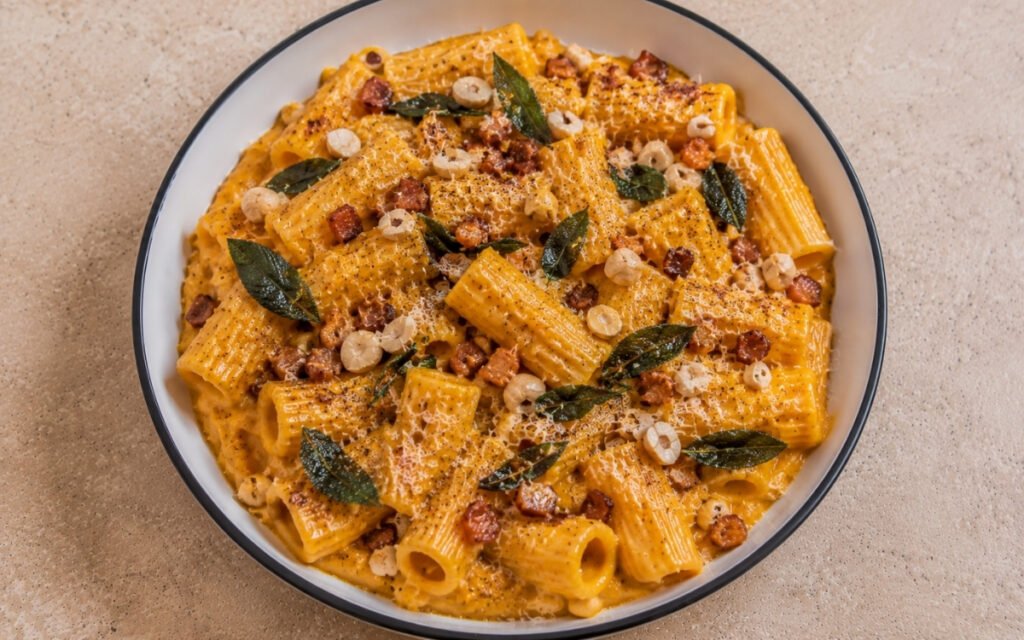
Creamy Pumpkin Sauce Pasta with Pancetta
Pumpkin cream sauce in pancetta fat, topped with crispy pancetta, fried sage, and hazelnuts — 40 minutes.
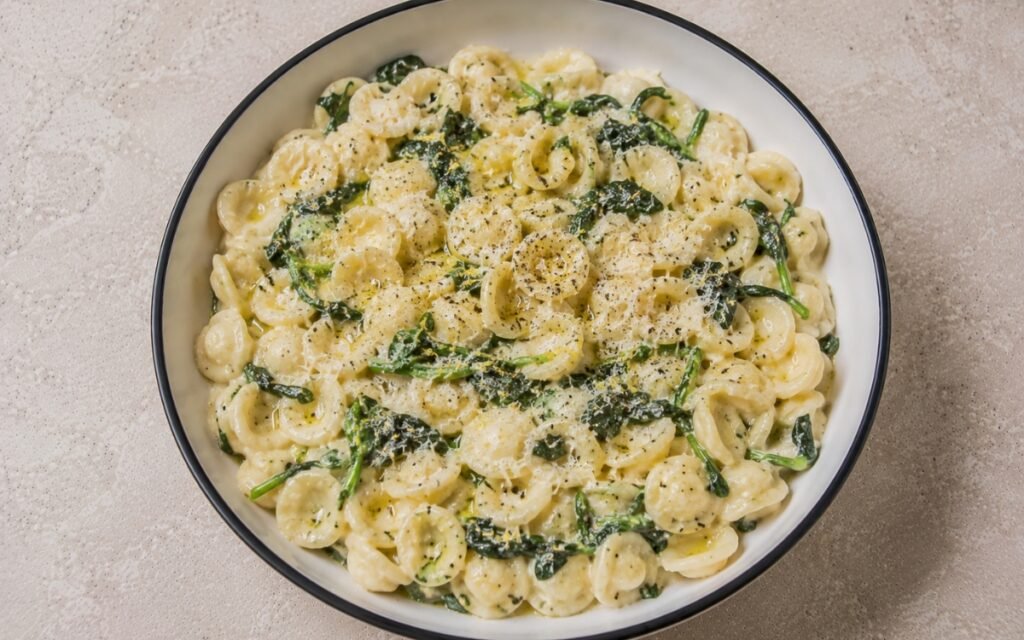
Lemon Ricotta Spinach Orecchiette
Ricotta whisked with Parmigiano, lemon, and warm pasta water — added off the heat to orecchiette and garlic spinach for silky sauce without cream. 30 minutes.
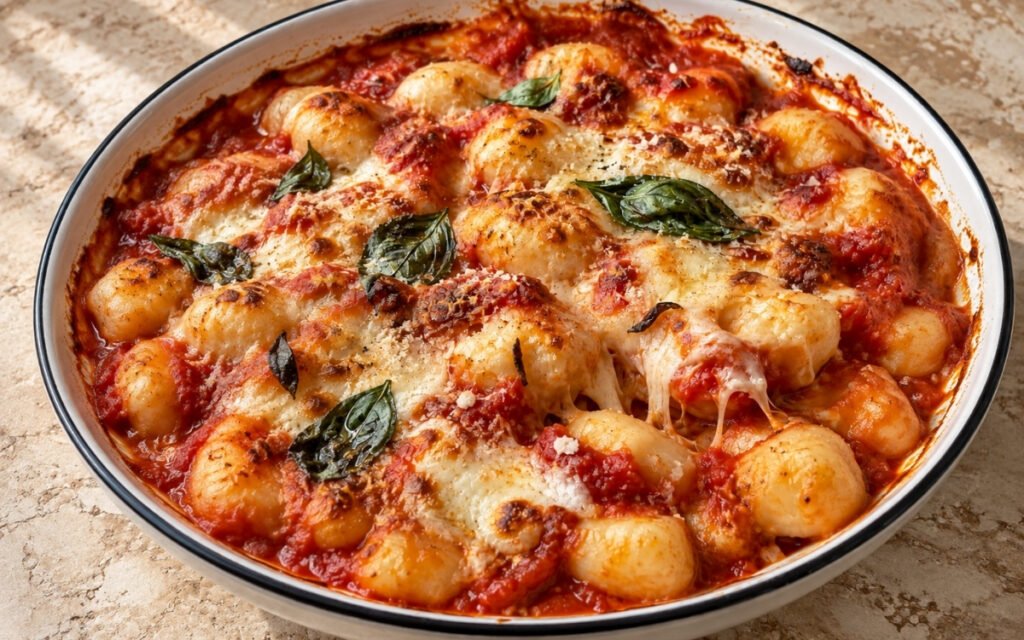
Gnocchi alla Sorrentina
Soft potato gnocchi baked in a simple tomato basil sauce with melted mozzarella, Parmesan, and bubbling browned cheese on top.
You might also like
You might also like
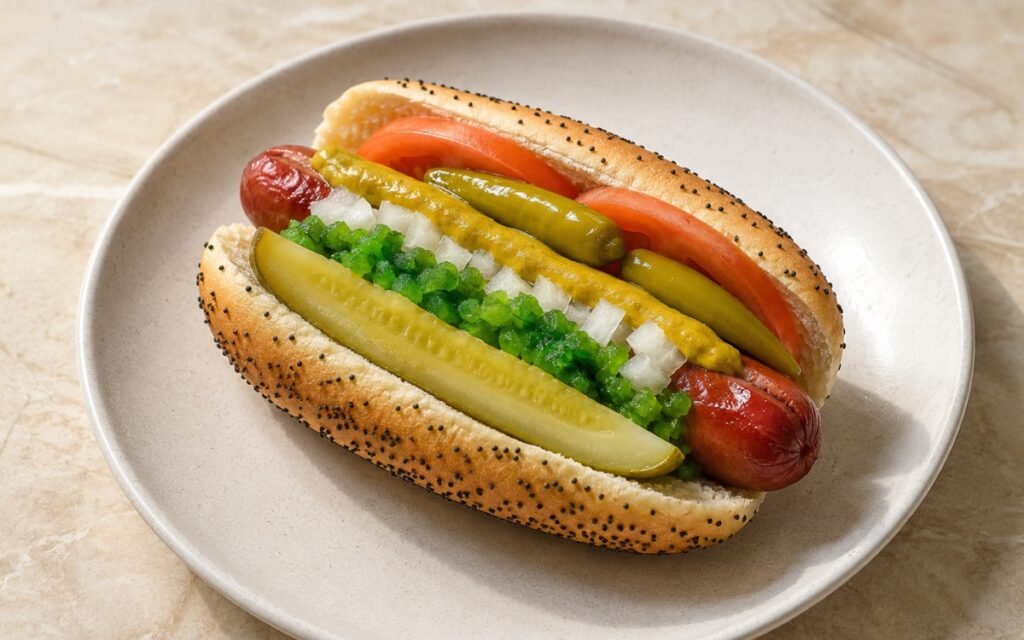
Chicago-Style Hot Dog
A natural-casing all-beef frankfurter in a soft, steamed poppy-seed bun, dressed with mustard, relish, onion, tomato, and sport peppers.
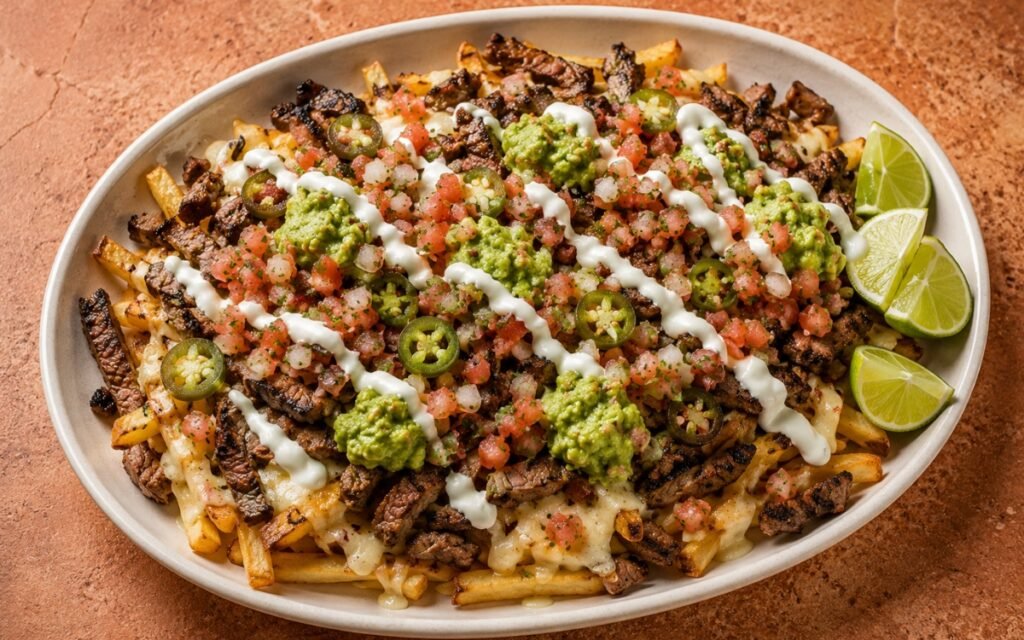
Carne Asada Fries
Double-fried thick-cut fries layered with charred citrus-marinated carne asada, melted mozzarella and cotija, guacamole, and pico de gallo.
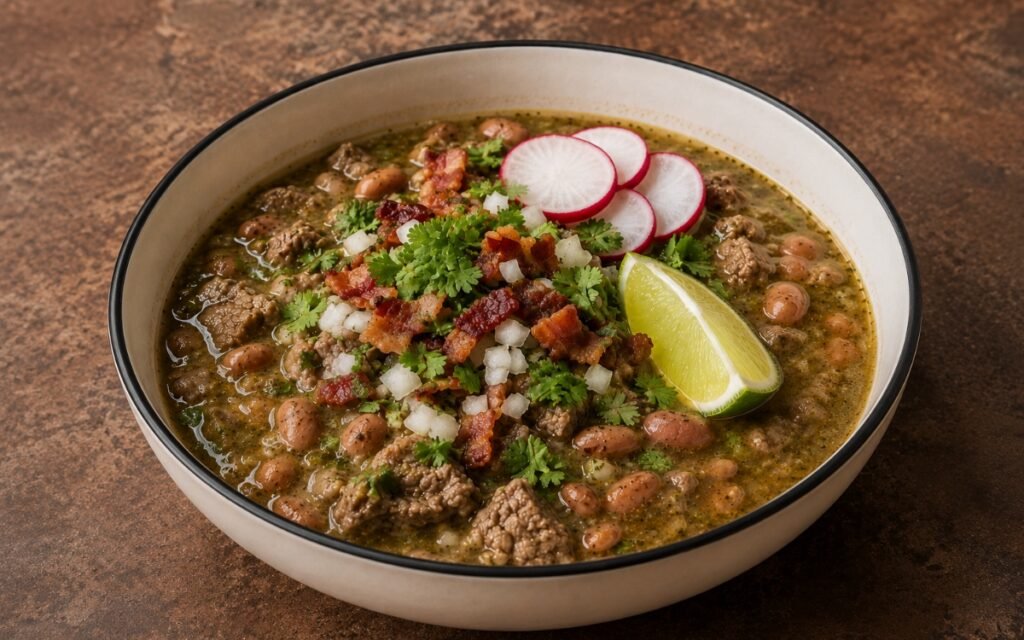
Carne en su Jugo
Finely chopped, batch-browned beef simmered briefly in a savory tomatillo broth with pinto beans, topped with crispy bacon and fresh garnishes.
Lasagne alla Bolognese
Ingredients
Method
- Heat a large, heavy Dutch oven over medium heat and add the 30ml of olive oil. Add the 225g of finely diced pancetta. Cook for 6–8 minutes, stirring occasionally, until the fat has rendered completely and the pancetta is turning lightly golden. The pancetta’s rendered fat is the cooking medium for the soffritto — it carries the cured pork’s savoury, slightly sweet character into the vegetable base that will subsequently cook in it. Do not drain the fat.
- Add the finely diced onion, carrot, celery, and minced garlic to the Dutch oven with the rendered pancetta and fat. Season lightly with salt. Cook over medium heat for 12–15 minutes, stirring occasionally. The vegetables should be cut very small — roughly the size of coarse crumbs — so they melt into the sauce during the 3-hour braise rather than remaining as identifiable vegetable pieces. During the 12–15 minutes of cooking, the vegetables release their moisture, soften completely, and begin to caramelise, their natural sugars concentrating into the sweet, mellow aromatic foundation of the ragù. The bottom of the pot will develop a layer of fond — browned bits from the caramelising vegetables and pancetta fat — which adds significant depth to the sauce.
- While the soffritto cooks, heat a separate large skillet over medium-high heat. Add the 454g of ground beef and 454g of ground veal together. Break the meat apart with a wooden spoon into very fine pieces — the Bolognese tradition favours a fine-textured sauce where the meat is barely distinguishable from the sauce rather than the chunky minced meat texture of a standard meat sauce. Cook for 10–12 minutes, breaking down the pieces continuously. The meat must go through two distinct phases: first, it releases moisture and appears grey and steamed; then, as the moisture evaporates, it begins to fry in its own fat and develops the deep, caramelised browning that produces the Maillard reaction compounds responsible for the ragù’s depth. Do not rush the second phase — pale, grey meat transfers no depth to the sauce. The meat should be deeply browned, not merely cooked through.
- Transfer the browned meat to the Dutch oven with the soffritto. Stir to combine and cook together for 3–4 minutes, allowing additional fond to develop as the two components integrate. Add the 240g of tomato paste and stir it thoroughly into the meat-and-vegetable mixture. Cook for 3–5 minutes, stirring frequently and pressing the paste against the hot pot surface — the tomato paste undergoes its own Maillard caramelisation during this direct-heat contact, converting its raw acidity and sharpness into concentrated, slightly sweet tomato depth. The paste should visibly darken from bright red to brick-red during this time.
- Pour in the red wine — use 240ml for a moderate wine presence and up to 480ml for a more wine-forward ragù. Scrape the bottom of the pot firmly to dissolve all the accumulated fond into the wine. Allow to reduce at medium-high heat until nearly syrupy — 5–7 minutes — the wine concentrated to a deep, fruity, slightly tannic liquid with the raw alcohol completely cooked off. The wine reduction is the stage where the ragù’s background complexity is established; an under-reduced wine produces a sharp, alcoholic sauce character that the subsequent braise cannot fully resolve.
- Pour in the 960ml of beef stock and 480ml of whole milk. Stir to combine fully. The whole milk is the traditionally Bolognese addition that distinguishes this ragù from simpler tomato-and-meat sauces — its fat content softens the tomato’s acidity and rounds the wine’s tannins into a smoother, more cohesive sauce character, and its proteins add slight body to the braising liquid. Bring to a gentle, steady simmer.
- Transfer the Dutch oven uncovered to a preheated 175°C oven. Braise for 3 hours, stirring every 30–40 minutes. The uncovered oven braise is the technique that makes this ragù different from a stovetop version — the steady, all-around oven heat produces a more even, slower reduction than stovetop direct heat, with significantly less risk of scorching at the base of the pot. During the 3 hours the sauce will reduce considerably, darken to a deep, rich brownish-red, and develop the complex, long-cooked depth that the earlier steps cannot produce in any other way. By the 2.5-hour mark, the sauce should have developed a noticeably thick, concentrated, slightly glossy character. By 3 hours it should look deeply rich, coat the back of a spoon heavily, and smell of the specific caramelised, meaty, tomato depth that defines a proper Bolognese.
- Remove the pot from the oven. Stir in the 30g of butter and the 50g of finely grated Parmigiano Reggiano until both are fully melted and incorporated. The butter adds the smooth, slightly sweet finishing richness that rounds the concentrated sauce. The Parmigiano adds savoury depth and a slight textural body. Taste and adjust with additional salt. Allow the sauce to cool slightly before assembling — very hot sauce makes layering difficult and can partially cook the ricotta during assembly.
- In a medium bowl, combine the 425g of ricotta, the egg, 3g of salt, and 2g of black pepper. Whisk until completely smooth and uniform — no visible egg streaks, no lumps of ricotta. The egg binds the ricotta during baking, preventing it from becoming watery and separating through the pasta layers. In a second bowl, combine the 170g of freshly grated low-moisture mozzarella and 100g of finely grated Parmesan cheese. Stir to distribute evenly.
- Bring a large pot of generously salted water to a full rolling boil. Cook the 9 lasagna sheets for 1 minute less than the package instructions — they will continue cooking during the 55–60 minutes of baking and must be underdone at this stage to avoid a soft, overcooked result in the finished lasagne. Drain and lay on a lightly oiled baking sheet in a single layer to prevent sticking — do not stack.
- Preheat the oven to 190°C. Spread approximately 250ml of ragù across the bottom of a 23 × 33cm baking dish — this base layer prevents the pasta from sticking to the dish and ensures the bottom layer is sauced. Add the first layer of pasta sheets. Spread one-third of the ricotta mixture evenly across the pasta. Scatter one-third of the cheese mixture over the ricotta. Add another layer of ragù. Repeat the layering sequence two more times: pasta sheets, one-third ricotta, one-third cheese mixture, ragù. Finish with a final layer of pasta sheets, a thin layer of ragù spread across the top, and the remaining cheese scattered over the surface.
- Cover the baking dish with aluminium foil — grease the underside lightly to prevent the foil from adhering to the melting cheese. Bake covered at 190°C for 25 minutes. Remove the foil and continue baking uncovered for 30–35 minutes until the top is deeply golden, visibly bubbling at the edges, and the cheese surface shows patches of golden-brown caramelisation. Remove from the oven and allow to rest for 15–20 minutes before cutting. The resting period allows the molten layers to firm slightly and set — cutting a freshly baked lasagne immediately produces a collapsed, formless serving regardless of how well it was constructed. After 15–20 minutes, a sharp knife produces clean-edged portions where the layers are visible and intact.