
Slow-Simmered Beef Ragù Pasta
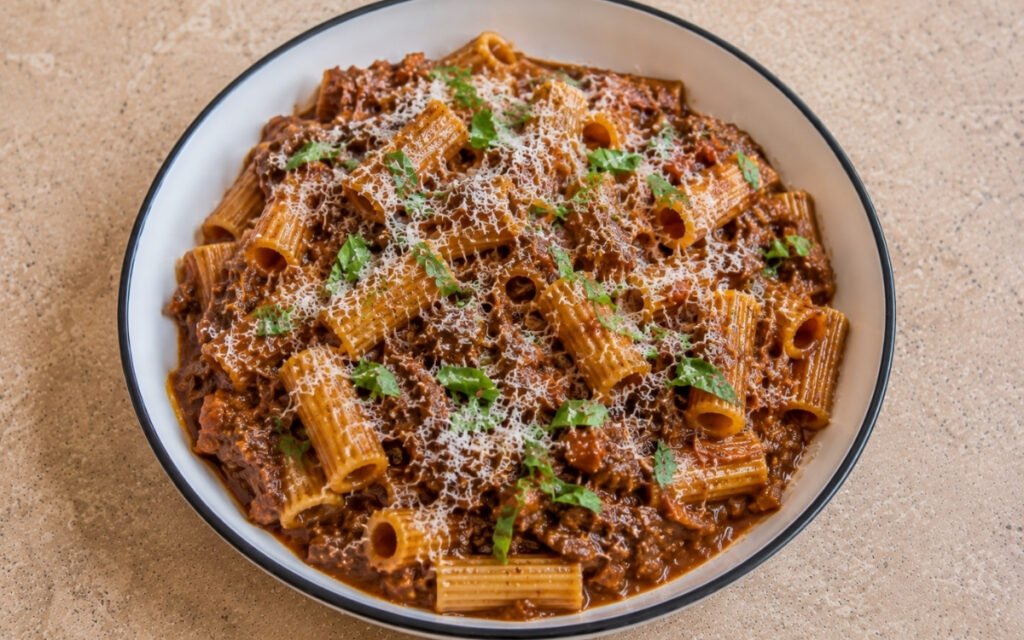
This is the pasta you make on a Sunday when you have three hours and want the kitchen to smell like a trattoria in Bologna. Beef chuck browned deeply in pancetta fat until a dark, caramelised crust forms on every side. A proper soffritto — onion, carrot, and celery cooked for 12–15 minutes until soft and beginning to colour. Tomato paste darkened to brick-red in the pot. Chianti reduced until syrupy. San Marzano tomatoes, beef stock, rosemary, and bay leaves, then 2.5 hours of the gentlest possible simmer until the beef shreds effortlessly and the sauce has become something the ingredients could not have predicted. A splash of whole milk at the end rounds the acidity and adds the quietly luxurious finish that defines the Bolognese tradition. The kind of dish that tastes even better the next day.
Prep Time : 20 min
Cook Time : 2hr, 45 min
Servings : 4
20 min
2hr, 45 min
4
Ingredients
For the Beef Ragù
• 500g beef chuck, cut into 2cm chunks
• 100g pancetta, finely diced — this one on Amazon
• 150g yellow onion, finely chopped
• 100g carrot, finely chopped
• 80g celery, finely chopped
• 20g garlic (4 cloves), minced
• 30g tomato paste
• 150ml dry red wine (preferably Chianti)
• 400g canned whole San Marzano tomatoes — this one on Amazon
• 300ml beef stock
• 2g fresh rosemary (1 sprig)
• 2 bay leaves
• 30ml whole milk
• 25ml extra virgin olive oil
• 8g kosher salt (divided)
• 3g freshly ground black pepper
• 2g granulated sugar
For the Pasta
• 320g rigatoni pasta — this one on Amazon
• 40g Parmigiano-Reggiano, finely grated — this one on Amazon
• Fresh basil leaves for garnish
This post may contain affiliate links. As an Amazon Associate I earn from qualifying purchases, at no additional cost to you.
Directions
- Brown the Pancetta and Beef
Pat the 500g of beef chuck pieces completely dry on all surfaces with paper towels — the drying step is the prerequisite for any meaningful browning. Any surface moisture on the beef converts to steam the moment it contacts the hot pan, dropping the temperature and preventing the Maillard reaction from occurring. Season generously with 5g of the salt and the full 3g of black pepper, pressing the seasoning into every surface. Set a large Dutch oven or heavy-bottomed pot over medium-high heat and add the diced pancetta — no oil is needed at this stage because the pancetta renders sufficient fat for both the pancetta browning and the subsequent beef searing. Cook the pancetta for 6–8 minutes, stirring occasionally, until deeply golden and crispy. The pancetta fat is the primary cooking medium for the beef sear — its cured pork fat carries savoury depth that plain olive oil cannot contribute. Remove the crispy pancetta with a slotted spoon and set aside on a plate, leaving all the rendered fat in the pot. Working in two batches — never adding all the beef at once, which would crowd the pot, drop the temperature, and produce grey steamed beef rather than the deep brown crust the flavour development requires — add the first batch of beef pieces in a single layer. Sear undisturbed for 3–4 minutes per side, working around the beef to develop a deep, dark, genuinely caramelised crust on every surface. The crust should be dark brown, not golden — this is the colour of properly developed Maillard reaction compounds, not the pale tan of an under-browned surface. Each side requires undisturbed contact with the hot pot surface — any movement before the crust has formed tears the developing crust rather than allowing it to build. This browning step produces both the deep savoury flavour of the finished ragù and the fond — the layer of caramelised protein and fat adhering to the pot surface — that will dissolve into the sauce during the deglaze step and contribute a depth that no amount of additional seasoning can replicate. Transfer the first batch to a plate and repeat with the second batch. - Build the Soffritto
Reduce the heat to medium and add the 25ml of olive oil to the rendered pancetta fat remaining in the pot. Add the finely chopped yellow onion, carrot, and celery simultaneously — the classic Italian soffritto. The ratio of these three aromatics — 150g onion, 100g carrot, 80g celery — is the standard foundation of northern Italian braised meat preparations, calibrated to produce a specific sweet, mellow, aromatic base rather than the sharper, more onion-forward character of different proportions. Cook for 12–15 minutes, stirring frequently — the soffritto requires the kind of unhurried, attentive cooking that the name suggests. The vegetables must be very soft and showing the first signs of caramelisation — not raw and watery, not browned and dark, but somewhere in between: completely softened, slightly shrunken, and beginning to deepen in colour to a light golden. During this 12–15 minutes, use a wooden spoon or spatula to scrape the bottom of the pot periodically, lifting and dissolving the fond left from the beef sear into the softening vegetables. This fond integration happens gradually throughout the soffritto stage rather than all at once during a deglaze, producing a deeper, more evenly flavoured base than fond left entirely for the wine deglaze. Add the minced garlic and cook for 30 seconds. Add the 30g of tomato paste and stir it into the soffritto, pressing and spreading it against the hot pot surface. Cook for 2–3 minutes, stirring constantly, until the paste darkens noticeably from its original bright red to a brick-red, slightly caramelised colour. This Maillard reaction in the tomato paste — possible only because the paste is in direct contact with the hot pan surface rather than diluted in liquid — concentrates its sweetness, reduces its raw acidic edge, and develops the deep, complex tomato depth that makes a ragù sauce different from a simple tomato sauce. - Deglaze with Red Wine and Build the Braising Liquid
Increase the heat to medium-high and pour in the 150ml of dry red wine. Chianti is the preferred choice — its specific combination of tannins, acidity, and dark fruit character is calibrated to both the fatty richness of the beef chuck and the sweetness of the soffritto. Scrape the bottom of the pot vigorously as the wine heats and bubbles — any remaining fond should dissolve within the first 60 seconds of vigorous bubbling. Allow the wine to reduce for 4–5 minutes until it has reduced by approximately half and has a slightly syrupy consistency — the sharp, alcoholic edge should be completely gone and the wine should smell of concentrated fruit and complexity rather than raw spirit. Crush the whole San Marzano tomatoes by hand directly over the pot — squeeze each tomato until it opens and breaks apart, releasing its juice and soft flesh into the sauce. Add all the tomato juices from the can. Add the 300ml of beef stock, the rosemary sprig, and the 2 bay leaves. Add the 2g of sugar — calibrated for the San Marzano tomatoes’ natural sweetness level and designed to bring the sauce’s acidity into balance rather than making it taste sweet. Return all the browned beef pieces with every drop of their accumulated resting juices to the pot. Return the crispy pancetta. The pot should now hold everything in a relatively loose braising liquid — the beef pieces partially submerged, the tomato and stock providing the braising medium. Bring to a gentle boil, then reduce the heat immediately to the lowest possible setting. - The 2.5-Hour Simmer
This step requires patience and periodic attention but not active effort. Partially cover the pot — leave the lid slightly ajar rather than fully sealed, allowing some steam to escape so the sauce reduces gradually during the simmer rather than remaining at the same volume. The heat must be at its absolute lowest — the correct simmer is the gentlest possible movement at the surface, a few occasional bubbles rather than a continuous, rolling simmer. A vigorous simmer boils the meat rather than braises it: boiling agitates the protein fibres and produces tough, dry, stringy beef despite the long cooking time. A gentle simmer conducts heat slowly and evenly through the collagen-rich chuck, progressively converting the collagen to gelatin — the substance that gives well-made ragù its characteristic richness, body, and the way it coats pasta with a specific silky weight. If the liquid bubbles too actively at any point, reduce the heat further or move the pot partially off the burner. Stir every 30 minutes — gently, lifting from the bottom to prevent the sauce from catching on the pot surface. Check the liquid level each time: the sauce should remain moist and saucy throughout the simmer. If it has reduced too aggressively and the beef is beginning to appear above the liquid line significantly, add a small amount of beef stock or water to maintain the correct braising environment. After 2.5 hours the beef should be completely tender — a fork inserted into a piece should meet no resistance, and the pieces should shred easily when pressed. Remove the rosemary sprig and bay leaves. Using two forks, shred the beef directly in the pot — not into fine strands but into rough, irregular smaller pieces that remain chunky enough to provide textural presence in the finished dish. The shredding also releases the beef’s gelatinised collagen back into the sauce, enriching the liquid further. - Finish with Milk and Final Seasoning
Add the 30ml of whole milk to the shredded ragù and stir to incorporate. The milk addition is specifically traditional in Bolognese-style ragù — its fat and protein content rounds the acidity of the wine and tomatoes, produces a slightly more velvety, less sharp sauce character, and adds a subtle richness without dairy heaviness. The quantity is deliberately small — 30ml enriches and balances without making the sauce taste of milk. Allow the ragù to simmer for 5 additional minutes after adding the milk, gently, to allow it to fully incorporate. Taste and adjust with the remaining 3g of salt if needed. The ragù should taste deep, savoury, and complex with a balance of richness, acidity, and mellow sweetness. - Cook the Pasta and Combine
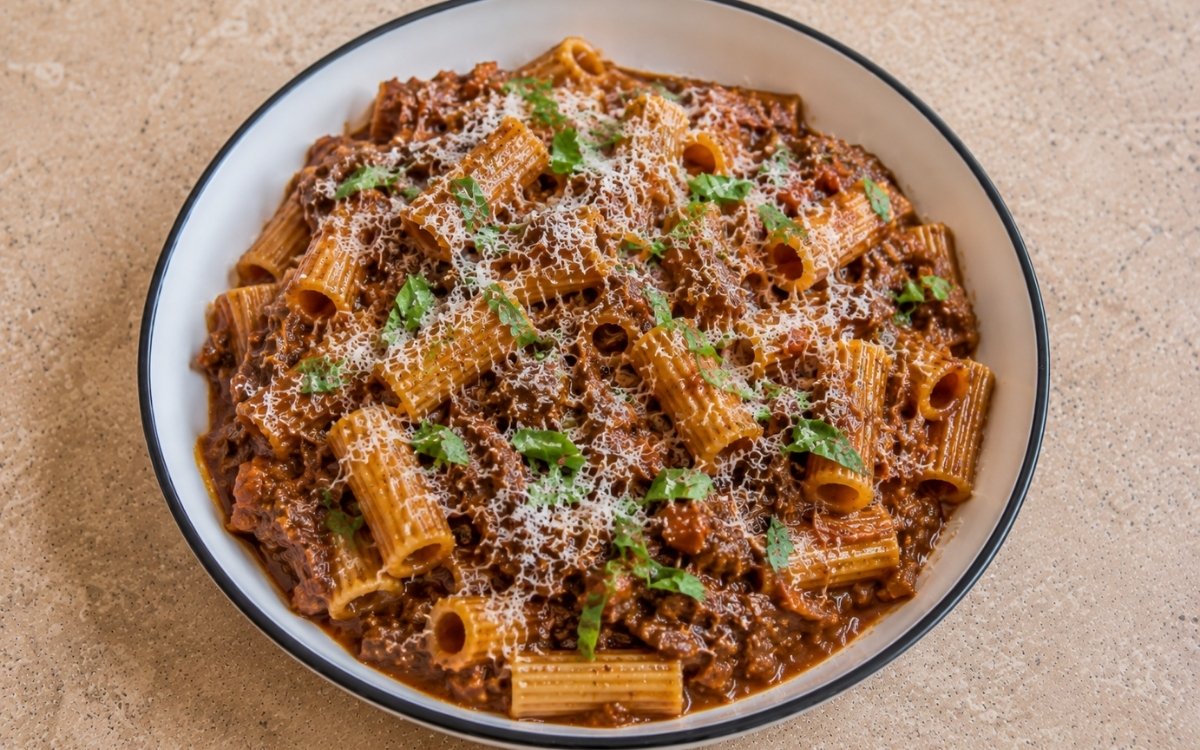
While the ragù finishes, bring a large pot of salted water to a full rolling boil and cook the 320g of rigatoni according to the package directions until al dente. Rigatoni is the correct pasta format for this ragù — its ridged exterior and hollow centre both capture the chunky, shredded meat sauce, ensuring every piece carries a generous amount of ragù. Reserve 240ml of pasta water before draining. Add the drained rigatoni directly to the ragù pot and toss over medium heat for 2–3 minutes, turning the pasta through the sauce continuously. Add pasta water in splashes if needed to maintain the correct flowing, coating consistency — as the pasta absorbs the sauce during tossing, the water maintains the sauce’s ability to coat rather than becoming dry. Each rigatoni tube should be coated inside and out, with pieces of shredded beef visible throughout. - Serve
Divide among four warm bowls. Scatter the 40g of finely grated Parmigiano-Reggiano generously over each bowl. Tear fresh basil leaves over the surface — the basil’s aromatic freshness provides a clean counterpoint to the deeply savoury ragù. Serve immediately with additional Parmigiano at the table.
*Notes :
- Beef chuck is the specific cut for this ragù for reasons that directly affect the quality of the finished sauce. Chuck contains a high proportion of collagen — the connective tissue protein that requires 2+ hours of gentle moist heat to convert to gelatin. When chuck is braised correctly, the released gelatin progressively enriches the braising liquid, producing a sauce with body, silkiness, and the characteristic way good ragù coats pasta with a specific weight and cling. Leaner cuts without this collagen content — beef round, sirloin — produce braised meat that shreds into dry, stringy fibres and a thin, watery sauce without the body collagen provides. The fat marbling in chuck also renders during the long simmer, basting the meat from the inside throughout the cooking period and keeping each piece moist and flavourful.
- The soffritto is not a quick step and cannot be shortened without sacrificing the quality of the ragù’s flavour foundation. The 12–15 minutes of cooking at medium heat produces a complete transformation of the raw vegetables — their sharp, individual flavour characters merging into a unified, sweet, mellow, complex aromatic base. A soffritto cooked for 4–5 minutes in the interest of time produces a noticeably more raw, less integrated flavour in the finished ragù. The ragù is a 3-hour recipe and the soffritto’s 15 minutes is not the place where time should be saved.
- The whole milk is the most counterintuitive ingredient in the recipe but its role is well-established in the northern Italian ragù tradition. Milk added to a long-simmered wine-and-tomato sauce raises the pH slightly, moderating the acidity of both the wine’s tannins and the tomato’s organic acids — producing a rounder, more velvety, less sharp sauce. Its fat adds a slight silkiness. Its protein contributes body. The effect is subtle — the sauce does not taste of milk — but immediately apparent in a comparison with the same sauce without it.
Why This Recipe Works
This recipe works because it applies the correct technique at each of the four stages that determine ragù quality. The beef is browned deeply in pancetta fat — the most flavourful fat available and the one most specifically suited to cured-meat-based Italian braises. The soffritto is cooked for the full 12–15 minutes to develop its maximum sweet, complex aromatics.
The tomato paste is caramelised in the pot to develop its maximum flavour before the liquid is added. The simmer runs at the lowest possible heat for the full 2.5 hours — the only temperature at which collagen converts to gelatin without the protein fibres tightening and drying. All four decisions compound toward the same goal.
Ingredient Breakdown
Beef Chuck (Cut into 2cm Chunks)
The collagen-rich braising cut — generates gelatin during the long simmer that enriches the sauce with body and silkiness, and shreds into irregular pieces that provide textural presence throughout the ragù.
Pancetta
The fat source and savoury flavour contributor — renders the cooking fat for the beef sear and contributes cured pork depth to the sauce base.
Soffritto (Onion, Carrot, Celery)
The sweet, mellow aromatic foundation — 12–15 minutes of cooking to develop maximum complexity before the liquid ingredients are added.
Tomato Paste (Caramelised in Pot)
The concentrated tomato depth — direct pot contact develops its sugars and reduces its acid, producing depth no liquid tomato can match in the same quantity.
Chianti
The deglaze and secondary flavour layer — specifically chosen for its compatibility with beef and the Bolognese ragù tradition, reduced by half to concentrate its character.
Whole Milk (Added at the End)
The traditional acidity moderator — rounds the wine and tomato’s sharpness and adds a subtle velvety richness without dairy heaviness.
Rigatoni
The structurally correct pasta — ridges and hollow centre capture chunky shredded meat sauce inside and out.
Flavor Structure Explained
This pasta follows a layered balance model:
- Deep savory core (beef, collagen, Maillard browning)
- Sweet integrated base (soffritto, tomato paste)
- Wine-driven depth (red wine reduction)
- Creamy rounding element (milk)
- Slow-built complexity (long simmer)
Beef defines the foundation with rich, gelatinous depth developed through browning and long cooking. The soffritto and tomato paste form a sweet, fully integrated layer that supports rather than stands out. Wine adds a background of fruity, tannic complexity that amplifies the meat’s richness. Milk softens and rounds the entire profile, smoothing edges into a cohesive whole. The structure is cumulative — flavor built over time, not contrast — resulting in depth that feels unified rather than layered.
Common Mistakes to Avoid
- Not Drying and Searing the Beef Properly – Wet beef in a crowded pot produces grey steamed meat without the caramelised crust that generates the ragù’s flavour foundation. Always dry thoroughly, season generously, and sear in batches.
- Rushing the Soffritto – A 5-minute soffritto produces a noticeably less complex ragù base than a 12–15 minute one. The soffritto is not optional preparation time — it is where the ragù’s sweet, integrated aromatic foundation is built.
- Simmering Too Vigorously – A rolling simmer produces tough, dry beef despite the long cooking time. The surface of the sauce should barely move during the entire 2.5 hours — occasional gentle bubbles only.
- Not Caramelising the Tomato Paste – Tomato paste added directly to liquid without caramelising in the pot first produces a less complex flavour contribution. The 2–3 minutes of darkening against the hot pot surface are essential.
- Lifting the Lid Fully During the Simmer – Fully sealing the lid prevents the sauce from reducing during the simmer — the lid should be slightly ajar throughout to allow gradual reduction and concentration.
- Forgetting the Milk – The 30ml of whole milk at the end is small in volume but noticeable in effect — it rounds the wine and tomato’s acidity into the characteristic mellow richness of a Bolognese-style ragù. Do not omit it.
Variations
Bolognese Style Ragù (Finer Texture)
Instead of cutting the beef into 2cm chunks, mince it coarsely through a meat grinder or chop very finely with a knife, producing the finely textured, uniform meat sauce of classic tagliatelle al Bolognese. Use 300g beef and 200g pork mince together for the traditional mixed-meat version. Reduce the braising time to 1.5–2 hours.
Pappardelle Ragù Version
Replace the rigatoni with 320g of fresh or dried pappardelle — the wide, flat pasta traditionally served with braised and shredded meat ragùs in Tuscany and Emilia-Romagna. The wide ribbon provides maximum surface area for the chunky meat sauce to cling to.
Slow Cooker Version
Complete steps 1–3 on the stovetop, then transfer everything to a slow cooker set to low for 8 hours rather than the 2.5-hour stovetop simmer. The slow cooker version produces an equally tender, deeply flavoured result — particularly convenient for making a larger batch.
Wine-Free Version
Replace the Chianti with 100ml of beef stock and 50ml of red grape juice plus 15ml of red wine vinegar — the combination approximates the acidity and fruit character of wine without the alcohol content.
Storage & Make-Ahead
Ragù without pasta can be refrigerated for up to 4 days, and it is often even better on the second and third day as the flavors continue to integrate. The gelatin from the collagen also firms slightly when cold, which gives the sauce more body once reheated. Warm it gently over low heat with a small splash of stock or water, stirring occasionally. It also freezes well for up to 3 months, especially if you portion it into smaller containers for easy weeknight use.
When serving, it is best to cook the pasta fresh and toss it with the reheated ragù. Pasta that has already been mixed with the sauce will continue to absorb it during storage and will lose the coating quality that makes freshly assembled pasta so much better.
The best approach is to make the ragù completely the day before, refrigerate it overnight, and then reheat it gently while you cook fresh pasta just before serving. In many cases, a ragù that has rested for 24 hours is the best version of the dish.
Frequently Asked Questions
Why beef chuck specifically?
Chuck’s high collagen and fat content are the structural requirements for a successful 2.5-hour braise. The collagen converts to gelatin during the long, gentle simmer — producing the sauce’s body, silkiness, and characteristic coating quality. Leaner cuts produce dry, stringy beef and thin, watery sauce. Chuck is non-negotiable.
Can I use a slow cooker?
Yes — complete the browning and soffritto steps on the stovetop, then transfer to a slow cooker on low for 8 hours. The result is comparable in tenderness and depth to the stovetop version. Skip the slow cooker’s high setting — it produces a simmer too vigorous for proper ragù.
Why add milk at the end?
Whole milk moderates the acidity of the wine and tomatoes through its protein and fat content — raising the sauce’s pH slightly and producing the rounder, more velvety character of a Bolognese-style ragù. The effect is subtle but clearly perceptible in a comparison with and without it. This is a traditional ingredient in northern Italian ragù preparations.
Why is the ragù better the next day?
During refrigerated rest, the gelatin from the beef’s collagen fully sets in the cold sauce, producing a more concentrated, more cohesive flavour when reheated. The wine, tomato, and aromatics continue to exchange flavour compounds during the rest period, producing a more integrated, less individually-distinct character. Any braise or stew improves on reheating for the same reasons.
Can I make this in less than 3 hours?
The 2.5-hour simmer can be shortened to 1.5 hours in a pressure cooker — seal, bring to high pressure, and cook for 45 minutes at full pressure. The beef will be tender but the sauce will have less of the gradual reduction and concentration that the stovetop simmer produces. The flavour will still be very good but less layered than the full 2.5-hour version.
Nutrition Facts
( per serving )
Calories
~748 kcal
Protein
42 g
Fat
31 g
Carbs
68 g
Calories
~748 kcal
Protein
42 g
Fat
31 g
Carbs
68 g
Related Recipes
Related Recipes

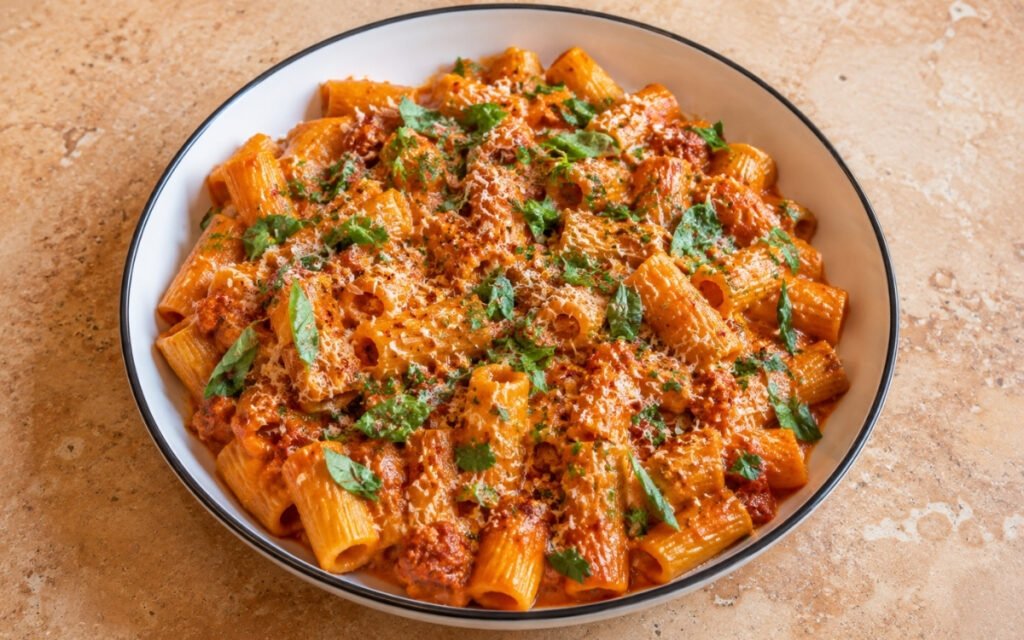
Spicy Italian ‘Nduja Pasta
Calabrian ‘nduja melted into olive oil until it becomes the sauce — mascarpone finish, 30 minutes.
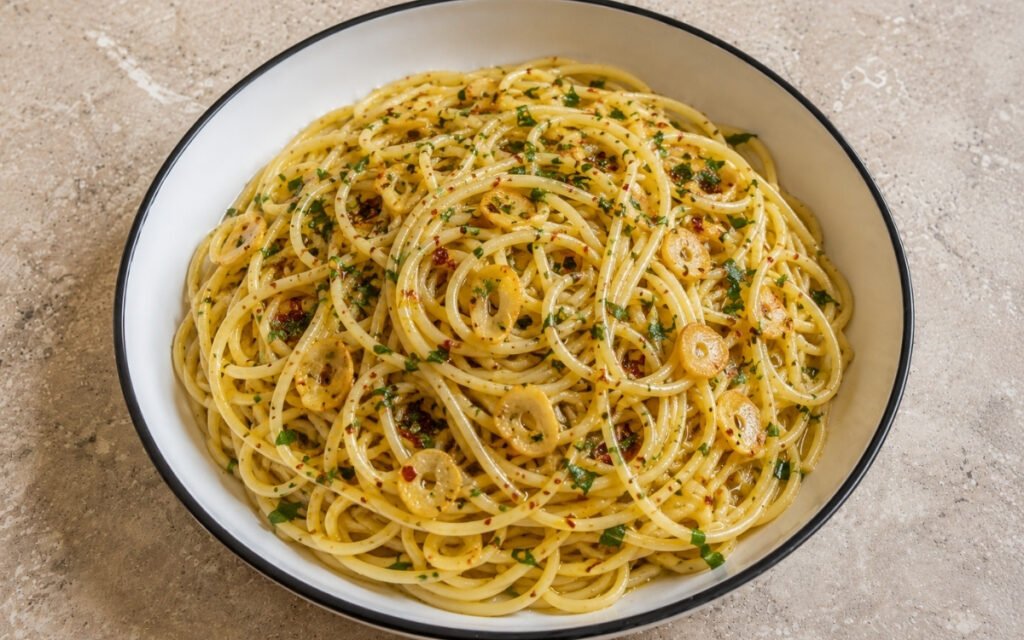
4-Ingredient Aglio e Olio Pasta
Paper-thin garlic toasted to pale gold, emulsified with pasta water — four ingredients, 20 minutes.
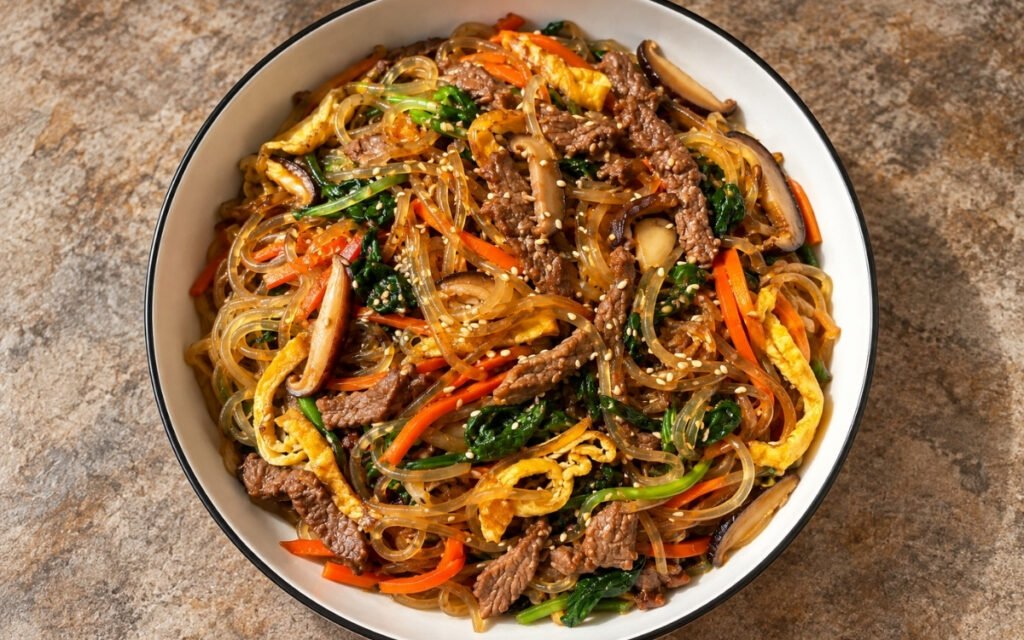
Japchae — Korean Glass Noodle Stir-Fry
Chewy sweet potato glass noodles, thin strips of beef, spinach, shiitake mushrooms, carrot, onion, and egg ribbons in glossy soy-sesame seasoning.
You might also like
You might also like
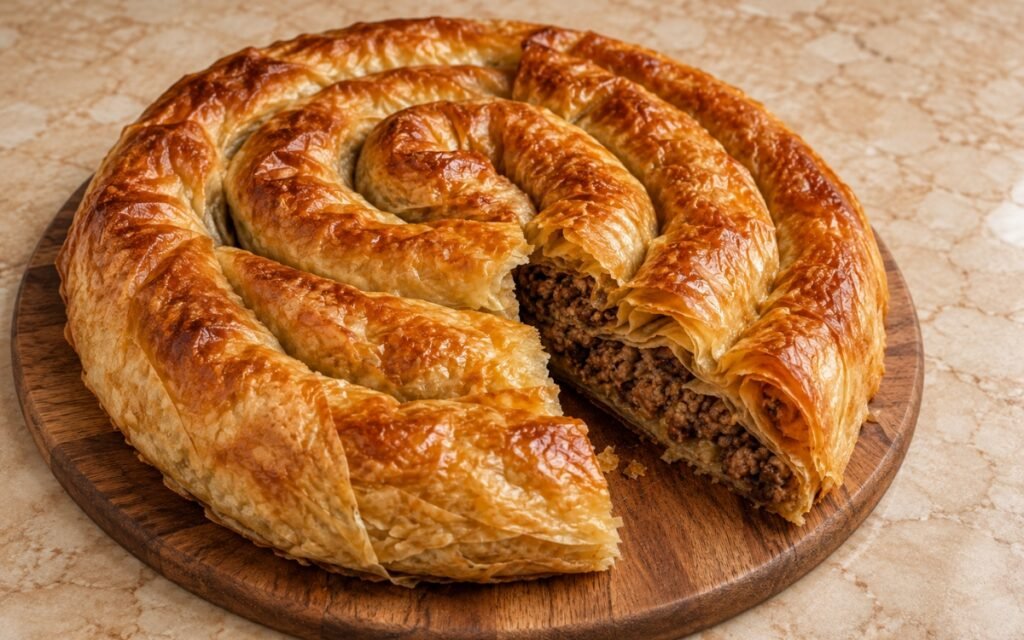
Meat Burek with Spiced Ground Beef
A round coiled phyllo pastry wrapped around savory spiced ground beef, baked until deeply golden, crisp, and flaky.
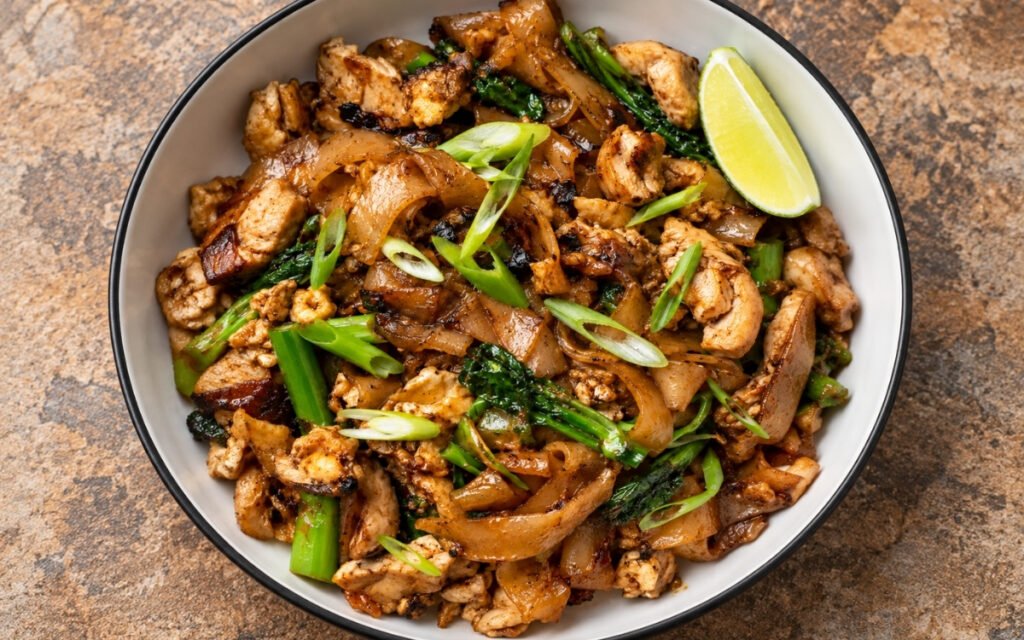
Pad See Ew — Thai Stir-Fried Wide Noodles
Wide rice noodles stir-fried with dark soy sauce, Chinese broccoli, sliced chicken, and egg over high heat for smoky wok-hei char.
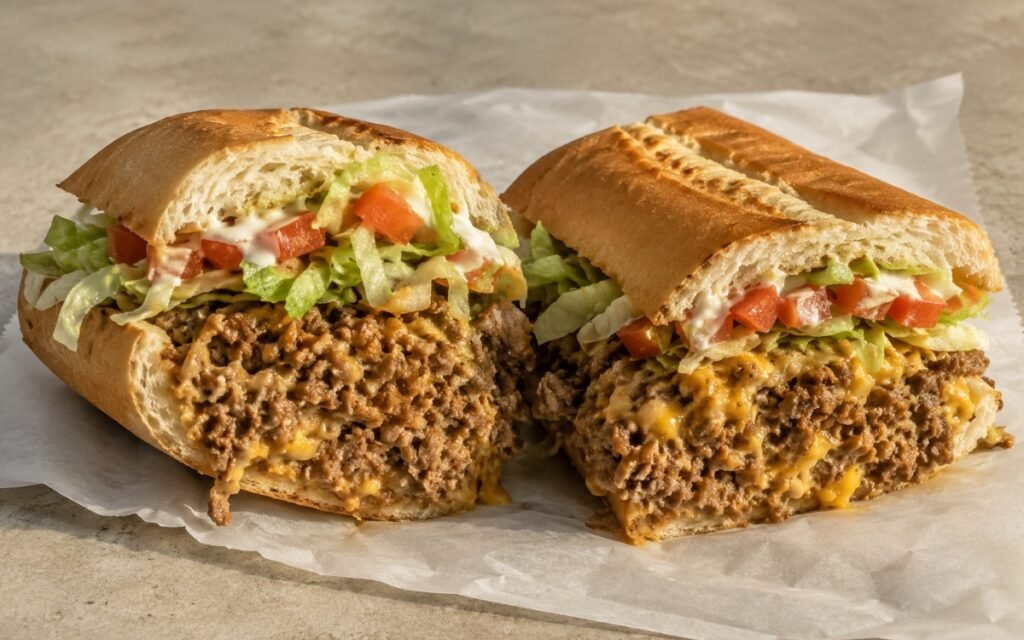
Chopped Cheese
Seared ground beef and caramelized onion chopped together with melted American cheese, piled into a soft hoagie roll with lettuce and tomato.
Slow-Simmered Beef Ragù Pasta
Ingredients
Method
- Pat the 500g of beef chuck pieces completely dry on all surfaces with paper towels — the drying step is the prerequisite for any meaningful browning. Any surface moisture on the beef converts to steam the moment it contacts the hot pan, dropping the temperature and preventing the Maillard reaction from occurring. Season generously with 5g of the salt and the full 3g of black pepper, pressing the seasoning into every surface. Set a large Dutch oven or heavy-bottomed pot over medium-high heat and add the diced pancetta — no oil is needed at this stage because the pancetta renders sufficient fat for both the pancetta browning and the subsequent beef searing. Cook the pancetta for 6–8 minutes, stirring occasionally, until deeply golden and crispy. The pancetta fat is the primary cooking medium for the beef sear — its cured pork fat carries savoury depth that plain olive oil cannot contribute. Remove the crispy pancetta with a slotted spoon and set aside on a plate, leaving all the rendered fat in the pot. Working in two batches — never adding all the beef at once, which would crowd the pot, drop the temperature, and produce grey steamed beef rather than the deep brown crust the flavour development requires — add the first batch of beef pieces in a single layer. Sear undisturbed for 3–4 minutes per side, working around the beef to develop a deep, dark, genuinely caramelised crust on every surface. The crust should be dark brown, not golden — this is the colour of properly developed Maillard reaction compounds, not the pale tan of an under-browned surface. Each side requires undisturbed contact with the hot pot surface — any movement before the crust has formed tears the developing crust rather than allowing it to build. This browning step produces both the deep savoury flavour of the finished ragù and the fond — the layer of caramelised protein and fat adhering to the pot surface — that will dissolve into the sauce during the deglaze step and contribute a depth that no amount of additional seasoning can replicate. Transfer the first batch to a plate and repeat with the second batch.
- Reduce the heat to medium and add the 25ml of olive oil to the rendered pancetta fat remaining in the pot. Add the finely chopped yellow onion, carrot, and celery simultaneously — the classic Italian soffritto. The ratio of these three aromatics — 150g onion, 100g carrot, 80g celery — is the standard foundation of northern Italian braised meat preparations, calibrated to produce a specific sweet, mellow, aromatic base rather than the sharper, more onion-forward character of different proportions. Cook for 12–15 minutes, stirring frequently — the soffritto requires the kind of unhurried, attentive cooking that the name suggests. The vegetables must be very soft and showing the first signs of caramelisation — not raw and watery, not browned and dark, but somewhere in between: completely softened, slightly shrunken, and beginning to deepen in colour to a light golden. During this 12–15 minutes, use a wooden spoon or spatula to scrape the bottom of the pot periodically, lifting and dissolving the fond left from the beef sear into the softening vegetables. This fond integration happens gradually throughout the soffritto stage rather than all at once during a deglaze, producing a deeper, more evenly flavoured base than fond left entirely for the wine deglaze. Add the minced garlic and cook for 30 seconds. Add the 30g of tomato paste and stir it into the soffritto, pressing and spreading it against the hot pot surface. Cook for 2–3 minutes, stirring constantly, until the paste darkens noticeably from its original bright red to a brick-red, slightly caramelised colour. This Maillard reaction in the tomato paste — possible only because the paste is in direct contact with the hot pan surface rather than diluted in liquid — concentrates its sweetness, reduces its raw acidic edge, and develops the deep, complex tomato depth that makes a ragù sauce different from a simple tomato sauce.
- Increase the heat to medium-high and pour in the 150ml of dry red wine. Chianti is the preferred choice — its specific combination of tannins, acidity, and dark fruit character is calibrated to both the fatty richness of the beef chuck and the sweetness of the soffritto. Scrape the bottom of the pot vigorously as the wine heats and bubbles — any remaining fond should dissolve within the first 60 seconds of vigorous bubbling. Allow the wine to reduce for 4–5 minutes until it has reduced by approximately half and has a slightly syrupy consistency — the sharp, alcoholic edge should be completely gone and the wine should smell of concentrated fruit and complexity rather than raw spirit. Crush the whole San Marzano tomatoes by hand directly over the pot — squeeze each tomato until it opens and breaks apart, releasing its juice and soft flesh into the sauce. Add all the tomato juices from the can. Add the 300ml of beef stock, the rosemary sprig, and the 2 bay leaves. Add the 2g of sugar — calibrated for the San Marzano tomatoes’ natural sweetness level and designed to bring the sauce’s acidity into balance rather than making it taste sweet. Return all the browned beef pieces with every drop of their accumulated resting juices to the pot. Return the crispy pancetta. The pot should now hold everything in a relatively loose braising liquid — the beef pieces partially submerged, the tomato and stock providing the braising medium. Bring to a gentle boil, then reduce the heat immediately to the lowest possible setting.
- This step requires patience and periodic attention but not active effort. Partially cover the pot — leave the lid slightly ajar rather than fully sealed, allowing some steam to escape so the sauce reduces gradually during the simmer rather than remaining at the same volume. The heat must be at its absolute lowest — the correct simmer is the gentlest possible movement at the surface, a few occasional bubbles rather than a continuous, rolling simmer. A vigorous simmer boils the meat rather than braises it: boiling agitates the protein fibres and produces tough, dry, stringy beef despite the long cooking time. A gentle simmer conducts heat slowly and evenly through the collagen-rich chuck, progressively converting the collagen to gelatin — the substance that gives well-made ragù its characteristic richness, body, and the way it coats pasta with a specific silky weight. If the liquid bubbles too actively at any point, reduce the heat further or move the pot partially off the burner. Stir every 30 minutes — gently, lifting from the bottom to prevent the sauce from catching on the pot surface. Check the liquid level each time: the sauce should remain moist and saucy throughout the simmer. If it has reduced too aggressively and the beef is beginning to appear above the liquid line significantly, add a small amount of beef stock or water to maintain the correct braising environment. After 2.5 hours the beef should be completely tender — a fork inserted into a piece should meet no resistance, and the pieces should shred easily when pressed. Remove the rosemary sprig and bay leaves. Using two forks, shred the beef directly in the pot — not into fine strands but into rough, irregular smaller pieces that remain chunky enough to provide textural presence in the finished dish. The shredding also releases the beef’s gelatinised collagen back into the sauce, enriching the liquid further.
- Add the 30ml of whole milk to the shredded ragù and stir to incorporate. The milk addition is specifically traditional in Bolognese-style ragù — its fat and protein content rounds the acidity of the wine and tomatoes, produces a slightly more velvety, less sharp sauce character, and adds a subtle richness without dairy heaviness. The quantity is deliberately small — 30ml enriches and balances without making the sauce taste of milk. Allow the ragù to simmer for 5 additional minutes after adding the milk, gently, to allow it to fully incorporate. Taste and adjust with the remaining 3g of salt if needed. The ragù should taste deep, savoury, and complex with a balance of richness, acidity, and mellow sweetness.
- While the ragù finishes, bring a large pot of salted water to a full rolling boil and cook the 320g of rigatoni according to the package directions until al dente. Rigatoni is the correct pasta format for this ragù — its ridged exterior and hollow centre both capture the chunky, shredded meat sauce, ensuring every piece carries a generous amount of ragù. Reserve 240ml of pasta water before draining. Add the drained rigatoni directly to the ragù pot and toss over medium heat for 2–3 minutes, turning the pasta through the sauce continuously. Add pasta water in splashes if needed to maintain the correct flowing, coating consistency — as the pasta absorbs the sauce during tossing, the water maintains the sauce’s ability to coat rather than becoming dry. Each rigatoni tube should be coated inside and out, with pieces of shredded beef visible throughout.
- Divide among four warm bowls. Scatter the 40g of finely grated Parmigiano-Reggiano generously over each bowl. Tear fresh basil leaves over the surface — the basil’s aromatic freshness provides a clean counterpoint to the deeply savoury ragù. Serve immediately with additional Parmigiano at the table.