
Tomato Spinach Farfalle Pasta
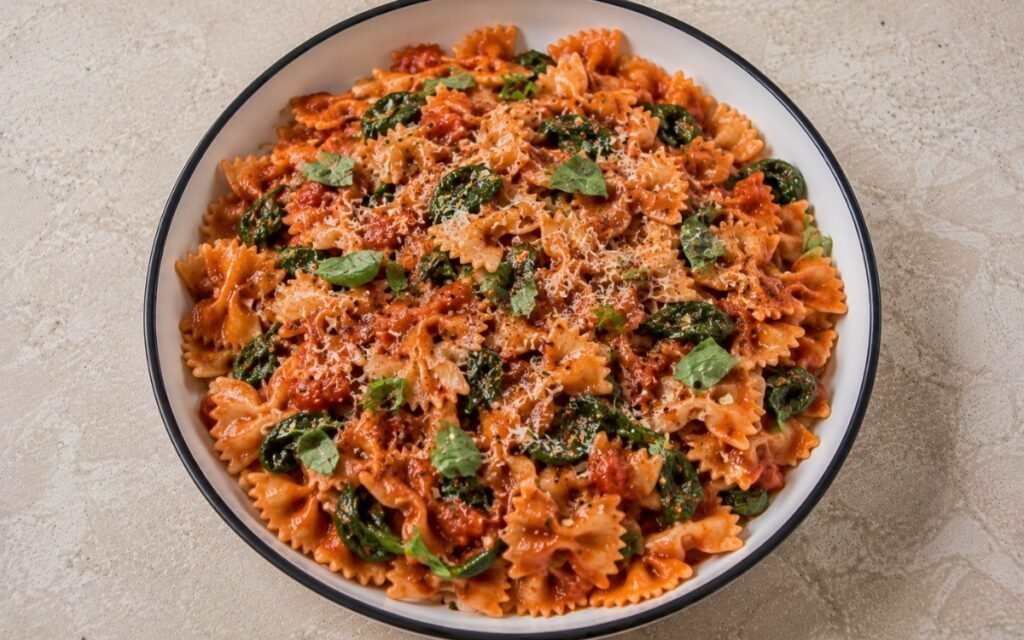
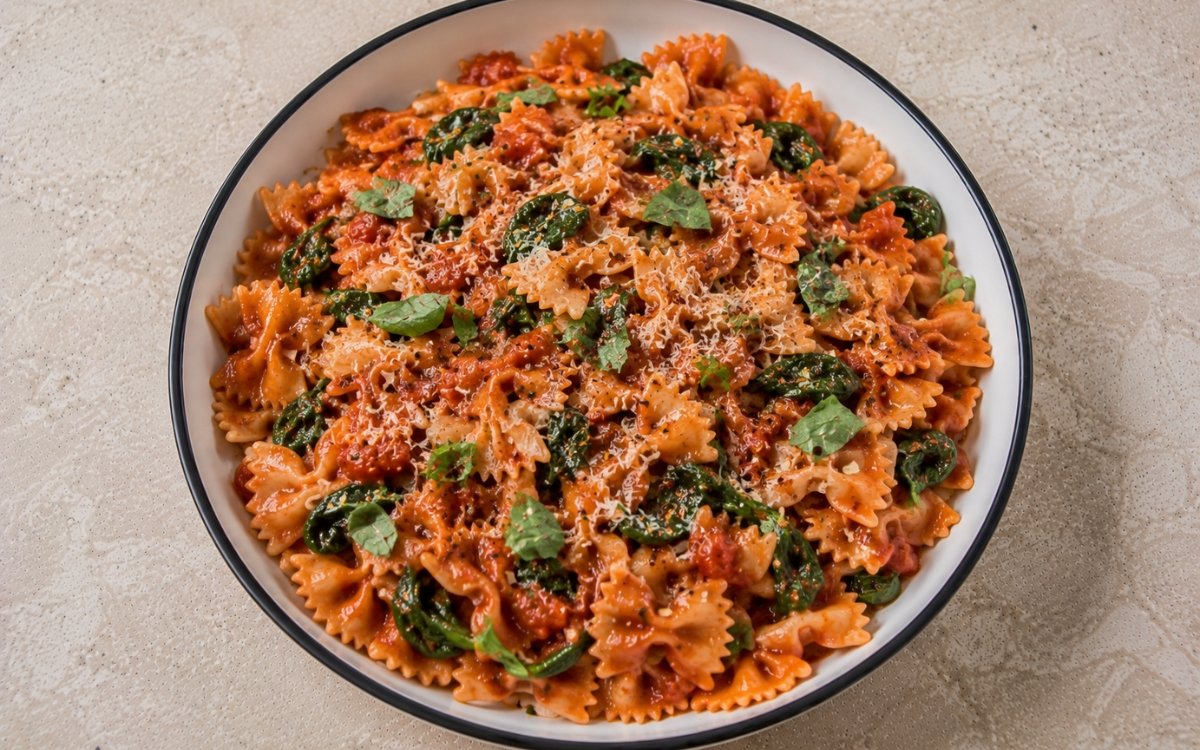
A weeknight tomato pasta where the technique is minimal but deliberate — caramelised tomato paste cooked for two full minutes against the hot pan before the crushed tomatoes go in, building the concentrated depth that a plain tomato sauce cannot develop without it. The spinach goes in at the very end of the sauce’s simmer, wilting in 60–90 seconds and staying bright green. The farfalle finishes in the sauce with starchy pasta water, turning the whole pan glossy and cohesive rather than loose. Optional balsamic rounds the acidity when the tomatoes need it. Thirty minutes, clean ingredient list, the kind of reliable weeknight pasta that works every time.
Prep Time : 10 min
Cook Time : 20 min
Servings : 4
10 min
20 min
4
Ingredients
For the Pasta
• 340 g farfalle pasta — this one on Amazon
• Salt, for the pasta water
• 240 ml pasta water, reserved
For the Tomato Spinach Sauce
• 60 ml extra virgin olive oil — this one on Amazon
• 1 medium yellow onion, approximately 150g, finely diced
• 4 garlic cloves, approximately 16g, minced
• 30 g tomato paste
• 800 g canned crushed tomatoes
• 6g kosher salt
• 1g freshly ground black pepper
• 1g red pepper flakes, about ½ tsp — optional
• 15ml balsamic vinegar — optional, for balance
• 200 g baby spinach
For Finishing
• 60g Parmesan cheese, finely grated, plus extra for serving — this one on Amazon
• 20 g fresh basil leaves, torn
This post may contain affiliate links. As an Amazon Associate I earn from qualifying purchases, at no additional cost to you.
Directions
- Cook the Pasta
Bring a large pot of water to a full rolling boil and salt generously — the water should taste properly seasoned throughout. Add the farfalle and cook according to the package directions until al dente, tasting 1 minute early to check — farfalle’s bow-tie shape has thicker and thinner sections that cook at slightly different rates, and tasting rather than relying solely on timing ensures the correct texture. Before draining, reserve 240ml of the starchy pasta water in a heatproof jug. Drain without rinsing — the surface starch on the pasta contributes to the sauce’s emulsification during the final toss. - Build the Sauce Base
While the pasta cooks, heat a large skillet over medium heat and add the 60ml of extra-virgin olive oil. This quantity is generous for a simple tomato sauce and deliberate — the olive oil is not simply a cooking medium but a primary flavour ingredient, and its emulsification with the pasta starch at the finishing step is what produces the sauce’s glossy, coating quality. Good olive oil that tastes good raw is worth using here; its character is present in every bite of the finished dish. Add the 150g of finely diced onion. Cook for 4–5 minutes, stirring occasionally, until completely softened and lightly translucent — the onion should be sweet and yielding without aggressive browning. The low-and-slow onion cooking builds the sweet, mellow aromatic base that prevents the crushed tomatoes from tasting sharp and one-dimensional. Add the 16g of minced garlic and cook for 45–60 seconds, stirring continuously — fragrant and just beginning to colour, not browning. Add the 30g of tomato paste immediately after the garlic and stir it into the onion-garlic mixture. Spread and press the tomato paste against the hot pan surface. Cook for a full 2 minutes, stirring constantly and pressing — this is the technique step that most determines the sauce’s depth. Direct contact between the tomato paste and the hot pan surface produces Maillard caramelisation in the paste’s concentrated sugars, converting the sharp, metallic raw paste character into a darker, sweeter, richer tomato depth. A tomato paste cooked for 2 minutes on a hot pan tastes fundamentally different from paste added directly to liquid — the sauce’s entire concentrated character begins at this step. - Add Tomatoes and Simmer
Add the 800g of crushed tomatoes, 6g of salt, 1g of black pepper, and the optional red pepper flakes if using. Stir firmly to combine, scraping up any tomato paste that has caramelised against the pan surface into the sauce. Bring to a steady, gentle simmer over medium heat. Cook uncovered for 8–10 minutes, stirring occasionally, until the sauce has thickened slightly, deepened in colour, and the oil begins to shimmer faintly on the surface — the surface shimmer is the visual indicator that the water content has reduced sufficiently and the oil is beginning to separate slightly, which is correct at this stage. Taste at the 8-minute mark. If the sauce tastes sharp, slightly one-dimensional, or uncomfortably acidic despite the correct technique, stir in the 15ml of balsamic vinegar — its sweet-acidic concentration rounds and balances the crushed tomatoes’ acidity in a way that additional salt or sugar cannot produce by themselves. The optional balsamic is not always needed — its requirement depends on the specific batch of crushed tomatoes, which vary in acidity between brands and harvest seasons. - Wilt the Spinach
Add the 200g of baby spinach directly to the simmering sauce. Toss gently with tongs for 60–90 seconds — turning the spinach through the tomato sauce until every leaf has wilted and collapsed but the colour remains bright, vivid green. This timing is precise and important: spinach wilts to the correct tender, bright-green state in approximately 90 seconds of contact with a simmering tomato sauce; beyond 2 minutes it begins to dull, release excess water, and lose both its colour and its fresh, slightly vegetal flavour character. The spinach wilting time also marks the end of the sauce’s cooking — the sauce should be ready for the pasta at the moment the spinach reaches its correct wilted state. - Finish the Pasta in the Sauce
Add the drained farfalle directly to the skillet. Pour in 120ml of the reserved pasta water immediately. Increase the heat slightly to medium-high. Toss and stir vigorously for 1–2 minutes — the pasta’s surface starch and the dissolved starch in the pasta water combine with the olive oil and tomato during the tossing motion to produce the glossy, coating emulsification. The farfalle’s specific shape — ridged surface, folded bow-tie structure, and multiple surface angles — captures sauce in its folds and at its ridges more effectively than smooth pasta, and the vigorous tossing drives the sauce into these surfaces. The sauce should visibly change consistency during the tossing — from loose and liquid-forward to glossy, slightly thickened, and clinging. If it remains loose after 90 seconds of vigorous tossing, continue tossing rather than immediately adding more cheese — the tossing motion itself is the emulsification mechanism. If it tightens beyond the correct flowing, coating consistency, add the remaining pasta water in 30ml increments while continuing to toss. - Add Parmesan and Basil, Serve
Remove the skillet from the heat. Add the 60g of finely grated Parmesan and the torn basil leaves simultaneously. Toss quickly — the Parmesan melts smoothly into the hot sauce off the direct heat, adding savoury depth and a light additional thickening. The basil releases its aromatic compounds in the residual heat without darkening or losing its fresh character. Divide among four warm bowls immediately — the starch in the sauce continues to tighten as temperature drops, and the dish is most glossy and fluid in the first 2–3 minutes after leaving the pan. Add additional Parmesan over each bowl at serving.
*Notes :
- The two-minute tomato paste caramelisation is the step that distinguishes this simple tomato pasta from an average one, and the reason is straightforward food chemistry. Raw tomato paste contains concentrated tomato solids including sugars, acids, and the glutamate-rich proteins that give tomato its umami character. When these components contact a hot, relatively dry pan surface, the Maillard reaction converts the sugars into a range of caramelised compounds that produce the deeper, slightly sweet, less acidic flavour of properly developed tomato paste. The same paste added directly to liquid — bypassing the hot pan contact — never undergoes this reaction and retains its raw, slightly metallic, sharply acidic character regardless of how long it subsequently simmers in the sauce.
- Farfalle is the specifically recommended shape for this sauce rather than a generically appropriate one. The bow-tie’s ridged surfaces, sharp folded edges, and multiple angles provide significantly more sauce-capture surface area per piece than smooth pasta — the sauce is driven into the folds and adheres to the ridges during the vigorous tossing step. The shape also provides textural variation per piece: the thicker knotted centre remains slightly more al dente than the thinner folded wings, producing a within-piece textural contrast that makes each forkful more interesting than a uniformly textured pasta would.
Why This Recipe Works
This recipe works because it applies the correct technique at each of the three critical steps — caramelising the tomato paste before the tomatoes, wilting the spinach at the last moment before the pasta is added, and finishing the pasta in the sauce with vigorous tossing and starchy pasta water.
All three decisions exist to prevent the same outcome: a flat, loose, one-dimensional tomato pasta where the sauce has not achieved the depth or the coating quality that makes simple pasta genuinely satisfying.
Ingredient Breakdown
Tomato Paste (2 Minutes Direct Pan Contact)
The concentrated flavour development step — Maillard caramelisation converts raw acidity and metallic sharpness into sweet, deep tomato complexity.
Crushed Tomatoes (Simmered 8–10 Minutes)
The sauce body — sufficient cooking to lose the raw edge and develop concentration without requiring hours of simmering.
Baby Spinach (Added Last, 60–90 Seconds)
The fresh vegetable element — wilted at the correct moment to stay bright green and retain its flavour character.
Extra-Virgin Olive Oil (60ml)
The emulsification fat and flavour ingredient — emulsifies with pasta starch at the finishing toss to produce the glossy, coating sauce.
Balsamic Vinegar (Optional, 15ml)
The acidity balance tool — used when the crushed tomatoes need rounding rather than as a standard ingredient.
Reserved Pasta Water
The emulsification medium — starch bridges the olive oil and tomato into the coating consistency at the finishing toss.
Flavor Structure Explained
This tomato spinach farfalle follows a layered balance model:
- Sweet-acidic tomato core (crushed tomatoes, tomato paste, balsamic)
- Smooth fruity base (olive oil)
- Savory aromatic depth (garlic, onion)
- Fresh green contrast (spinach)
- Savory herbal finish (Parmesan, basil)
Tomato defines the structure with concentrated sweetness and balanced acidity, deepened by caramelised paste and rounded by optional balsamic. Olive oil carries and smooths the sauce, distributing the tomato flavor evenly across the pasta. Garlic and onion build a subtle savory base that adds complexity without distracting from the tomato. Spinach introduces freshness and slight bitterness that lighten the profile. Parmesan reinforces the savory depth, while basil finishes the dish with a clean aromatic lift that defines its Italian character.
Common Mistakes to Avoid
- Rushing the Tomato Paste – The 2-minute caramelisation is the depth development step — 30 seconds produces insufficient caramelisation and a sauce that tastes raw. The full 2 minutes of pressing and stirring is necessary.
- Adding Spinach Too Early – Spinach simmered throughout the sauce’s 8–10 minute cooking becomes dark, watery, and flavourless. Always add at the very end for the last 60–90 seconds only.
- Not Tossing Vigorously at the Finish – The glossy emulsification requires mechanical action — gentle stirring does not combine the olive oil and pasta starch into the coating consistency. Always toss hard at the finishing step.
- Using Cheap Olive Oil – In a sauce this simple the olive oil is a primary flavour ingredient. Poor quality oil makes the dish taste flat regardless of technique quality.
- Serving Late – The starch tightens progressively as the dish cools. Serve within 2–3 minutes of finishing.
- Not Reserving Enough Pasta Water – The 240ml reserve allows multiple additions if the sauce tightens during or after the toss. Always reserve more than you expect to need.
Variations
Tomato Spinach Farfalle Pasta With Burrata
Place a torn ball of burrata over each bowl at serving — the liquid cream interior pools into the hot tomato sauce, adding a cool, creamy dairy element that transforms the dish into something more substantial and visually dramatic.
Spinach Farfalle With White Beans
Add one drained 400g can of white beans (cannellini or borlotti) alongside the crushed tomatoes for a heartier, protein-forward version where the beans absorb the sauce’s character during the simmer.
Spinach Farfalle With Mozzarella
Tear 150g of fresh mozzarella into the finished pasta off the heat alongside the Parmesan — the mozzarella melts partially into the sauce and produces an occasional creamy, milky pocket within the tomato coating.
Spicier Version
Increase the red pepper flakes to 3g and add a whole dried chili to the oil alongside the onion, removed before serving — the chili’s fat-soluble heat distributes through the olive oil during the 4–5 minutes of onion cooking.
Storage & Make-Ahead
The assembled pasta can be refrigerated for up to 3 days. To reheat it, warm it gently in a pan over low heat with a splash of water, tossing until the sauce loosens and returns to the right consistency. The starch will tighten noticeably during refrigeration, so gentle reheating is important.
The tomato spinach sauce on its own, without the pasta, can be refrigerated for up to 5 days and actually improves over 24 to 48 hours. This is the most efficient make-ahead approach: prepare the sauce in advance, then cook the pasta fresh when you are ready to serve.
Frequently Asked Questions
Why farfalle rather than penne or rigatoni?
Farfalle’s ridged surfaces, folded edges, and multiple angles provide more sauce-capture surface area per piece than smooth pasta. The bow-tie’s thicker centre also produces a slight within-piece textural contrast. That said, penne rigate or rigatoni work excellently as substitutes.
When should I add the balsamic vinegar?
Taste the sauce at the 8-minute mark — if it tastes sharp or one-dimensional, add the 15ml of balsamic and stir, then taste again after 1 minute. The balsamic rounds the acidity rather than adding balsamic flavour at this small quantity. Not every batch of crushed tomatoes needs it.
Why not add the spinach to the sauce from the beginning?
Spinach wilted throughout an 8–10 minute simmer turns dark, watery, and releases enough liquid to dilute the sauce. Spinach added for 60–90 seconds at the end stays bright green, retains its fresh flavour, and adds colour without watering the sauce.
Can I use frozen spinach?
Frozen spinach works but must be fully thawed and very thoroughly drained — squeezed between paper towels until no visible moisture remains. The excess water in inadequately drained frozen spinach dilutes the sauce. Add at the same point as fresh spinach and wilt for 30–45 seconds rather than 60–90.
Why is the olive oil quantity so generous?
The 60ml of olive oil is not simply a cooking medium — it emulsifies with the pasta starch at the finishing toss to produce the sauce’s glossy, coating quality. Reducing it produces a less coating, less richly flavoured sauce. Good-quality olive oil at this quantity is worth it.
Nutrition Facts
( per serving )
Calories
~595 kcal
Protein
21 g
Fat
29 g
Carbs
84 g
Calories
~595 kcal
Protein
21 g
Fat
20 g
Carbs
84 g
Related Recipes
Related Recipes

Gnocchi alla Sorrentina
Soft potato gnocchi baked in a simple tomato basil sauce with melted mozzarella, Parmesan, and bubbling browned cheese on top.
Creamy Spinach & Herb Green Sauce Pasta
Four herbs blended raw with cream cheese and Parmigiano — vivid green, rich, and ready in 35 minutes.
Chicken Fettuccine Alfredo
Seared chicken over fettuccine emulsified with butter, Parmigiano, and pasta water — the authentic no-cream Alfredo, 40 minutes.
You might also like
You might also like
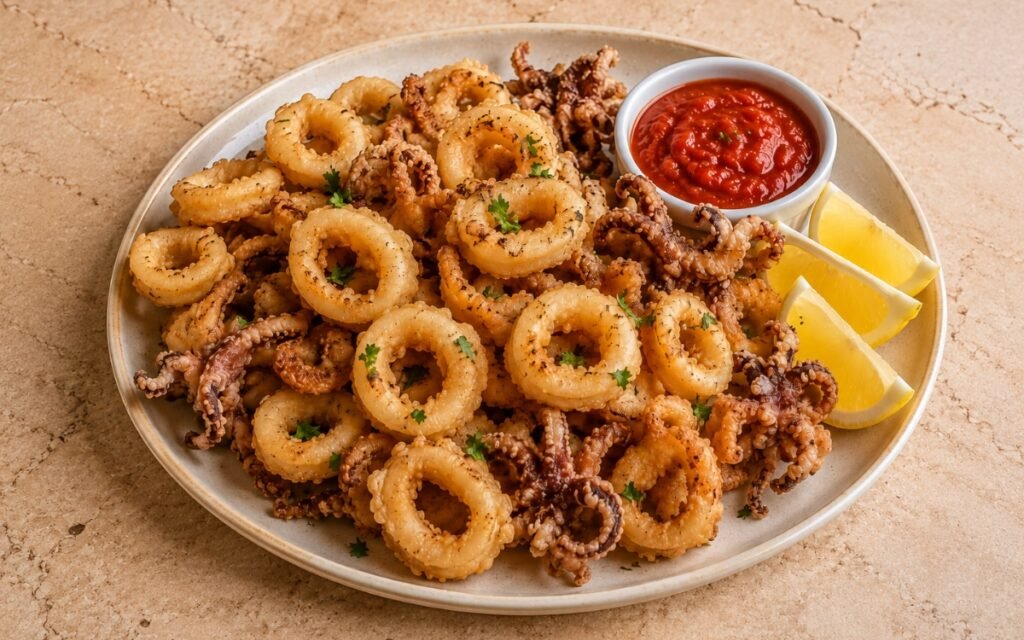
Deep Fried Calamari
Tender squid rings and tentacles lightly coated in flour and cornstarch, fried briefly until pale golden and crisp, served with marinara.
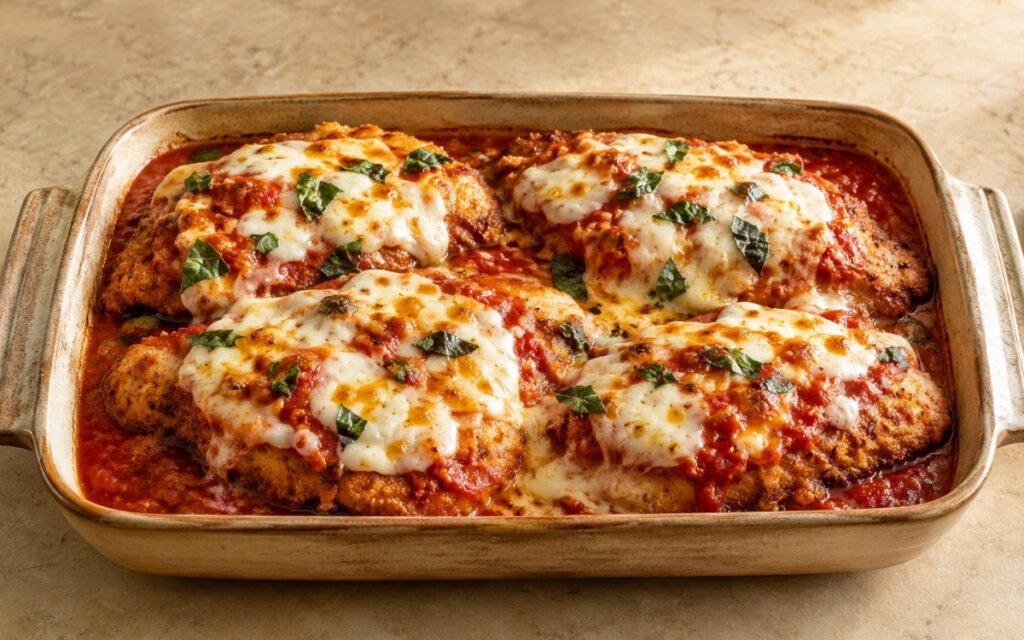
Chicken Parmigiana
Crispy fried cutlets topped with homemade marinara, fresh mozzarella, and Parmesan, baked until bubbling and golden — the complete American-Italian classic from scratch in 55 minutes.
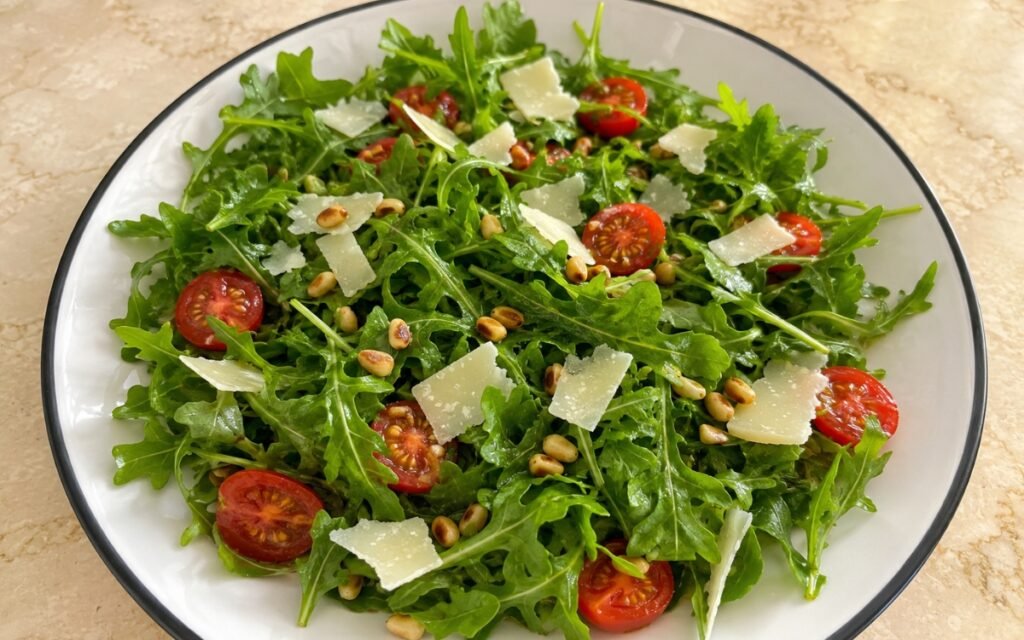
Simple Arugula Salad with Lemon Vinaigrette
Peppery arugula with lemon vinaigrette, cherry tomatoes, shaved Parmesan, and toasted pine nuts.
Tomato Spinach Farfalle Pasta
Ingredients
Method
- Bring a large pot of water to a full rolling boil and salt generously — the water should taste properly seasoned throughout. Add the farfalle and cook according to the package directions until al dente, tasting 1 minute early to check — farfalle’s bow-tie shape has thicker and thinner sections that cook at slightly different rates, and tasting rather than relying solely on timing ensures the correct texture. Before draining, reserve 240ml of the starchy pasta water in a heatproof jug. Drain without rinsing — the surface starch on the pasta contributes to the sauce’s emulsification during the final toss.
- While the pasta cooks, heat a large skillet over medium heat and add the 60ml of extra-virgin olive oil. This quantity is generous for a simple tomato sauce and deliberate — the olive oil is not simply a cooking medium but a primary flavour ingredient, and its emulsification with the pasta starch at the finishing step is what produces the sauce’s glossy, coating quality. Good olive oil that tastes good raw is worth using here; its character is present in every bite of the finished dish. Add the 150g of finely diced onion. Cook for 4–5 minutes, stirring occasionally, until completely softened and lightly translucent — the onion should be sweet and yielding without aggressive browning. The low-and-slow onion cooking builds the sweet, mellow aromatic base that prevents the crushed tomatoes from tasting sharp and one-dimensional. Add the 16g of minced garlic and cook for 45–60 seconds, stirring continuously — fragrant and just beginning to colour, not browning. Add the 30g of tomato paste immediately after the garlic and stir it into the onion-garlic mixture. Spread and press the tomato paste against the hot pan surface. Cook for a full 2 minutes, stirring constantly and pressing — this is the technique step that most determines the sauce’s depth. Direct contact between the tomato paste and the hot pan surface produces Maillard caramelisation in the paste’s concentrated sugars, converting the sharp, metallic raw paste character into a darker, sweeter, richer tomato depth. A tomato paste cooked for 2 minutes on a hot pan tastes fundamentally different from paste added directly to liquid — the sauce’s entire concentrated character begins at this step.
- Add the 800g of crushed tomatoes, 6g of salt, 1g of black pepper, and the optional red pepper flakes if using. Stir firmly to combine, scraping up any tomato paste that has caramelised against the pan surface into the sauce. Bring to a steady, gentle simmer over medium heat. Cook uncovered for 8–10 minutes, stirring occasionally, until the sauce has thickened slightly, deepened in colour, and the oil begins to shimmer faintly on the surface — the surface shimmer is the visual indicator that the water content has reduced sufficiently and the oil is beginning to separate slightly, which is correct at this stage. Taste at the 8-minute mark. If the sauce tastes sharp, slightly one-dimensional, or uncomfortably acidic despite the correct technique, stir in the 15ml of balsamic vinegar — its sweet-acidic concentration rounds and balances the crushed tomatoes’ acidity in a way that additional salt or sugar cannot produce by themselves. The optional balsamic is not always needed — its requirement depends on the specific batch of crushed tomatoes, which vary in acidity between brands and harvest seasons.
- Add the 200g of baby spinach directly to the simmering sauce. Toss gently with tongs for 60–90 seconds — turning the spinach through the tomato sauce until every leaf has wilted and collapsed but the colour remains bright, vivid green. This timing is precise and important: spinach wilts to the correct tender, bright-green state in approximately 90 seconds of contact with a simmering tomato sauce; beyond 2 minutes it begins to dull, release excess water, and lose both its colour and its fresh, slightly vegetal flavour character. The spinach wilting time also marks the end of the sauce’s cooking — the sauce should be ready for the pasta at the moment the spinach reaches its correct wilted state.
- Add the drained farfalle directly to the skillet. Pour in 120ml of the reserved pasta water immediately. Increase the heat slightly to medium-high. Toss and stir vigorously for 1–2 minutes — the pasta’s surface starch and the dissolved starch in the pasta water combine with the olive oil and tomato during the tossing motion to produce the glossy, coating emulsification. The farfalle’s specific shape — ridged surface, folded bow-tie structure, and multiple surface angles — captures sauce in its folds and at its ridges more effectively than smooth pasta, and the vigorous tossing drives the sauce into these surfaces. The sauce should visibly change consistency during the tossing — from loose and liquid-forward to glossy, slightly thickened, and clinging. If it remains loose after 90 seconds of vigorous tossing, continue tossing rather than immediately adding more cheese — the tossing motion itself is the emulsification mechanism. If it tightens beyond the correct flowing, coating consistency, add the remaining pasta water in 30ml increments while continuing to toss.
- Remove the skillet from the heat. Add the 60g of finely grated Parmesan and the torn basil leaves simultaneously. Toss quickly — the Parmesan melts smoothly into the hot sauce off the direct heat, adding savoury depth and a light additional thickening. The basil releases its aromatic compounds in the residual heat without darkening or losing its fresh character. Divide among four warm bowls immediately — the starch in the sauce continues to tighten as temperature drops, and the dish is most glossy and fluid in the first 2–3 minutes after leaving the pan. Add additional Parmesan over each bowl at serving.