Ingredients
Method
Cook the Pasta
- Bring a large pot of water to a full rolling boil and salt generously — the water should taste properly seasoned throughout. Add the farfalle and cook according to the package directions until al dente, tasting 1 minute early to check — farfalle's bow-tie shape has thicker and thinner sections that cook at slightly different rates, and tasting rather than relying solely on timing ensures the correct texture. Before draining, reserve 240ml of the starchy pasta water in a heatproof jug. Drain without rinsing — the surface starch on the pasta contributes to the sauce's emulsification during the final toss.
Build the Sauce Base
- While the pasta cooks, heat a large skillet over medium heat and add the 60ml of extra-virgin olive oil. This quantity is generous for a simple tomato sauce and deliberate — the olive oil is not simply a cooking medium but a primary flavour ingredient, and its emulsification with the pasta starch at the finishing step is what produces the sauce's glossy, coating quality. Good olive oil that tastes good raw is worth using here; its character is present in every bite of the finished dish. Add the 150g of finely diced onion. Cook for 4–5 minutes, stirring occasionally, until completely softened and lightly translucent — the onion should be sweet and yielding without aggressive browning. The low-and-slow onion cooking builds the sweet, mellow aromatic base that prevents the crushed tomatoes from tasting sharp and one-dimensional. Add the 16g of minced garlic and cook for 45–60 seconds, stirring continuously — fragrant and just beginning to colour, not browning. Add the 30g of tomato paste immediately after the garlic and stir it into the onion-garlic mixture. Spread and press the tomato paste against the hot pan surface. Cook for a full 2 minutes, stirring constantly and pressing — this is the technique step that most determines the sauce's depth. Direct contact between the tomato paste and the hot pan surface produces Maillard caramelisation in the paste's concentrated sugars, converting the sharp, metallic raw paste character into a darker, sweeter, richer tomato depth. A tomato paste cooked for 2 minutes on a hot pan tastes fundamentally different from paste added directly to liquid — the sauce's entire concentrated character begins at this step.
Add Tomatoes and Simmer
- Add the 800g of crushed tomatoes, 6g of salt, 1g of black pepper, and the optional red pepper flakes if using. Stir firmly to combine, scraping up any tomato paste that has caramelised against the pan surface into the sauce. Bring to a steady, gentle simmer over medium heat. Cook uncovered for 8–10 minutes, stirring occasionally, until the sauce has thickened slightly, deepened in colour, and the oil begins to shimmer faintly on the surface — the surface shimmer is the visual indicator that the water content has reduced sufficiently and the oil is beginning to separate slightly, which is correct at this stage. Taste at the 8-minute mark. If the sauce tastes sharp, slightly one-dimensional, or uncomfortably acidic despite the correct technique, stir in the 15ml of balsamic vinegar — its sweet-acidic concentration rounds and balances the crushed tomatoes' acidity in a way that additional salt or sugar cannot produce by themselves. The optional balsamic is not always needed — its requirement depends on the specific batch of crushed tomatoes, which vary in acidity between brands and harvest seasons.
Wilt the Spinach
- Add the 200g of baby spinach directly to the simmering sauce. Toss gently with tongs for 60–90 seconds — turning the spinach through the tomato sauce until every leaf has wilted and collapsed but the colour remains bright, vivid green. This timing is precise and important: spinach wilts to the correct tender, bright-green state in approximately 90 seconds of contact with a simmering tomato sauce; beyond 2 minutes it begins to dull, release excess water, and lose both its colour and its fresh, slightly vegetal flavour character. The spinach wilting time also marks the end of the sauce's cooking — the sauce should be ready for the pasta at the moment the spinach reaches its correct wilted state.
Finish the Pasta in the Sauce
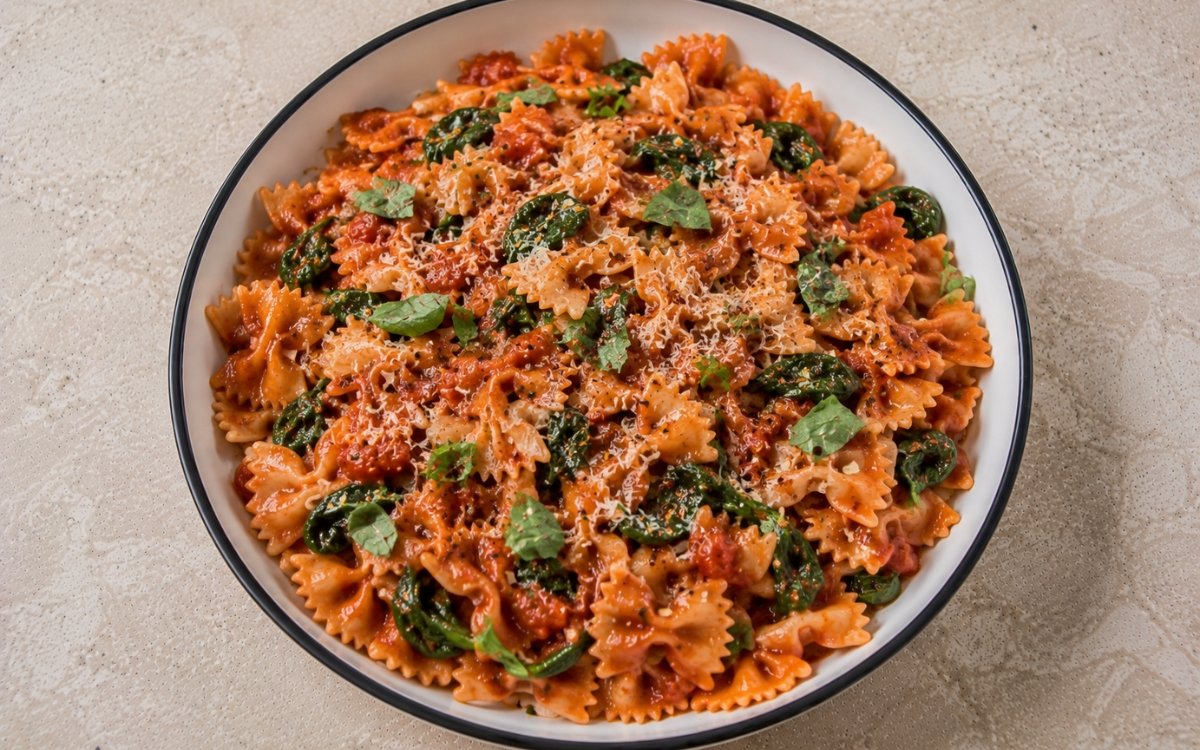
- Add the drained farfalle directly to the skillet. Pour in 120ml of the reserved pasta water immediately. Increase the heat slightly to medium-high. Toss and stir vigorously for 1–2 minutes — the pasta's surface starch and the dissolved starch in the pasta water combine with the olive oil and tomato during the tossing motion to produce the glossy, coating emulsification. The farfalle's specific shape — ridged surface, folded bow-tie structure, and multiple surface angles — captures sauce in its folds and at its ridges more effectively than smooth pasta, and the vigorous tossing drives the sauce into these surfaces. The sauce should visibly change consistency during the tossing — from loose and liquid-forward to glossy, slightly thickened, and clinging. If it remains loose after 90 seconds of vigorous tossing, continue tossing rather than immediately adding more cheese — the tossing motion itself is the emulsification mechanism. If it tightens beyond the correct flowing, coating consistency, add the remaining pasta water in 30ml increments while continuing to toss.
Add Parmesan and Basil, Serve
- Remove the skillet from the heat. Add the 60g of finely grated Parmesan and the torn basil leaves simultaneously. Toss quickly — the Parmesan melts smoothly into the hot sauce off the direct heat, adding savoury depth and a light additional thickening. The basil releases its aromatic compounds in the residual heat without darkening or losing its fresh character. Divide among four warm bowls immediately — the starch in the sauce continues to tighten as temperature drops, and the dish is most glossy and fluid in the first 2–3 minutes after leaving the pan. Add additional Parmesan over each bowl at serving.
Notes
The two-minute tomato paste caramelisation is the step that distinguishes this simple tomato pasta from an average one, and the reason is straightforward food chemistry. Raw tomato paste contains concentrated tomato solids including sugars, acids, and the glutamate-rich proteins that give tomato its umami character. When these components contact a hot, relatively dry pan surface, the Maillard reaction converts the sugars into a range of caramelised compounds that produce the deeper, slightly sweet, less acidic flavour of properly developed tomato paste. The same paste added directly to liquid — bypassing the hot pan contact — never undergoes this reaction and retains its raw, slightly metallic, sharply acidic character regardless of how long it subsequently simmers in the sauce.
Farfalle is the specifically recommended shape for this sauce rather than a generically appropriate one. The bow-tie's ridged surfaces, sharp folded edges, and multiple angles provide significantly more sauce-capture surface area per piece than smooth pasta — the sauce is driven into the folds and adheres to the ridges during the vigorous tossing step. The shape also provides textural variation per piece: the thicker knotted centre remains slightly more al dente than the thinner folded wings, producing a within-piece textural contrast that makes each forkful more interesting than a uniformly textured pasta would.