
Sicilian Orange and Fennel Salad
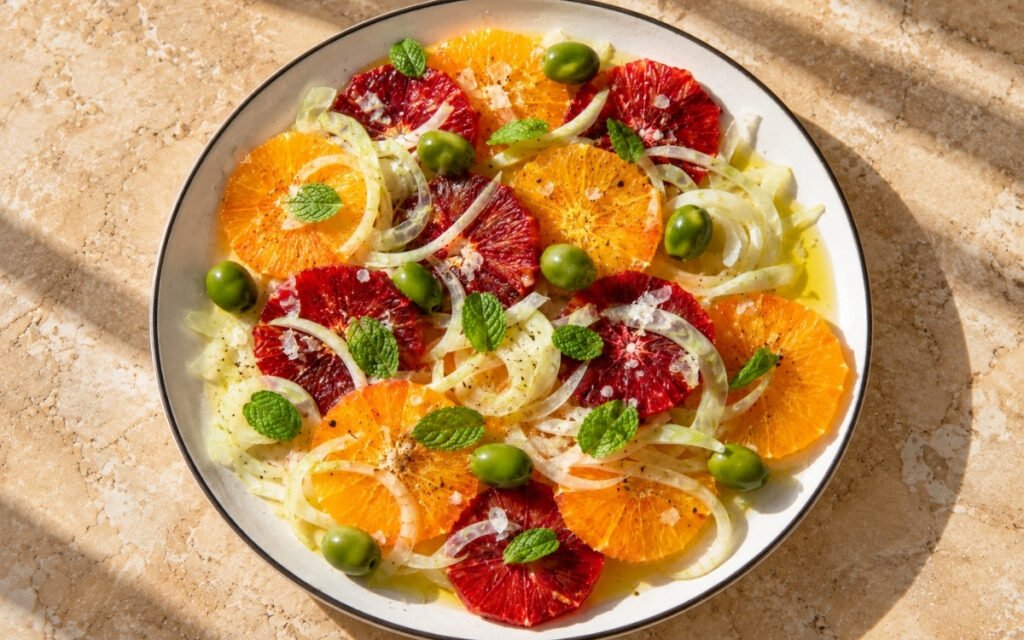
A classic Sicilian salad of sweet oranges and anise-scented fennel, finished with good olive oil, olives, mint, flaky salt, and black pepper, the key being real contrast — juicy citrus, very thin crisp fennel, and a clean, bright, lightly savory finish. Removing every trace of the oranges’ own bitter white pith is the technique this whole salad depends on for its real, clean sweetness — any pith left behind would introduce a genuine bitterness that works directly against the dish’s intended bright, sweet character, the same segment-and-remove-pith-fully principle used elsewhere in this collection whenever a citrus fruit’s own final flavour depends on stripping away every trace of its bitter membrane. Shaving the fennel genuinely thin, rather than leaving it thicker, is what lets it stay crisp without turning bulky or fibrous. Assembling the salad in loose, overlapping arrangement rather than a tossed pile is what protects each component’s own distinct visual and textural presence. The payoff is a salad with real, elegant Sicilian contrast — juicy, sweet orange rounds against delicate, crisp fennel ribbons, briny olives, and fresh mint.
Prep Time : 20 min
Cook Time : 0 min
Servings : 4
20 min
0 min
4
Ingredients
For the Salad
• 3 large navel oranges
• 3 blood oranges
• 1 large fennel bulb
• 12–16 Castelvetrano or other mild green olives — this one on Amazon
• 12–16 small fresh mint leaves
• A small handful fennel fronds, optional
For the Dressing / Finish
• 3 tbsp extra-virgin olive oil — this one on Amazon
• ½ tsp flaky sea salt, plus more to taste
• Freshly cracked black pepper, to taste
This post may contain affiliate links. As an Amazon Associate I earn from qualifying purchases, at no additional cost to you.
Directions
- Prep the Oranges
Slice off the top and bottom of each orange so it sits flat. Using a sharp knife, cut away the peel and all white pith, following the curve of the fruit. Slice the oranges into 5–7mm rounds. Remove any visible seeds. Work over a bowl or plate so you catch all juices. Remove all bitter white pith. The salad should taste sweet, bright, and clean. That deliberate, thorough removal of every trace of pith is exactly what protects this salad’s own intended flavour — any pith left clinging to the flesh would introduce a genuine, unwanted bitterness the rest of the dish is specifically built to avoid. - Prep the Fennel
Trim the fennel bulb. Remove any bruised outer layer if needed. Reserve a few fronds for garnish if nice and fresh. Halve the bulb lengthwise and shave it very thinly using a mandoline or a very sharp knife. The slices should be delicate, pale, and slightly translucent. If the fennel is especially strong or dry, place it in ice water for 5–10 minutes, then drain and dry very well. Fennel must be sliced thinly enough to stay crisp but not bulky or fibrous. That genuinely thin shaving is what keeps the fennel’s own texture delicate and crisp rather than thick and fibrous — a coarser cut would carry considerably more of the bulb’s own tougher, more assertive structure into every bite. - Assemble the Salad
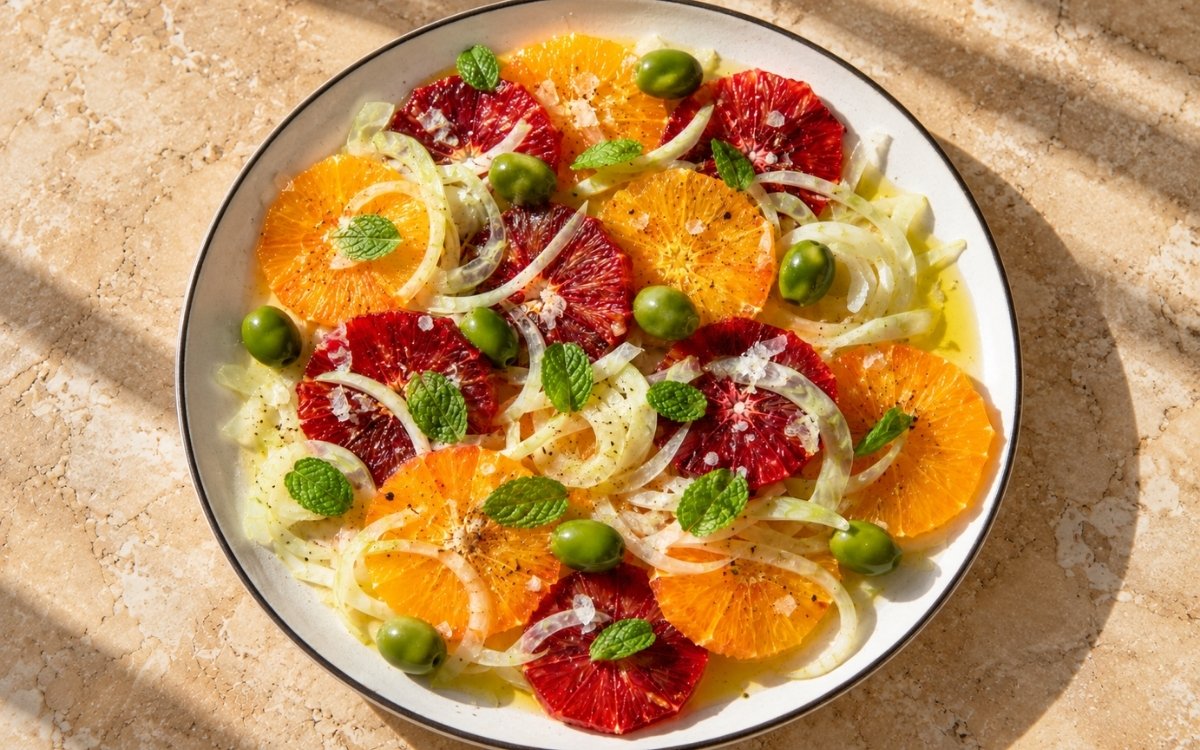
Arrange the orange rounds on a wide shallow platter or plate in loose overlapping circles, alternating navel and blood oranges for contrast. Scatter the shaved fennel evenly over and between the orange slices. Add the olives and mint leaves. If using fennel fronds, scatter a little over the top. Spoon over any reserved orange juices from the cutting board or bowl. That loose, overlapping arrangement, rather than a tossed pile, is what keeps every component genuinely visible and distinct on the plate — the alternating navel and blood orange rounds specifically build the classic visual contrast this salad is known for. - Dress and Finish
Drizzle evenly with the olive oil. Sprinkle with flaky sea salt and several grinds of black pepper. Let the salad sit for 5–10 minutes before serving so the fennel softens slightly and the juices mingle. Do not overdress. This salad should look glossy, not oily or wet. That brief resting period gives the fennel real time to soften just slightly while the oranges’ own juices and the olive oil have a genuine chance to mingle together across the plate before serving.
*Notes :
- Removing every trace of the oranges’ own bitter white pith deserves genuine recognition as the technique most directly responsible for this salad’s real, clean sweetness. The recipe’s own explicit instruction that “the salad should taste sweet, bright, and clean” reflects exactly what’s at stake — any pith left behind carries a genuine, unwanted bitterness that would work directly against the dish’s intended character.
- Shaving the fennel genuinely thin, using a mandoline or very sharp knife, deserves the same attention this technique receives throughout this collection’s other thinly sliced raw vegetable preparations. The recipe’s own explicit target — “delicate, pale, and slightly translucent” — reflects a real, checkable standard; fennel cut any thicker would carry considerably more of its own fibrous, bulky structure into the finished salad.
- Arranging the salad in loose, overlapping circles rather than tossing everything together deserves genuine attention as a deliberate presentation choice central to this dish’s own classic character. The recipe’s own explicit target — “clearly visible orange rounds, fennel ribbons, scattered olives, and mint rather than a tossed pile” — reflects real, considered attention to how this salad is meant to look as much as how it tastes.
- The brief resting period before serving deserves respect as a real, functional step rather than simple patience. That window gives the fennel genuine time to soften just slightly while the oranges’ own juices and the drizzled olive oil have a real chance to mingle together across the plate, rounding out the finished dish’s flavour.
Why This Recipe Works
This recipe works because every trace of bitter white pith is removed from the oranges, protecting the salad’s own clean, bright sweetness. The fennel is shaved genuinely thin, staying crisp and delicate rather than bulky or fibrous.
Arranging every component in loose, overlapping circles rather than tossing them together protects each element’s own distinct visual and textural presence.
A light hand with the olive oil keeps the finished salad glossy rather than oily, and a brief resting period lets the fennel soften slightly while the citrus juices and oil mingle together before serving.
Ingredient Breakdown
Thoroughly Pith-Removed Oranges
The critical technique — protects the salad’s own clean, bright sweetness from any residual bitterness.
Genuinely Thin-Shaved Fennel
The critical technique — a specific, delicate thinness keeps it crisp rather than bulky or fibrous.
Alternating Navel and Blood Oranges
The critical technique — builds the classic visual contrast central to this salad’s presentation.
Loose, Overlapping Arrangement
The critical technique — keeps every component genuinely visible and distinct rather than lost in a tossed pile.
Light Olive Oil Drizzle
The finishing technique — keeps the finished salad glossy rather than oily or wet.
Brief Resting Period (5–10 Minutes)
The finishing technique — lets the fennel soften slightly and the juices and oil mingle before serving.
Flavor Structure Explained
This Sicilian orange and fennel salad follows a layered balance model:
- Juicy, bright foundation (thoroughly pith-removed navel and blood oranges)
- Crisp, aromatic contrast (thinly shaved fennel)
- Briny, savoury accent (Castelvetrano olives)
- Fresh herbal lift (mint, optional fennel fronds)
- Clean, glossy finish (olive oil, flaky salt, black pepper)
Thoroughly pith-removed navel and blood oranges provide this salad’s juicy, genuinely bright foundation, their sweetness protected through careful, deliberate preparation. Thinly shaved fennel adds crisp, anise-scented contrast against the citrus. Castelvetrano olives contribute a briny, savoury accent throughout. Fresh mint and optional fennel fronds layer in bright herbal lift. A light drizzle of olive oil, flaky salt, and black pepper finishes the salad with a clean, glossy character that ties this classic, elegant Sicilian dish together.
Common Mistakes to Avoid
- Leaving Any Pith on the Oranges – This introduces real bitterness that works against the salad’s clean sweetness. Always remove every trace thoroughly.
- Slicing the Fennel Too Thick – This produces a bulky, fibrous texture rather than delicate crispness. Always shave it genuinely thin.
- Tossing the Salad Together Instead of Arranging It – This loses the classic, elegant presentation this dish depends on. Always arrange components in loose, overlapping circles.
- Overdressing the Salad – This leaves it looking oily and wet rather than glossy. Always drizzle the olive oil with a light hand.
- Chopping the Mint Too Finely – This causes it to bruise and darken. Always use whole small leaves or torn larger ones.
Variations
Extra-Olive Version
Increase the Castelvetrano olives for a more pronounced, buttery, briny presence throughout the finished salad.
Fennel Frond Version
Include the optional fennel fronds generously, per the recipe’s own note, for extra aromatic, herbal lift alongside the mint.
Single-Orange Version
Use only navel oranges if blood oranges aren’t available, accepting a less visually contrasting but still bright, sweet finished salad.
Extra-Peppery Version
Increase the freshly cracked black pepper slightly for a sharper, more assertive finish against the sweet citrus.
Storage & Make-Ahead
Use a mix of sweet navel oranges and blood oranges for the most classical look and flavour contrast, since that combination is specifically what gives this salad its recognisable, elegant appearance.
The ideal fennel texture is crisp and fresh, never thick or woody, so take real care with the shaving stage, using a mandoline if possible for the most consistently thin, delicate slices.
Castelvetrano olives are ideal because they’re buttery and mild, though any good green olive works, and mint should be used as whole small leaves or torn larger ones, never chopped too finely, since that causes it to bruise and darken.
This salad needs enough salt to wake up the oranges’ own sweetness, but not so much that it tastes briny, so season with a light, careful hand and taste as you go.
You can prep the oranges and fennel ahead of time, but assemble the salad close to serving for the freshest possible texture, and it’s genuinely best served slightly cool or at room temperature, since very cold fruit tastes noticeably less aromatic.
Frequently Asked Questions
Why does every trace of white pith need to be removed from the oranges?
Any pith left clinging to the flesh introduces genuine bitterness that works directly against this salad’s intended bright, clean sweetness. Thorough removal protects that whole flavour profile.
Why does the fennel need to be shaved so thin?
Thinner slices stay delicate and crisp rather than carrying the bulb’s own tougher, more fibrous structure into every bite. That genuine thinness is what keeps the fennel’s texture light rather than bulky.
Why is the salad arranged in loose, overlapping circles rather than tossed together?
That deliberate arrangement keeps every component — the orange rounds, fennel ribbons, olives, and mint — genuinely visible and distinct, which is central to this salad’s classic, elegant presentation.
Why does the salad need to rest for a few minutes before serving?
That brief window gives the fennel real time to soften just slightly while the oranges’ own juices and the drizzled olive oil have a genuine chance to mingle together across the plate.
Are there other classic citrus, roasted vegetable, or elegant Italian dessert dishes worth trying?
Fennel Citrus Salad offers another classic citrus-forward salad direction worth exploring. Roasted Beetroot & Goat Cheese Salad and Italian Farro Salad are also worth trying for other classic salad directions, and Sicilian Caponata and Panna Cotta offer other classic Sicilian and Italian dishes worth exploring.
Nutrition Facts
( per serving )
Calories
~220 kcal
Protein
3 g
Fat
12 g
Carbs
28 g
Calories
~220 kcal
Protein
3 g
Fat
12 g
Carbs
28 g
Related Recipes
Related Recipes

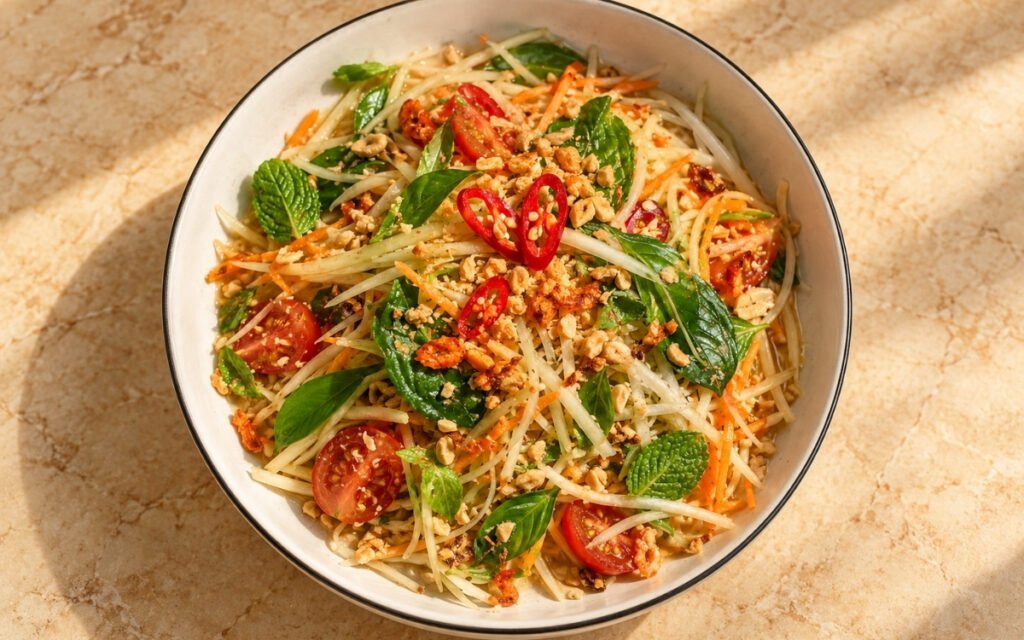
Vietnamese Green Papaya Salad (Gỏi Đu Đủ)
Fine julienne of crisp green papaya and carrot dressed with a sharp fish sauce–lime dressing, finished with tomatoes, peanuts, herbs, and dried shrimp.
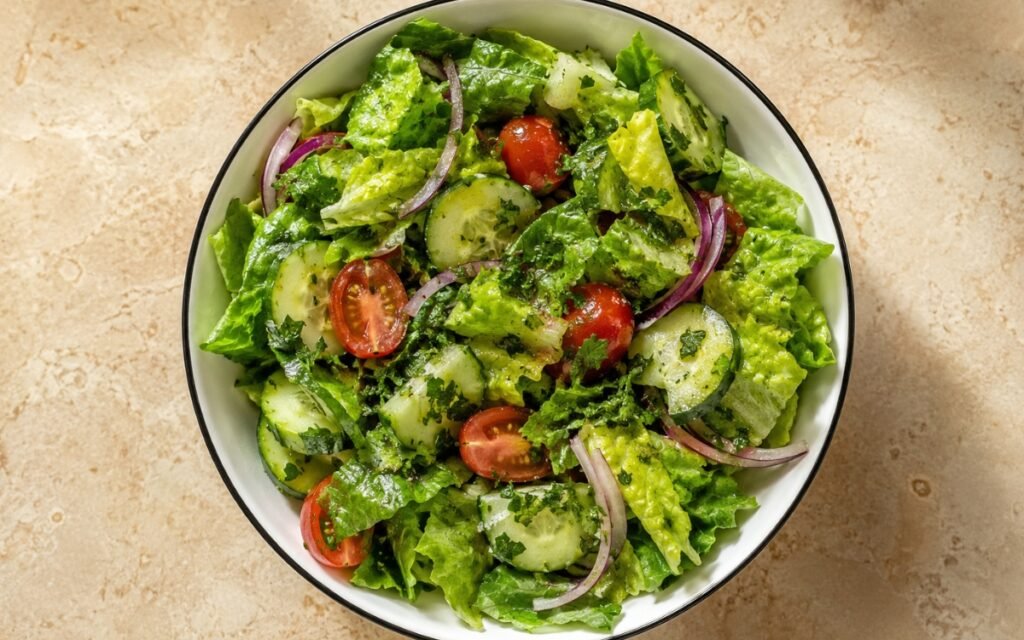
Lemon Parsley Side Salad
Crisp romaine and fresh parsley with cucumber, tomatoes, and red onion in zesty lemon dressing.
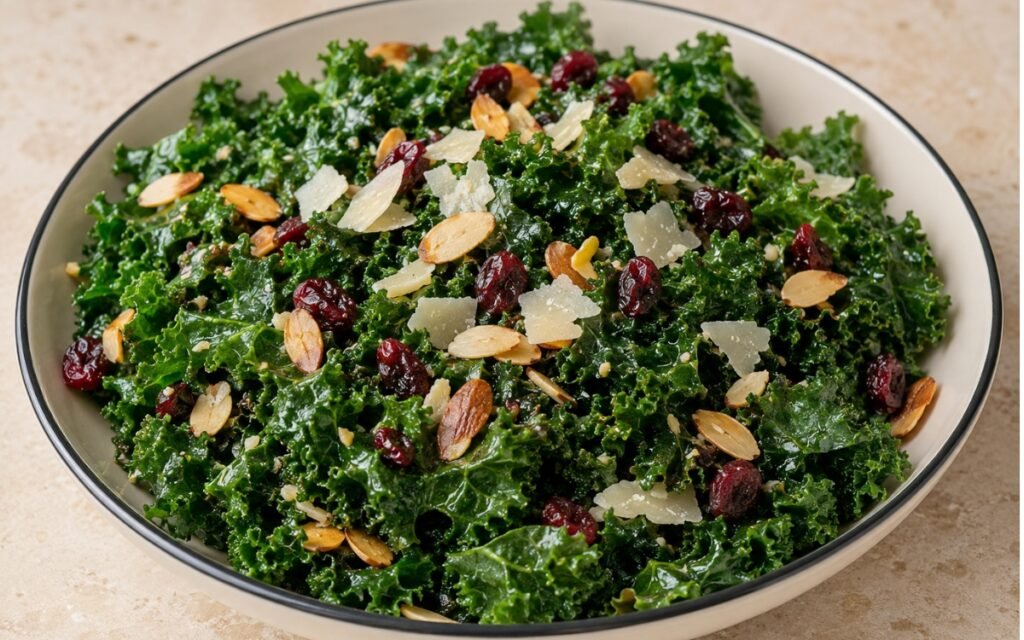
Lemon Parmesan Kale Salad
Massaged kale with bright lemon dressing, shaved Parmesan, toasted almonds, and cranberries.
You might also like
You might also like
Lavender Lemonade
Lavender steeped in warm syrup exactly 6–8 minutes before camphor develops — lemon pulp, juice, salt, cold water, chilled. Citrus first, floral behind.
Roasted Red Pepper Sauce
Silky roasted red pepper sauce with garlic and almonds. No-cook versatile condiment in 10 minutes.
Peach Thyme Iced Tea
White tea at 75–80°C, peaches simmered and thyme steeped off heat 8–10 minutes — lemon juice added cold, served still over ice. Peach-forward and herbal.

Sicilian Orange and Fennel Salad
Ingredients
Method
- Slice off the top and bottom of each orange so it sits flat. Using a sharp knife, cut away the peel and all white pith, following the curve of the fruit. Slice the oranges into 5–7mm rounds. Remove any visible seeds. Work over a bowl or plate so you catch all juices. Remove all bitter white pith. The salad should taste sweet, bright, and clean. That deliberate, thorough removal of every trace of pith is exactly what protects this salad’s own intended flavour — any pith left clinging to the flesh would introduce a genuine, unwanted bitterness the rest of the dish is specifically built to avoid.
- Trim the fennel bulb. Remove any bruised outer layer if needed. Reserve a few fronds for garnish if nice and fresh. Halve the bulb lengthwise and shave it very thinly using a mandoline or a very sharp knife. The slices should be delicate, pale, and slightly translucent. If the fennel is especially strong or dry, place it in ice water for 5–10 minutes, then drain and dry very well. Fennel must be sliced thinly enough to stay crisp but not bulky or fibrous. That genuinely thin shaving is what keeps the fennel’s own texture delicate and crisp rather than thick and fibrous — a coarser cut would carry considerably more of the bulb’s own tougher, more assertive structure into every bite.
- Arrange the orange rounds on a wide shallow platter or plate in loose overlapping circles, alternating navel and blood oranges for contrast. Scatter the shaved fennel evenly over and between the orange slices. Add the olives and mint leaves. If using fennel fronds, scatter a little over the top. Spoon over any reserved orange juices from the cutting board or bowl. That loose, overlapping arrangement, rather than a tossed pile, is what keeps every component genuinely visible and distinct on the plate — the alternating navel and blood orange rounds specifically build the classic visual contrast this salad is known for.
- Drizzle evenly with the olive oil. Sprinkle with flaky sea salt and several grinds of black pepper. Let the salad sit for 5–10 minutes before serving so the fennel softens slightly and the juices mingle. Do not overdress. This salad should look glossy, not oily or wet. That brief resting period gives the fennel real time to soften just slightly while the oranges’ own juices and the olive oil have a genuine chance to mingle together across the plate before serving.