
Panna Cotta
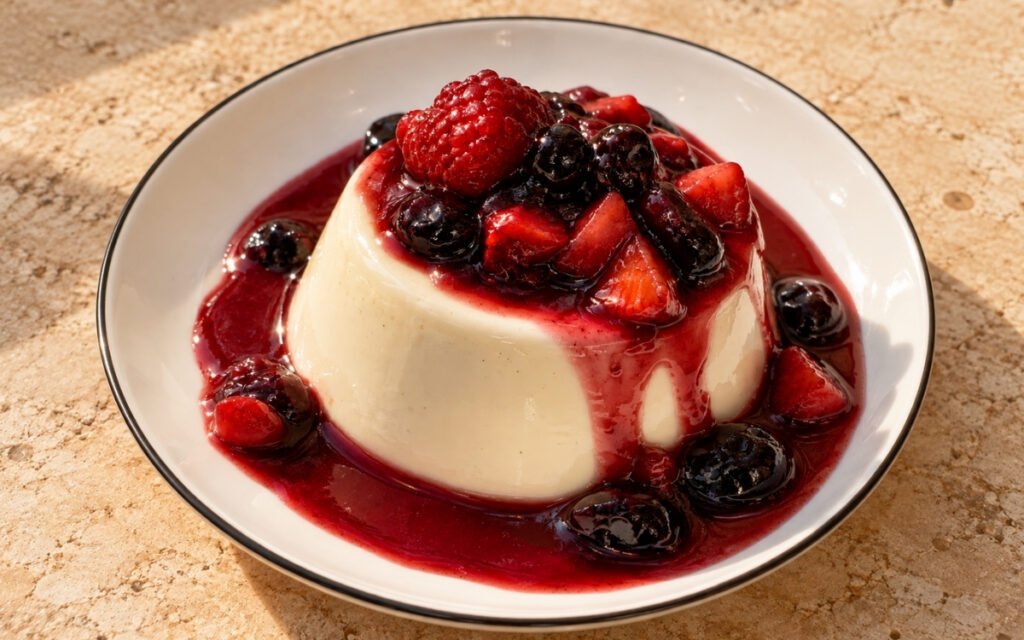
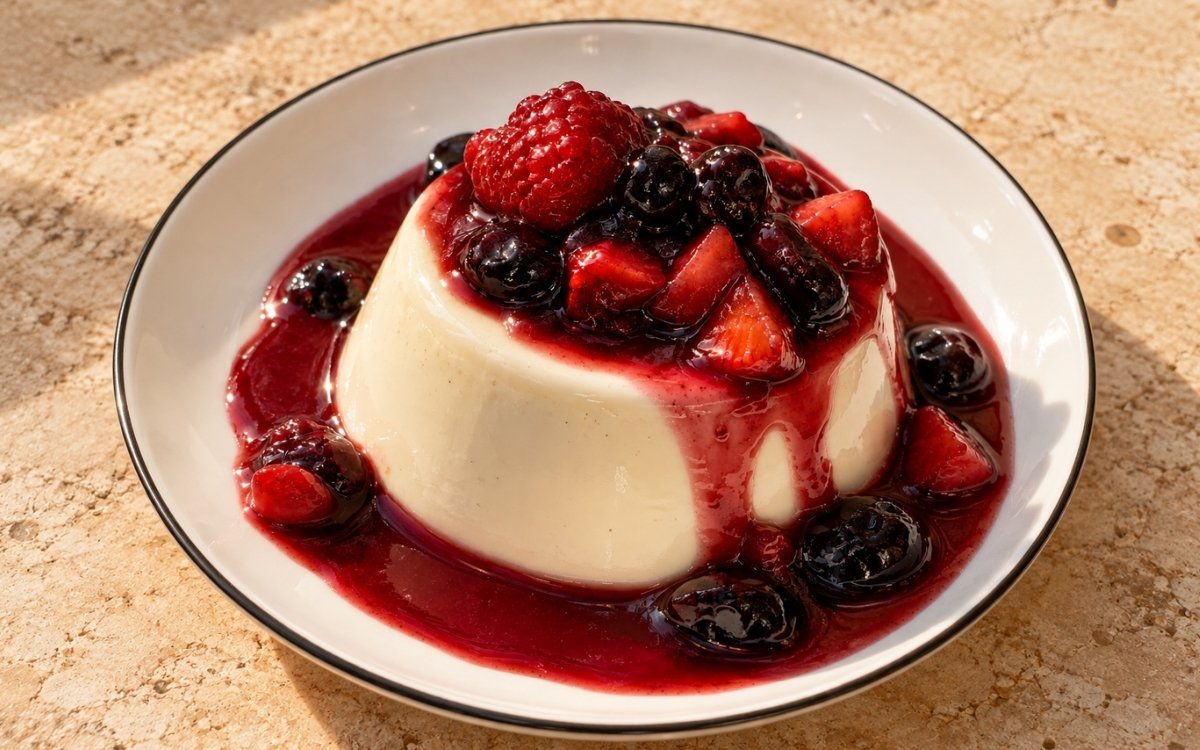
Classic panna cotta made with cream, milk, sugar, vanilla and gelatin, chilled until delicately set, then unmolded and topped with glossy berry sauce and macerated berries, built around a soft wobble — fully set but never rubbery. Blooming the gelatin in cold water before it ever meets the hot cream gives a smooth, even set — dry gelatin added straight to hot liquid can clump and dissolve unevenly. Heating the cream base gently, never letting it boil hard, protects the dessert’s clean dairy flavour and final texture. A quick dip in hot water lets the panna cotta release cleanly without melting at the edges. The result is a dessert with classical restraint — a delicately trembling, creamy panna cotta unmolded cleanly, finished with glossy berry sauce and bright, macerated fruit.
Prep Time : 20 min
Cook Time : 10 min
Servings : 4
20 min
10 min
4
Ingredients
For the Panna Cotta
• 400g heavy cream — this one on Amazon
• 100g whole milk — this one on Amazon
• 60g granulated sugar
• 1 tsp vanilla paste or extract, or 1 vanilla bean, split and scraped — this one on Amazon
• 1 small pinch fine salt
• 6g powdered gelatin
• 30g cold water, for blooming the gelatin
For the Berry Sauce
• 180g mixed berries (blueberries, raspberries, strawberries, blackberries, or a mix)
• 35g granulated sugar
• 10g lemon juice
• 15–30g water, only if needed
For the Macerated Berries / Finishing
• 120g mixed fresh berries, cut if large
• 10–15g sugar
• 1 tsp lemon juice
This post may contain affiliate links. As an Amazon Associate I earn from qualifying purchases, at no additional cost to you.
Directions
- Prepare the Molds
Lightly grease 4 ramekins, dariole molds, or cups with a very thin film of neutral oil, then wipe out any excess with paper towel. Use only the faintest coating. Too much oil leaves a visible film on the panna cotta. A very thin coating helps the dessert release cleanly without leaving visible residue on its smooth, glossy surface. - Bloom the Gelatin
In a small bowl, sprinkle the powdered gelatin evenly over the 30g cold water. Let sit for 5–10 minutes until fully hydrated and thickened. Never dump gelatin straight into hot cream without blooming first, or it can clump and dissolve unevenly. That blooming period lets the gelatin granules absorb water gradually and evenly before they ever meet heat, protecting them from clumping the way direct contact with hot liquid would otherwise cause. - Heat the Cream Base
In a saucepan, combine the heavy cream, milk, sugar, vanilla, and salt. Heat over medium-low heat, stirring occasionally, until the sugar fully dissolves and the mixture is hot but not boiling. If using a vanilla bean, add both the seeds and the pod and let it steep for a few minutes in the hot dairy. Remove from the heat. The mixture should be steaming and fully hot, but not simmering hard. Do not boil aggressively. Overheating can affect the clean dairy flavor and final texture. Gentle heat protects the dairy’s own clean, delicate flavour from the slightly cooked or scalded character a hard boil would introduce. - Dissolve the Gelatin
Remove the vanilla pod if using. Add the bloomed gelatin to the hot cream mixture and stir until completely dissolved. Strain through a fine sieve into a jug or bowl for the smoothest texture. The gelatin must dissolve fully, but once added, the mixture should not be boiled. That final straining step catches any tiny undissolved gelatin granules or vanilla bean fragments, keeping the final texture smooth and silky. - Fill and Chill
Divide the mixture evenly among the 4 prepared molds. Let cool for 15–20 minutes at room temperature, then cover and refrigerate for at least 6 hours, preferably overnight, until softly but fully set. The panna cotta should jiggle gently when the mold is nudged, not feel liquid in the center. The long chill gives the gelatin time to set the whole mixture evenly throughout, right down to the very center, rather than only firming at the surface. - Make the Berry Sauce
Place 180g berries, 35g sugar, and 10g lemon juice in a small saucepan. Cook over medium-low heat for 4–6 minutes, stirring gently, until the fruit releases juice and the mixture becomes glossy and lightly syrupy. Add a small splash of water only if needed. For a smoother sauce, lightly crush some of the berries. For a chunkier topping, leave some berries whole. Cool completely. Do not reduce too far. The sauce should still flow gently around the panna cotta. That specific, restrained cooking time protects the sauce’s own intended consistency — reduced further, it would tighten past the point of flowing gently around the delicate, unmolded dessert. - Macerate the Finishing Berries
Toss the remaining 120g fresh berries with 10–15g sugar and 1 tsp lemon juice. Let stand 10–15 minutes to become glossy and lightly juicy. That brief maceration period draws just enough natural juice out of the berries through osmosis, coating them in a light, glossy syrup without ever needing to cook them. - Unmold and Serve
To unmold, dip each mold briefly in hot water for 3–5 seconds only, then run a thin knife around the edge if needed. Invert onto dessert plates. Spoon berry sauce over and around each panna cotta, then top with the macerated berries. Serve chilled. Do not leave the molds in hot water too long or the panna cotta will begin melting at the edges.
*Notes :
- Bloom the gelatin in cold water before it meets the hot cream so the panna cotta sets smoothly and evenly. Dry gelatin dumped straight into hot liquid tends to clump; hydrating it first means it dissolves evenly once it meets heat.
- Heat the cream base gently and watch it so it never reaches a hard boil. That restraint protects the dessert’s own clean, delicate dairy flavour, since overheating at this stage can affect both taste and final texture in ways that are hard to correct later.
- Keep the unmolding dip short. A longer soak in hot water melts the edges and undoes the texture the long chill built.
- Use the full 6g of gelatin for this quantity; it gives the classical set needed for unmolding. For panna cotta served in glasses, the amount can be reduced slightly, since gelatin quantity directly affects the final texture.
Why This Recipe Works
This recipe works because the gelatin is bloomed properly in cold water before it ever meets heat, protecting it from clumping. The cream base is heated gently, never boiled hard, preserving its own clean dairy flavour.
Straining the finished mixture removes any small imperfections for a smooth set, and the full 6-hour chill lets the gelatin set the dessert evenly throughout.
Unmolding with only a brief hot water dip protects the delicate set from melting, and both the berry sauce and macerated berries are made with restraint, delivering bright, glossy fruit that complements rather than overwhelms the panna cotta itself.
Ingredient Breakdown
Properly Bloomed Gelatin
Gradual hydration in cold water protects against clumping once it meets hot cream.
Gently Heated Cream Base
Never boiled hard, protecting the dessert’s own clean, delicate dairy flavour.
Strained Custard Mixture
Removes small imperfections for a smooth, silky final texture.
Full 6+ Hour Chill
Gives the gelatin real time to set the dessert evenly throughout, right to the center.
Brief Hot-Water Unmolding Dip (3–5 Seconds)
A narrow window that releases the panna cotta cleanly without melting its delicate set.
Restrained Berry Sauce
The finishing technique — cooked just enough to turn glossy and syrupy without reducing past a gentle, flowing consistency.
Flavor Structure Explained
The flavours come in four layers:
- Delicately set, creamy foundation (gently heated, properly gelled cream base)
- Warm vanilla depth (vanilla bean or paste)
- Glossy, sweet-tart sauce (cooked berry sauce)
- Bright, fresh finish (macerated berries)
A gently heated, properly gelled cream base provides this dessert’s delicately set, creamy foundation. Vanilla, whether bean or paste, contributes warm, classical depth throughout. A glossy, cooked berry sauce adds sweet-tart richness that pools around the unmolded dessert. Fresh, macerated berries finish the plate with a bright, juicy contrast that ties this classic, restrained dessert together.
Common Mistakes to Avoid
- Adding Dry Gelatin Directly to Hot Cream – This causes clumping and uneven dissolving. Always bloom it in cold water first.
- Boiling the Cream Base Hard – This affects the clean dairy flavour and final texture. Always heat gently, stopping before a hard boil.
- Skipping the Straining Step – This leaves small imperfections in the finished texture. Always strain the mixture before filling the molds.
- Leaving the Molds in Hot Water Too Long – This causes the panna cotta to begin melting at the edges. Always dip for only 3 to 5 seconds.
- Reducing the Berry Sauce Too Far – This tightens it past the point of flowing gently around the dessert. Always stop while it’s still glossy and syrupy.
Variations
Vanilla Bean Version
Use a real vanilla bean, split and scraped, for the most classical flavour, though good-quality vanilla paste also works very well.
Softer, Glass-Served Version
Reduce the gelatin slightly to about 5g, for a softer texture suited to serving directly in glasses rather than unmolding onto plates.
Single-Fruit Topping Version
Use strawberries alone, or a raspberry coulis, for a simpler, more focused fruit flavour than the mixed berry combination.
Chunkier Sauce Version
Leave more of the cooked berries whole rather than crushing them, for a more textured, rustic finished topping.
Storage & Make-Ahead
Panna cotta’s own texture target is creamy and softly trembling, never stiff, so the 6g of gelatin specified for this quantity gives the classic, unmoldable set this recipe aims for.
If you’re planning to serve the panna cotta in glasses rather than unmolding it onto plates, you can reduce the gelatin slightly to about 5g for an even softer, more delicate finished texture.
The best molds for this recipe are 150 to 180ml in size, since that range gives both clean unmolding and an elegant height once the dessert is turned out onto the plate.
Panna cotta can be made a full day ahead and kept chilled directly in its molds, with unmolding done only shortly before you actually plan to serve it, keeping the dessert’s delicate texture protected right up until the last moment.
If the berry sauce feels too thick once it’s cooled, loosen it with a teaspoon or two of water or lemon juice, and know that strawberries alone, mixed berries, raspberry coulis, or a simple berry compote all fit the classical style equally well as alternative toppings.
Frequently Asked Questions
Why does the gelatin need to be bloomed in cold water before it’s added to the hot cream?
That gradual hydration period lets the gelatin granules absorb water evenly before they ever meet heat. Adding dry gelatin directly to hot liquid instead risks clumping and uneven dissolving throughout the finished custard.
Why can’t the cream base be boiled hard while heating?
Overheating at this stage affects the dessert’s clean, delicate dairy flavour and its final texture. Gentle heat protects that character right through to the finished, chilled panna cotta.
Why does the finished mixture need to be strained before it goes into the molds?
Straining removes any small undissolved gelatin granules or vanilla bean fragments, so the set panna cotta is smooth and silky.
Why can the molds only sit in hot water for such a brief window when unmolding?
That specific, narrow timing loosens just the outer edge enough for a clean release. Any longer, and the dessert’s own delicate set would begin melting at the edges before it’s even served.
Are there other classic European or elegant chilled dessert dishes worth trying?
Tiramisu and Cannoli both offer other classic Italian dessert directions worth exploring. Hibiscus & Orange Poached Pears is also worth trying for a different, fruit-forward elegant dessert, and Classic Pavlova and Basque Burnt Cheesecake offer other classic baked or chilled desserts worth exploring.
Nutrition Facts
( Per Serving — 1 panna cotta)
Calories
~420 kcal
Protein
5 g
Fat
30 g
Carbs
34 g
Calories
~420 kcal
Protein
5 g
Fat
30 g
Carbs
34 g
Related Recipes
Related Recipes

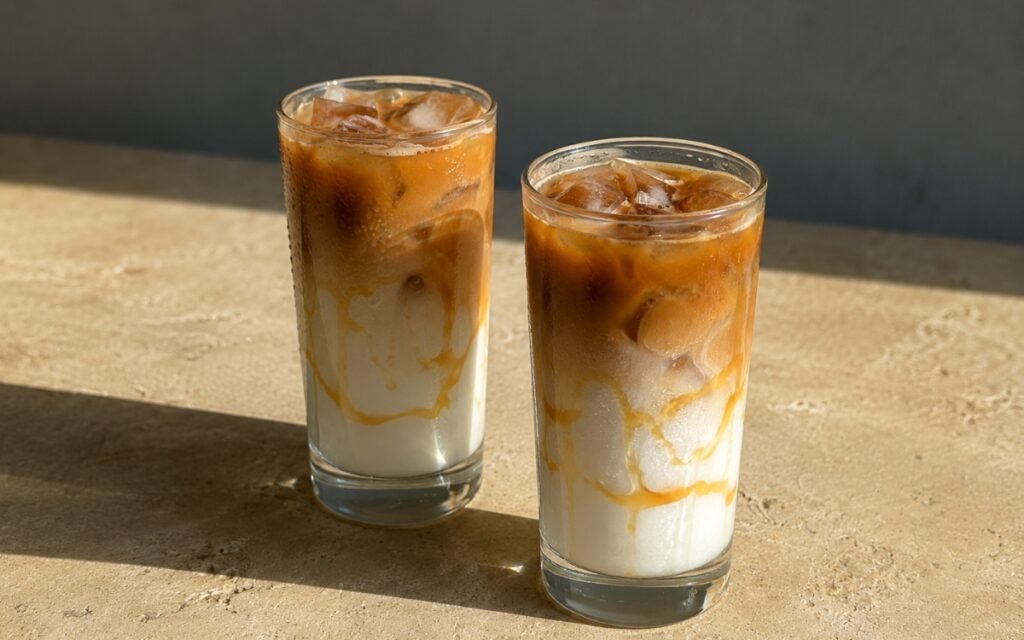
Iced Caramel Macchiato
Vanilla-sweetened cold milk, ice, and espresso poured over the top to create a dramatic dark swirl, finished with caramel sauce drizzle.
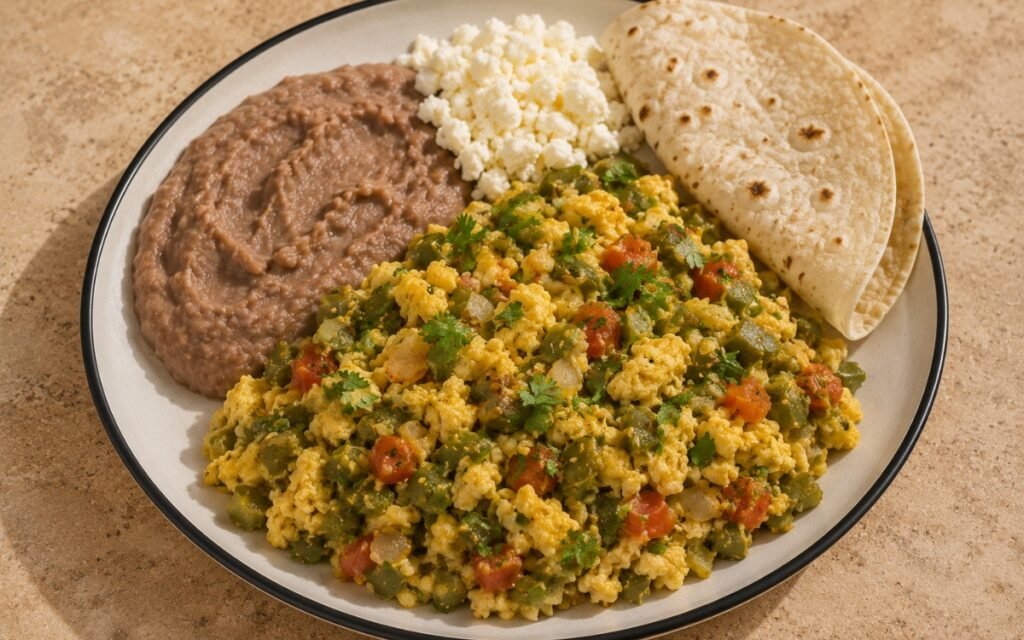
Nopales con Huevo
Scrambled eggs cooked with tender diced nopales, onion, tomato, and green chile, finished with fresh cilantro.
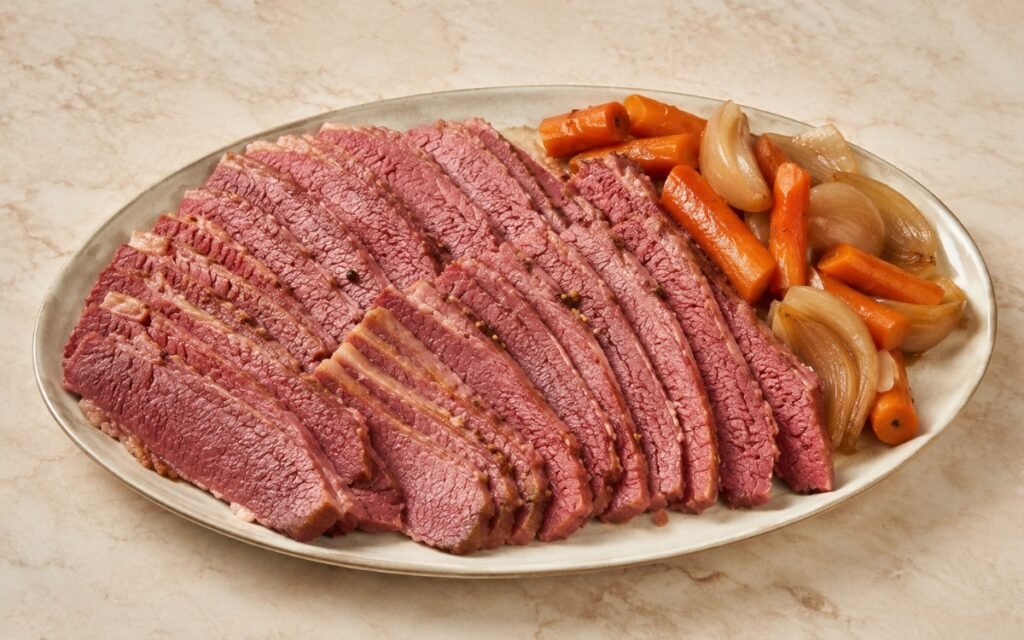
Homemade Corned Beef
Beef brisket cured in a spiced brine for a full week, then simmered gently until fork-tender, sliced thick against the grain.
You might also like
You might also like
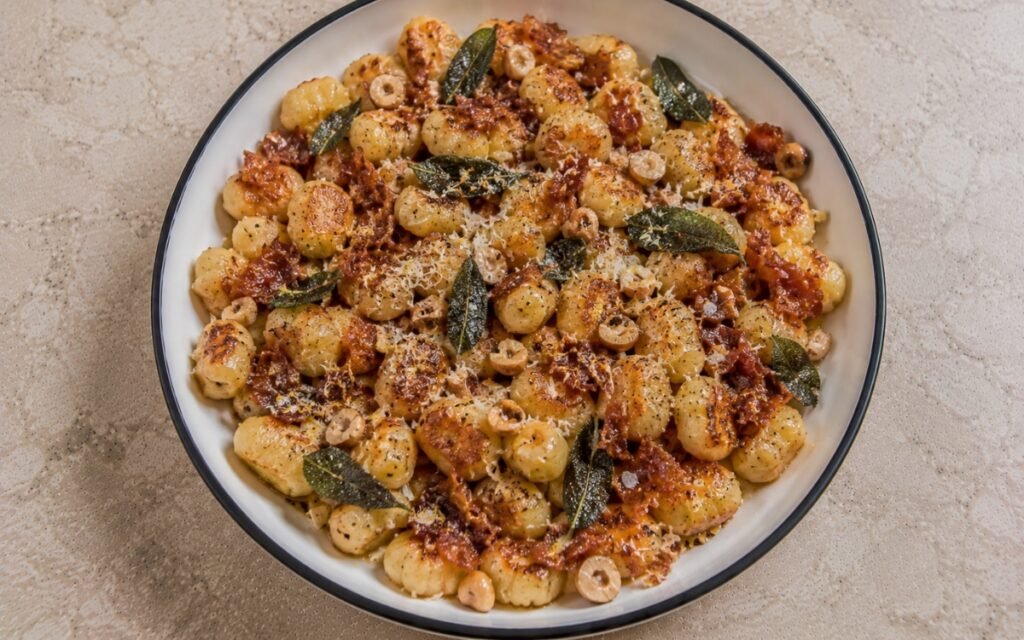
Brown Butter Sage Gnocchi with Crispy Prosciutto
Gnocchi tossed in brown butter with fried sage until golden-edged, emulsified with gnocchi water, finished with crispy prosciutto and Parmigiano — 25 minutes.
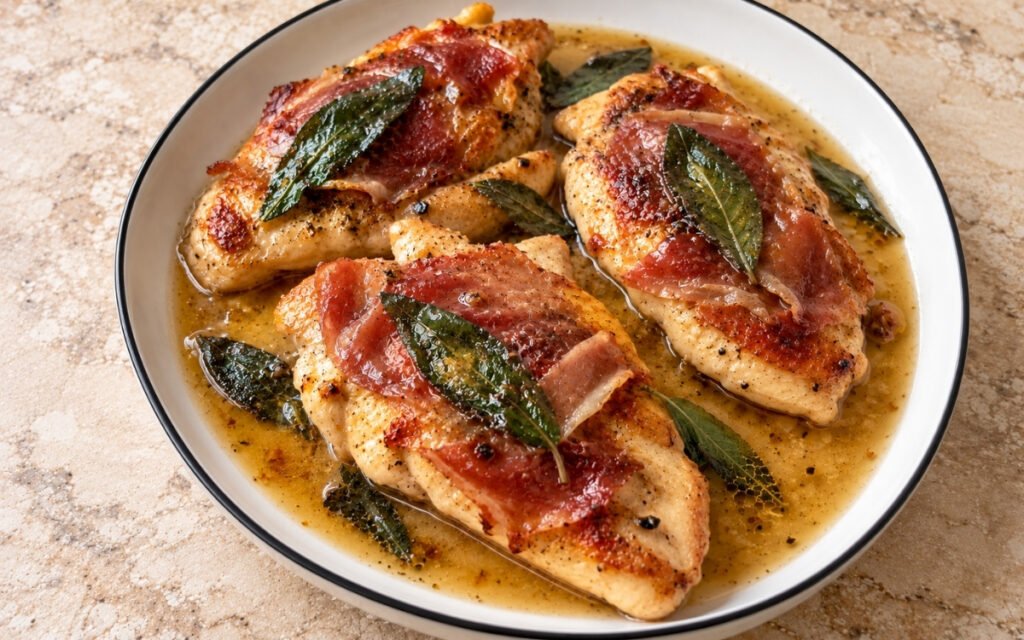
Chicken Saltimbocca
Thin seared chicken cutlets topped with prosciutto and sage, finished in a glossy buttery white wine pan sauce.
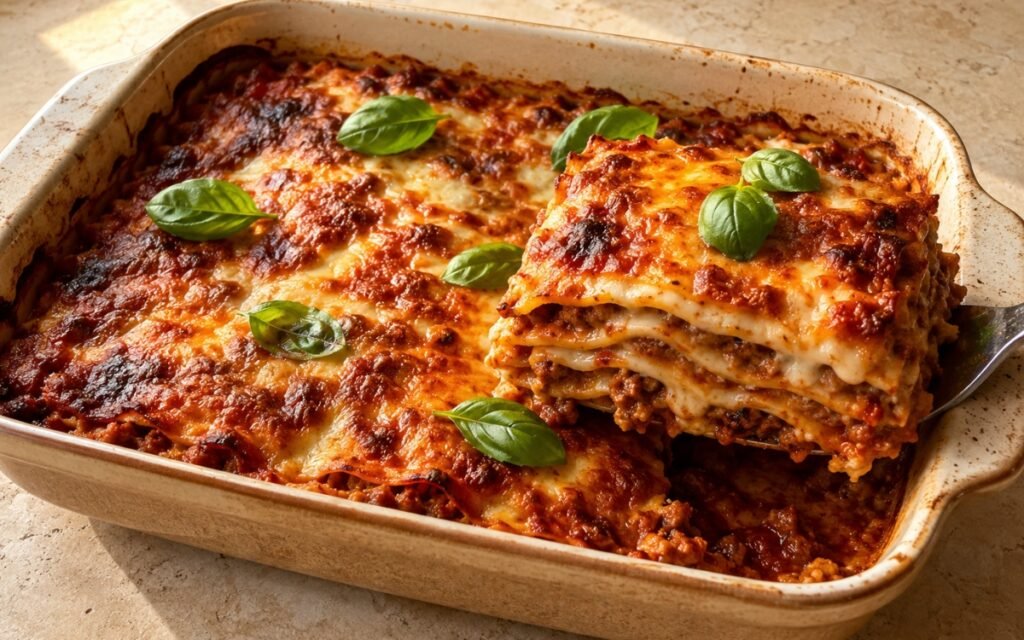
Lasagne alla Bolognese
Beef and veal Bolognese slow-braised 3 hours on pancetta fat and soffritto — layered with ricotta, mozzarella, and Parmesan, baked golden. The weekend lasagne worth every hour.
Panna Cotta
Ingredients
Method
- Lightly grease 4 ramekins, dariole molds, or cups with a very thin film of neutral oil, then wipe out any excess with paper towel. Use only the faintest coating. Too much oil leaves a visible film on the panna cotta. A very thin coating helps the dessert release cleanly without leaving visible residue on its smooth, glossy surface.
- In a small bowl, sprinkle the powdered gelatin evenly over the 30g cold water. Let sit for 5–10 minutes until fully hydrated and thickened. Never dump gelatin straight into hot cream without blooming first, or it can clump and dissolve unevenly. That blooming period lets the gelatin granules absorb water gradually and evenly before they ever meet heat, protecting them from clumping the way direct contact with hot liquid would otherwise cause.
- In a saucepan, combine the heavy cream, milk, sugar, vanilla, and salt. Heat over medium-low heat, stirring occasionally, until the sugar fully dissolves and the mixture is hot but not boiling. If using a vanilla bean, add both the seeds and the pod and let it steep for a few minutes in the hot dairy. Remove from the heat. The mixture should be steaming and fully hot, but not simmering hard. Do not boil aggressively. Overheating can affect the clean dairy flavor and final texture. Gentle heat protects the dairy’s own clean, delicate flavour from the slightly cooked or scalded character a hard boil would introduce.
- Remove the vanilla pod if using. Add the bloomed gelatin to the hot cream mixture and stir until completely dissolved. Strain through a fine sieve into a jug or bowl for the smoothest texture. The gelatin must dissolve fully, but once added, the mixture should not be boiled. That final straining step catches any tiny undissolved gelatin granules or vanilla bean fragments, keeping the final texture smooth and silky.
- Divide the mixture evenly among the 4 prepared molds. Let cool for 15–20 minutes at room temperature, then cover and refrigerate for at least 6 hours, preferably overnight, until softly but fully set. The panna cotta should jiggle gently when the mold is nudged, not feel liquid in the center. The long chill gives the gelatin time to set the whole mixture evenly throughout, right down to the very center, rather than only firming at the surface.
- Place 180g berries, 35g sugar, and 10g lemon juice in a small saucepan. Cook over medium-low heat for 4–6 minutes, stirring gently, until the fruit releases juice and the mixture becomes glossy and lightly syrupy. Add a small splash of water only if needed. For a smoother sauce, lightly crush some of the berries. For a chunkier topping, leave some berries whole. Cool completely. Do not reduce too far. The sauce should still flow gently around the panna cotta. That specific, restrained cooking time protects the sauce’s own intended consistency — reduced further, it would tighten past the point of flowing gently around the delicate, unmolded dessert.
- Toss the remaining 120g fresh berries with 10–15g sugar and 1 tsp lemon juice. Let stand 10–15 minutes to become glossy and lightly juicy. That brief maceration period draws just enough natural juice out of the berries through osmosis, coating them in a light, glossy syrup without ever needing to cook them.
- To unmold, dip each mold briefly in hot water for 3–5 seconds only, then run a thin knife around the edge if needed. Invert onto dessert plates. Spoon berry sauce over and around each panna cotta, then top with the macerated berries. Serve chilled. Do not leave the molds in hot water too long or the panna cotta will begin melting at the edges.