
Turkish Bulgur Salad (Kısır)
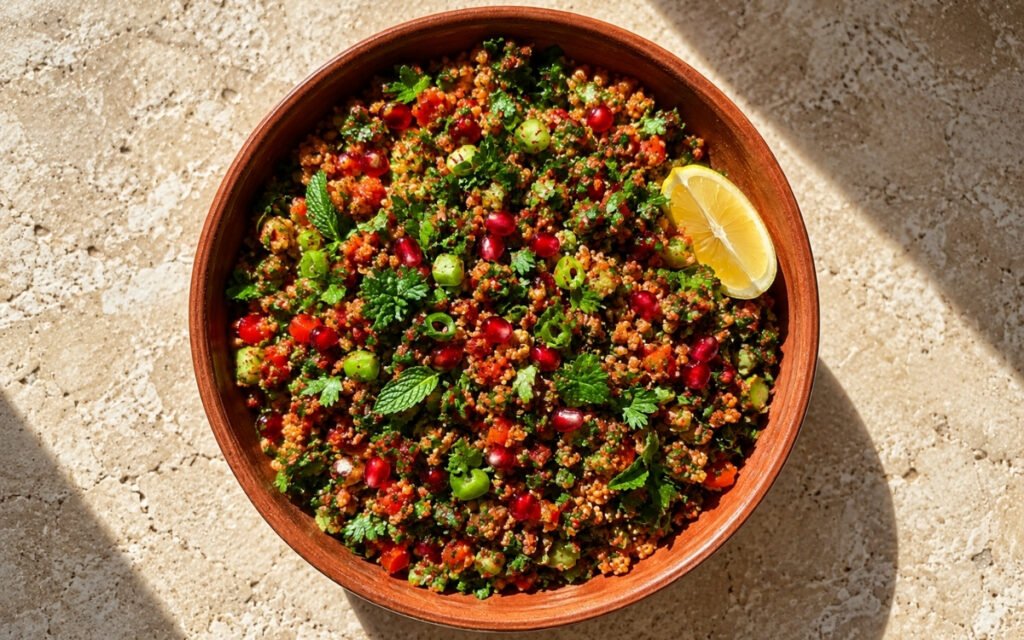
A classical Turkish kısır made with fine bulgur softened in hot water, then worked with tomato paste, pepper paste, olive oil, lemon, and pomegranate molasses until lightly red-tinted and glossy, finished with lots of parsley, mint, spring onion, diced tomato, and cucumber, the texture staying fluffy and separate, never wet or mushy. Using genuinely fine bulgur, never medium or coarse, is the technique this whole dish depends on for real, proper hydration — coarse bulgur won’t soften correctly for kısır and stays hard unless cooked separately, the same right-grind-for-the-method principle used elsewhere in this collection whenever a grain’s own particle size determines whether it can hydrate through soaking alone or genuinely needs to be cooked. Working the paste mixture thoroughly into the softened bulgur, rather than simply tossing it, is what gives kısır its characteristic even, glossy coating and real depth of flavour. Adding the tomato and cucumber close to serving is what keeps the finished salad’s texture clean rather than watery. The payoff is a salad with real, classic Turkish character — fluffy, lightly red-tinted bulgur grains, tangy-sweet from pomegranate molasses, generously herbed and studded with fresh vegetables.
Prep Time : 25 min
Cook Time : 5 min
Servings : 4
25 min
5 min
4
Ingredients
For the Bulgur Base
• 240g fine bulgur wheat
• 300ml just-boiled water
• ½ tsp fine salt
For the Paste and Dressing Mixture
• 2 tbsp tomato paste (about 35g)
• 1 tbsp Turkish red pepper paste / biber salçası (about 20g), mild or hot — this one on Amazon
• 60ml extra-virgin olive oil — this one on Amazon
• 45ml pomegranate molasses — this one on Amazon
• 30ml fresh lemon juice, plus more to taste
• 1 tsp Aleppo pepper or Turkish pul biber — this one on Amazon
• ½ tsp red chili flakes, or to taste
• ½ tsp ground cumin — this one on Amazon
• ¼ tsp freshly ground black pepper
• ¾ tsp fine salt, or to taste
For the Vegetables and Herbs
• 2 medium tomatoes (about 220g), finely diced
• 1 small cucumber (about 140g), finely diced
• 4 spring onions, finely sliced
• 1 small bunch flat-leaf parsley (about 35–40g leaves and tender stems), very finely chopped
• 15g fresh mint leaves, finely chopped
Optional Garnish / Finish
• 60–80g pomegranate seeds
• Lemon wedges, for serving
• Extra olive oil, a light drizzle if needed
This post may contain affiliate links. As an Amazon Associate I earn from qualifying purchases, at no additional cost to you.
Directions
- Soften the Bulgur
Place the fine bulgur in a large heatproof bowl and mix with the ½ tsp salt. Pour over the just-boiled water, stir once, cover tightly with a plate or lid, and let sit for 15–20 minutes until the bulgur absorbs the water and softens. Fluff with a fork and break up any clumps. Use fine bulgur only. Coarse bulgur will not hydrate properly for kısır and will stay hard unless cooked separately. That genuinely fine grind is what allows the bulgur to soften entirely through simple hot-water soaking alone — coarser grinds simply lack the same surface area and structure to fully hydrate without actual cooking. - Prepare the Vegetables and Herbs
While the bulgur rests, finely dice the tomatoes and cucumber, slice the spring onions, and finely chop the parsley and mint. If the tomatoes are very juicy, let them drain briefly in a sieve or on paper towels. The vegetables should be cut small and evenly so the salad mixes uniformly and stays spoonable, not chunky. That consistent, fine dice matters directly for how the finished salad actually eats — evenly sized pieces let every spoonful carry a genuine mix of components rather than isolated chunks. - Build the Paste Mixture
In a small bowl, mix together the tomato paste, pepper paste, olive oil, pomegranate molasses, lemon juice, Aleppo pepper, chili flakes, cumin, black pepper, and ¾ tsp salt until smooth. Taste it. It should be bold, tangy, slightly sweet, and a little spicy. Having this mixture fully combined and tasted before it ever meets the bulgur is what lets its own balance be checked and adjusted while it’s still easy to work with, before it’s committed to seasoning the whole grain base. - Work the Bulgur
Add the paste mixture to the softened bulgur. Using a spoon or clean hands, mix and lightly rub the mixture into the grains for 2–3 minutes until the bulgur is evenly coated and takes on a light red-orange tint. Let it sit for 5 minutes so the seasoning absorbs. This mixing step matters. Kısır tastes better when the paste and dressing are worked thoroughly into the bulgur rather than simply tossed. That deliberate, hands-on rubbing motion is what actually drives the paste’s own flavour into every individual grain — a lighter toss would leave the coating sitting on the surface rather than genuinely absorbed throughout. - Add the Fresh Ingredients
Add the spring onions, parsley, mint, diced tomato, and diced cucumber to the seasoned bulgur. Mix gently but thoroughly until evenly combined. Taste and adjust with more lemon juice, pomegranate molasses, salt, or chili as needed. If it feels a little dry, add 1–2 tsp olive oil. If it feels too wet, let it stand uncovered for a few minutes before serving. That real-time adjustment, using either more oil or a brief uncovered rest as needed, reflects genuine understanding that the exact moisture balance can vary batch to batch, worth actively correcting for rather than accepting either extreme. - Finish and Serve
Transfer to a wide shallow bowl. Scatter over the pomegranate seeds if using and serve with lemon wedges. The final salad should be fluffy, lightly glossy, herb-heavy, and well-seasoned, with distinct grains and no pooling liquid at the bottom. That specific, checkable final appearance — distinct grains, no pooled liquid — is a genuine confirmation that every earlier technique, from the fine bulgur’s own hydration through to the vegetables’ final timing, has actually worked as intended.
*Notes :
- Using genuinely fine bulgur, rather than medium or coarse, deserves recognition as the technique most directly responsible for whether this dish achieves proper hydration through simple soaking alone. The recipe’s own explicit warning that coarse bulgur “will not hydrate properly for kısır and will stay hard unless cooked separately” reflects a real, structural distinction between grinds — this particular method depends specifically on fine bulgur’s own greater surface area.
- Working the paste mixture thoroughly into the softened bulgur, rather than simply tossing it in, deserves genuine attention as the technique responsible for kısır’s real, even flavour throughout. The recipe’s own explicit note that “kısır tastes better when the paste and dressing are worked thoroughly into the bulgur rather than simply tossed” reflects real, deliberate technique — that hands-on rubbing motion is what actually drives the seasoning into each individual grain.
- Adding the diced tomato and cucumber closer to serving, rather than earlier in preparation, deserves respect as a real, functional timing choice given how much water both vegetables carry. The recipe’s own explicit acknowledgment that they “add water” reflects genuine awareness that their moisture, left too long in contact with the seasoned bulgur, would compromise the dish’s own intended fluffy, distinct texture.
- The recipe’s own specific final-appearance target — distinct grains with no pooling liquid — deserves attention as a genuine, checkable confirmation rather than a loose description. That visible result reflects whether every earlier stage, from the bulgur’s own fine grind through to the vegetables’ careful timing, has actually come together as intended.
Why This Recipe Works
This recipe works because genuinely fine bulgur is used specifically for its ability to hydrate fully through hot-water soaking alone. The paste mixture is built and tasted separately before it ever meets the bulgur, letting its own balance be checked.
Working that paste thoroughly into the grains, rather than simply tossing, drives real flavour into every individual piece.
The fresh vegetables and herbs are added at a deliberate stage, and real-time adjustments to moisture and seasoning protect the finished dish’s own fluffy, distinct texture right through to serving.
Ingredient Breakdown
Genuinely Fine Bulgur
The critical ingredient choice — the specific grind that allows full hydration through simple hot-water soaking alone.
Tomato Paste and Pepper Paste Combination
The critical technique — together form the core flavour base, with pepper paste adding real depth and authenticity.
Thoroughly Worked-In Paste Mixture
The critical technique — deliberate, hands-on rubbing drives real flavour into every individual bulgur grain.
Pomegranate Molasses
The defining flavour ingredient — essential for the classic tangy-sweet profile central to kısır’s whole identity.
Finely, Evenly Diced Vegetables
The critical technique — consistent size lets the salad mix uniformly and stay spoonable rather than chunky.
Late-Added Tomato and Cucumber
The critical technique — protects the finished salad’s clean texture from the water these vegetables would otherwise release.
Flavor Structure Explained
This Turkish kısır follows a layered balance model:
- Fluffy, tangy foundation (paste-worked, softened fine bulgur)
- Sweet-tart depth (pomegranate molasses, lemon juice)
- Warm background spice (Aleppo pepper, cumin, chili flakes)
- Fresh, crisp vegetable body (tomato, cucumber, spring onion)
- Herbal dominance (parsley, mint)
- Bright finishing note (pomegranate seeds, lemon wedges)
Paste-worked, softened fine bulgur provides this salad’s fluffy, genuinely tangy foundation, its flavour built through deliberate hands-on mixing. Pomegranate molasses and lemon juice contribute real sweet-tart depth central to kısır’s classic profile. Aleppo pepper, cumin, and chili flakes layer in warm, classic background spice. Finely diced tomato, cucumber, and spring onion add fresh, crisp vegetable body, added at a deliberate stage to protect the salad’s texture. Generous parsley and mint dominate the salad with real herbal character, and pomegranate seeds with lemon wedges finish the dish with a bright, classic Turkish note.
Common Mistakes to Avoid
- Using Medium or Coarse Bulgur – This won’t hydrate properly through simple soaking and will stay hard. Always use genuinely fine bulgur (#1 grind).
- Simply Tossing the Paste Mixture In Rather Than Working It – This leaves the coating sitting on the surface rather than absorbed throughout. Always mix and rub it into the grains for the full 2–3 minutes.
- Adding the Tomato and Cucumber Too Early – This releases water into the finished salad, compromising its fluffy texture. Always add them close to serving.
- Skipping the Real-Time Moisture Adjustment – This leaves the salad too dry or too wet depending on the batch. Always adjust with a little olive oil or a brief uncovered rest as needed.
- Using Only Tomato Paste Without Pepper Paste – This produces a less rounded, less authentic flavour. Always include pepper paste for real depth.
Variations
Extra-Herbal Version
Increase the parsley, keeping it as the salad’s main herb, per the recipe’s own note that “kısır should be generously herbaceous,” for a more pronounced fresh, herbal character.
Lettuce-Wrapped Version
Serve with lettuce leaves for scooping, per the recipe’s own note on this being a traditional serving style, for a more interactive, handheld way to enjoy the salad.
Mezze Spread Version
Serve as part of a larger mezze spread alongside other classic Turkish or Middle Eastern dishes, per the recipe’s own guidance, for a more complete shared meal.
Extra-Spicy Version
Use hot Turkish red pepper paste and increase the chili flakes slightly, per the recipe’s own note on adjusting heat to taste, for a sharper, more assertive finished flavour.
Storage & Make-Ahead
Very fine bulgur is genuinely the standard for kısır, and medium or coarse bulgur should not be substituted unless it’s fully cooked first, since the resulting texture would be noticeably different from the classic version.
Tomato paste combined with pepper paste forms the core flavour base here, with pepper paste adding real depth and authenticity, though tomato paste alone works in a pinch while leaving the finished salad less rounded overall.
Pomegranate molasses is essential for the classic tangy-sweet profile, so use a good one that tastes genuinely tart and fruity rather than simply sugary, since that distinction carries directly into the finished dish.
If the bulgur still feels firm after its initial resting period, sprinkle in 1 to 2 tablespoons of hot water, cover again, and rest for 5 more minutes, since fine bulgur can sometimes need just a little extra hydration time depending on the batch.
For the best make-ahead approach, mix the bulgur base with the paste and dressing well in advance, but add the tomato, cucumber, and most of the herbs closer to serving for the freshest possible texture and flavour.
Frequently Asked Questions
Why does this recipe specifically require fine bulgur rather than medium or coarse?
Coarse bulgur simply won’t hydrate properly through hot-water soaking alone and will stay hard unless cooked separately. Genuinely fine bulgur’s own greater surface area is what allows it to soften fully this way.
Why does the paste mixture need to be worked into the bulgur rather than just tossed?
That deliberate, hands-on rubbing motion is what actually drives the seasoning into every individual grain. A lighter toss would leave the coating sitting mostly on the surface rather than genuinely absorbed throughout.
Why are the tomato and cucumber added closer to serving rather than earlier?
Both vegetables carry considerable water content, and adding them too early would release that moisture into the finished salad, compromising its intended fluffy, distinct texture.
Why does the finished salad need to look like distinct grains with no pooling liquid?
That specific appearance is a genuine, checkable confirmation that every earlier stage — the bulgur’s proper hydration, the thorough paste working, and the vegetables’ careful timing — has actually come together as intended.
Are there other classic Middle Eastern grain, bean, or fresh vegetable salad dishes worth trying?
Classic Tabbouleh Salad offers another classic herb-forward grain salad direction worth exploring. Freekeh Grain Salad and Egyptian Balela are also worth trying for other classic Middle Eastern grain and legume dishes, and Turkish Piyaz Bean Salad and Lebanese Fattoush Salad offer other classic Turkish and Lebanese salads worth exploring.
Nutrition Facts
( per serving )
Calories
~340 kcal
Protein
7 g
Fat
16 g
Carbs
46 g
Calories
~340 kcal
Protein
7 g
Fat
16 g
Carbs
46 g
Related Recipes
Related Recipes

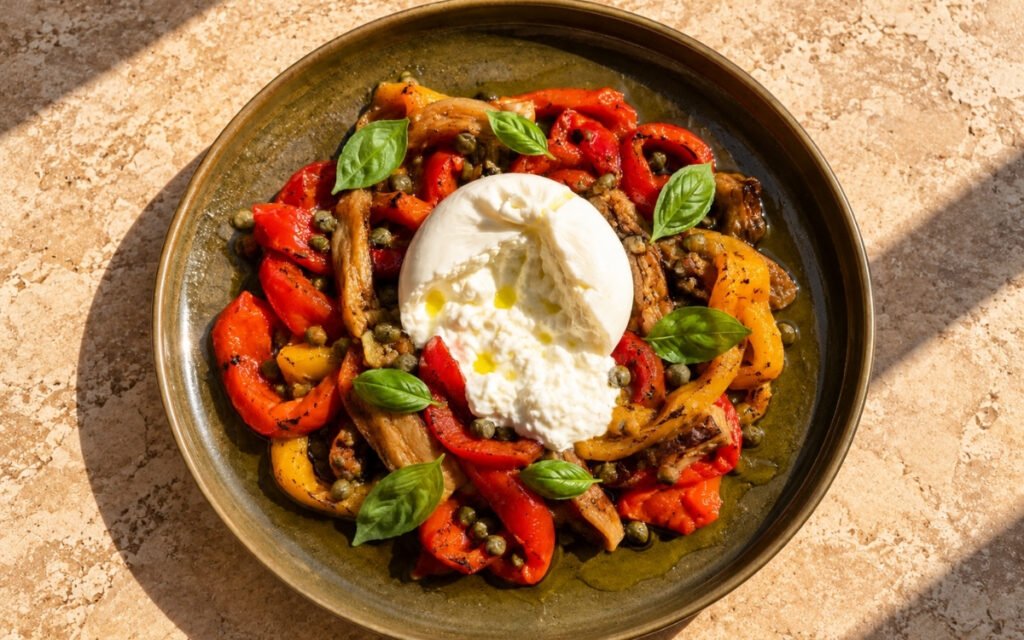
Spanish Escalivada with Burrata & Capers
Fully roasted peppers, eggplant, and onion, peeled and torn into soft smoky strips, dressed with olive oil, finished with torn burrata, capers, and basil.
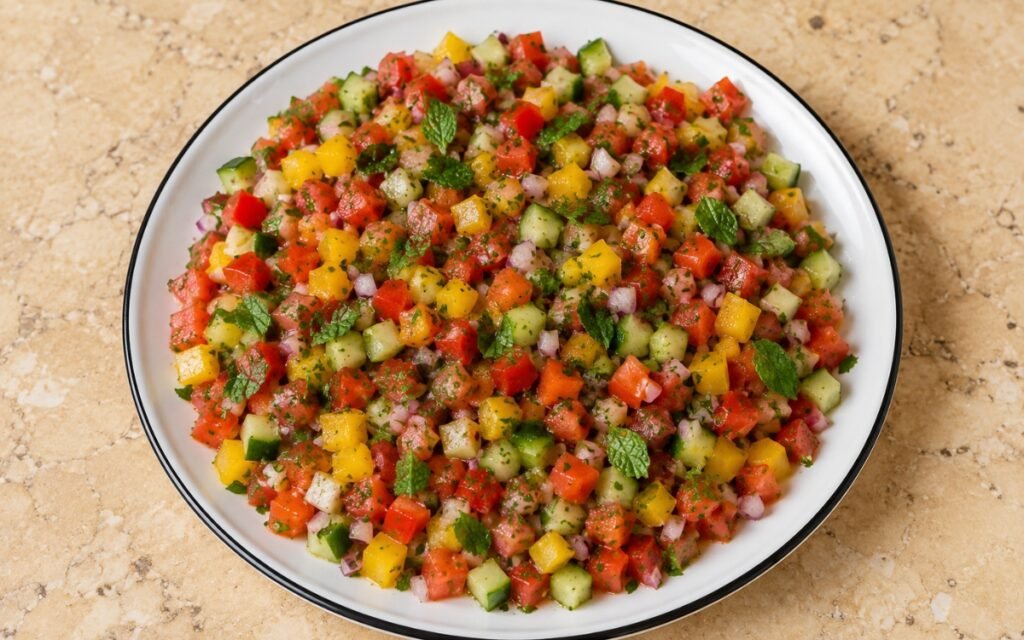
Light Chopped Vegetable Salad
Crisp chopped vegetables with cucumbers, bell peppers, tomatoes, and herbs in lemon vinaigrette.
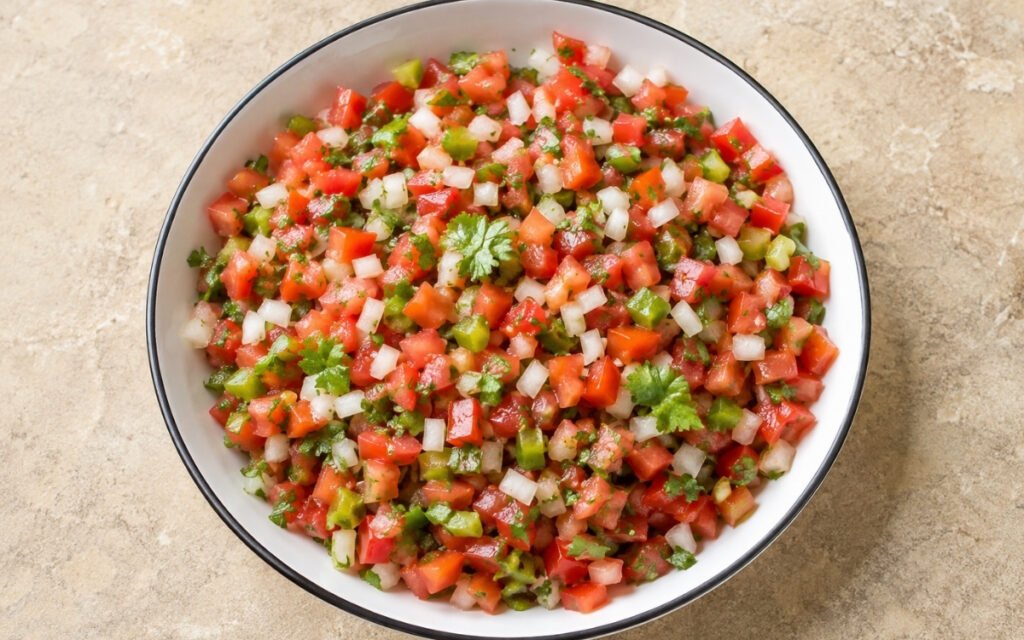
Pico de Gallo
Fresh Roma tomatoes, dual onion, jalapeño, and three limes — the classic Mexican condiment that makes every dish from the region taste complete.
You might also like
You might also like
Chipotle and Lime Hummus
Chipotle pepper in adobo and fresh lime blended into the classic hummus base — smoky, warm, and bold, finished with cilantro and sumac.
Jambon-Beurre
Fresh crusty baguette, a generous layer of softened butter, and thinly folded slices of pale pink French ham.
Lebanese Chicken Shawarma Rice Bowl
Chicken thighs marinated in yogurt and seven Lebanese spices, charred undisturbed in cast iron — over turmeric rice with cold-whisked tahini sauce and pickled turnips. 45 minutes.

Turkish Bulgur Salad (Kısır)
Ingredients
Method
- Place the fine bulgur in a large heatproof bowl and mix with the ½ tsp salt. Pour over the just-boiled water, stir once, cover tightly with a plate or lid, and let sit for 15–20 minutes until the bulgur absorbs the water and softens. Fluff with a fork and break up any clumps. Use fine bulgur only. Coarse bulgur will not hydrate properly for kısır and will stay hard unless cooked separately. That genuinely fine grind is what allows the bulgur to soften entirely through simple hot-water soaking alone — coarser grinds simply lack the same surface area and structure to fully hydrate without actual cooking.
- While the bulgur rests, finely dice the tomatoes and cucumber, slice the spring onions, and finely chop the parsley and mint. If the tomatoes are very juicy, let them drain briefly in a sieve or on paper towels. The vegetables should be cut small and evenly so the salad mixes uniformly and stays spoonable, not chunky. That consistent, fine dice matters directly for how the finished salad actually eats — evenly sized pieces let every spoonful carry a genuine mix of components rather than isolated chunks.
- In a small bowl, mix together the tomato paste, pepper paste, olive oil, pomegranate molasses, lemon juice, Aleppo pepper, chili flakes, cumin, black pepper, and ¾ tsp salt until smooth. Taste it. It should be bold, tangy, slightly sweet, and a little spicy. Having this mixture fully combined and tasted before it ever meets the bulgur is what lets its own balance be checked and adjusted while it’s still easy to work with, before it’s committed to seasoning the whole grain base.
- Add the paste mixture to the softened bulgur. Using a spoon or clean hands, mix and lightly rub the mixture into the grains for 2–3 minutes until the bulgur is evenly coated and takes on a light red-orange tint. Let it sit for 5 minutes so the seasoning absorbs. This mixing step matters. Kısır tastes better when the paste and dressing are worked thoroughly into the bulgur rather than simply tossed. That deliberate, hands-on rubbing motion is what actually drives the paste’s own flavour into every individual grain — a lighter toss would leave the coating sitting on the surface rather than genuinely absorbed throughout.
- Add the spring onions, parsley, mint, diced tomato, and diced cucumber to the seasoned bulgur. Mix gently but thoroughly until evenly combined. Taste and adjust with more lemon juice, pomegranate molasses, salt, or chili as needed. If it feels a little dry, add 1–2 tsp olive oil. If it feels too wet, let it stand uncovered for a few minutes before serving. That real-time adjustment, using either more oil or a brief uncovered rest as needed, reflects genuine understanding that the exact moisture balance can vary batch to batch, worth actively correcting for rather than accepting either extreme.
- Transfer to a wide shallow bowl. Scatter over the pomegranate seeds if using and serve with lemon wedges. The final salad should be fluffy, lightly glossy, herb-heavy, and well-seasoned, with distinct grains and no pooling liquid at the bottom. That specific, checkable final appearance — distinct grains, no pooled liquid — is a genuine confirmation that every earlier technique, from the fine bulgur’s own hydration through to the vegetables’ final timing, has actually worked as intended.