Ingredients
Method
Score and Season the Pork Belly
- Pat the pork belly very dry. Place it skin-side up. Using a sharp skewer, cake tester, or the tip of a small knife, prick the skin all over without cutting deeply into the meat. Flip the pork belly meat-side up. Mix the salt, sugar, five-spice, garlic powder, white pepper, fish sauce, and soy sauce. Rub this seasoning into the meat side and sides only. Do not rub wet seasoning onto the skin. Flip skin-side up again. Brush the skin lightly with rice vinegar, then sprinkle with a thin, even layer of fine sea salt. Place the pork belly uncovered on a rack set over a tray and refrigerate for 8 hours minimum, ideally overnight. The skin needs to look dry and slightly tightened before roasting. Wet pork skin will not puff properly. If the skin is still damp, keep drying it uncovered longer. Pricking the skin creates small channels that let trapped fat and moisture escape during roasting, which is what allows the skin to blister into individual bubbles rather than staying flat and dense.
Make the Pickled Carrot and Daikon
- Place the carrot and daikon matchsticks in a bowl. Toss with the salt and let sit for 10 minutes. Rinse briefly and squeeze out excess water. In a clean bowl or jar, combine the sugar, rice vinegar, and warm water. Stir until the sugar dissolves. Add the carrot and daikon and let pickle for at least 45 minutes. The pickles should be flexible, lightly sharp, lightly sweet, and still crisp. If they taste flat, they need a little more salt or vinegar. The initial salting and rinsing step draws out some of the vegetables' raw water content before they ever meet the sweet vinegar brine, which is what lets the pickle penetrate more effectively rather than being diluted by the vegetables' own moisture.
Roast the Pork Belly
- Preheat the oven to 160°C. Place the pork belly skin-side up on a rack set over a tray. Roast for 1 hour 15 minutes to 1 hour 30 minutes, until the meat is tender and the fat has rendered. Increase the oven to 240°C, or use a broiler, and continue cooking until the skin bubbles, blisters, and turns crisp, about 15–25 minutes. Rotate the tray if needed so the skin crisps evenly. The pork is not finished just because it is cooked through. The target is tender meat plus crisp, blistered skin. If the skin is still leathery, it needs more high heat. If parts are darkening too fast, shield those spots loosely with foil. This two-stage roast mirrors the same render-then-crisp logic used for other skin-on pork preparations throughout this collection — the gentler first stage gives the substantial fat layer real time to melt away, and only once that rendering is essentially complete does the aggressive high heat step in to finish the skin quickly.
Rest and Slice the Pork
- Transfer the pork belly to a board and rest for 15 minutes. Slice into thick bite-size strips or thin slabs that fit the baguette. Keep the skin attached to the meat where possible. Resting matters. If sliced immediately, the juices run out and the pork eats dry even if it was cooked correctly. This rest lets the juices that redistributed through the meat during roasting settle back evenly rather than spilling out onto the board the moment a knife goes in.
Make the Sandwich Sauce
- In a small bowl, mix the mayonnaise, grated garlic, lime juice, fish sauce, and sriracha if using. The sauce should be creamy, lightly salty, lightly acidic, and rich enough to coat the bread. This sauce carries the sandwich's foundational savoury-tangy layer, spread directly against the bread rather than relying on the fillings alone to season the crust.
Prepare the Bread
- Cut each baguette portion lengthwise, leaving a hinge if possible. Warm or lightly toast the bread until the crust is crisp and the interior is soft. If the baguette is very dense, pull out a little of the interior crumb so the fillings fit properly. Bánh mì bread should crackle outside but not fight your teeth. A rock-hard baguette makes a bad sandwich. Removing some of an overly dense crumb creates genuine room for the generous fillings this sandwich calls for, without needing to compress everything into a cavity that wasn't built to hold it.
Assemble the Sandwiches
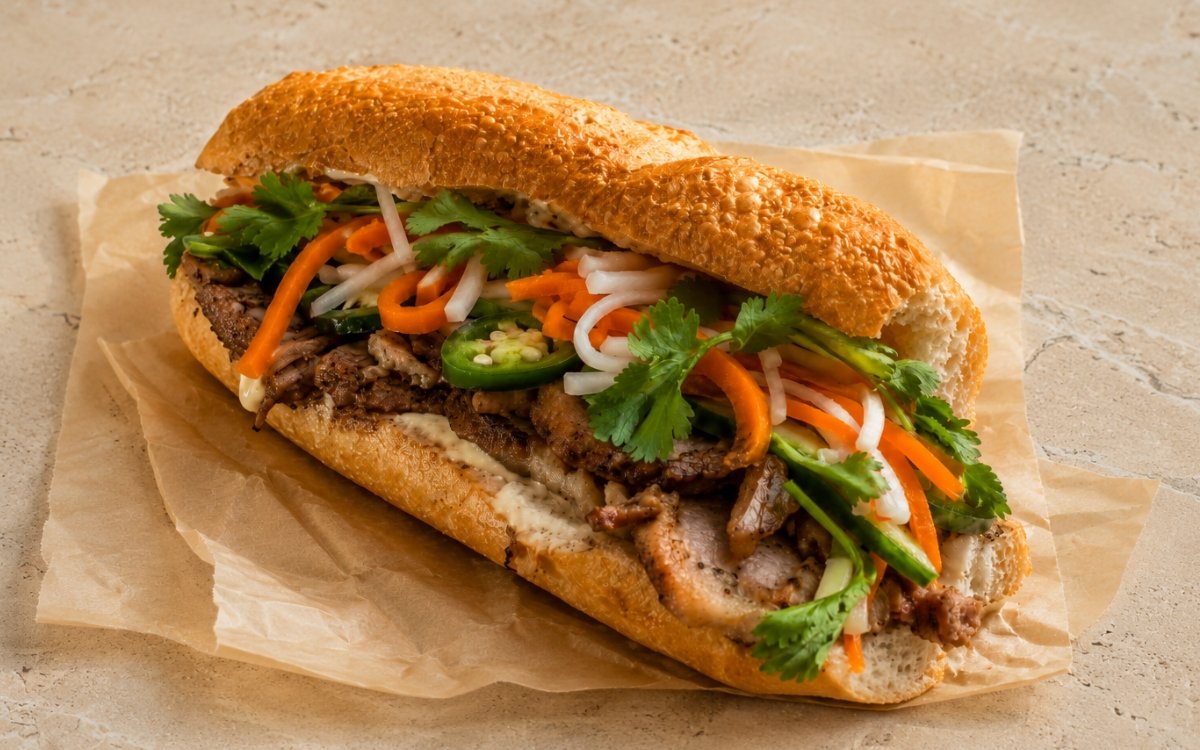
- Spread the sandwich sauce inside each baguette. Add a generous layer of sliced crispy pork belly. Top with pickled carrot and daikon, cucumber batons, jalapeño slices, and fresh cilantro. Add a very light splash of Maggi seasoning, soy sauce, or fish sauce over the filling. Close the sandwich gently without crushing it. The finished sandwich should have crisp bread, crunchy pork skin, juicy pork belly, sharp pickles, cool cucumber, fresh herbs, and chili heat in the same bite. That final light splash of seasoning sauce is a small, characteristic finishing touch — enough to season the fresh vegetables and herbs directly, tying the whole sandwich together without needing to be built into any single component beforehand.
Notes
Keeping wet marinade strictly confined to the meat side while the skin receives only dry salt and a light vinegar brush is worth understanding as a rule with no real exceptions in this recipe. Any wet marinade that touches the skin directly works against the entire point of the overnight dry — moisture on the skin is precisely what prevents it from blistering and crisping properly, regardless of how thoroughly it's dried afterward. The careful separation between the two sides during seasoning is what sets up the drying stage to actually succeed.
The overnight drying period deserves to be treated as genuinely non-negotiable rather than a flexible suggestion, since it's directly responsible for whether the skin crisps at all. Pork skin holds real surface moisture, and that moisture has to be drawn out and evaporated before high heat can properly blister it — rushing or skipping this step is one of the most common reasons homemade crispy pork belly ends up chewy rather than crackling.
The two-stage roast — a longer, gentler cook followed by a short, aggressive finish — solves a genuine tension specific to skin-on pork belly. Going straight to high heat would char the skin's exterior long before the substantial fat layer beneath it has had time to render out, leaving chewy, greasy fat under a burnt surface. The gentler first stage handles that rendering fully, so the hot finish can focus entirely on the skin without needing to also cook the meat through.
The bright, sharp pickled carrot and daikon, along with the fresh cucumber, herbs, and chili, aren't simply garnish in this sandwich — they're doing genuine structural work against the pork belly's richness. Without that acidic, crisp, herbal counterpoint, a sandwich built around fatty, crispy-skinned pork would read as heavy rather than balanced; the pickles and fresh vegetables are what keep the whole sandwich feeling bright rather than one-note.