
Yaki Udon Stir-Fry Noodles
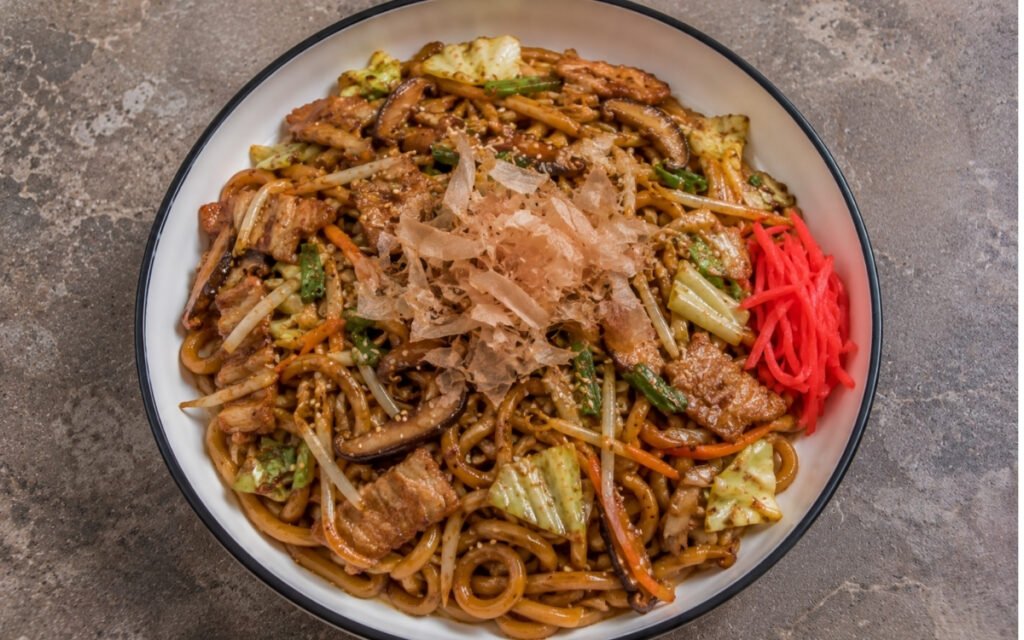
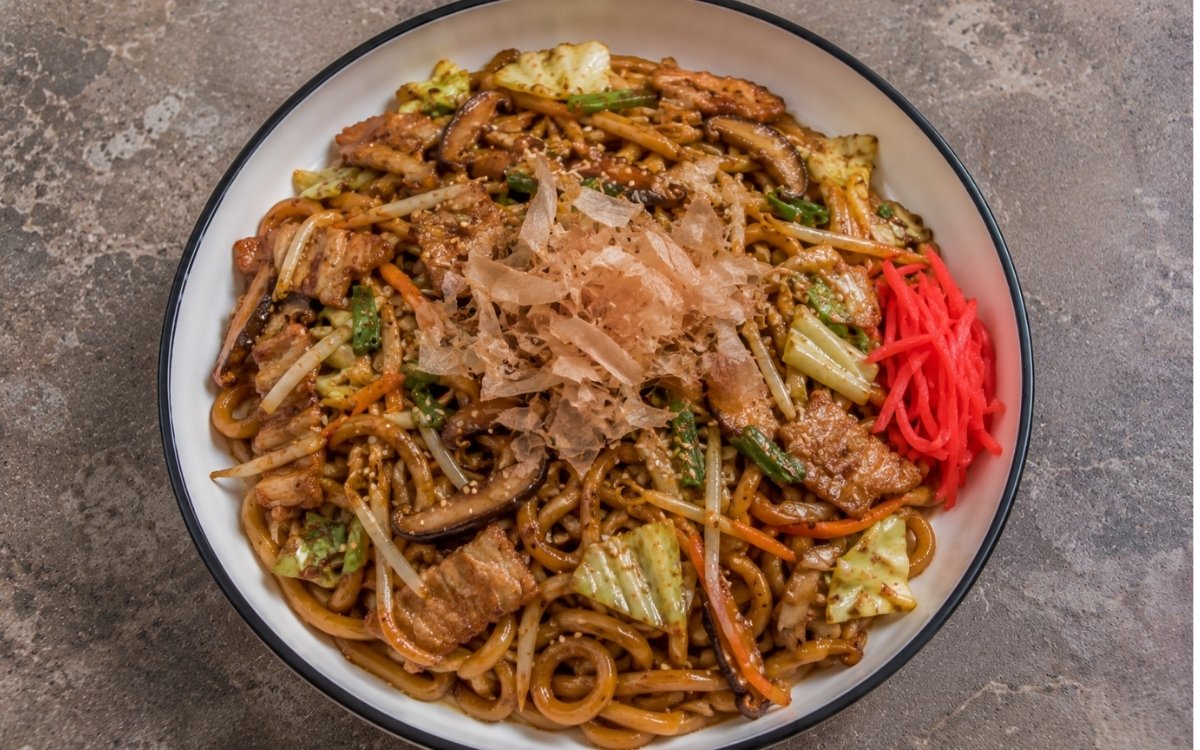
Yaki udon is the Japanese stir-fried noodle dish where everything depends on the heat of the wok and the sequencing of what goes in when. Pork belly seared undisturbed until a golden crust forms and its fat renders into the pan, set aside while mushrooms, carrot, and cabbage take their turn at maximum heat, then noodles added to the centre of the wok and allowed to sit still against the hot surface for 45 seconds before being tossed — building the slight char and smoky caramelisation that is the difference between restaurant yaki udon and home yaki udon. The soy-mirin-sake-oyster sauce goes on at the end of everything, coating every strand in one vigorous 90-second toss. Bonito flakes, sesame seeds, and pickled red ginger finish each bowl. Twenty-seven minutes.
Prep Time : 15 min
Cook Time : 12 min
Servings : 4
15 min
12 min
4
Ingredients
For the Yaki Udon Sauce
• 60ml soy sauce
• 45ml mirin — this one on Amazon
• 30ml sake — this one on Amazon
• 15ml oyster sauce — this one on Amazon
For the Stir-Fry
• 600g fresh udon noodles
• 400g pork belly, thinly sliced
• 200g shiitake mushrooms, stems removed and sliced
• 150g cabbage, cut into 2cm squares
• 120g carrots, julienned
• 100g bean sprouts
• 80g scallions, cut into 3cm pieces
• 45ml vegetable oil, divided
• 8g fresh ginger, grated
• 8g garlic, minced
• 3g white pepper
For Garnish
• 10g toasted sesame seeds
• 4g bonito flakes (katsuobushi) — this one on Amazon
• 8g pickled red ginger (beni shoga)
This post may contain affiliate links. As an Amazon Associate I earn from qualifying purchases, at no additional cost to you.
Directions
- Prepare yaki udon Sauce and Noodles
Before the wok is turned on, have every component ready — yaki udon moves too fast for concurrent preparation once the heat is on. In a small bowl, whisk together the 60ml of soy sauce, 45ml of mirin, 30ml of sake, and 15ml of oyster sauce until completely combined. Set beside the wok. The sauce’s four components each contribute a distinct dimension: soy provides the primary salt and deep savoury umami that coats every noodle; mirin provides sweetness and the characteristic Japanese glaze that caramelises slightly on the noodle surface during the final toss; sake provides aromatic, subtle fermented grain depth and a mild acidity that prevents the sauce from tasting flat; oyster sauce adds a secondary, more concentrated savoury-sweet umami depth and a slight thickness that helps the sauce adhere. Together they produce the specific sweet-savoury-umami balance that defines Japanese stir-fried noodle sauces. If using shelf-stable vacuum-packed udon noodles — the most common format outside Japan — blanch them in boiling water for exactly 1 minute, then drain and rinse under cold water. Separate the noodles gently with your fingers, working them apart completely — fresh udon’s surface starch causes strands to stick together and any clumps that enter the wok will not separate during cooking, producing uneven sauce distribution. If the noodles are sold in a fresh or pre-cooked format that requires no blanching, simply loosen them at room temperature. - Sear the Pork Belly
Heat the large wok or 14-inch skillet over the absolute highest heat your burner produces for a full 2–3 minutes until the wok is smoking. The wok must reach genuinely smoking-hot temperature before the first ingredient is added — this is the prerequisite for wok hei, the slight smoky caramelised character of high-heat wok cooking that sets restaurant stir-fry apart from home cooking. Add 15ml of vegetable oil and swirl to coat the wok surface completely. Add the thinly sliced pork belly in a single layer — work in two batches if needed to ensure space between slices. Leave completely undisturbed for 2 minutes. The undisturbed contact with the smoking-hot wok surface caramelises the pork’s natural sugars and rendered fat simultaneously, producing the deep golden-brown crust that is both a flavour contribution and a textural element — the rendered fat also leaves a pork-enriched cooking medium in the wok for the subsequent vegetable and noodle stages. Flip each slice and cook the second side for 90 seconds. Transfer to a plate. The pork does not need to be cooked entirely through at this stage — it will return to the wok for the final toss and finish there. - Cook the Aromatics and Mushrooms
Add 15ml of fresh oil to the still-smoking wok. Add the grated ginger and minced garlic simultaneously. Stir-fry for exactly 15 seconds, moving continuously — at the wok’s temperature, garlic and ginger move from raw to fragrant to burnt in under 30 seconds. The 15-second window produces the correct transition: the sharp, pungent raw character of both aromatics is converted to a sweeter, more complex fragrance by the brief high-heat contact without burning. Immediately add the 200g of sliced shiitake mushrooms without reducing the heat. Stir-fry for 2 minutes — allowing brief stationary contact with the wok surface between stirs, which produces the caramelised edges that distinguish wok-fried shiitake from simply cooked shiitake. The mushrooms will first release moisture, creating a brief steaming period, then the moisture evaporates and the caramelisation begins. By the 2-minute mark the mushrooms should be showing golden-brown colouring at their edges and smelling of toasted, concentrated mushroom. - Stir-Fry the Vegetables
Add the 120g of julienned carrots and 150g of cabbage squares to the wok with the mushrooms. Stir-fry vigorously for 2 minutes — keeping the vegetables in near-constant motion, tossing from the bottom of the wok up and over, pressing briefly against the hot surface and immediately lifting. The cabbage will wilt slightly at the edges while remaining crisp at the centre — the correct tender-crisp texture that distinguishes high-heat wok vegetable cooking from the uniform softness of medium-heat sautéing. Push all the vegetables to the sides of the wok, creating a clear well in the centre. Add the remaining 15ml of oil to the centre well. Add the blanched and separated udon noodles to the oil in the centre well. Spread them out with tongs or chopsticks and leave them completely undisturbed for 45 seconds — this is the technique step that most directly produces the yaki udon character that distinguishes it from simply tossed noodles. The 45 seconds of direct contact between the noodles and the smoking-hot wok surface, with the fresh oil as the medium, produces very slight charring and caramelisation on the exterior noodle surfaces — a subtle smokiness and slight crust that is specific to yaki udon and that no amount of tossing at lower temperatures produces. After 45 seconds, toss the noodles together with the vegetables from the sides of the wok. - Return the Pork, Add Remaining Vegetables, and Finish with Sauce
Return the seared pork belly pieces to the wok along with any accumulated resting juices from the plate — the juices contain rendered pork fat and caramelised protein compounds that add flavour to the final dish. Add the 100g of bean sprouts and 80g of scallion pieces. Pour the entire prepared sauce mixture over everything in a single, decisive pour — distributing it as evenly as possible across the noodles, meat, and vegetables. Using two spatulas, tongs, or chopsticks, toss everything vigorously for 90 seconds. The tossing must be continuous and high-energy — lifting from the bottom and folding over the top, working around the entire wok circumference. The sauce coats every noodle strand and vegetable piece during this 90 seconds. The mirin’s sugar caramelises slightly against the still-hot wok surface, producing the characteristic glaze on the noodles. The 90-second toss is calibrated to heat the bean sprouts and scallions through while preserving their crunch — longer cooking softens both significantly. Scatter the 3g of white pepper over the stir-fry and toss once more to distribute. Remove from the heat immediately. - Garnish and Serve
Divide the Yaki udon among four plates or wide shallow bowls immediately. The bonito flakes, sesame seeds, and pickled red ginger are not optional garnishes in yaki udon — they are integral components of the traditional preparation that each contribute specific texture, flavour, and visual character. Scatter the toasted sesame seeds over each bowl. Place a small pinch of bonito flakes on top of each portion — katsuobushi’s delicate, umami-rich, slightly smoky flavour and the way the thin flakes move in the heat rising from the noodles is the visual signature of the dish. Place the pickled red ginger alongside each bowl — beni shoga’s vinegary, slightly sweet, bright pink presence provides the acid contrast that cuts through the sauce’s sweetness and richness, and its crunch against the chewy noodles provides the final textural element. Serve immediately.
*Notes :
- Fresh udon noodles are specified because their specific character — thick, very chewy, with a slightly slippery, silky exterior surface — is what makes yaki udon specifically satisfying. Fresh udon’s chew comes from its high-gluten wheat flour composition and its hydration level, which is significantly higher than dried pasta. This high hydration means fresh udon softens quickly in boiling water (hence the 1-minute blanch rather than 8–10 minutes), holds its chew through high-heat wok cooking without becoming soft or mushy, and produces the characteristic slightly sticky, slightly silky surface that the sauce adheres to efficiently. Dried udon, if used, should be cooked to full tenderness before wok cooking — it becomes too firm to wok-cook correctly if pulled al dente as Italian pasta is.
- The wok hei technique — creating a hot zone in the centre of the wok for the noodles while vegetables rest at the sides — is the authentic yaki udon technique found in Japanese izakaya and teishoku restaurants. Home stoves produce less BTU than restaurant burners, which is why the 2–3 minute preheat and the staged cooking are more important at home than in a restaurant — the strategy compensates for lower available heat by maximising each ingredient’s contact time with the wok surface at its hottest.
- Bonito flakes (katsuobushi) are dried, fermented, and smoked skipjack tuna shaved into paper-thin flakes. Their flavour is specifically umami-rich, slightly smoky, and deeply savoury — the dried fermentation process concentrates glutamate and inosinate, the two umami compounds that act synergistically to produce an amplified savoury response. They waver and move on top of hot food because of the convection currents from the rising heat — a presentation element that signals temperature and freshness simultaneously.
Why This Recipe Works
This recipe works because it applies the correct high-heat technique at each stage: smoking-hot wok for the pork sear, undisturbed contact for the noodle charring, vigorous final toss for sauce coating, and immediate service before the vegetables soften past their correct crunch.
The staging of ingredients — pork first to render fat and create the cooking medium, mushrooms next for their own caramelisation, harder vegetables then softer, noodles allowed to char briefly, sauce added at the very end — ensures every component is at its best texture when the dish reaches the bowl.
Ingredient Breakdown
Fresh Udon Noodles
The chewy, silky, thick noodle format specifically suited to Japanese stir-fry — high hydration, excellent heat tolerance, and the characteristic surface that sauce adheres to efficiently.
Pork Belly (Thinly Sliced, Seared Undisturbed)
The flavour-and-fat foundation — its rendered fat enriches the wok’s cooking medium; its caramelised crust adds smoky depth; its pieces provide rich, fatty protein throughout the dish.
Soy-Mirin-Sake-Oyster Sauce
The Japanese stir-fry sauce formula — soy for umami-salt, mirin for sweetness-glaze, sake for aromatic depth, oyster sauce for secondary concentrated savoury sweetness.
Shiitake Mushrooms
The umami-amplifying vegetable — their glutamate content is the highest of any common mushroom, adding concentrated savoury depth when caramelised.
45-Second Noodle Char
The technique decision that most distinguishes yaki udon from generic stir-fried noodles — undisturbed contact with the smoking surface produces the smoky caramelisation that is the dish’s specific identity.
Bonito Flakes, Pickled Red Ginger, and Sesame
The three traditional garnishes — umami, acid contrast, and nutty toasted crunch, each contributing a dimension absent from the stir-fry itself.
Flavor Structure Explained
This Yaki udon follows a layered balance model:
- Sweet-savory core (soy sauce, mirin)
- Savory fatty depth (pork, mushrooms)
- Aromatic warmth (ginger, garlic, sake)
- Textural contrast (udon, vegetables, char)
- Finishing garnish layer (bonito, pickled ginger, sesame)
The sauce defines the foundation with a balanced sweet-salty coating that clings to every noodle. Pork and mushrooms build a deeper layer of savory richness, intensified by high-heat caramelisation. Ginger, garlic, and sake add aromatic warmth that keeps the sweetness from flattening the profile. The noodles and vegetables create contrast through chew, crunch, and charred edges. Garnishes finish the structure with smoky umami, acidity, and nuttiness, adding top-layer complexity and variation to each bite.
Common Mistakes to Avoid
- Not Preheating the Wok Sufficiently – A moderately hot wok produces steamed, pale vegetables and noodles without the char and caramelisation that make yaki udon restaurant-quality. Preheat for a full 2–3 minutes over maximum heat.
- Not Separating the Noodles Before Wok Entry – Udon clumps that enter the wok will not separate during cooking, producing dense, unevenly sauced masses rather than individually coated noodles. Separate completely before adding.
- Moving the Pork During the Sear – Undisturbed 2-minute contact produces the caramelised crust. Any movement tears the developing crust and prevents golden colour.
- Skipping the 45-Second Noodle Rest – The stationary contact with the smoking wok surface is what produces the char. Moving the noodles immediately after adding them removes this contact and produces ordinary tossed noodles without the yaki udon character.
- Adding the Sauce Too Early – Sauce added before the noodles have been tossed with the vegetables produces sauce that evaporates and burns against the hot surface rather than coating the noodles. Always add at the final toss stage.
- Overcooking After the Sauce Addition – 90 seconds is the maximum tossing time with sauce — longer tossing overcooks the bean sprouts and scallions and evaporates the sauce’s aroma. Remove from heat immediately.
Variations
Chicken Yaki Udon
Replace the pork belly with 375g of thinly sliced chicken thigh fillets. Sear for 2–3 minutes per side rather than 2 minutes and 90 seconds — chicken requires more time than the very thin pork belly slices. The sauce and technique are identical.
Shrimp Yaki Udon
Replace the pork belly with 400g of large peeled shrimp. Sear for 90 seconds per side until just pink — the shrimp returns to the wok at the sauce toss and finishes there. The lighter protein allows the sauce’s sweetness to be more prominent.
Vegetarian Version
Replace the pork belly with 300g of extra-firm tofu pressed dry and cut into thin slabs, pan-fried until golden on both sides. Replace oyster sauce with an additional 15ml of soy sauce mixed with 5ml of hoisin sauce. The technique is identical.
Extra Spicy Version
Add 15ml of the chili oil from the Spicy Chili Garlic Oil Noodles recipe alongside the sauce mixture for a spiced yaki udon with the specific heat combination of gochugaru and Sichuan peppercorn alongside the traditional sauce.
Storage & Make-Ahead
Assembled yaki udon is best served immediately, since the noodles continue to absorb the sauce during storage and the bean sprouts lose their crunch. It can be refrigerated for up to 2 days. To reheat it, use a dry wok or skillet over high heat with a splash of water and a small amount of soy sauce, tossing vigorously for about 2 minutes.
The sauce base can be kept in a sealed jar in the refrigerator for up to 2 weeks. It is worth making a larger batch so you can use it throughout the week for quick yaki udon.
For the best workflow, the vegetables, sauce, and noodles can all be prepared separately up to 2 hours before cooking. The actual wok-cooking step takes only about 12 minutes, so it is best to have everything ready and within reach before you start, then cook the dish in one continuous sequence.
Frequently Asked Questions
What are fresh udon noodles and where do I find them?
Fresh udon are thick, soft wheat flour noodles sold vacuum-sealed or loose in the refrigerated section of Japanese and Korean grocery stores, Asian supermarkets, and increasingly in the Asian foods section of mainstream supermarkets. They require only a 1-minute blanch before wok cooking. Dried udon works but requires full cooking time (8–10 minutes) before wok cooking.
What is wok hei and how do I achieve it at home?
Wok hei is the slightly smoky, caramelised character of high-heat wok cooking — produced when the wok is hot enough that the ingredients make brief contact with the surface and caramelise rather than steam. Achieve it at home by preheating the wok over maximum heat for 2–3 full minutes before adding any oil or ingredient, cooking in small batches so temperature is maintained, and allowing brief undisturbed contact rather than constant movement.
Can I substitute sake with something non-alcoholic?
Replace the sake with an equal amount of dry sherry as the closest substitute — it provides a comparable fermented grain depth. Alternatively, use additional mirin and reduce the sugar quantity slightly to compensate for the additional sweetness. Plain water is the most neutral substitution if neither is available.
What is bonito flake and is it necessary?
Katsuobushi is dried, fermented, smoked skipjack tuna in paper-thin shavings. It is available at Japanese grocery stores and online. It is traditional and provides specific smoky umami at the finish. The dish is complete without it if unavailable — toasted sesame seeds alone still provide the textural and aromatic finishing element.
What does beni shoga (pickled red ginger) taste like?
Beni shoga is ginger preserved in plum vinegar, which turns it the characteristic bright red-pink colour. It tastes sharp, sour, lightly gingery, and very slightly sweet — its function at the table is acid contrast against the yaki udon’s sweet-savoury sauce. Available at Japanese grocery stores. Regular pickled ginger (gari — the sushi accompaniment) is a valid substitute.
Nutrition Facts
( per serving )
Calories
~900 kcal
Protein
28 g
Fat
58 g
Carbs
66 g
Calories
~900 kcal
Protein
28 g
Fat
58 g
Carbs
66 g
Related Recipes
Related Recipes

Gnocchi alla Sorrentina
Soft potato gnocchi baked in a simple tomato basil sauce with melted mozzarella, Parmesan, and bubbling browned cheese on top.
Creamy Spinach & Herb Green Sauce Pasta
Four herbs blended raw with cream cheese and Parmigiano — vivid green, rich, and ready in 35 minutes.
Baked Chicken Thighs with Cheesy Spaghetti
Smoked paprika crispy chicken thighs, cacio e pepe spaghetti with tempered cheese paste, and charred broccolini — one bowl, Parmesan over everything, 55 minutes.
You might also like
You might also like
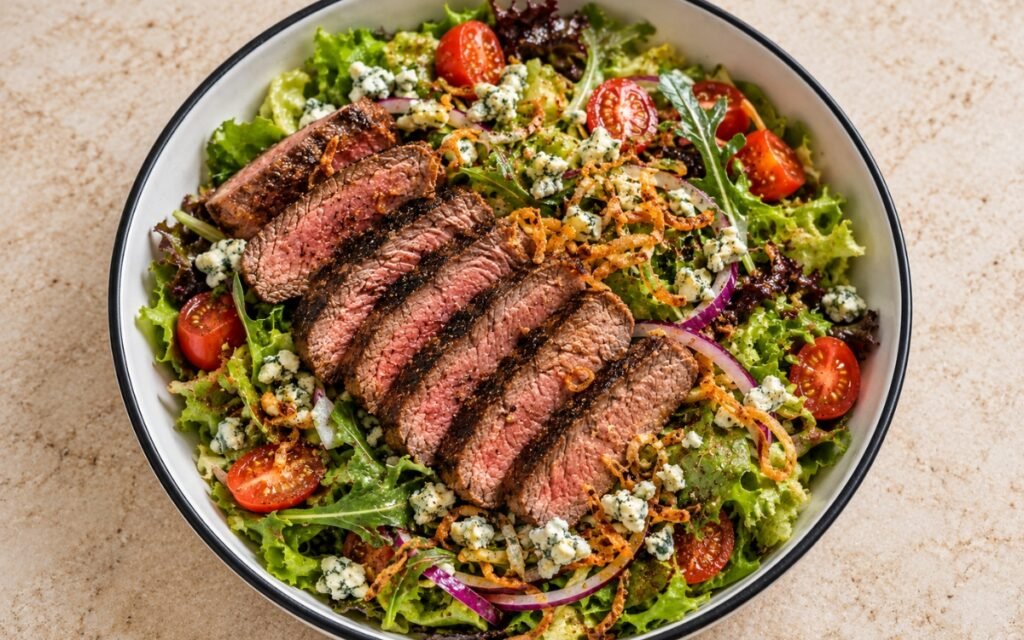
Steakhouse Steak Salad with Blue Cheese
Sliced medium-rare seared steak over crisp greens with cherry tomatoes, red onion, blue cheese crumbles, and crispy fried shallots.
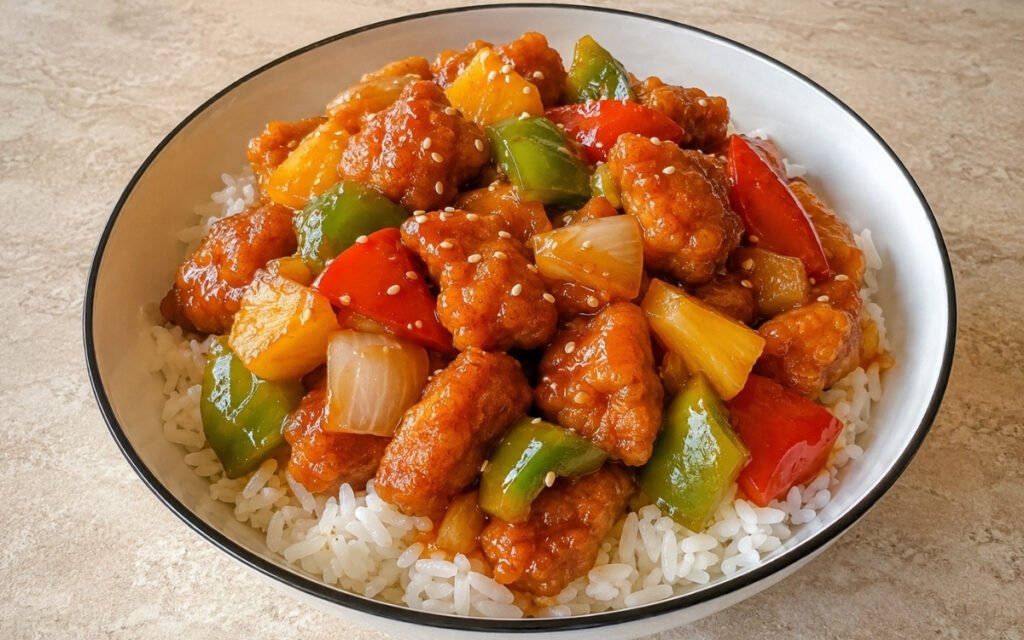
Sweet and Sour Chicken
Double-fried battered chicken thighs with pineapple and vegetables tossed in a glossy tangy-sweet sauce — the restaurant crispiness technique explained for home cooking in 50 minutes.
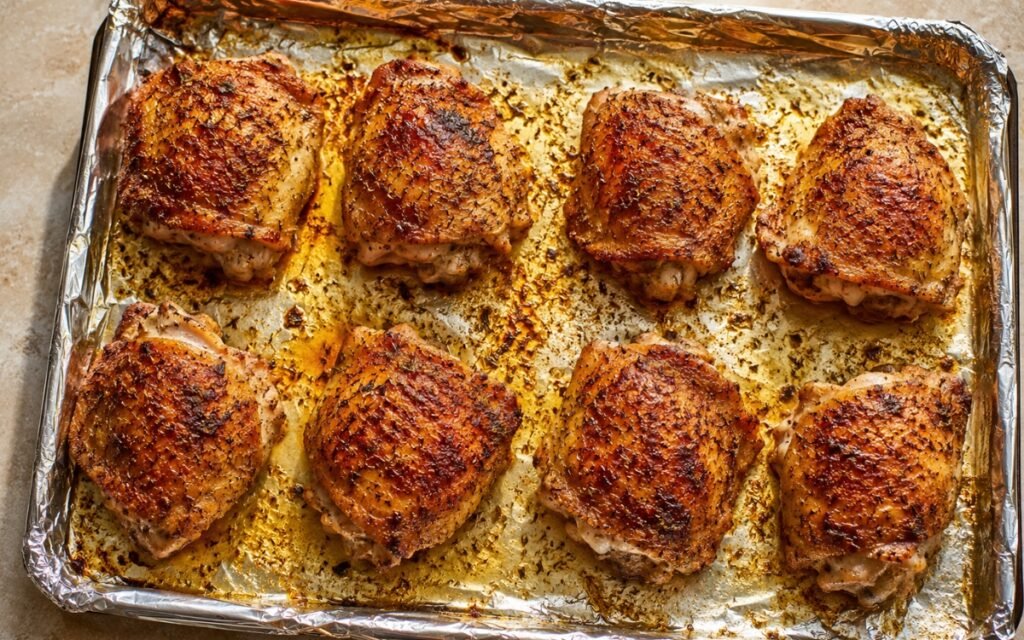
Cripsy Oven-Baked Chicken Thighs
Crispy-skinned chicken thighs baked with simple spices—the most forgiving and flavorful cut.
Yaki Udon Stir-Fry Noodles
Ingredients
Method
- Before the wok is turned on, have every component ready — yaki udon moves too fast for concurrent preparation once the heat is on. In a small bowl, whisk together the 60ml of soy sauce, 45ml of mirin, 30ml of sake, and 15ml of oyster sauce until completely combined. Set beside the wok. The sauce’s four components each contribute a distinct dimension: soy provides the primary salt and deep savoury umami that coats every noodle; mirin provides sweetness and the characteristic Japanese glaze that caramelises slightly on the noodle surface during the final toss; sake provides aromatic, subtle fermented grain depth and a mild acidity that prevents the sauce from tasting flat; oyster sauce adds a secondary, more concentrated savoury-sweet umami depth and a slight thickness that helps the sauce adhere. Together they produce the specific sweet-savoury-umami balance that defines Japanese stir-fried noodle sauces. If using shelf-stable vacuum-packed udon noodles — the most common format outside Japan — blanch them in boiling water for exactly 1 minute, then drain and rinse under cold water. Separate the noodles gently with your fingers, working them apart completely — fresh udon’s surface starch causes strands to stick together and any clumps that enter the wok will not separate during cooking, producing uneven sauce distribution. If the noodles are sold in a fresh or pre-cooked format that requires no blanching, simply loosen them at room temperature.
- Heat the large wok or 14-inch skillet over the absolute highest heat your burner produces for a full 2–3 minutes until the wok is smoking. The wok must reach genuinely smoking-hot temperature before the first ingredient is added — this is the prerequisite for wok hei, the slight smoky caramelised character of high-heat wok cooking that sets restaurant stir-fry apart from home cooking. Add 15ml of vegetable oil and swirl to coat the wok surface completely. Add the thinly sliced pork belly in a single layer — work in two batches if needed to ensure space between slices. Leave completely undisturbed for 2 minutes. The undisturbed contact with the smoking-hot wok surface caramelises the pork’s natural sugars and rendered fat simultaneously, producing the deep golden-brown crust that is both a flavour contribution and a textural element — the rendered fat also leaves a pork-enriched cooking medium in the wok for the subsequent vegetable and noodle stages. Flip each slice and cook the second side for 90 seconds. Transfer to a plate. The pork does not need to be cooked entirely through at this stage — it will return to the wok for the final toss and finish there.
- Add 15ml of fresh oil to the still-smoking wok. Add the grated ginger and minced garlic simultaneously. Stir-fry for exactly 15 seconds, moving continuously — at the wok’s temperature, garlic and ginger move from raw to fragrant to burnt in under 30 seconds. The 15-second window produces the correct transition: the sharp, pungent raw character of both aromatics is converted to a sweeter, more complex fragrance by the brief high-heat contact without burning. Immediately add the 200g of sliced shiitake mushrooms without reducing the heat. Stir-fry for 2 minutes — allowing brief stationary contact with the wok surface between stirs, which produces the caramelised edges that distinguish wok-fried shiitake from simply cooked shiitake. The mushrooms will first release moisture, creating a brief steaming period, then the moisture evaporates and the caramelisation begins. By the 2-minute mark the mushrooms should be showing golden-brown colouring at their edges and smelling of toasted, concentrated mushroom.
- Add the 120g of julienned carrots and 150g of cabbage squares to the wok with the mushrooms. Stir-fry vigorously for 2 minutes — keeping the vegetables in near-constant motion, tossing from the bottom of the wok up and over, pressing briefly against the hot surface and immediately lifting. The cabbage will wilt slightly at the edges while remaining crisp at the centre — the correct tender-crisp texture that distinguishes high-heat wok vegetable cooking from the uniform softness of medium-heat sautéing. Push all the vegetables to the sides of the wok, creating a clear well in the centre. Add the remaining 15ml of oil to the centre well. Add the blanched and separated udon noodles to the oil in the centre well. Spread them out with tongs or chopsticks and leave them completely undisturbed for 45 seconds — this is the technique step that most directly produces the yaki udon character that distinguishes it from simply tossed noodles. The 45 seconds of direct contact between the noodles and the smoking-hot wok surface, with the fresh oil as the medium, produces very slight charring and caramelisation on the exterior noodle surfaces — a subtle smokiness and slight crust that is specific to yaki udon and that no amount of tossing at lower temperatures produces. After 45 seconds, toss the noodles together with the vegetables from the sides of the wok.
- Return the seared pork belly pieces to the wok along with any accumulated resting juices from the plate — the juices contain rendered pork fat and caramelised protein compounds that add flavour to the final dish. Add the 100g of bean sprouts and 80g of scallion pieces. Pour the entire prepared sauce mixture over everything in a single, decisive pour — distributing it as evenly as possible across the noodles, meat, and vegetables. Using two spatulas, tongs, or chopsticks, toss everything vigorously for 90 seconds. The tossing must be continuous and high-energy — lifting from the bottom and folding over the top, working around the entire wok circumference. The sauce coats every noodle strand and vegetable piece during this 90 seconds. The mirin’s sugar caramelises slightly against the still-hot wok surface, producing the characteristic glaze on the noodles. The 90-second toss is calibrated to heat the bean sprouts and scallions through while preserving their crunch — longer cooking softens both significantly. Scatter the 3g of white pepper over the stir-fry and toss once more to distribute. Remove from the heat immediately.
- Divide among four plates or wide shallow bowls immediately. The bonito flakes, sesame seeds, and pickled red ginger are not optional garnishes in yaki udon — they are integral components of the traditional preparation that each contribute specific texture, flavour, and visual character. Scatter the toasted sesame seeds over each bowl. Place a small pinch of bonito flakes on top of each portion — katsuobushi’s delicate, umami-rich, slightly smoky flavour and the way the thin flakes move in the heat rising from the noodles is the visual signature of the dish. Place the pickled red ginger alongside each bowl — beni shoga’s vinegary, slightly sweet, bright pink presence provides the acid contrast that cuts through the sauce’s sweetness and richness, and its crunch against the chewy noodles provides the final textural element. Serve immediately.