
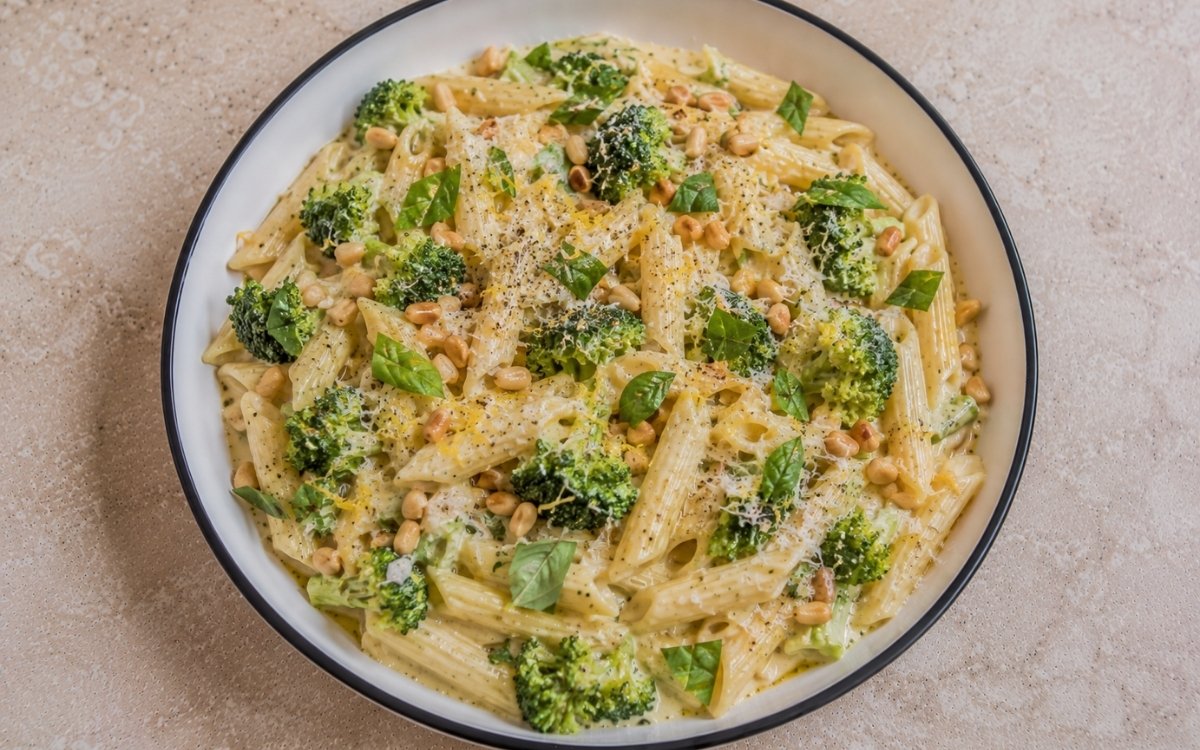
Creamy Broccoli Lemon Pasta
Pasta and broccoli cooked together in the same water — the broccoli releases its earthy sweetness into the cooking water, which subsequently becomes the starchy emulsifying liquid that the mascarpone-lemon sauce is built with. The sauce itself is made while the pasta cooks: mascarpone, heavy cream, Parmigiano, double lemon zest, and lemon juice whisked together cold into a smooth, citrus-forward cream that goes into the garlic-butter pan with the pasta water and immediately becomes something silky and coating. Bright, rich, and lemony simultaneously — the combination that makes a 30-minute weeknight pasta feel genuinely elegant.
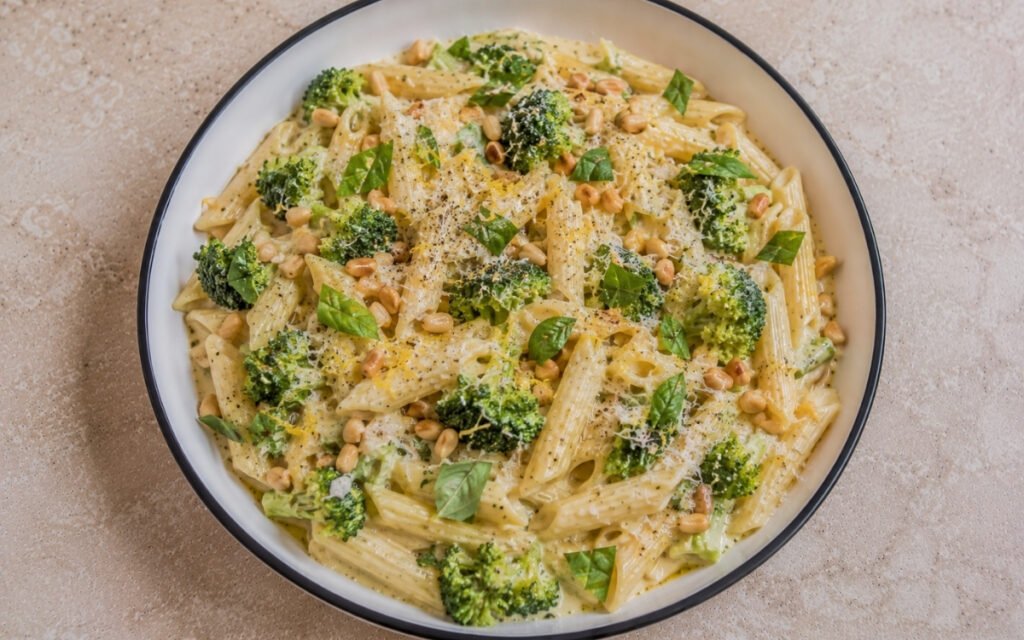
Prep Time : 10 min
Cook Time : 20 min
Servings : 4
10 min
20 min
4
Ingredients
For the Pasta
• 400g penne rigate or casarecce pasta — this one on Amazon
• 500g broccoli florets, cut into bite-sized pieces
• 8g fine sea salt, divided, plus more to taste
• 180ml reserved pasta and broccoli cooking water
For the Creamy Lemon Sauce
• 180g mascarpone cheese
• 120ml heavy cream (35% fat)
• 80g Parmigiano-Reggiano, finely grated, plus extra for serving — this one on Amazon
• Zest of 2 medium lemons
• Juice of 1½ lemons, approximately 60–70ml
• Freshly ground black pepper to taste
For the Aromatics and Finishing
• 60g unsalted butter — this one on Amazon
• 45ml extra-virgin olive oil, plus more for drizzling — this one on Amazon
• 4 cloves garlic (20g), thinly sliced
• ½ teaspoon red pepper flakes
• 60g pine nuts — this one on Amazon
• 15g fresh basil leaves, torn
This post may contain affiliate links. As an Amazon Associate I earn from qualifying purchases, at no additional cost to you.
Directions
- Toast the Pine Nuts
Place the 60g of pine nuts in a dry skillet over medium heat without any oil. Toast for 3–4 minutes, stirring or shaking the pan every 30–45 seconds throughout. Pine nuts’ exceptionally high polyunsaturated fat content makes them the most volatile nut to toast — the window between pale and raw, correctly golden, and burnt-and-bitter is measured in seconds rather than minutes. Watch continuously from the 2-minute mark. Remove immediately when they reach an even light golden colour and transfer to a plate — the residual heat of a skillet left on the burner can carry them past the correct point even after the heat is off. Set aside for the finish. - Cook the Pasta and Broccoli Together in the Same Water
Bring a large pot of water to a full rolling boil and add the 6g of salt. Add the pasta and cook for 5 minutes — the pasta will be undercooked at this point, which is correct. After 5 minutes, add the 500g of broccoli florets directly to the same pot alongside the cooking pasta. Continue cooking for a further 5–6 minutes until the pasta has reached al dente and the broccoli is tender but still bright green. The decision to cook the pasta and broccoli in the same water is not a time-saving shortcut alone — it is a deliberate flavour decision. During the 5–6 minutes the broccoli cooks in the water, it releases its earthy, slightly sweet, distinctively green vegetable compounds into the surrounding starchy pasta water. These compounds flavour the water that will subsequently become the sauce’s emulsifying liquid, adding a subtle background broccoli depth to the sauce itself rather than simply to the broccoli pieces. Before draining, reserve 180ml of this broccoli-infused, starchy cooking water in a heatproof jug and keep it warm — this water is the emulsification medium for the entire sauce. Drain the pasta and broccoli together without rinsing. - Make the Mascarpone-Lemon Sauce Base
While the pasta and broccoli cook, prepare the cream sauce in a medium bowl. This can be done entirely at room temperature — no heat required. Combine the 180g of mascarpone, 120ml of heavy cream, and 80g of finely grated Parmigiano-Reggiano in the bowl. Add the zest of both lemons and the juice of 1½ lemons. Whisk vigorously until the mixture is completely smooth and uniform — the cream loosens the mascarpone into a pourable consistency, the Parmigiano distributes through the dairy, and the lemon zest’s aromatic oils and the juice’s acid distribute evenly throughout. The double lemon application — zest and juice together from 2 lemons for zest and 1½ for juice — is the technique that produces a lemon character that is simultaneously aromatic and acidic rather than simply sour. The zest’s volatile oils cannot be extracted by heat-free mixing alone as effectively as in a heated application, but whisking with the cream distributes them sufficiently to be present in every bite of the finished dish. Season with the remaining 2g of salt and several grinds of black pepper. Set aside at room temperature — cold mascarpone sauce added to the warm pan can cause temperature shock that produces grainy separation rather than smooth integration. - Build the Aromatic Garlic-Butter Base
In the same large pot used for the pasta — wiped dry with paper towels — heat the 45ml of olive oil and 60g of butter together over medium heat. The combination of butter and olive oil produces the ideal aromatic base for this sauce: the butter provides the sweet dairy richness and the foam that signals the correct temperature for garlic; the olive oil moderates the butter’s temperature, prevents burning, and contributes its own fruity character to the background. When the butter has melted completely and begins to foam, add the thinly sliced garlic and the red pepper flakes simultaneously. Cook for 1–2 minutes, stirring constantly. At medium heat in foaming butter and oil, thin garlic slices move quickly — constant stirring ensures even heat distribution and prevents any pieces from sitting stationary long enough to brown. The target is fragrant, just-beginning-to-colour garlic — sweet, aromatic, and present without any bitterness from browning. The red pepper flakes bloom their fat-soluble capsaicin into the surrounding butter and oil during these 1–2 minutes, providing the background warmth that runs through every bite of the finished dish. - Create the Silky Emulsified Sauce
Reduce the heat to low. Add the mascarpone-lemon mixture to the pot with the garlic butter. Stir immediately to combine — the garlic-butter fat and the mascarpone’s fat and protein begin to integrate at this stage. Add 120ml of the reserved pasta-and-broccoli cooking water and whisk vigorously. The starchy, slightly broccoli-infused cooking water emulsifies with the mascarpone, cream, and butter in the pot — the water’s dissolved starch molecules bridge between the fat-based dairy and the water itself, producing a unified, cohesive sauce rather than separated oil and dairy. The emulsified sauce should coat the back of a spoon clearly within 60 seconds of vigorous whisking over low heat. Add the drained pasta and broccoli to the pot and toss gently but thoroughly for 1–2 minutes over low heat — turning the pasta and broccoli through the sauce to coat every surface. The pasta’s surface starch continues to release during this tossing, progressively thickening the sauce further and improving its cling. If the sauce tightens beyond the correct glossy, flowing consistency, add the remaining 60ml of pasta water in 30ml increments while continuing to toss. - Finish and Serve
Remove from the heat completely. Fold in the torn basil leaves and half of the toasted pine nuts — gently, so the basil is distributed without being crushed and the pine nuts maintain their crunch rather than being broken by vigorous stirring. Taste carefully and adjust — the mascarpone and Parmigiano provide significant richness and salt, but the dish may need additional lemon juice if the cream’s richness is masking the citrus brightness. A small additional squeeze of lemon juice at this stage can be the difference between a very good pasta and a genuinely memorable one. Divide among four warm shallow bowls immediately. Scatter the remaining pine nuts over each bowl — the crunch contrast against the smooth cream sauce is most effective when the pine nuts are still at room temperature and their texture is at its best. Add a generous additional grating of Parmigiano-Reggiano. Finish with a small drizzle of the best extra-virgin olive oil available.
*Notes :
- The pasta-and-broccoli cooked together technique is worth understanding beyond its efficiency benefit. When broccoli cooks in water, it releases glucosinolate breakdown products, chlorophyll fragments, and a range of volatile sulphur compounds that give broccoli its characteristic earthy, slightly pungent sweetness. These compounds dissolve into the surrounding water and, when that water is subsequently used to emulsify the cream sauce, they add a subtle background broccoli character to the sauce itself — making the sauce taste of the dish rather than simply being the medium the dish sits in. This is the same principle as the broccoli cooking water being preferable to plain water as a sauce component in any pasta where broccoli is a central ingredient.
- Mascarpone’s specific role in this sauce — rather than all cream, or ricotta, or cream cheese — is its combination of very high fat content and very low acidity. Its fat produces the coating, luxurious texture. Its near-neutral acidity means the sauce tastes clean and bright from the lemon rather than the dairy contributing a competing sourness. Cream cheese would add a slight tanginess that conflicts with the lemon’s intended role as the dominant acid. Ricotta would produce a grainier texture at the mascarpone’s quantity. Mascarpone specifically produces the neutral, silky, richly coating base that allows the lemon to be the defining flavour of the sauce.
Why This Recipe Works
This recipe works because it sequences every technique decision to compound toward the same clean, bright, rich outcome. The pasta-broccoli water infuses the sauce’s emulsifying liquid with vegetable depth. The mascarpone sauce is made cold and whisked smooth before any heat is applied — preventing the protein-seizing that hot-add dairy can produce.
The garlic and butter base creates the aromatic cooking fat that the mascarpone integrates into rather than simply sitting on top of. Low heat throughout the sauce-making step prevents the mascarpone from breaking. And the lemon’s dual application — zest and juice together in the cold mascarpone base — produces the citrus character that defines the dish.
Ingredient Breakdown
Broccoli (Cooked in Pasta Water)
The vegetable element and the flavour contributor to the cooking water — its compounds released during cooking enrich the pasta water that subsequently emulsifies the sauce.
Mascarpone (180g)
The coating, neutral dairy base — very high fat, very low acidity, producing the silky richness that carries the lemon’s brightness without competing with it.
Double Lemon (Zest of 2, Juice of 1½)
The defining brightness layer — zest for aromatic citrus oils, juice for clean acid; together producing a lemon character that is fragrant and vivid rather than simply sour.
Pasta and Broccoli Cooking Water
The broccoli-infused emulsifying medium — carries both dissolved starch for sauce cohesion and subtle vegetable depth from the broccoli’s cooking compounds.
Garlic-Butter-Olive Oil Base
The aromatic carrying fat — butter for sweet dairy richness, olive oil for temperature moderation and fruity character; the medium that the mascarpone sauce integrates into.
Toasted Pine Nuts
The essential textural contrast — crunchy and buttery against the uniformly smooth cream sauce; half folded through for internal distribution, half scattered over each bowl for surface impact.
Flavor Structure Explained
This pasta follows a layered balance model:
- Bright citrus core (lemon juice, zest)
- Creamy rich base (mascarpone, cream)
- Earthy vegetal layer (broccoli)
- Savory warmth (garlic, red pepper)
- Textural savory finish (pine nuts, Parmesan)
Lemon defines the dominant character with vivid acidity and aromatic lift that runs through every bite. Mascarpone and cream build a smooth, coating richness that carries the citrus without competing. Broccoli grounds the dish with mild earthiness, adding substance and balance. Garlic and chili provide background warmth, preventing the profile from feeling flat. Pine nuts and Parmesan finish with crunch and savory depth, completing the structure with contrast and cohesion.
Common Mistakes to Avoid
- Not Adding the Broccoli to the Pasta Water – Cooking broccoli separately loses the flavour contribution its cooking compounds make to the pasta water that becomes the sauce. Always cook together.
- Using Cold Mascarpone Sauce – Cold mascarpone added to a warm pan can cause protein shock and produce a grainy, separated sauce rather than smooth integration. Always bring the mascarpone mixture to room temperature before adding to the pan.
- Using High Heat When Adding the Mascarpone Sauce – High heat causes mascarpone’s proteins to seize and the fat to separate. Always reduce to low before adding.
- Not Adding Enough Lemon – The mascarpone’s richness can mask the lemon if under-added. Use the full zest of both lemons and juice of 1½, and taste after combining — a small additional squeeze at the finish is often the step that makes the dish’s lemon character vivid.
- Over-toasting or Under-toasting the Pine Nuts – Both extremes reduce the pine nut’s contribution — pale nuts taste raw and flat, burnt nuts taste bitter. Watch from the 2-minute mark and remove immediately when golden.
- Not Reserving Enough Pasta Water – Reserve the full 180ml and keep it warm — the emulsification requires warm starchy water, not cold.
Variations
Broccoli Lemon Pasta With Prawns
Add 400g of large peeled prawns seared in the butter and olive oil for 90 seconds per side before the garlic step. Set aside and return with the pasta tossing step. The prawn’s sweetness has a natural affinity with both broccoli and lemon.
With Walnuts Instead of Pine Nuts
Replace the 60g of pine nuts with 60g of roughly chopped toasted walnuts — more bitter and more assertively earthy, producing a more robust textural contrast that pairs particularly well with the broccoli’s vegetal character.
Extra Green Version
Add 80g of baby spinach and 80g of frozen peas (defrosted) alongside the broccoli during the pasta water cooking stage for a more intensely green, more herb-forward dish.
Lighter Version
Replace the mascarpone with 180g of full-fat Greek yogurt and omit the heavy cream. Add the yogurt off the heat to prevent curdling. The result is tangier, lighter, and considerably less calorific while retaining the citrus-dairy character.
Storage & Make-Ahead
The assembled pasta can be refrigerated for up to 3 days. During storage, the pasta will absorb some of the cream sauce, so when reheating, warm it gently in a pan over very low heat with 2 to 3 tablespoons of cream or water per portion, stirring very carefully. After reheating, add a small extra squeeze of lemon juice, since the brightness of the lemon fades during storage and refreshing it makes the dish taste much more vibrant.
The mascarpone-lemon sauce base can be made up to 24 hours in advance and refrigerated before mixing. Let it come to room temperature for about 30 minutes before adding it to the pan.
Toasted pine nuts can be stored in an airtight container at room temperature for up to 3 days with good results. If they have softened slightly, re-crisp them in a dry pan for about 60 seconds before serving.
Frequently Asked Questions
Why cook the broccoli in the pasta water rather than separately?
The broccoli releases flavour compounds into the water during cooking that enrich the sauce’s emulsifying liquid with a subtle background broccoli depth. The pasta water becomes broccoli-infused, which makes the sauce taste of the dish rather than being a neutral emulsifying medium. It also saves a pot.
Can I use frozen broccoli?
Yes — add frozen broccoli florets directly to the pasta water without thawing, 4–5 minutes before the pasta is ready rather than 5–6 minutes, as frozen broccoli thaws and cooks faster than fresh. The sauce infusion benefit is maintained.
Why mascarpone rather than cream cheese or ricotta?
Mascarpone’s high fat content and near-neutral acidity produce a coating, luxurious sauce where the lemon’s brightness is the dominant acid note. Cream cheese adds competing tanginess; ricotta produces a slightly grainier texture. Mascarpone is the correct dairy base for this specific lemon-forward application.
How much lemon is too much?
This sauce is designed to be prominently lemon-forward — the zest of both lemons and juice of 1½ is the correct, assertive quantity. For a more restrained citrus character, use the zest of one lemon and juice of one. Taste after combining and add more if the brightness is not clearly present.
What pasta shape works best?
Penne rigate’s ridged exterior captures the creamy sauce on every external surface. Casarecce — a slightly twisted, hollow short pasta — captures the sauce in its twist, which produces a more interesting sauce distribution per piece. Both are excellent. Avoid smooth pasta shapes without ridges for this sauce.
Nutrition Facts
( per serving )
Calories
~1095 kcal
Protein
28 g
Fat
70 g
Carbs
92 g
Calories
~1095 kcal
Protein
28 g
Fat
70 g
Carbs
92 g
Related Recipes
Related Recipes

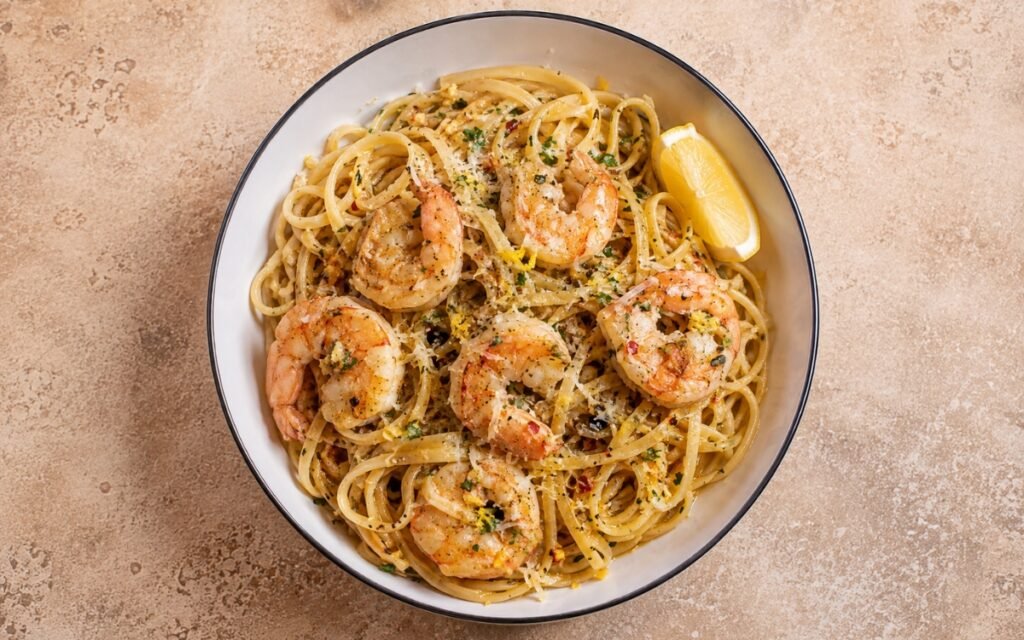
Shrimp Scampi Pasta
Linguine finished in a glossy garlic butter lemon sauce with tender shrimp, parsley, chili flakes, and Parmesan.
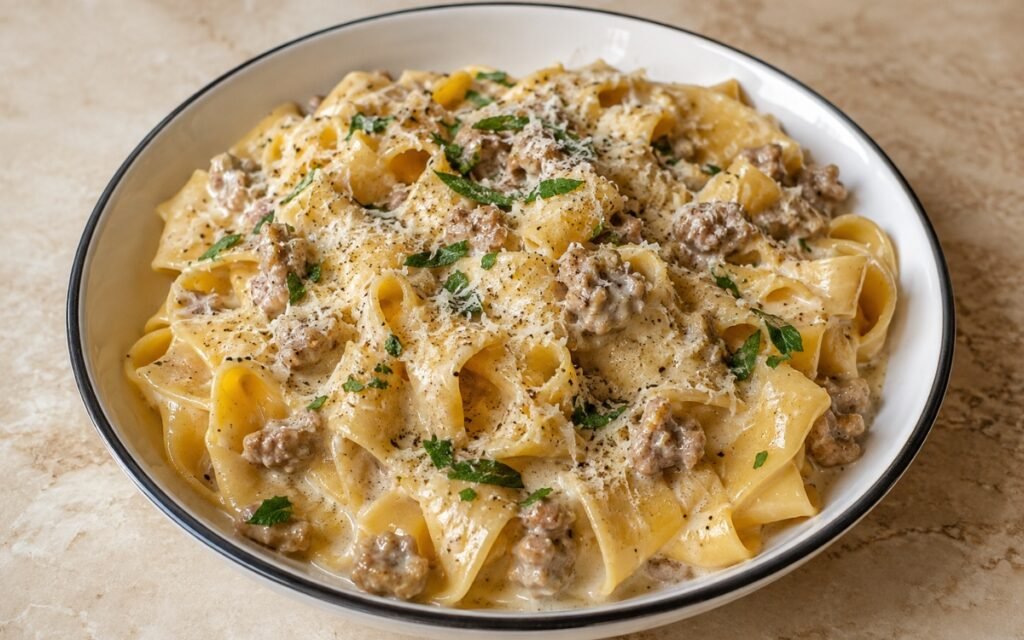
Pappardelle White Sausage Ragù
Wide pappardelle ribbons coated in a pale, glossy sausage ragù emulsified from browned sausage fat, pasta water, and Parmigiano-Reggiano.
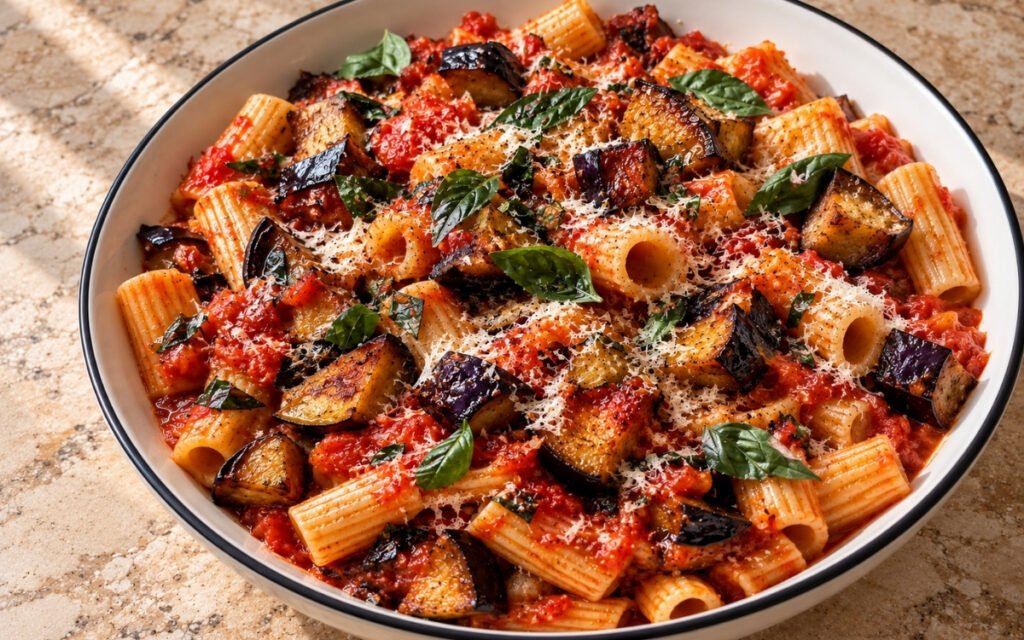
Pasta alla Norma
Glossy pasta tossed with deeply golden fried eggplant in a simple tomato basil sauce, finished with grated ricotta salata.
You might also like
You might also like
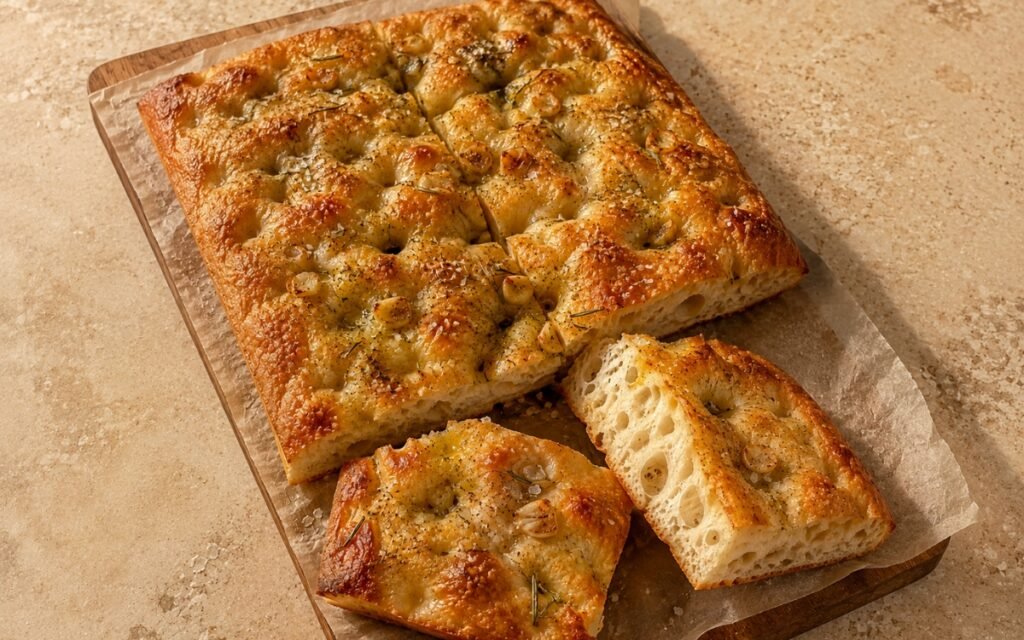
Garlic Butter Focaccia
A golden, high-hydration focaccia with a crisp fried bottom, deeply dimpled airy crumb, and glossy garlic rosemary butter, built over a 48–72 hour cold ferment.
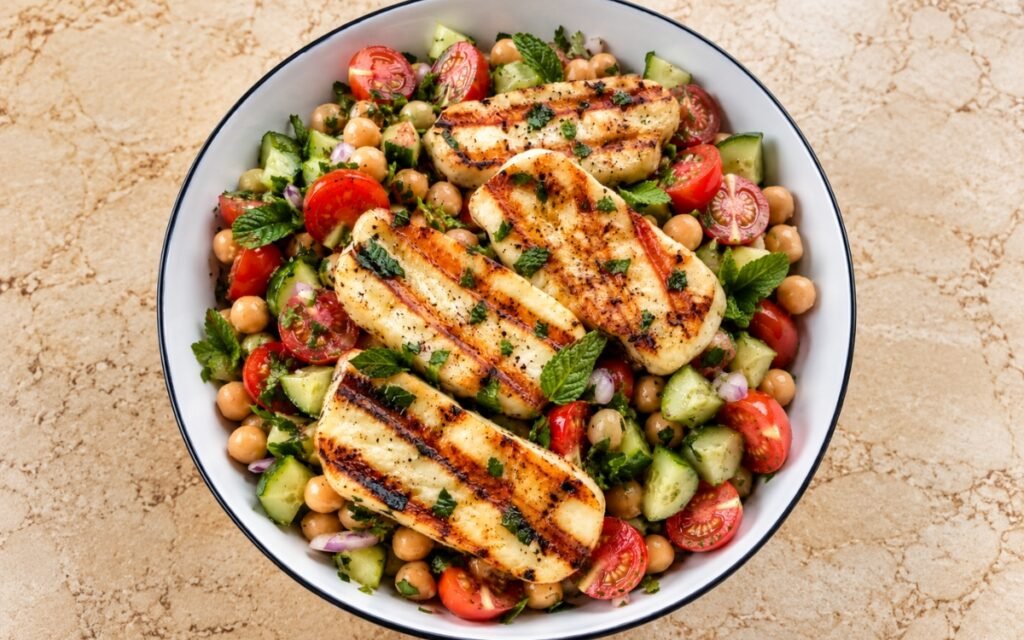
Grilled Halloumi Chickpea Salad
Chickpeas, cherry tomatoes, cucumber, red onion, parsley, and mint dressed with lemony olive oil, topped with warm grilled halloumi.
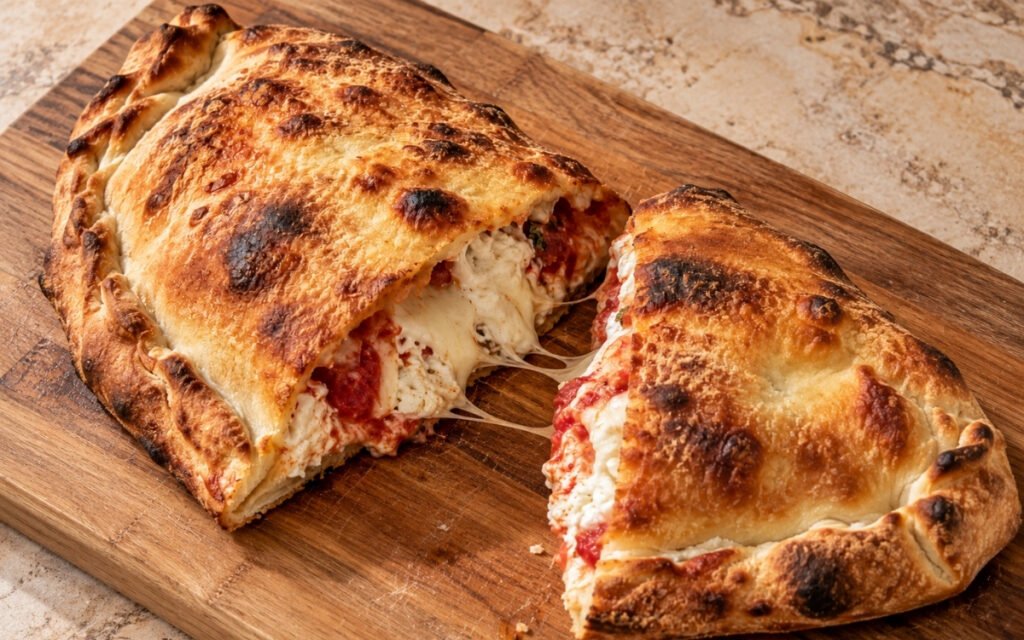
Calzone with Ricotta and Mozzarella
Golden baked calzones filled with creamy ricotta, melted mozzarella, Parmesan, a little thick tomato sauce, black pepper, and basil.
Creamy Broccoli Lemon Pasta
Ingredients
Method
- Place the 60g of pine nuts in a dry skillet over medium heat without any oil. Toast for 3–4 minutes, stirring or shaking the pan every 30–45 seconds throughout. Pine nuts’ exceptionally high polyunsaturated fat content makes them the most volatile nut to toast — the window between pale and raw, correctly golden, and burnt-and-bitter is measured in seconds rather than minutes. Watch continuously from the 2-minute mark. Remove immediately when they reach an even light golden colour and transfer to a plate — the residual heat of a skillet left on the burner can carry them past the correct point even after the heat is off. Set aside for the finish.
- Bring a large pot of water to a full rolling boil and add the 6g of salt. Add the pasta and cook for 5 minutes — the pasta will be undercooked at this point, which is correct. After 5 minutes, add the 500g of broccoli florets directly to the same pot alongside the cooking pasta. Continue cooking for a further 5–6 minutes until the pasta has reached al dente and the broccoli is tender but still bright green. The decision to cook the pasta and broccoli in the same water is not a time-saving shortcut alone — it is a deliberate flavour decision. During the 5–6 minutes the broccoli cooks in the water, it releases its earthy, slightly sweet, distinctively green vegetable compounds into the surrounding starchy pasta water. These compounds flavour the water that will subsequently become the sauce’s emulsifying liquid, adding a subtle background broccoli depth to the sauce itself rather than simply to the broccoli pieces. Before draining, reserve 180ml of this broccoli-infused, starchy cooking water in a heatproof jug and keep it warm — this water is the emulsification medium for the entire sauce. Drain the pasta and broccoli together without rinsing.
- While the pasta and broccoli cook, prepare the cream sauce in a medium bowl. This can be done entirely at room temperature — no heat required. Combine the 180g of mascarpone, 120ml of heavy cream, and 80g of finely grated Parmigiano-Reggiano in the bowl. Add the zest of both lemons and the juice of 1½ lemons. Whisk vigorously until the mixture is completely smooth and uniform — the cream loosens the mascarpone into a pourable consistency, the Parmigiano distributes through the dairy, and the lemon zest’s aromatic oils and the juice’s acid distribute evenly throughout. The double lemon application — zest and juice together from 2 lemons for zest and 1½ for juice — is the technique that produces a lemon character that is simultaneously aromatic and acidic rather than simply sour. The zest’s volatile oils cannot be extracted by heat-free mixing alone as effectively as in a heated application, but whisking with the cream distributes them sufficiently to be present in every bite of the finished dish. Season with the remaining 2g of salt and several grinds of black pepper. Set aside at room temperature — cold mascarpone sauce added to the warm pan can cause temperature shock that produces grainy separation rather than smooth integration.
- In the same large pot used for the pasta — wiped dry with paper towels — heat the 45ml of olive oil and 60g of butter together over medium heat. The combination of butter and olive oil produces the ideal aromatic base for this sauce: the butter provides the sweet dairy richness and the foam that signals the correct temperature for garlic; the olive oil moderates the butter’s temperature, prevents burning, and contributes its own fruity character to the background. When the butter has melted completely and begins to foam, add the thinly sliced garlic and the red pepper flakes simultaneously. Cook for 1–2 minutes, stirring constantly. At medium heat in foaming butter and oil, thin garlic slices move quickly — constant stirring ensures even heat distribution and prevents any pieces from sitting stationary long enough to brown. The target is fragrant, just-beginning-to-colour garlic — sweet, aromatic, and present without any bitterness from browning. The red pepper flakes bloom their fat-soluble capsaicin into the surrounding butter and oil during these 1–2 minutes, providing the background warmth that runs through every bite of the finished dish.
- Reduce the heat to low. Add the mascarpone-lemon mixture to the pot with the garlic butter. Stir immediately to combine — the garlic-butter fat and the mascarpone’s fat and protein begin to integrate at this stage. Add 120ml of the reserved pasta-and-broccoli cooking water and whisk vigorously. The starchy, slightly broccoli-infused cooking water emulsifies with the mascarpone, cream, and butter in the pot — the water’s dissolved starch molecules bridge between the fat-based dairy and the water itself, producing a unified, cohesive sauce rather than separated oil and dairy. The emulsified sauce should coat the back of a spoon clearly within 60 seconds of vigorous whisking over low heat. Add the drained pasta and broccoli to the pot and toss gently but thoroughly for 1–2 minutes over low heat — turning the pasta and broccoli through the sauce to coat every surface. The pasta’s surface starch continues to release during this tossing, progressively thickening the sauce further and improving its cling. If the sauce tightens beyond the correct glossy, flowing consistency, add the remaining 60ml of pasta water in 30ml increments while continuing to toss.
- Remove from the heat completely. Fold in the torn basil leaves and half of the toasted pine nuts — gently, so the basil is distributed without being crushed and the pine nuts maintain their crunch rather than being broken by vigorous stirring. Taste carefully and adjust — the mascarpone and Parmigiano provide significant richness and salt, but the dish may need additional lemon juice if the cream’s richness is masking the citrus brightness. A small additional squeeze of lemon juice at this stage can be the difference between a very good pasta and a genuinely memorable one. Divide among four warm shallow bowls immediately. Scatter the remaining pine nuts over each bowl — the crunch contrast against the smooth cream sauce is most effective when the pine nuts are still at room temperature and their texture is at its best. Add a generous additional grating of Parmigiano-Reggiano. Finish with a small drizzle of the best extra-virgin olive oil available.