
Roasted Red Pepper Cream Pasta
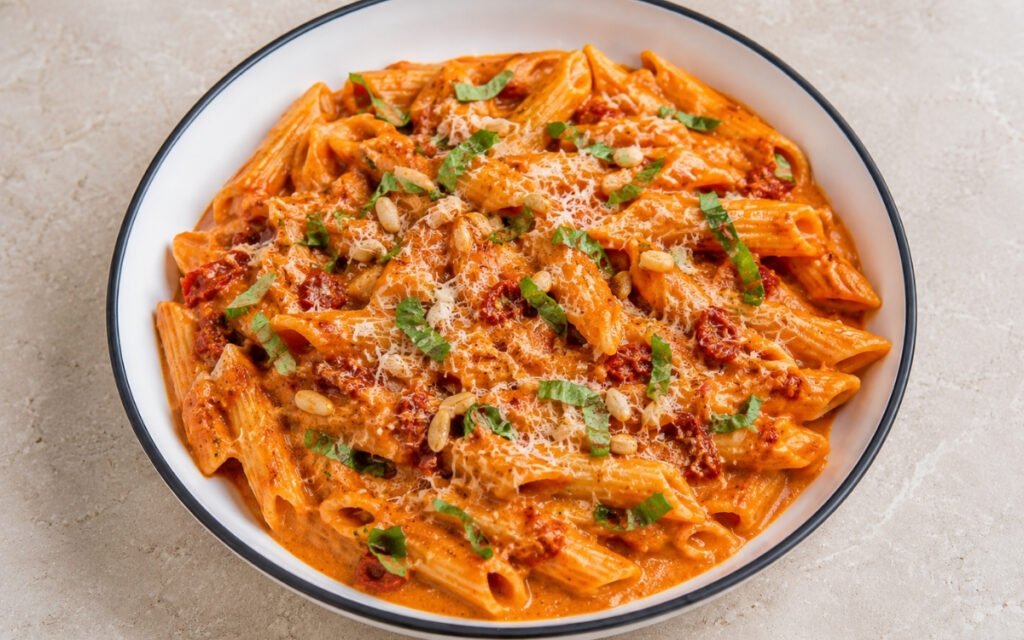
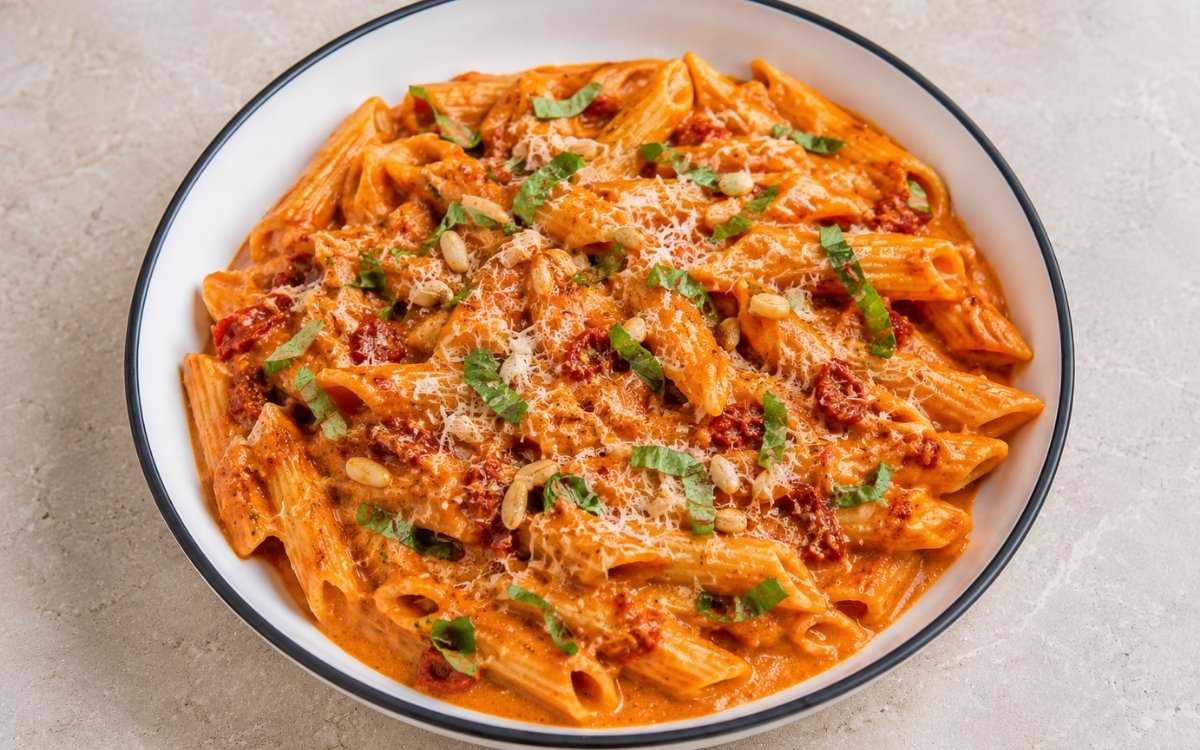
Red bell peppers broiled until completely blackened and blistered, then steamed in their own heat until the skins slip off and the flesh is sweet, deeply smoky, and soft. That roasted pepper flesh — combined with deeply golden caramelised shallots, sun-dried tomatoes, smoked paprika, thyme, and a splash of balsamic vinegar — goes into the blender with mascarpone and heavy cream and becomes something surprisingly luxurious: a vivid orange-red, silky, smoky, slightly sweet cream sauce that coats penne with a specific richness and depth that no jarred sauce can approximate. Finished with Parmigiano, torn basil, and toasted pine nuts. Fifty minutes including the broiling, thirty minutes if the peppers are roasted ahead.
Prep Time :15 min
Cook Time : 35 min
Servings : 4
15 min
35 min
4
Ingredients
For the Roasted Peppers
• 450g red bell peppers (about 3 large)
• 15ml balsamic vinegar (balsamico) — this one on Amazon
For the Cream Sauce
• 240ml heavy cream
• 120g mascarpone cheese
• 60g Parmigiano-Reggiano, finely grated, plus more for serving — this one on Amazon
• 5g smoked paprika
• 3g red pepper flakes
For the Aromatics
• 120g shallots, thinly sliced
• 4 cloves garlic (20g), minced
• 60g sun-dried tomatoes in oil, drained and chopped — this one on Amazon
• 8g fresh thyme leaves
For the Pasta
• 400g penne rigate or rigatoni — this one on Amazon
• 45ml extra virgin olive oil (divided)
• 200ml reserved pasta water
• 12g kosher salt (divided)
• 3g freshly ground black pepper
• 15g fresh basil leaves, torn
• 40g toasted pine nuts
This post may contain affiliate links. As an Amazon Associate I earn from qualifying purchases, at no additional cost to you.
Directions
- Broil and Steam the Red Peppers
Position an oven rack approximately 15cm below the broiler element and preheat the broiler to its highest setting. Place the whole, uncut red peppers on a foil-lined baking sheet. Broil for 18–22 minutes, turning each pepper every 5 minutes using tongs — working around the circumference to expose every surface to the broiler’s direct radiant heat. The target is complete, total blackening and blistering of the entire exterior skin — not partial charring with some red skin remaining, but uniformly blackened, blistered surfaces on every side. This level of char seems aggressive but is entirely correct: the blackened skin is the part that is removed, and the char’s aromatic compounds penetrate slightly into the flesh beneath the skin during the steaming step, contributing the smoky depth that defines the sauce’s character. Transfer the blackened peppers immediately to a large bowl and cover tightly with plastic wrap. Allow to steam for 15 minutes — the trapped residual heat continues to cook the flesh and the steam separates the skin from the flesh, making peeling effortless. Do not rinse the peppers after peeling — rinsing washes away the charred aromatic compounds that have penetrated the flesh surface. Peel the skin away with your fingers, pulling in strips — it should slip off cleanly after the steam. Remove the stem and seeds from each pepper and tear the flesh into large chunks. The peeled, roasted pepper should show a deep red interior with occasional charred flecks — this is correct. - Bring the Pasta Water to a Boil
While the peppers steam, bring a large pot of water to a full rolling boil and add the 10g of kosher salt. Hold at the boil while preparing the aromatic base — the pasta will be added when the aromatics are done. - Caramelise the Shallots and Build the Aromatic Base
Heat 30ml of the olive oil in a large, deep skillet over medium heat. Add the thinly sliced shallots. Cook for 6–7 minutes, stirring frequently, until deeply golden and fully softened — not simply translucent, but showing proper caramelisation at the edges with a light golden-brown colour throughout. Shallots are specified here rather than standard onion for their sweeter, more complex, slightly wine-like flavour that complements the roasted pepper’s natural sweetness without the sharper sulphurous note of a standard white onion. At the correct depth of colour, the shallot’s natural sugars have caramelised sufficiently to produce a sweet, deeply flavoured aromatic base that is the flavour foundation of the entire sauce. Add the minced garlic and cook for 90 seconds, stirring constantly — at medium heat, garlic in sweet caramelised shallot juices moves quickly toward browning. Add the 60g of drained, chopped sun-dried tomatoes, the 5g of smoked paprika, 3g of red pepper flakes, and 8g of fresh thyme leaves. Cook for 1 minute, stirring continuously — the smoked paprika and red pepper flakes bloom their fat-soluble aromatic and heat compounds into the surrounding olive oil and shallot fat. The sun-dried tomatoes add a secondary concentrated tomato sweetness alongside the roasted pepper’s primary character. The thyme’s aromatic compounds release into the hot oil. The pan should smell deeply complex — caramelised onion, smoked spice, tomato, and herb simultaneously. - Add the Roasted Peppers and Balsamic
Add the torn roasted pepper pieces to the skillet with the shallot mixture. Add the 15ml of balsamic vinegar. Cook for 2 minutes, stirring and turning the peppers through the aromatics — the balsamic reduces slightly against the pan heat, concentrating its sweet-acidic character and distributing it evenly through the pepper-and-shallot mixture. The balsamic is not present in sufficient quantity to taste of balsamic in the finished sauce — rather, it adds a concentrated sweet-acidic note that bridges the pepper’s natural sweetness and the cream’s richness, producing a more complete, more complex flavour than the sauce would have without it. After 2 minutes, remove from the heat and allow to cool for 3–4 minutes before blending — adding very hot ingredients to a blender can produce pressure buildup and steam release. - Blend the Sauce to Silky Smoothness
Transfer the entire contents of the skillet — roasted peppers, caramelised shallots, sun-dried tomatoes, all aromatics and oil — to a blender. Add the 240ml of heavy cream, 120g of mascarpone, and the remaining 2g of salt. The mascarpone is the sauce’s body-building dairy component — its much higher fat content than cream alone produces a sauce with more coating quality, more resistance to breaking during the pasta tossing step, and a richer, more velvety mouthfeel. The heavy cream lightens the mascarpone slightly and contributes to the sauce’s flowing, pourable consistency. Blend on high speed for 60–90 seconds — a full, uninterrupted high-speed blend rather than a brief pulse. The goal is a completely smooth, uniformly vivid orange-red sauce with no visible pepper pieces, shallot fragments, or herb bits remaining. Stop and scrape down the sides of the blender once during blending to ensure the entire batch reaches the same consistency. The finished blended sauce should flow slowly from the blender, have a vivid, almost luminous colour from the roasted peppers and smoked paprika, and smell intensely of sweet roasted pepper with the background warmth of the spiced oil. - Cook the Pasta and Combine
Add the 400g of pasta to the boiling salted water and cook for 1 minute less than the package directions. Before draining, reserve 200ml of the starchy pasta water. Drain without rinsing. Return the empty skillet to medium heat and pour in the blended red pepper cream sauce. Warm for 2–3 minutes, stirring occasionally, until the sauce is gently simmering — just enough heat to ensure it is at the correct temperature to finish cooking the pasta. Add the drained pasta directly to the sauce along with 120ml of the reserved pasta water and the 60g of finely grated Parmigiano-Reggiano. Toss vigorously for 2–3 minutes — turning the pasta continuously through the sauce. The pasta absorbs the red pepper cream’s flavour during this tossing period and releases additional starch into the sauce, thickening it and producing the glossy, coating emulsion. Add additional pasta water tablespoon by tablespoon if the sauce tightens beyond the correct flowing, coating consistency during the toss. - Finish and Serve
Remove from the heat. Drizzle the remaining 15ml of extra-virgin olive oil over the pasta and toss to distribute — raw, uncooked olive oil’s fresh, fruity character adds a top note that the oil cooked into the base at the beginning does not provide. Add the torn basil leaves and 3g of black pepper and toss gently for 10 seconds — enough to distribute the basil without wilting it completely. Taste and adjust with additional salt if needed. Divide among four warm shallow bowls immediately. Scatter approximately 10g of toasted pine nuts over each bowl — the pine nuts’ buttery crunch against the smooth cream sauce is the specific textural contrast this uniformly silky sauce requires. Finish with additional finely grated Parmigiano-Reggiano.
*Notes :
- The complete blackening of the pepper skins during broiling is the technique step that most home cooks under-do out of instinct — pulling the peppers when they show partial char rather than total blackening because the visual cue of completely black skin feels like burning rather than cooking correctly. The distinction is critical: partial charring means partial skin separation, which means difficult, incomplete peeling and less developed smoky flavour. Complete blackening means the skin separates effortlessly and the flesh beneath has absorbed the maximum amount of aromatic char compounds. The flesh itself does not burn during this process — it is protected by the skin and steams in its own moisture while the exterior blackens.
- The 15-minute covered steam after broiling is as important as the broiling itself. During the steam, several things happen simultaneously: the residual heat inside the covered bowl continues cooking the flesh without additional external heat; the steam produced from the pepper’s own moisture separates the skin from the flesh across the entire surface; and the aromatic compounds from the charred skin that have penetrated the flesh continue to distribute through the flesh. A pepper peeled immediately without steaming is both difficult to peel and less flavourful than one given the full 15-minute rest.
Why This Recipe Works
This recipe works because it builds the sauce’s flavour at three distinct stages before any cream is added. The broiling develops the pepper’s deep, smoky, concentrated character. The caramelised shallot base adds sweet, complex aromatic depth. The smoked paprika, sun-dried tomatoes, thyme, and balsamic add their specific contributions to the aromatic oil that the peppers go into.
When everything is blended together with the mascarpone and cream, the sauce is already deeply layered before the dairy is introduced — the cream and mascarpone are carrying a sauce with three levels of flavour development rather than simply colouring plain dairy.
Ingredient Breakdown
Red Bell Peppers (Completely Blackened and Steamed)
The primary flavour and colour foundation — the complete char is what produces the smoky depth; the steam is what makes peeling effortless and the aromatic compounds distribute through the flesh.
Caramelised Shallots
The sweet, complex aromatic base — 6–7 minutes to true caramelisation, producing the sauce’s background sweetness that complements the pepper’s natural sugar.
Sun-Dried Tomatoes
The secondary concentrated tomato sweetness layer — adds depth to the roasted pepper’s primary character without competing with it.
Smoked Paprika
The amplifying spice — deepens the broiled pepper’s inherent smokiness and adds colour intensity to the blended sauce.
Balsamic Vinegar
The sweet-acidic bridge — reduces briefly in the pan, adding concentrated complexity that balances the cream’s richness in the finished sauce.
Mascarpone and Heavy Cream
The sauce body — mascarpone for coating richness and stability, cream for lightness and flowability; together producing the velvety, coating consistency.
Pine Nuts (Toasted, at Serving)
The textural contrast — crunchy and buttery against the uniformly smooth cream sauce, scattered at the last moment.
Flavor Structure Explained
This pasta follows a layered balance model:
- Sweet-smoky core (roasted red peppers)
- Creamy rich body (cream, mascarpone)
- Aromatic complexity (shallots, paprika, thyme, garlic, balsamic)
- Savory depth (Parmesan)
- Textural and fresh finish (pine nuts, basil)
Roasted peppers define the foundation with deep caramelised sweetness and smokiness built through high heat. Cream and mascarpone create a smooth, coating richness that carries that flavor evenly. Aromatics layer in complexity, preventing the sauce from collapsing into simple sweetness. Parmesan adds a savory backbone that grounds the richness. Pine nuts introduce crunch, while basil finishes with fresh aromatic lift. The result is a balanced structure — rich but not heavy, sweet but controlled.
Common Mistakes to Avoid
- Not Fully Blackening the Peppers – Partially charred peppers produce a less developed smoky flavour and are harder to peel. Push the broiling further than feels instinctively correct — completely black skin is the target.
- Skipping the Steam – Unsteamed peppers are difficult to peel completely and lose the flavour development that the 15-minute covered rest produces. Always steam for the full time.
- Rinsing the Peeled Peppers – Rinsing washes away the char-infused aromatic compounds on the flesh surface. Always peel dry.
- Under-blending the Sauce – A 30-second blend leaves visible pepper pieces that produce an uneven texture. Blend for the full 60–90 seconds until completely smooth.
- Not Caramelising the Shallots Fully – Translucent shallots produce a sharper, less sweet base than properly caramelised ones. Take the full 6–7 minutes to deep golden.
- Adding Too Much Pasta Water at Once – The sauce can go from correctly coating to watery quickly. Add tablespoon by tablespoon during the pasta tossing step and assess constantly.
Variations
With Grilled Chicken
Season 400g of chicken thigh fillets with smoked paprika, salt, and pepper, and grill or sear for 4–5 minutes per side. Slice and serve over the plated pasta — the chicken’s smoked paprika seasoning specifically echoes the sauce’s character.
Extra Smoky Version
Add 1 whole canned chipotle pepper in adobo to the blender alongside the roasted peppers, mascarpone, and cream for a secondary, deeper smoky heat dimension on top of the broiled pepper’s natural smokiness.
Without Mascarpone
Replace the mascarpone with an equal amount of cream cheese at room temperature, or simply increase the heavy cream to 360ml. The sauce will be slightly less coating and less rich but still excellent.
With Goat Cheese Finish
Crumble 40g of fresh goat cheese over each bowl at serving in place of or alongside the Parmigiano — its tangy, slightly earthy character provides a specific contrast to the sweet pepper sauce that works particularly well.
Storage & Make-Ahead
The blended roasted pepper cream sauce can be refrigerated for up to 4 days and is one of the best make-ahead components in this collection. Its flavor deepens overnight as the shallot, pepper, and spices continue to integrate. Reheat it gently over low heat, stirring carefully, then toss it with freshly cooked pasta when you are ready to serve.
The assembled pasta can be refrigerated for up to 3 days. To reheat it, warm it gently in a pan over low heat with 2 to 3 tablespoons of cream or water per portion, stirring until the sauce loosens and becomes smooth again.
The roasted peppers on their own, once broiled and peeled, can be refrigerated in olive oil for up to 5 days or frozen for up to 3 months. Making a larger batch is an efficient way to have them ready for several uses throughout the week.
Frequently Asked Questions
Can I use jarred roasted peppers instead of broiling fresh ones?
Yes — jarred fire-roasted peppers are a practical shortcut that produces a good result in significantly less time. Drain thoroughly and pat dry before adding to the shallot base. The flavour will be slightly less complex and less smoky than fresh-broiled peppers but still excellent for a 30-minute rather than 50-minute preparation.
How do I know the peppers are broiled enough?
The exterior skin should be uniformly black and blistered with no areas of red or orange skin remaining — total blackening across every surface. The pepper will have softened considerably and may be slightly collapsed. If in doubt, err toward more rather than less char.
Why mascarpone rather than cream cheese or ricotta?
Mascarpone’s very high fat content — approximately 75% — produces a sauce with more coating quality, more stability during the pasta tossing step, and a richer, more velvety mouthfeel than cream cheese or ricotta. Cream cheese produces a slightly tangy result; ricotta produces a grainier texture. Mascarpone produces the smoothest, most luxurious result.
Can I make this vegan?
Replace the mascarpone with 120g of well-blended cashew cream (soaked cashews blended with water), the heavy cream with full-fat coconut cream, and the Parmigiano with nutritional yeast. The roasted pepper sauce’s character remains; the dairy richness is replaced by a different kind of plant-based richness.
What else can I do with leftover roasted red pepper sauce?
Use as a pizza sauce for a smoky, sweet alternative to tomato. Thin with stock for a soup base. Stir into scrambled eggs. Use as a dipping sauce for bread. Toss with roasted vegetables as a warm salad dressing.
Nutrition Facts
( per serving )
Calories
~1025 kcal
Protein
25 g
Fat
59 g
Carbs
98 g
Calories
~1025 kcal
Protein
25 g
Fat
59 g
Carbs
98 g
Related Recipes
Related Recipes

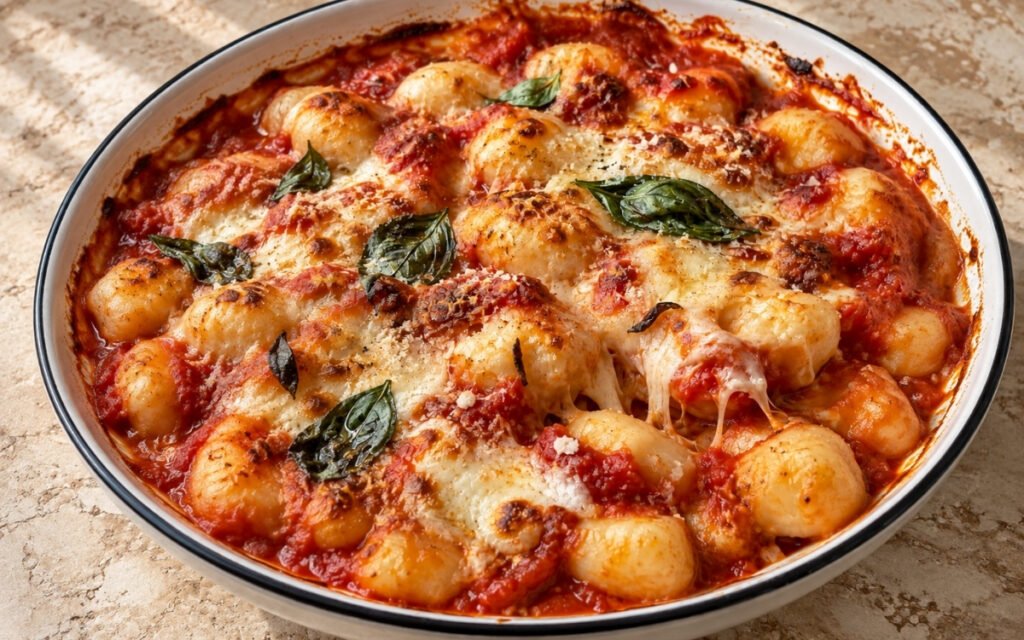
Gnocchi alla Sorrentina
Soft potato gnocchi baked in a simple tomato basil sauce with melted mozzarella, Parmesan, and bubbling browned cheese on top.
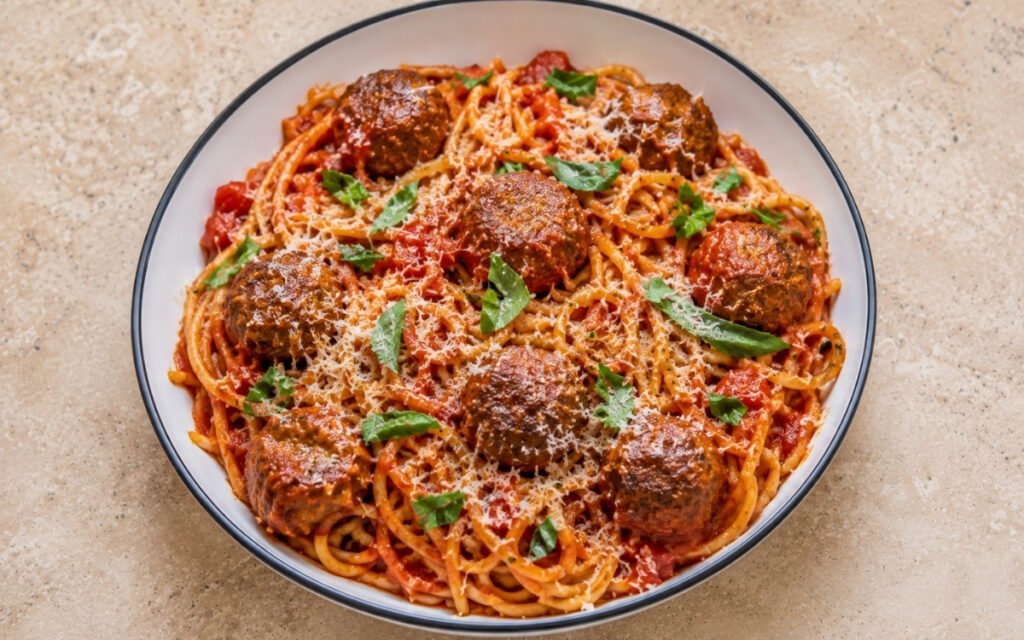
Easy Spaghetti and Meatballs
Beef and pork meatballs on a panade, deeply browned, simmered in San Marzano marinara — 60 minutes.
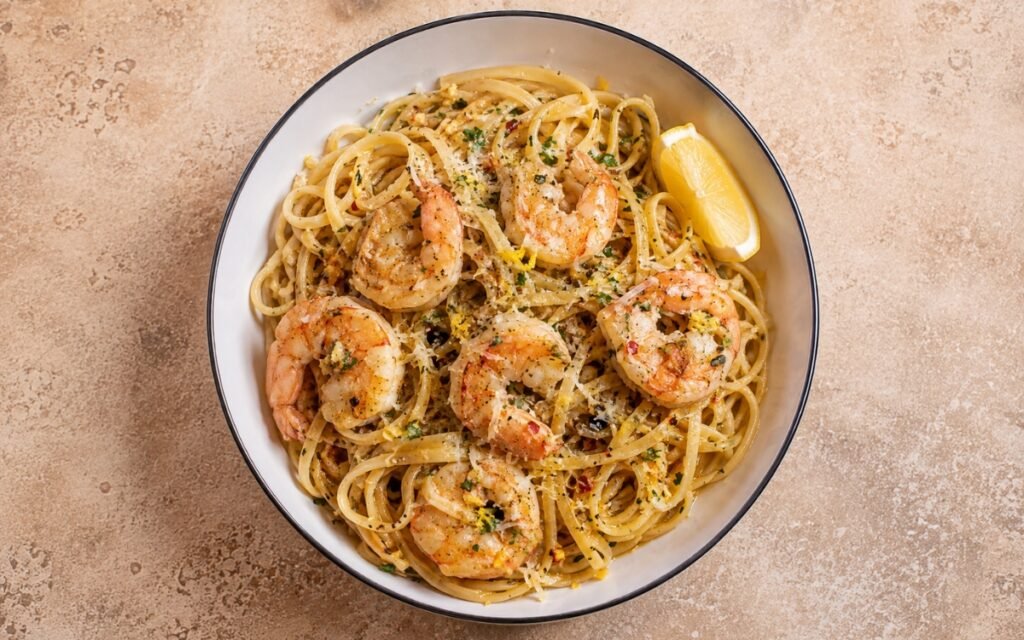
Shrimp Scampi Pasta
Linguine finished in a glossy garlic butter lemon sauce with tender shrimp, parsley, chili flakes, and Parmesan.
You might also like
You might also like
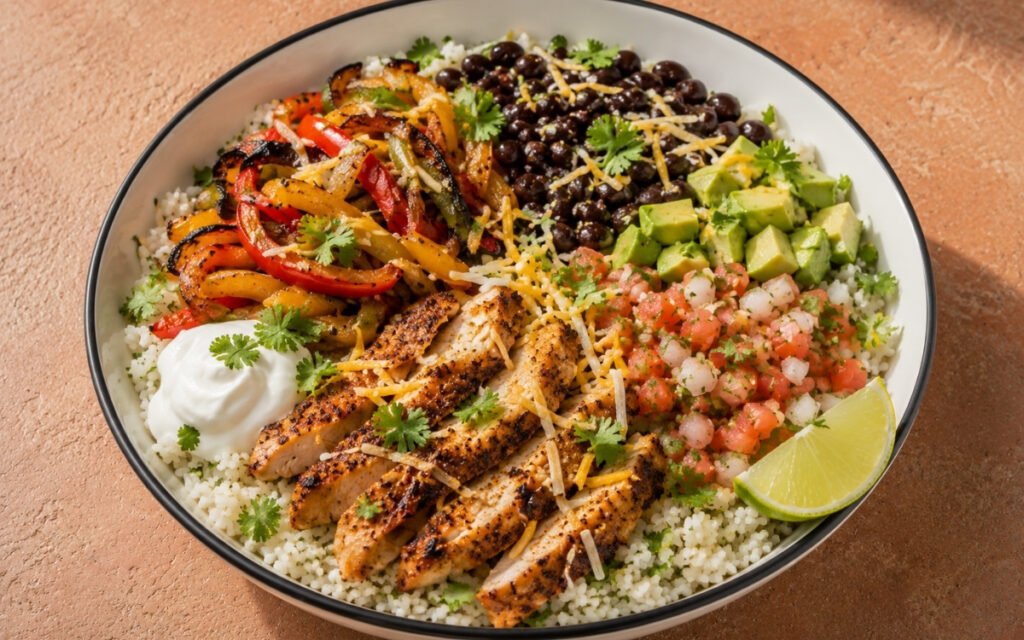
Chicken Fajita Rice Bowl
Charred chicken and peppers over cilantro-lime rice with black beans and fresh toppings.
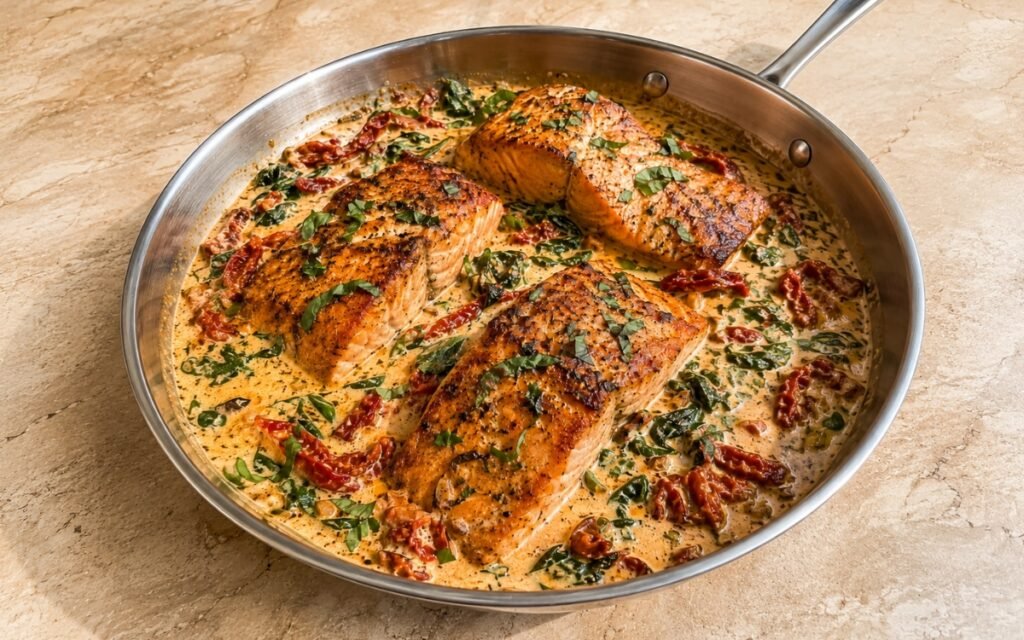
Creamy Tuscan Salmon
Deeply seared salmon finished gently in a rich garlic Parmesan cream sauce with sun-dried tomatoes, spinach, parsley, and basil.
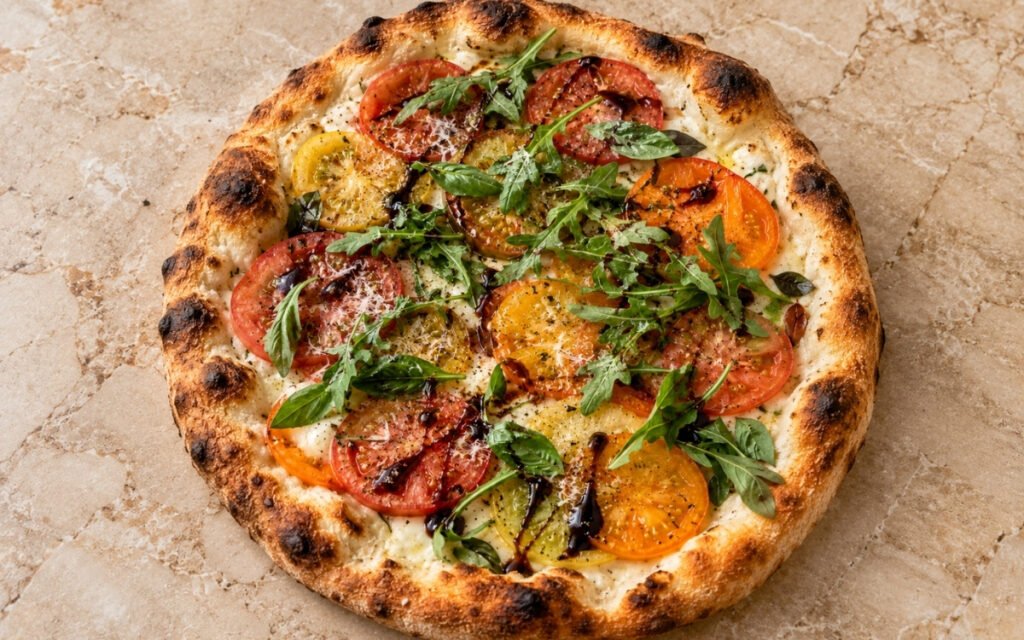
Pizza Bianca Caprese
Creamy cheese base topped with thinly sliced heirloom tomatoes, arugula, Parmigiano-Reggiano, basil, and balsamic glaze over a blistered crust.
Roasted Red Pepper Cream Pasta
Ingredients
Method
- Position an oven rack approximately 15cm below the broiler element and preheat the broiler to its highest setting. Place the whole, uncut red peppers on a foil-lined baking sheet. Broil for 18–22 minutes, turning each pepper every 5 minutes using tongs — working around the circumference to expose every surface to the broiler’s direct radiant heat. The target is complete, total blackening and blistering of the entire exterior skin — not partial charring with some red skin remaining, but uniformly blackened, blistered surfaces on every side. This level of char seems aggressive but is entirely correct: the blackened skin is the part that is removed, and the char’s aromatic compounds penetrate slightly into the flesh beneath the skin during the steaming step, contributing the smoky depth that defines the sauce’s character. Transfer the blackened peppers immediately to a large bowl and cover tightly with plastic wrap. Allow to steam for 15 minutes — the trapped residual heat continues to cook the flesh and the steam separates the skin from the flesh, making peeling effortless. Do not rinse the peppers after peeling — rinsing washes away the charred aromatic compounds that have penetrated the flesh surface. Peel the skin away with your fingers, pulling in strips — it should slip off cleanly after the steam. Remove the stem and seeds from each pepper and tear the flesh into large chunks. The peeled, roasted pepper should show a deep red interior with occasional charred flecks — this is correct.
- While the peppers steam, bring a large pot of water to a full rolling boil and add the 10g of kosher salt. Hold at the boil while preparing the aromatic base — the pasta will be added when the aromatics are done.
- Heat 30ml of the olive oil in a large, deep skillet over medium heat. Add the thinly sliced shallots. Cook for 6–7 minutes, stirring frequently, until deeply golden and fully softened — not simply translucent, but showing proper caramelisation at the edges with a light golden-brown colour throughout. Shallots are specified here rather than standard onion for their sweeter, more complex, slightly wine-like flavour that complements the roasted pepper’s natural sweetness without the sharper sulphurous note of a standard white onion. At the correct depth of colour, the shallot’s natural sugars have caramelised sufficiently to produce a sweet, deeply flavoured aromatic base that is the flavour foundation of the entire sauce. Add the minced garlic and cook for 90 seconds, stirring constantly — at medium heat, garlic in sweet caramelised shallot juices moves quickly toward browning. Add the 60g of drained, chopped sun-dried tomatoes, the 5g of smoked paprika, 3g of red pepper flakes, and 8g of fresh thyme leaves. Cook for 1 minute, stirring continuously — the smoked paprika and red pepper flakes bloom their fat-soluble aromatic and heat compounds into the surrounding olive oil and shallot fat. The sun-dried tomatoes add a secondary concentrated tomato sweetness alongside the roasted pepper’s primary character. The thyme’s aromatic compounds release into the hot oil. The pan should smell deeply complex — caramelised onion, smoked spice, tomato, and herb simultaneously.
- Add the torn roasted pepper pieces to the skillet with the shallot mixture. Add the 15ml of balsamic vinegar. Cook for 2 minutes, stirring and turning the peppers through the aromatics — the balsamic reduces slightly against the pan heat, concentrating its sweet-acidic character and distributing it evenly through the pepper-and-shallot mixture. The balsamic is not present in sufficient quantity to taste of balsamic in the finished sauce — rather, it adds a concentrated sweet-acidic note that bridges the pepper’s natural sweetness and the cream’s richness, producing a more complete, more complex flavour than the sauce would have without it. After 2 minutes, remove from the heat and allow to cool for 3–4 minutes before blending — adding very hot ingredients to a blender can produce pressure buildup and steam release.
- Transfer the entire contents of the skillet — roasted peppers, caramelised shallots, sun-dried tomatoes, all aromatics and oil — to a blender. Add the 240ml of heavy cream, 120g of mascarpone, and the remaining 2g of salt. The mascarpone is the sauce’s body-building dairy component — its much higher fat content than cream alone produces a sauce with more coating quality, more resistance to breaking during the pasta tossing step, and a richer, more velvety mouthfeel. The heavy cream lightens the mascarpone slightly and contributes to the sauce’s flowing, pourable consistency. Blend on high speed for 60–90 seconds — a full, uninterrupted high-speed blend rather than a brief pulse. The goal is a completely smooth, uniformly vivid orange-red sauce with no visible pepper pieces, shallot fragments, or herb bits remaining. Stop and scrape down the sides of the blender once during blending to ensure the entire batch reaches the same consistency. The finished blended sauce should flow slowly from the blender, have a vivid, almost luminous colour from the roasted peppers and smoked paprika, and smell intensely of sweet roasted pepper with the background warmth of the spiced oil.
- Add the 400g of pasta to the boiling salted water and cook for 1 minute less than the package directions. Before draining, reserve 200ml of the starchy pasta water. Drain without rinsing. Return the empty skillet to medium heat and pour in the blended red pepper cream sauce. Warm for 2–3 minutes, stirring occasionally, until the sauce is gently simmering — just enough heat to ensure it is at the correct temperature to finish cooking the pasta. Add the drained pasta directly to the sauce along with 120ml of the reserved pasta water and the 60g of finely grated Parmigiano-Reggiano. Toss vigorously for 2–3 minutes — turning the pasta continuously through the sauce. The pasta absorbs the red pepper cream’s flavour during this tossing period and releases additional starch into the sauce, thickening it and producing the glossy, coating emulsion. Add additional pasta water tablespoon by tablespoon if the sauce tightens beyond the correct flowing, coating consistency during the toss.
- Remove from the heat. Drizzle the remaining 15ml of extra-virgin olive oil over the pasta and toss to distribute — raw, uncooked olive oil’s fresh, fruity character adds a top note that the oil cooked into the base at the beginning does not provide. Add the torn basil leaves and 3g of black pepper and toss gently for 10 seconds — enough to distribute the basil without wilting it completely. Taste and adjust with additional salt if needed. Divide among four warm shallow bowls immediately. Scatter approximately 10g of toasted pine nuts over each bowl — the pine nuts’ buttery crunch against the smooth cream sauce is the specific textural contrast this uniformly silky sauce requires. Finish with additional finely grated Parmigiano-Reggiano.