
Sichuan Chili Oil Wontons
A classic Sichuan-style dish of tender, juicy pork wontons served in a deep red oil sauce of chili oil, light soy sauce, black vinegar, garlic and ground Sichuan peppercorn, finished with scallions, cilantro, sesame seeds and crushed peanuts, the key being silky wrappers resting in a glossy pool of sauce rather than a thick paste. Stirring the pork filling vigorously in one direction with a little water until it turns sticky and elastic, rather than simply mixing it until combined, is the technique this whole dish depends on for its juicy, springy bite — a loosely mixed filling cooks up crumbly and dry inside the wrapper, while a properly worked one binds its own moisture and holds together, the same stir-until-sticky principle used elsewhere in this collection whenever a minced-meat filling has to stay succulent. Cooking the wontons at a gentle boil, rather than a violent rolling one, is what keeps the thin wrappers whole, sealed and silky. Loosening the sauce with a splash of hot wonton cooking water is what draws the oil, soy and vinegar into one cohesive, glossy base. The payoff is a wonton bowl with real, layered intensity — silky wrappers, juicy pork, a spicy, tangy, gently numbing red oil sauce and crunchy peanuts and sesame.

Prep Time : 45 min
Total Time : 1 hr 10 min
Servings : 4
45 min
1 hr 10 min
4
Ingredients
For the Pork Filling
• 500g ground pork, preferably 15–20% fat
• 2 scallions, very finely chopped
• 2 tsp fresh ginger, finely grated
• 2 cloves garlic, very finely grated or minced
• 1 tbsp light soy sauce
• 1 tbsp Shaoxing wine
• 1 tsp toasted sesame oil
• ½ tsp fine salt
• ½ tsp sugar
• ¼ tsp ground white pepper
• ¼ tsp ground Sichuan peppercorn, optional but recommended
• 2 tbsp water or unsalted stock
For Wrapping and Boiling
• 32 wonton wrappers
• A small bowl of cold water, for sealing
• About 4 litres water, for boiling the wontons
For the Chili Oil Sauce
• 8 tbsp Chinese chili oil, including some of the chili flakes or crisp solids from the jar
• 4 tbsp light soy sauce
• 4 tbsp Chinese black vinegar
• 2 tsp sugar
• 3 cloves garlic, very finely grated or minced
• ½ tsp ground Sichuan peppercorn, or more to taste
• 2 tbsp hot wonton cooking water, plus more as needed to loosen
For the Garnish
• 3 scallions, thinly sliced
• 15g cilantro, chopped
• 2 tbsp toasted sesame seeds
• 40g roasted peanuts, roughly crushed
• Extra chili oil, for spooning over
Directions
- Make the Filling
Place the 500g ground pork in a large mixing bowl and add the 2 finely chopped scallions, 2 tsp grated ginger, 2 grated garlic cloves, 1 tbsp light soy sauce, 1 tbsp Shaoxing wine, 1 tsp toasted sesame oil, ½ tsp fine salt, ½ tsp sugar, ¼ tsp ground white pepper and the ¼ tsp ground Sichuan peppercorn, if using. Add the 2 tbsp water or unsalted stock a tablespoon at a time, then stir vigorously in one direction with chopsticks or a sturdy spoon for 1–2 minutes, until the filling looks sticky, slightly elastic and cohesive and starts to pull away from the bowl in strands. It should look tacky and hold together on the spoon; if it still looks loose and crumbly, keep stirring for another 30 seconds. Cover the bowl and let the filling rest for 15 minutes. That one-direction stirring is what works the pork’s proteins into a sticky bind that holds the water in and gives the filling its juicy, springy texture. - Mix the Sauce and Prep the Garnishes
While the filling rests, combine the 8 tbsp Chinese chili oil, including a good spoonful of the chili flakes or crisp solids from the jar, with the 4 tbsp light soy sauce, 4 tbsp Chinese black vinegar, 2 tsp sugar, the 3 grated garlic cloves and ½ tsp ground Sichuan peppercorn in a small bowl. Stir well to dissolve the sugar as much as possible, then taste: the sauce should be bold, salty, tangy and spicy, with a gentle tingle, before any water goes in. Add a pinch more Sichuan peppercorn if you want a stronger numbing character. Thinly slice the 3 scallions, chop the 15g cilantro and roughly crush the 40g roasted peanuts, then set them out with the 2 tbsp toasted sesame seeds. That fully seasoned base matters because the hot cooking water added later softens it, so it has to start out genuinely assertive. - Fold the Wontons
Set the 32 wonton wrappers under a barely damp towel so they do not dry out, with the small bowl of cold water and a parchment-lined tray beside them. Place a generous heaped teaspoon of filling, about 17g, in the centre of a wrapper. Moisten the edges lightly with a fingertip dipped in the water, fold the wrapper into a triangle and press firmly from the filling outwards to seal, removing any obvious air pockets. Bring the two side corners together and press them to make a classic wonton shape, or leave them as triangles. Repeat to make 32 wontons, arranging them on the tray without letting them touch too much and keeping the finished ones covered. Towards the end of folding, bring the 4 litres of water to a gentle boil in a large pot. That tight, air-free seal is what stops the wrappers from bursting or leaking filling into the water. - Cook the Wontons
Keep the water at a gentle boil, with steady bubbles rather than a violent rolling boil, then drop in the wontons; the pot should be large enough for them to move freely without crowding. Stir gently once along the bottom so none stick. Cook for 4–5 minutes, until the wrappers turn silky and slightly translucent and the filling is fully cooked. The wontons usually float after about 3 minutes, but floating alone is not the doneness cue, so give them another 1–2 minutes after they rise. If unsure, cut one open: the pork should be opaque throughout with clear juices, or read 71°C at the centre. Before draining, scoop out about 120ml of the hot cooking water and keep it beside the sauce. That gentle boil is what lets the pork cook through while the delicate wrappers stay whole and sealed. - Finish the Sauce
Stir 2 tbsp of the reserved hot cooking water into the sauce, then add a little more, a teaspoon at a time, only if needed, until the sauce loosens slightly into a glossy, lightly pooling base rather than a thick paste. The oil and the soy-vinegar mixture should look drawn together rather than sitting in separate layers; if the sauce turns thin, stop adding water rather than diluting its flavour further. Drain the wontons well in a slotted spoon or colander, shaking off the excess water so it does not dilute the sauce. Work quickly, since drained wontons left standing begin to stick together. That hot, starchy cooking water is what helps emulsify the oil into the soy and vinegar, giving a cohesive sauce that genuinely clings to the wrappers. - Assemble and Serve
Spoon about half of the sauce into 4 shallow serving bowls. Divide the wontons among them, 8 wontons per serving, then spoon the remaining red oil sauce over and around them, so it coats the wontons and pools lightly around them without drowning them. Scatter over the sliced scallions, chopped cilantro, toasted sesame seeds and crushed peanuts, then finish each bowl with a little extra chili oil spooned over the top. Serve immediately, while the wrappers are at their silkiest; letting the bowls sit makes the wrappers soften excessively. That last-minute garnishing is what keeps the herbs fresh and bright and the peanuts crunchy against the silky wontons.
*Notes :
- Stirring the filling in one direction until sticky deserves genuine recognition as the technique most directly responsible for whether the wontons taste juicy or dry and crumbly. The recipe’s own instruction that “The filling should look tacky and hold together, not crumbly” reflects what is happening in the bowl — vigorous stirring works the pork’s proteins into a sticky network that binds the added liquid and cooks into a springy, succulent centre.
- Adding the small amount of water or stock deserves the same attention this technique receives throughout this collection’s other minced-meat fillings, because a tight, dry filling has nothing to turn into juice. The recipe’s own warning, “Do not skip the small amount of water or stock; it keeps the filling moist,” makes sense once the liquid, held by the worked pork, turns to steam inside the sealed wrapper and keeps every bite tender.
- Loosening the sauce with hot cooking water deserves genuine respect as the detail most directly responsible for the sauce’s glossy, cohesive body. The recipe’s own note that “The cooking water helps emulsify the oil and soy-vinegar mixture into a more cohesive sauce” explains the step — starch released from the wrappers binds oil and liquid together, while too much water thins the flavour, so it goes in a little at a time.
- The extra minute or two after the wontons float deserves attention as a genuine, checkable doneness cue rather than a loose approximation. The recipe’s own reminder that “floating alone is not the only doneness cue” matters because trapped air can lift a wonton before the pork at its centre is cooked, so the extra 1–2 minutes, and a quick cut into one if unsure, guarantee an opaque, fully cooked filling.
Why This Recipe Works
This recipe works because each component is built to meet the others at the moment of serving. A filling stirred until sticky, with a little water worked in, binds its own moisture and cooks into a springy, juicy centre. Tightly sealed wrappers cooked at a gentle boil turn genuinely silky without tearing, and the extra minute or two after floating ensures the pork is cooked through. A bold base of chili oil, soy, black vinegar, garlic and Sichuan peppercorn, loosened with hot cooking water, becomes a glossy sauce that clings rather than separating. Last-minute scallions, cilantro, sesame and peanuts then add genuine freshness and crunch.
Ingredient Breakdown
One-Direction Stirred Filling
The critical technique — working the pork until sticky binds its moisture and gives the classic springy, juicy bite.
Water or Unsalted Stock in the Filling
The critical safeguard — 2 tbsp of liquid held by the worked pork keeps the filling genuinely moist inside the wrapper.
Tight, Air-Free Seal
The critical technique — lightly moistened, firmly pressed edges stop the wrappers from bursting or leaking filling into the water.
Gentle Boil (Not Rolling)
The critical timing technique — steady bubbles cook the pork through while the thin wrappers stay whole and silky.
Chinese Black Vinegar
The defining flavour ingredient — its mellow, malty tang balances the chili oil and gives the sauce its classic depth.
Hot Wonton Cooking Water
The finishing technique — a small starchy splash emulsifies the oil and soy-vinegar mixture into a glossy, cohesive sauce.
Scallions, Cilantro, Sesame and Peanuts
The finishing touch — added just before serving, they bring freshness and crunch against the silky wontons.
Flavor Structure Explained
This Sichuan chili oil wonton dish follows a layered balance model:
- Juicy, savoury foundation (ground pork, light soy sauce, Shaoxing wine, ginger)
- Silky, tender structure (wonton wrappers)
- Spicy, numbing heat (Chinese chili oil, ground Sichuan peppercorn, raw garlic)
- Tangy, mellow balance (Chinese black vinegar, sugar)
- Fresh, crunchy finish (scallions, cilantro, toasted sesame seeds, crushed peanuts)
Ground pork seasoned with soy sauce, Shaoxing wine and ginger provides the juicy, savoury foundation inside each wonton. Thin wonton wrappers add the silky, tender structure that carries the sauce. Chinese chili oil, Sichuan peppercorn and raw garlic bring the spicy, numbing heat that defines the dish, while black vinegar and a little sugar supply the tangy, mellow balance that keeps the oil from tasting heavy. Scallions, cilantro, sesame seeds and peanuts land as the fresh, crunchy finish that ties these wontons together.
Common Mistakes to Avoid
- Mixing the Filling Only Until Combined – This leaves the pork loose and crumbly, so it cooks up dry inside the wrapper. Always stir vigorously in one direction for 1–2 minutes until tacky.
- Overfilling the Wrappers – This stretches the wrapper thin around the filling and makes the wontons burst as they cook. Always use a generous heaped teaspoon, about 17g, per wrapper.
- Leaving Air Pockets or Open Seams – This lets water in and filling out as the wontons boil. Always moisten the edges lightly and press firmly from the filling outwards to seal.
- Boiling the Wontons Too Hard – This tears the delicate wrappers before the filling has cooked through. Always keep the pot at a gentle boil and stir only gently.
- Draining Them the Moment They Float – This can leave the pork undercooked at the centre. Always give them another 1–2 minutes after they rise, and cut one open if unsure.
Variations
Rice Vinegar and Balsamic Version
Replace the Chinese black vinegar with rice vinegar plus a tiny splash of balsamic, per the recipe’s own note, for a workable tang that is slightly sharper and less classic than the original sauce.
Extra Numbing Version
Increase the ground Sichuan peppercorn in the sauce slightly, per the recipe’s own note, grinding it fresh and adding it a pinch at a time so the tingle builds without turning gritty or overpowering.
Cook-From-Frozen Version
Freeze the folded wontons on a tray until firm, then bag them, per the recipe’s own note, and boil them straight from frozen with 1–2 extra minutes for a genuinely fast weeknight bowl.
Milder Version
Use 5 tbsp chili oil, mostly the oil rather than the chili solids, and leave the Sichuan peppercorn out of the filling, keeping the soy-vinegar base unchanged for a gentler bowl that stays glossy and tangy.
Storage & Make-Ahead
Look for Chinese black vinegar, often sold as Chinkiang or Zhenjiang vinegar, at an Asian grocer, and choose a chili oil with plenty of crisp chili solids, since both genuinely shape the sauce’s flavour and its deep red look.
Uncooked wontons can be frozen in a single layer on a parchment-lined tray until firm, then transferred to a freezer bag and kept for up to 3 months, cooked straight from frozen with 1–2 extra minutes in the pot.
Folded wontons that will be cooked the same day can be held on their tray, covered tightly, in the fridge for up to 2 hours, which keeps the wrappers supple without letting them turn soggy.
The chili oil sauce can be mixed without the cooking water up to 2 days ahead and kept in a sealed jar in the fridge, then brought to room temperature and stirred well before the hot water goes in.
Cooked wontons are best served immediately, since letting them sit makes the wrappers soften excessively, so cook only as many as you will eat and keep any leftovers, separate from the sauce, in the fridge for no more than 1 day.
Frequently Asked Questions
Why does the filling need to be stirred in one direction until sticky?
Stirring consistently one way works the pork’s proteins into a tacky, elastic bind that holds the added water. That bind is what gives the cooked filling its genuinely juicy, springy texture instead of a dry, crumbly one.
Why is a gentle boil better than a rolling boil for wontons?
Wonton wrappers are thin and tear easily when they are thrown against each other and the sides of the pot. A steady, gentle boil cooks the pork through just as well while keeping the wrappers whole, silky and sealed.
Why are the wontons cooked for another minute or two after they float?
Wontons can float as soon as trapped air and steam lift them, before the pork at the centre is fully cooked. The extra 1–2 minutes makes sure the filling is opaque throughout, with clear juices.
Why is hot cooking water stirred into the chili oil sauce?
The starch the wrappers release into the water helps the oil emulsify with the soy sauce and black vinegar. A small splash turns separate layers into a glossy, cohesive sauce that clings to each wonton without watering it down.
Are there other classic dumpling, Sichuan noodle, or chili oil dishes worth trying?
Pork Soup Dumplings / Xiao Long Bao offers another classic Chinese dumpling direction worth exploring. Dan Dan Noodles and Chili Garlic Oil are also worth trying for other bold, chili oil–led directions, and Japanese Gyoza Soup and Japanese Pork Gyoza — Pan-Fried Dumplings offer other pork dumpling dishes worth exploring.
Nutrition Facts
( Per Serving — 8 wontons )
Calories
~840 kcal
Protein
32 g
Fat
58 g
Carbs
45 g
Calories
~840 kcal
Protein
32 g
Fat
58 g
Carbs
45 g
Related Recipes
Related Recipes
-

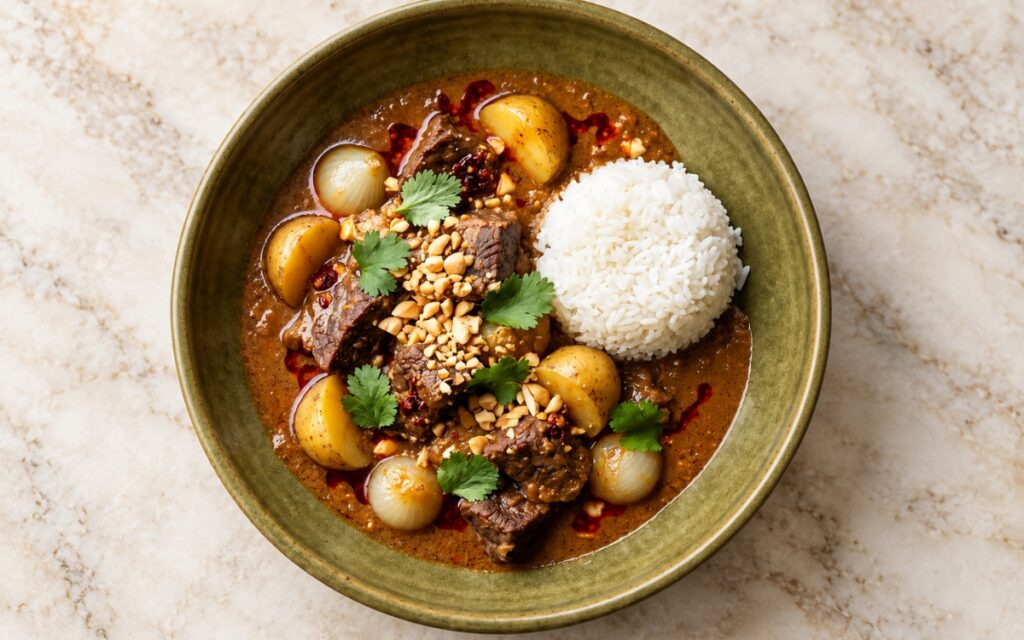
Massaman Beef Curry
Beef chuck braised in a rich, spiced coconut massaman sauce with baby potatoes, pearl onions and peanuts, served with jasmine rice.
-
Indonesian Nasi Goreng
An Indonesian fried rice of cold jasmine rice, chicken, shallot-chilli paste and kecap manis, topped with a fried egg, fried shallots and fresh vegetables.
-
Indian Butter Chickpea Bowl
Tender chickpeas in a smooth, buttery tomato-cashew masala with cream and kasuri methi, spooned over fluffy basmati rice in four hearty bowls.


You might also like
You might also like
-
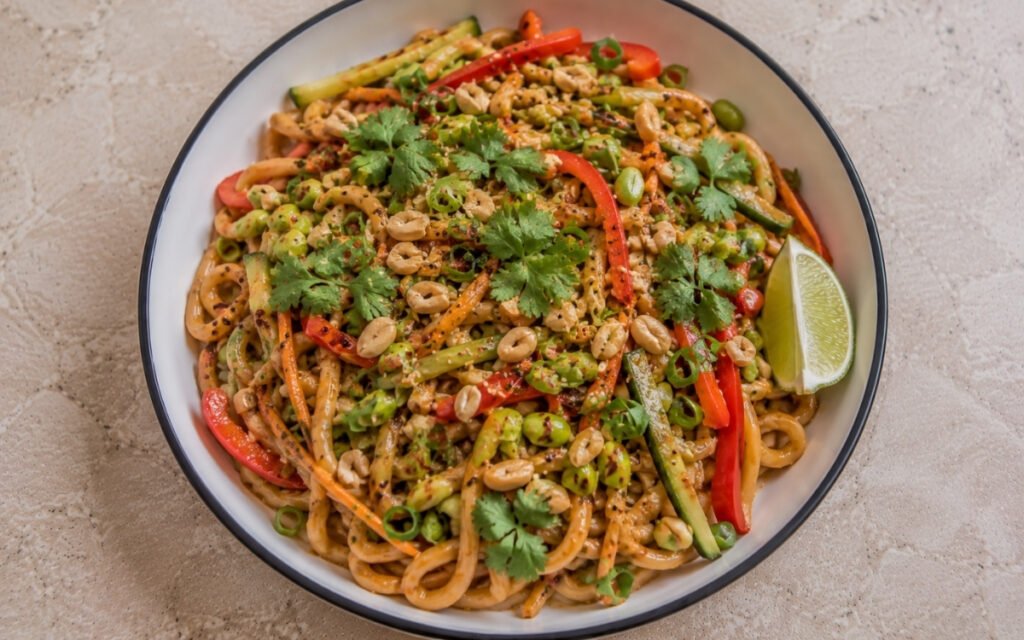
Spicy Peanut Butter Noodles
Udon in a peanut sauce spiked with bird’s eye chilies and Sichuan peppercorns — better the next day.
-
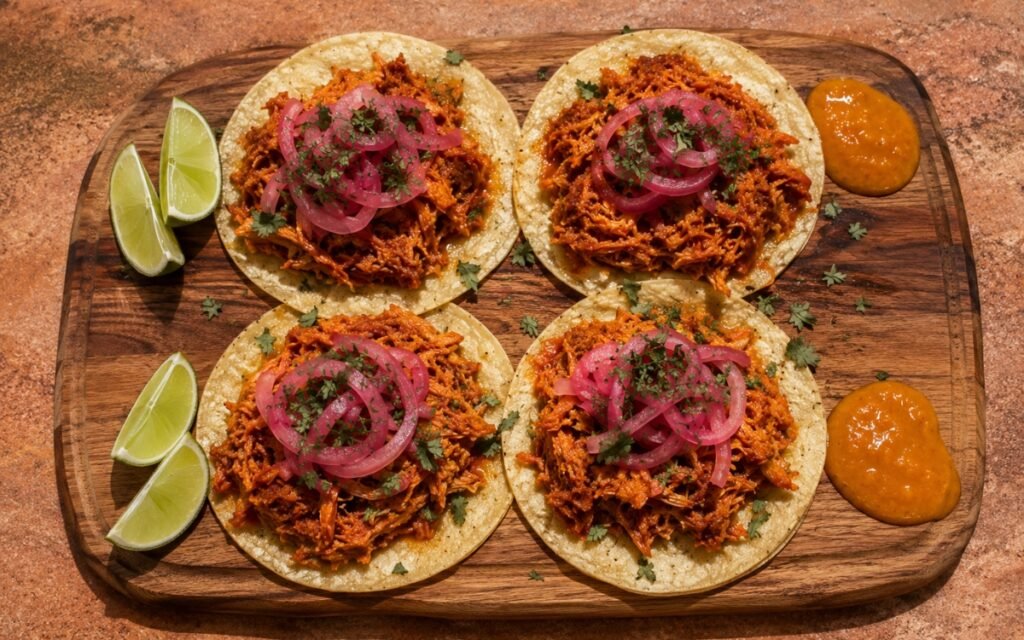
Cochinita Pibil Tacos
Pork shoulder braised in a smooth achiote marinade until fork-tender and glossy, served on corn tortillas with pickled red onion and habanero salsa.
-
Korean Soy Garlic Fried Chicken
Crisp double-fried Korean chicken wings and drumettes in a glossy dark amber soy-garlic glaze, finished with toasted sesame seeds and sliced scallions.


Sichuan Chili Oil Wontons
Ingredients
Method
- Place the 500g ground pork in a large mixing bowl and add the 2 finely chopped scallions, 2 tsp grated ginger, 2 grated garlic cloves, 1 tbsp light soy sauce, 1 tbsp Shaoxing wine, 1 tsp toasted sesame oil, ½ tsp fine salt, ½ tsp sugar, ¼ tsp ground white pepper and the ¼ tsp ground Sichuan peppercorn, if using. Add the 2 tbsp water or unsalted stock a tablespoon at a time, then stir vigorously in one direction with chopsticks or a sturdy spoon for 1–2 minutes, until the filling looks sticky, slightly elastic and cohesive and starts to pull away from the bowl in strands. It should look tacky and hold together on the spoon; if it still looks loose and crumbly, keep stirring for another 30 seconds. Cover the bowl and let the filling rest for 15 minutes. That one-direction stirring is what works the pork’s proteins into a sticky bind that holds the water in and gives the filling its juicy, springy texture.
- While the filling rests, combine the 8 tbsp Chinese chili oil, including a good spoonful of the chili flakes or crisp solids from the jar, with the 4 tbsp light soy sauce, 4 tbsp Chinese black vinegar, 2 tsp sugar, the 3 grated garlic cloves and ½ tsp ground Sichuan peppercorn in a small bowl. Stir well to dissolve the sugar as much as possible, then taste: the sauce should be bold, salty, tangy and spicy, with a gentle tingle, before any water goes in. Add a pinch more Sichuan peppercorn if you want a stronger numbing character. Thinly slice the 3 scallions, chop the 15g cilantro and roughly crush the 40g roasted peanuts, then set them out with the 2 tbsp toasted sesame seeds. That fully seasoned base matters because the hot cooking water added later softens it, so it has to start out genuinely assertive.
- Set the 32 wonton wrappers under a barely damp towel so they do not dry out, with the small bowl of cold water and a parchment-lined tray beside them. Place a generous heaped teaspoon of filling, about 17g, in the centre of a wrapper. Moisten the edges lightly with a fingertip dipped in the water, fold the wrapper into a triangle and press firmly from the filling outwards to seal, removing any obvious air pockets. Bring the two side corners together and press them to make a classic wonton shape, or leave them as triangles. Repeat to make 32 wontons, arranging them on the tray without letting them touch too much and keeping the finished ones covered. Towards the end of folding, bring the 4 litres of water to a gentle boil in a large pot. That tight, air-free seal is what stops the wrappers from bursting or leaking filling into the water.
- Keep the water at a gentle boil, with steady bubbles rather than a violent rolling boil, then drop in the wontons; the pot should be large enough for them to move freely without crowding. Stir gently once along the bottom so none stick. Cook for 4–5 minutes, until the wrappers turn silky and slightly translucent and the filling is fully cooked. The wontons usually float after about 3 minutes, but floating alone is not the doneness cue, so give them another 1–2 minutes after they rise. If unsure, cut one open: the pork should be opaque throughout with clear juices, or read 71°C at the centre. Before draining, scoop out about 120ml of the hot cooking water and keep it beside the sauce. That gentle boil is what lets the pork cook through while the delicate wrappers stay whole and sealed.
- Stir 2 tbsp of the reserved hot cooking water into the sauce, then add a little more, a teaspoon at a time, only if needed, until the sauce loosens slightly into a glossy, lightly pooling base rather than a thick paste. The oil and the soy-vinegar mixture should look drawn together rather than sitting in separate layers; if the sauce turns thin, stop adding water rather than diluting its flavour further. Drain the wontons well in a slotted spoon or colander, shaking off the excess water so it does not dilute the sauce. Work quickly, since drained wontons left standing begin to stick together. That hot, starchy cooking water is what helps emulsify the oil into the soy and vinegar, giving a cohesive sauce that genuinely clings to the wrappers.
- Spoon about half of the sauce into 4 shallow serving bowls. Divide the wontons among them, 8 wontons per serving, then spoon the remaining red oil sauce over and around them, so it coats the wontons and pools lightly around them without drowning them. Scatter over the sliced scallions, chopped cilantro, toasted sesame seeds and crushed peanuts, then finish each bowl with a little extra chili oil spooned over the top. Serve immediately, while the wrappers are at their silkiest; letting the bowls sit makes the wrappers soften excessively. That last-minute garnishing is what keeps the herbs fresh and bright and the peanuts crunchy against the silky wontons.