Ingredients
Method
Salt and Squeeze the Cabbage
- Toss the 180g of finely chopped napa cabbage with the 4g of fine salt in a bowl and leave it for 10 minutes, until it looks lightly wilted and water has collected at the bottom. Gather the cabbage in a clean cloth or squeeze it in your fist, pressing firmly several times until it feels much drier and no more liquid runs out. Do not leave a pool of moisture in the cabbage, because wet cabbage loosens the filling and lets the dumplings leak into the soup. That thorough squeezing is what keeps the filling cohesive and the wrappers intact.
Mix the Chicken Filling
- Combine the 450g of ground chicken thigh, the squeezed cabbage, 3 very finely sliced scallions, 2 grated garlic cloves, 15g of grated ginger, 20ml soy sauce, 15ml sake, 10ml toasted sesame oil, 5ml neutral oil, 1g white pepper, and 8g potato starch in a mixing bowl. Mix firmly with chopsticks or your hand for 2–3 minutes, stirring in one direction, until the filling turns sticky, cohesive, and slightly tacky, holding together as a soft paste that clings to the bowl. If it feels too wet, mix in 1–2 more teaspoons of starch. That firm one-direction mixing is what develops a springy, juicy filling.
Wrap the Gyoza
- Keep the 20 round wrappers under a towel so they do not dry out, and set a small bowl of water beside a tray lightly dusted with potato starch or cornstarch. Place 20–22g of filling in the centre of each wrapper, moisten the edge lightly with water, then fold into a half-moon and pleat one side over the other, pressing firmly at the pleats and both ends. Each dumpling should look full but close comfortably, sealed tightly with no air pockets. Set the finished gyoza on the tray, cover loosely, and keep any extra filling for a second batch. That firm sealing is what stops the dumplings bursting in the water.
Build the Broth
- Combine the 1,500ml of chicken stock, 250ml water, 20ml soy sauce, 10ml usukuchi soy sauce, 15ml sake, 10ml mirin, and the 4 slices of ginger in a pot and bring it to a gentle simmer, never a hard boil. Taste and adjust lightly with salt and a pinch of white pepper, until the broth tastes delicate, clean, and lightly savoury rather than dark or salty. It should stay clear and light golden. That gentle heat and restrained seasoning are what keep the broth clean enough to let the dumplings lead.
Cook the Mushrooms and Bok Choy
- Add the 8 sliced shiitake caps to the simmering broth and cook gently for 3–4 minutes, until tender and softened. Add the 4 halved baby bok choy and cook for 1–2 minutes, just until the stems are tender and the leaves are still bright green. Lift both out with a slotted spoon if you want cleaner final bowls, or leave them in and hold the broth on the lowest heat. That short, gentle cooking is what keeps the bok choy vivid and the mushrooms silky.
Cook the Gyoza Separately
- Bring a separate pot of water to a gentle boil, then lower it to a steady simmer, and add the gyoza in batches if needed so they are not crowded. Cook for 4–5 minutes, stirring very gently once after the first minute to prevent sticking, until the wrappers look silky and slightly translucent, the dumplings float, and the filling is cooked through. Check that the centre reaches 74°C if you want to be certain, and add 1–2 minutes if cooking from frozen. That separate pot is what keeps starch and stray filling out of the soup.
Assemble and Serve
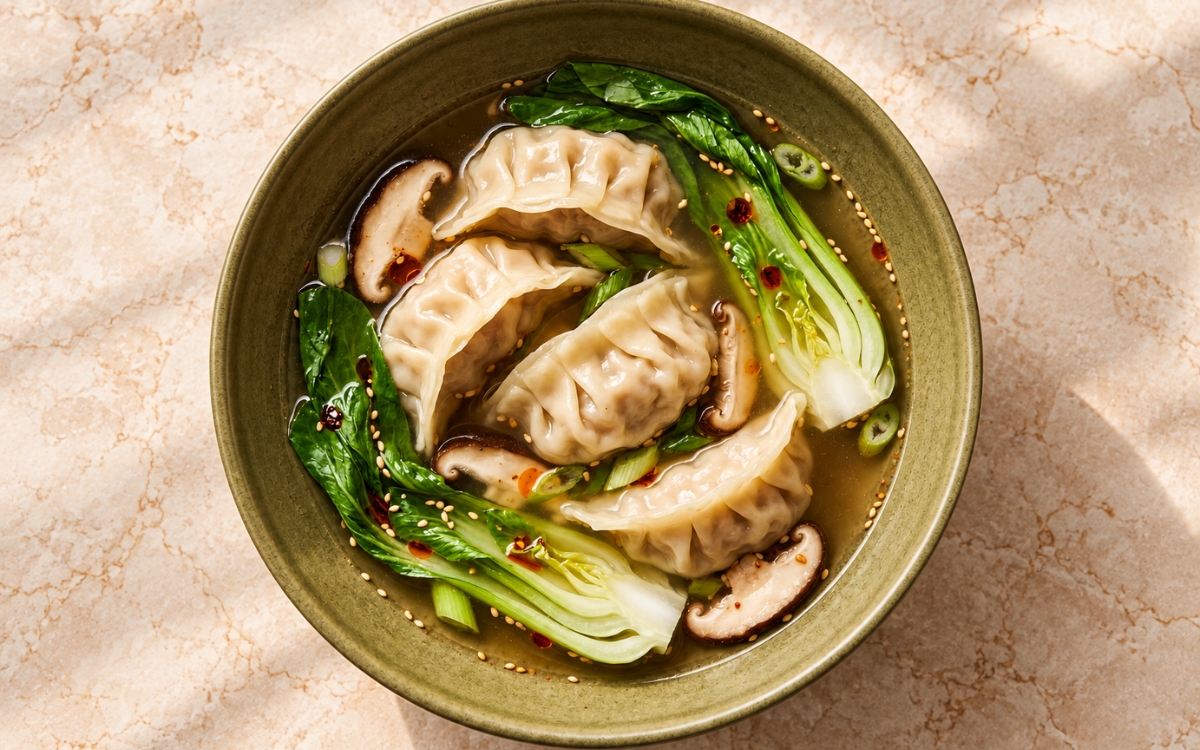
- Reheat the broth until piping hot, lift out the ginger slices, and divide the cooked gyoza among 4 bowls, 5 dumplings per bowl. Arrange the bok choy and shiitake around the dumplings, then ladle the hot broth around them so the pleated tops sit visibly above the surface. Finish with the 2 sliced scallions, the 2 tsp of toasted sesame seeds, and a few tiny droplets of the 1–2 tsp of chili oil, using only enough to accent the broth, never to turn it red. That minimal finish is what keeps the dumplings the star of the bowl.
Notes
Cooking the gyoza in their own pot of water deserves genuine recognition as the technique most directly responsible for a clear, golden broth. Raw wrappers release surface starch as they cook and any seepage from the filling clouds the liquid, so a separate pot keeps all of that away from the soup the bowls are built on.
Squeezing the salted cabbage thoroughly deserves the same attention this technique receives throughout this collection’s other dumpling and filling-based recipes. Salt draws out the water the cabbage would otherwise release inside each wrapper, and that liquid is what loosens the filling, splits the seams, and leaks into the broth.
A gentle simmer deserves genuine respect as the detail most directly responsible for intact dumplings and a clean soup. A rolling boil knocks the delicate gyoza against each other and the pot, tearing wrappers at the pleats, whereas a steady simmer cooks the filling through gently without breaking anything or clouding the liquid.
The 74°C filling temperature deserves attention as a genuine, checkable readiness cue rather than a loose approximation. Floating, silky, slightly translucent wrappers are a good visual sign, but a quick probe confirms the ground chicken is fully cooked through, which matters because the centre of a plump dumpling is always the last part to set.